

Recipes

Mustard-Crusted Baked Chump Chops with Root Vegetables
A Dijon-and-herb crust baked golden while the chops stay juicy over roasting roots
This is a Sunday roast that happens to be quick enough for a Wednesday. The roots go in first — carrots, parsnips and potatoes tossed in oil to get a head start — while you press a crust of Dijon, breadcrumbs and herbs onto the chops. Twenty minutes later the chops join them, the mustard crust turning golden and savoury as the vegetables finish underneath, catching every drop of lamb fat. One tray, one oven, the flavour of a big roast dinner from four chops. That's a fair trade for a school night.
Read moreabout Mustard-Crusted Baked Chump Chops with Root Vegetables

One hot oven tray, and your broth goes from pale to profound
There's exactly one technique separating an everyday pale broth from the deep mahogany kind you'd happily sip from a mug: roast the bones first. Fifty minutes in a hot oven, a smear of tomato paste, and every browned edge on that tray becomes flavour in the pot. French kitchens have sorted their stocks into white and brown for centuries, and this is the brown one — richer, rounder, made for gravies, French onion soup and cold evenings. The oven does the clever part. The pot just needs time.

Low oven first, ferocious pan last
Reverse-searing sounds like something off a cooking show, but it's honestly the most relaxed way to cook a thick steak — and a thick bone-in T-bone is exactly what the method was invented for. A low oven brings the steak up to temperature gently, edge to edge, with no grey band and no guesswork. Then one short, ferocious sear at the end builds the crust. You'll need a meat thermometer and about an hour, and most of that hour is yours — the steak looks after itself while you sort the sides.
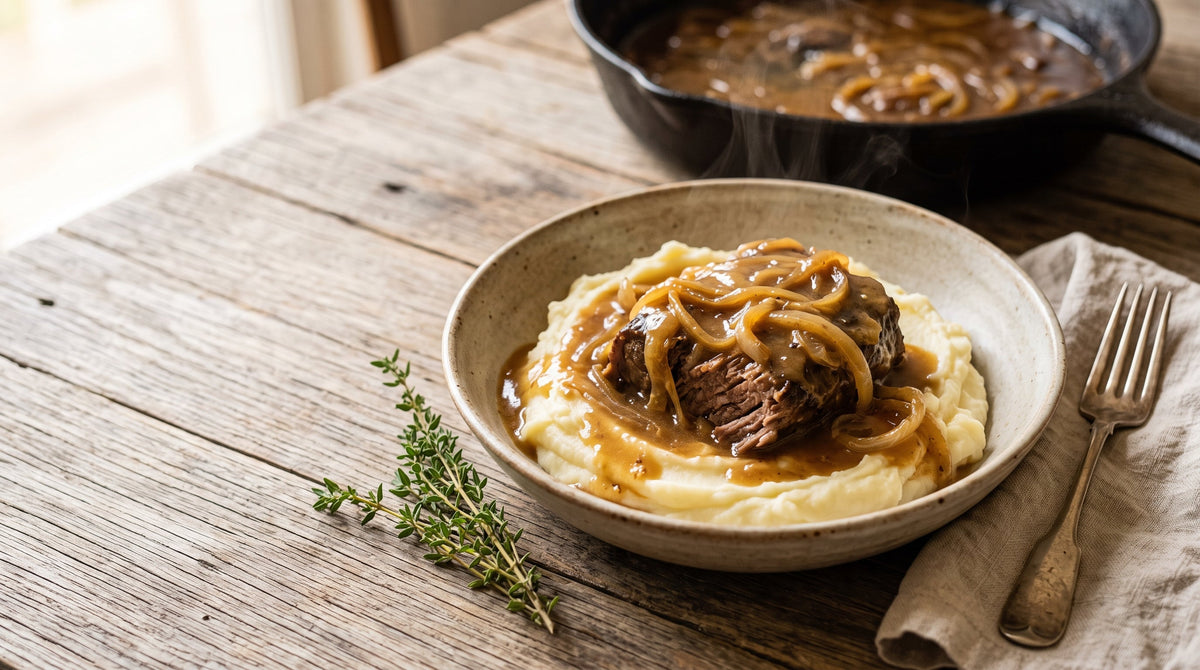
Smothered BBQ Steak with Onions and Gravy
Browned hard, braised soft — the Southern trick that never misses
In the American South they call it smothering: brown a steak hard, bury it under a blanket of onions and gravy, and let a gentle simmer do what an hour of watching never could. It's insurance cooking — the method forgives a distracted cook, a phone call, a homework crisis. The BBQ steak turns out to be made for it, because the same seam that melts over a slow braise is what gives the gravy its body. Serve it over mash on a cold night and watch the pot empty.
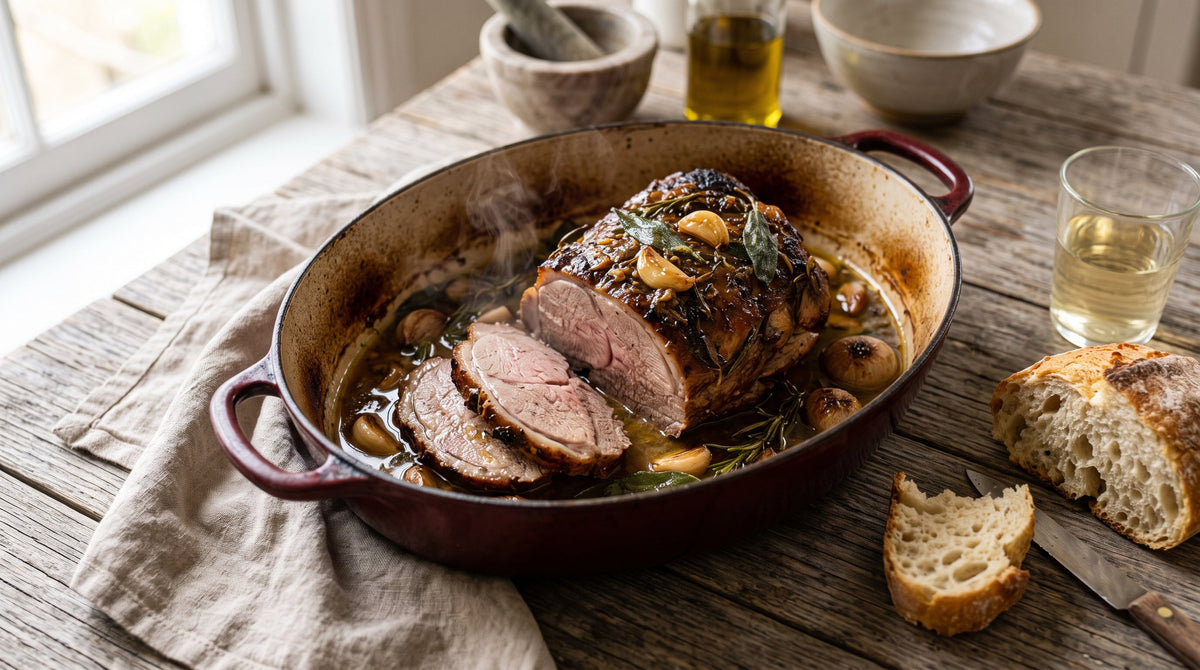
Italian Pot-Roasted Lamb with White Wine and Garlic
The Roman way — lamb, white wine, a whole head of garlic, and a pot that does the thinking
The Italians have a lovely name for this method: arrosto morto, the "dead roast" — meaning the lamb goes into a covered pot and doesn't move while wine, garlic and herbs quietly do everything for you. There's no oven tray, no basting, no gravy-making at the end, because the sauce builds itself in the bottom of the pot while the meat turns tender above it. Brown the lamb well, pour in the wine, put the lid on and let two slow hours make you look like you've been to Rome.
Read moreabout Italian Pot-Roasted Lamb with White Wine and Garlic

Slow-Cooked Beef Curry with Blade Steak
The step up from curry powder — and worth every minute
There's a point in a proper beef curry where the kitchen starts smelling like the good Indian place — onions gone deep gold, cardamom and cinnamon crackling away in the oil. This is that curry. Blade steak wants a long, gentle simmer, and it repays you by turning silky where leaner cuts go stringy. It's a step up from the curry-powder version you grew up with, but every step is simple, and the pot mostly looks after itself while the rice cooks.

Slow-Cooked Beef Rib Ragu with Soft Polenta
The ragu with a body that mince can only dream about
A proper Italian Sunday ragu was never made from mince alone — it was made from whatever cut had bones and time in it. Beef ribs are exactly that cut. They braise in tomato until the meat shreds at a glance, and the bones quietly lend the sauce a gloss and richness you can't buy in a jar. Spooned over soft, buttery polenta, it's about the most comforting plate this kitchen turns out. Start it after lunch and it's ready when the evening turns cold.

The bistro dish that made shanks famous, back in your own kitchen
There was a time when butchers practically gave shanks away. Then some clever cook braised one in red wine until the meat slumped off the bone into a glossy, wine-dark sauce, put it on a bistro menu, and the secret was out for good. This is that dish — a proper sear, a soffritto, half a bottle of red and two and a half unhurried hours in a low oven. It asks for twenty minutes of real work and repays you with the kind of dinner people order at restaurants because they assume they can't make it at home. They can.

The Portuguese chilli-citrus baste that was built for fatty cuts over flame
Piri piri gets typecast as a chicken sauce, which is a shame, because everything it does — the chilli, the lemon, the vinegar, the garlic — was made to stand up to rich meat and open fire. Lamb ribs are exactly that. The racks spend two gentle hours wrapped on the cool side of the barbecue while the fat renders, then come over the flame to be basted again and again with a bright red, sharp-edged sauce until the edges char and the whole backyard smells like a Portuguese grill house. Keep some sauce back for the table. You'll want it.