


The truth about industrial farming that changes how you think about food

THE PROBLEM YOU CAN'T SEE
When "Healthy" Isn't Always Whole
The food on your supermarket shelf looks fine. It's colourful, it's labelled "fresh," and it fills you up. But something is missing—and your body knows it.
Decades of industrial farming have stripped nutrients from the soil. Plants grown in depleted ground are weaker and less nourishing. Animals fed on those plants—or worse, on grain instead of grass—carry that same loss forward to your plate.
Plus, trace chemicals may build up over time—quietly impacting your family's health in ways you can't see on the label.
It's not right that families who try to eat well are quietly being short-changed by a system that prioritises volume over nutrition.
We understand that frustration—because we're farmers who saw the same thing happening to the land. When we rebuilt the soil, everything changed. When the land thrives, you thrive.

THE DEEPER SCIENCE
Why eco-grown food leaves you genuinely satisfied
David explains how ecological design creates food that doesn’t just fill you up — it satisfies you at a cellular level. When soil biology is healthy, plants and animals carry more micronutrients, and your body knows the difference.
THE SCIENCE IS CLEAR
What eco-grown food gives your family
When soil is alive with microbiology, every plant and animal it supports is naturally more nourishing. Here's what the research shows:
How does grass-fed meat compare nutritionally?
Grass-fed beef contains 2 to 5 times more omega-3 fatty acids than grain-fed, supporting heart health and reducing inflammation.1,2
Conjugated Linoleic Acid—linked to reduced body fat and improved immune function—is up to 500% higher in grass-fed meat.1,2
Grass-fed beef provides significantly higher levels of vitamins A and E compared to grain-fed alternatives.3
What are the advantages of eating eggs from pasture-raised hens?
Pasture-raised eggs contain 2.5 times more omega-3 fatty acids than conventional eggs, essential for brain development and immune health.4
Higher levels of lutein support eye health and cognitive function—vital for growing children.5
No antibiotics, hormones, Bovaer, or synthetic growth promoters—just real food feeding real birds.
How does eco-grown produce compare to conventional produce?
Organically grown produce has on average 27% higher antioxidant levels (range 19–69% by class), protecting against cellular damage.6
Eco-grown leafy greens are a leading source of vitamin K1 (phylloquinone) — essential for bone strength and cardiovascular health.7
No residual pesticides that disrupt digestion, hormone balance, or neurological development in children.8
WHAT FAMILIES ARE EXPERIENCING
A KEY DISTINCTION
Beyond Organic: What's the Difference?
Certified Organic
What's NOT in your food
- ✕ No synthetic pesticides
- ✕ May still use approved chemicals
- ✕ Large-scale monoculture possible
- ✕ Soil health not guaranteed
- ✕ Water intensive methods
- ✕ Animal welfare varies
Your Farmer Eco-Grown
What IS in your food
- ✔ No synthetic pesticides
- ✔ Living soil restored year on year
- ✔ Diverse rotational systems
- ✔ Ecological outcomes measured
- ✔ Water conservation built-in
- ✔ High animal welfare standards
WHAT YOU'RE ACTUALLY GETTING
Real Food, Real Standards
🌾 Grass-Fed Beef & Lamb
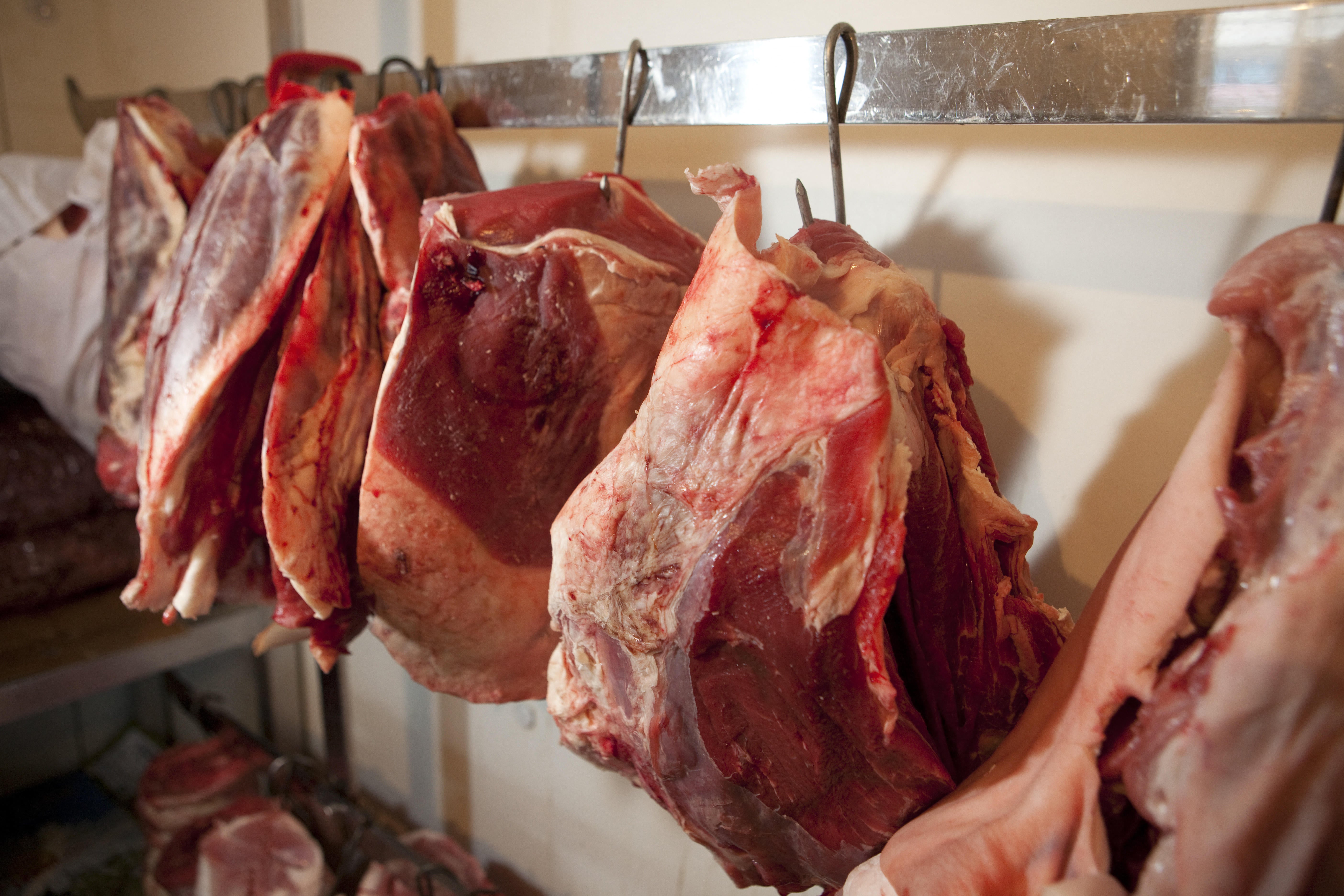
Animals raised on pasture year-round, eating what nature intended. Higher nutrient density, superior flavour, zero grain subsidies feeding the problem.
🥚 Pasture-Raised Eggs
Hens roaming freely on pesticide-free pasture, building richer yolks and stronger nutritional profiles than any cage or barn system can achieve.
🥬 Eco-Grown Vegetables
Grown in regenerated soil with no synthetic inputs. Seasonal, local, harvested at peak ripeness—not shipped weeks after picking.
THE REAL COST EQUATION
What It Means for You
Your Farmer Box: from $159 per month
That's less than a pizza night, less than a casual cafe lunch, and infinitely more nourishing. You're not paying premium prices for eco-grown food—you're paying real cost, and industrial food has been artificially cheap all along.
When you factor in reduced doctor visits, clearer thinking, better energy, and knowing your kids are actually getting nourished—the math is simple. Real food isn't an expense. It's an investment.
PRACTICAL GUIDE
7 Steps to Choose Farm Foods You Believe In
Not ready to order yet? Use this framework to evaluate any food source—supermarket produce, local farmers market, or online service.
- Ask about soil — Living soil = living food. Request test results.
- Know the farmer's name — If you can't, that's a red flag.
- Verify animal treatment — Grass-fed, pasture-raised, no confinement.
- Check for certifications — Organic is baseline, but look for outcome-based standards like eco-grown that measure what the farm actually produces.
- Look at crop rotation — Monoculture depletes. Diversity rebuilds.
- Ask about water use — Sustainable practices protect future harvests.
- Trust your taste — Real food tastes different. Better. You'll know immediately.
Three Simple Steps
A whole table of real food.
Your Farmers grow grass-fed beef and lamb, pastured eggs and the best eco-grown veggies and produce — every item grown to the same ecological standard, every farmer one you can know by name. One subscription, your whole real-food shop.
Reserve your share — or try a pack
Subscribe to a share of the harvest, or start with a one-off fixed pack.
Make it your own
Pick your delivery rhythm and what's in the box. Skip or cancel anytime — no lock-in.
Cook, savour, know your farmer
We deliver in a reusable esky we collect next time. No couriers, no waste.
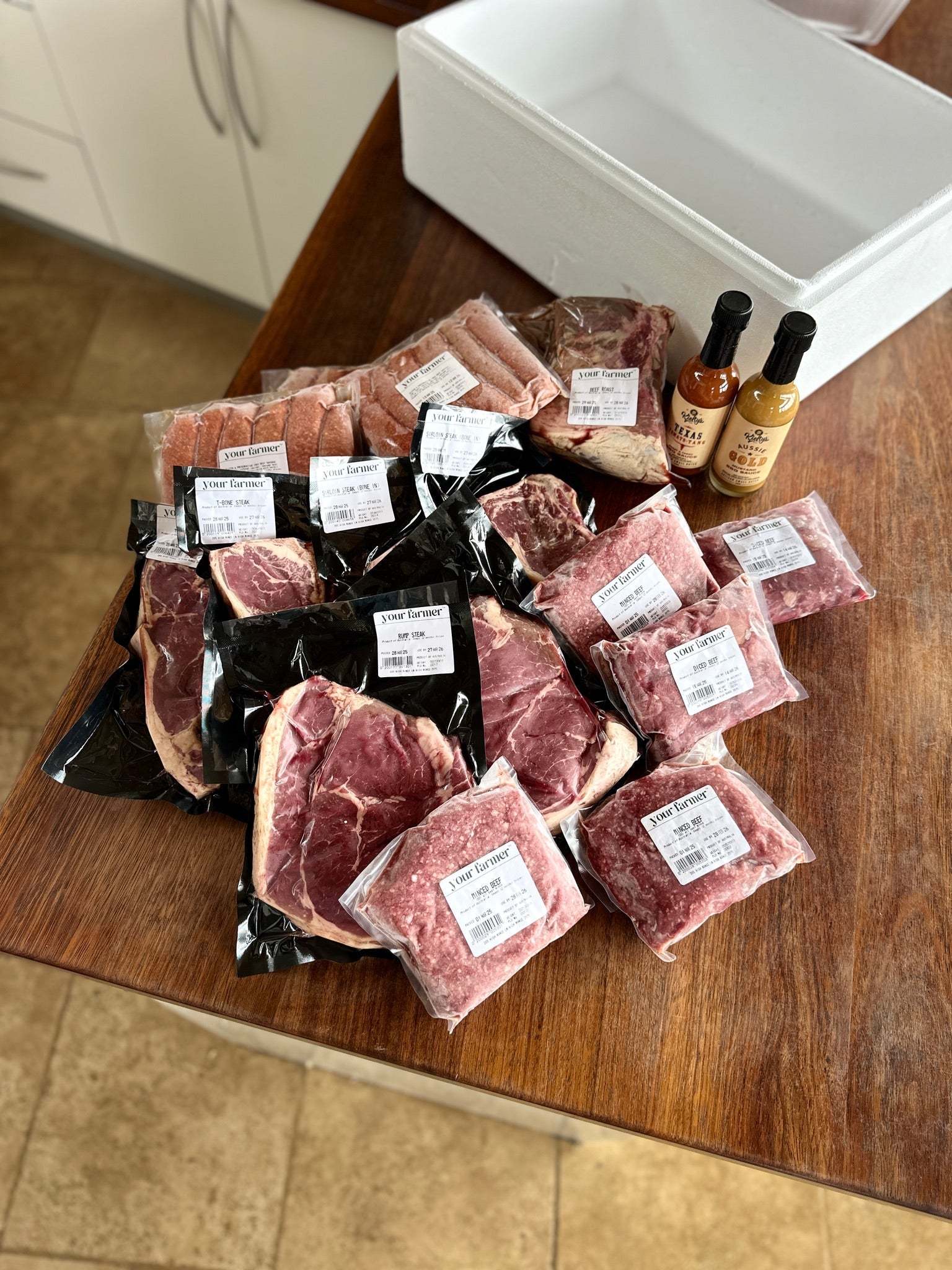
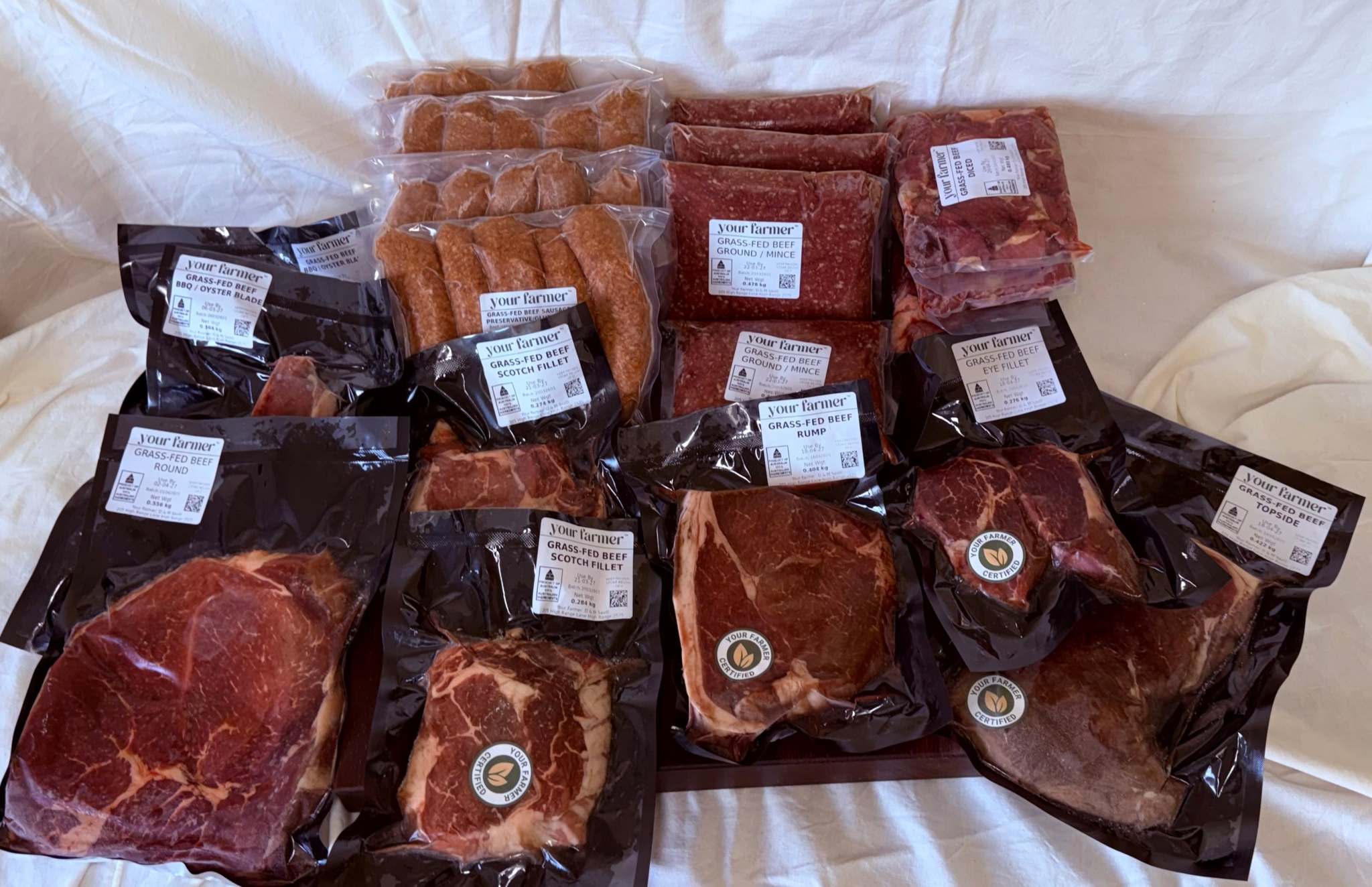

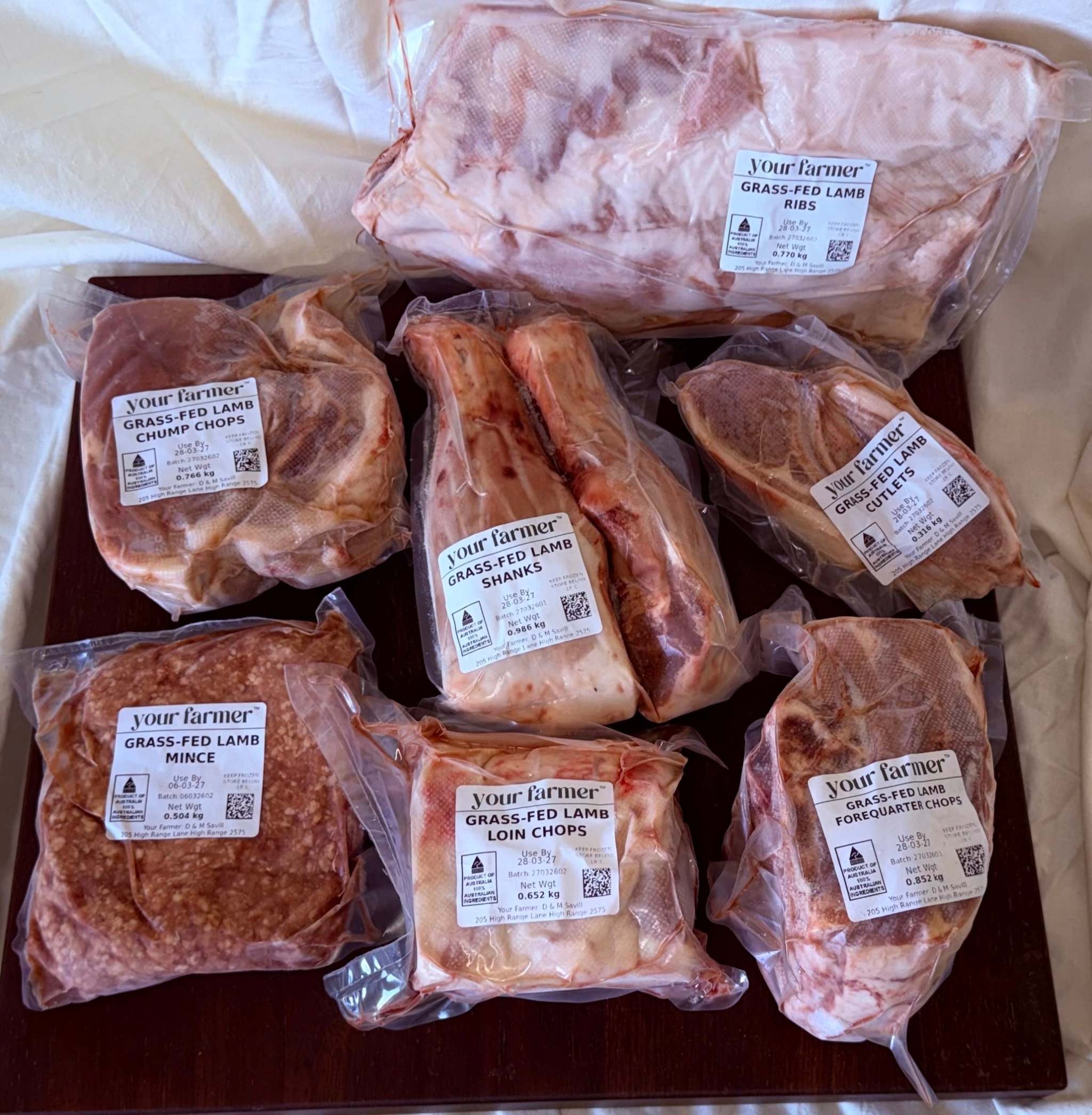
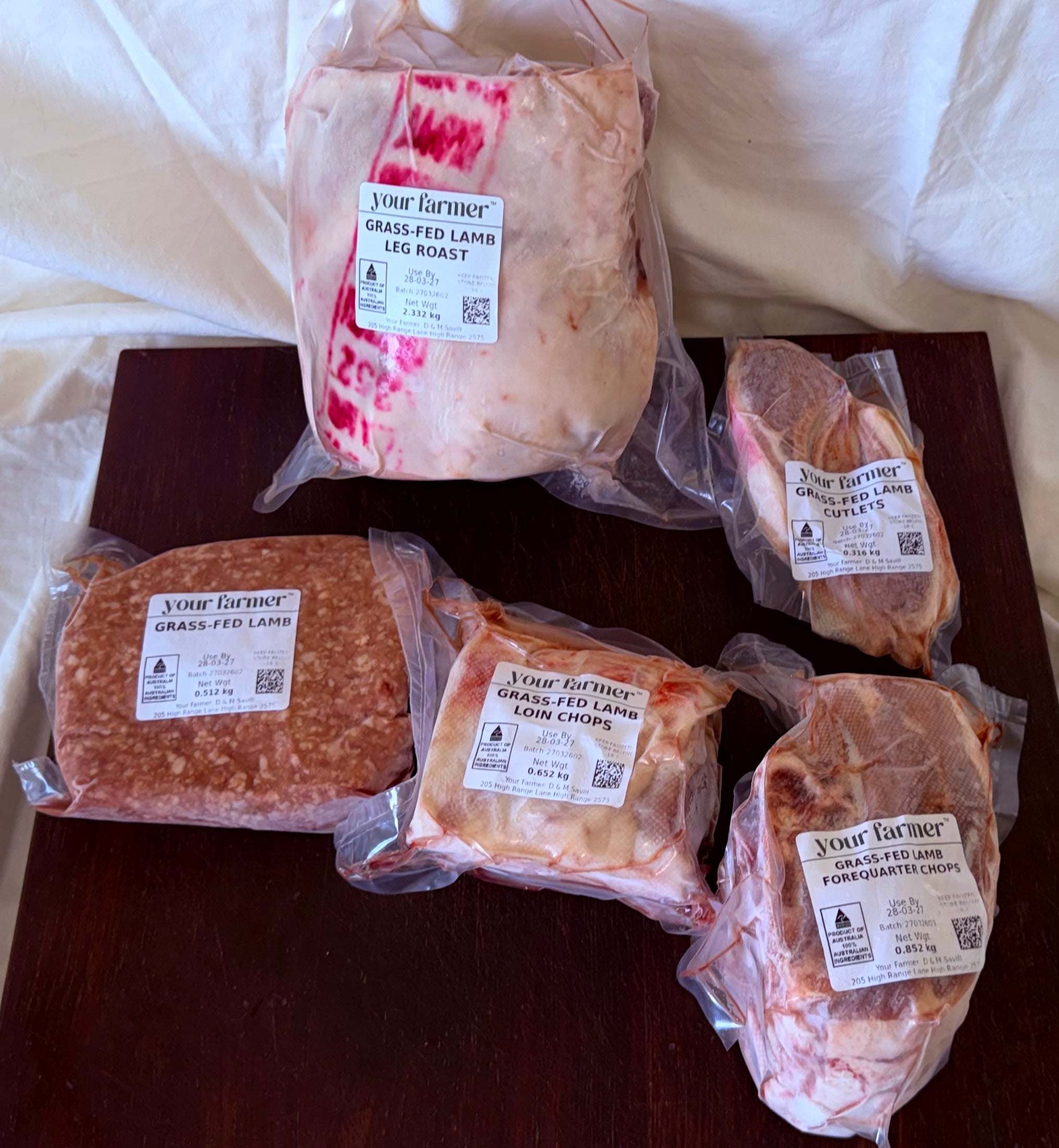
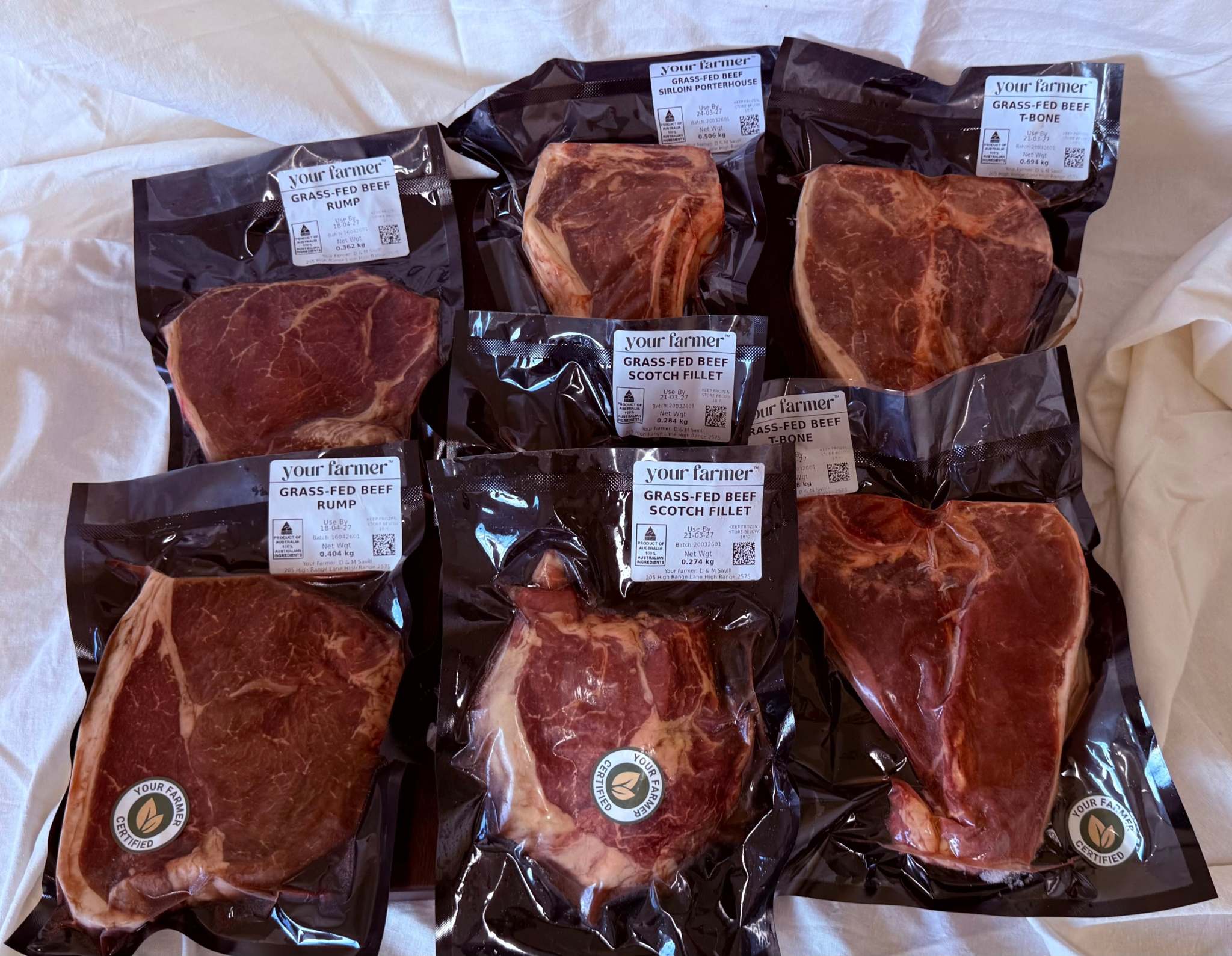
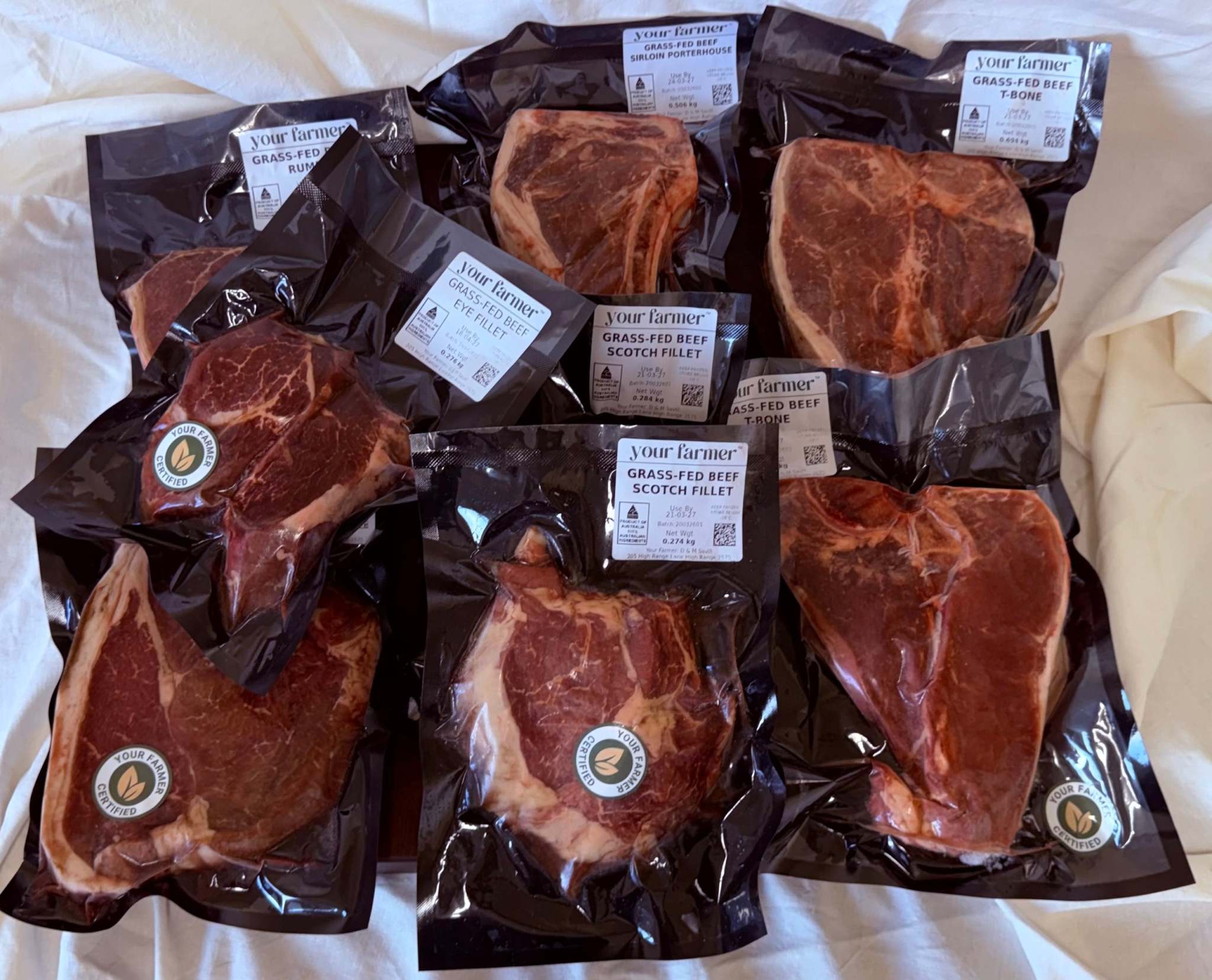
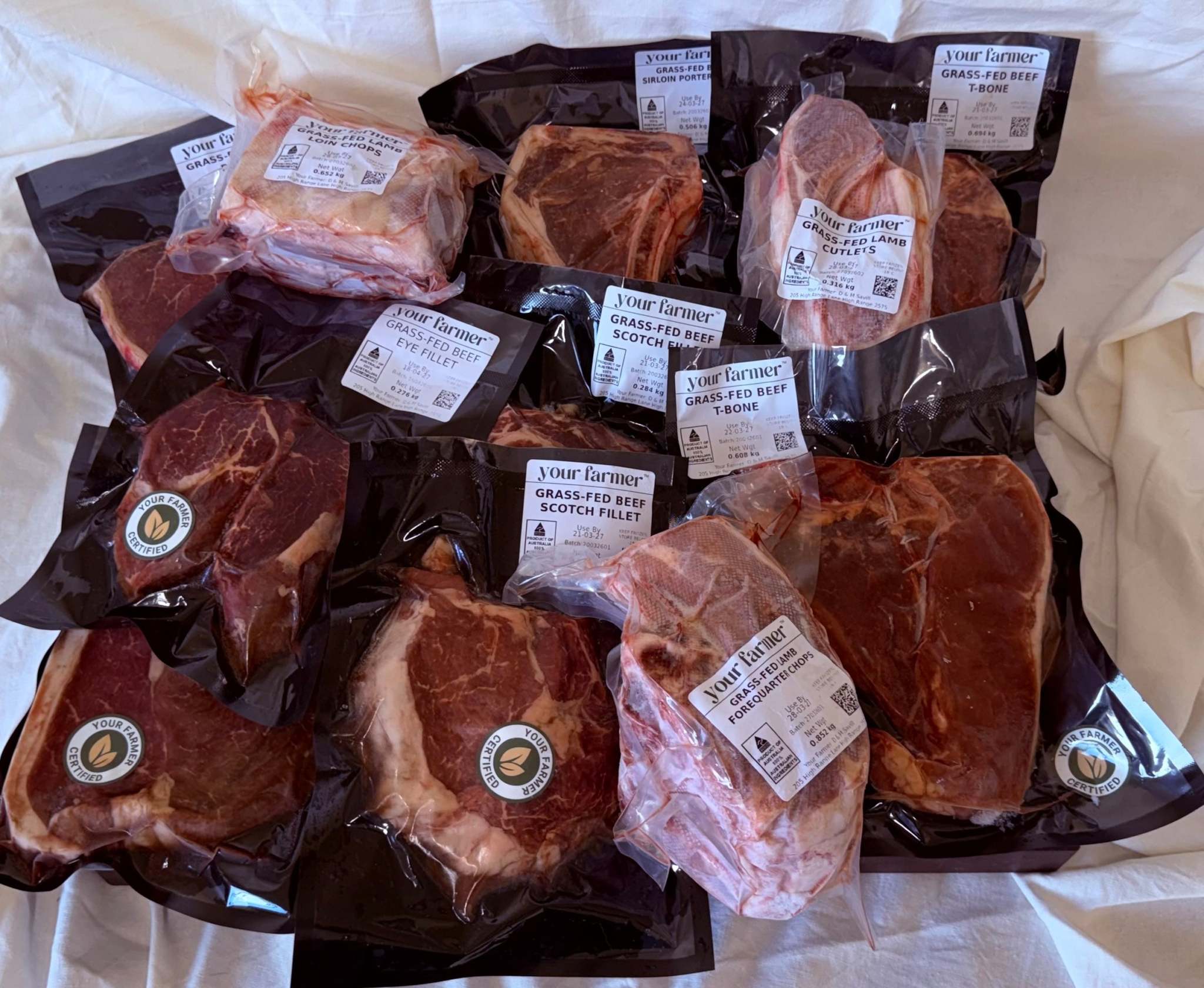
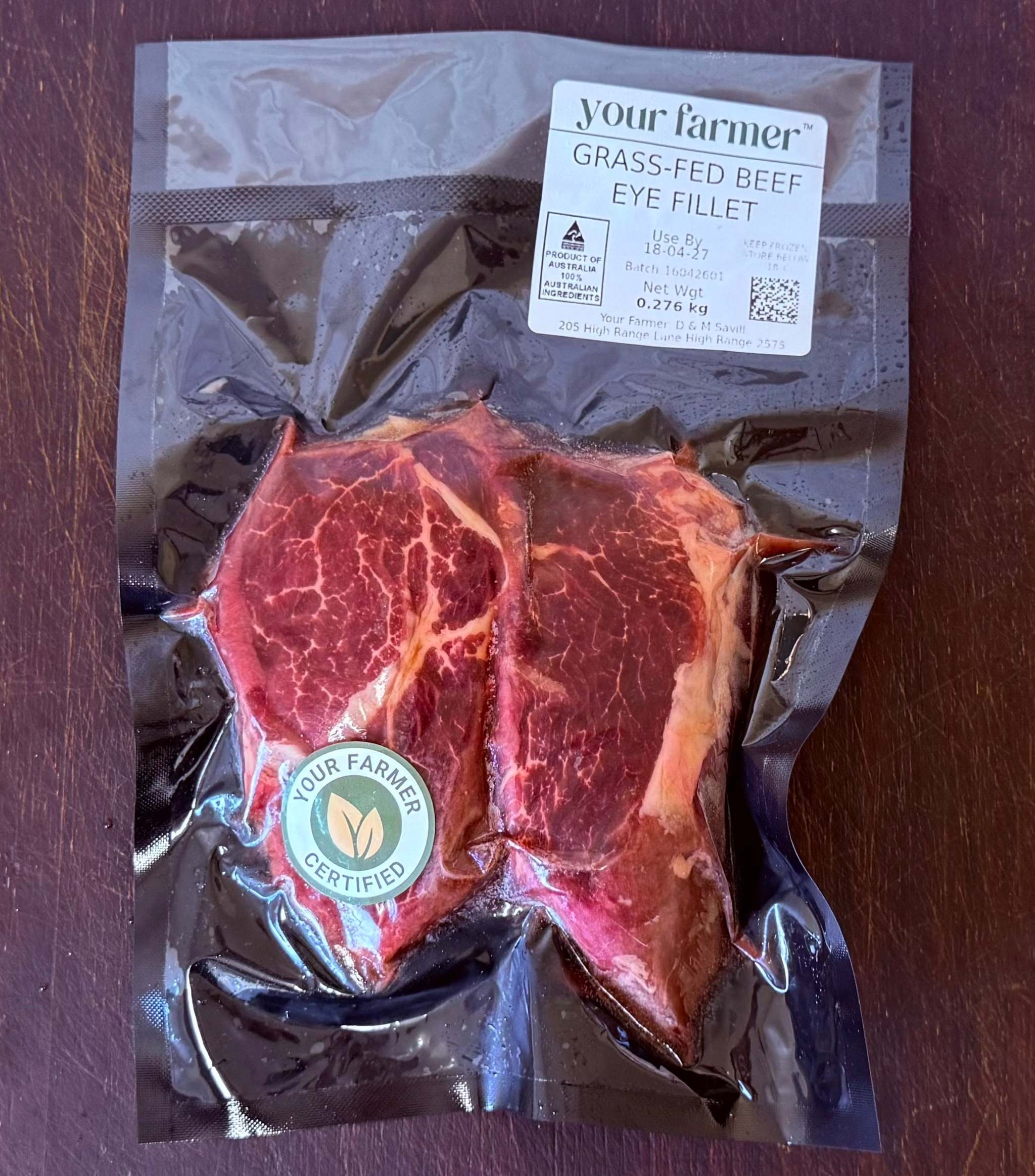
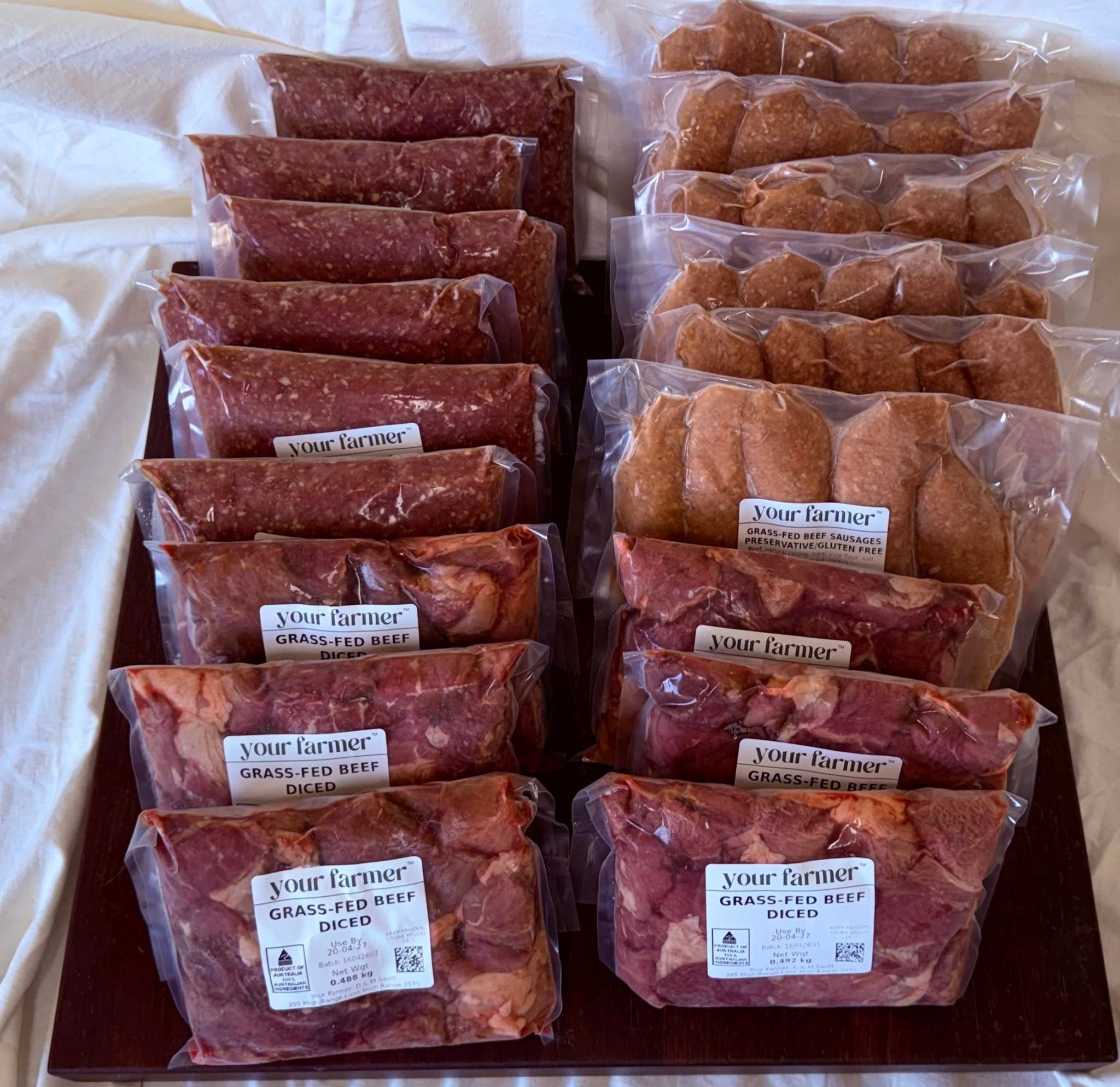
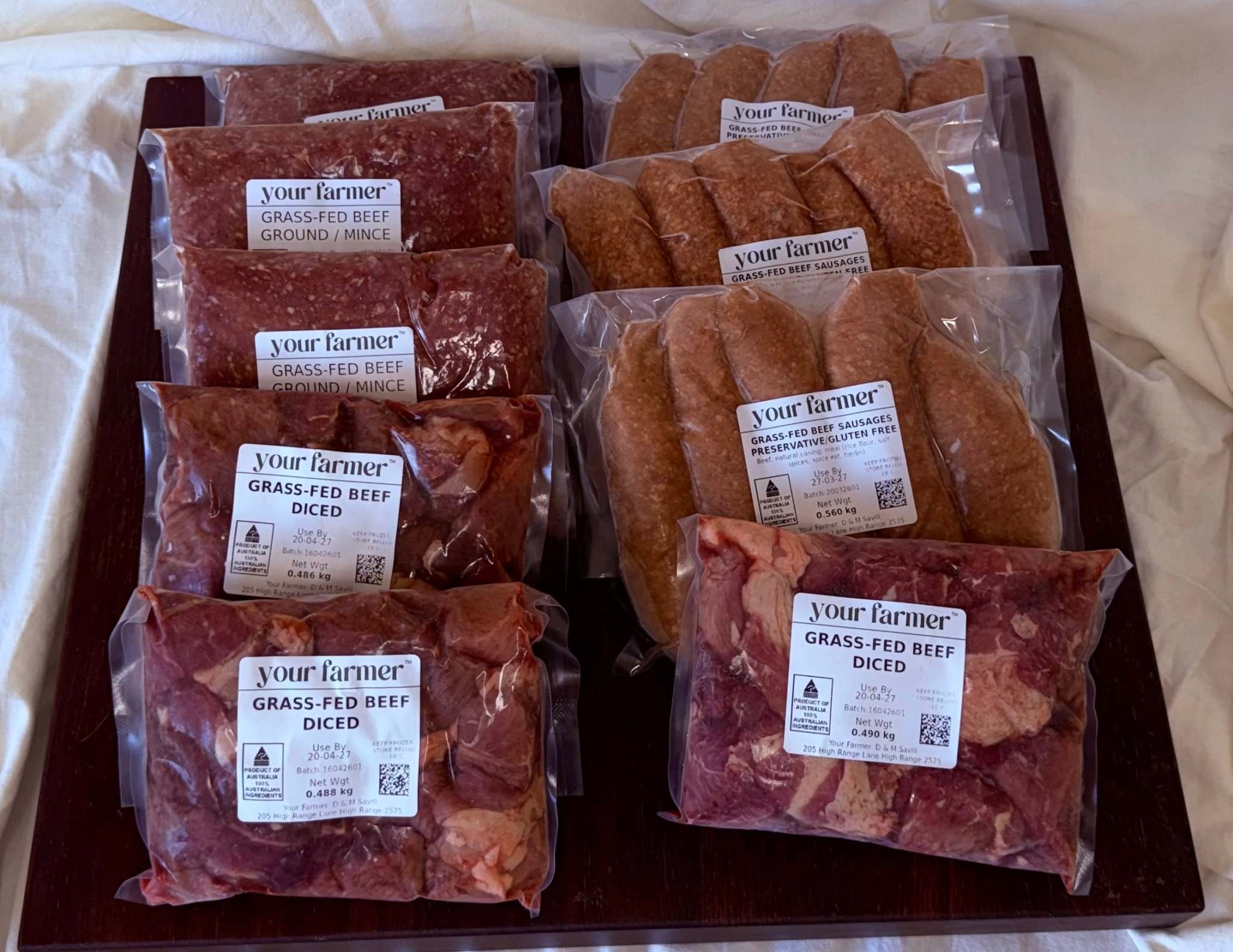
Grass-Fed Mince, Sausage and Diced Beef Pack
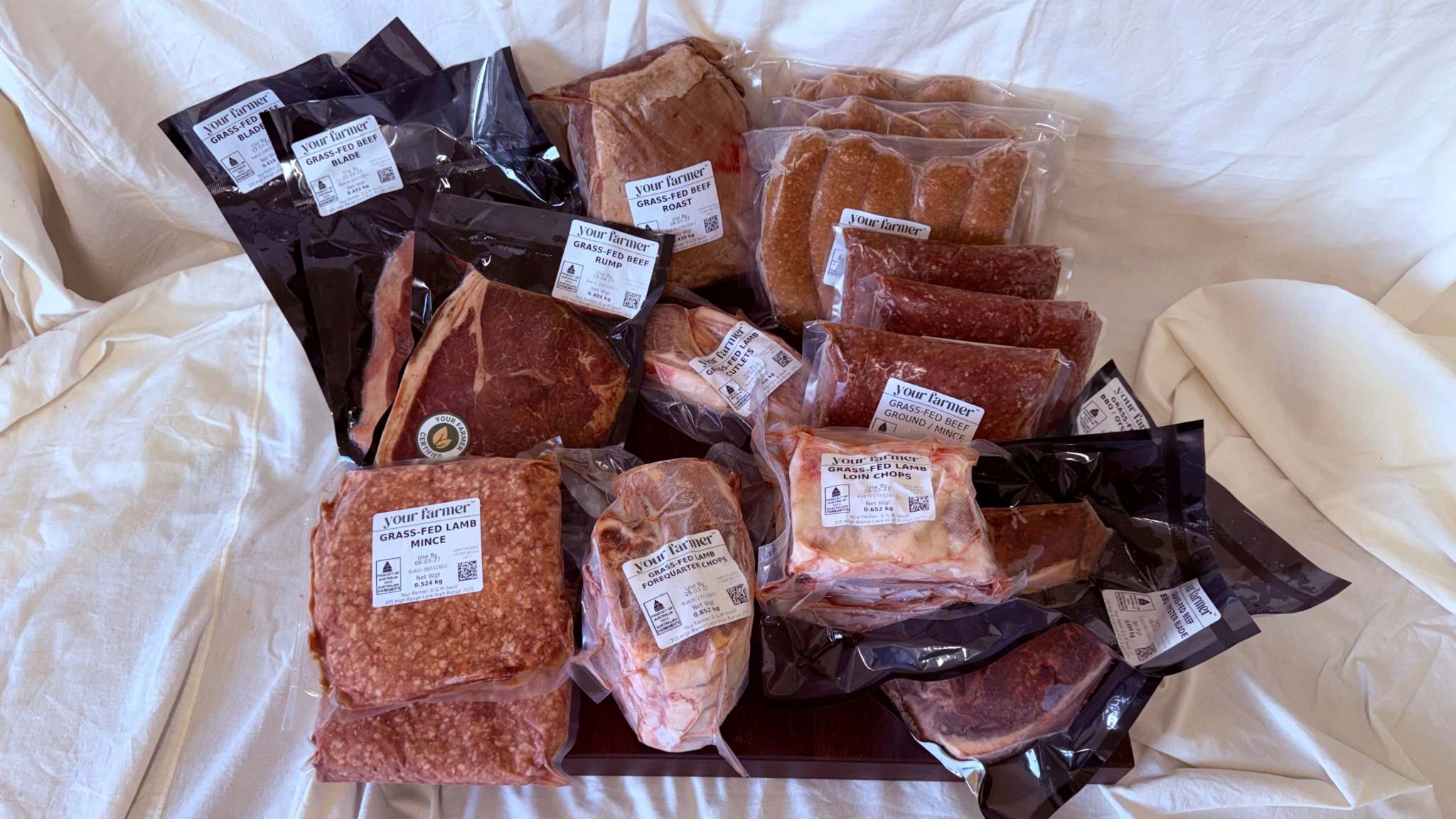
Grass-Fed Beef and Lamb BBQ Box
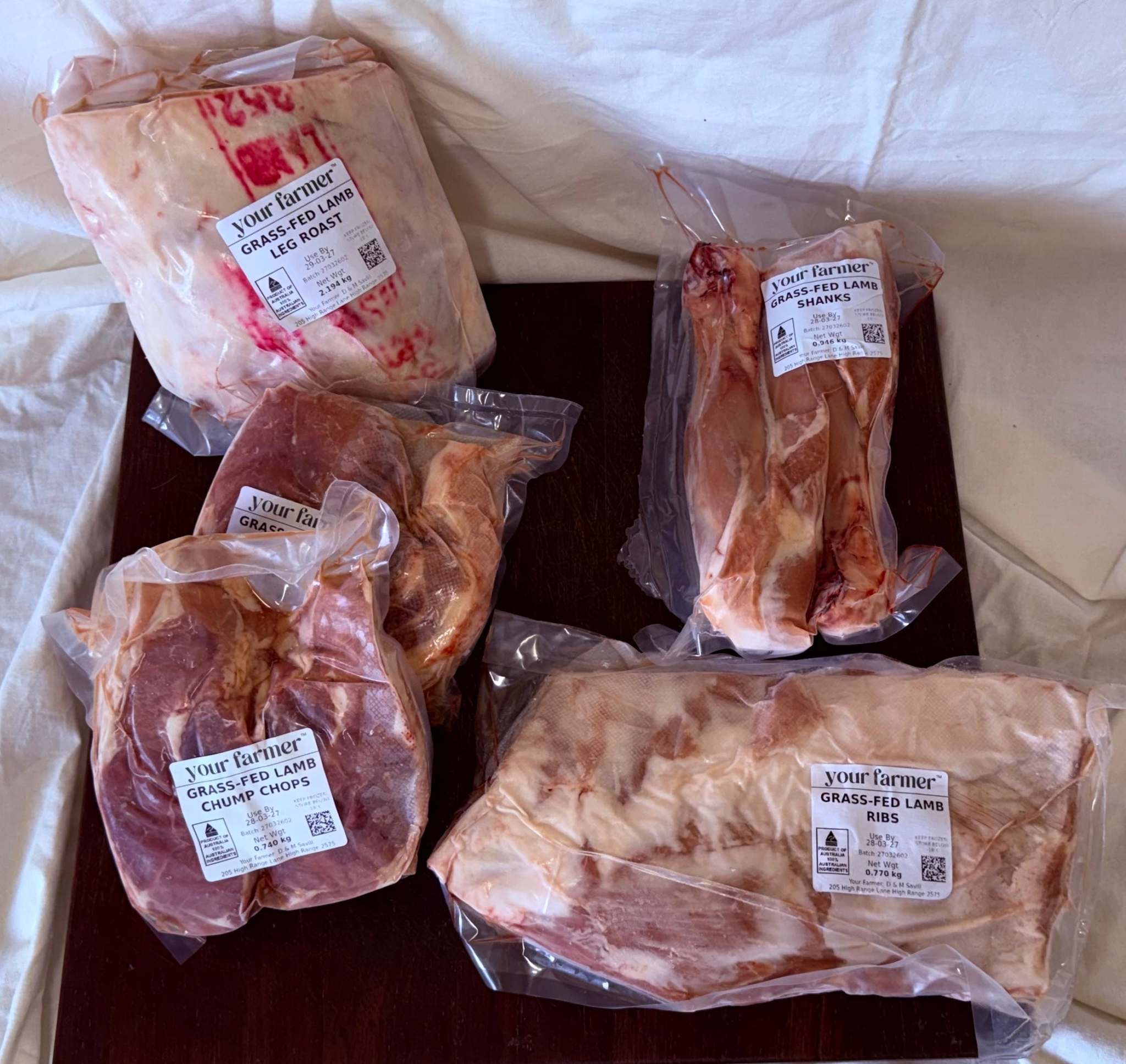
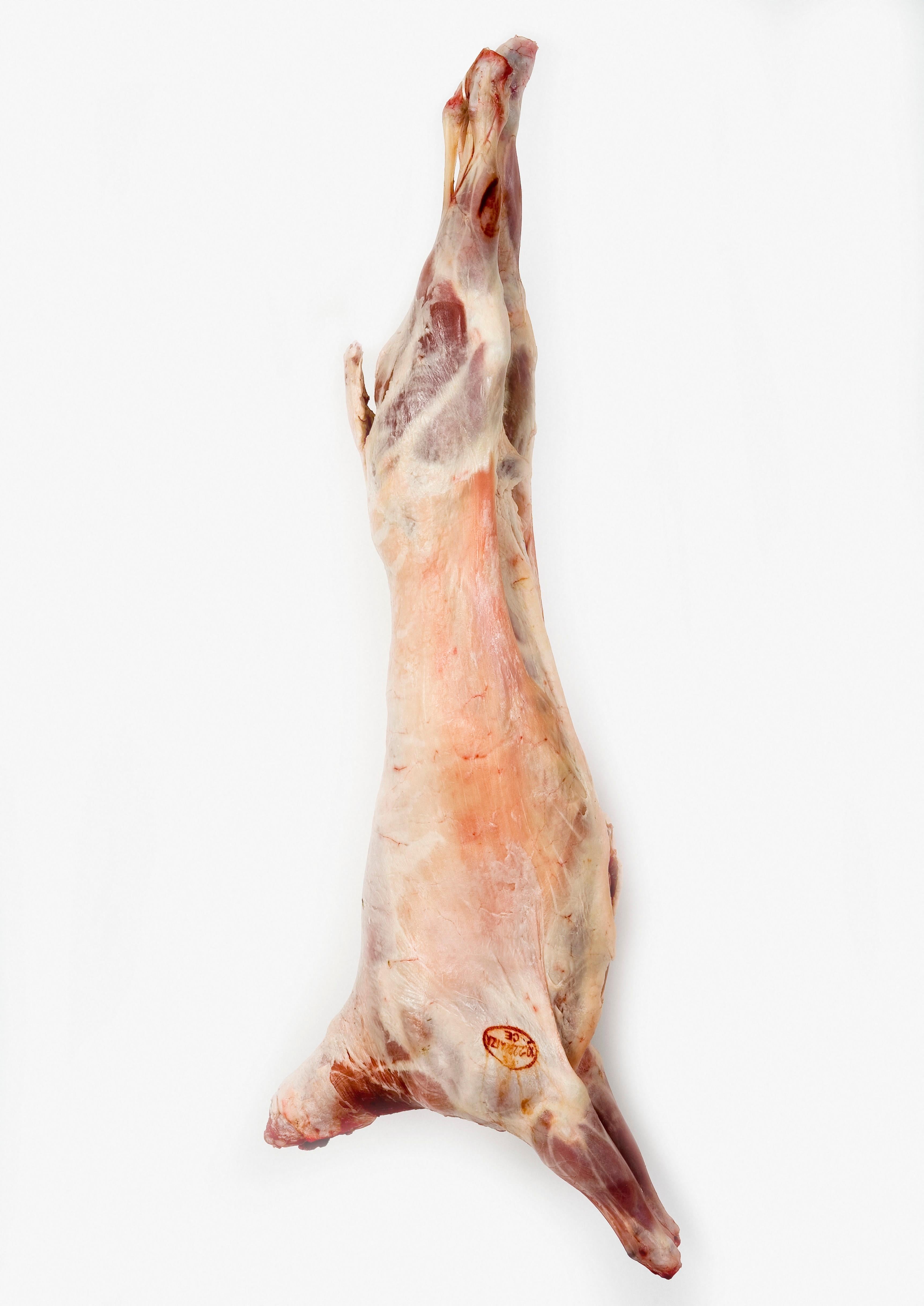
Pastured Lamb Roast and Slow-Cook Box
Frequently Grazed Questions
Is grass-fed beef actually healthier than grain-fed?
Yes, and the difference is significant. Grass-fed beef contains 2 to 5 times more omega-3 fatty acids than grain-fed, up to 500% more conjugated linoleic acid (CLA), and three times more vitamins A, D and E. The omega-3 to omega-6 ratio sits at a healthy ~1:2, compared to ~1:10 in grain-finished beef. That's why grass-fed fat has a golden hue, it's beta-carotene from the pasture.
Is grass-fed beef the same as grass-finished beef?
Not always, and that's the catch. "Grass-fed" can legally mean an animal that ate grass for part of its life and was finished on grain in a feedlot to fatten quickly. Grass-finished means 100% pasture from birth to harvest. Your Farmer beef is grass-fed AND grass-finished, every animal, no exceptions, no grain ever. If a label only says "grass-fed", ask the question.
Are pasture-raised eggs more nutritious than free-range?
Yes, and "free-range" usually doesn't mean what people think. Truly pastured eggs contain 2.5 times more omega-3, 7 times more beta-carotene, twice the vitamin E, and significantly more lutein than conventional eggs. Most "free-range" hens live in giant sheds with optional outdoor access; truly pastured hens (like Sam's at Ecolibrium Farm) rotate across grass daily, eating insects, worms and forage as nature designed. The deep orange yolk is the proof.
What's the difference between organic and eco-grown?
Organic measures what's NOT in your food, a list of banned synthetic inputs. Eco-grown measures what IS, eight ecological outcomes including living soil, water cycles, biodiversity, animal welfare and farmer wellbeing. A certified-organic paddock can still have depleted soil and stressed animals; an eco-grown farm has to prove the land is improving year on year. Eco-grown is outcomes-based, peer-reviewed, and audited against the Your Farmer Certified standard.
Why does ecological farming produce more nutrient-dense food?
It starts with the sun. Plants on healthy soil photosynthesise and release sugars into the ground. Those sugars feed bacteria, fungi and microbiology, and that biology converts the soil into the exact nutrition the plant needs. Animals eat that grass, and you eat that animal. Living soil = living food. Depleted soil grows depleted plants and depleted meat, even if the label says "organic."
What is Bovaer®10 and why doesn't Your Farmer use it?
Bovaer®10 is a synthetic feed additive given to cattle to reduce methane burps. It's been approved for use in Australian dairy and beef. We don't use it, and we never will, our cattle eat pasture, full stop. We don't add anything synthetic to their diet, including methane reducers. If you don't want experimental compounds in your beef, that's a vote for grass-finished from named farms.
Are eco-grown vegetables really worth the extra cost?
Eco-grown produce contains, on average, 27% more antioxidants than conventional (range 19–69% depending on the antioxidant class), and eco-grown leafy greens are a leading source of vitamin K1 (phylloquinone)—essential for bone strength and cardiovascular health. There are zero synthetic pesticide residues, the kind that disrupt digestion, hormones and neurological development in kids. And because the soil is alive, the flavour comes through properly. Once your kids taste a real carrot, the supermarket version becomes a hard sell.
How much does a Your Farmer box cost?
A Your Farmer half share is $159 a box on subscription, about $37 a week. That's less than a pizza night, less than a casual cafe lunch, and infinitely more nourishing. Eco-grown isn't premium, industrial food has been artificially cheap all along. When you factor in better energy, fewer doctor visits, and knowing your kids are properly nourished, the math is simple.
Does grass-fed beef contain more omega-3 than salmon?
Per gram, no, salmon is still the omega-3 king. But grass-fed beef contains 2 to 5 times more omega-3 than grain-fed, with a much healthier omega-3 to omega-6 ratio of around 1:2. For families who don't eat fish three times a week, grass-fed beef is one of the easiest ways to lift your kids' omega-3 intake without supplements.
References
- Daley, C. A., Abbott, A., Doyle, P. S., Nader, G. A., & Larson, S. (2010). A review of fatty acid profiles and antioxidant content in grass-fed and grain-fed beef. Nutrition Journal, 9(1), 10. https://doi.org/10.1186/1475-2891-9-10
- Krusinski, L., Sergin, S., Jambunathan, V., Rowntree, J. E., & Fenton, J. I. (2022). Attention to the Details: How Variations in U.S. Grass-Fed Cattle-Feed Supplementation and Finishing Date Influence Human Health. Frontiers in Sustainable Food Systems, 6. https://doi.org/10.3389/fsufs.2022.851494
- Descalzo, A. M., Insani, E. M., Biolatto, A., Sancho, A. M., García, P. T., Pensel, N. A., & Josifovich, J. A. (2005). Influence of pasture or grain-based diets supplemented with vitamin E on antioxidant/oxidative balance of Argentine beef. Meat Science, 70(1), 35–44. https://doi.org/10.1016/j.meatsci.2004.11.018
- Karsten, H. D., Patterson, P. H., Stout, R., & Crews, G. (2010). Vitamins A, E and fatty acid composition of the eggs of caged hens and pastured hens. Renewable Agriculture and Food Systems, 25(1), 45–54. https://doi.org/10.1017/S1742170509990214
- Sergin, S., Jambunathan, V., Garg, E., Rowntree, J. E., & Fenton, J. I. (2022). Fatty Acid and Antioxidant Profile of Eggs from Pasture-Raised Hens Fed a Corn- and Soy-Free Diet and Supplemented with Grass-Fed Beef Suet and Liver. Foods, 11(21), 3404. https://doi.org/10.3390/foods11213404
- Barański, M., Średnicka-Tober, D., Volakakis, N., Seal, C., Sanderson, R., Stewart, G. B., Benbrook, C., Biavati, B., Markellou, E., Giotis, C., Gromadzka-Ostrowska, J., Rembiałkowska, E., Skwarło-Sońta, K., Tahvonen, R., Janovská, D., Niggli, U., Nicot, P., & Leifert, C. (2014). Higher antioxidant and lower cadmium concentrations and lower incidence of pesticide residues in organically grown crops: A systematic literature review and meta-analyses. British Journal of Nutrition, 112(5), 794–811. https://doi.org/10.1017/S0007114514001366
- Damon, M., Zhang, N. Z., Haytowitz, D. B., & Booth, S. L. (2005). Phylloquinone (vitamin K1) content of vegetables. Journal of Food Composition and Analysis, 18(8), 751–758. https://doi.org/10.1016/j.jfca.2004.07.004
- Bouchard, M. F., Bellinger, D. C., Wright, R. O., & Weisskopf, M. G. (2010). Attention-Deficit/Hyperactivity Disorder and Urinary Metabolites of Organophosphate Pesticides. Pediatrics, 125(6), e1270–e1277. https://doi.org/10.1542/peds.2009-3058
Didn't find your answer?
Don't hesitate to contact us