

Real Families, Real Results
Here's what families across NSW and ACT are saying about knowing their farmers.
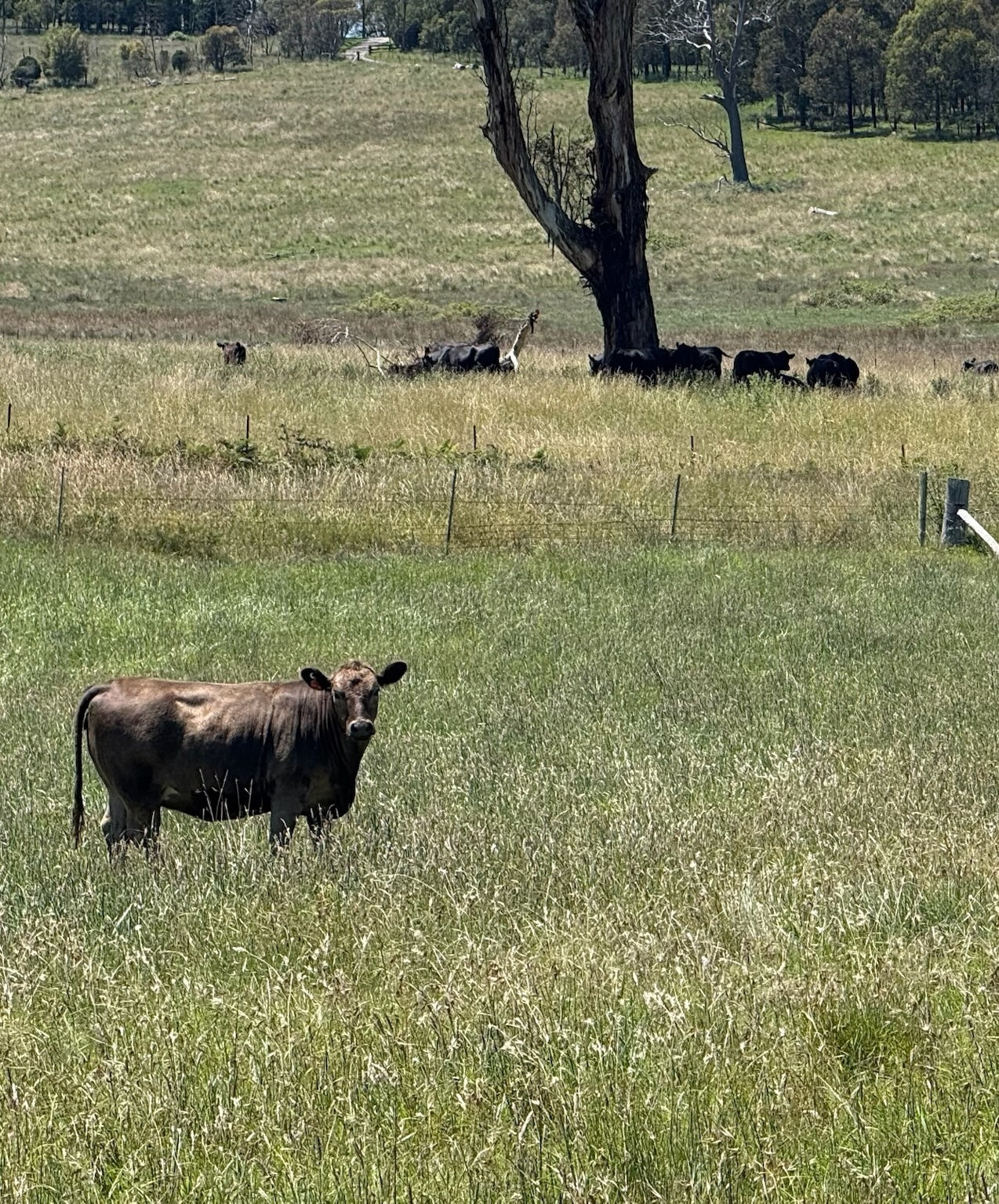
Grass-Fed Beef
The steak that actually tastes like beef used to taste.
Our cattle spend their entire lives on open pasture — grazing on diverse, ecologically managed grasslands. They're never fed grain, never given antibiotics, and never finished in a feedlot. The result is beef with deeper colour, richer flavour, and a nutritional profile that supermarket mince simply can't match.
Grass-fed beef is naturally higher in omega-3 fatty acids — the same heart-healthy fats found in salmon. It contains up to five times more conjugated linoleic acid (CLA), which research links to reduced inflammation. It's also richer in antioxidants like vitamin E and beta-carotene, the reason the fat has that distinctive golden hue rather than bright white.
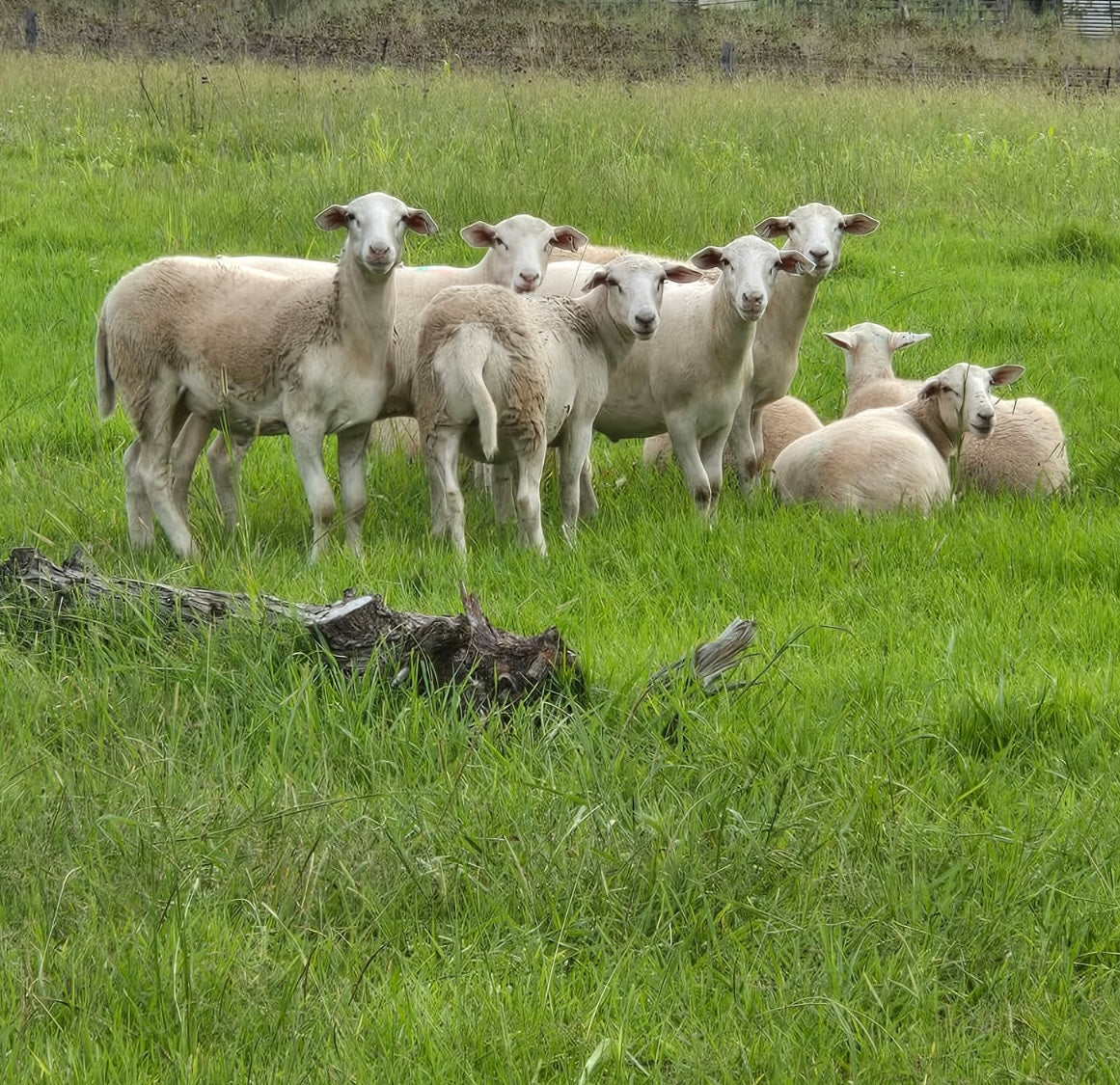
Grass-Fed Lamb
The lamb that tastes like terroir — the pasture in every bite.
Lamb from pasture-only diets carries the flavour of the land. Our lambs graze on diverse, seasonal pasture in the Southern Highlands — eating native grasses, legumes, and herbs that give the meat its distinctive mineral-rich taste. They're never confined, never given antibiotics, never stressed.
Pasture-raised lamb is 50% higher in CLA than grain-fed, with better omega-3 balance. It contains significant levels of selenium, zinc, and B vitamins. The colour difference is visible — you'll see the difference in the meat.
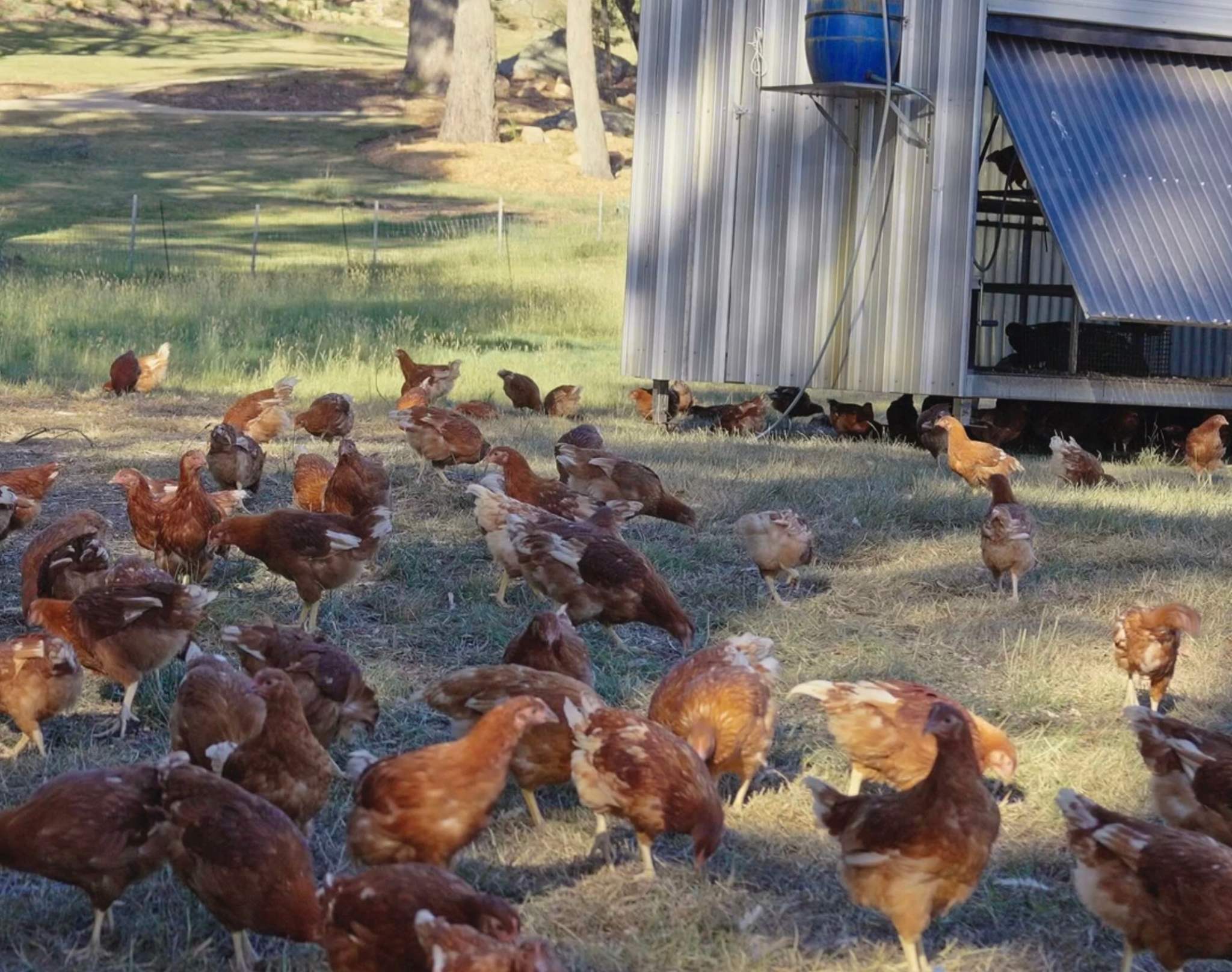
Pastured Eggs
The yolk that stops you mid-bite. That's how you know it's real.
Our hens rotate across pasture daily, eating grass, insects, and worms — the diet that evolution designed them for. Not a barn with a door. Not a cage. Pasture. The bright orange yolk isn't a surprise — it's evidence of what the birds have actually eaten.
Pastured eggs contain 7 times more beta-carotene, 3 times more omega-3, and twice the vitamin E. The yolk is larger, richer, and the protein structure is different at the molecular level. Once you taste the difference, supermarket eggs become impossible to go back to.
Raw Honey
The honey that's still alive — enzymes, pollen, and all.
Raw honey is living food. Ours is never heated, never filtered beyond simple settling, never pasteurised. It contains active enzymes, raw pollen, and propolis — the very things that make honey a medicinal food. Most commercial honey is heated to 60°C or higher, which destroys these compounds.
Our bees forage on the wildflowers and pasture native to the Southern Highlands. The taste changes month to month — that variation is a sign that you're eating real honey, not a standardised product.
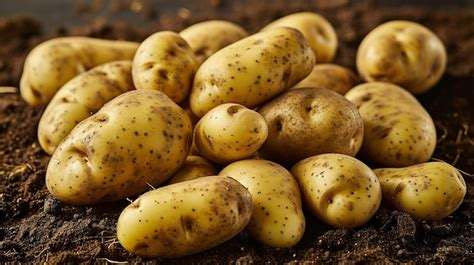
Eco-Grown Potatoes
The potato that comes from soil, not a chemical sheet.
Grown in soil we've been building through rotations and cover crops. These potatoes taste different because they've grown in living soil — soil full of biology, not just chemistry. They're denser, with better starch ratios and a deeper flavour.
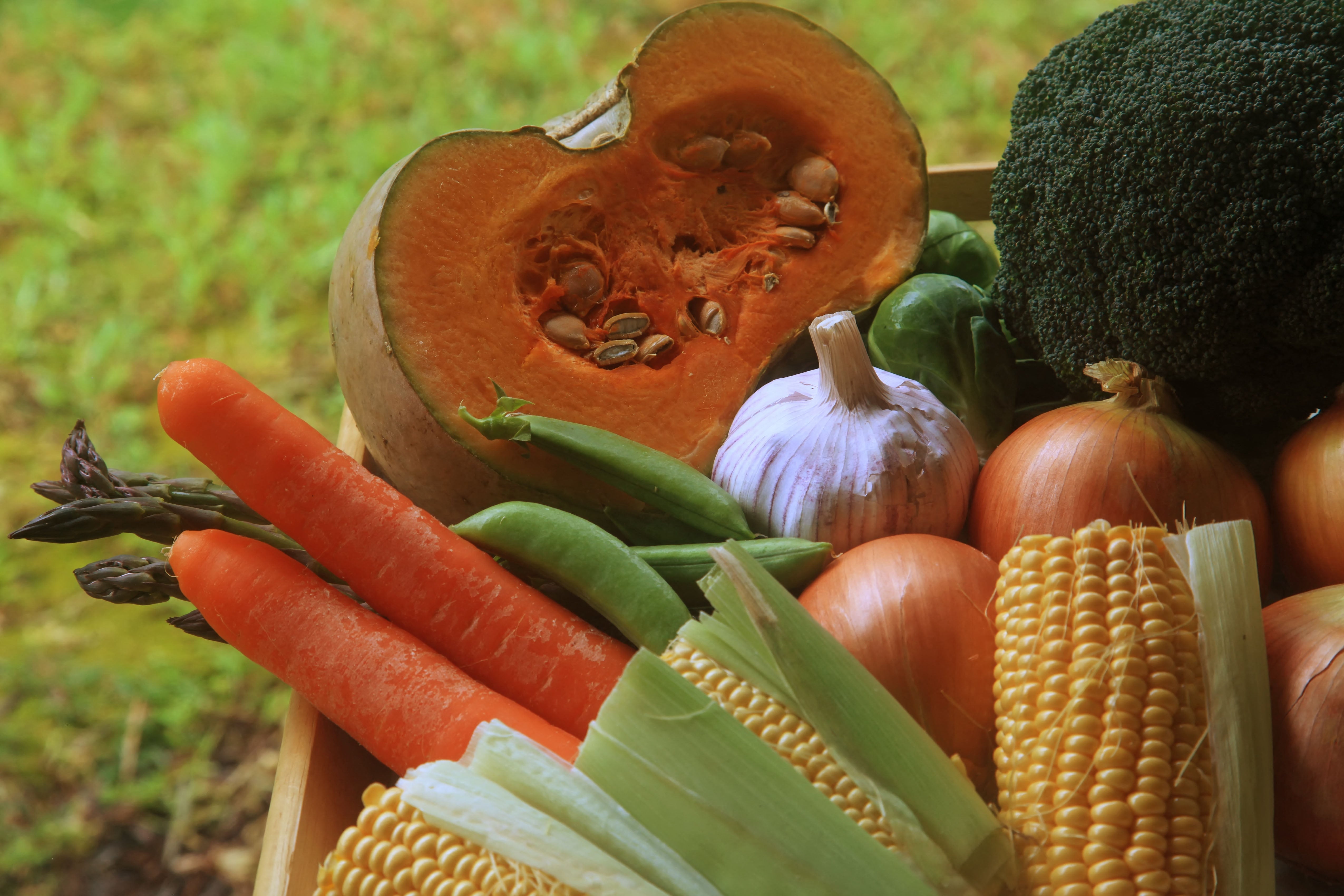
Seasonal Produce & Veggie Box
The vegetables that actually taste like vegetables.
Our vegetable box changes with the seasons because that's how real farming works. You get what the land is producing at its peak — maximum flavour, maximum nutrition. No strawberries in July. No tomatoes in winter. Just the best the farm is offering right now.
Grown in soil we've been building for over a decade. No synthetic pesticides, no GMOs, no shortcuts. We measure soil biology — the fungi, bacteria, and organisms that make vegetables actually nutritious. That's why the taste is different, and why families tell us their kids suddenly eat vegetables without complaining.
Get Your Box Today
Three steps from our paddock to your plate
Choose Your Box
Browse our CSA plans or fixed packs. Beef, lamb, eggs and produce, with honey and biodynamic wines coming soon.
Make It Yours
Pick how often we deliver to your door, while also customising your box with extra good stuff: Beef, lamb, eggs, produce and more.
We Deliver, You Savour
Our team brings it to your door in a reusable esky we collect next time. No couriers, no waste - just food from farmers you know by name.
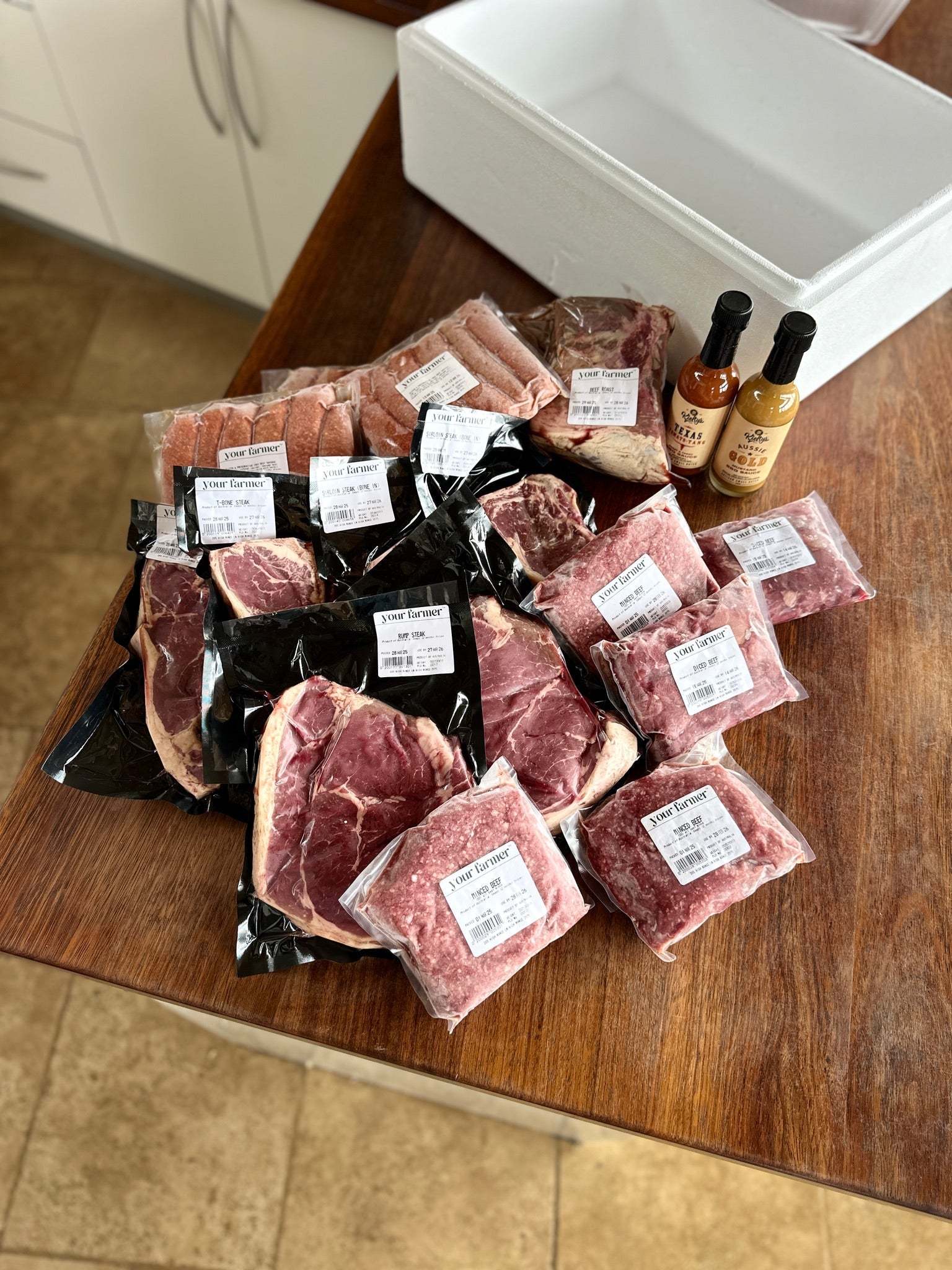
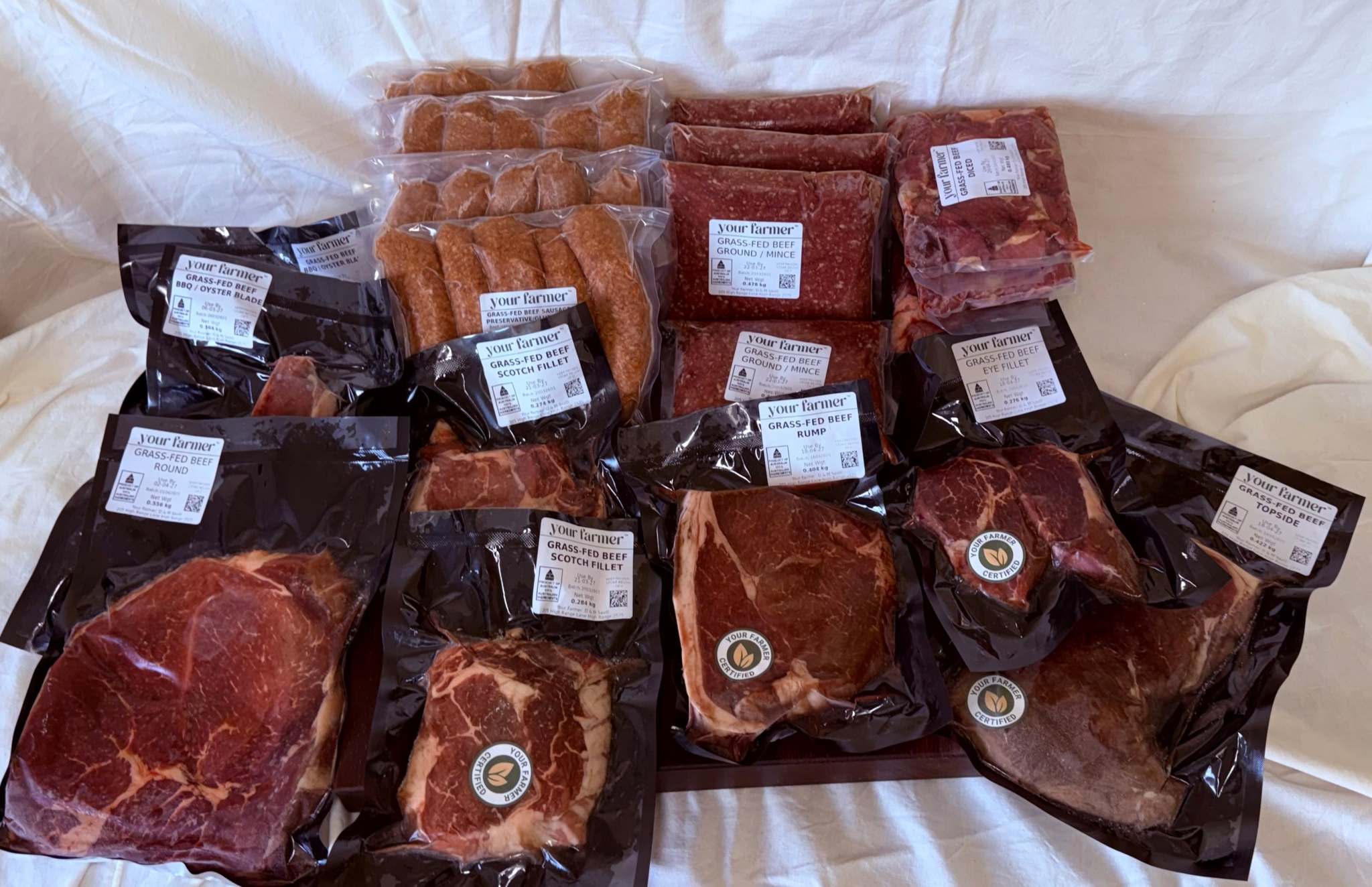

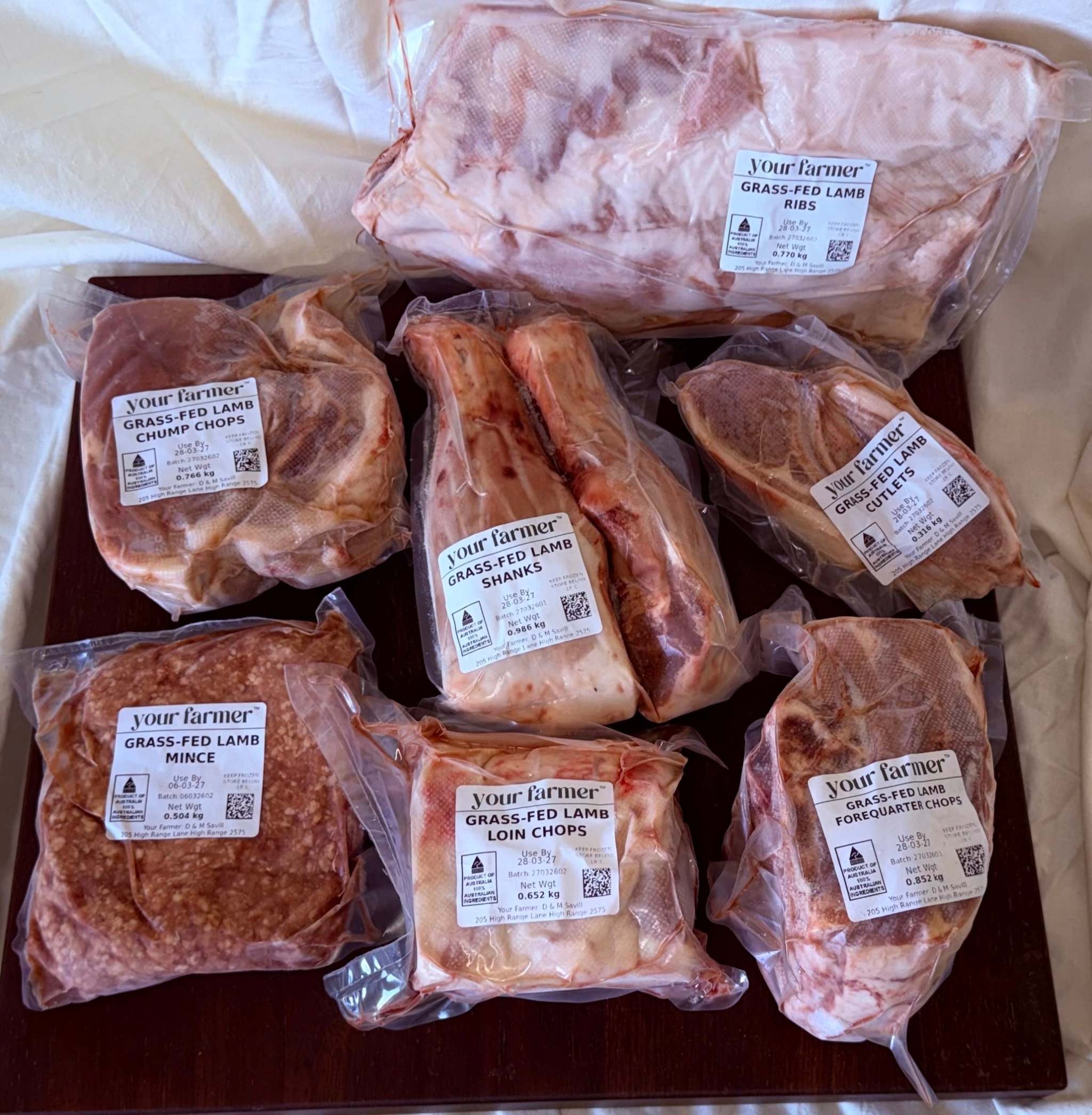
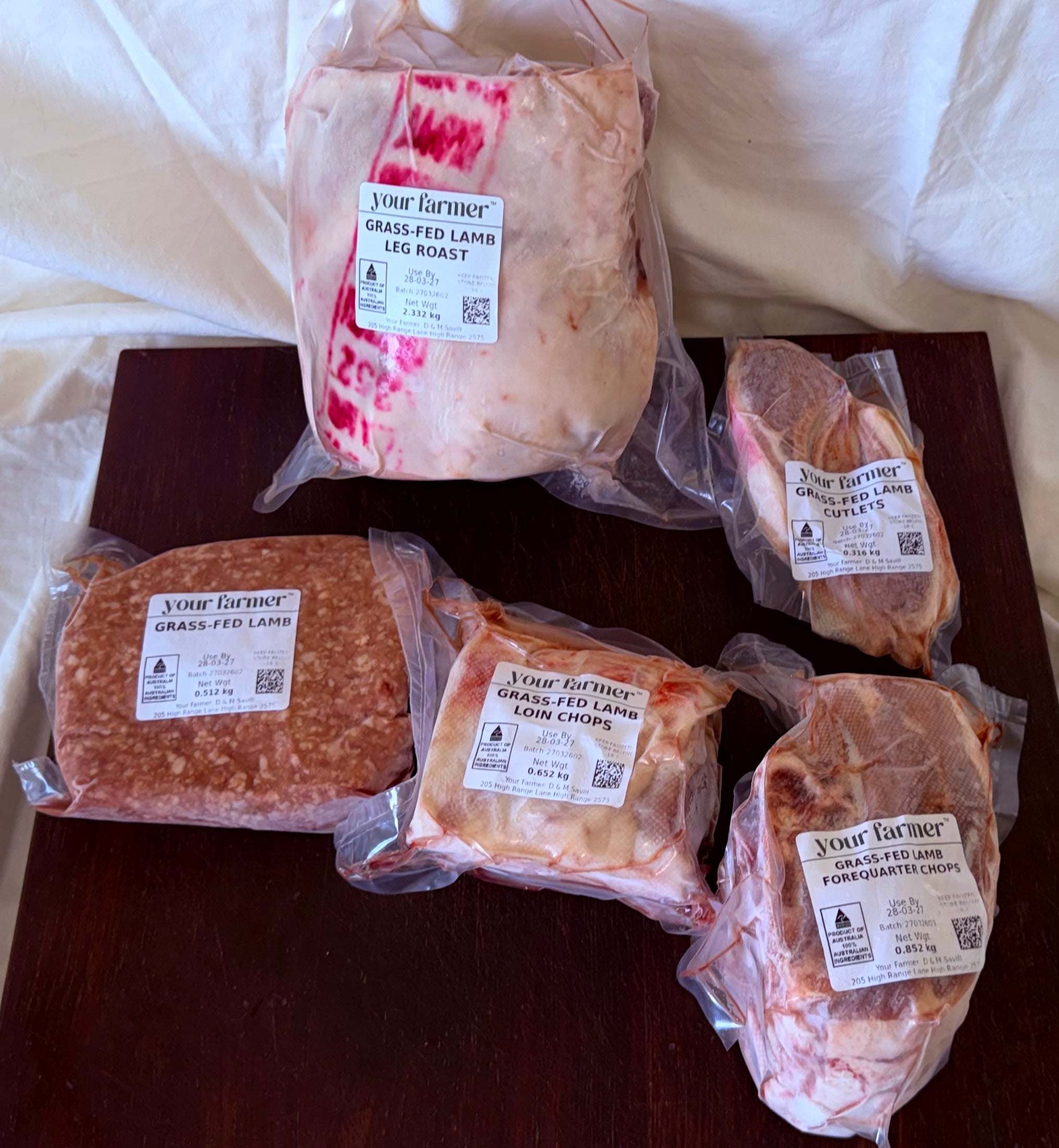
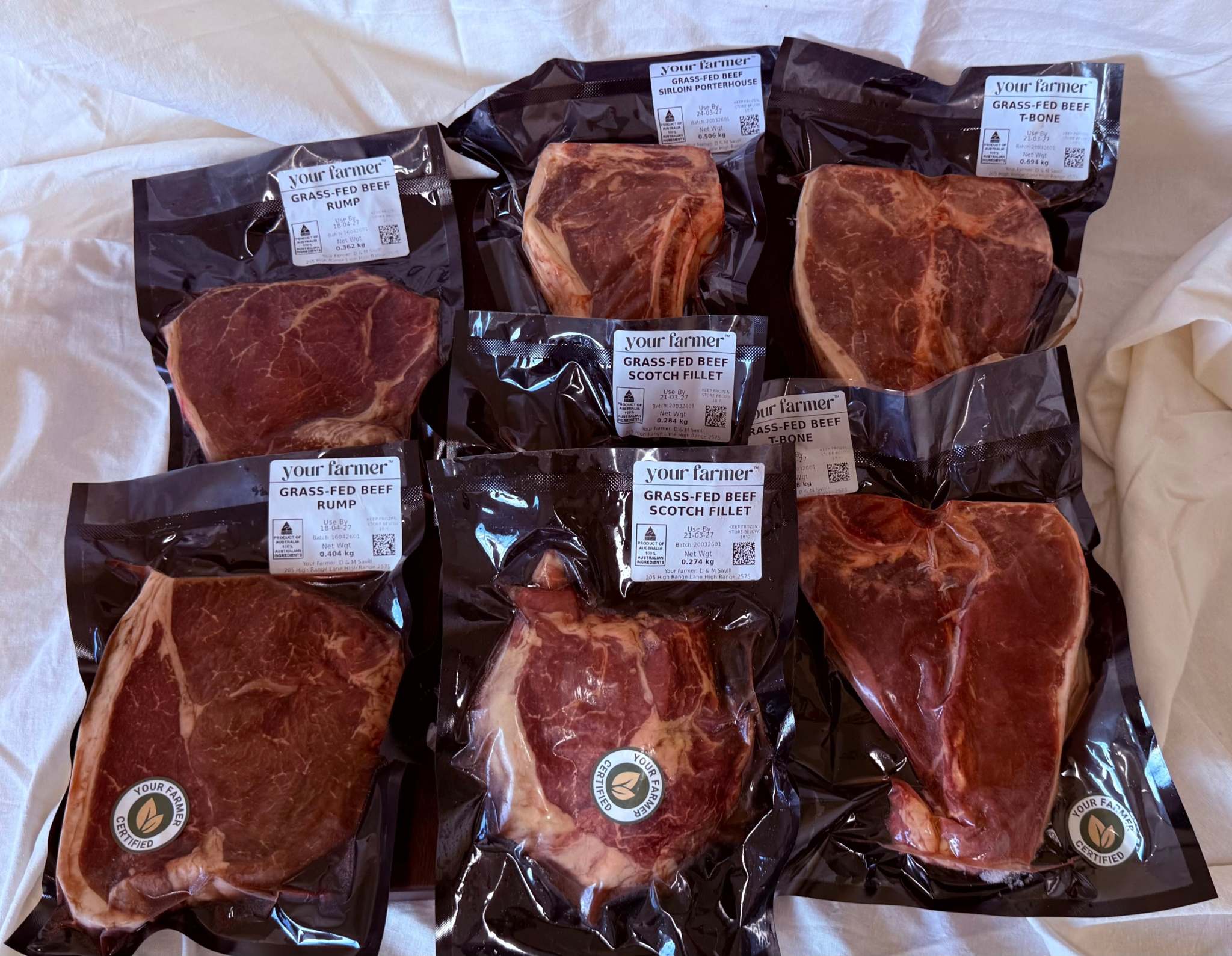
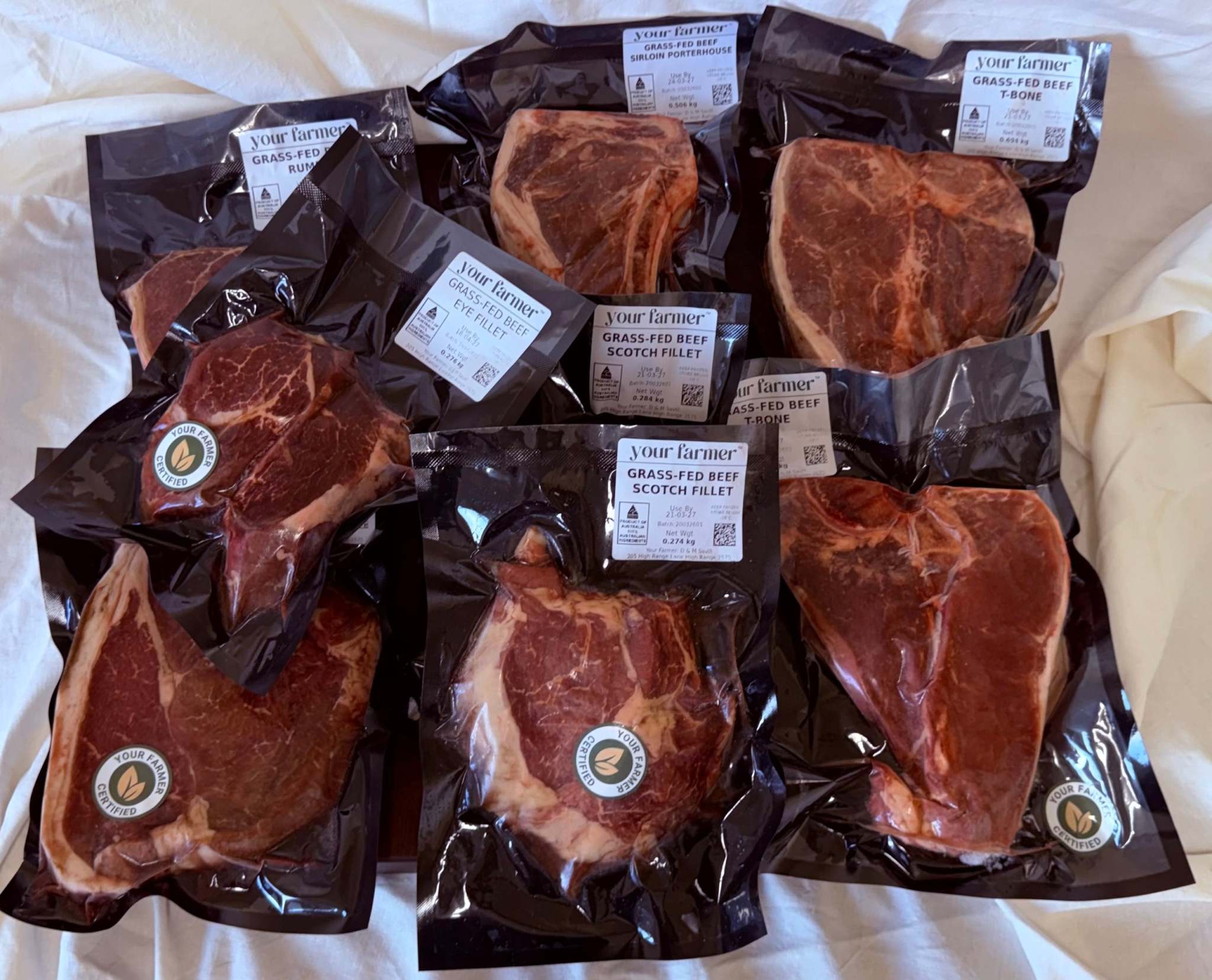
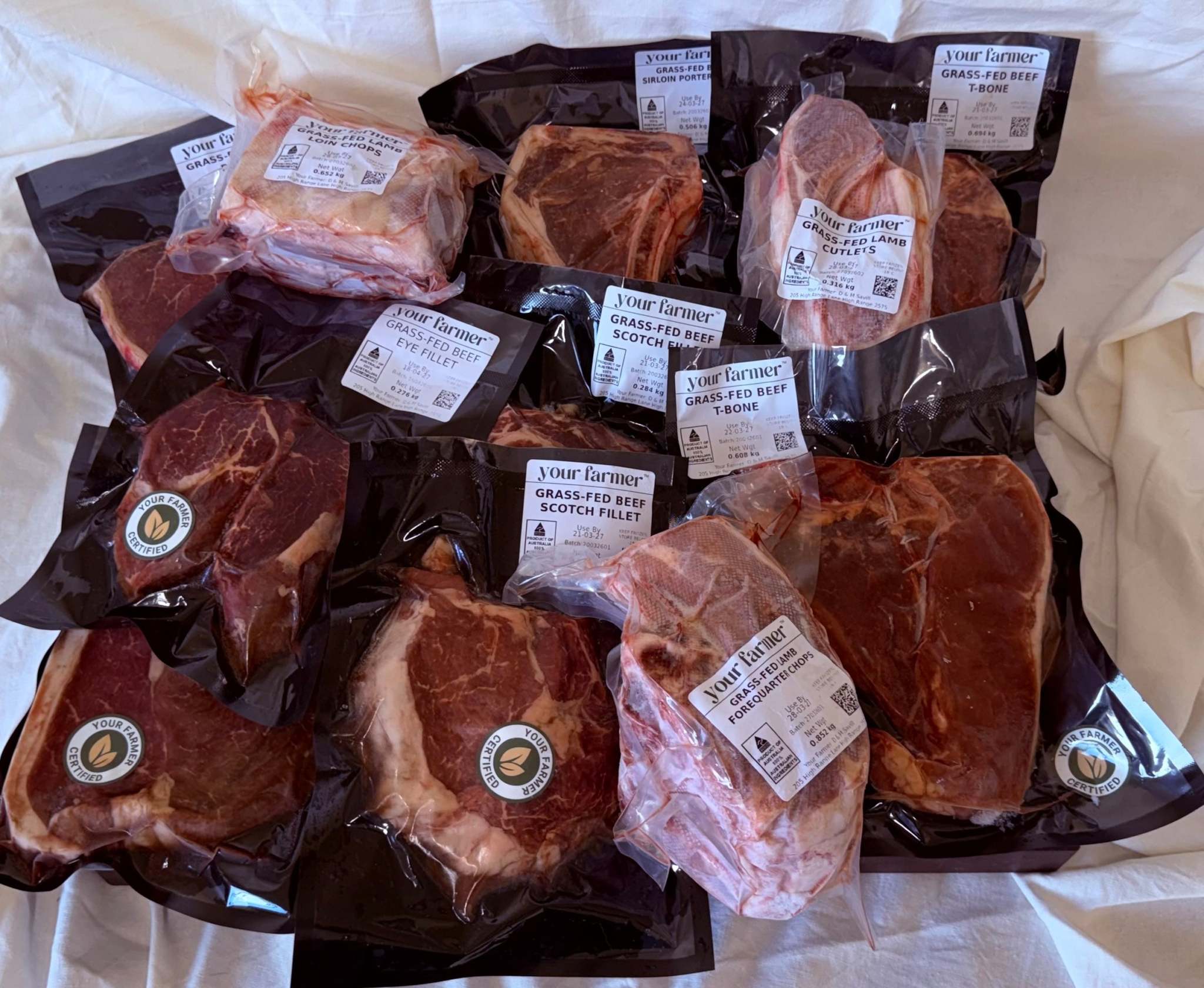
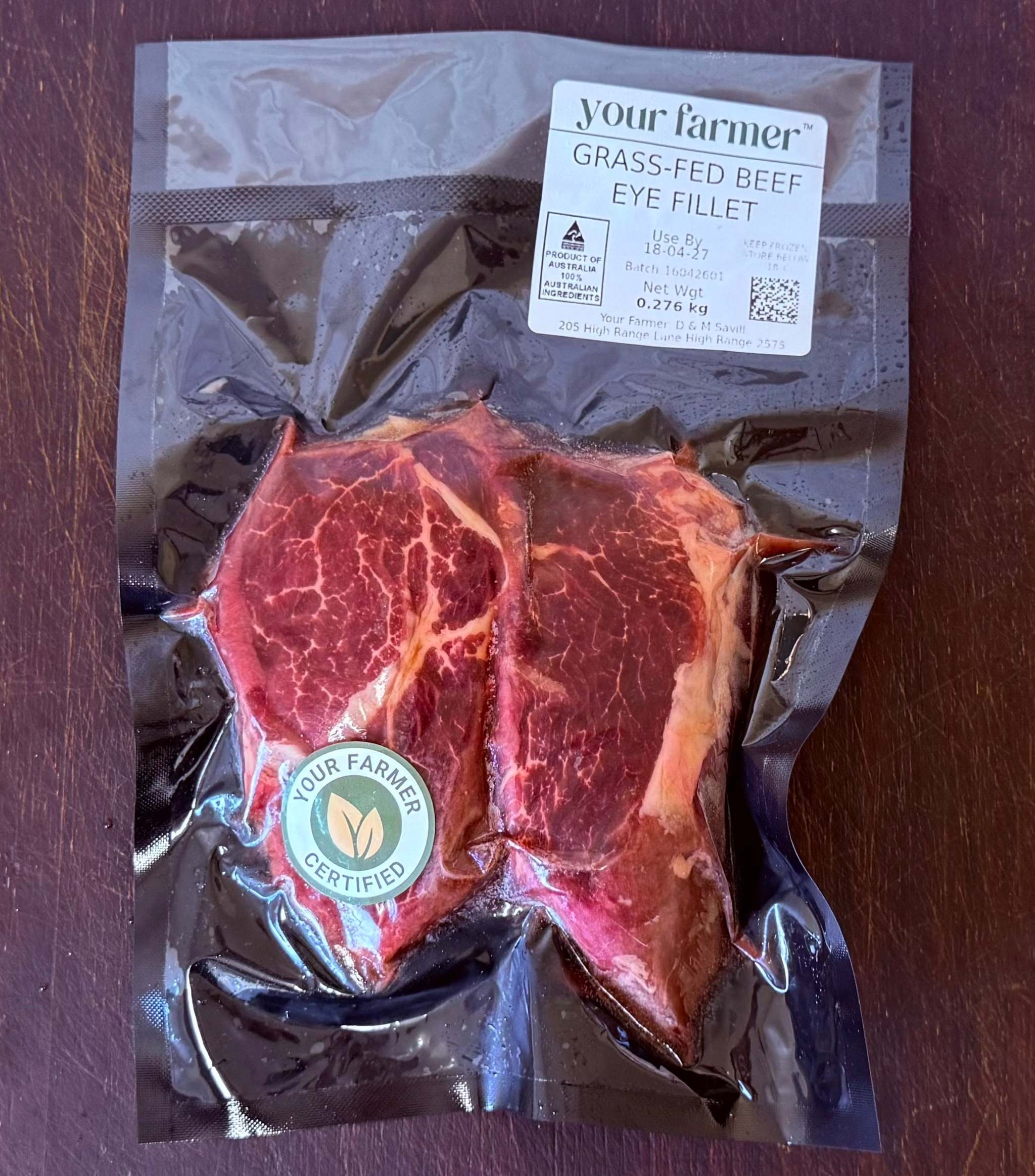
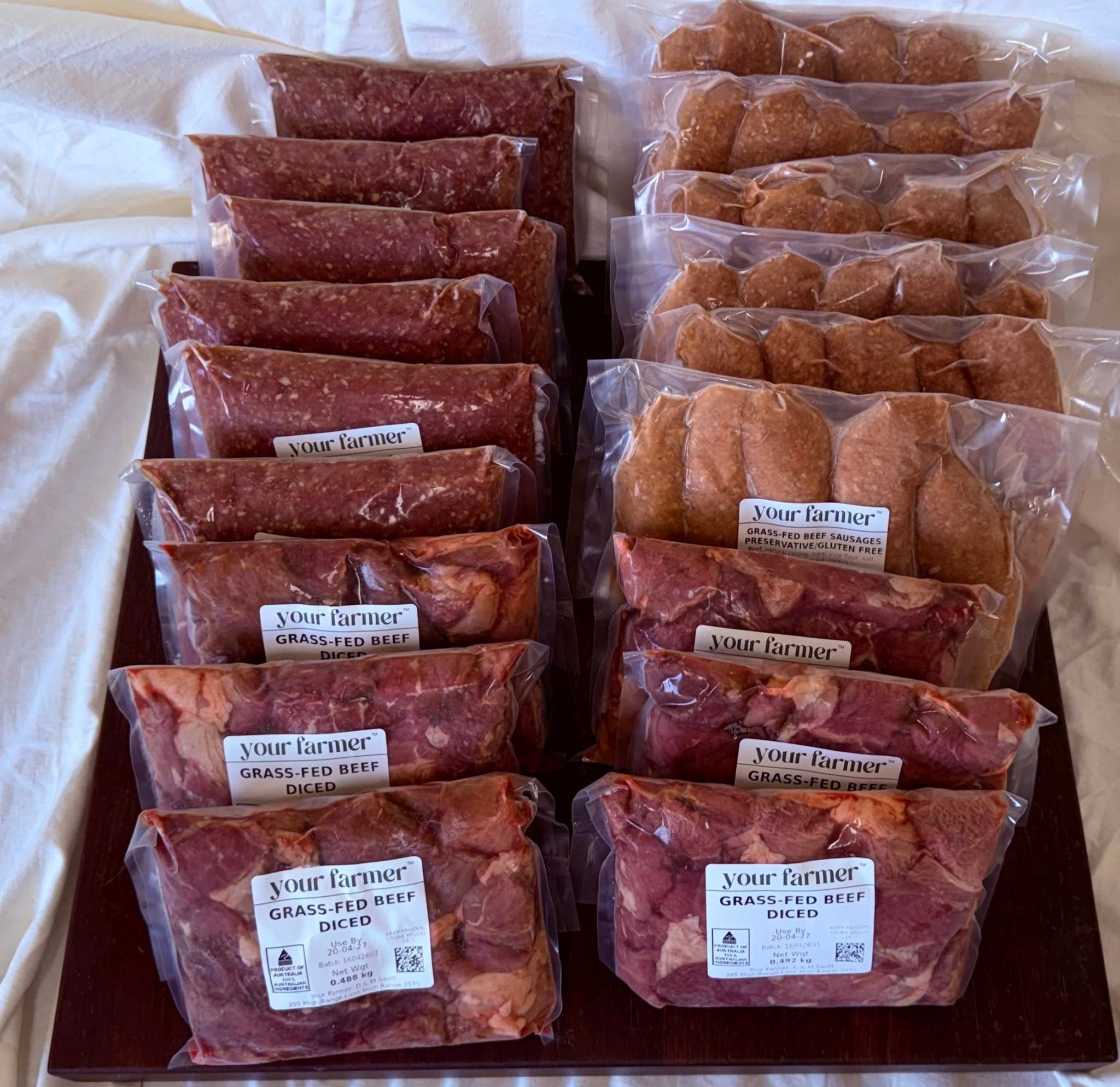
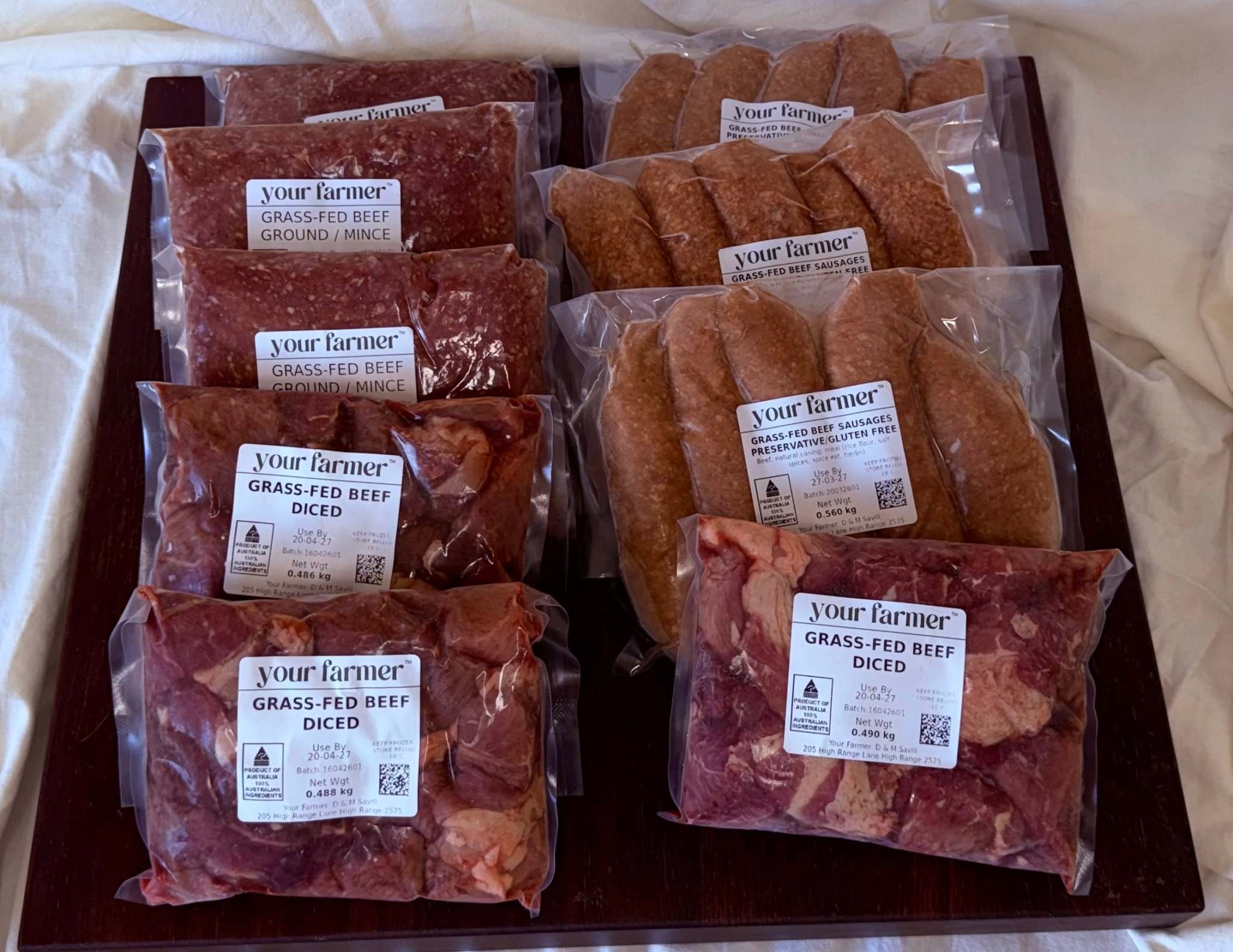
Grass-Fed Mince, Sausage and Diced Beef Pack
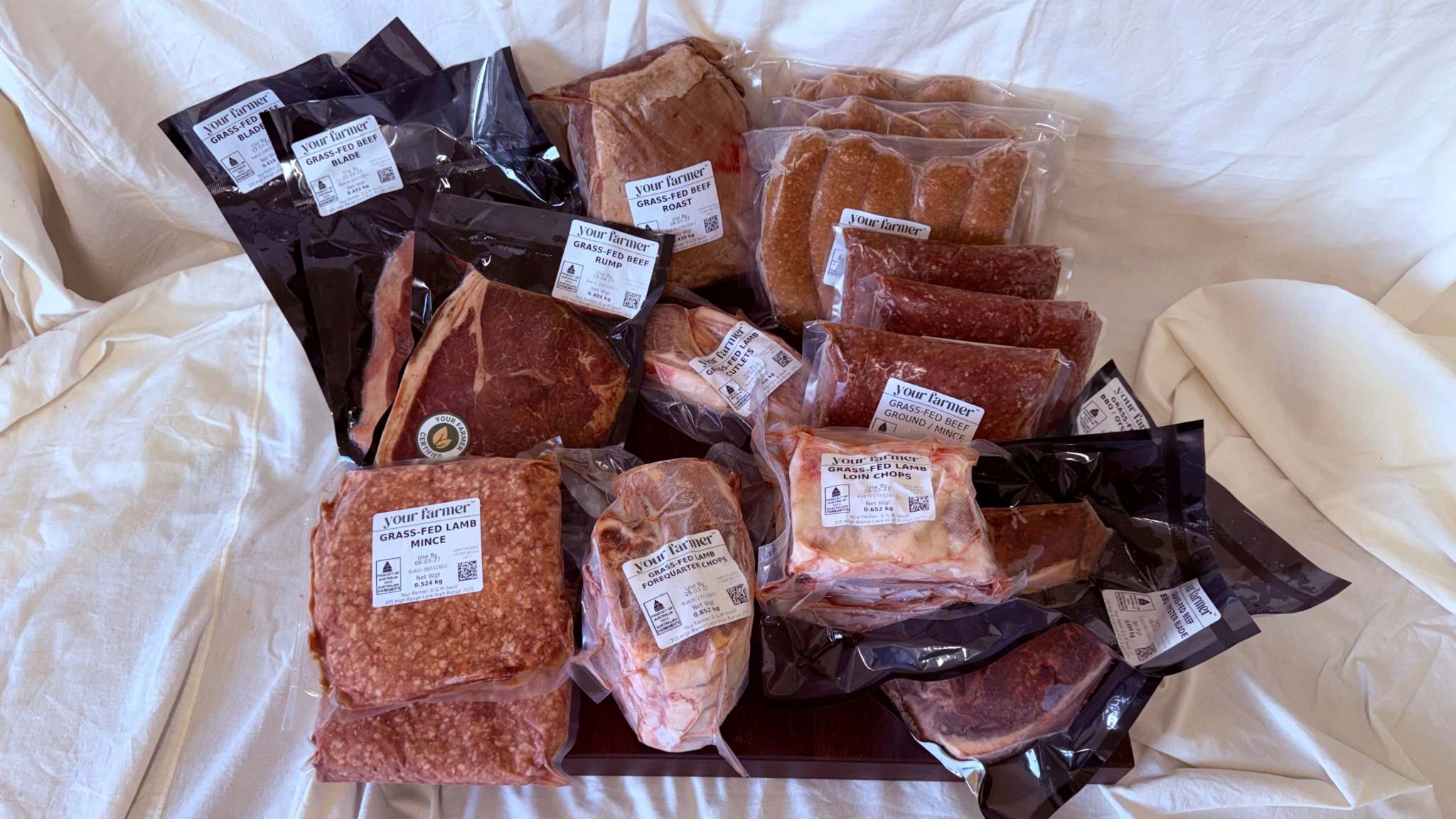
Grass-Fed Beef and Lamb BBQ Box
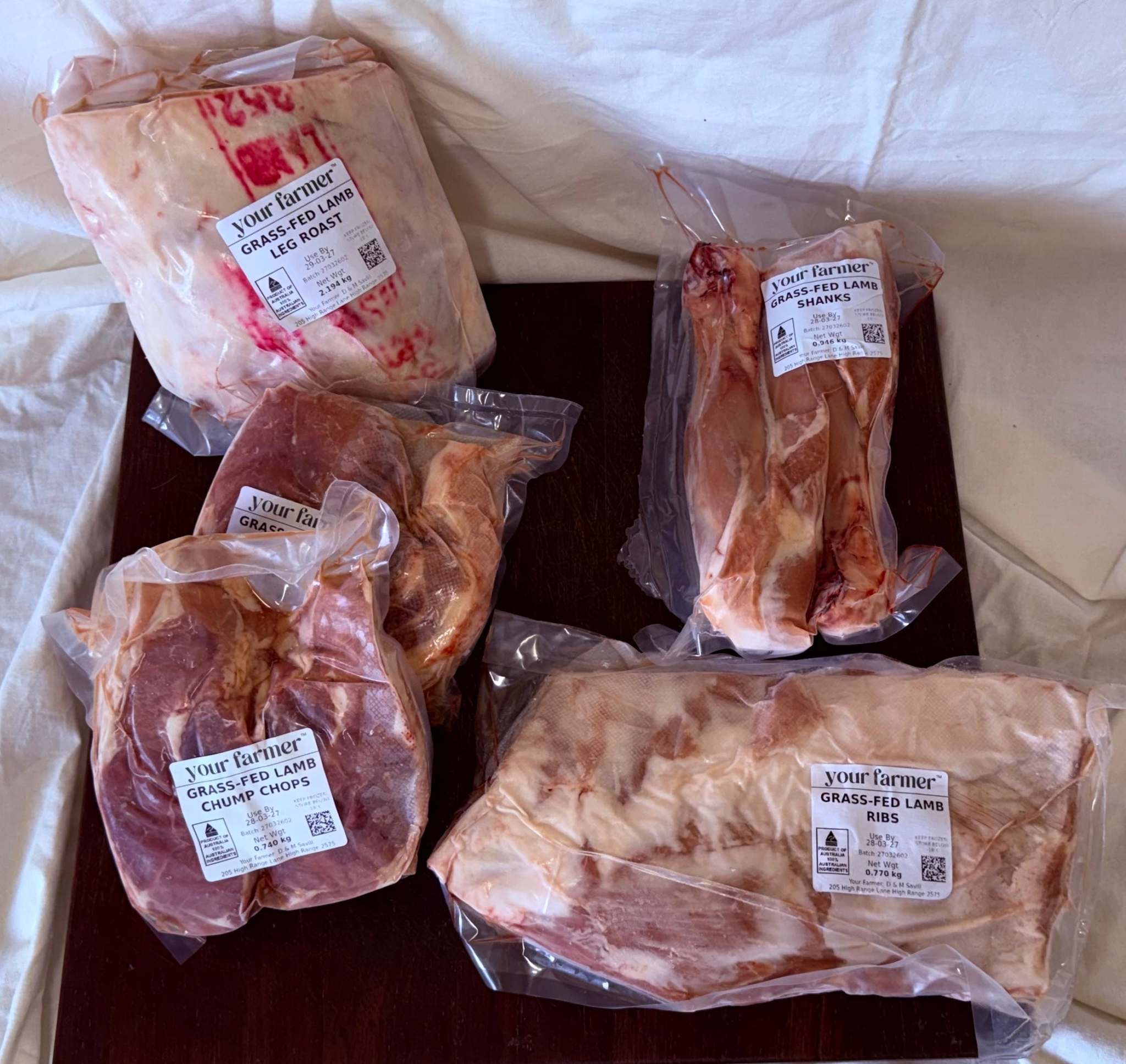
Pastured Lamb Roast and Slow-Cook Box
Most of us have no idea what's actually in the meat, eggs, and vegetables we eat. Supermarket labels say "grass-fed" but the animal finished on grain. They say "free range" but the hens never left the shed. You shouldn't need a science degree to feed your family real food.
David Savill - Founding Farmer
THE SCIENCE OF CLEAN FOOD
Why we never use chemicals, GMOs, or synthetic inputs
David explains the reasoning behind Your Farmer’s commitment to growing without chemicals or genetic modification — and why healthy soil biology makes them unnecessary.

Frequently Grazed Queries
What does Your Farmer's grass-fed beef taste like compared to supermarket beef?
Grass-fed, grass-finished beef has a deeper colour, a richer beefy flavour, and golden-tinged fat (that's beta-carotene from the pasture, not yellowing). Slow-grown to 24–30 months on diverse, ecologically managed grasslands so the flavour properly develops. Most supermarket beef is finished on grain in a feedlot for fast weight gain, that produces milder, fatter, less complex meat. Our beef tastes like beef used to taste.
Why are Your Farmer eggs orange-yolked?
The deep orange yolk is evidence of what the bird actually ate, grass, insects, worms, and pasture forage. Pale yellow yolks come from commercial grain-and-pigment feed, not real diet. Our hens at Ecolibrium Farm rotate across pasture daily, the way evolution designed. Once you taste a real pastured egg with a properly orange yolk, supermarket eggs become impossible to go back to.
Is grass-fed lamb actually different from supermarket lamb?
Yes, and the difference is bigger than beef's. Pasture-raised lamb is 50% higher in CLA, with a better omega-3 balance, more selenium, zinc and B-vitamins. Our lambs graze on diverse Southern Highlands pasture, native grasses, legumes and herbs, which gives the meat its mineral-rich, terroir-driven flavour. They're never confined, never given antibiotics, never stressed. You can taste the country in the meat.
What is raw honey, and why is Your Farmer's different?
Raw honey is honey that's never been heated above 40°C, never filtered beyond simple settling, and never pasteurised. That keeps the active enzymes, raw pollen and propolis intact, the things that make honey medicinal as well as delicious. Most commercial honey is heated to 60°C or higher, which destroys those compounds. Our bees forage on the wildflowers and pasture native to the Southern Highlands, so the taste shifts month to month. That variation is the proof.
Why are Your Farmer's seasonal vegetables only available some months?
Because that's how real farming works. We deliver what the land is producing at its peak, maximum flavour, maximum nutrition. No strawberries in July. No tomatoes in winter. Just whatever the farm is offering right now. Our produce comes from Mussett Holdings, grown in soil we've been building for over a decade. No synthetic pesticides, no GMOs, no shortcuts.
What are eco-grown potatoes and how are they different?
Eco-grown potatoes are grown in living soil, soil full of biology, not just chemistry. Through years of crop rotation and cover crops, Mussett Holdings have built a soil ecosystem that produces denser, more flavourful potatoes with better starch profiles. No synthetic fertiliser. No fungicides. Once you cook with one, you'll notice the difference, and so will your kids.
Why does Your Farmer publish nutrition data per food type?
Because we love science. Most labels stop at "free-range" or "organic", we research the omega-3 levels beef, the CLA in lamb, the beta-carotene in eggs, and the antioxidants in produce. Then we design ecosystems to make that the best it can be. When the soil is alive, the food is more nutrient-dense, and we want you to see the numbers. Living soil grows living food. The science backs it up.
What does ProCryo do to Your Farmer's meat?
ProCryo is our blast-freezing process, meat is dropped to -18°C in under two hours, then vacuum-sealed. That stops ice crystals from damaging the cells, locks in nutrients at peak, and means no water-weight added to the pack (unlike a lot of "fresh" supermarket meat, which has water injected). When you want it, just chuck it in the fridge to thaw and it's ready to roll. It takes us a long longer and more cost to process this way, but its better than a a steak in a bag, so we put the effort in
Didn't find your answer?
Don't hesitate to contact us