

Recipes
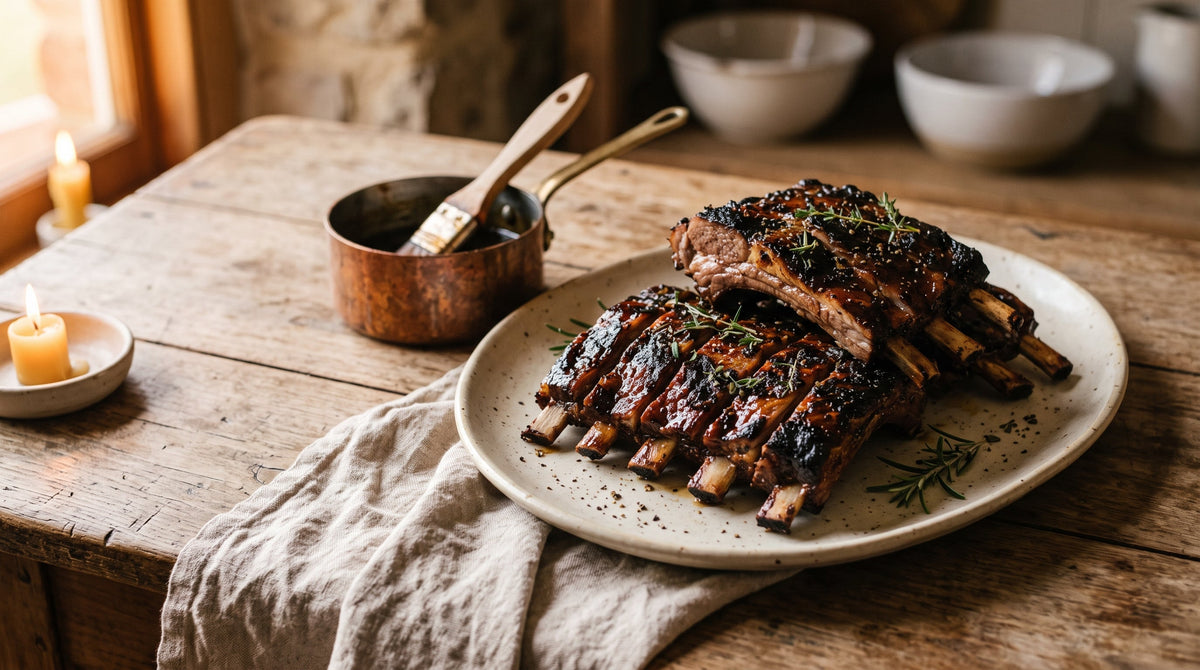
Twice-Cooked Lamb Ribs: Braise, Then Char
The restaurant trick: do the hard part yesterday, take the applause tonight
Ever wondered how a restaurant sends out perfect sticky ribs eight minutes after you order them? They cooked the ribs yesterday. The racks get braised in stock and aromatics until tender, then cooled in their own liquid — where they firm up, drink back flavour, and wait as long as you need. Come dinner time, all that's left is a hot grill pan, a honey glaze made from the braising liquid, and about ten minutes of theatre. It's the most reliable rib method there is, and the only one where the night-of cooking fits between guests arriving and the first drink being finished.

Osso Buco-Style Braised Chump Chops with Gremolata
The Milanese treatment — chops braised low in white wine and tomato, lifted at the end by lemony gremolata
Osso buco is Milan's great braise, and the finishing touch is what makes it: gremolata, a raw scatter of lemon zest, garlic and parsley chopped fine, stirred in right at the end. Against an hour and a half of slow, rich braising, that fresh, sharp hit is a revelation — it stops the whole thing feeling heavy and makes you reach for another spoonful. Lamb chump chops stand in beautifully for the traditional veal shin here, their fat and connective tissue melting into a glossy sauce over soft polenta. It takes time, but almost none of it is yours. This is a dish to be proud of.
Read moreabout Osso Buco-Style Braised Chump Chops with Gremolata

T-Bone with Bearnaise from Scratch
The sauce that turns a steak into an occasion
Béarnaise has a reputation as chef's territory — it isn't. It's three egg yolks, a sharp tarragon reduction and a stream of warm butter, whisked over gentle heat until it turns thick, glossy and faintly wobbly. Twenty minutes of honest attention, most of it while the steak rests. And there's no better steak to learn it on than a grass-fed T-bone: the fillet side was born for béarnaise, and the sirloin side isn't far behind. This is occasion cooking you can pull off on an ordinary Saturday.

Sticky Asian-Braised Lamb Shanks with Star Anise and Orange
Red-braising the shank until it's lacquered, glossy and falling off the bone
Chinese red-braising is one of the great slow-cooking techniques, and it takes to lamb shanks like they were made for it. Soy, Shaoxing wine, rock sugar, star anise and wide strips of orange peel go into the pot, the shanks braise low for a few hours, then the liquid gets boiled down hard into a dark, sticky glaze you spoon back over the meat. The reward is a shank that's tender all the way through and shining like it's been varnished. It's a bit of a project and needs a couple of pantry stops, but the stove does the real work while the smell takes over the house.
Read moreabout Sticky Asian-Braised Lamb Shanks with Star Anise and Orange

Sticky Pomegranate-Glazed Lamb Ribs
Pomegranate molasses reduced to a sweet-sour lacquer — the Middle Eastern glaze that loves lamb fat most of all
There's a jar of pomegranate molasses in a lot of pantries doing nothing, and this is what it's for. Across the Middle East it's the sweet-sour note that cuts through rich lamb the way mint sauce does back home — only darker, deeper, and stickier. This is a project, not a Tuesday: two quiet hours in a low oven while the rib fat renders, then a glaze you reduce down to a proper lacquer and paint on in coats until the edges go mahogany and tacky. The oven does the patient work. You do the fun part at the end, brush in hand.

Taiwanese-Style Beef Noodle Soup with Blade
The famous Taiwanese bowl, made for a cut exactly like this
Beef noodle soup is Taiwan's national obsession — chunks of beef braised in a broth built on soy, warm spice and a spoonful of chilli bean paste, ladled over chewy noodles with greens on top. The cut matters more than anything else in the bowl: it needs enough collagen to go silky but enough structure to hold its shape through two hours of simmering. That's blade steak, described exactly. One jar from the Asian grocer, one unhurried afternoon, and one seriously impressive dinner.

Sticky Tamarind-Glazed Beef Ribs
Braised gentle, glazed loud — the rib pack in its dinner-party clothes
Tamarind is the flavour plenty of us have eaten a hundred times without ever naming — that sweet-sour note running through pad thai and a proper massaman. Here it gets top billing. The ribs braise first, low and gentle, in a pot scented with ginger, lemongrass and star anise until they're tender to the bone. Then the glaze takes over: tamarind, palm sugar and fish sauce reduced to a lacquer and brushed on in a hot oven until the ribs come out dark, sticky and glistening. A weekend cook in two unhurried acts.

Navarin-Style Lamb with Chump Chops and Spring Vegetables
The classic French spring stew — chops braised until tender, then baby vegetables added late so they stay bright
Navarin is spring on a plate, the dish French cooks make when the first young vegetables arrive. It's peasant cooking with a light touch — chops browned and braised in a glossy tomato-flecked broth until yielding, then baby carrots, turnips and peas dropped in near the end so they keep their colour and bite. Nothing here is difficult, but the sequence matters, and that's what makes it feel like a proper project. Serve it in shallow bowls with bread for the broth. It's the sort of dinner that turns an ordinary night into an occasion.
Read moreabout Navarin-Style Lamb with Chump Chops and Spring Vegetables

Slow-Roasted Beef with Horseradish Cream and Crispy Potatoes
Blushing pink from edge to edge, with potatoes that shatter
This is the considered version of roast beef — the one where you trade speed for certainty. Seared hard for a crust, then roasted at a whisper-low 120°C, the 1.4kg roast from your share cooks so gently that it ends up the same rosy pink from the first slice to the centre, with none of the grey band a hot oven leaves behind. While it rests, the oven roars back to life for properly crispy potatoes, and a sharp horseradish cream gets stirred together in two minutes. It's a long afternoon's roast that's almost impossible to overshoot.
Read moreabout Slow-Roasted Beef with Horseradish Cream and Crispy Potatoes