The dish that asks everything of the cut — and nothing of the cook

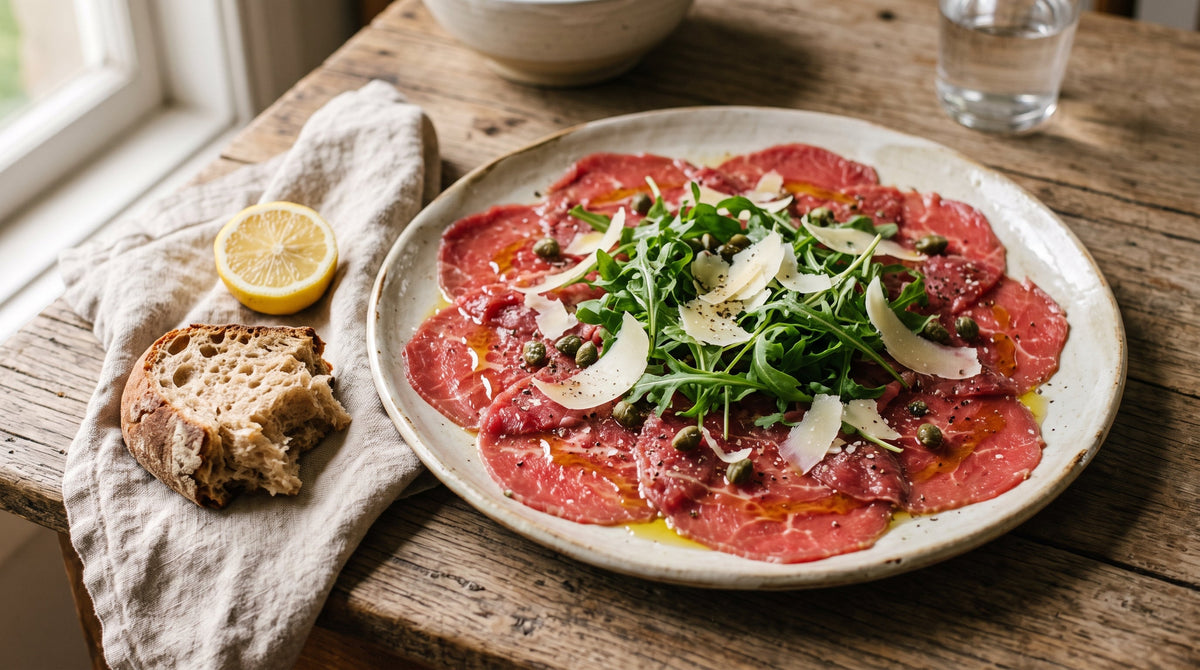
Carpaccio is Venice's great confidence trick: it looks like restaurant theatre, and there's no cooking in it at all. Paper-thin raw fillet, good olive oil, lemon, rocket, capers, parmesan — that's the entire dish. What it does demand is the tenderest, cleanest cut there is, from a source you trust completely, and that's exactly what the twin pack in your share was born for. The only technique is a trick: half an hour in the freezer firms the medallions so your sharpest knife can shave them gossamer-thin. After that, you're just arranging.

45 mins 2 servings Prep 45 minsSaladItalian

Ingredients

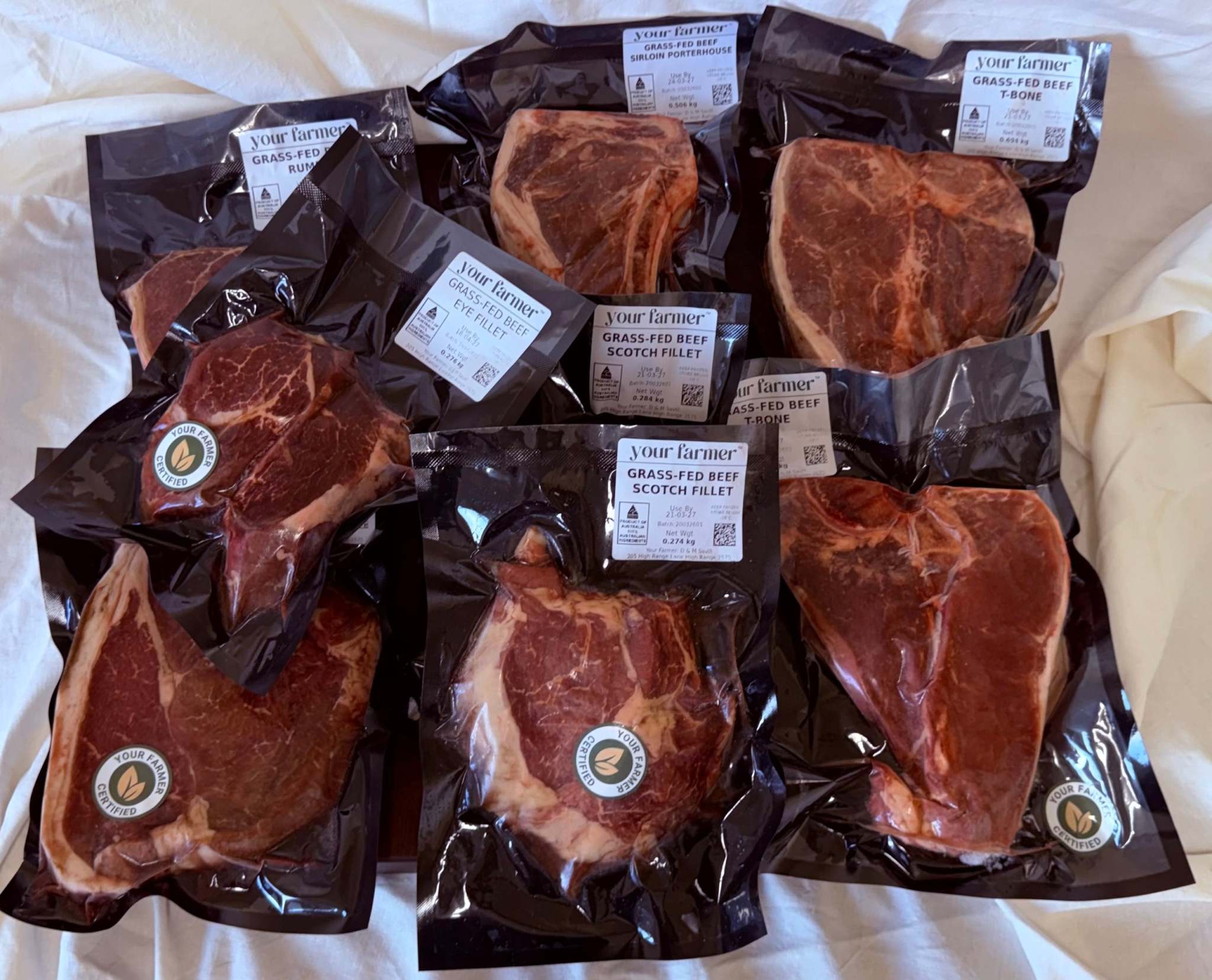
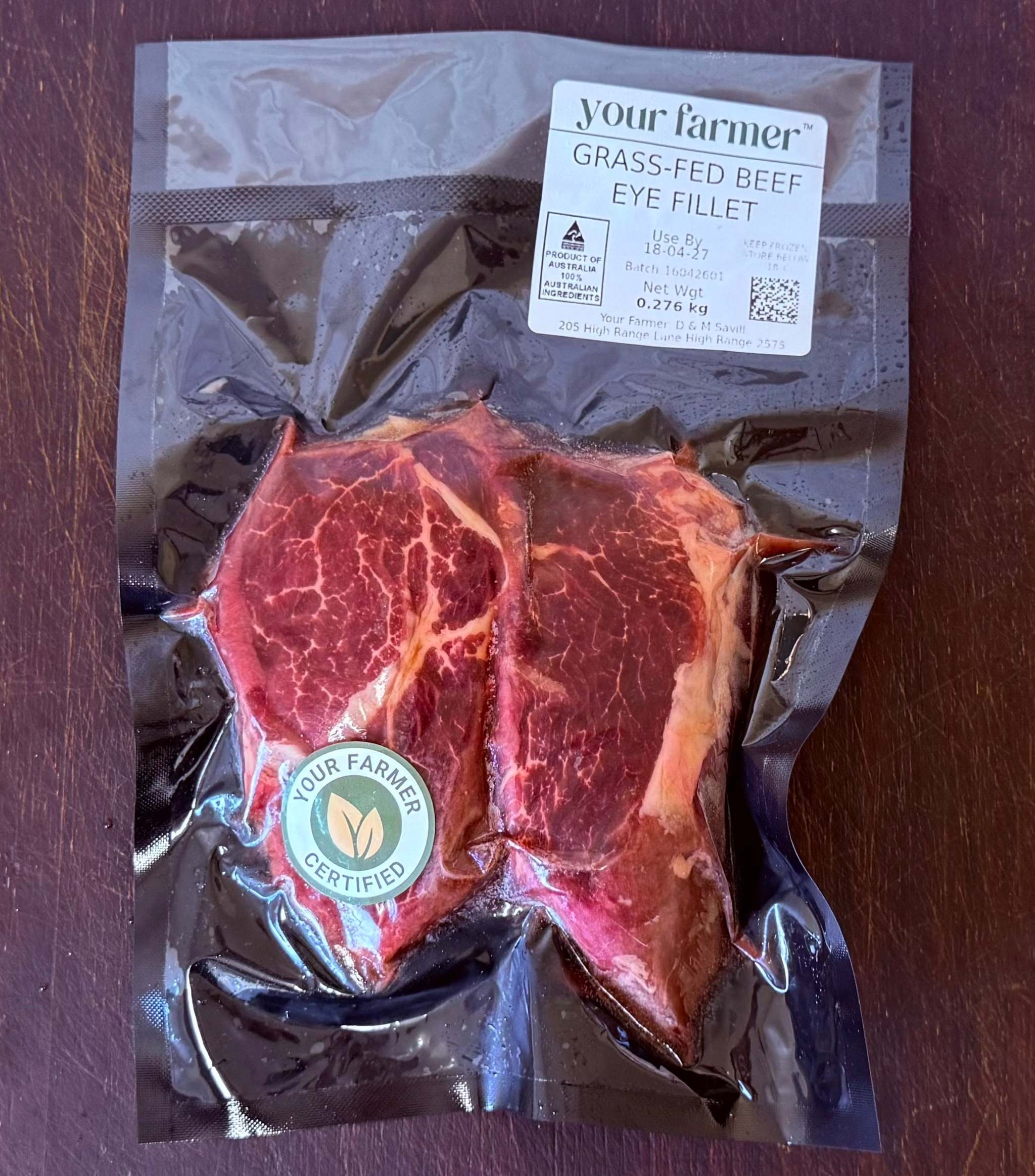
  • 2 Your Farmer grass-fed eye fillet medallions (about 140g each)
  • 2 tbsp extra virgin olive oil, divided
  • Juice of half a lemon
  • Flaky sea salt and freshly cracked black pepper
  • 2 big handfuls rocket
  • 1 tbsp baby capers, drained
  • 30g parmesan, shaved
  • Crusty bread, to serve

Instructions

Wrap each medallion tightly in cling film, rolling it into a neat cylinder, and freeze for 30 minutes — firm at the edges but not frozen solid. Put two serving plates in the fridge while you wait.

2 eye fillet medallions

Unwrap the medallions and slice them across the grain as thinly as you possibly can with your sharpest knife.

Lay the slices in a single layer between two sheets of baking paper and press gently with a rolling pin until they're gossamer-thin and almost translucent.

Arrange the slices over the chilled plates in a single overlapping layer, working quickly so the beef stays cold.

Whisk half the olive oil with the lemon juice and drizzle it evenly over the beef, then season with flaky salt and plenty of cracked pepper.

1 tbsp olive oiljuice of half a lemonflaky salt

Scatter over the rocket, capers and shaved parmesan, and finish with the remaining oil in a thin thread.

2 handfuls rocket1 tbsp baby capers30g parmesan

Serve immediately, straight from the fridge-cold plates, with crusty bread alongside.

Appears in

A Raw Dish Is a Trust Exercise

Carpaccio was invented at Harry's Bar in Venice and named for a painter famous for his reds — and from the very first plate it's been made with fillet, because a raw dish gives the meat nowhere to hide. The eye fillet is the tenderloin: the muscle that never works, so there's no connective tissue to chew through and the texture stays silk-soft even uncooked. Every other cut on the beast earns its tenderness through cooking; this one arrives that way. When you're eating beef raw, where it came from stops being a nice-to-have and becomes the whole point — you want a single farm, a short supply chain and a farmer you can name, which is the entire idea behind knowing your farmer. Your Farmer® fillet comes as two 140g medallions from our smaller-framed grass-fed cattle, and their neat cylinder shape is exactly what the freeze-and-slice trick wants.

Swaps and Variations

The classic plate needs nothing, but it takes variation gracefully. Swap the rocket for baby cress, add a scatter of toasted pine nuts, or drop pea-sized dabs of Dijon-spiked mayonnaise across the plate the way Harry's Bar originally did. Shaved fennel brings crunch and a clean aniseed note. There's no true substitute for the cut itself, though — if raw beef isn't your thing, sear a whole medallion hard on all sides, rest it, and slice it thinly for a tagliata-style plate over the same rocket, capers and parmesan. Same flavours, cooked edges, still glorious.

Keeping It Safe and Fresh

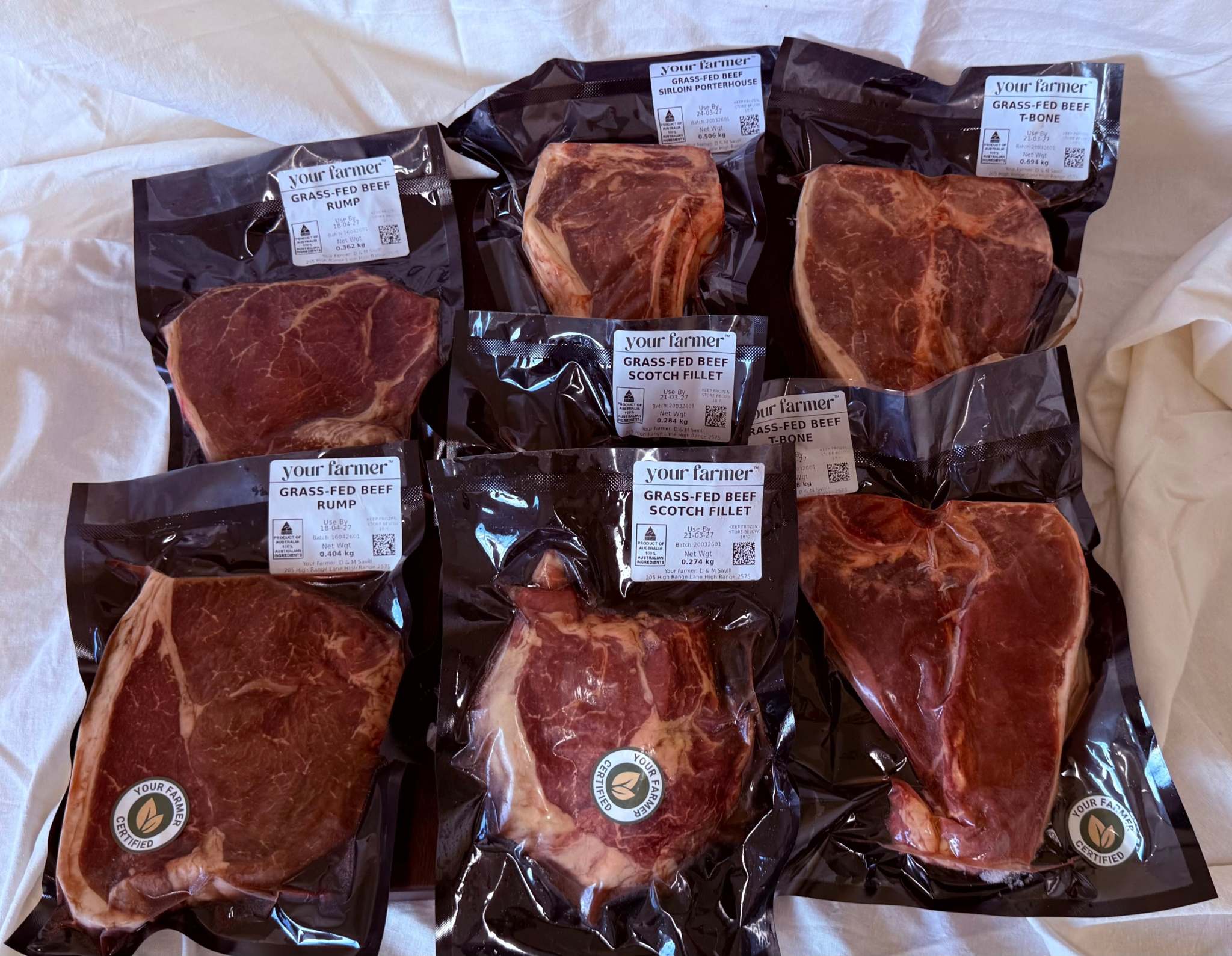
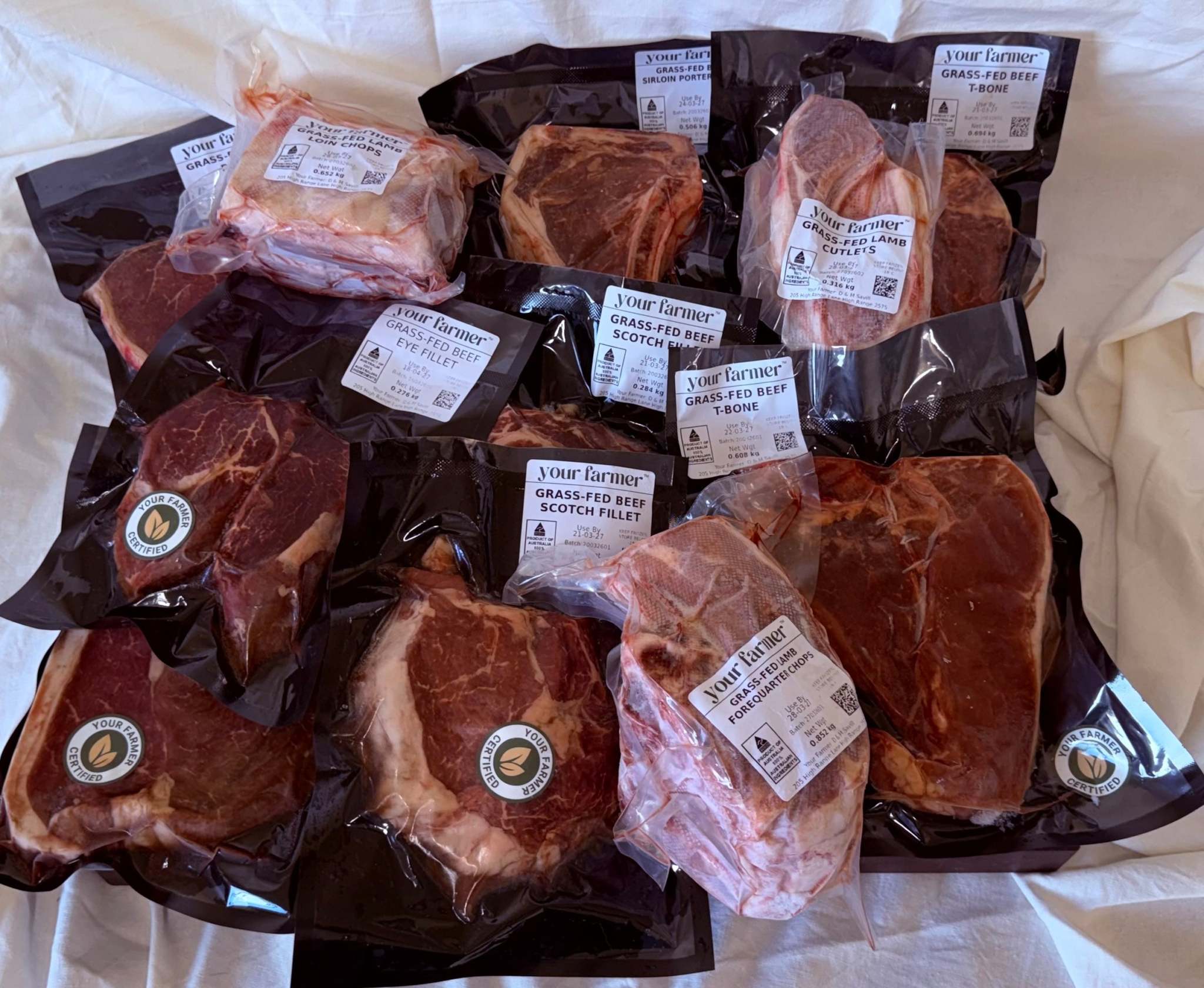
Raw dishes reward a little care. Use the fillet within a day or two of it landing in your fridge, keep it in the coldest spot until the freezer step, and thaw a frozen pack overnight in the fridge, never on the bench. Work with a clean board and knife, keep the plates chilled, and slice only when you're ready to eat — carpaccio is made to order, not made ahead, and leftovers don't keep once dressed. If you're slicing just one medallion for a starter-sized plate, cook the second within a couple of days. The twin pack comes around in the Pack A rotation of our grass-fed beef CSA share, and when there's surplus, the eye fillet twin pack is there on its own.
Frequently asked questions

Is it safe to eat raw beef at home?

With sensible handling, yes — carpaccio is a whole-muscle cut, sliced fresh from the centre of the meat. Use fillet from a source you trust within a day or two, keep it cold, work with clean hands and equipment, and eat it as soon as it's plated. Anyone who ordinarily avoids raw or undercooked meat should sit this dish out.

Why freeze the medallions first?

Thirty minutes in the freezer firms the meat just enough that a sharp knife can shave it into thin, even slices instead of dragging and tearing. You're chilling it firm, not freezing it solid — the edges should resist your thumb but still give slightly.

My slices came out thick and ragged — can I rescue them?

Yes, that's what the baking paper step is for. Lay even your roughest slices between two sheets and press gently with a rolling pin or the base of a saucepan — they'll flatten out to translucent and no one will ever know.

Is this a starter or a main?

Both medallions across two plates makes a generous light main with bread and perhaps another salad. For a classic starter portion, slice one medallion across four small plates and cook the second medallion another night.

Can I prepare it ahead for guests?

Do everything except the slicing ahead: plates chilled, dressing whisked, garnishes ready, medallions wrapped in the freezer. Then slice, press and plate in the ten minutes before you sit down — dressed carpaccio waits for no one.

Three Simple Steps

A whole table of real food.

Your Farmers grow grass-fed beef and lamb, pastured eggs and the best eco-grown veggies and produce — every item grown to the same ecological standard, every farmer one you can know by name. One subscription, your whole real-food shop.

01

Reserve your share — or try a pack

Subscribe to a share of the harvest, or start with a one-off fixed pack.

02

Make it your own

Pick your delivery rhythm and what's in the box. Skip or cancel anytime — no lock-in.

03

Cook, savour, know your farmer

We deliver in a reusable esky we collect next time. No couriers, no waste.

More Recipes

View all

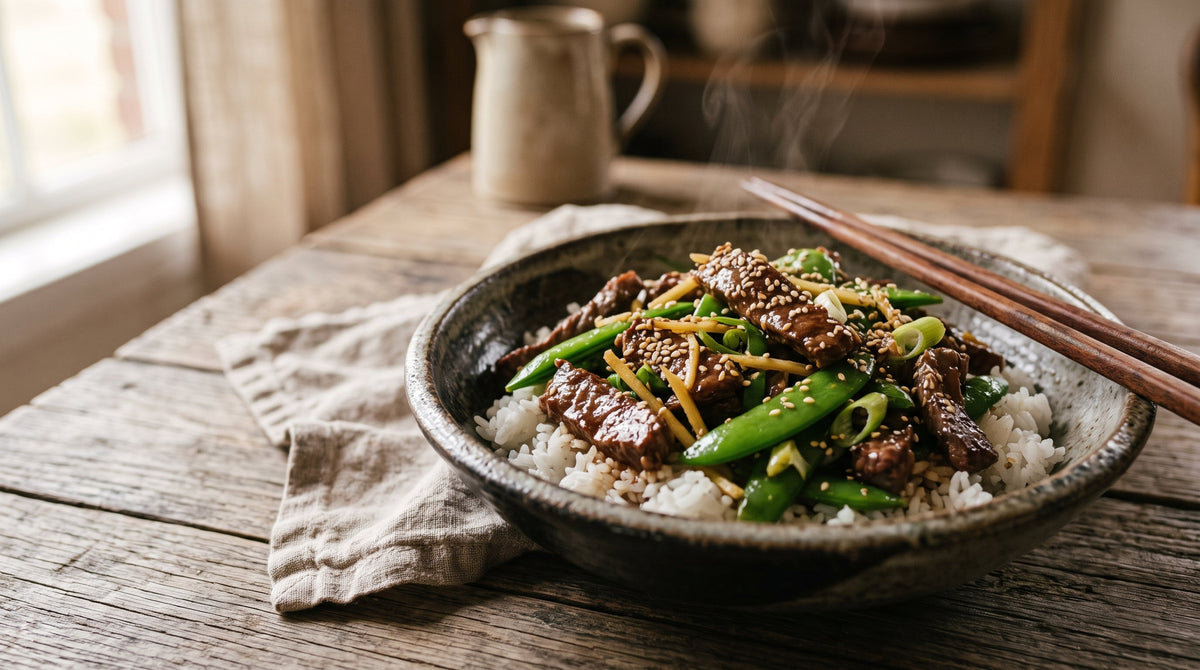
Sirloin and sugar snap pea stir-fry with sesame seeds and spring onion served over jasmine rice.

Sirloin, Sugar Snap and Sesame Stir-Fry

The premium shortcut to a better stir-fry

Most stir-fry troubles start with the beef spending too long in the wok, toughening up while you wait for it to colour. Sirloin fixes that before you start. It's tender from the first slice, so the strips need only a minute over ferocious heat — which means the sugar snaps stay bright and snappy and the sauce goes glossy instead of stewed. Twenty-five minutes including the marinade, and one steak quietly stretches to feed four.

Read moreabout Sirloin, Sugar Snap and Sesame Stir-Fry

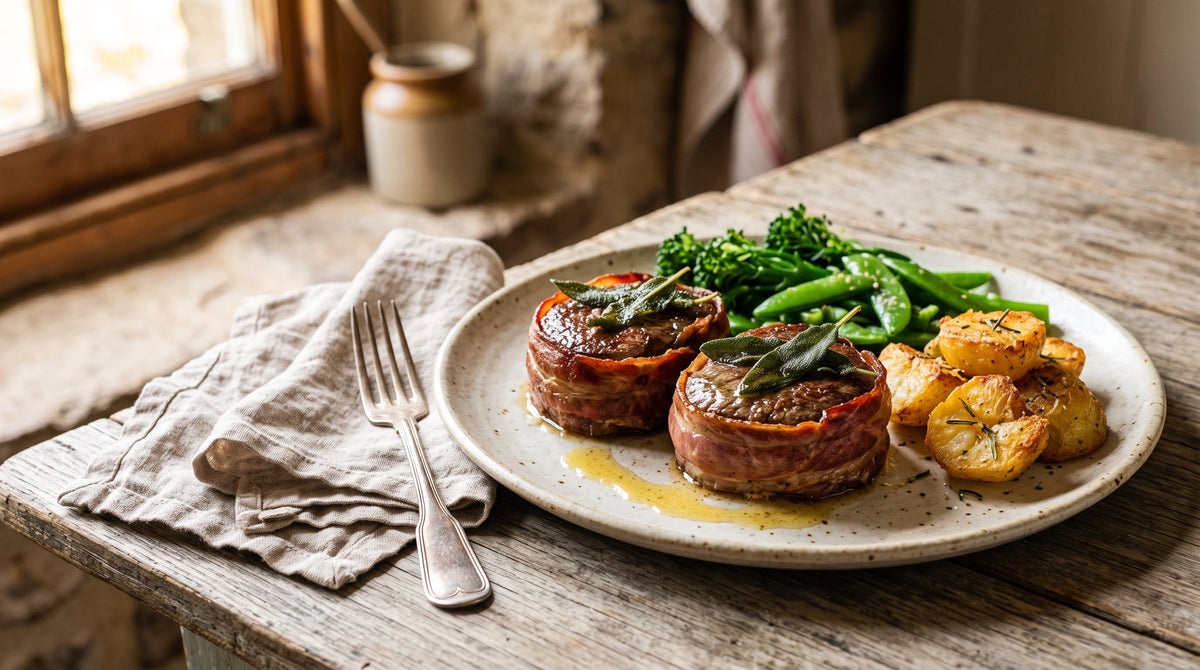
Prosciutto-wrapped grass-fed eye fillet medallions with crisped sage and pan butter, served with greens and potatoes.

Prosciutto-Wrapped Eye Fillet Medallions

Salty fat, doing exactly what fillet needs

Eye fillet has one weakness — it's the leanest cut on the beast — and butchers worked out the fix generations ago: wrap it in something fatty and let the wrap do the basting. Prosciutto is the elegant version of that old trick. As the band crisps around each medallion, its salty fat renders into the meat, and a quick butter-and-sage baste at the end brings the whole thing together. Two medallions, one pan, thirty-five minutes — and a plate that looks like far more work than it was.

Read moreabout Prosciutto-Wrapped Eye Fillet Medallions

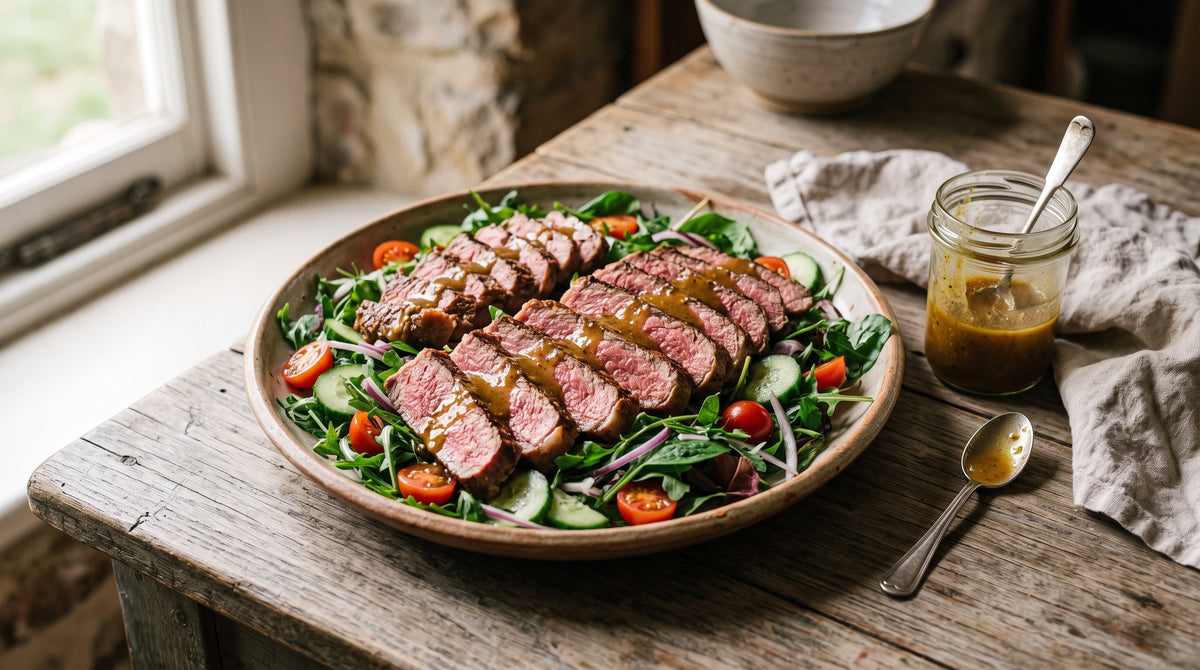
Sliced grass-fed sirloin steak fanned over a salad of cherry tomatoes, cucumber and red onion with honey-mustard dressing.

Sirloin Steak Salad with Honey-Mustard Dressing

One steak, four plates, no oven

Here's a trick worth knowing: one good steak, rested properly and sliced thin, feeds the whole table when there's a proper salad underneath it. The sirloin in your share is made for the job — tender enough to slice like silk, with enough flavour that every forkful counts. The honey-mustard dressing is four pantry things shaken in a jar, and the salad is whatever's crisp in the crisper. Fifteen minutes of actual cooking, one pan, and dinner looks like you tried a lot harder than you did.

Read moreabout Sirloin Steak Salad with Honey-Mustard Dressing