

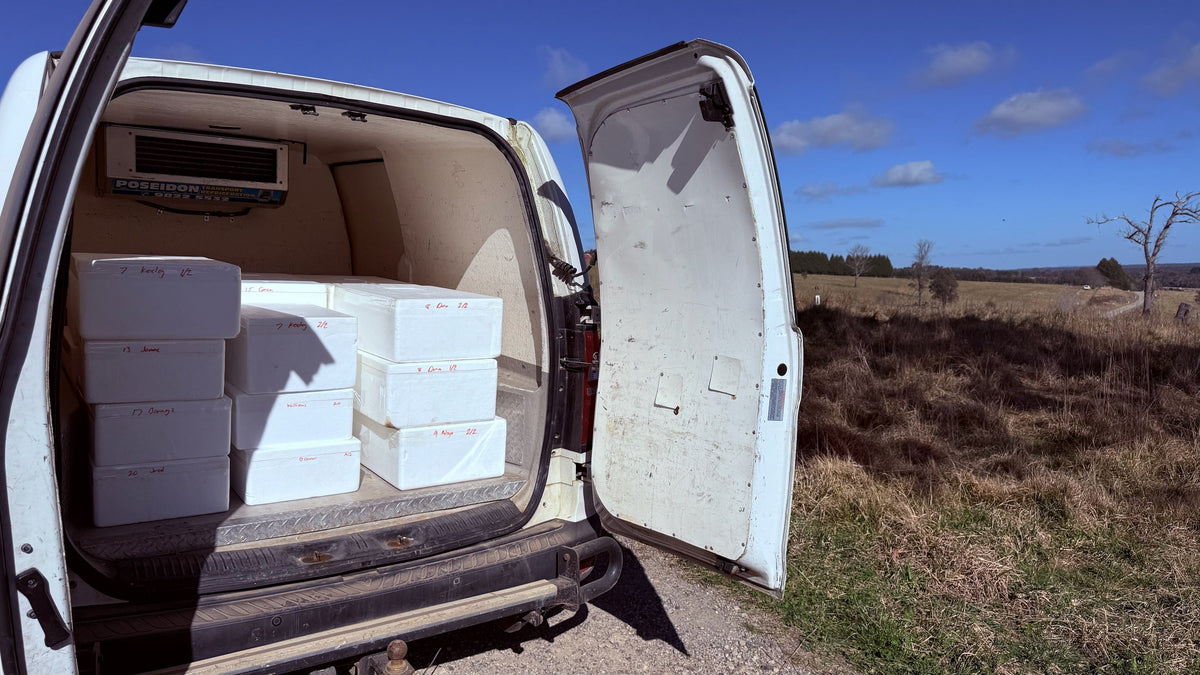
Blast-freeze technology rapidly produces smaller, more uniform ice crystals that preserve cell structure, texture and nutrients — so grass-fed beef delivery can arrive in better condition than chilled cuts sitting in a butcher's display case.
Why "Fresh" Meat at the Butcher May Not Be as Fresh as You Think
If you've ever pulled a steak from the freezer and found it grey, dry, or tasteless, your scepticism about frozen meat is well earned. That disappointing experience is real — it's what happens when meat is frozen slowly in a standard home freezer without proper packaging. But the assumption that all frozen meat is like this doesn't hold up once you look at how different freezing methods actually work.
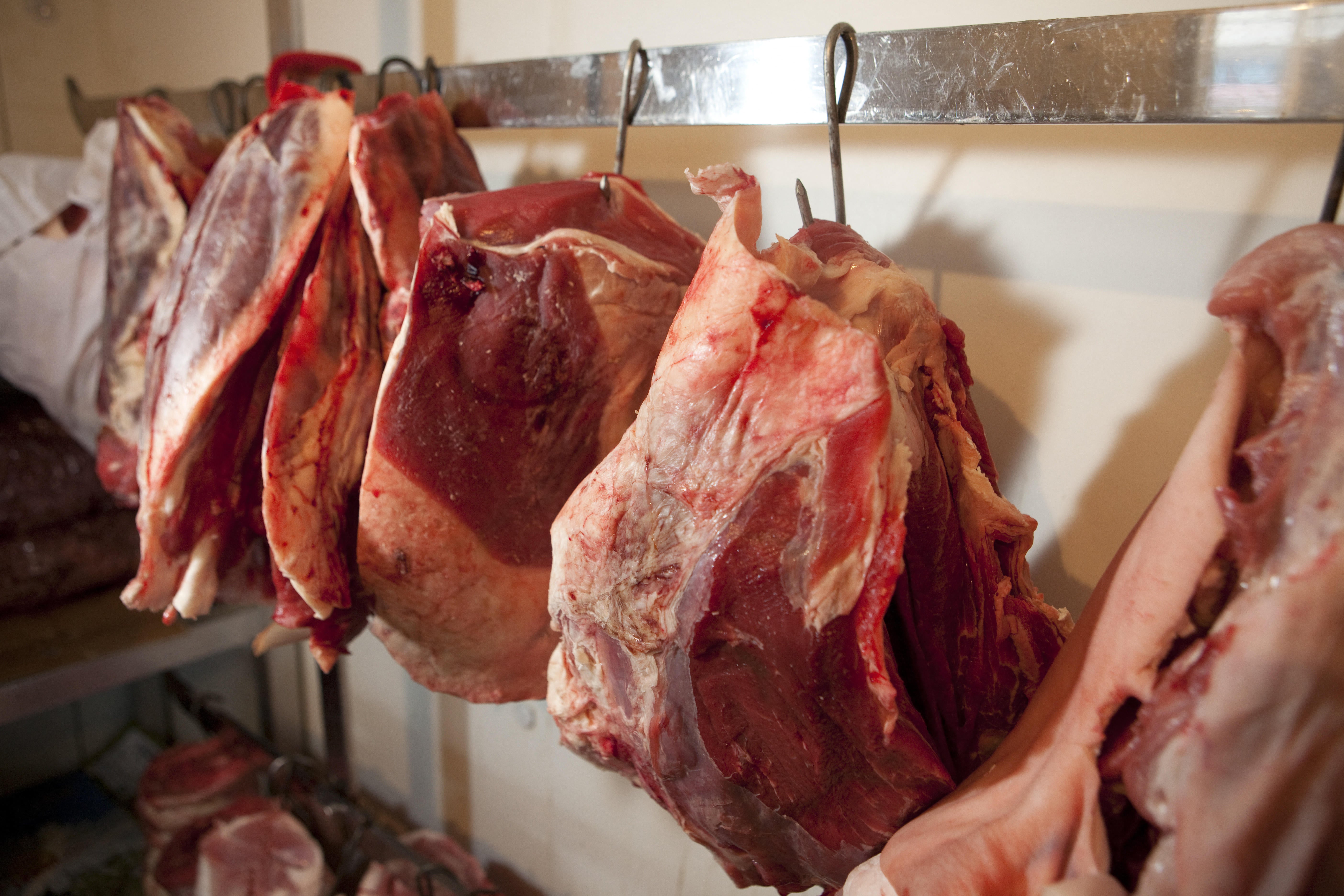
The cuts you see at the butcher are labelled "fresh" because they haven't been frozen. What that label doesn't tell you is how long ago the animal was processed, how many hands the meat passed through, or how many hours it spent in transit. Under FSANZ Standard 3.2.2, raw meat must be kept at 5°C or below during storage and transport. That temperature slows bacterial growth, but it doesn't stop oxidation, moisture loss, or enzymatic breakdown — all of which quietly reduce quality from the moment the animal is processed.
A typical retail journey for beef in NSW might include processing at an abattoir, transport to a wholesaler, time in a cold store regulated by the NSW Food Authority, delivery to the butcher, and hours in the display case. Each step adds time during which the meat is chilled, but continues to age.
For families across Sydney's North Shore, The Hills District, and the Wollongong–Nowra corridor, the question worth asking isn't whether your butcher keeps the cabinet cold enough. It's whether there's a way to preserve quality closer to the source — before the supply chain has a chance to chip away at it.
What Happens to Beef When It Freezes Slowly
Most home freezers and many commercial cold rooms use conventional slow freezing. When beef freezes this way, water inside the muscle cells turns to ice gradually, and large ice crystals form that deform the original cell structure.
Slow freezing creates a range of quality problems:
-
Cell damage: Large, uneven ice crystals rupture cell walls, releasing moisture when the meat eventually thaws
-
Drip loss: The liquid pooling in the bottom of the tray is water, dissolved protein and flavour compounds, leaving the meat
-
Texture changes: Damaged muscle fibres produce a mushy or stringy texture that doesn't resemble the original cut
-
Oxidative rancidity: A CSIRO Meat Industry Services information sheet states that frozen storage life is normally limited by adverse flavours caused by oxidative rancidity of fat, with storage temperature and packaging method affecting the onset of these changes.
-
Freezer burn: Inadequate wrapping combined with temperature fluctuations causes surface dehydration, leaving dry, discoloured patches
This is what most people picture when they hear "frozen beef." But the science shows that the problem isn't freezing itself — it's the speed at which ice crystals form and how uniformly they're distributed through the muscle tissue.
How Blast-Freeze Technology Preserves Beef Quality
Blast-freezing exposes meat to extremely cold temperatures in a high-airflow environment, driving the core temperature down far faster than a conventional freezer. In published research, rapid freezing achieved rates of 5.1 cm/h compared to just 0.2 cm/h for traditional air freezing — roughly 25 times faster.
That speed difference matters at the cellular level. Faster cooling rates produce smaller ice crystals with less structural damage, which is why rapid freezing is the preferred method for meat products specifically. In practical terms, the same cut of beef can have very different qualities depending on whether it was frozen in a home freezer over many hours or blast-frozen in a fraction of that time.
The following table summarises how these two methods compare across key quality indicators:
|
Quality factor |
Slow (traditional) freezing |
Rapid blast-freezing |
|
Freezing rate |
~0.2 cm/h |
~5.1 cm/h |
|
Ice crystal size |
Large and uneven |
Small and uniform |
|
Muscle fibre structure after thawing |
Collapsed |
Largely intact |
|
Thawing (drip) loss |
Higher |
Significantly lower |
|
Oxidation risk during freezing |
Higher (longer freezing window) |
Lower (shorter exposure) |
In a 2021 study comparing rapid and traditional freezing of beef, rapidly frozen beef maintained its muscle fibre structure largely intact after 75 days of frozen storage, while traditionally frozen samples showed collapsed fibre structure and measurably higher thawing losses. In practical terms, blast-frozen beef thaws closer to the texture and juiciness you'd expect from a freshly cut steak — less liquid in the tray, better colour retention, and a firmer texture.
Because blast-freezing limits structural damage at the cellular level, the meat retains more of its natural moisture and texture through thawing and cooking — a difference you can see on the plate and taste in the finished dish.
How Your Farmer's ProCryo™ Process Works
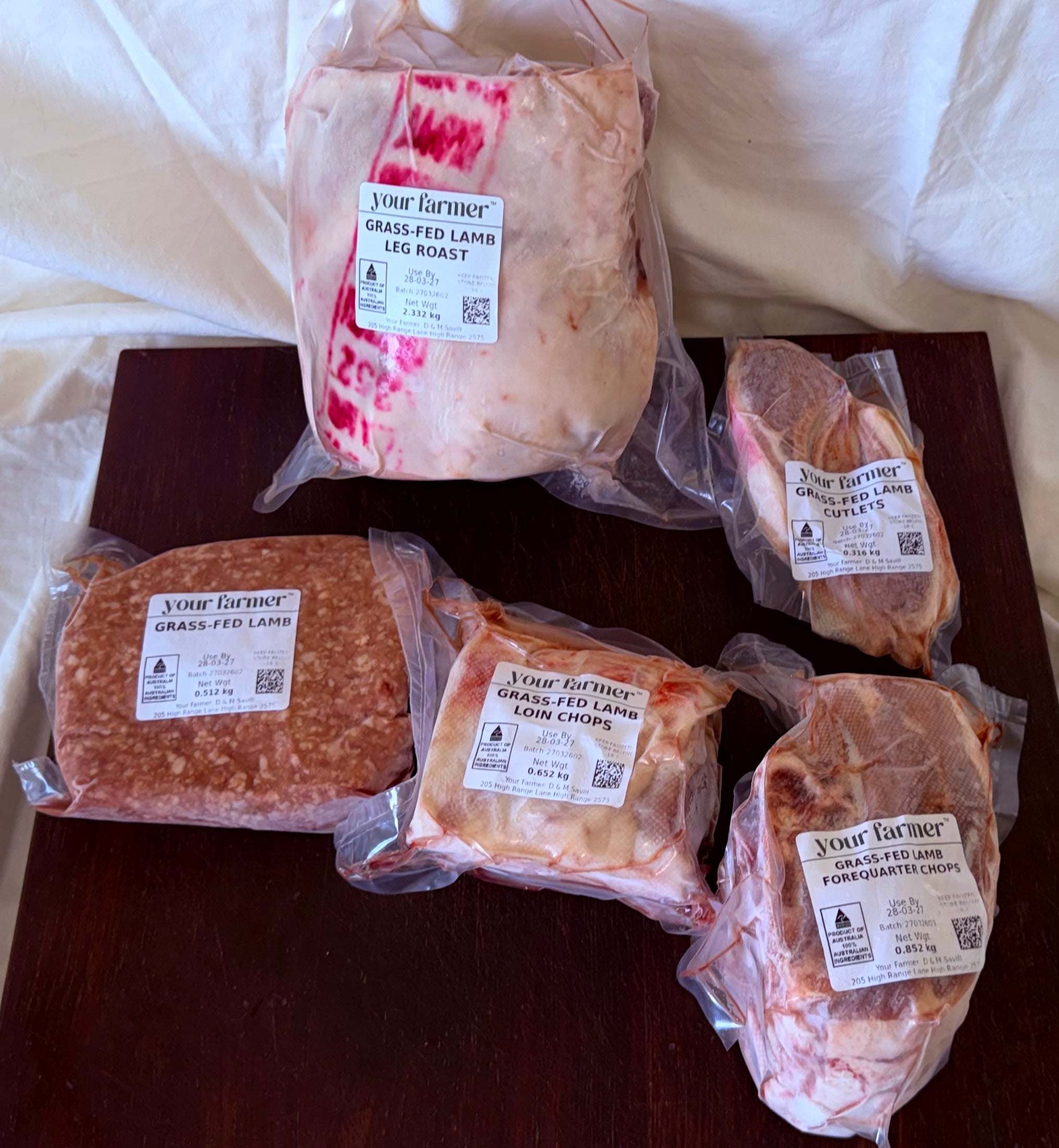
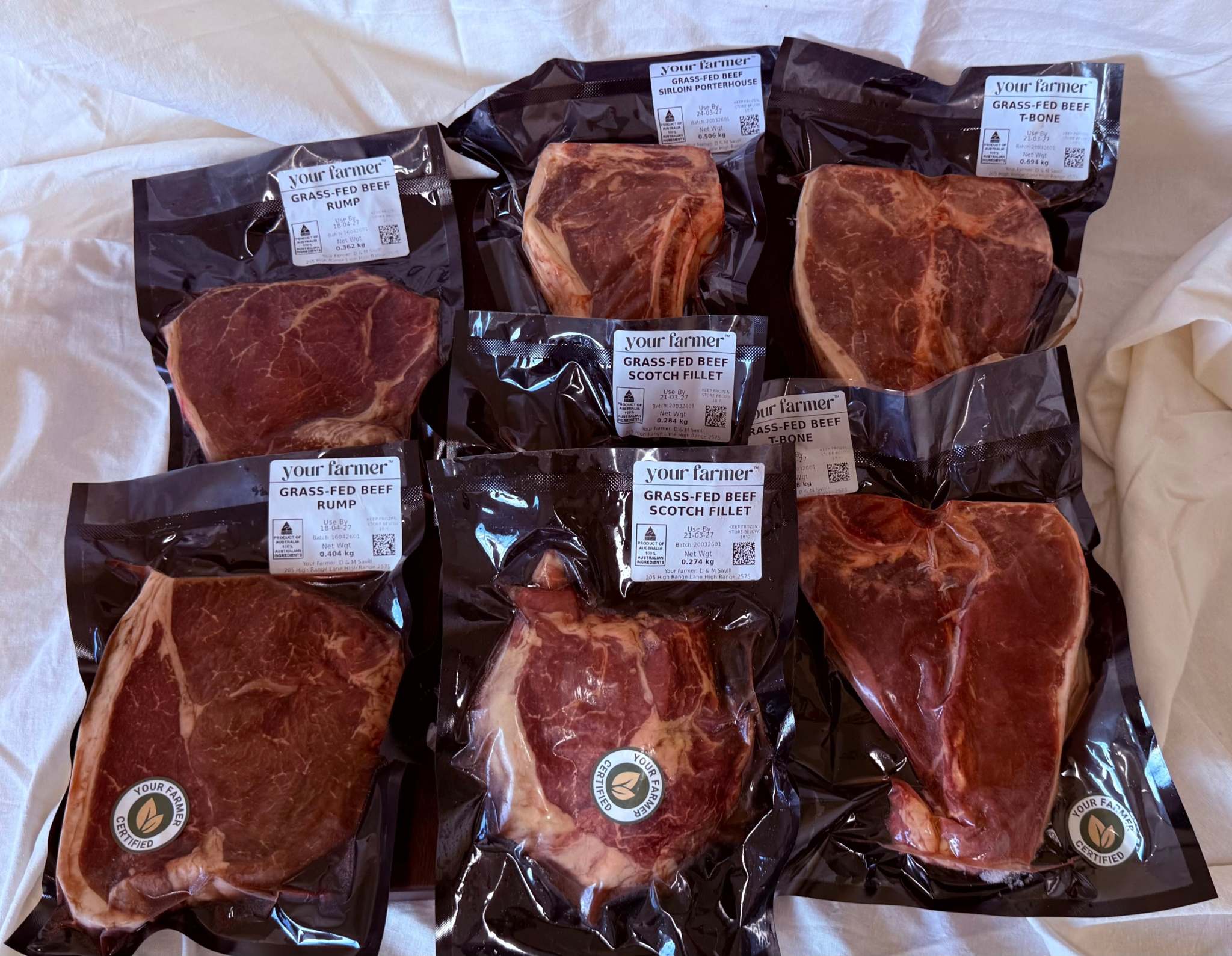
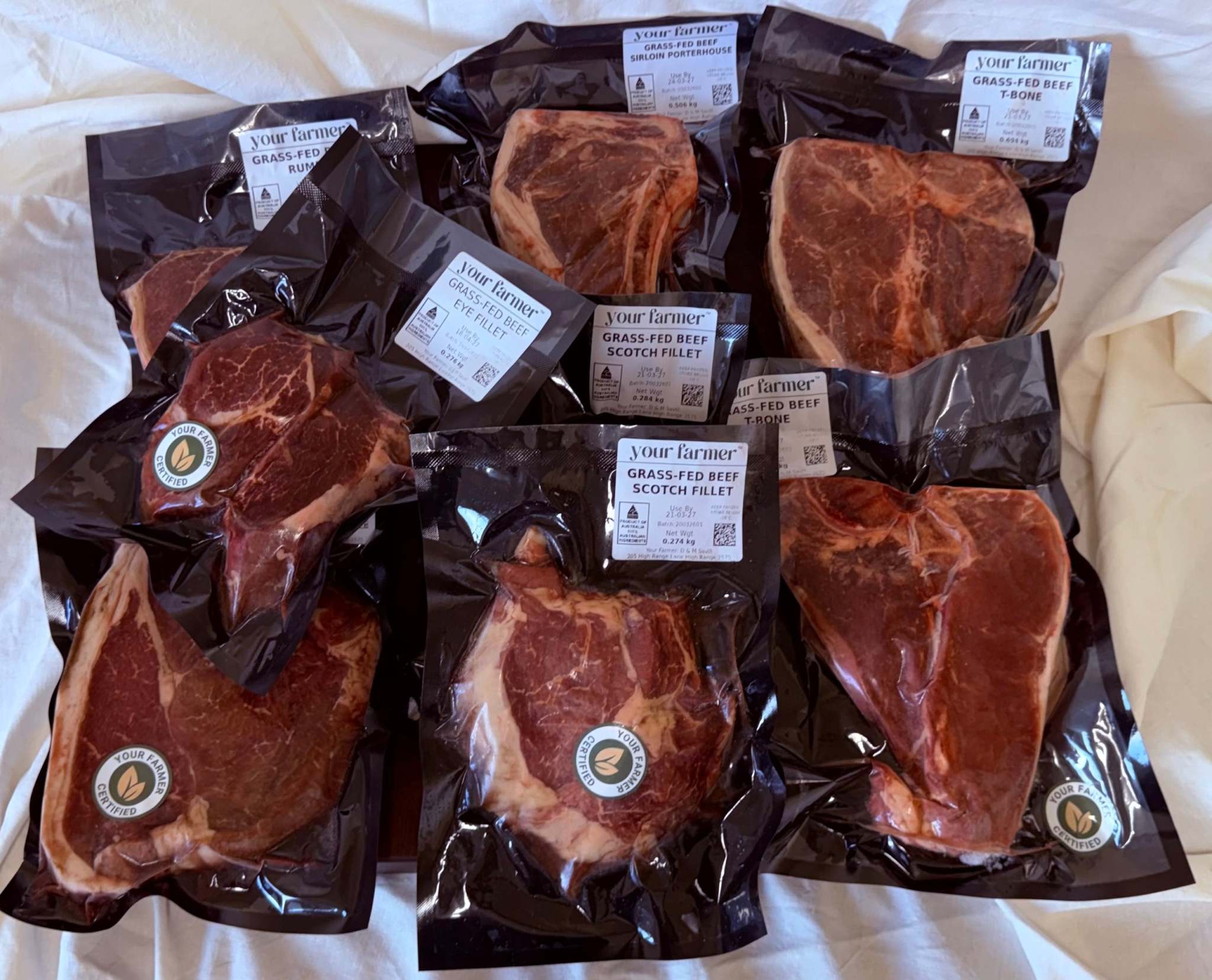
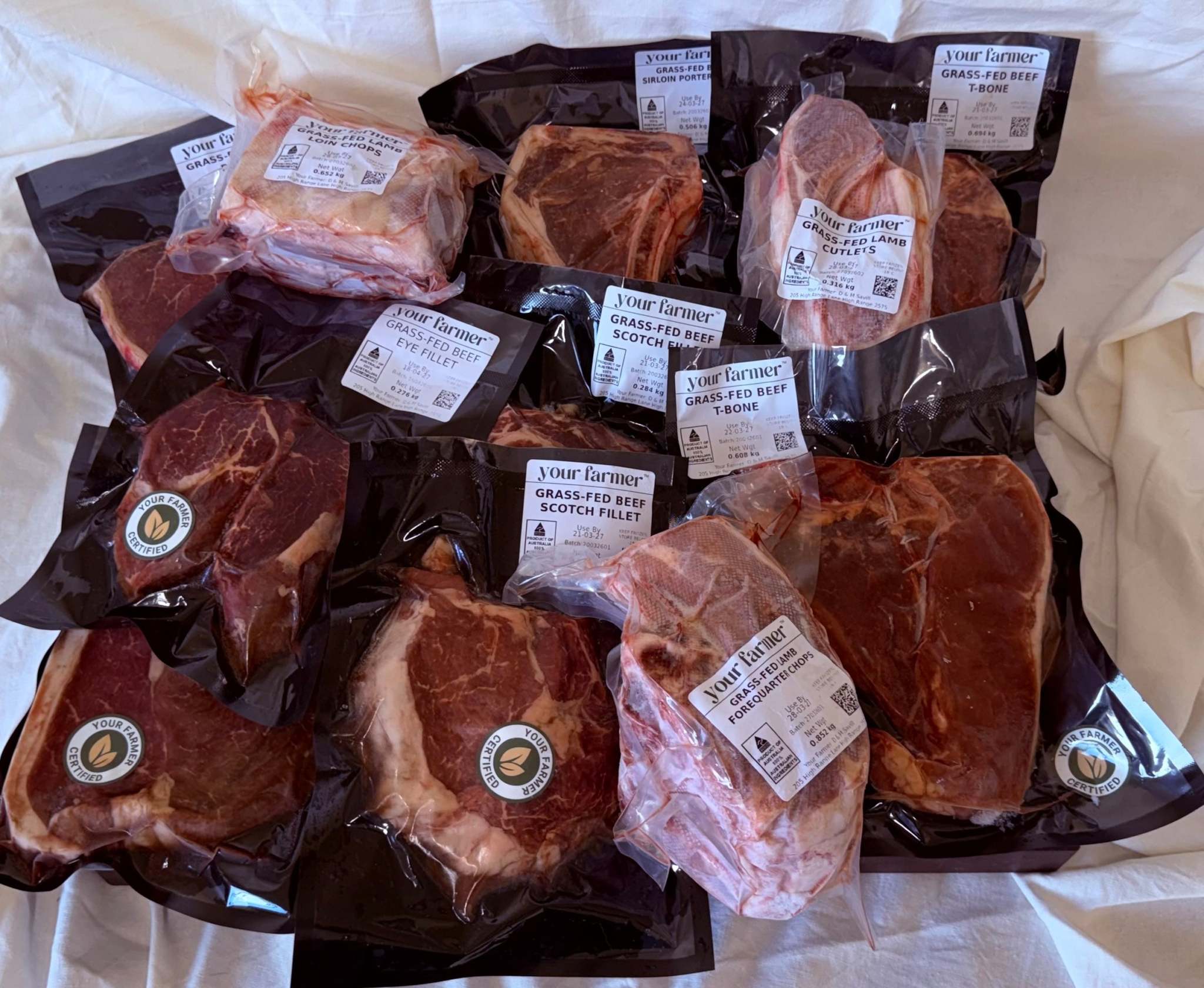
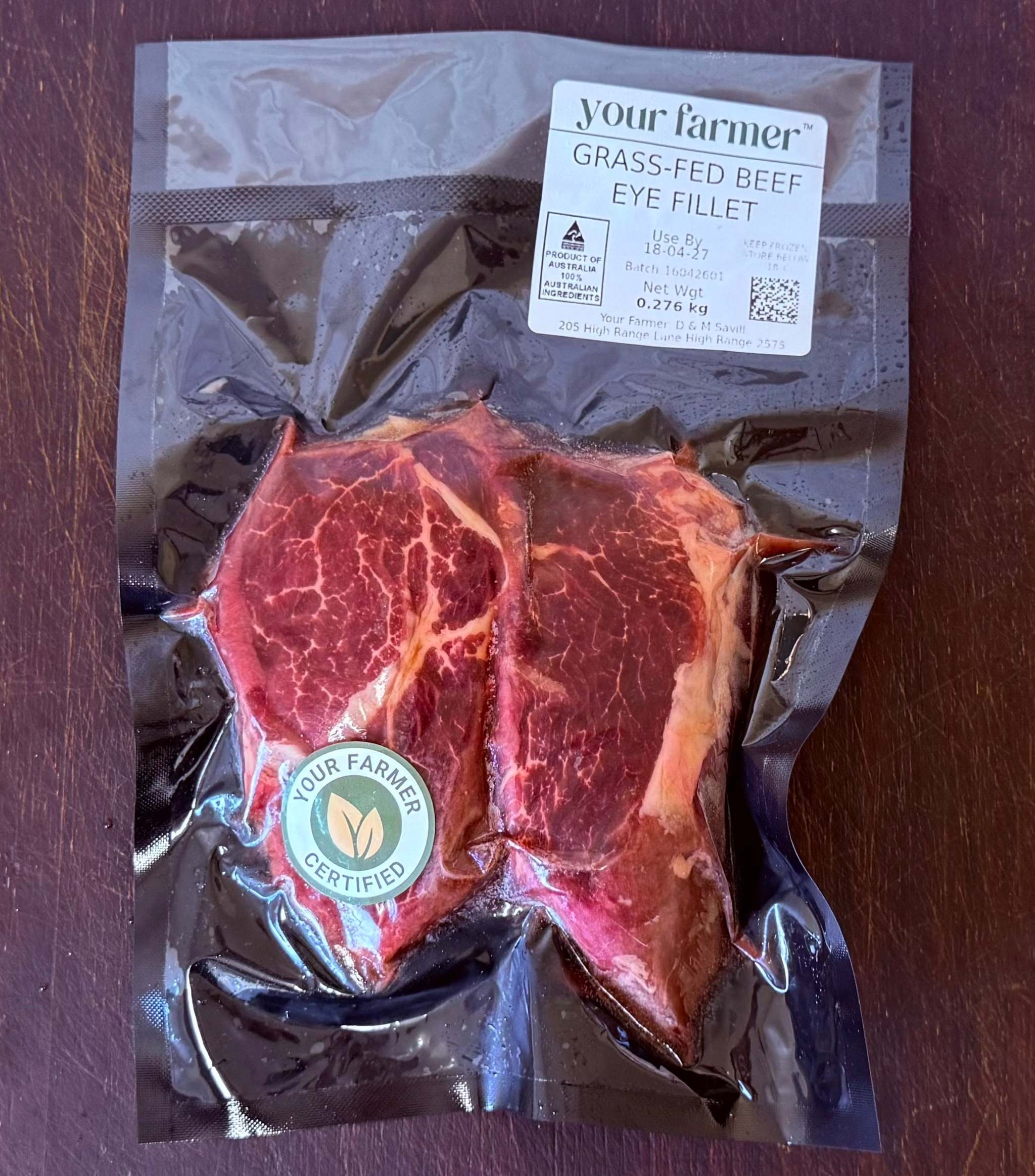
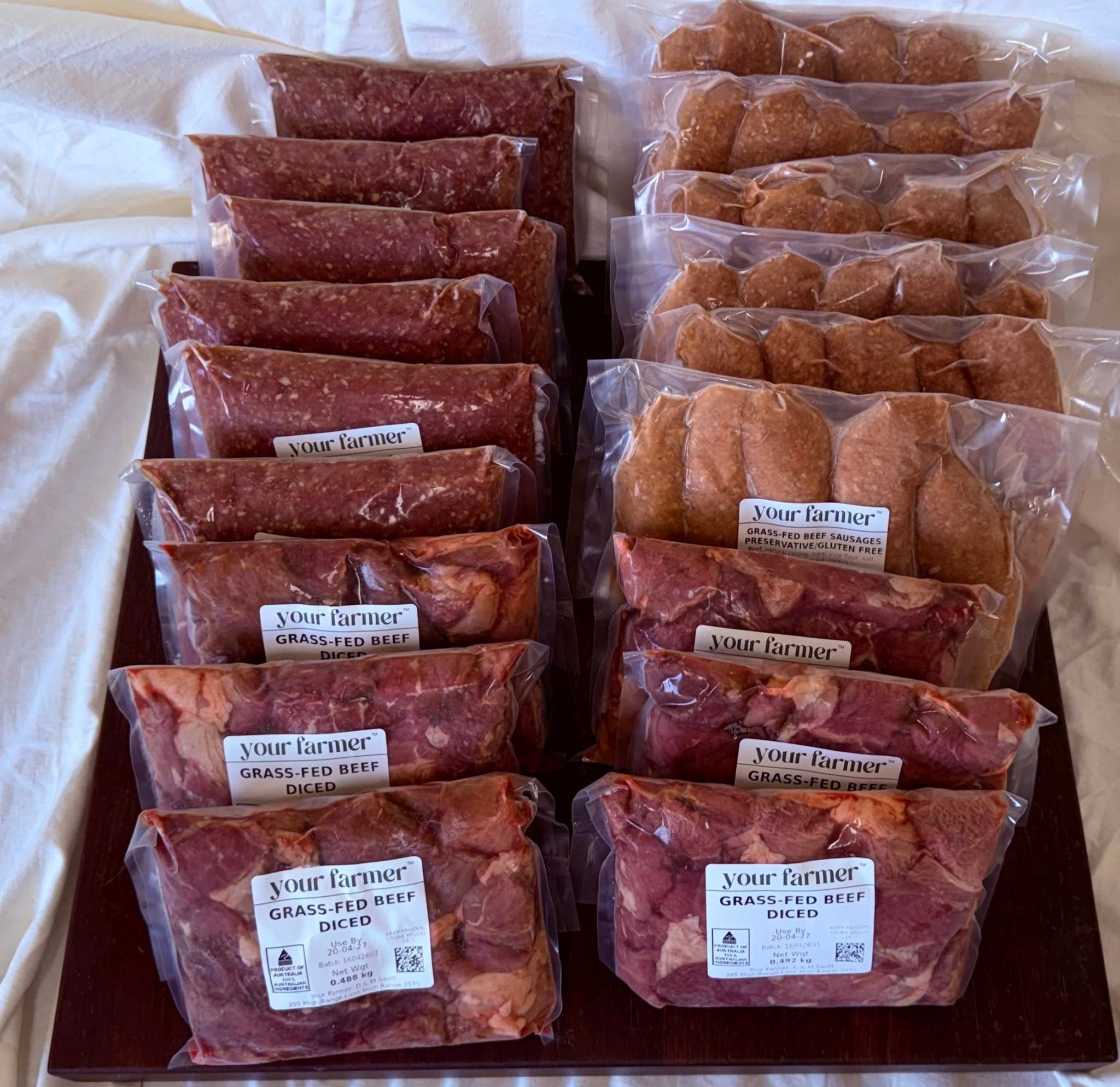
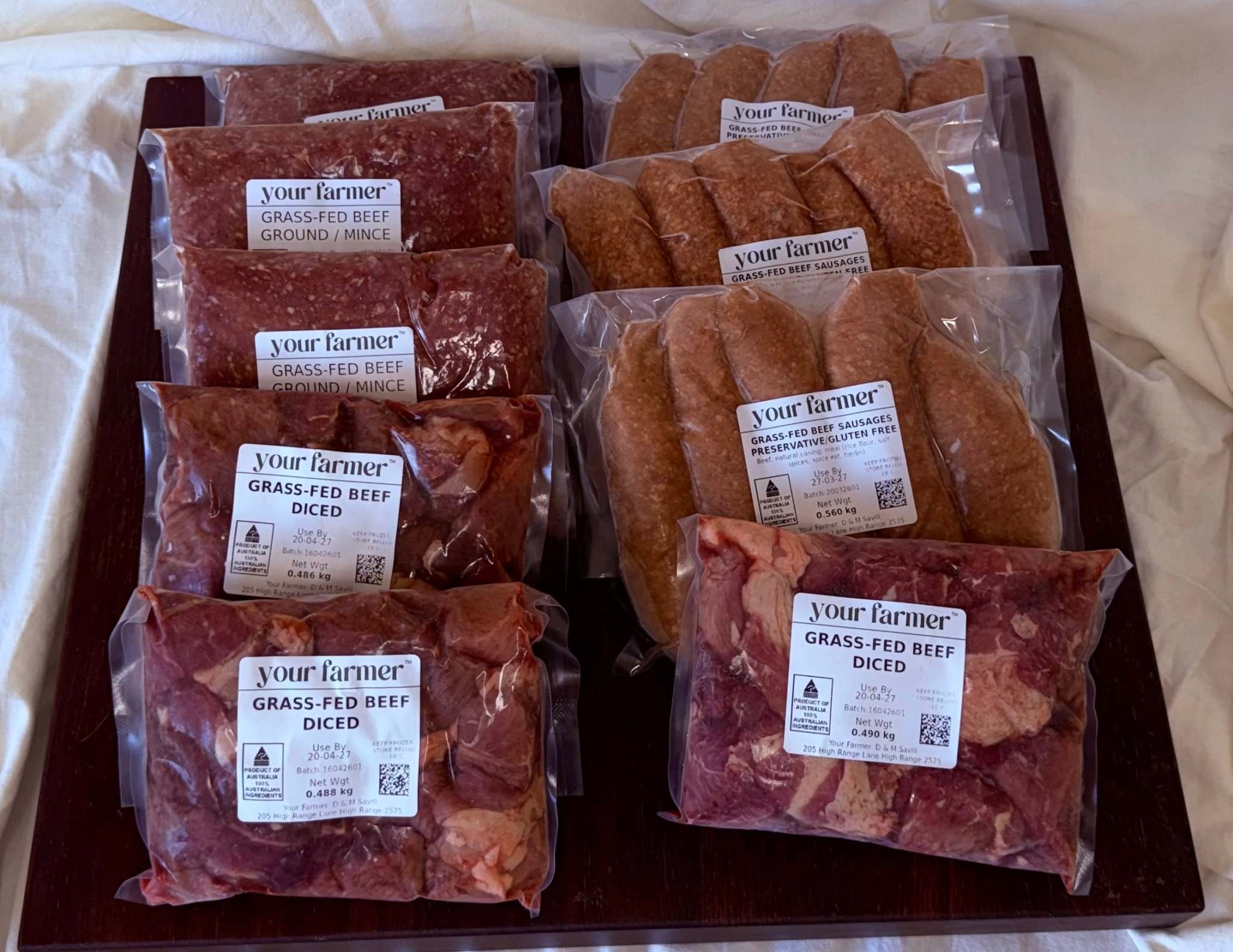
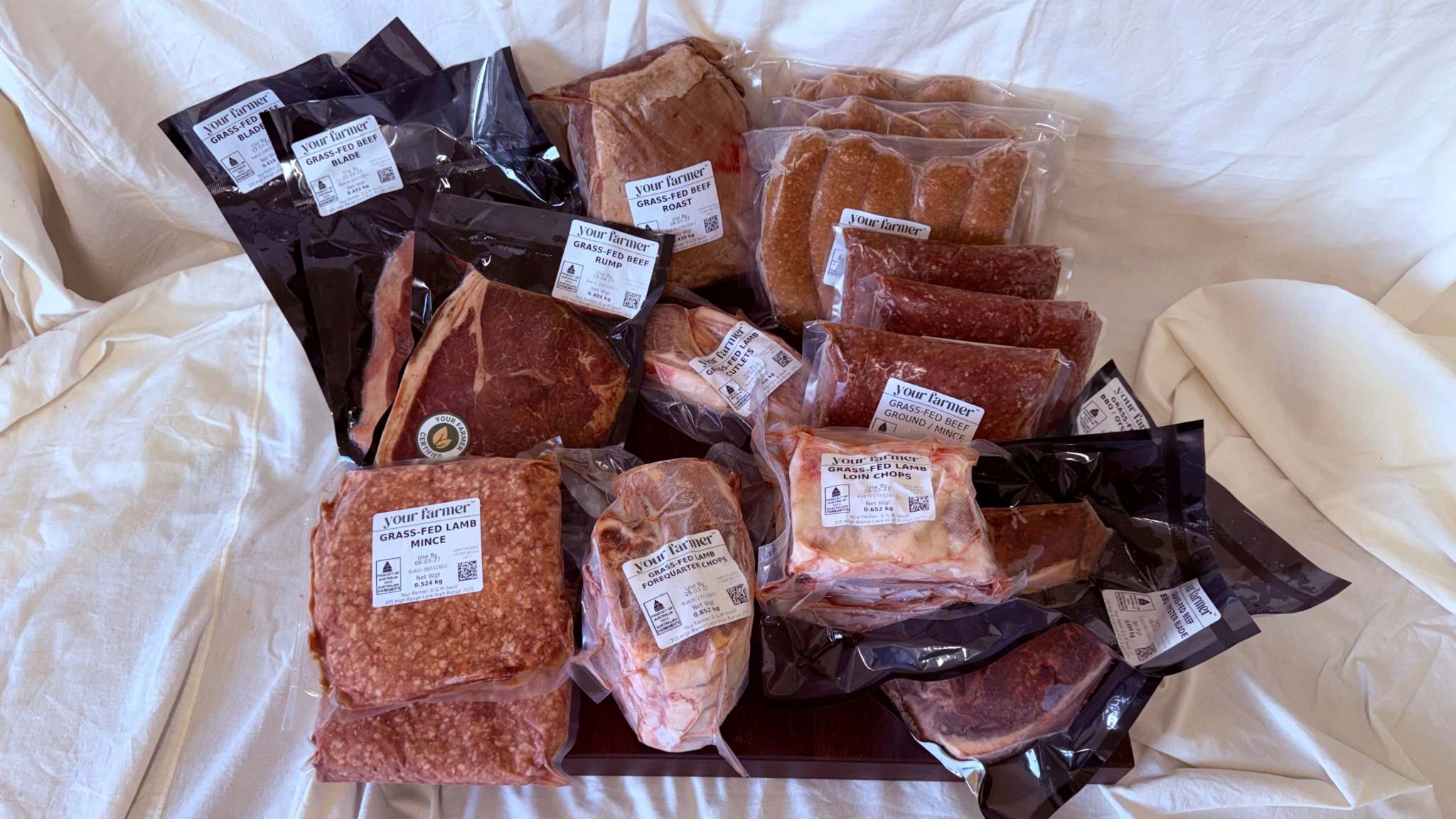
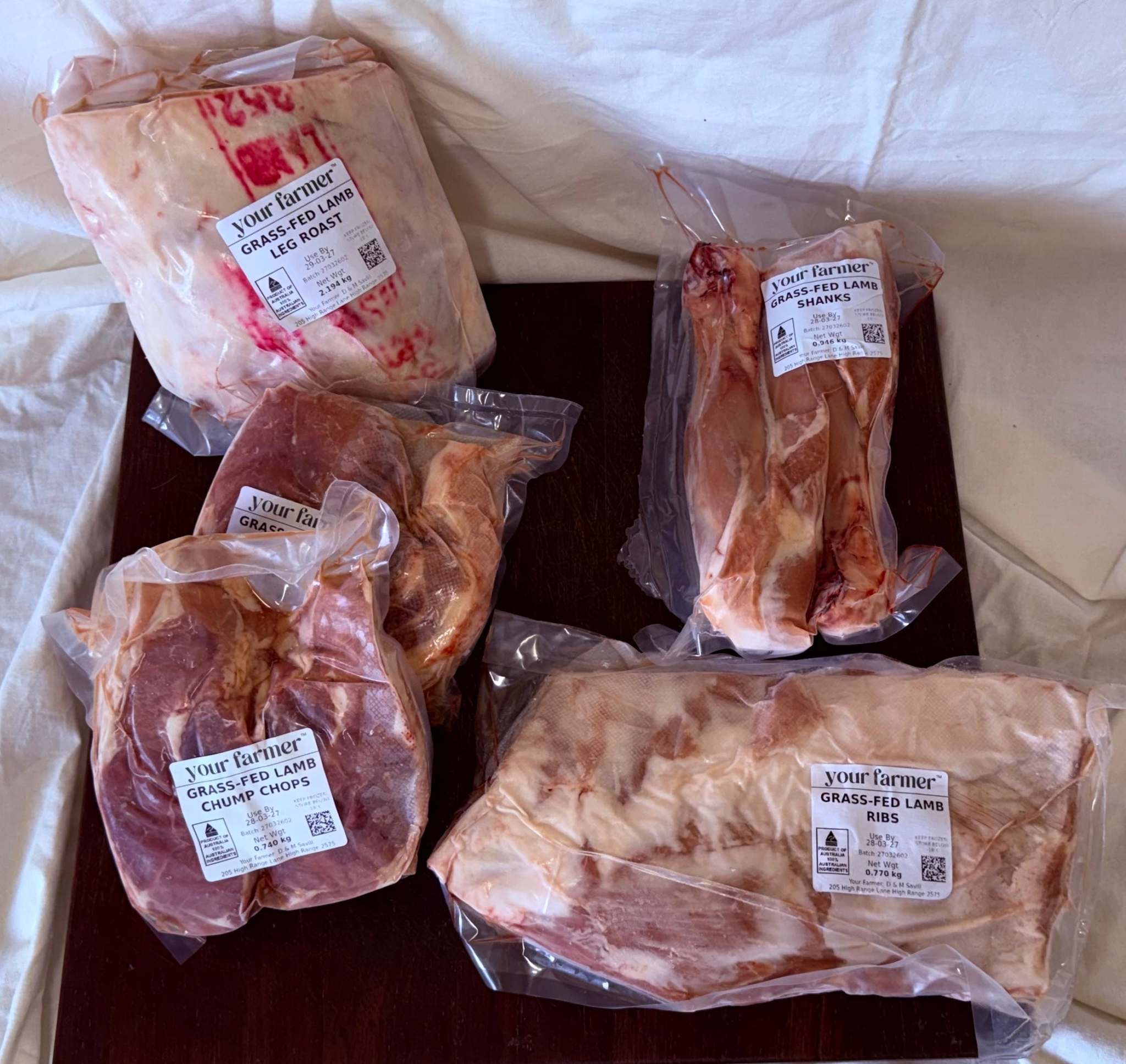
Your Farmer's ProCryo™ process uses vacuum blast-freeze technology designed to lock in flavour, texture and nutrients within hours of packing. Rather than letting meat sit in a conventional chilled supply chain where quality gradually declines over days, ProCryo™ aims to close the gap between processing and preservation as quickly as possible — giving you control over when and how you thaw and cook your beef.
The ProCryo™ process is designed to:
-
Rapidly freeze each cut to minimise ice crystal size and reduce cellular damage
-
Vacuum-seal the meat to protect against oxidation and freezer burn during storage and transit
-
Remove prolonged cold-storage holding periods between the farm and your door
-
Deliver without additives or unnecessary middlemen in the supply chain
For households in Dee Why, Kellyville, Dural, or across the Wollongong–Nowra corridor looking to buy grass-fed beef online, this approach means the beef arriving at your door has had no prolonged storage and no middlemen between paddock and plate.
Why Grass Fed Beef Benefits Most from Rapid Freezing
Grass-fed beef has a nutritional profile that sets it apart from grain-fed alternatives — and for buyers choosing it for health reasons, those differences are worth protecting. A widely cited review of fatty acid profiles in grass-fed and grain-fed beef found that grass-fed beef contains significantly higher levels of omega-3 fatty acids, along with more favourable ratios of omega-6 to omega-3.
|
Nutrient indicator |
Grass-fed beef |
Grain-fed beef |
|
Omega-3 fatty acids |
Significantly higher |
Lower |
|
Omega-6 to omega-3 ratio |
1.53 (average) |
7.65 (average) |
|
Vitamin A precursors (beta-carotene) |
Higher |
Lower |
|
Vitamin E precursors (alpha-tocopherol) |
Higher |
Lower |
Grass-finished cattle also produce beef with higher levels of beta-carotene and alpha-tocopherol, precursors to Vitamins A and E. These fat-soluble nutrients may benefit from the kind of rapid preservation that blast-freezing provides.
Omega-3 fatty acids in particular are vulnerable to oxidation, and repeated freeze-thaw cycles have been shown to denature proteins and reduce nutritional value. A single, rapid freeze followed by stable cold storage helps preserve the nutritional profile that distinguishes grass-fed beef.
Australian food claims must not be false or misleading, and grass-fed or pasture-fed claims may be supported through certification, declarations, company programs or AUS-MEAT trade-description frameworks. For consumers, the practical issue is whether the supplier can clearly explain and verify the production system behind the label.
How to Store and Thaw Your Grass Fed Beef Delivery
Getting the most from blast-frozen beef starts with proper handling at home. CSIRO meat research notes that frozen meat is commonly recommended to be stored at -18°C, with frozen beef maintained at -18°C or colder where possible.”
Follow these steps to get the most from your delivery:
-
Transfer your delivery to the freezer as soon as it arrives
-
Set your freezer to -18°C or below — consider using a freezer thermometer to verify
-
Keep vacuum-sealed packaging intact until you're ready to cook, as it protects against freezer burn and oxidation
-
Thaw in the refrigerator overnight rather than on the benchtop — FSANZ Standard 3.2.2 requires potentially hazardous food, including meat, to be kept at 5°C or below
-
Cook within 24 hours of thawing and avoid refreezing previously thawed meat
Correct storage makes a measurable difference to how long your beef maintains its quality. CSIRO guidance on frozen meat storage life notes that frozen meat can slowly deteriorate through oxidative changes, with storage temperature and packaging method affecting how quickly those changes develop. A well-maintained home freezer set to -18°C or below, combined with intact vacuum seals, can help your grass-fed beef delivery retain its eating quality for months — so you can stock up with confidence and cook on your own schedule.
Frequently Asked Questions
Does freezing grass-fed beef reduce its nutritional value?
A single rapid freeze has minimal impact on the nutritional profile of beef. A peer-reviewed review of grass-fed beef nutrition confirms that grass-fed beef is naturally higher in omega-3 fatty acids, vitamin A and E precursors, and maintains a more favourable omega-6 to omega-3 ratio — and these nutrients can be better maintained when the meat is frozen quickly and stored at a stable temperature. The main nutritional risk comes from repeated freeze-thaw cycles, not from the initial rapid freeze itself.
How long can I keep blast-frozen beef in my home freezer?
CSIRO Meat Technology Update states that the common recommendation is frozen meat stored at -18°C and that frozen beef should be maintained at -18°C or colder whenever possible. One important factor that limits storage life is oxidative rancidity of fat, which is significantly slowed by low temperatures and airtight packaging.
Is the beef from my local butcher really fresher than frozen delivery?
Not necessarily. "Fresh" in a retail setting means the meat has not been frozen, but it says nothing about how many days have passed since processing or how many supply chain stages it moved through. Under FSANZ Standard 3.2.2, chilled meat must be kept at 5°C or below. Quality can still change during chilled or frozen storage through factors such as moisture loss, lipid oxidation and temperature fluctuation. Blast-frozen beef, by contrast, has its quality preserved within hours of packing, and a study comparing rapid and traditional freezing methods shows that rapidly frozen beef retains its muscle fibre structure largely intact even after months of frozen storage.

Share:
Dirty Dozen Australia: What the 2026 Supermarket Residue Tests Found