

What Does "Hormone-Free" Beef Actually Mean in Australia — and Is It Legally Protected?
In Australia, "hormone-free" on a beef label has no legal definition under the Food Standards Code. Any producer can print it without meeting a defined standard, without independent verification, and without penalty — as long as the claim can be substantiated under general consumer law.
The phrase sounds regulated. It isn't.
For many people searching for ethical meat delivery in Sydney, labels like "hormone-free" feel like a clear signal of quality. In reality, these phrases are not formally defined under Australian food standards — meaning their presence on packaging doesn't always tell you what you might expect.
When you see "hormone-free" on a packet of beef at the butcher or online, your instinct might be that someone has checked and certified that claim. That instinct is understandable — but it is not how Australian food law works for this term.
The Food Standards Code, maintained by Food Standards Australia New Zealand (FSANZ), does not contain a definition for "hormone-free", "antibiotic-free", or "chemical-free" as applied to fresh meat. FSANZ confirms that "all representations made about food are subject to fair trading laws and food laws in Australia and New Zealand, which prohibit false, misleading or deceptive representations" — but that is the extent of it. There is no specific standard for these terms, no government-endorsed definition, and no certification scheme that must be met before a producer uses them on a domestic product.
This is not a loophole. It is a deliberate characteristic of how voluntary label claims work in Australia. As ACCC states, a business must be able to prove any claim it makes. Broad, vague terms have limited value and may mislead consumers, as they rarely provide enough information for consumers to understand how the claim connects with or affects the product.
What hormones are we actually talking about?
To understand the label, you first need to understand the substance. Hormonal Growth Promotants (HGPs), as defined by the Meat & Livestock Australia, are "supplements of hormones that naturally occur in all animals." They are delivered via a slow-release implant in the ear and are legally approved for use in Australian cattle under registration by the Australian Pesticides and Veterinary Medicines Authority (APVMA).
HGPs are not exotic or foreign chemicals. They are the same hormones every cow produces naturally — just administered at a controlled dose to accelerate growth. HGPs are predominantly used in the feedlot industry, where the efficiency gains are most commercially significant. So when you buy supermarket beef, there is a reasonable chance it came from a feedlot animal that received an HGP implant.
What the label says vs. what the law says
The table below maps the most common voluntary meat label claims against their legal standing in Australia.
|
Label term |
Legally defined in the Food Standards Code? |
Government-verified before use? |
Who is responsible for substantiation? |
|
Hormone-free |
No |
No |
The producer — under Australian Consumer Law |
|
Antibiotic-free |
No |
No |
The producer — under Australian Consumer Law |
|
Chemical-free |
No |
No |
The producer — under Australian Consumer Law |
|
Organic |
No — a voluntary domestic standard exists (AS 6000–2015), but it is not mandatory |
Only if third-party certified — certification is not required to use the term |
The producer — ACCC can require substantiation |
|
HGP free (export markets) |
Yes — formally defined by the Australian Department of Agriculture for export |
Yes — National Vendor Declaration and physical verification at slaughter required |
Government-verified under the EUCAS framework for EU and other regulated markets |
The contrast between the domestic "hormone-free" label and the export "HGP-free" certification is instructive. The European Union Cattle Accreditation Scheme (EUCAS), administered by the Australian Department of Agriculture, Fisheries and Forestry, defines HGP-free as cattle that have "never been treated with hormonal growth promotants at any time — enforced with lifetime traceability through the National Livestock Identification System and physical checks at slaughter. That level of rigour exists to satisfy the EU's stricter rules. It does not apply to what ends up in your local butcher's display.
How Australian beef safety is actually regulated
If "hormone-free" labels are not legally standardised, does that mean shoppers have no protection? Not exactly. Australian beef is subject to a separate, parallel safety system built around Maximum Residue Limits (MRLs).
FSANZ sets MRLs for all agricultural and veterinary chemicals in food sold in Australia. An MRL is "the highest amount of an agricultural or veterinary (agvet) chemical residue that is legally allowed in a food product sold in Australia, whether it is produced domestically or imported." These limits — which cover hormone residues — are "set using internationally recognised methods and national scientific data and are well below the level that could pose health and safety risks to consumers." All beef sold in Australia, whether labelled "hormone-free" or not, must comply with these limits.
|
Framework |
What it covers |
Who administers it |
Applies to domestic beef? |
Relevant to "hormone-free" labels? |
|
MRL system (Food Standards Code, Schedule 20) |
Maximum legally permitted hormone residue levels in all beef |
FSANZ / APVMA |
Yes — mandatory for all beef sold in Australia |
Applies regardless of label — not a label certification |
|
APVMA registration of HGP products |
Approval and conditions of use for HGP implants |
APVMA |
Yes — all HGP products must be registered |
No — registration does not define or certify consumer label claims |
|
EUCAS / HGP-free export certification |
Formal "never treated with HGPs" status with verified traceability |
DAFF |
No — export framework only |
Closest equivalent to a defined standard — export markets only |
|
Australian Consumer Law (ACCC) |
Prevents false or misleading marketing claims |
ACCC |
Yes — applies to all food marketing |
Yes — businesses must be able to substantiate the claim if challenged |
What "hormone-free" could mean on any given product
Given the absence of a defined domestic standard, a "hormone-free" label could mean any of the following — and there is currently no way for a consumer to tell which interpretation applies from the label alone:
-
No synthetic HGP implants were ever used — the strongest interpretation, equivalent to the EUCAS export standard, but with no equivalent domestic verification requirement
-
Hormone residue levels are below the legal MRL — true of virtually all Australian beef, whether labelled "hormone-free" or not, since FSANZ MRL compliance is mandatory for all beef sold domestically.
-
The producer believes their animals have lower hormone levels — a reasonable claim if the farm does not use HGPs, but self-reported with no mandatory third-party verification.
-
A voluntary marketing term with limited farm-level commitment — permissible under current law, provided the producer can offer some form of substantiation if the ACCC requires it.
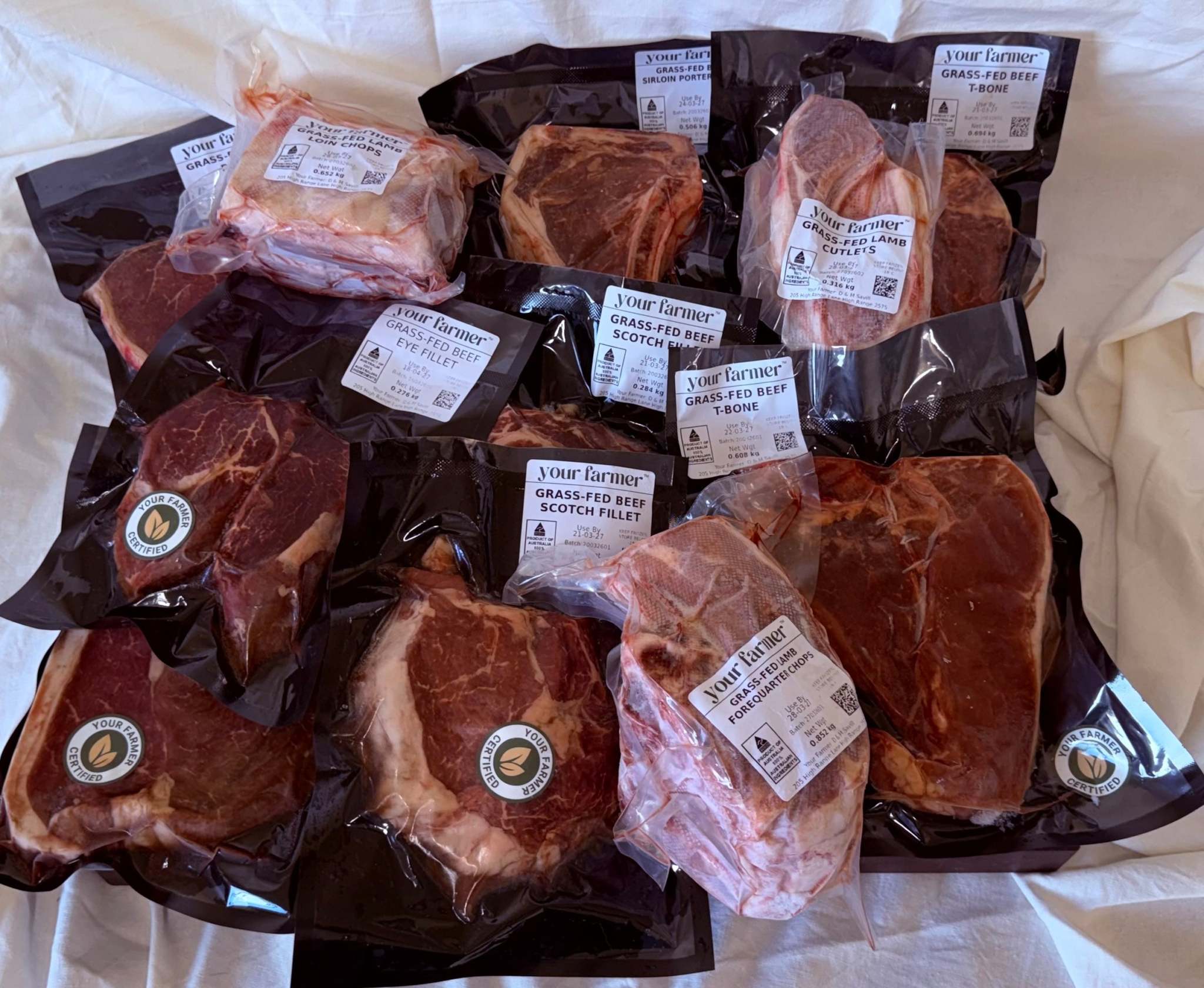
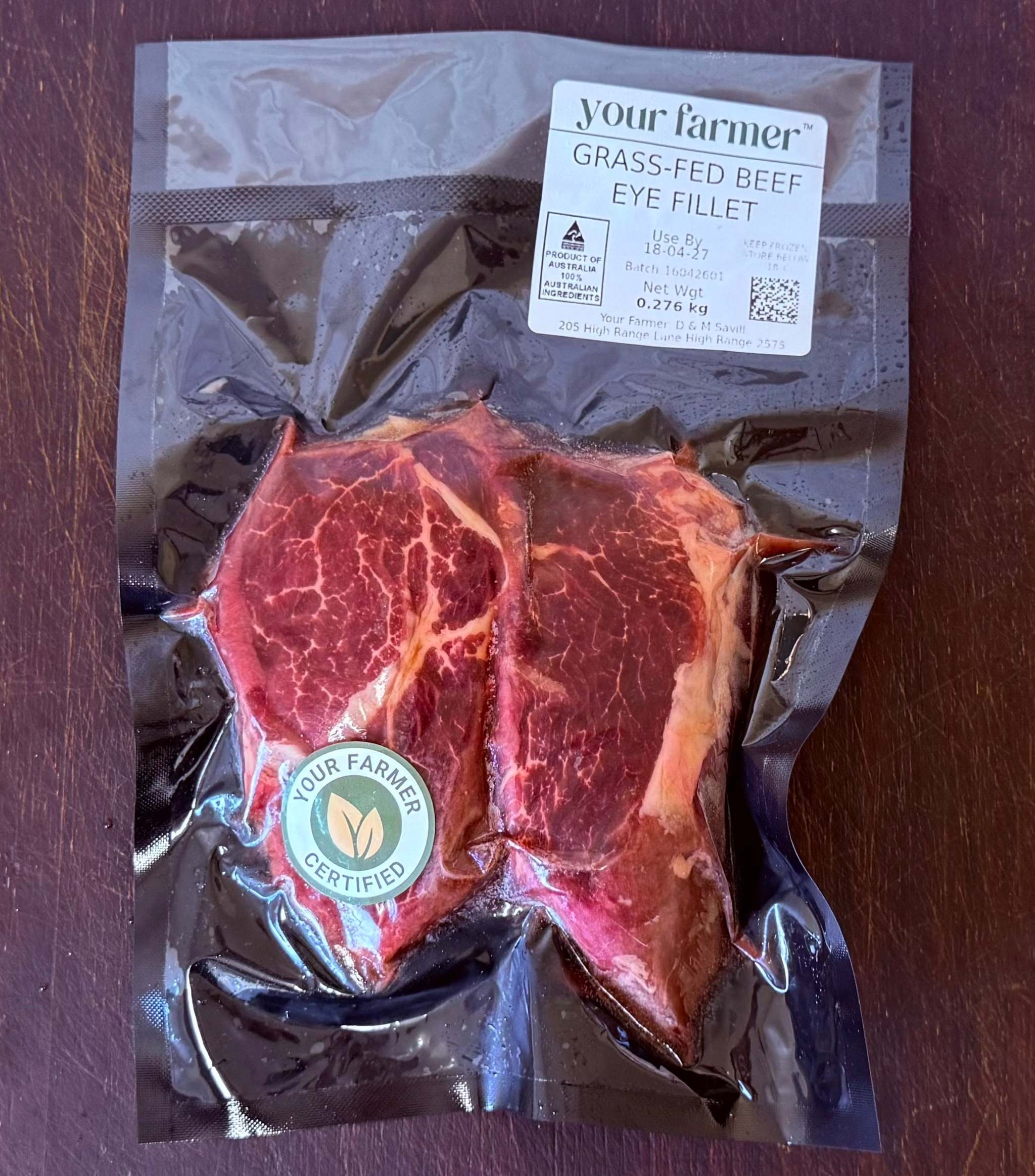
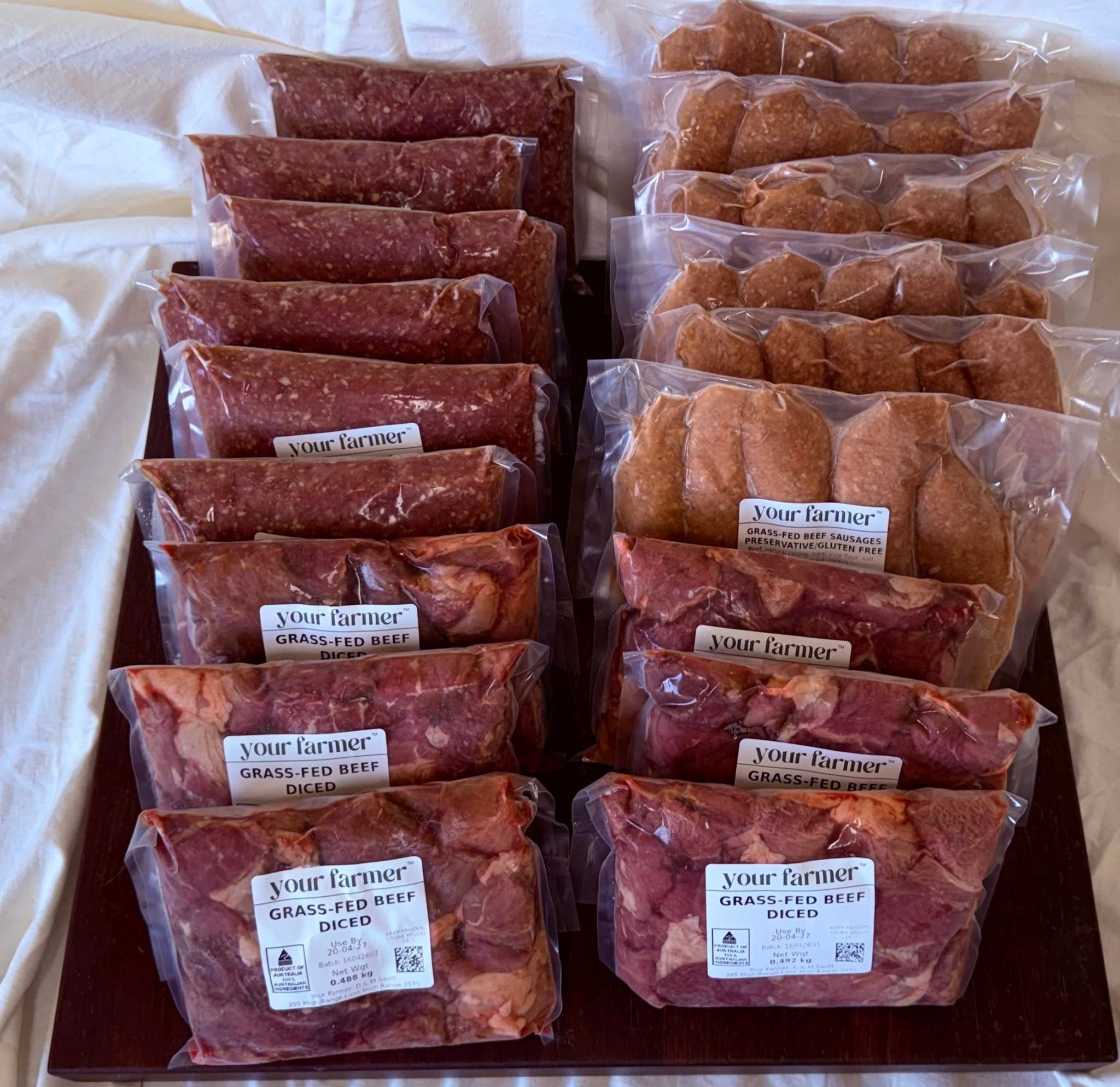
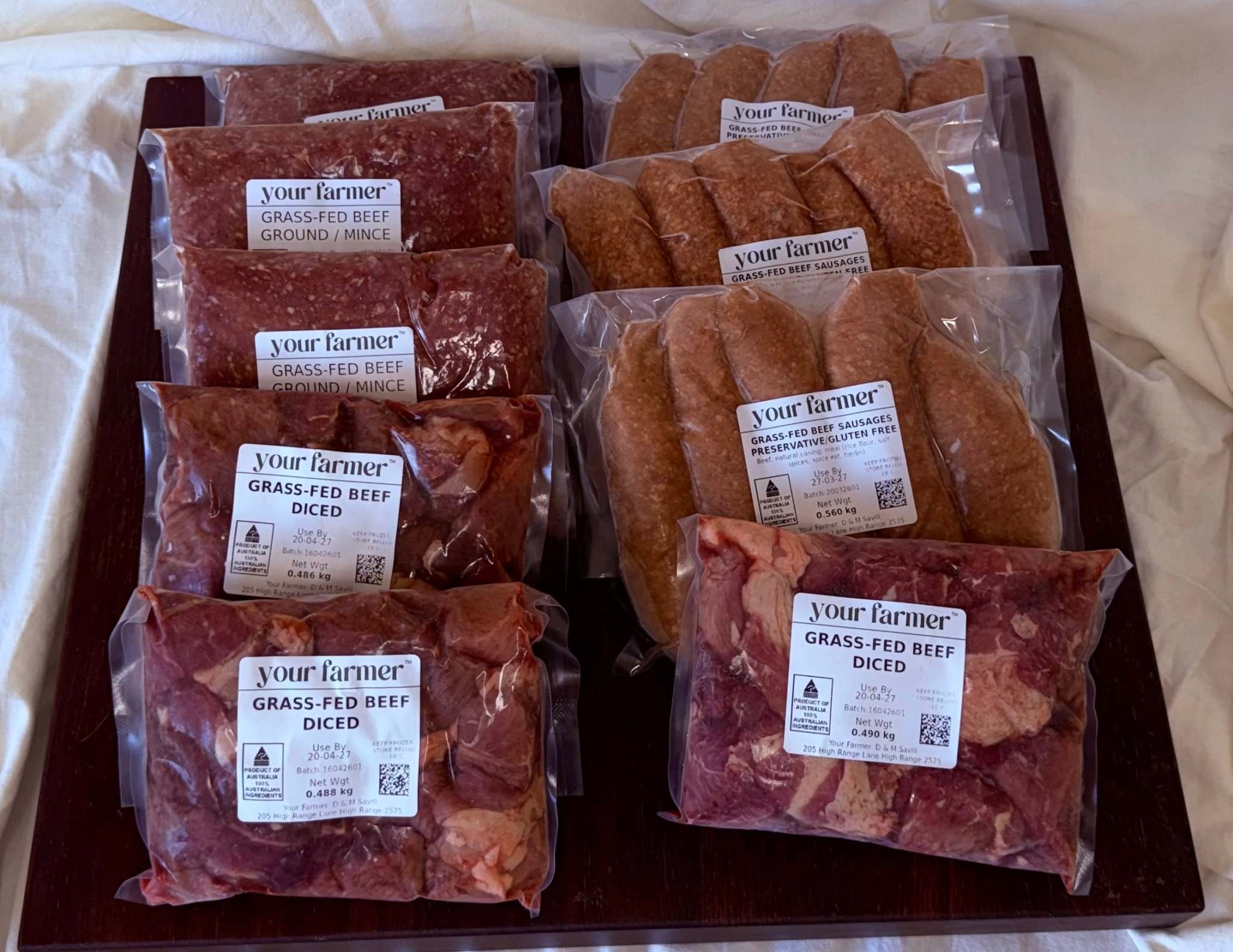
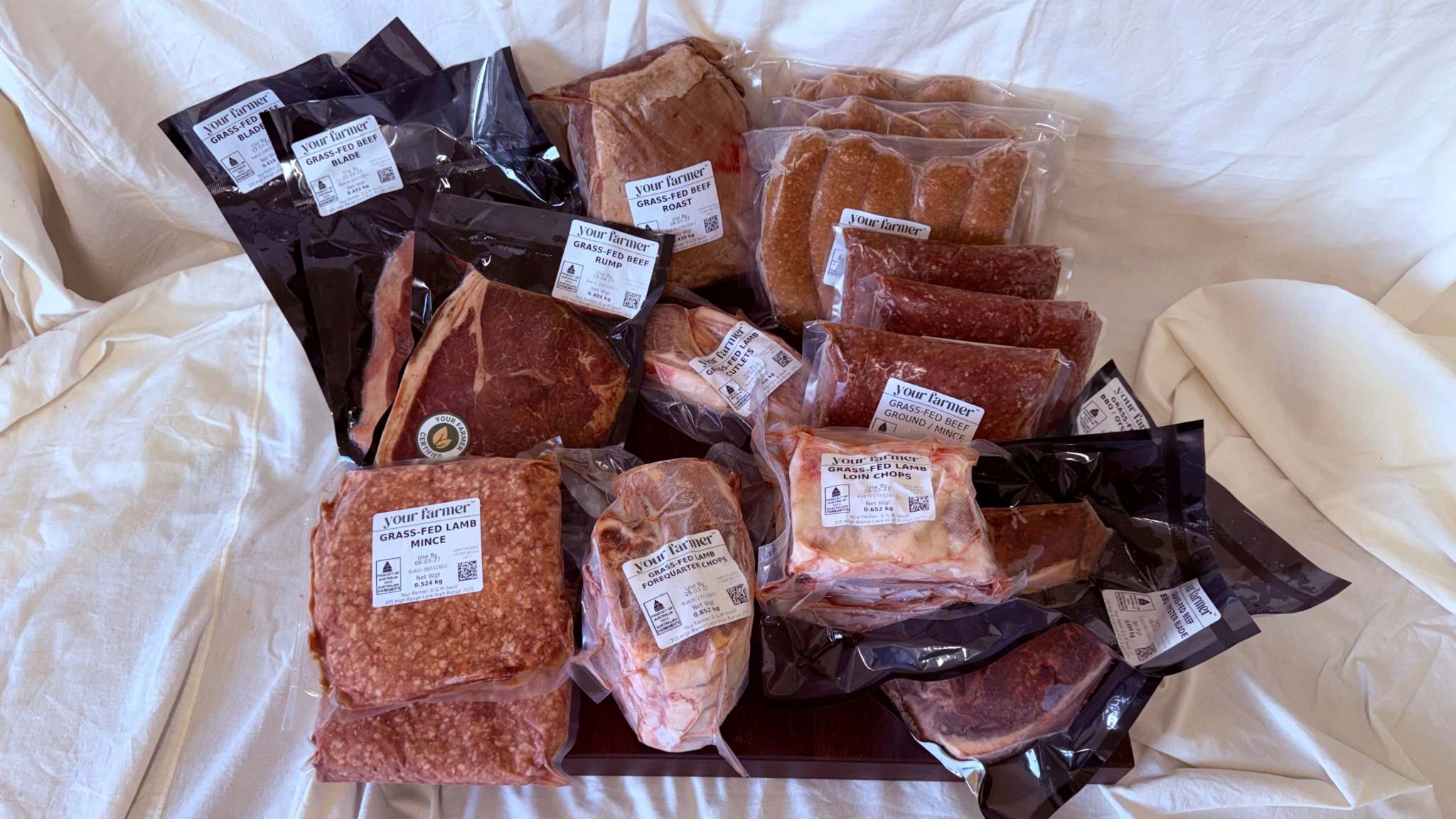
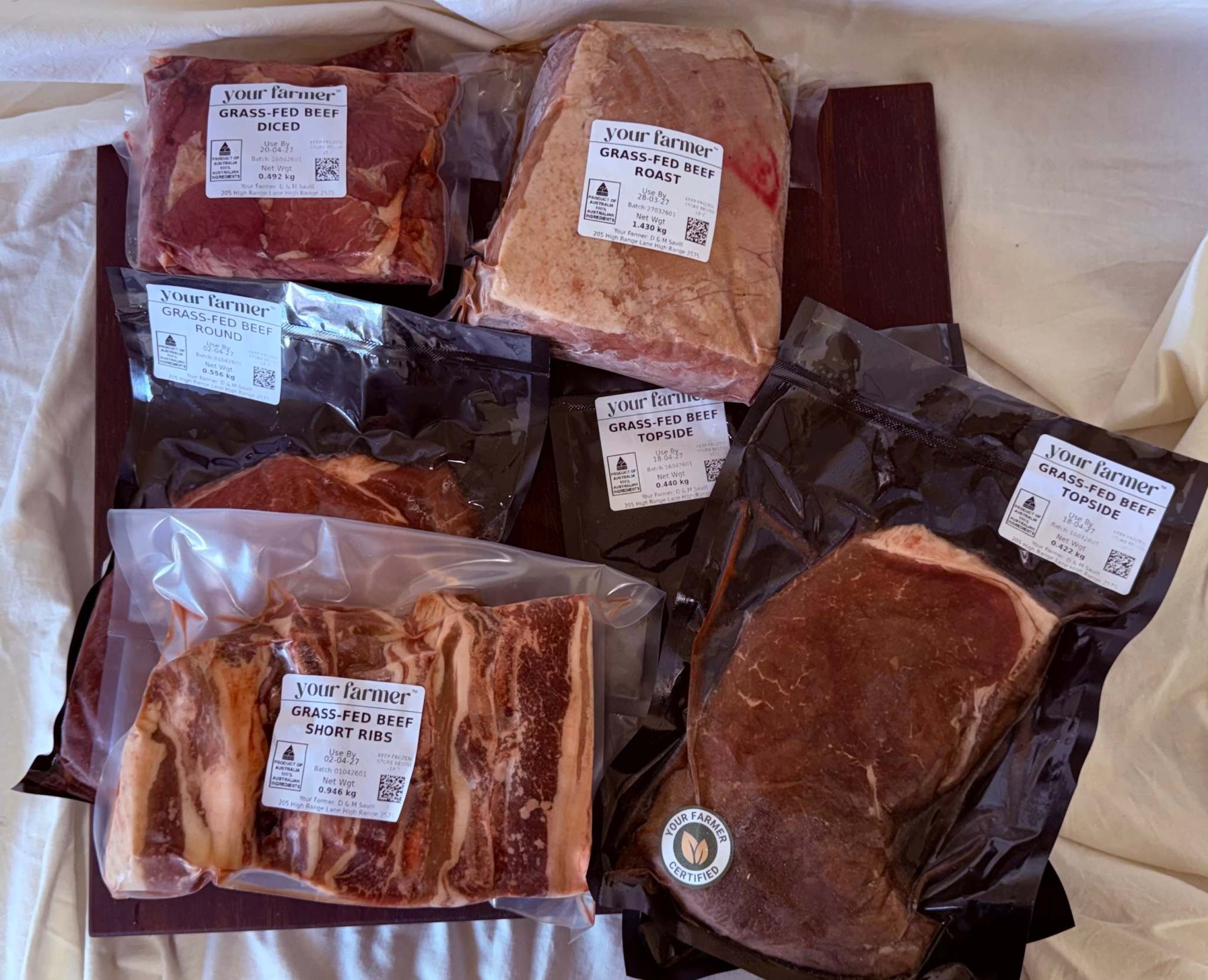
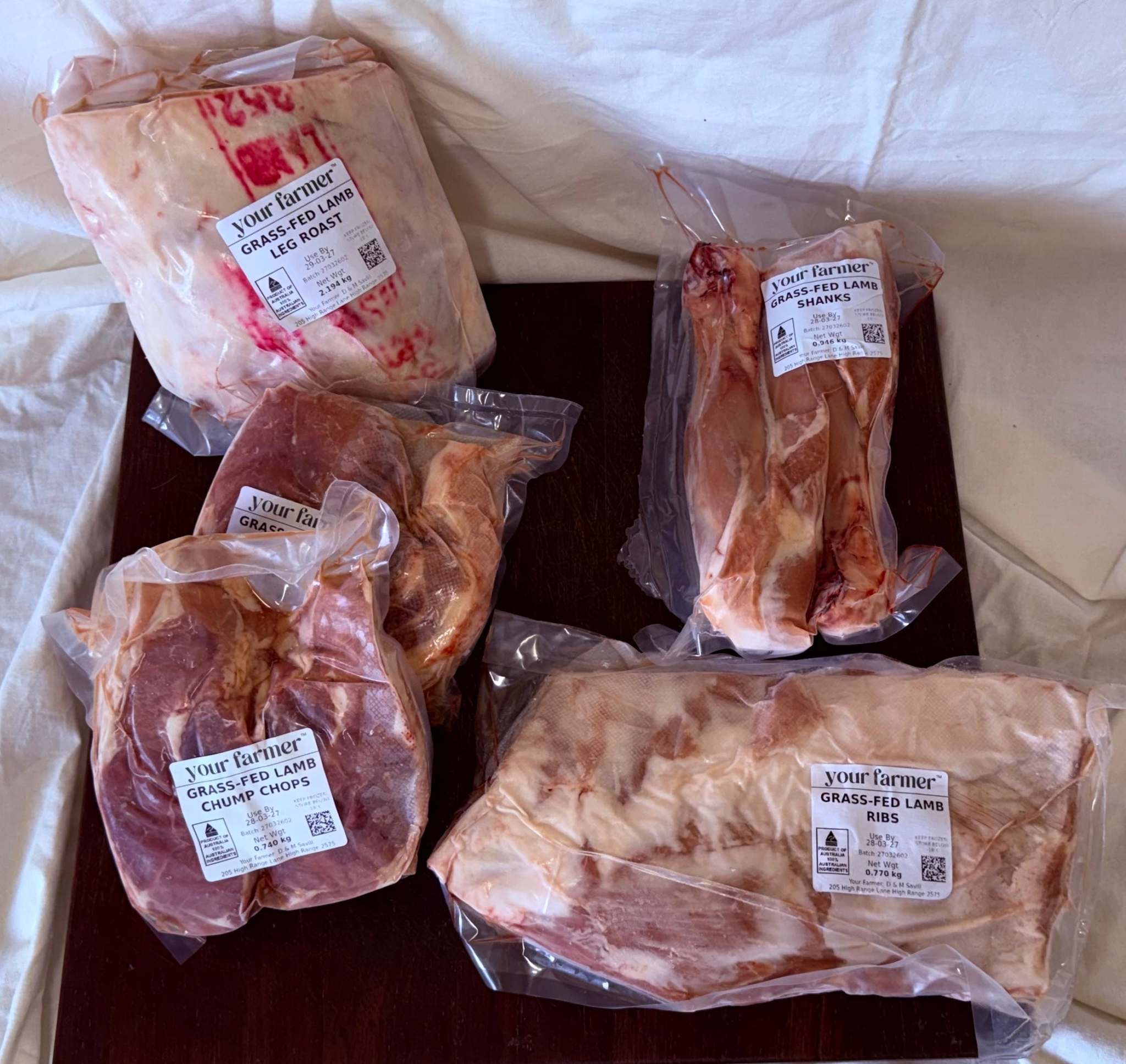
This is why labels alone are rarely enough to make a confident choice. What matters more is the system behind the product — how animals are raised, how claims are verified, and how transparent the supply chain really is. At Your Farmer, the focus is not on vague label claims, but on clearly defined farming practices and direct relationships with farmers, so you know exactly what sits behind the words on your food.
The same gap applies to "antibiotic-free" and "chemical-free"
The picture is the same for two other common label claims. "Antibiotic-free" has no legal definition for domestic beef sold in Australia. Antibiotic use in livestock is regulated by the APVMA, which registers veterinary antimicrobials and sets withholding periods before slaughter — but these are production controls, not label standards. A producer can declare beef "antibiotic-free" without meeting a government-defined benchmark for that term.
"Chemical-free" is arguably even harder to substantiate as a label claim. Under Australian Consumer Law, a claim that a food is entirely free from any chemical would be very difficult to prove — all biological organisms, including cattle and the beef they produce, contain naturally occurring chemical compounds. The ACCC warns that claims should be "specific and not use vague language" for precisely this reason.
What to ask instead of believing the label
If you want to understand what is actually behind a meat producer's claims, these questions will give you more useful information than the label text alone:
-
Do you use HGP implants in your cattle at any point in their life? This is the specific question the EUCAS uses to define genuine HGP-free status.
-
Is your claim independently verified? Ask which body audits it, how frequently, and whether you can see the documentation.
-
Do your animals spend time in a feedlot? HGP use is very common in the feedlot sector — cattle that are grass-finished and never enter a feedlot are less likely to have received an implant.
-
What third-party certification or accreditation do you hold? A self-declared label carries less weight than a scheme with independent auditing.
-
Can you provide your National Vendor Declarations? These are the traceability documents DAFF requires for verified HGP-free beef destined for regulated export markets — a reputable producer with genuine HGP-free status may have them.
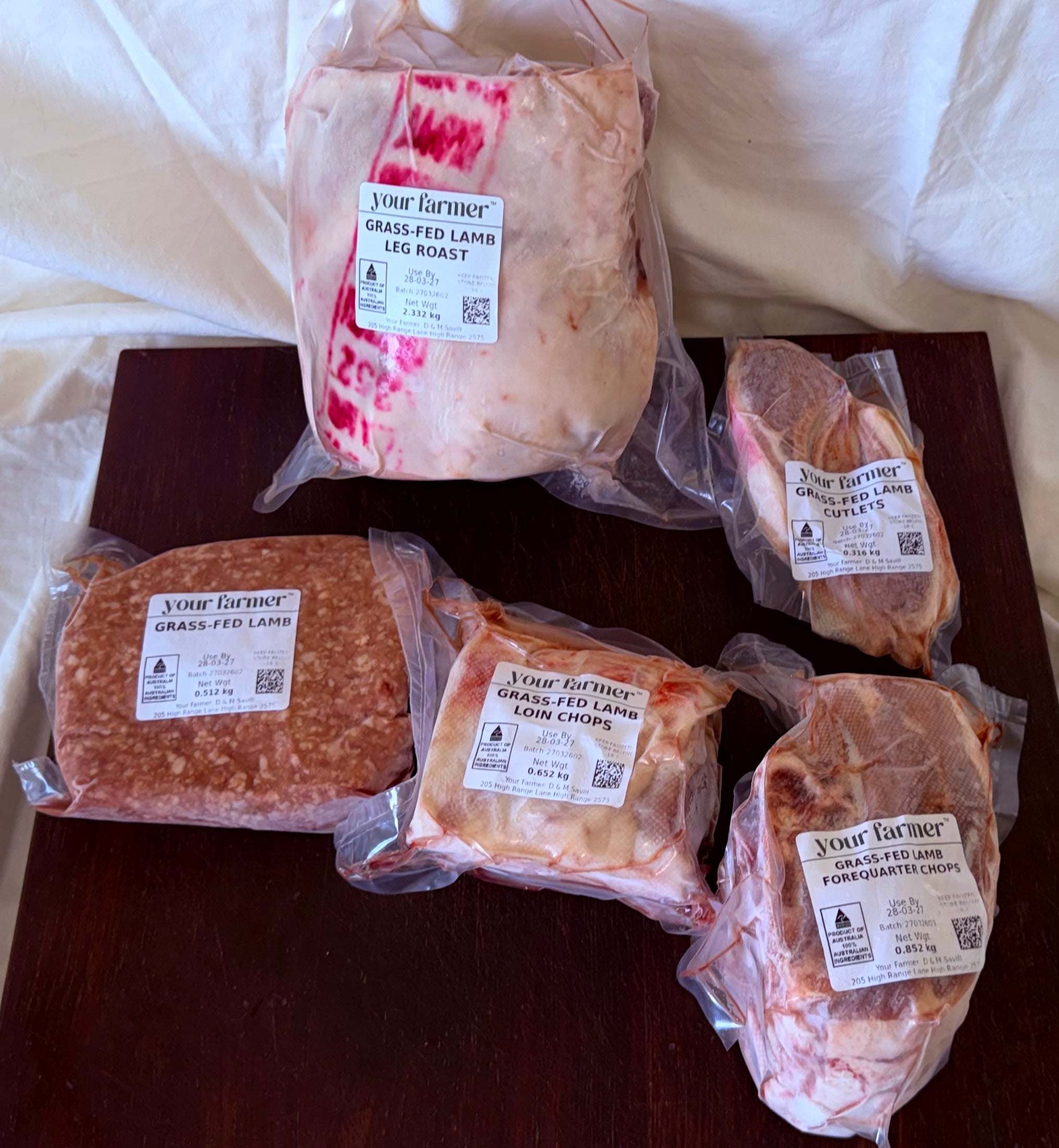
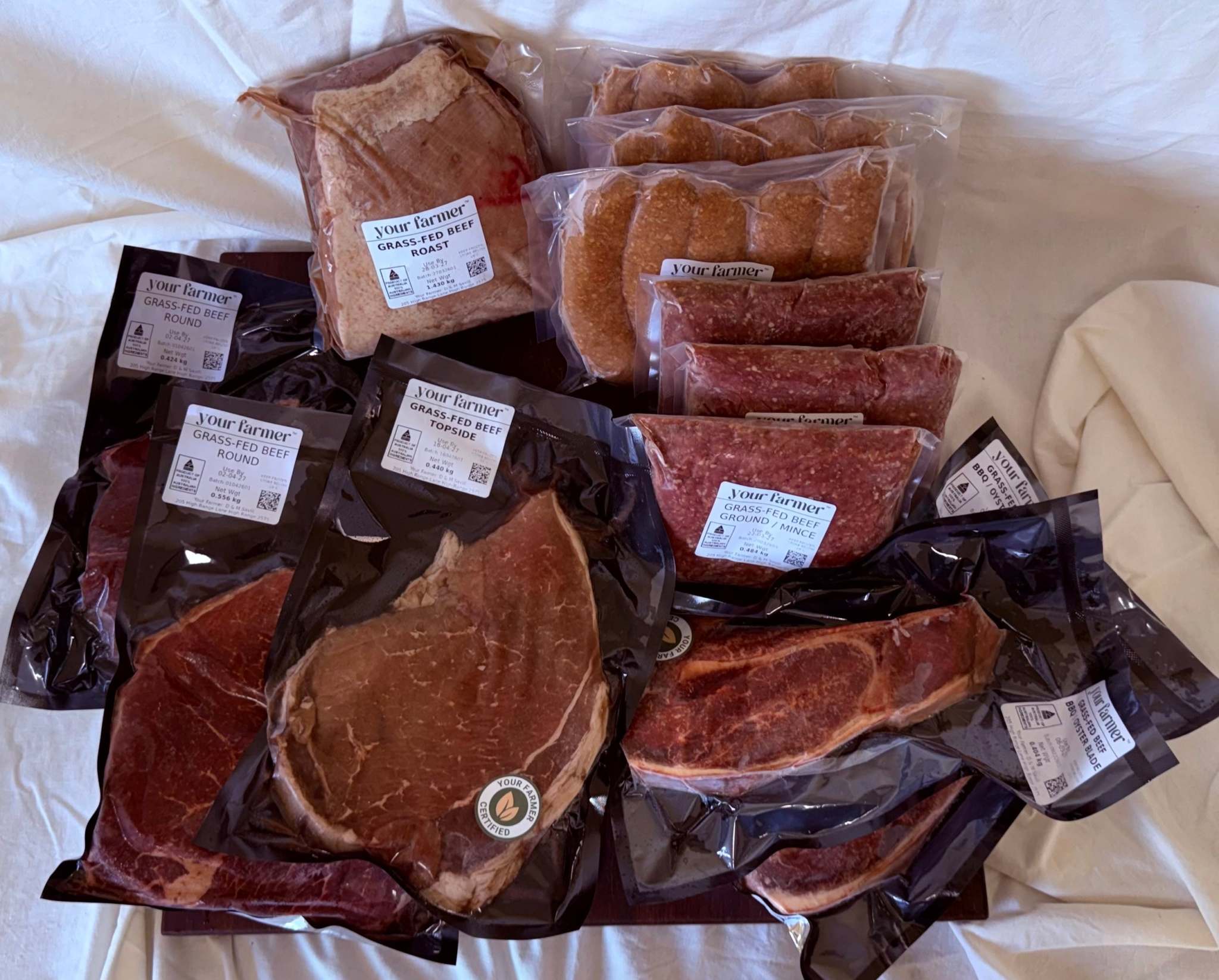
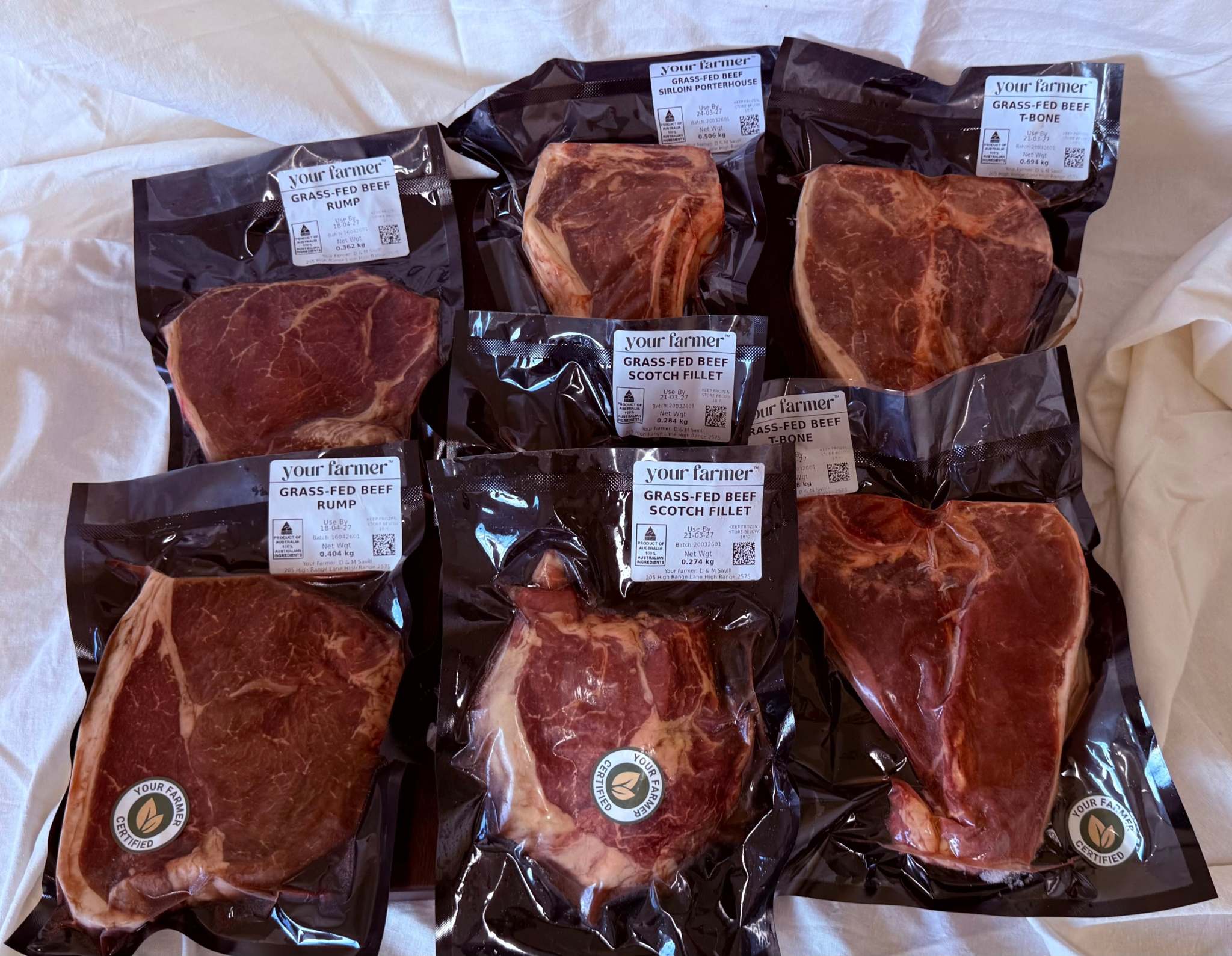
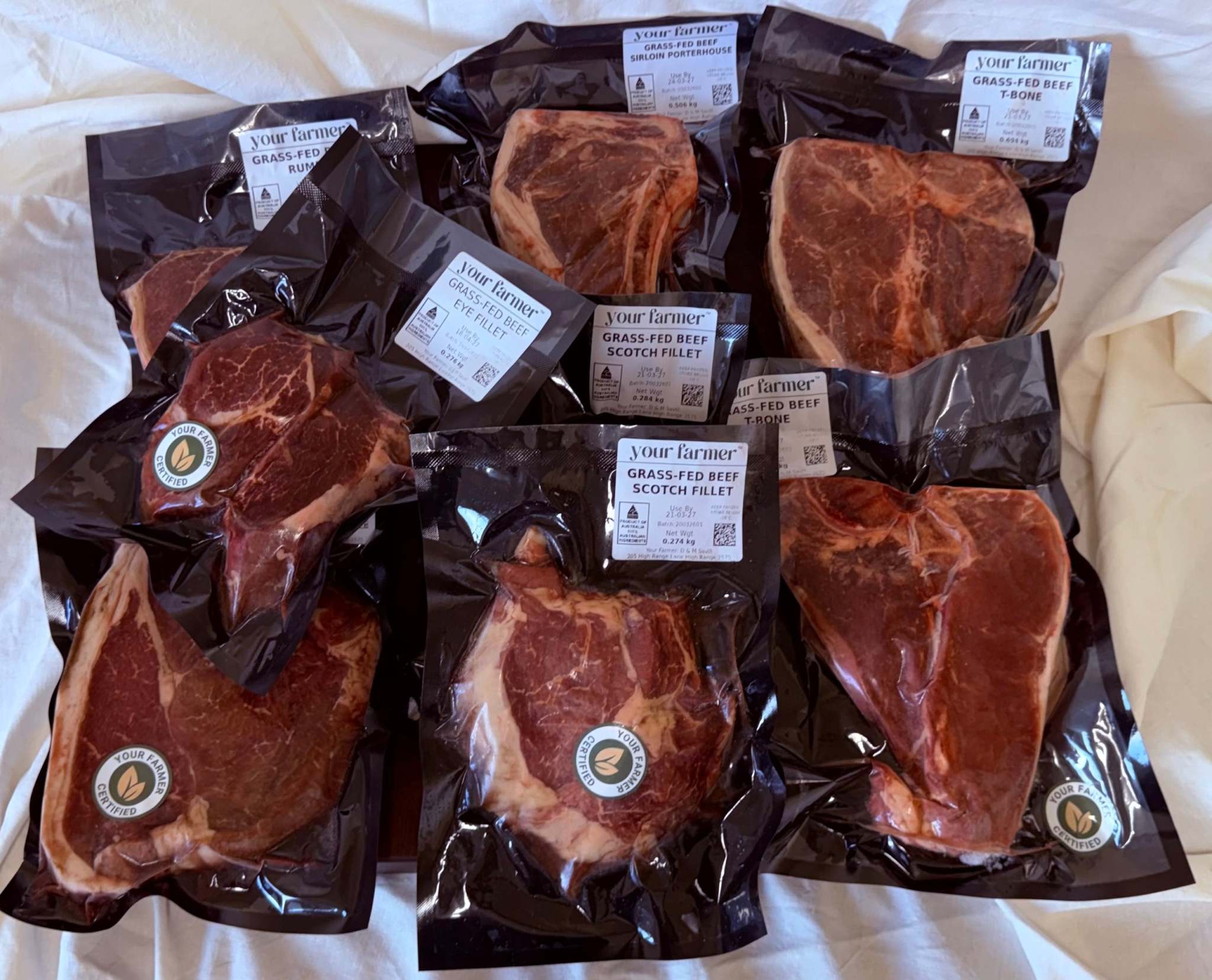
For shoppers across Sydney's northern suburbs, The Hills District, and the Wollongong–Nowra corridor who want these questions answered rather than label-guessed, the more reliable path is a direct relationship with a producer who can answer all of them transparently. That is the foundation of ethical meat delivery in Sydney, built on a Community Supported Agriculture model — where traceability comes from knowing your farmer, not from decoding a label. That's the approach taken by Your Farmer, where transparency starts with direct access to the farmers themselves — not just the claims on the packaging.

Share:
What Does "Hormone-Free" Beef Actually Mean in Australia — and Is It Legally Protected?
What Does "Hormone-Free" Beef Actually Mean in Australia — and Is It Legally Protected?