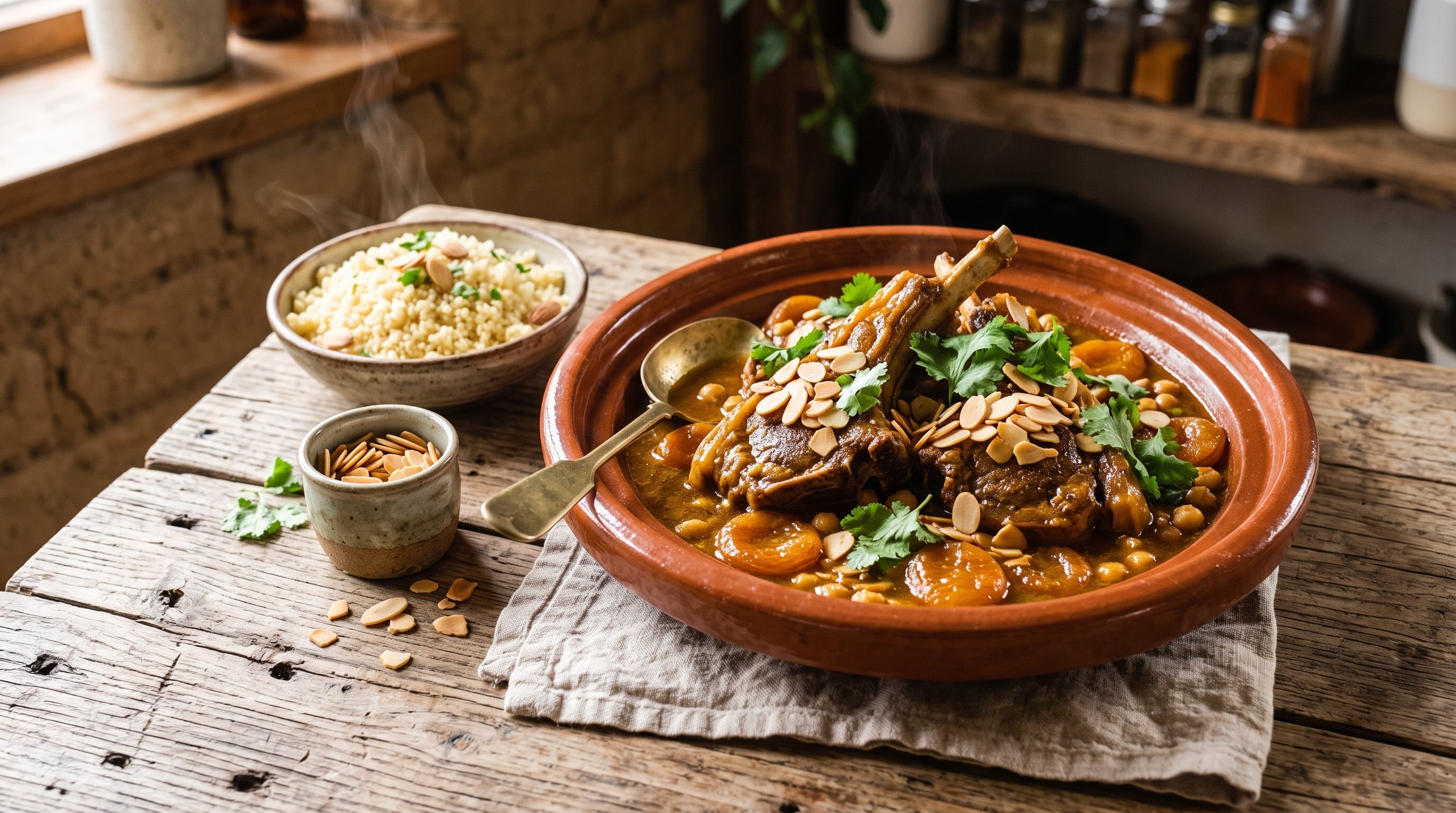
Sweet apricots, warm spice and lamb falling off the bone — no tagine pot required

Morocco has been slow-cooking the shoulder cuts of lamb with fruit and spice for about as long as anyone's been writing recipes down, and the combination still stops conversation at the table. Forequarter chops braise in a broth of cumin, coriander, cinnamon and a spoonful of honey until the meat surrenders, then dried apricots go in to plump up and turn the sauce glossy and sweet-savoury. A Dutch oven does everything the famous cone-lidded pot would. Toasted almonds on top, couscous underneath, and a weekend afternoon well spent.

2 hrs 25 mins 4 servings Prep 20 minsCook 2 hrs 5 minsMain CourseMoroccan

Ingredients

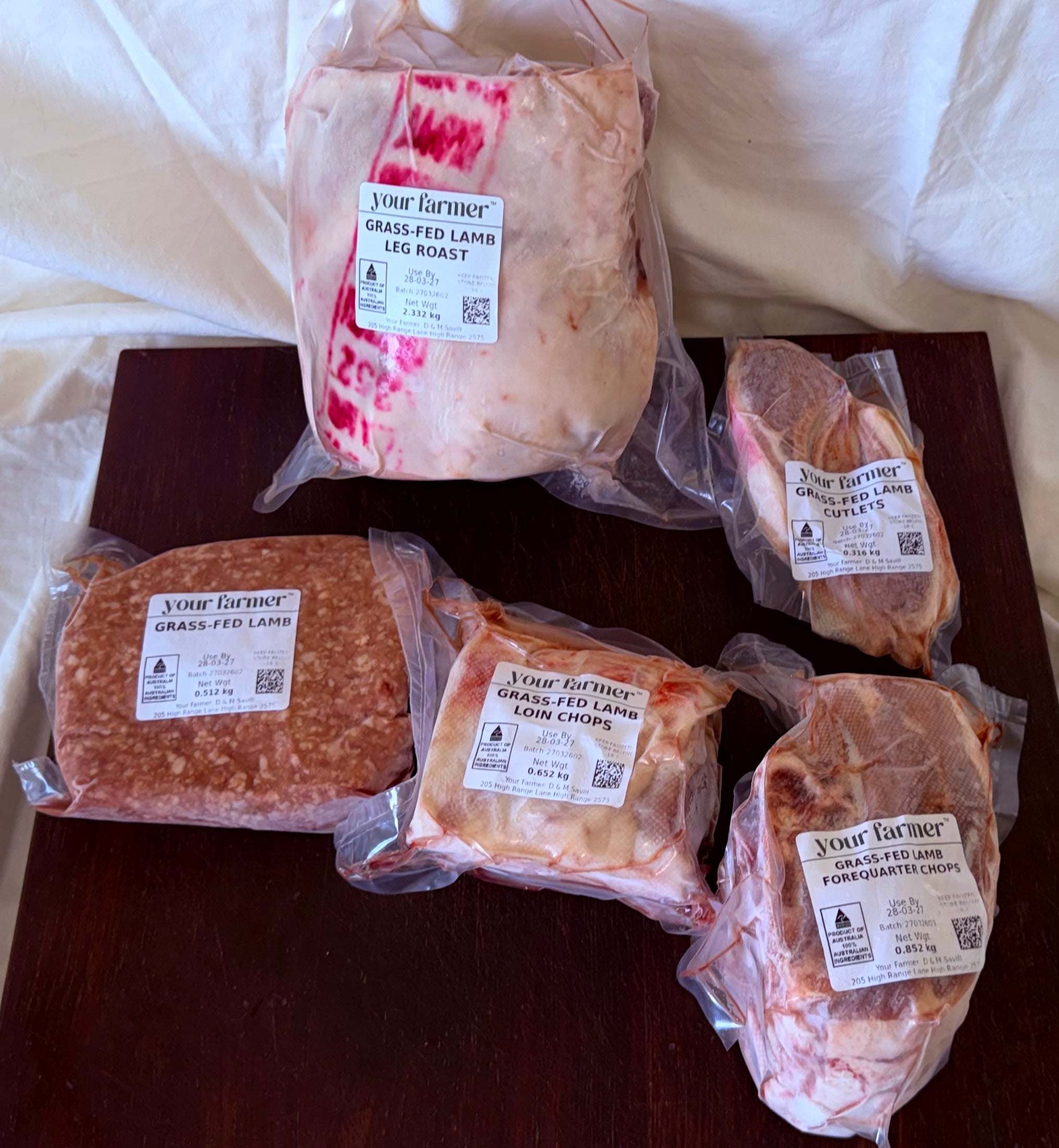
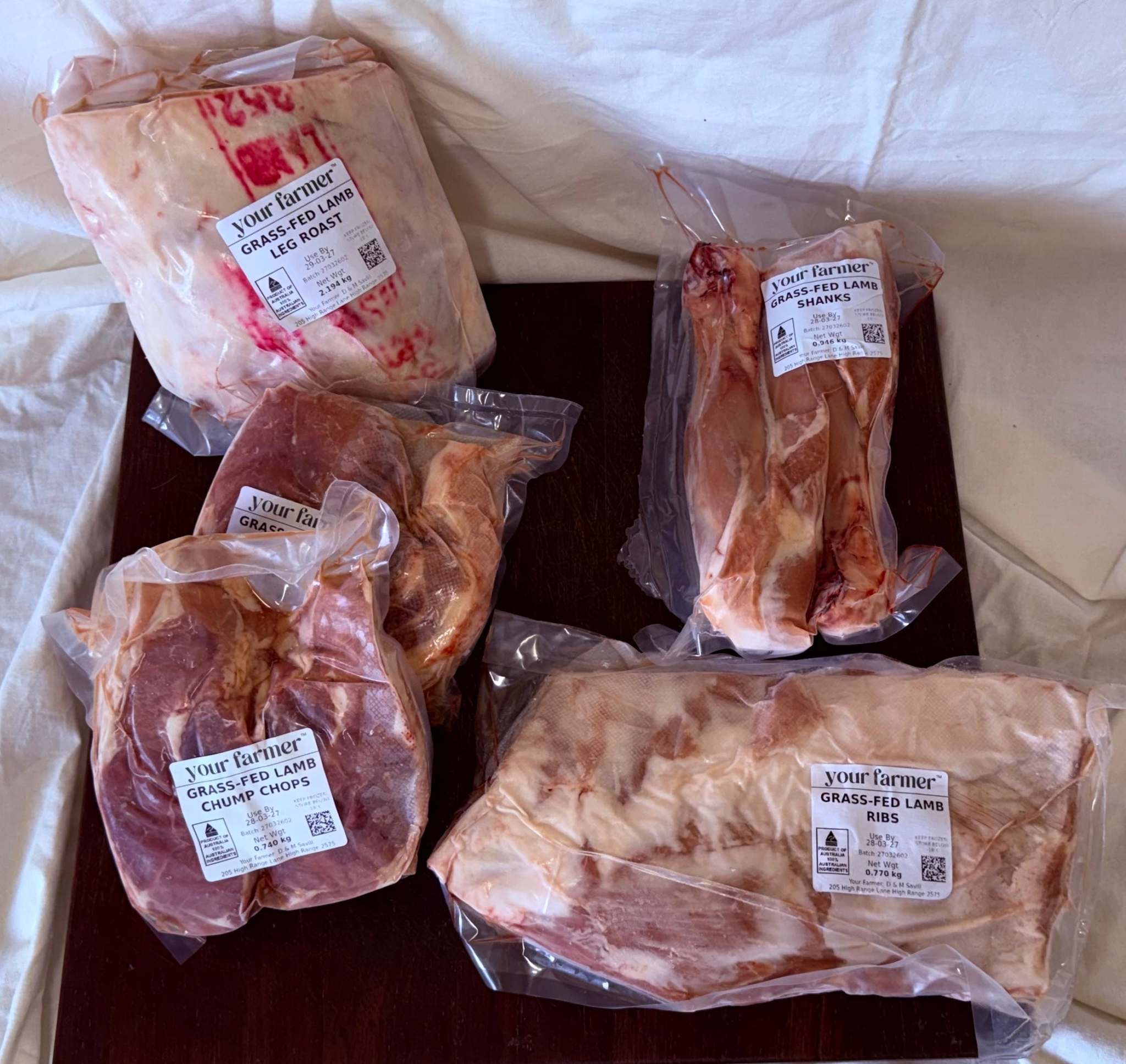
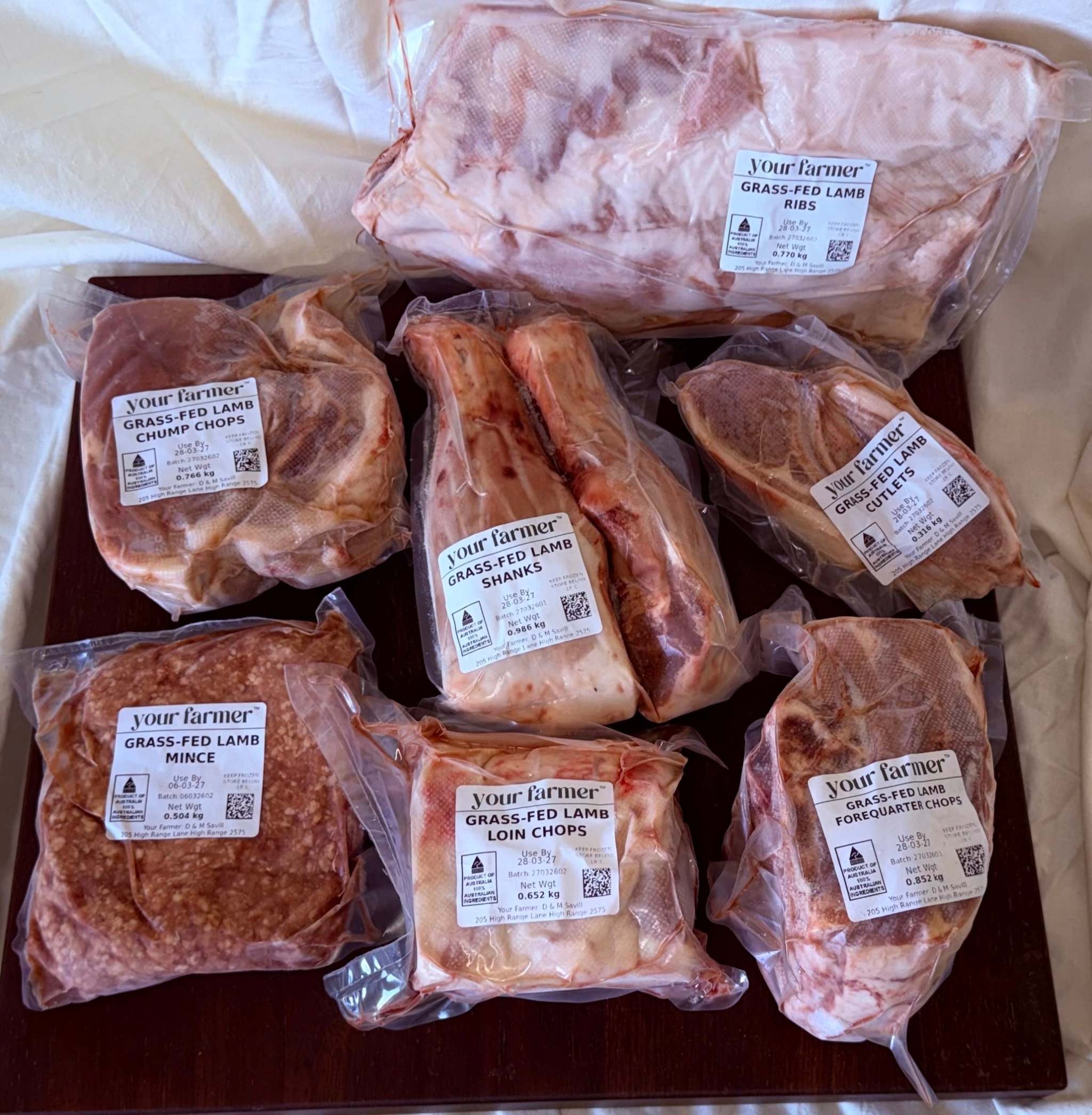
  • 4 Your Farmer grass-fed lamb forequarter chops
  • Salt and pepper to season
  • 2 tbsp olive oil
  • 2 brown onions, finely sliced
  • 3 cloves garlic, crushed
  • 1 tbsp finely grated fresh ginger
  • 2 tsp ground cumin
  • 2 tsp ground coriander
  • 1 cinnamon stick (or 1 tsp ground cinnamon)
  • 1/2 tsp ground turmeric
  • Pinch of saffron threads (optional)
  • 500ml chicken stock
  • 1 tbsp honey
  • 150g dried apricots
  • 40g flaked almonds, toasted
  • Fresh coriander and couscous, to serve

Instructions

Season the chops well. Heat the oil in a Dutch oven or heavy casserole over medium-high heat and brown them for about 3 minutes each side; set aside.

4 forequarter chops2 tbsp olive oil

Lower the heat to medium and cook the onions for 6 to 8 minutes until soft and golden, then add the garlic and ginger for 1 minute.

2 onions3 cloves garlic1 tbsp ginger

Stir in the cumin, coriander, cinnamon, turmeric and saffron for 30 seconds, until the kitchen smells like a spice market.

2 tsp ground cumin2 tsp ground coriander1 cinnamon stick1/2 tsp turmeric

Add the stock and honey, return the chops and their juices, cover, and simmer on the lowest heat for 1 hour 15 minutes, turning the chops once.

500ml chicken stock1 tbsp honey

Add the apricots and simmer partly covered for 30 minutes more, until the meat is falling from the bone and the sauce has turned glossy and slightly syrupy.

150g dried apricots

Check the seasoning — it should sit right on the line between sweet and savoury — then scatter over the almonds and coriander and serve on a bed of couscous.

40g flaked almondsfresh coriander

Appears in

Why Tagines Start at the Shoulder End

A tagine is a braise wearing a different hat, and braises are built on working muscles. Moroccan cooks reach for the shoulder and neck cuts by instinct — bone in, fat on — because two gentle hours turn their connective tissue to silk while the bones give the sauce its body. The forequarter chop is our version of exactly that cut. The fat matters doubly here: it carries the spices and balances the sweetness of the fruit, which is why lean cuts make flat tagines. Your Farmer® forequarter chops are grass-fed on pasture, and that clean, sweet fat is what lets the apricots and honey shine without the dish turning cloying. Speaking of which — the honey in our pantry is raw honey from the same food community, and a spoonful is all this pot asks.

Swaps and Variations

Pitted prunes or dates swap for the apricots and pull the dish darker and stickier. A drained tin of chickpeas in the final 30 minutes stretches it to six serves. Preserved lemon and green olives instead of fruit and honey takes you to the other great tagine tradition — sharper, saltier, equally correct. If your spice drawer runs to ras el hanout, two teaspoons replaces the cumin, coriander, cinnamon and turmeric in one scoop, and a pinch of chilli flakes is welcome if your table leans that way. And for the grandest version of this pot, lamb shanks braise the same way with an extra hour on the clock.

Storage and Leftovers

Tagines are famously better the next day, once the fruit has finished seasoning the sauce. It keeps in the fridge for 3 to 4 days and freezes for up to 3 months; reheat gently on the stove with a splash of water. Leftover idea: shred the meat off the bones and toss it with couscous, herbs and a squeeze of lemon for a warm salad that doesn't feel like leftovers at all.

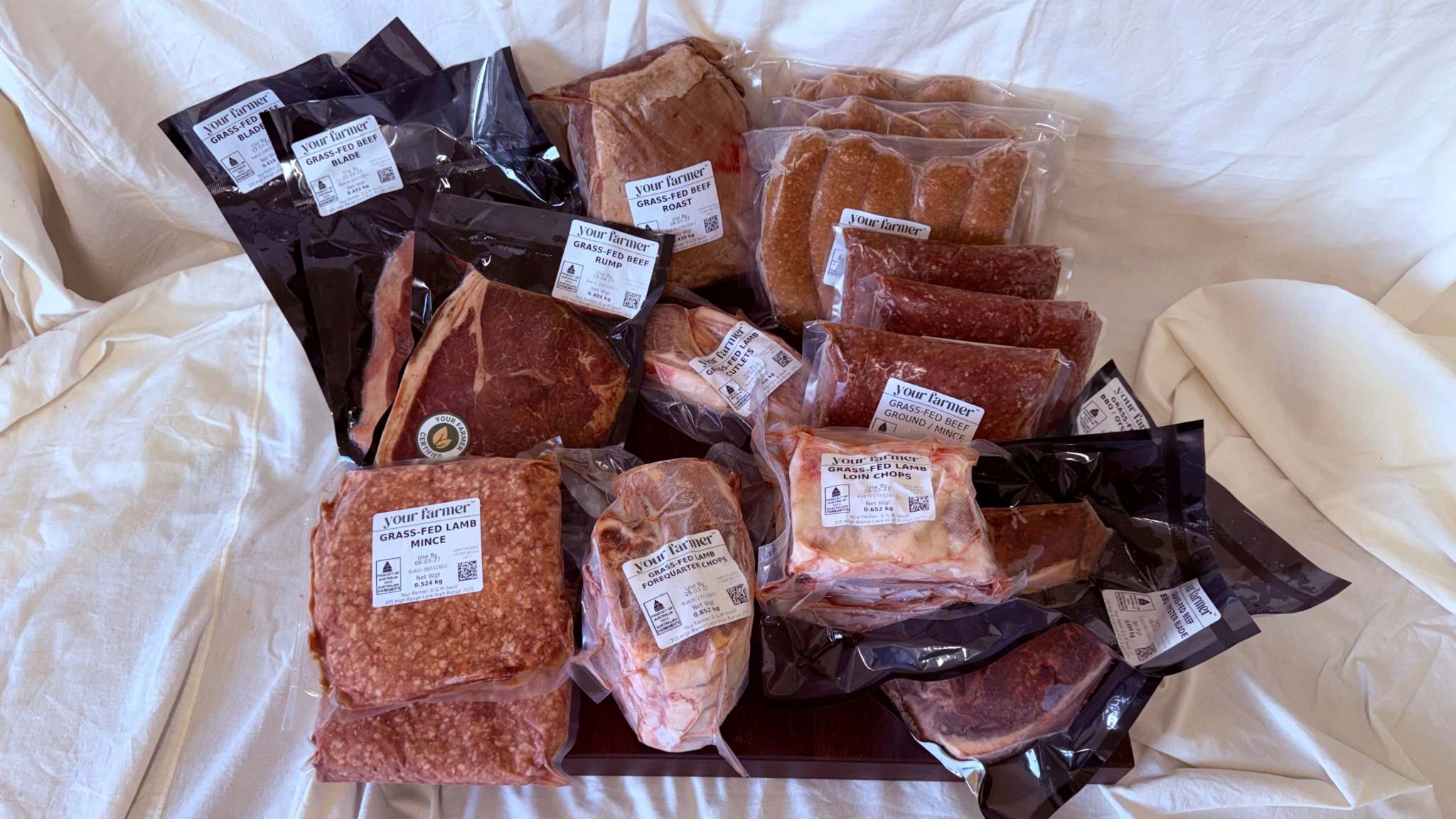
Forequarter chops arrive in every box of our pastured lamb share — this is the dish that turns the humble pack into the weekend's main event.
Frequently asked questions

Do I need an actual tagine pot?

No. The cone-lidded pot is a beautiful piece of engineering for cooking over coals, but a Dutch oven or any heavy casserole with a good lid achieves the same slow, moist braise on a modern stove.

My tagine tastes too sweet. How do I fix it?

A squeeze of lemon juice and a proper pinch of salt pull it back into balance. Taste again before serving — the line between sweet and savoury is exactly where this dish lives.

Is the saffron essential?

No — it adds a lovely aroma and colour, but the tagine works well without it. Don't substitute more turmeric; just leave it out.

Can I use ras el hanout instead of the individual spices?

Yes — two teaspoons of a good ras el hanout replaces the cumin, coriander, cinnamon and turmeric. Every blend is different, so taste and adjust near the end.

Can I make it in the slow cooker?

Yes. Brown the chops and build the spice base in a frying pan, then transfer to the slow cooker with the stock reduced to 375ml. Cook on LOW for 6 to 7 hours, adding the apricots for the final hour.

Three Simple Steps

A whole table of real food.

Your Farmers grow grass-fed beef and lamb, pastured eggs and the best eco-grown veggies and produce — every item grown to the same ecological standard, every farmer one you can know by name. One subscription, your whole real-food shop.

01

Reserve your share — or try a pack

Subscribe to a share of the harvest, or start with a one-off fixed pack.

02

Make it your own

Pick your delivery rhythm and what's in the box. Skip or cancel anytime — no lock-in.

03

Cook, savour, know your farmer

We deliver in a reusable esky we collect next time. No couriers, no waste.

More Recipes

View all

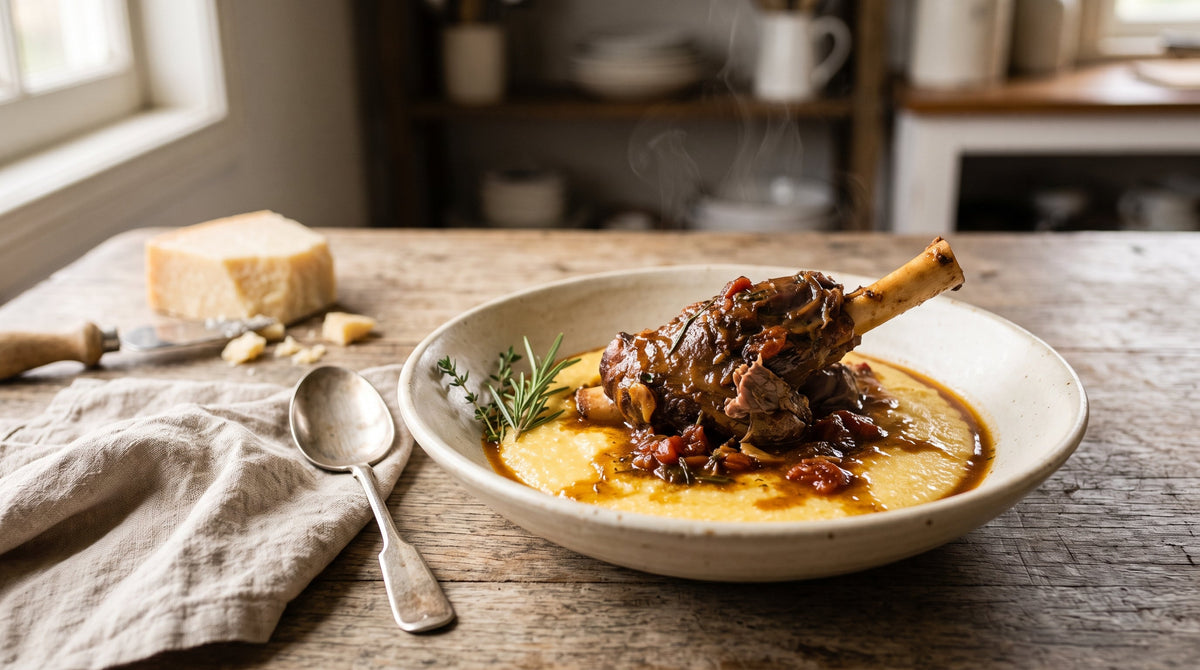
Tomato and rosemary braised grass-fed lamb shank served over soft parmesan polenta.

Tomato and Rosemary Braised Lamb Shanks with Soft Polenta

Osso buco's lamb cousin, with soft polenta doing the catching

The Milanese figured out long ago that a shin braised on the bone in tomato makes a sauce nothing else can — the marrow sees to that. This is the same idea run through the lamb paddock: shanks browned hard, then braised low with tomato, white wine and rosemary until the meat leans off the bone, all of it served over a pool of soft, buttery parmesan polenta whose entire purpose in life is catching sauce. It's a Sunday sort of pot that happily cooks on a Tuesday, and the polenta takes less minding than most people fear.

Read moreabout Tomato and Rosemary Braised Lamb Shanks with Soft Polenta

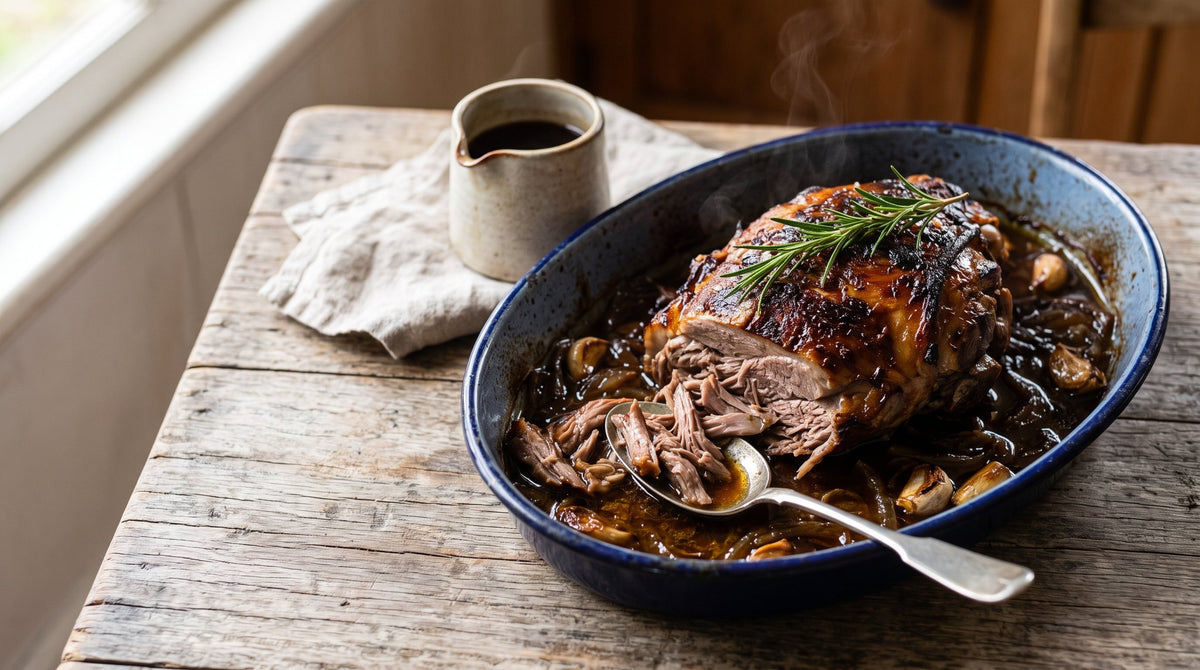
Slow-roasted grass-fed lamb pulled into tender shreds in its pan juices in an enamel roasting dish.

Slow-Roasted Lamb with Pan Juices, the Low and Slow Way

The roast that cannot be overcooked — give it half a day and it gives up entirely

Most roast anxiety comes from a five-minute window: pull it too early, it's raw; too late, it's leather. This method deletes the window. You give the lamb a hard blast of colour, then drop the oven right down and walk away for the better part of an afternoon. Somewhere in hour three the meat stops resisting altogether — a spoon will do the carving. There's no thermometer stress, no window to miss, and the pan underneath quietly builds the best juices you'll pour all winter. Patience, rewarded.

Read moreabout Slow-Roasted Lamb with Pan Juices, the Low and Slow Way

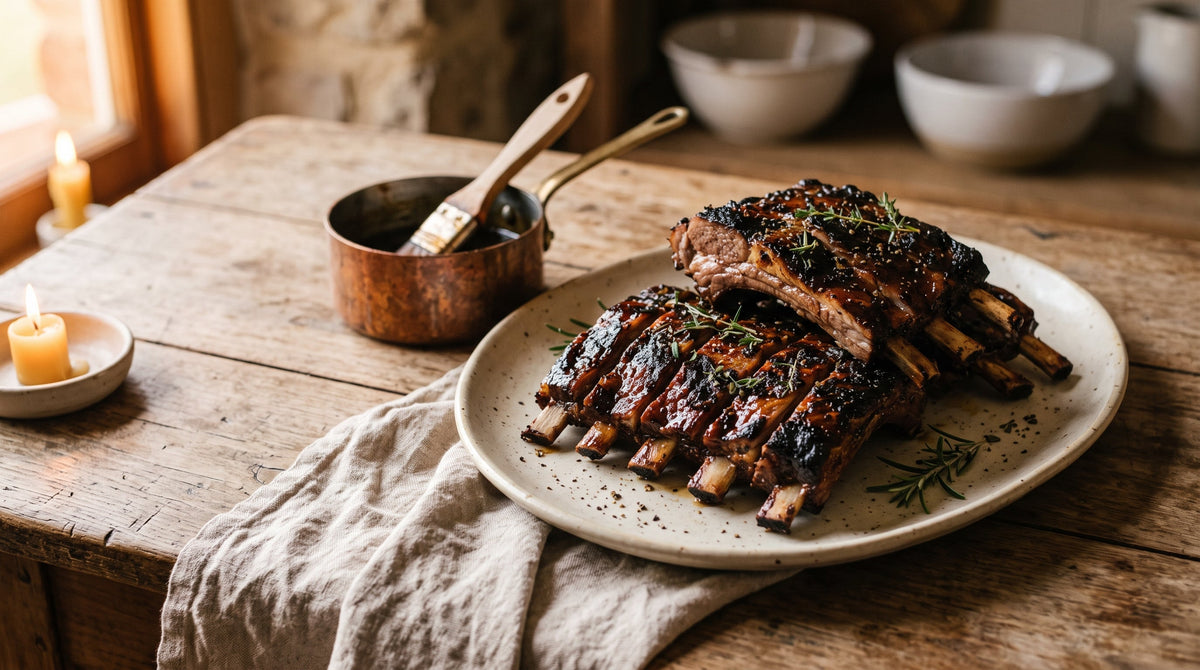
Twice-cooked grass-fed lamb ribs, braised until tender then charred and glazed, stacked on a stoneware platter.

Twice-Cooked Lamb Ribs: Braise, Then Char

The restaurant trick: do the hard part yesterday, take the applause tonight

Ever wondered how a restaurant sends out perfect sticky ribs eight minutes after you order them? They cooked the ribs yesterday. The racks get braised in stock and aromatics until tender, then cooled in their own liquid — where they firm up, drink back flavour, and wait as long as you need. Come dinner time, all that's left is a hot grill pan, a honey glaze made from the braising liquid, and about ten minutes of theatre. It's the most reliable rib method there is, and the only one where the night-of cooking fits between guests arriving and the first drink being finished.

Read moreabout Twice-Cooked Lamb Ribs: Braise, Then Char