

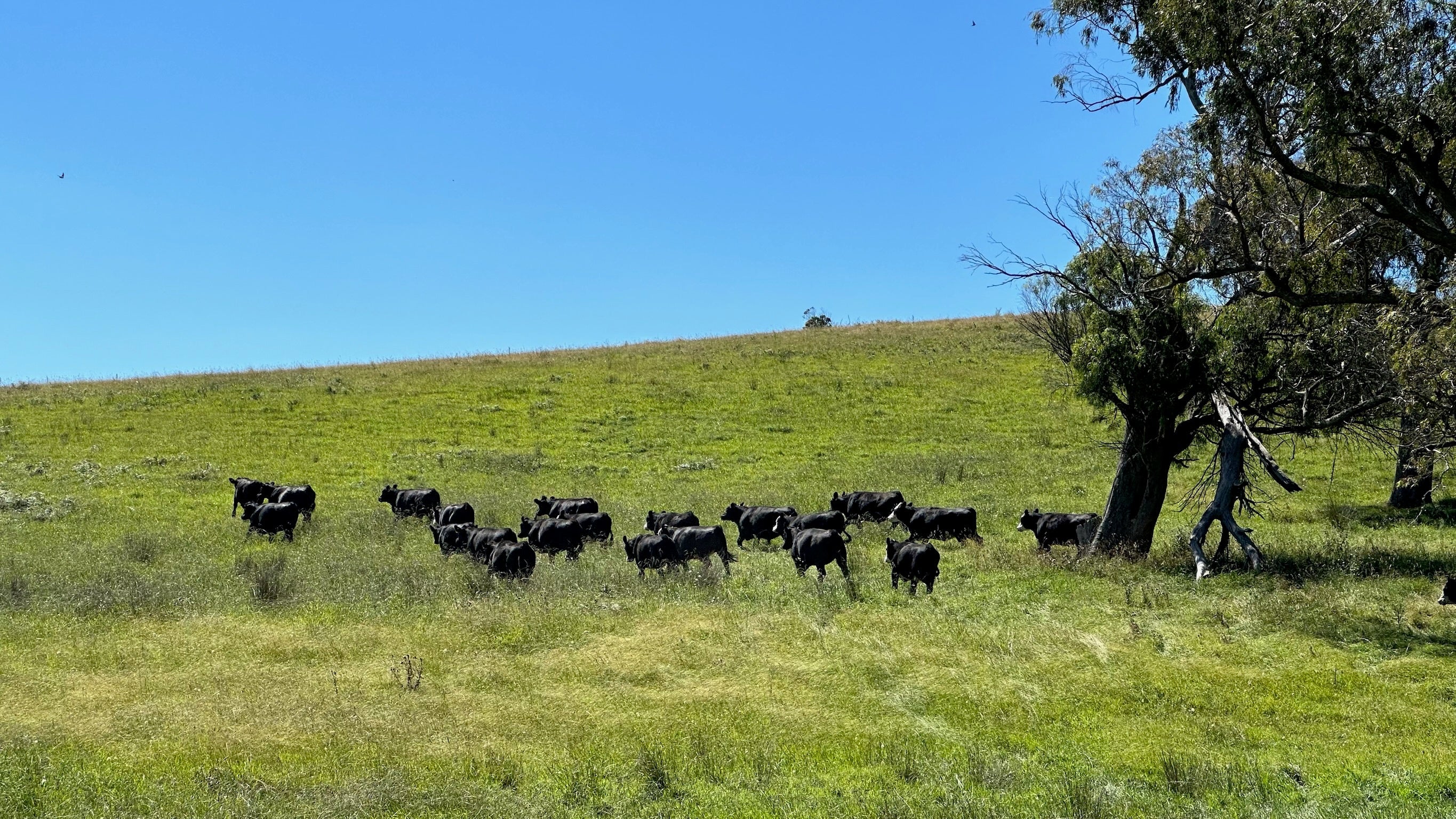
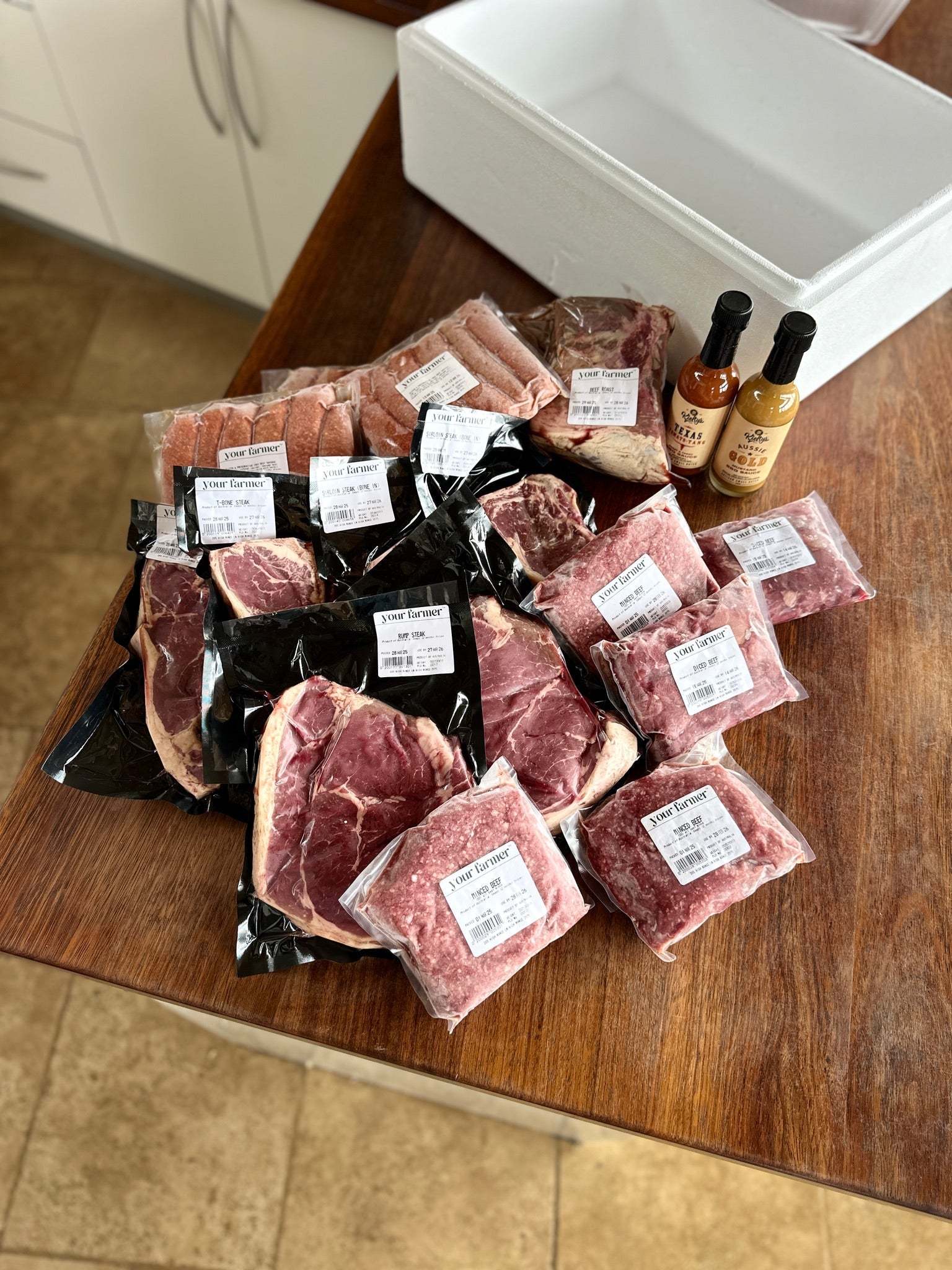
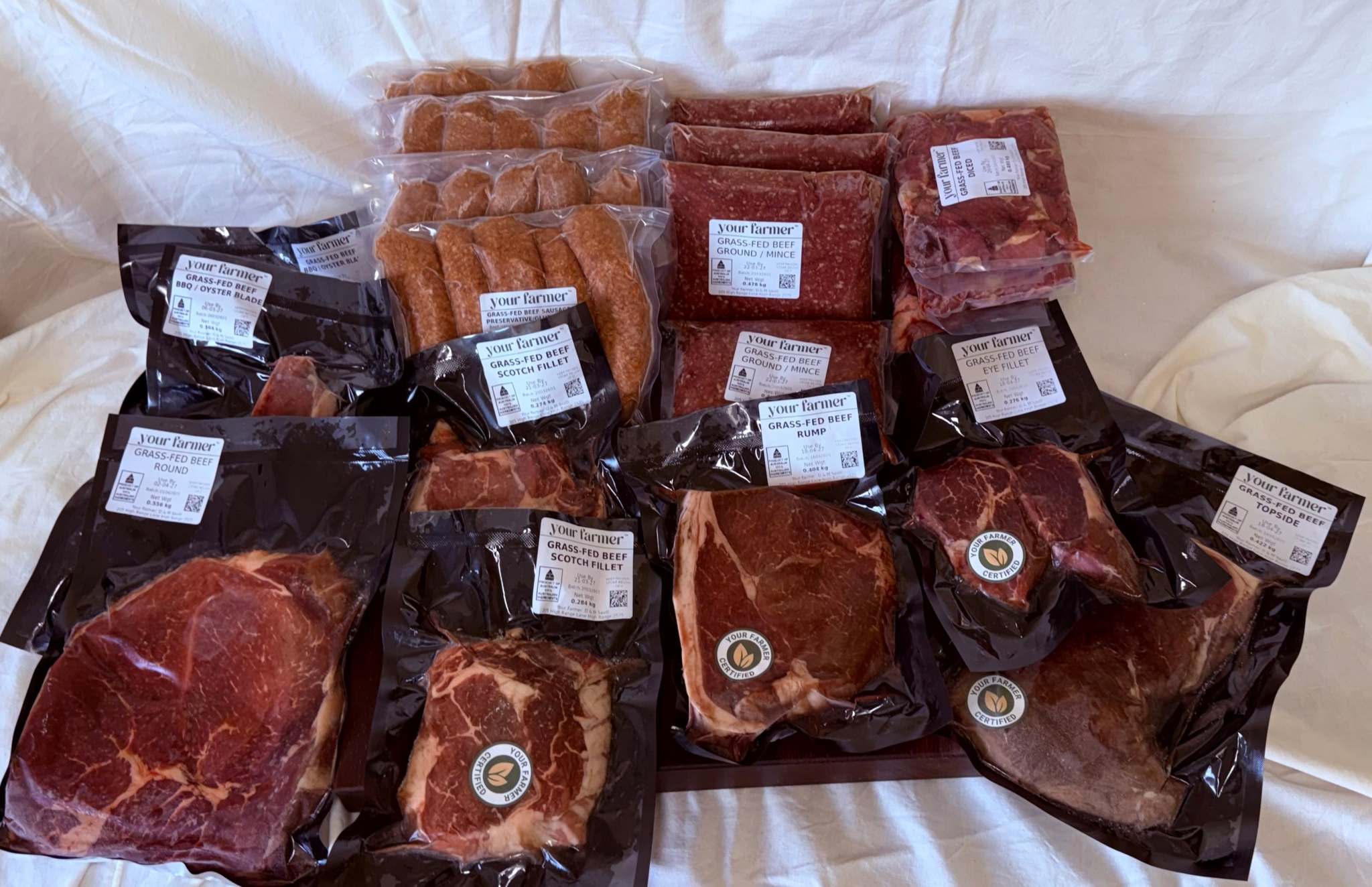
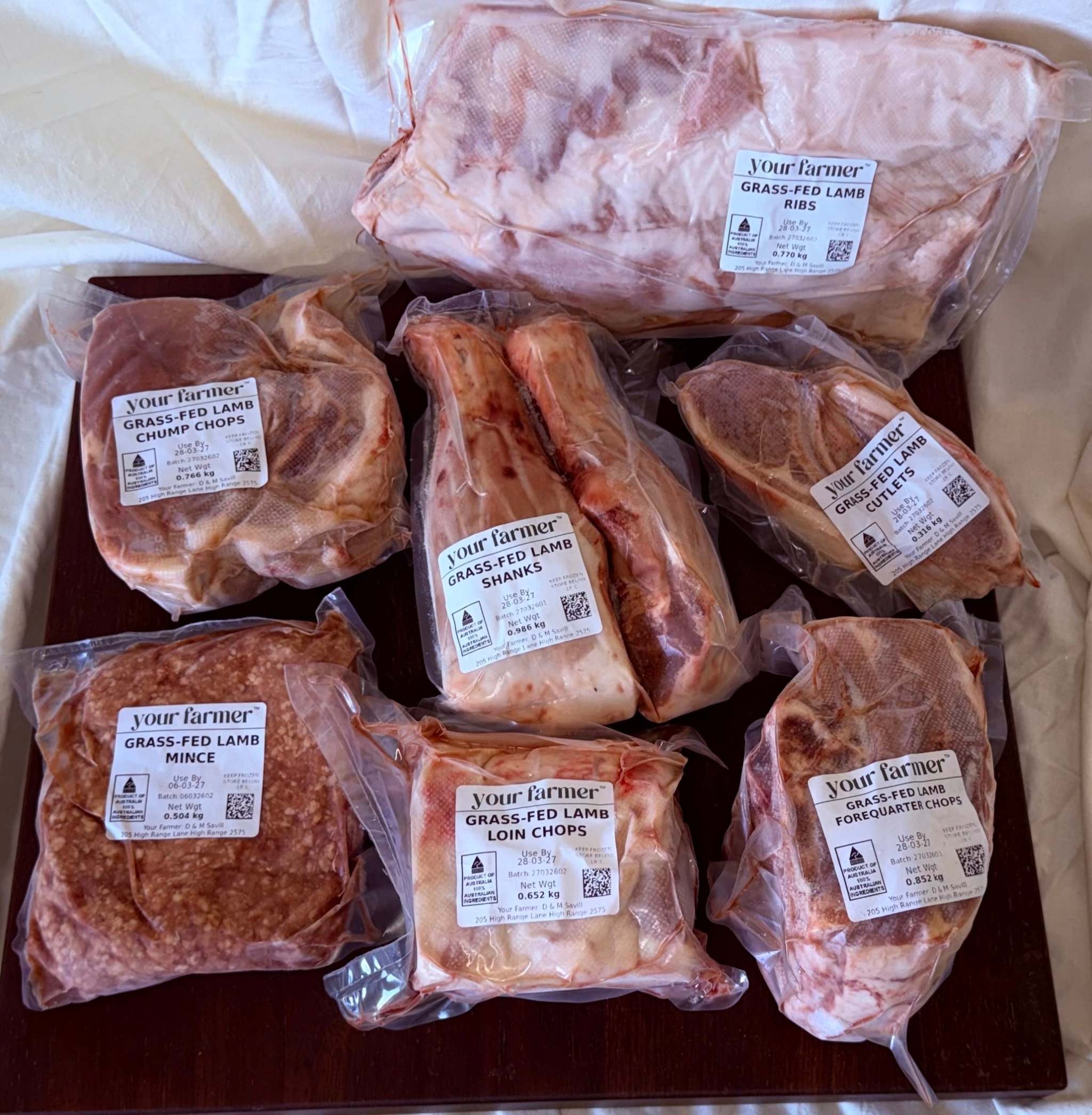
A CSA meat box can support lower food waste, more transparent sourcing and regenerative farming practices — offering environmentally conscious consumers a more direct connection between their food choices and the land those choices affect.
Why Food Systems Matter for the Environment
The environmental footprint of food extends well beyond the farm gate. According to CSIRO's Reshaping Australian Food Systems roadmap, total food system emissions equate to 6.8 tonnes of CO2 equivalent per person per year in Australia — a figure that accounts for production, processing, transport, retail, consumption and disposal.
A significant portion of that footprint comes from waste. The Australian Government reports that the country wastes around 7.6 million tonnes of food each year — more than 300 kilograms per person. That waste accounts for approximately 3% of Australia's annual greenhouse gas emissions.
These figures point to an opportunity. Any food model that can shorten the supply chain, reduce surplus production and connect consumers more directly with farmers has the potential to chip away at those numbers — and that is where Community Supported Agriculture comes in.
What Makes the CSA Model Environmentally Different
Community Supported Agriculture, or CSA, is a food distribution model where consumers purchase a share of a farm's harvest in advance. Rather than producing speculatively for retail, farmers grow and process to meet confirmed demand. This structural shift may help reduce the one-third of Australian food production that currently goes to waste. This demand-led approach has several environmental implications.
-
Pre-planned production: Because shares are purchased before the harvest, farmers can plan their production more accurately. This can help reduce the overproduction that contributes to the 7.6 million tonnes of food wasted in Australia each year.
-
Shorter supply chains: A CSA meat box typically moves from farm to packing to the consumer's door, removing the wholesaler, distributor and retailer stages where waste accumulates. CSIRO has identified that nearly 7.7 million tonnes of food is wasted and 3 million tonnes of post-consumer packaging goes to landfill annually across the broader food system.
-
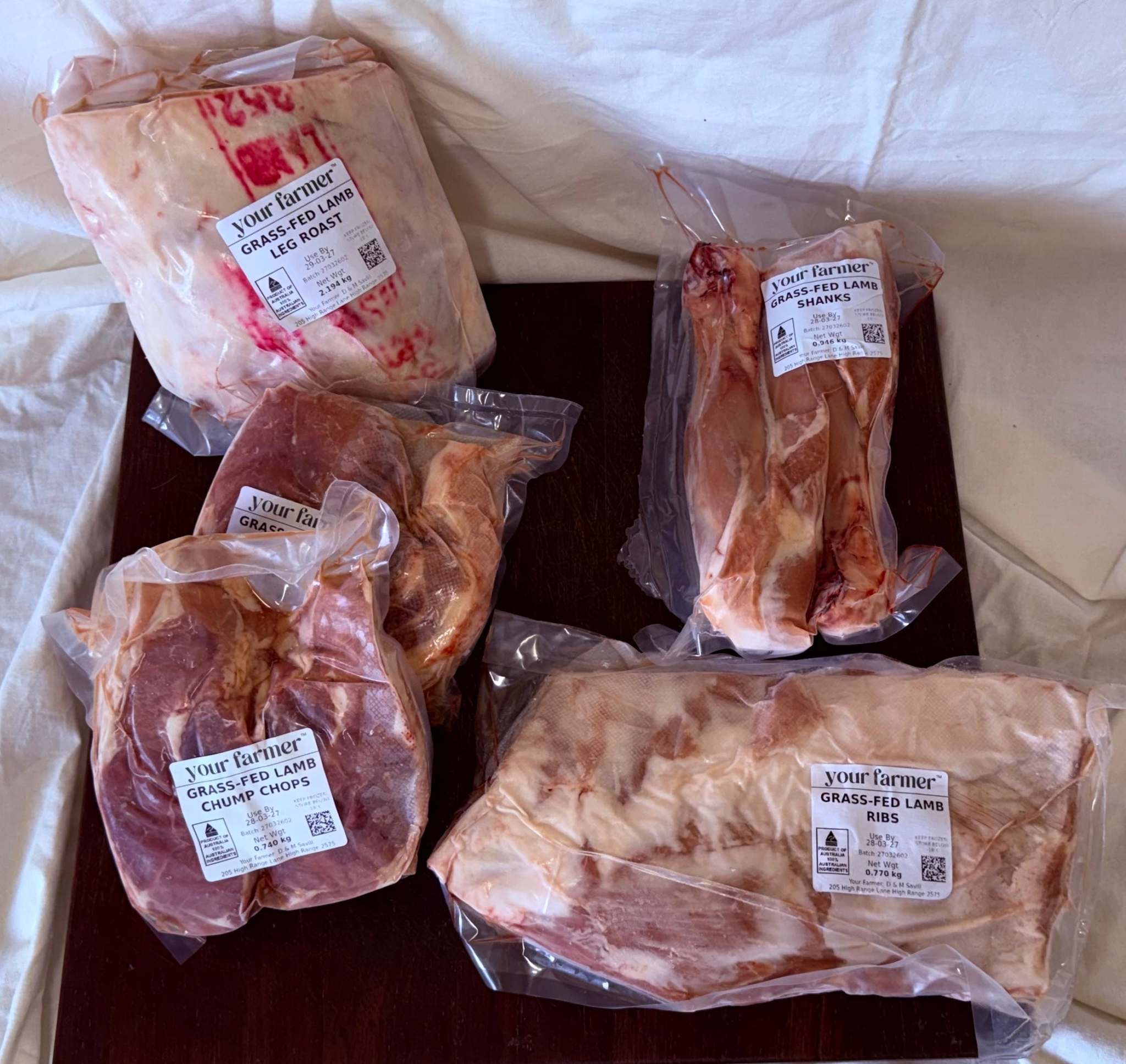
Direct farmer relationships: When consumers know who produces their food and how it is raised, it creates transparency that conventional supply chains often lack. For families across Sydney, the Blue Mountains, Wollongong and the Shoalhaven, a paddock to plate meat subscription can replace anonymous retail sourcing with a traceable, named connection to the land.
How a CSA Meat Box Reduces Food Waste
Food waste occurs at every stage of a conventional supply chain — from overproduction on the farm, to spoilage during transport and storage, to unsold stock in retail, to household waste. The Australian Government has set a national target to halve food waste by 2030, recognising the scale of the problem.
The CSA model addresses waste at the production and distribution stages. When a farmer knows exactly how many shares have been purchased, they can match their processing to actual demand rather than forecasting for an unpredictable retail market. For meat in particular, where cold-chain losses can compound at each stage, this demand-led approach can contribute to Australia's goal of halving food waste by 2030.
|
Dimension |
Conventional Retail Supply Chain |
CSA Meat Box Model |
|
Production planning |
Speculative — based on forecasted retail demand |
Demand-led — based on confirmed share purchases |
|
Supply chain stages |
Farm → processor → wholesaler → distributor → retailer → consumer |
Farm → packing → consumer |
|
Waste risk points |
Multiple — spoilage, unsold stock, display waste, household waste |
Fewer — primarily household storage and use |
|
Farmer–consumer connection |
Anonymous — consumer has no relationship with the producer |
Direct — the consumer knows the farmer and farm practices |
|
Packaging |
Retail packaging at multiple stages, contributing to 3 million tonnes of post-consumer packaging to landfill |
Reduced intermediary packaging; some CSA providers use reusable delivery systems |
For consumers in areas like Dee Why, Kellyville, Dural, Appin, Shellharbour and Nowra, choosing a CSA meat box means their food travels a more direct route — with fewer opportunities for waste to accumulate along the way.
How Regenerative Farming Supports Soil Health and Biodiversity
Many CSA programs are connected to farms that practise regenerative or ecological agriculture — farming methods designed to restore soil biology rather than deplete it. According to CSIRO, farmers who adopt management practices that sequester soil carbon stand to gain a benefit from a more productive, sustainable and resilient farming system.
Research from the University of Sydney has found that Australian agricultural soils have a sequestration potential of 541 million tonnes, equivalent to 18 years of annual CO2 emissions for the agricultural sector. The same researchers noted that decades of intensive cropping have left arable soil with less than half the organic carbon of surrounding pasture.
The Australian Government's Department of Climate Change, Energy, the Environment and Water identifies a range of co-benefits from carbon farming practices, including:
-
Improved biodiversity, soil quality, water quality and farm productivity
-
Reduced erosion and run-off
-
Habitat for plant and animal species, including natural pest predators
The Clean Energy Regulator formally recognises several of these practices as eligible for Australian Carbon Credit Units (ACCUs). Eligible activities include altering the stocking rate, duration or intensity of grazing, re-establishing or rejuvenating pasture, using cover crops and introducing legume species.
|
Environmental co-benefit |
How regenerative grazing contributes |
Supporting evidence |
|
Soil carbon sequestration |
Managed grazing rotation allows pasture recovery and root growth, which draws carbon into the soil |
|
|
Water retention |
Higher soil organic carbon helps soils absorb and store a larger proportion of rainfall |
|
|
Biodiversity |
Diverse pastures and reduced chemical inputs support a wider range of plant, insect and animal species |
|
|
Erosion and runoff reduction |
Continuous ground cover and healthy root systems hold soil in place and slow water movement |
|
|
Farm productivity |
Healthier soil biology can improve pasture growth and reduce reliance on synthetic inputs |
Your Farmer's ecological farming approach reflects many of these practices. On partner farms, each animal spends its entire life on pasture, moving through paddocks in a carefully managed rotation that mimics natural grazing patterns. The farm team treats soil like a living community, focusing on thriving soil biology with good water-holding capacity.
The Bigger Picture: Livestock Emissions and Industry Direction
It is important to acknowledge that livestock farming carries a significant emissions profile. The Australian Government reports that methane from livestock makes up around 13% of national emissions, with around 95% of cattle and sheep farmed in extensive grazing systems.
However, the trajectory is shifting. MLA reported in 2024 that the Australian red meat and livestock industry had reduced net greenhouse gas emissions by 78% since 2005, based on updated CSIRO estimates. The Australian Government's Agriculture and Land Sector Plan now establishes a framework for the sector to contribute to the national net-zero target.
For consumers choosing a CSA meat box from a farm practising regenerative grazing, the environmental equation is more nuanced than simply counting methane. Soil carbon is one part of that picture: CSIRO notes that increasing carbon stored in agricultural soils can help mitigate emissions while improving the productivity and resilience of agricultural systems.
What Environmentally Conscious Consumers Can Look For
Not all environmental claims are equal. The ACCC found that 57% of 247 businesses reviewed made concerning environmental claims, including vague terms like "eco-friendly" and "sustainable" without evidence to support them. The ACCC's eight principles for environmental claims emphasise that businesses must be accurate, evidence-based and transparent.
When evaluating a CSA meat box or any paddock to plate meat provider, environmentally conscious consumers may want to consider:
-
Whether the provider can name the farms and describe the specific farming practices used
-
Whether environmental claims are backed by recognised certifications or third-party frameworks
-
Whether the supply chain is genuinely shorter — farm to consumer — or simply branded as "direct"
-
Whether the provider is transparent about what they can and cannot claim about their environmental impact
Your Farmer's approach includes a proprietary certification program for partner farms and transparency about ecological farming methods — including soil biology focus, animal welfare, and integrated farming systems with livestock rotation. Every purchase helps convert more farms to regenerative, ecological agriculture.
Frequently Asked Questions
Does a CSA meat box actually reduce food waste?
CSIRO has reported that a third of all food produced in Australia — 7.6 million tonnes per year — currently goes to waste. Food waste occurs across the supply chain, from farms through to households. A demand-led CSA model may help reduce some avoidable surplus by aligning production and distribution more closely with committed customers, but the scale of that impact depends on the farm, product type and household use.
Can grazing practices genuinely help sequester carbon in soil?
Yes — and the Australian Government formally recognises this. The Clean Energy Regulator's soil carbon method lists altering the stocking rate, duration or intensity of grazing as an eligible activity for earning Australian Carbon Credit Units. This means managed grazing is an accepted mechanism for increasing soil carbon under the national framework, though outcomes depend on local soil type, climate and management quality.
How can I tell if a food provider's environmental claims are credible?
The ACCC's eight principles for environmental claims provide a useful framework. Look for claims that are specific rather than vague, backed by evidence rather than sentiment, and transparent about any limitations. A provider that can name their farms, describe their soil management practices and explain their supply chain is offering a level of transparency that broad terms like "eco-friendly" do not.


Share:
Grass-Fed Southern Highlands Beef vs Grain-Finished Supermarket Beef: What's Actually Different?
How a Paddock to Plate Meat Subscription Can Help Shellharbour Families Spend Less on Groceries"