

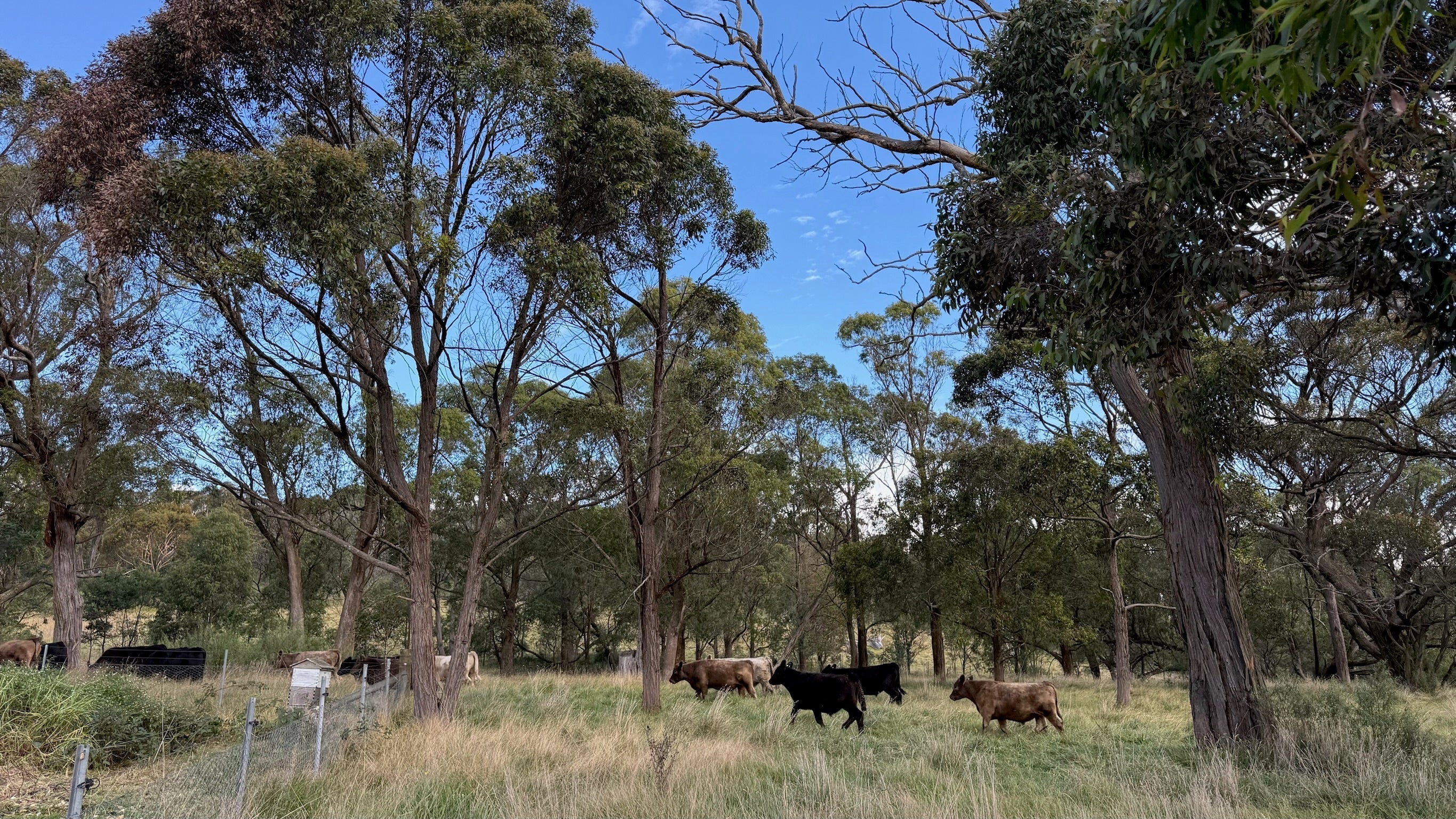
Certified grass-fed Southern Highlands beef comes from cattle that eat pasture for life under the Australian PCAS grass-fed standard, while grain-finished supermarket beef typically spends time in an accredited feedlot on a grain ration before slaughter.
That sentence is the bottom line, but it leaves out a lot. The word "grass-fed" appears on shelves in Coles, Woolworths and Aldi, on packs from local butchers, and on direct-from-farm boxes across NSW. They don't all mean the same thing, and the differences matter for finishing practice, animal welfare, fatty acid signals, and how much you can actually verify about what's in the pack. The rest of this article walks through what's different, fairly and with sources, so you can make a more informed call on your beef in the Southern Highlands.
What "grass-fed" actually means in Australia
Australia has no single legally mandatory definition of "grass-fed", the way it does for organic certification. Generic "grass-fed" claims sit under the same rules as any other food representation: the FSANZ truth in labelling framework requires that food labels do not misinform consumers through false, misleading or deceptive representations, and the Australian Consumer Law within the Competition and Consumer Act 2010 is the primary enforcement mechanism.
The reference standard for verifying grass-fed claims is the Pasturefed Cattle Assurance System (PCAS) administered by AUS-MEAT — an industry standard designed to support claims relating to pasturefed or grassfed beef production. The PCAS certification program itself wound up on 1 January 2026, but the PCAS standards continue as the baseline for grass-fed claims under AUS-MEAT's Animal Raised Claims Framework. Under the standard, certified cattle must meet defined feeding, traceability and handling requirements:
-
Cattle must never have been fed separated grain or grain by-products at any point in their life.
-
Continuous access to graze pasture, with a diet of grass, forbs and forage
-
Defined on-farm traceability and pre-slaughter handling requirements
-
Optional certification modules for freedom from hormonal growth promotants (HGPs) and freedom from antibiotics
A pack labelled "grass-fed" in a supermarket may or may not have been raised to that standard. Without an explicit certification mark, a generic grass-fed claim falls back on what the supplier can substantiate under Australian Consumer Law. ACCC food labelling guidance makes the principle clear in the country-of-origin context: claims about food must be true, accurate, and based on reasonable grounds, and the overall impression of packaging matters as much as the words on it.
How grain-finished beef is actually made
Most Australian beef cattle are not raised in feedlots; they start their lives on pasture. CSIRO research published in the journal Animal describes cattle as efficient upcyclers of grass and other feedstuffs humans cannot digest, with Australian grain-fed beef rated 1.96 and grass-fed (with a very small amount of grain) rated 1597 on the net protein contribution scale — a measure of how much human-edible protein is produced relative to the human-edible protein consumed.
Cattle that are then "grain-finished" sit under the AUS-MEAT Grain Fed Finished (GFF) standard, which requires cattle to come from a feedlot accredited under the National Feedlot Accreditation Scheme (NFAS), to spend a minimum of 35 days on feed, and to meet Meat Standards Australia (MSA) eligibility criteria. In supermarket terms, a pack marked "grain-fed" or "grain-finished" generally signals an animal that lived most of its life on grass and was then transitioned onto a grain ration in its final weeks.
That distinction matters. A "grain-fed" label does not mean the animal never saw a paddock; it means the meat is from cattle whose final finishing phase was on grain under the AUS-MEAT GFF rules, not on pasture. Whether or not that final phase matters to you depends on what you value — flavour, fat composition, traceability, welfare, or farming method.
Grass-fed vs grain-finished — at a glance
|
Attribute |
Certified grass-fed (PCAS standard) |
Grain-finished (typical supermarket) |
|
Lifetime diet |
Pasture and forage only — no separated grain at any stage |
Pasture for the majority of life; grain ration in the finishing period |
|
Finishing |
Pasture finished |
NFAS-accredited feedlot, minimum 35 days on feed |
|
Certifications available |
PCAS standard, with optional HGP-free and antibiotic-free modules |
NFAS accreditation plus MSA eligibility under the GFF standard |
|
Backstop for label honesty |
Certification mark on the pack provides independent verification |
Generic claims governed by the Australian Consumer Law |
The nutrition question — what the evidence actually shows
The nutritional claim most often attached to grass-fed beef is that it has a more favourable fatty acid profile. A peer-reviewed review in the Nutrition Journal by Daley et al. (2010) concluded that grass-based diets significantly raised omega-3 levels in the lipid fraction of the meat while leaving omega-6 levels unchanged, with an average omega-6 to omega-3 ratio of 1.53 in grass-fed beef versus 7.65 in grain-fed beef. The same review reported that grass finishing increased α-tocopherol (vitamin E) levels around threefold over grain-fed beef, and that grass-finished beef tended to have a saturated fat profile leaning more toward cholesterol-neutral stearic acid rather than the more cholesterol-elevating myristic and palmitic acids common in grain-finished beef.
These nutritional signals should still be read with care. Australian beef in general — grass-fed or grain-finished — is recognised in the Australian Dietary Guidelines as a meaningful contributor to iron, zinc, vitamin B12 and protein intake, with the modelling identifying around 65 g of cooked lean red meat per day as sufficient to help most Australians meet their iron and zinc needs. The grass-fed versus grain-finished comparison shifts the fatty acid balance; it does not change the underlying nutritional category.
It is also worth being precise about what a brand can legally claim. Under FSANZ Standard 1.2.7, any explicit nutrition content or health claim on a food label must be supported by scientific evidence to the same degree of certainty, whether the claim is pre-approved by FSANZ or self-substantiated by the food business. That is why credible Australian producers are careful about exactly which nutritional claims they print on a pack.
Fatty acid signal — grass-fed vs grain-fed
|
Marker |
Grass-fed |
Grain-fed |
|
Omega-6 to omega-3 ratio (review average) |
1.53 |
7.65 |
|
α-tocopherol (vitamin E) |
Approximately three times higher with grass finishing |
Lower baseline |
|
Omega-3 (n-3) levels in lipid fraction |
Significantly higher with grass-based diets |
Lower |
|
Saturated fat profile |
Leans toward cholesterol-neutral stearic acid |
Higher myristic and palmitic acid content |
Where Southern Highlands fits — the pasture story
The Southern Highlands of NSW sits within what the NSW Department of Primary Industries describes as the high rainfall zone (HRZ) grazing region, which covers the Northern, Central and Southern Tablelands of NSW. The HRZ typically receives more than 600 mm of rainfall per year on fertile soils, supporting pasture-based grazing rather than feedlotting as the dominant livestock production system.
In practice, that means the regional landscape described by NSW DPI is set up for cattle that finish on grass rather than in a feedlot. What follows is what the HRZ provides:
-
Reliable rainfall above 600 mm per year, supporting year-round pasture growth
-
Fertile tableland soils across the Southern, Central and Northern Tablelands
-
Diverse sown grasses, annual legumes and native pasture species provide varied forage
-
A climate suited to cool-season pasture production
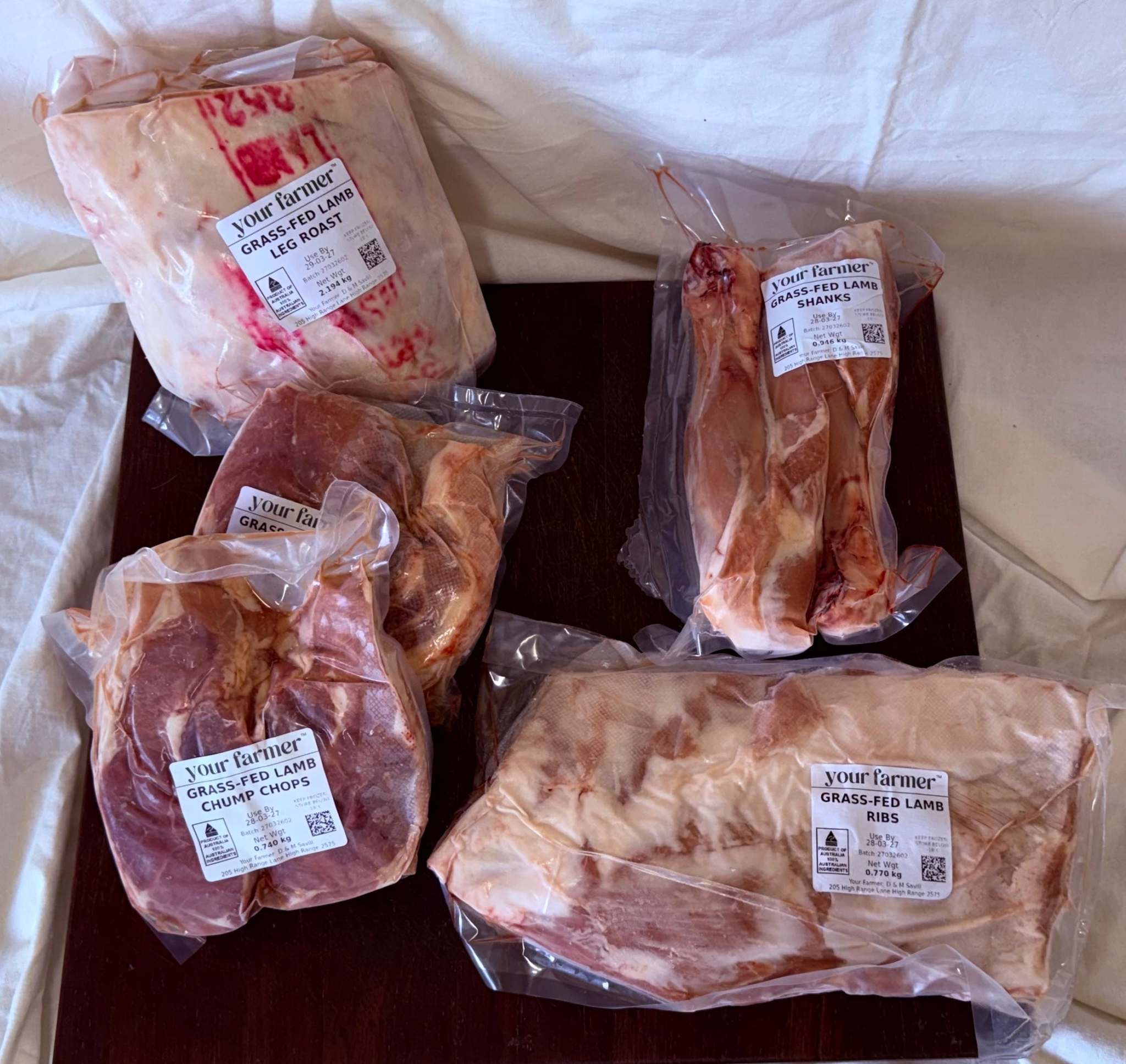
This regional context is part of why farm-direct options for farm fresh meat in the Southern Highlands can be a genuine alternative to the supermarket cabinet — the geography genuinely supports the production system the label describes, and the cattle producing the beef may well be grazing on the same kind of country you drive past on weekend trips around Bowral, Mittagong and Moss Vale.
That is why provenance matters. When the landscape itself supports pasture-raised cattle, farm-direct meat becomes more than a marketing claim — it becomes a way to buy in line with how the region naturally farms. Your Farmer gives local families a simpler path to that kind of paddock-to-plate connection.
Certification, traceability, and how to read a label
For shoppers comparing options, the practical question is: how do I tell whether a "grass-fed" claim is verifiable? Without a certification mark, a pack-level grass-fed claim is only as strong as the supplier's substantiation. Generic claims must still be accurate and not misleading under FSANZ truth in labelling rules, but that is not the same as being certified to an audited standard.
A practical checklist for the cabinet:
-
Look for an explicit grass-fed certification mark or recognised PCAS-aligned claim rather than a generic "grass-fed" descriptor
-
Check whether the pack mentions HGP-free or antibiotic-free under a defined standard, not just as a marketing line
-
Check whether "grain-fed" or "grain-finished" appears anywhere on the pack — that signals finishing on grain
-
Look at producer information: a named farm or supplier is easier to verify than an unnamed sourcing claim
Direct-from-farm channels typically shorten this chain. A farm supplying farm fresh meat in Southern Highlands households can name the paddock, the breed and the feeding system because the customer relationship is direct rather than mediated through a wholesale supply chain.
Animal welfare considerations
Australian beef cattle in both production systems sit under the Australian Animal Welfare Standards and Guidelines developed by the Department of Agriculture, Fisheries and Forestry and implemented through state and territory legislation. These standards update and replace the earlier Model Code of Practice for the Welfare of Animals and apply across pasture-based and feedlot systems alike.
The day-to-day reality is different, however. Pasture-finished cattle live their lives outdoors on grass; feedlot-finished cattle spend their final weeks in higher-density pens being fed a defined ration. Both can be compliant with the national welfare standards; what differs is the experience and the level of natural feeding behaviour expressed in the final phase. Many consumers consider that distinction a meaningful part of why they choose pasture-finished beef.
So is the switch worth it?
The decision comes down to what you value. If your priority is the lowest price per kilogram and the convenience of a single weekly shop, supermarket grain-finished beef will continue to win on those dimensions. If you weigh finishing practice, traceability, fatty acid signal, and the ability to name the farm, certified grass-fed beef is a clearer match — and the peer-reviewed evidence on grass finishing backs the fatty-acid case for it.
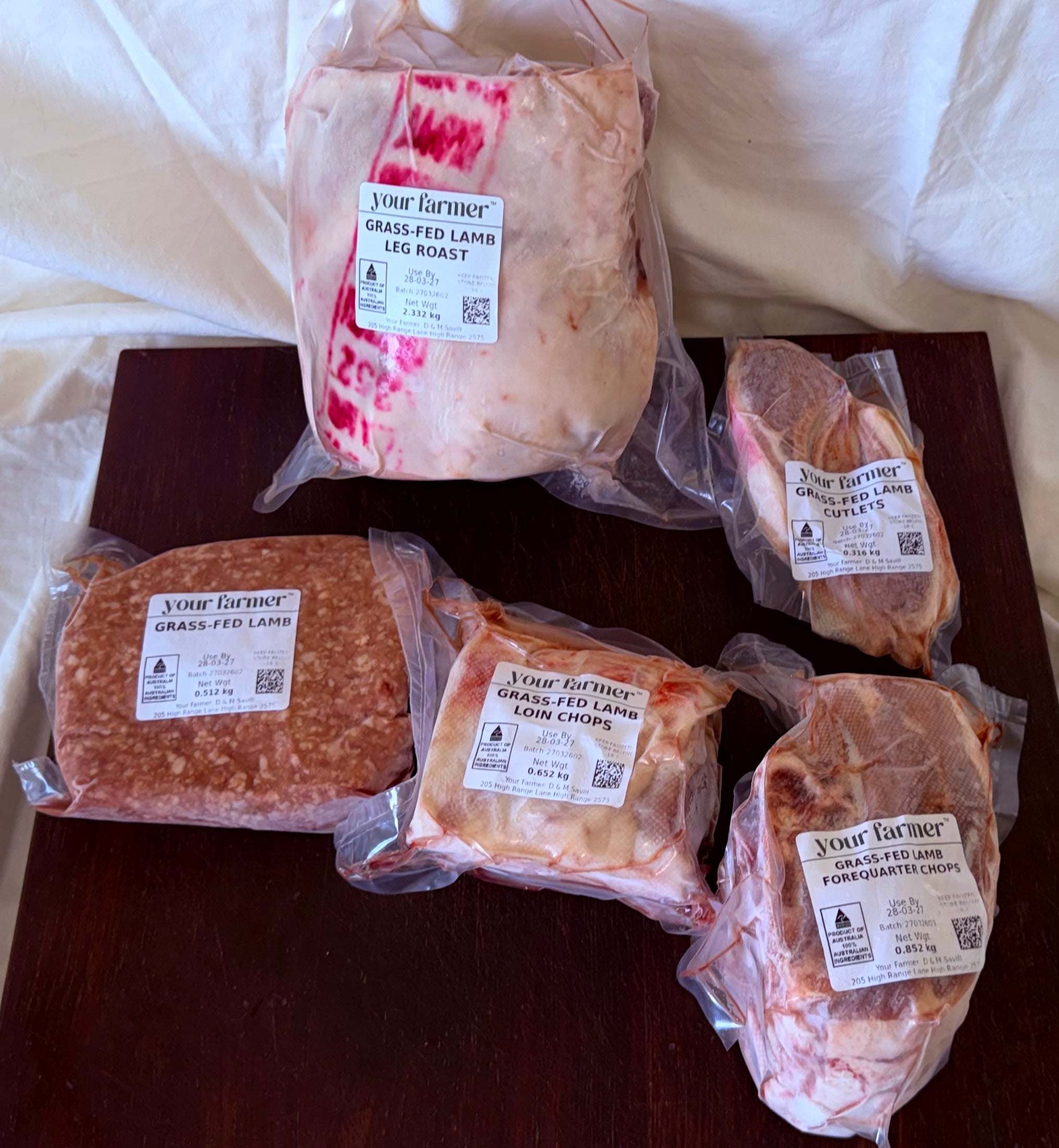
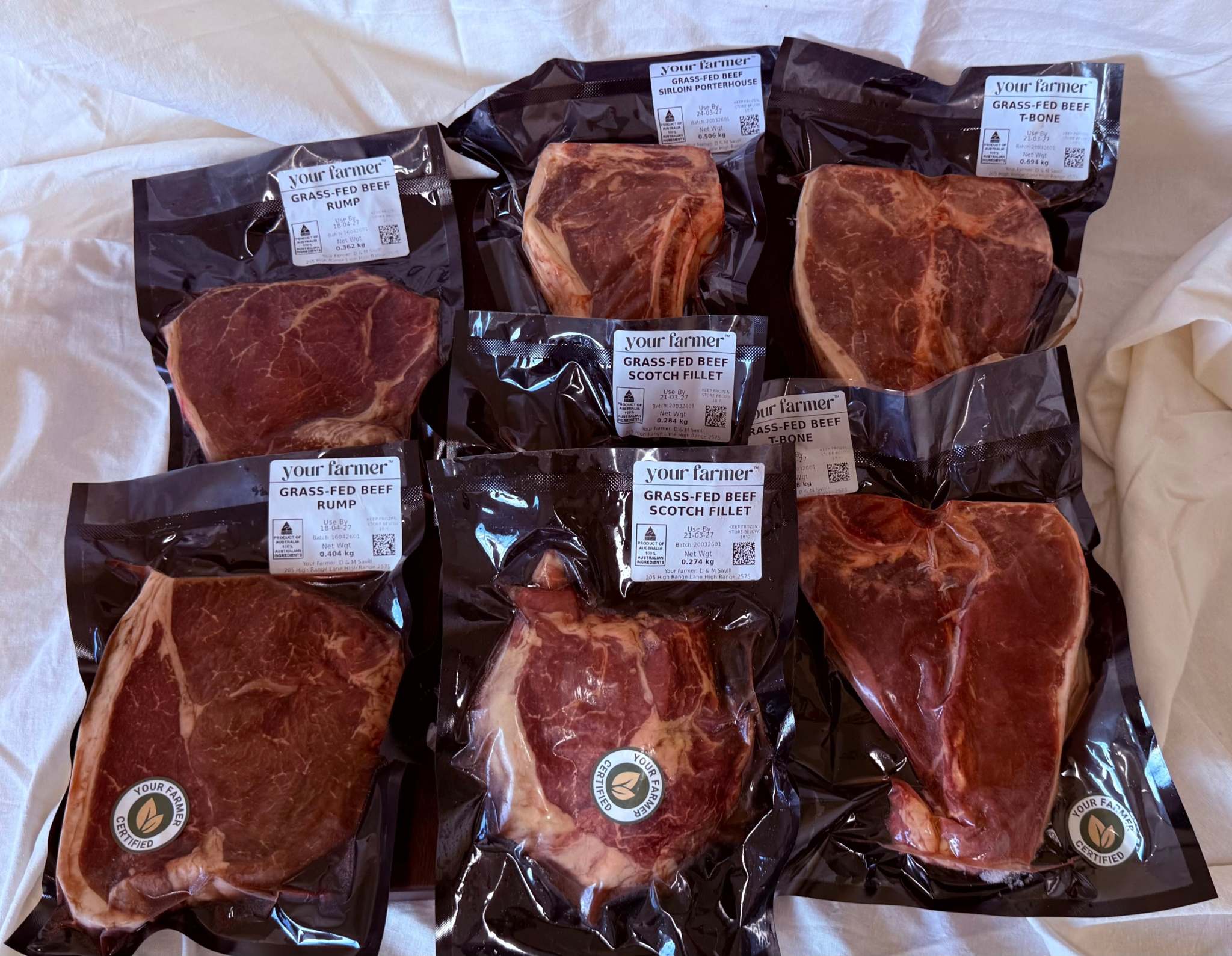
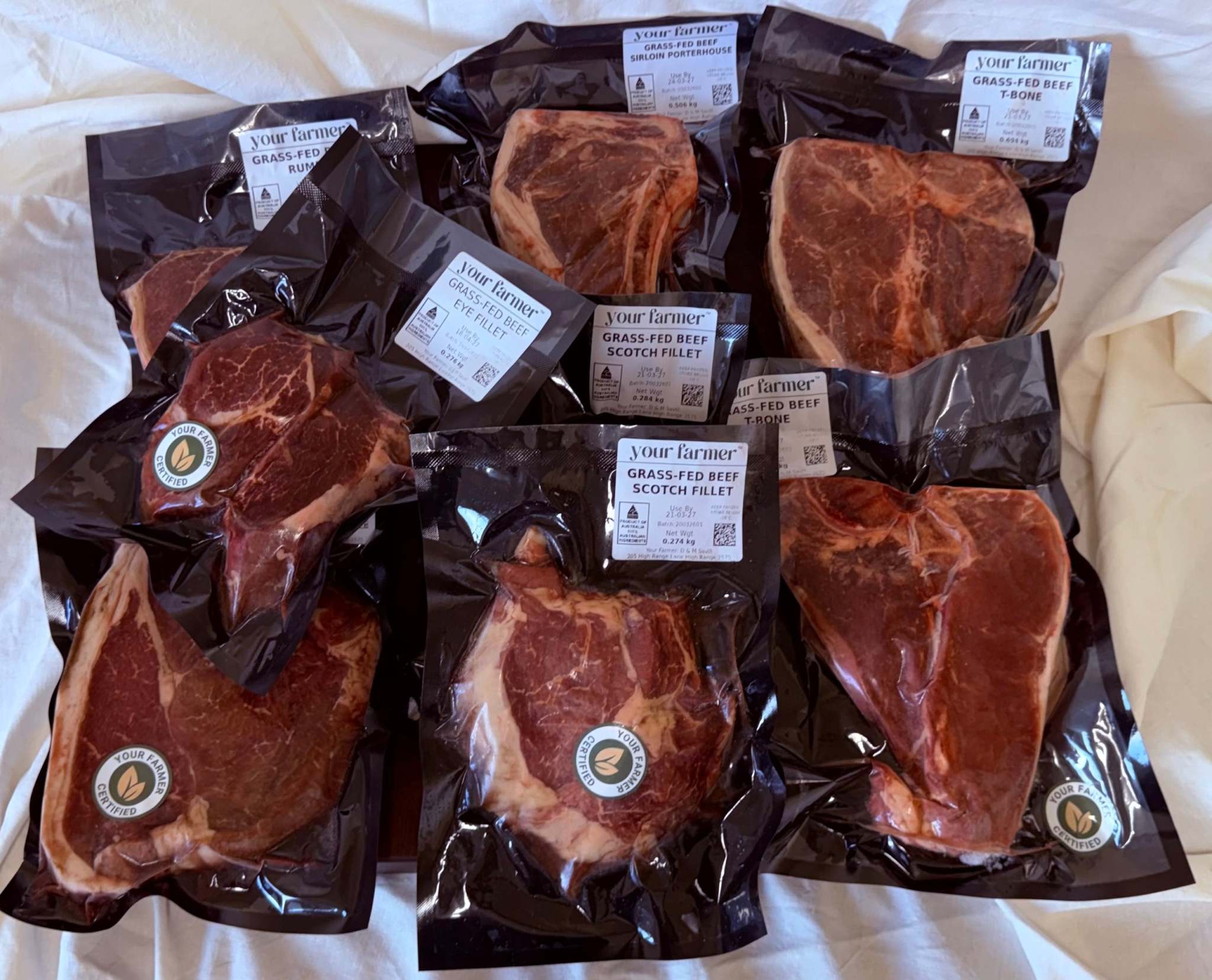
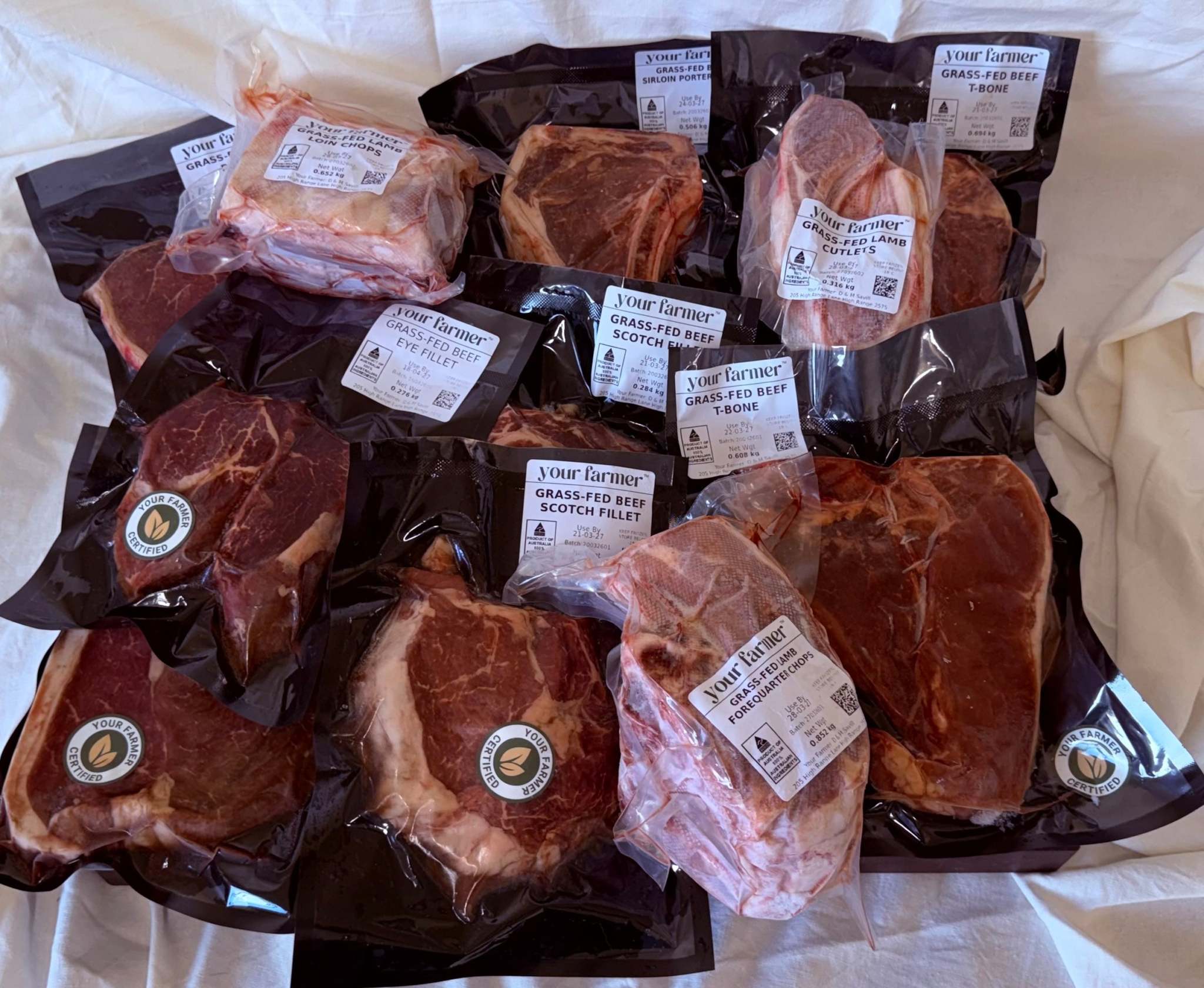
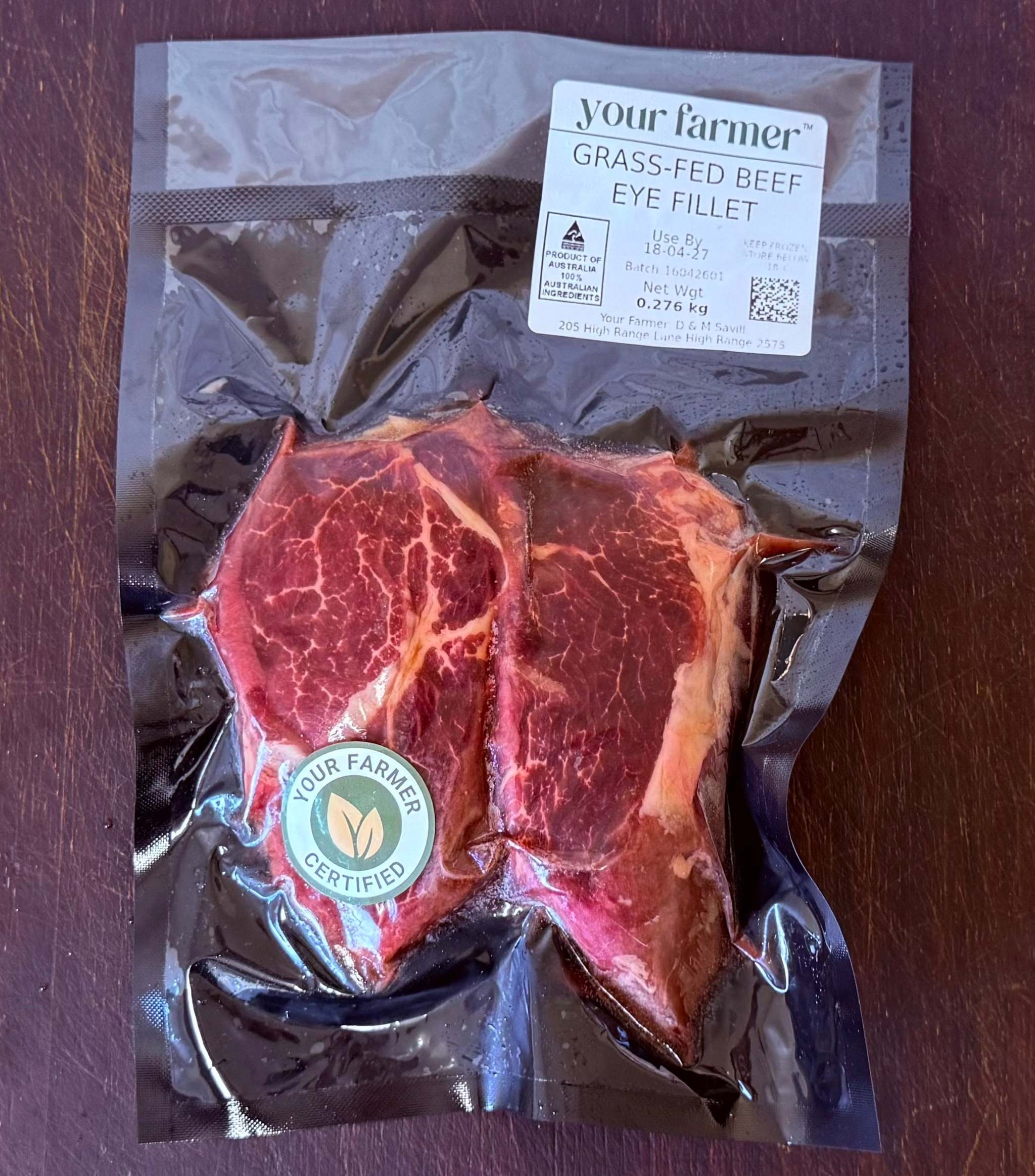
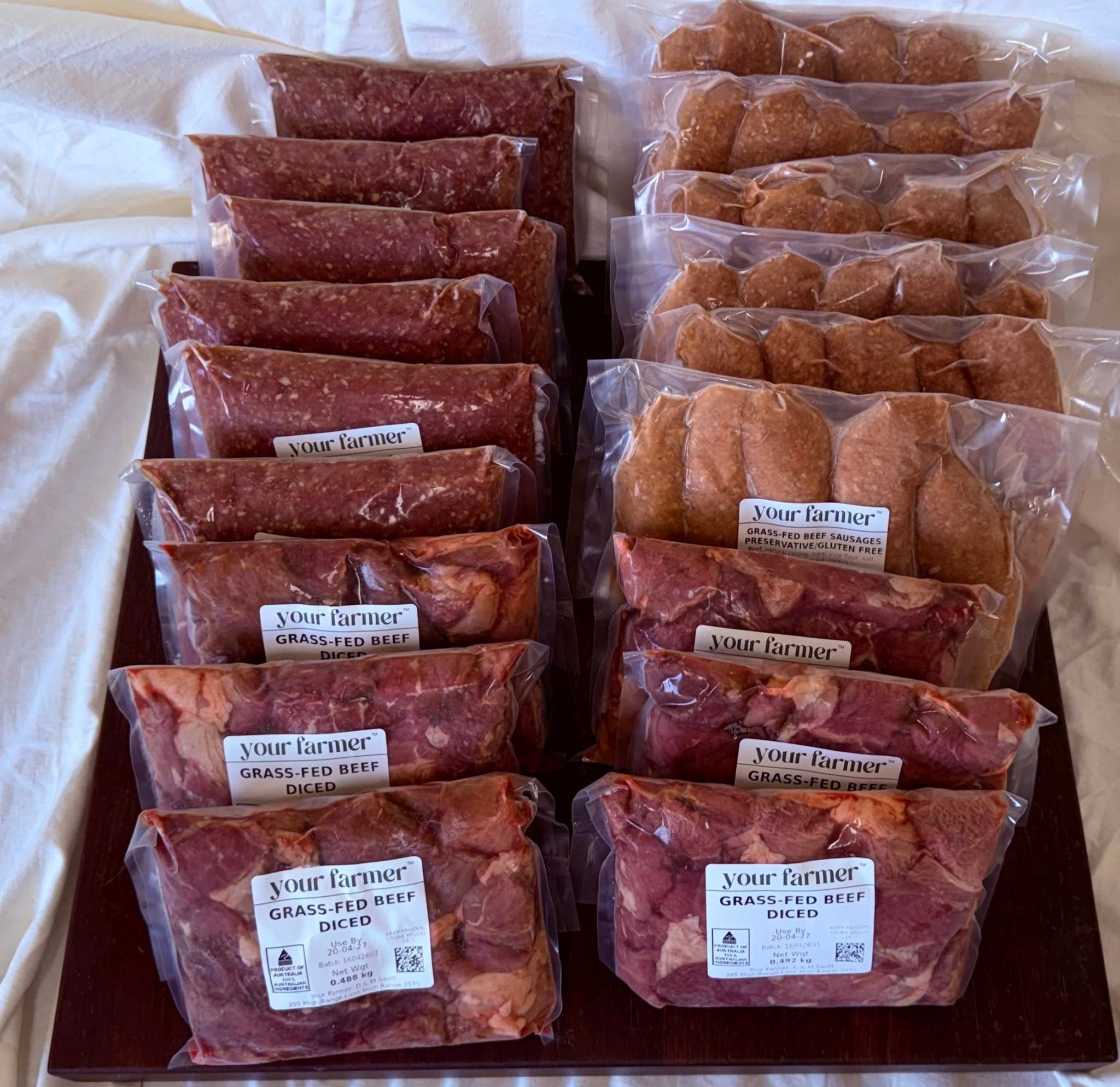
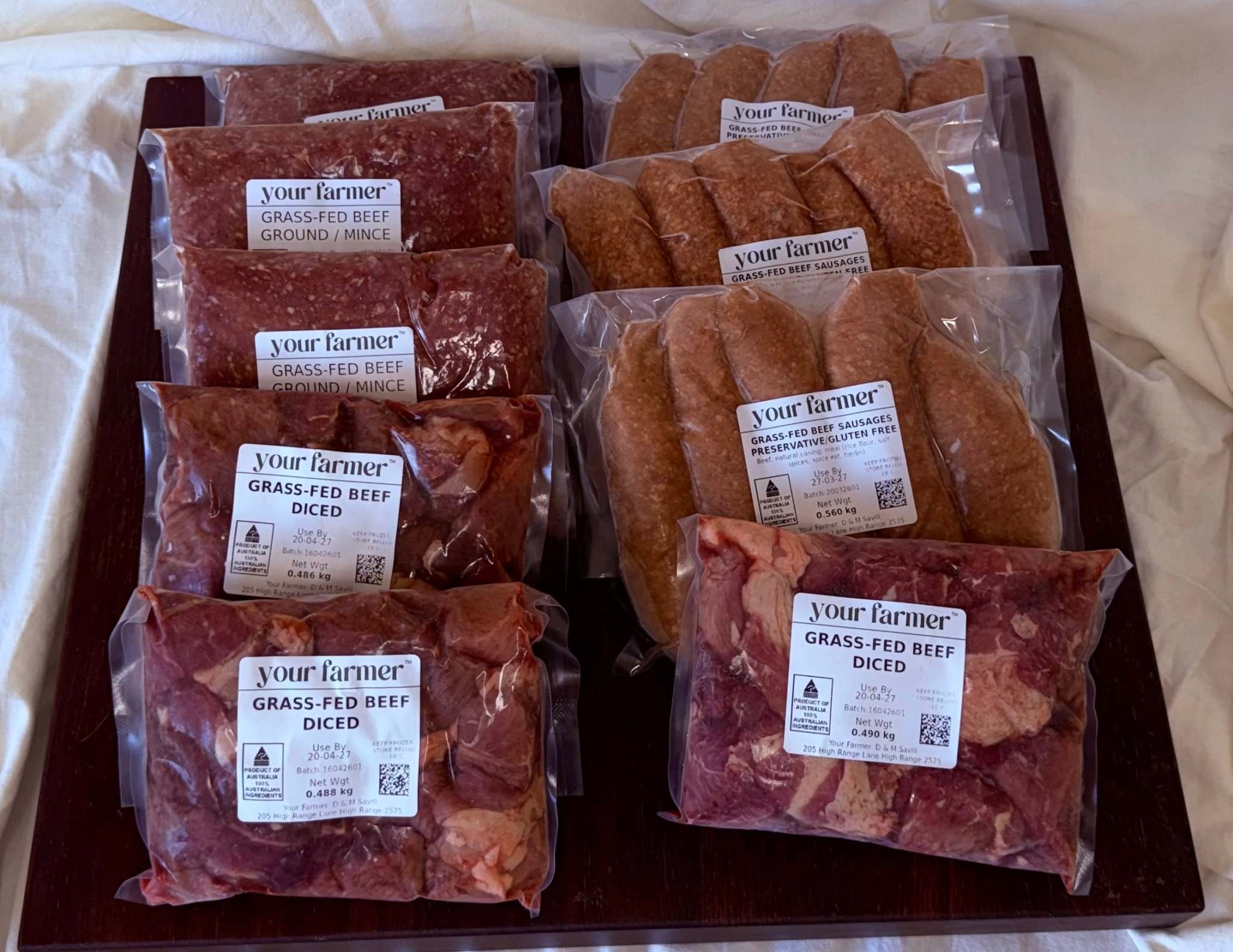
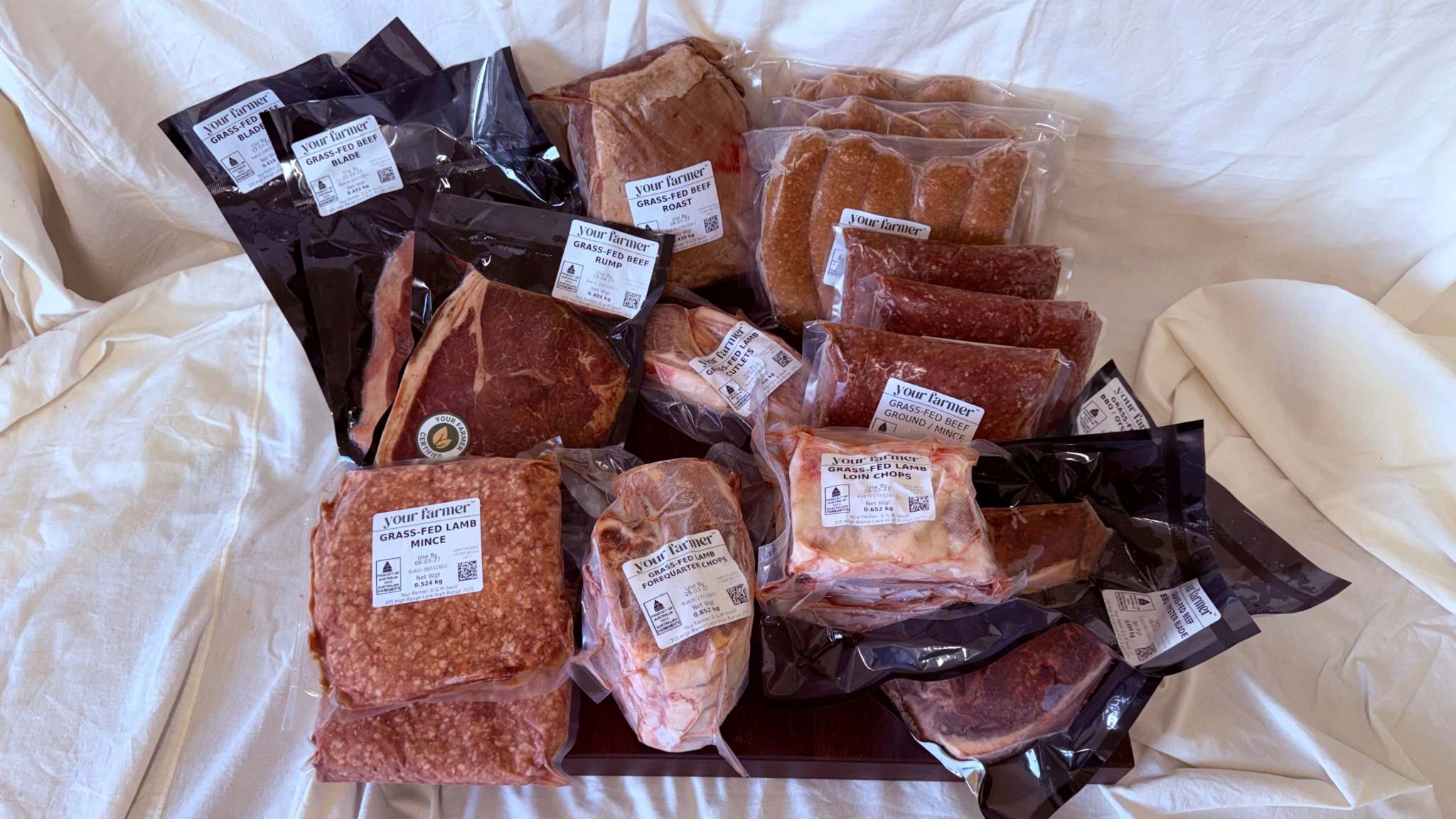
Either way, the difference is no longer a matter of marketing — it is a matter of definitions and standards you can check. Knowing the difference between a certified pasture-fed claim and a generic supermarket grass-fed label is enough to make a more honest call at the cabinet. If you would like to see how a fully pasture-finished option looks in practice in your area, you can explore Your Farmer's grass fed beef Southern Highlands delivery.

Share:
Why the Illawarra and Shoalhaven Is a Natural Match for Sustainable Meat Delivery
Environmental Benefits of a CSA Meat Box: What the Evidence Says