Florence's famous steak, at home in Australia

In Florence they cook bistecca over ferocious coals, stand it up on its bone to finish, and serve it properly rare with nothing but olive oil, lemon and salt. The dish is a T-bone — that's not an adaptation, that's the recipe. Ours is Australian-style: a 500g grass-fed steak rather than the kilo-plus slab from a giant Chianina steer, but the ritual is identical and so is the reward — a charred crust, a scarlet centre, and the best argument going for cooking a great steak as simply as possible.

1 hr 2 servings Prep 40 minsCook 20 minsMain CourseItalian

Ingredients

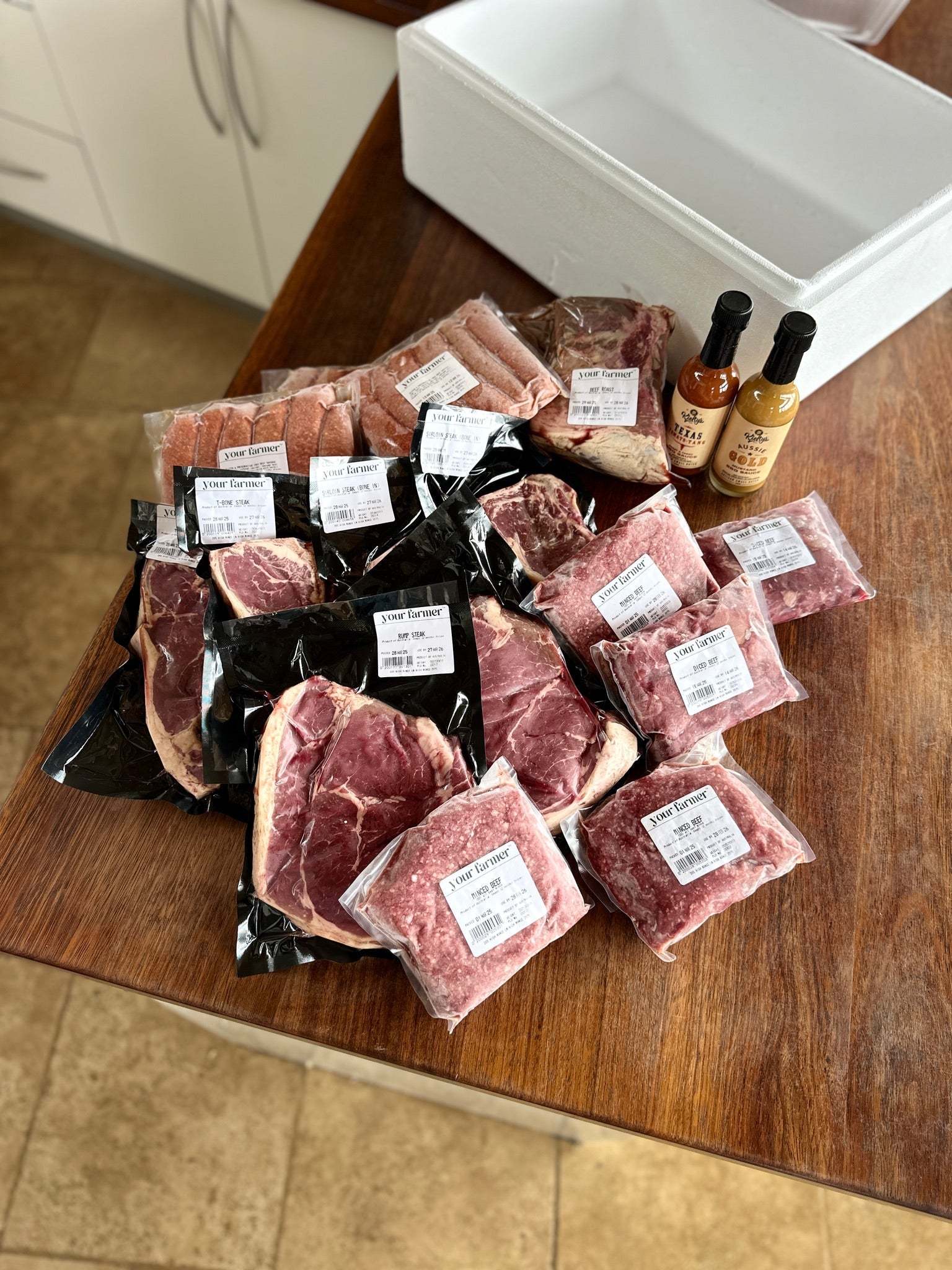
  • 1 Your Farmer grass-fed beef T-bone steak (about 500g)
  • Coarse sea salt
  • Cracked black pepper
  • Your best extra virgin olive oil, to serve
  • 1 lemon, halved

Instructions

Take the steak out of the fridge a full 30–40 minutes before cooking — a cold centre is the enemy of a rare steak. Pat it completely dry. No oil on the meat; this is a dry sear.

1 T-bone steak

Heat a cast-iron grill pan (or a charcoal barbecue, if you have one going) until it is ferociously hot — hotter than feels polite. Open the windows.

Salt the steak generously on one side and lay it in, salted side down, with the smaller fillet side toward the pan's cooler corner. Do not touch it for 4–5 minutes — the crust is the dish.

coarse sea salt

Salt the top, turn once, and give the second side 4 minutes.

Now the Florentine move: stand the steak upright on its bone with tongs for 2–3 minutes. Heat climbs through the bone to finish the meat beside it while both faces rest from the flame. You're after 48–50C in the sirloin side — rare, as the dish demands.

Rest on a board, uncovered, for 10 minutes.

Carve both muscles off the bone, slice thickly across the grain, and reassemble around the bone on a warm board. Pour over your best olive oil, scatter with salt and pepper, and serve with lemon halves for squeezing. Nothing else.

extra virgin olive oil1 lemon

Appears in

Florence's Steak, Australia's Beef

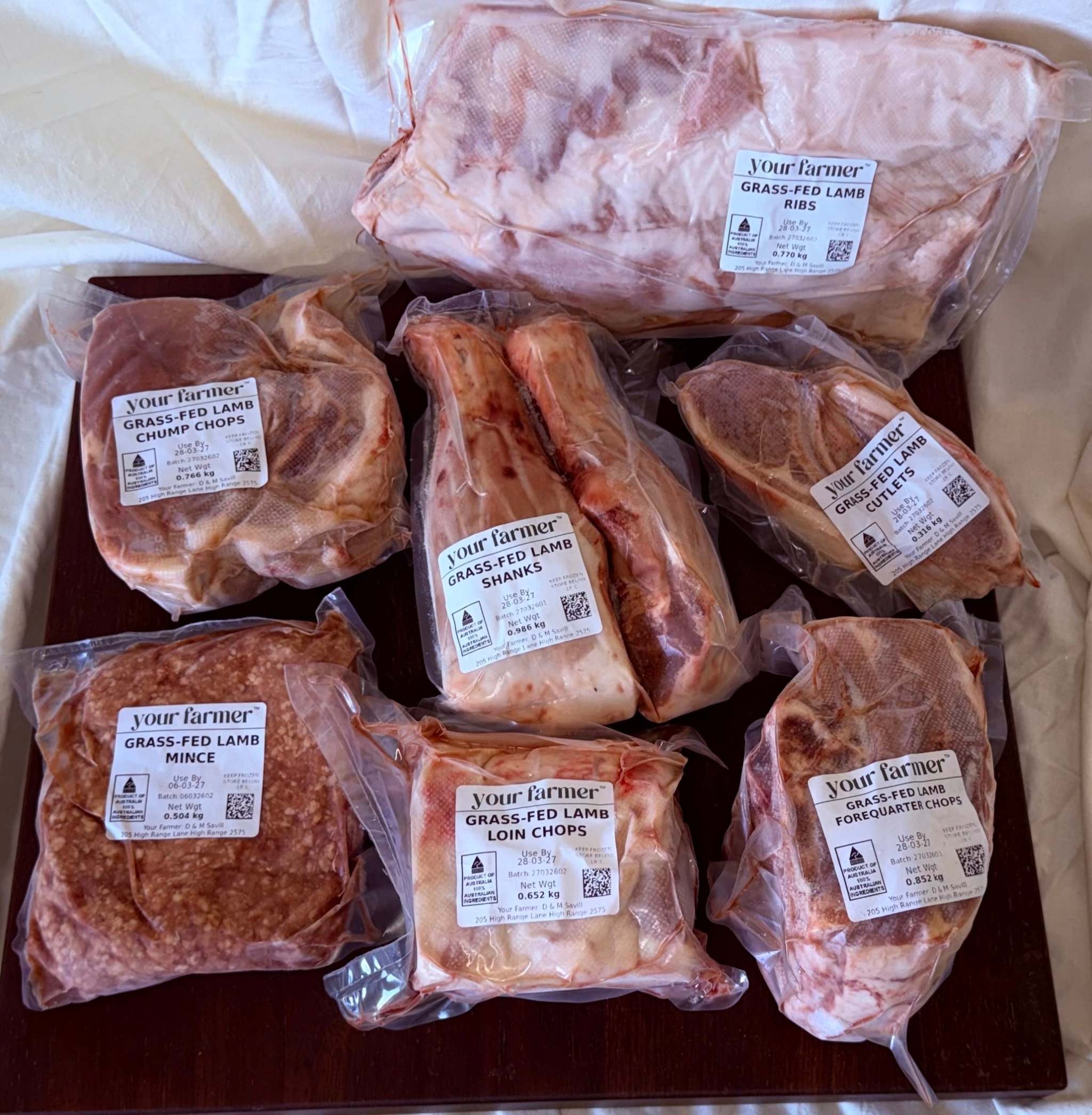
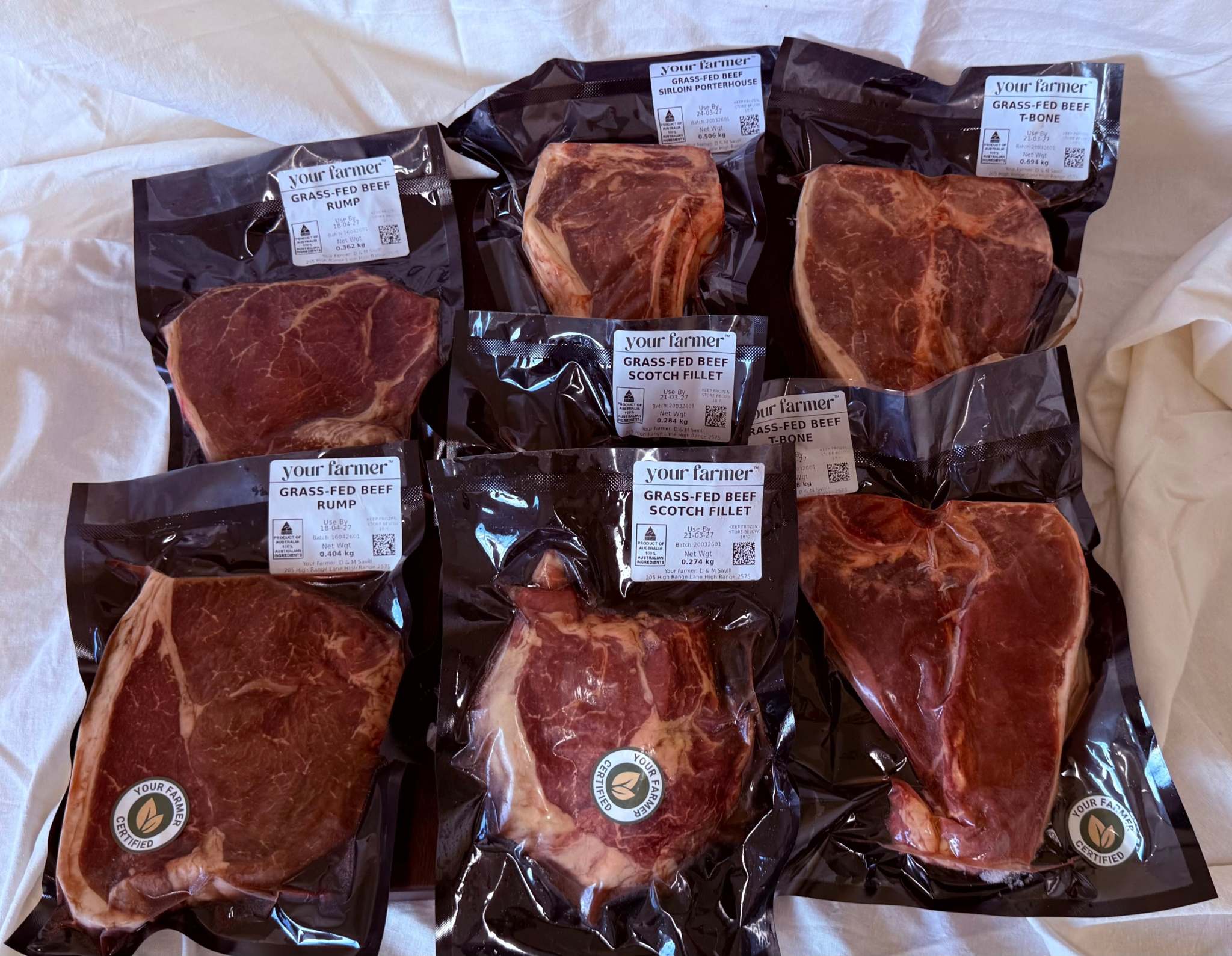
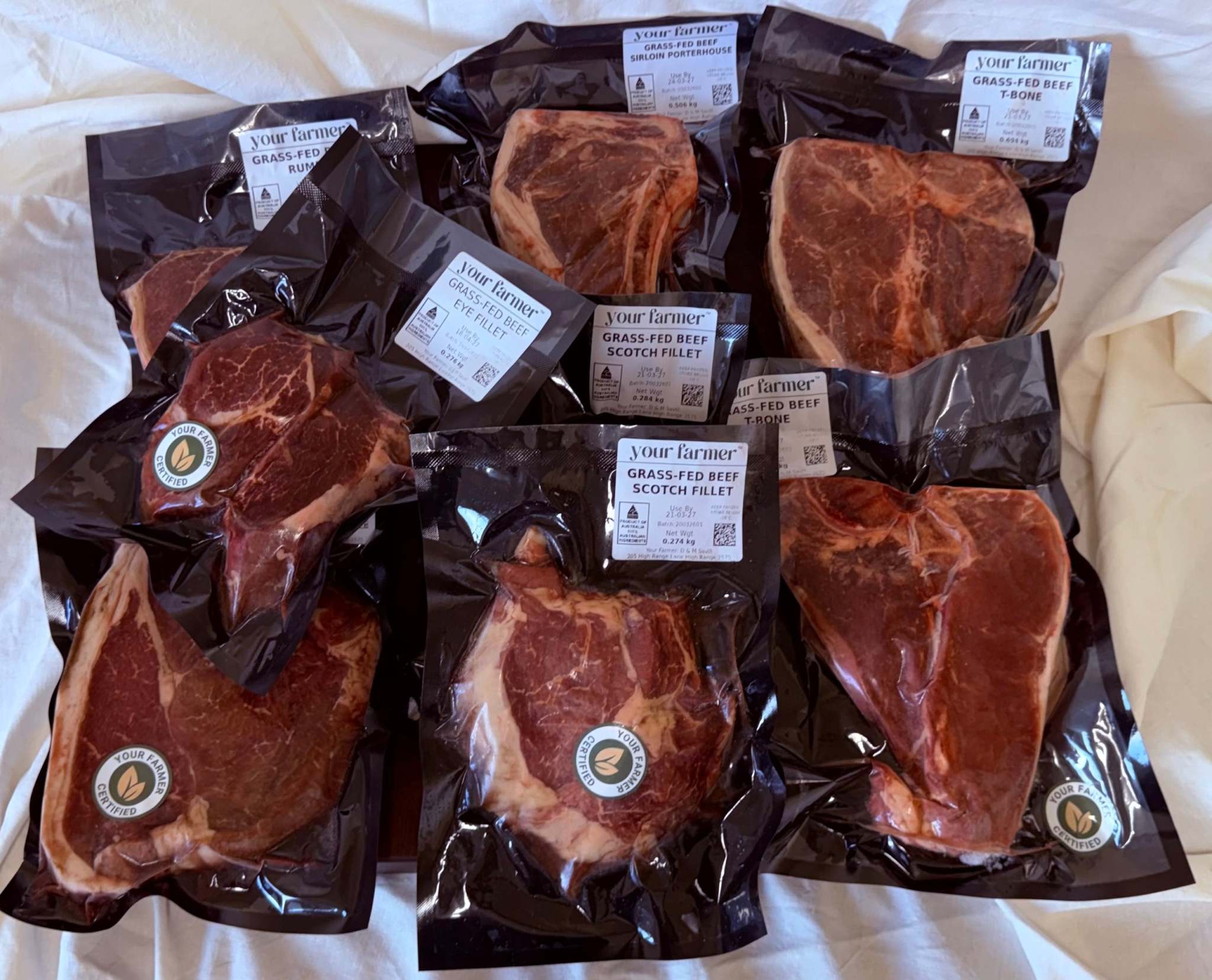
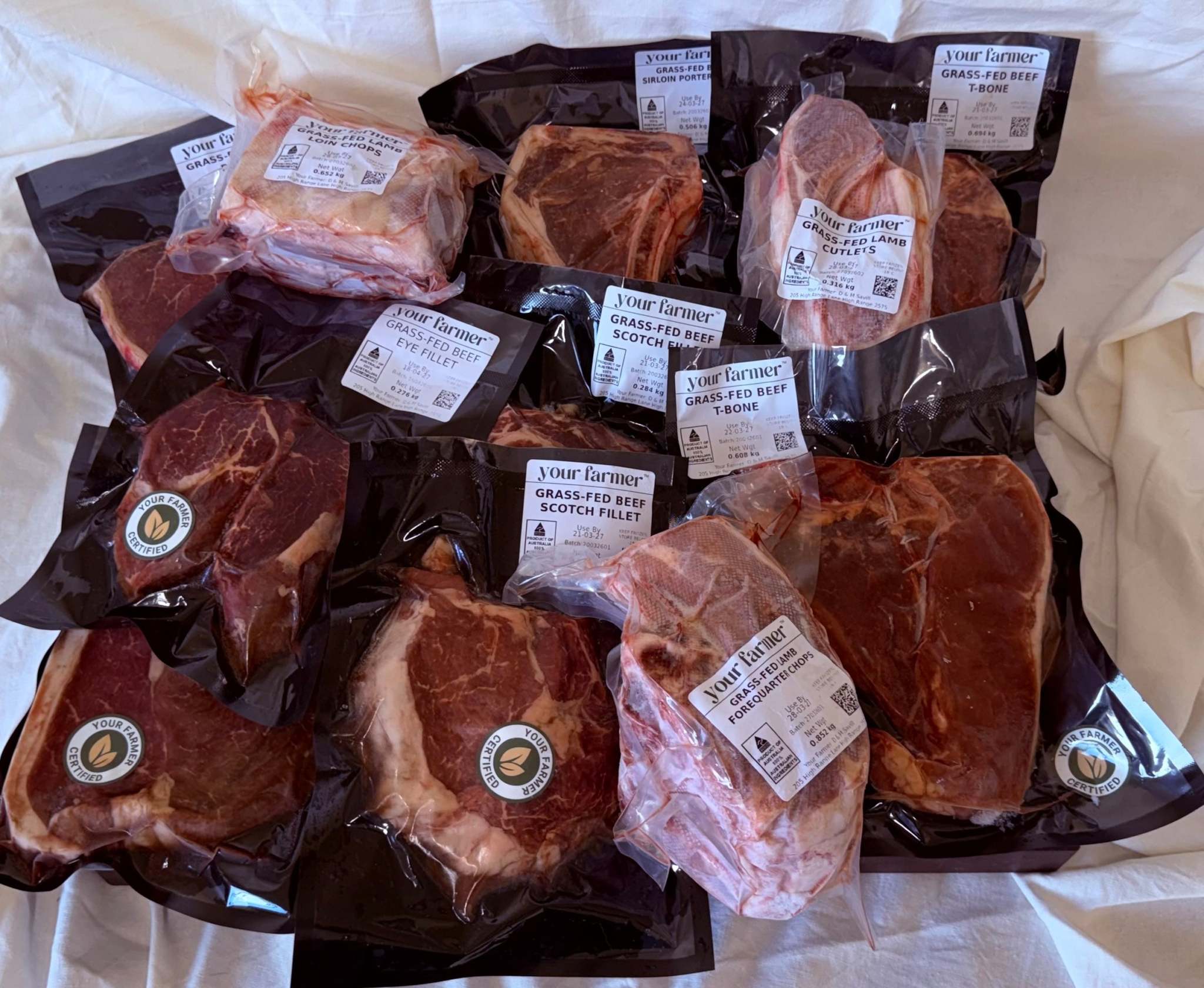
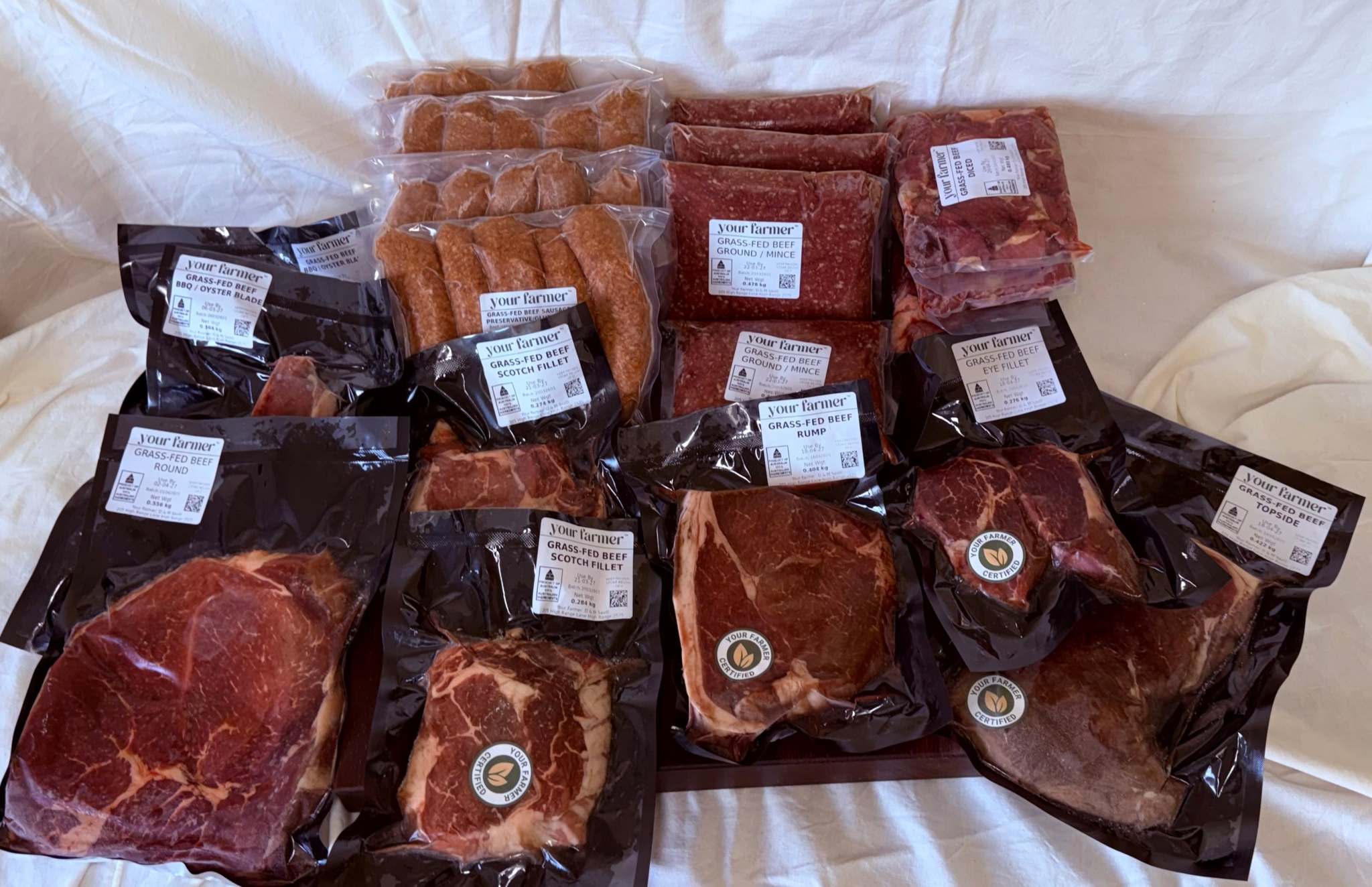
In Tuscany, bistecca alla fiorentina comes from the Chianina — an enormous white breed — cut three fingers thick and weighing well over a kilo. The ritual around it is older than any of us: ferocious dry heat, salt, one turn only, a stint standing upright on the bone, and to the table rare. Not medium-rare — rare. Our version is honest about scale: a 500g grass-fed T-bone from smaller-framed cattle, which we'd argue is no loss at all — smaller cattle make better steaks, with finer grain and flavour that doesn't need a kilo to prove itself. Standing the steak on its bone is the original version of the T-bone's two-zone rule: the bone conducts gentle heat into the meat beside it and shields the delicate fillet while the fierce work happens elsewhere. Every Your Farmer® grass-fed beef CSA share in Packs B and D carries one T-bone — this is its pinnacle.

Swaps and Variations

If the table insists on medium, it stops being fiorentina — but it's your dinner. Add two or three extra minutes standing on the bone rather than more time flat on the pan; it's kinder to both muscles. Charcoal is traditional and worth the trouble when you have the barbecue going; a cast-iron grill pan is the honest indoor answer. White beans dressed with oil, or bitter leaves, are the classic company — nothing creamy, nothing sweet, nothing that competes with the beef. Cooking for four, add a second single T-bone rather than hunting a bigger steak; two 500g steaks cook more evenly side by side than one giant would.

Storage and Leftovers

Rare beef doesn't reheat — it just turns grey and sulks — so treat leftovers as an asset, not a problem. Cold rare bistecca sliced thin over crostini with rocket, shaved parmesan, oil and lemon is one of the great day-after lunches. Cooked steak keeps 3 days airtight in the fridge; thawed raw steak keeps 2–3 days in the coldest part before cooking. The bone, with its browned edges, is a gift to the stock bag in the freezer.
Frequently asked questions

Is it safe to eat the steak rare?

For a whole steak, yes — surface bacteria are dealt with by the sear, which is why rare whole-muscle steak is standard practice everywhere. The rules are different for mince, which must be cooked through.

What does standing the steak on its bone actually do?

The bone conducts gentle heat up into the meat beside it — the part that always lags — while both seared faces get a break from the flame. It finishes the steak evenly without pushing the outside past its crust.

I don't have charcoal — is a grill pan really acceptable?

Yes. Florence would grumble, but a cast-iron grill pan heated until it's genuinely ferocious gets you the crust and the rare centre, which is the heart of the dish. Just give it a long preheat.

Why no oil in the pan or on the steak?

At the heat this dish demands, oil just burns and taints the crust. The steak sears dry; the olive oil arrives at the table, raw and peppery, over the carved slices — that's where Tuscany spends its money.

Three Simple Steps

A whole table of real food.

Your Farmers grow grass-fed beef and lamb, pastured eggs and the best eco-grown veggies and produce — every item grown to the same ecological standard, every farmer one you can know by name. One subscription, your whole real-food shop.

01

Reserve your share — or try a pack

Subscribe to a share of the harvest, or start with a one-off fixed pack.

02

Make it your own

Pick your delivery rhythm and what's in the box. Skip or cancel anytime — no lock-in.

03

Cook, savour, know your farmer

We deliver in a reusable esky we collect next time. No couriers, no waste.

More Recipes

View all

Osso buco-style braised grass-fed lamb chump chops in tomato sauce over soft polenta, topped with gremolata.

Osso Buco-Style Braised Chump Chops with Gremolata

The Milanese treatment — chops braised low in white wine and tomato, lifted at the end by lemony gremolata

Osso buco is Milan's great braise, and the finishing touch is what makes it: gremolata, a raw scatter of lemon zest, garlic and parsley chopped fine, stirred in right at the end. Against an hour and a half of slow, rich braising, that fresh, sharp hit is a revelation — it stops the whole thing feeling heavy and makes you reach for another spoonful. Lamb chump chops stand in beautifully for the traditional veal shin here, their fat and connective tissue melting into a glossy sauce over soft polenta. It takes time, but almost none of it is yours. This is a dish to be proud of.

Read moreabout Osso Buco-Style Braised Chump Chops with Gremolata

A thick bowl of split pea and lamb bone soup topped with shredded lamb and mint.

Split Pea and Lamb Bone Soup

Pea-and-ham thinking, straight from the lamb paddock

Every Australian family has a pea-and-ham soup story, and every one of those soups leans on the same trick: a bone in the pot doing the heavy lifting. This is that trick with lamb bones instead of a hock. The split peas collapse into a thick, velvety base, the bones give the broth real depth and body, and a pinch of smoked paprika stands in for the smokehouse if you want that familiar edge. It's the thriftiest pot in this whole collection — pantry peas, add-on bones, one lazy afternoon — and it eats like a hug.

Read moreabout Split Pea and Lamb Bone Soup

Grass-fed T-bone steak sliced and served with homemade tarragon bearnaise and chips, bistro style.

T-Bone with Bearnaise from Scratch

The sauce that turns a steak into an occasion

Béarnaise has a reputation as chef's territory — it isn't. It's three egg yolks, a sharp tarragon reduction and a stream of warm butter, whisked over gentle heat until it turns thick, glossy and faintly wobbly. Twenty minutes of honest attention, most of it while the steak rests. And there's no better steak to learn it on than a grass-fed T-bone: the fillet side was born for béarnaise, and the sirloin side isn't far behind. This is occasion cooking you can pull off on an ordinary Saturday.

Read moreabout T-Bone with Bearnaise from Scratch