Salt it tonight, eat like a steakhouse tomorrow

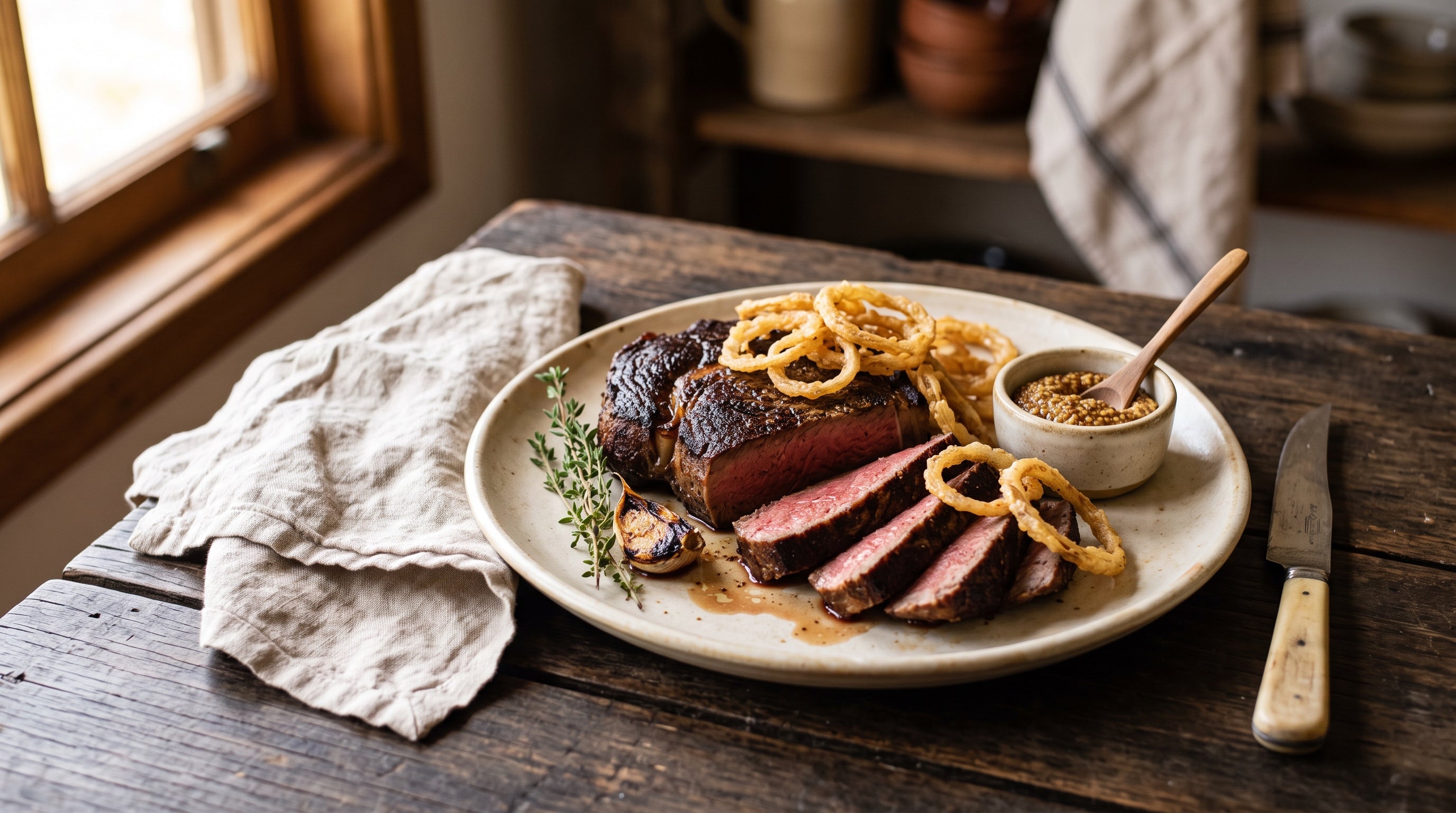
The steakhouses aren't hiding a special pan or a secret marinade. Their trick is time: the steak gets salted the day before and sits uncovered in the coolroom overnight, so the seasoning works its way deep and the surface dries out — and a dry surface is what makes that thick, crackling crust possible. It's the easiest advanced technique in cooking, because the fridge does all the work. Add a pile of proper homemade onion rings, shatteringly crisp in their soda-water batter, and the share's premium scotch gets the full Saturday-night ritual it deserves.

13 hrs 2 servings Prep 12 hrs 20 minsCook 40 minsMain CourseAmerican

Ingredients

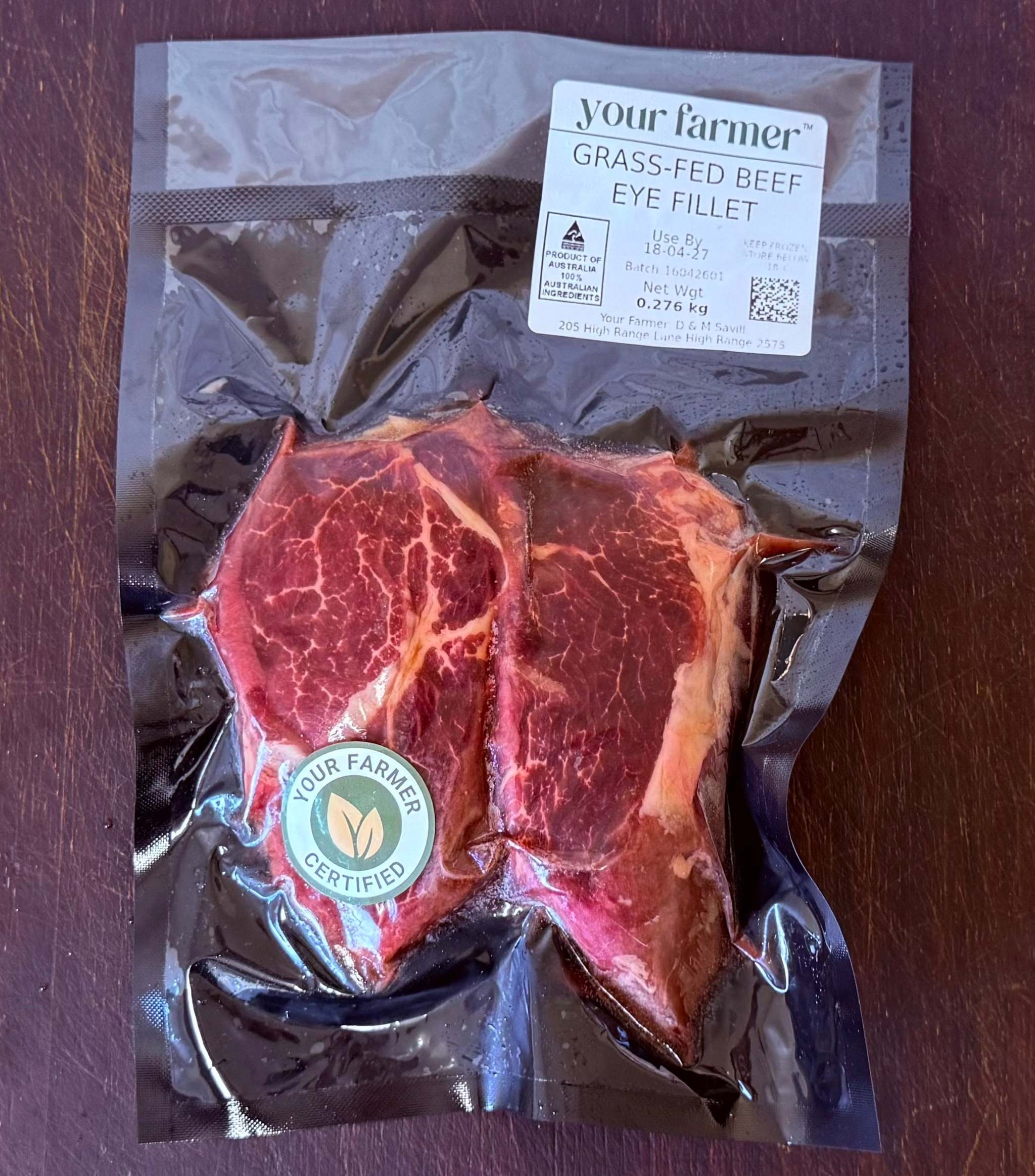
  • 280g Your Farmer grass-fed scotch fillet steak
  • 1 tsp salt flakes (for the dry brine)
  • 1 tbsp vegetable oil
  • 25g butter
  • 1 clove garlic, bruised
  • 1 sprig thyme
  • Cracked black pepper
  • 1 large brown onion, cut into 1cm-thick rings (for the onion rings)
  • 150g plain flour — 50g for dusting, 100g for the batter (for the onion rings)
  • 1 tsp sweet paprika (for the onion rings)
  • 3/4 tsp salt (for the onion rings)
  • 185ml cold soda water (for the onion rings)
  • Vegetable oil, for shallow frying — about 500ml (for the onion rings)

Instructions

The night before

Pat the steak dry and sprinkle the salt flakes evenly over every surface. Set it on a rack over a plate and refrigerate, uncovered, for 12–24 hours. This is the dry brine — the salt travels in, the surface dries out, and the crust tomorrow is the payoff.

280g scotch fillet1 tsp salt flakes

For the onion rings

Heat about 2cm of oil in a deep, heavy saucepan to 180C — a cube of bread should turn golden in about 15 seconds.

500ml vegetable oil

Whisk the 100g flour, paprika and salt with the cold soda water into a thin batter the consistency of pouring cream.

100g plain flour1 tsp sweet paprika185ml soda water

Separate the onion into rings, dust in the remaining flour, dip in the batter and fry in batches for 2–3 minutes until golden and crisp. Drain on a rack and salt while hot.

1 brown onion50g plain flour

For the steak

Take the steak from the fridge while a heavy grill pan or cast iron pan heats until properly smoking. Rub the steak lightly with the oil.

1 tbsp vegetable oil

Cook 3–4 minutes per side for a hard, even crust. In the last 2 minutes, add the butter, garlic and thyme and baste continuously.

25g butter1 clove garlic1 sprig thyme

Rest for 8 minutes on a warm plate — no extra salt needed, the brine handled it. Finish with cracked pepper.

Slice the steak thick, pour the plate juices back over, and serve piled with the onion rings.

Appears in

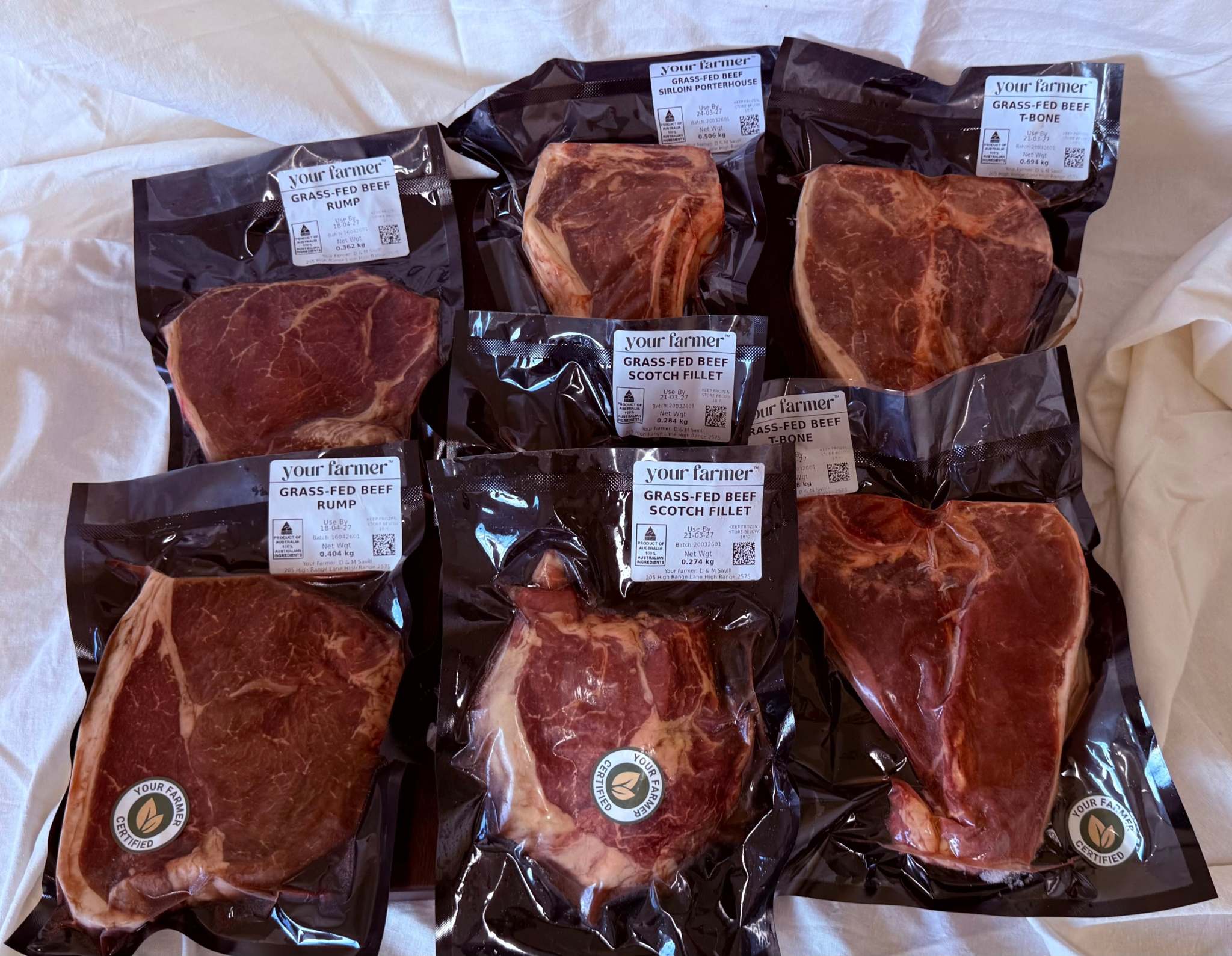
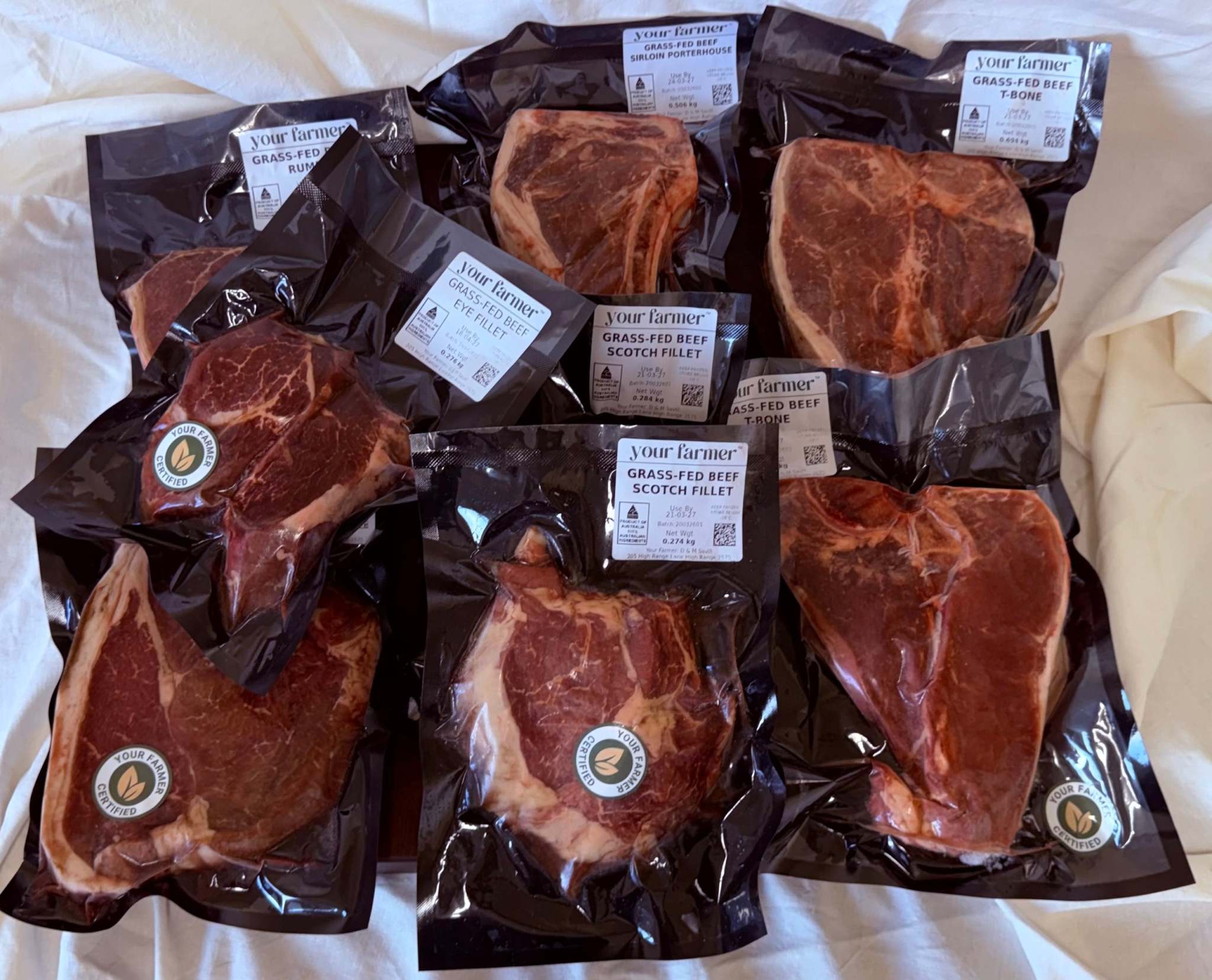
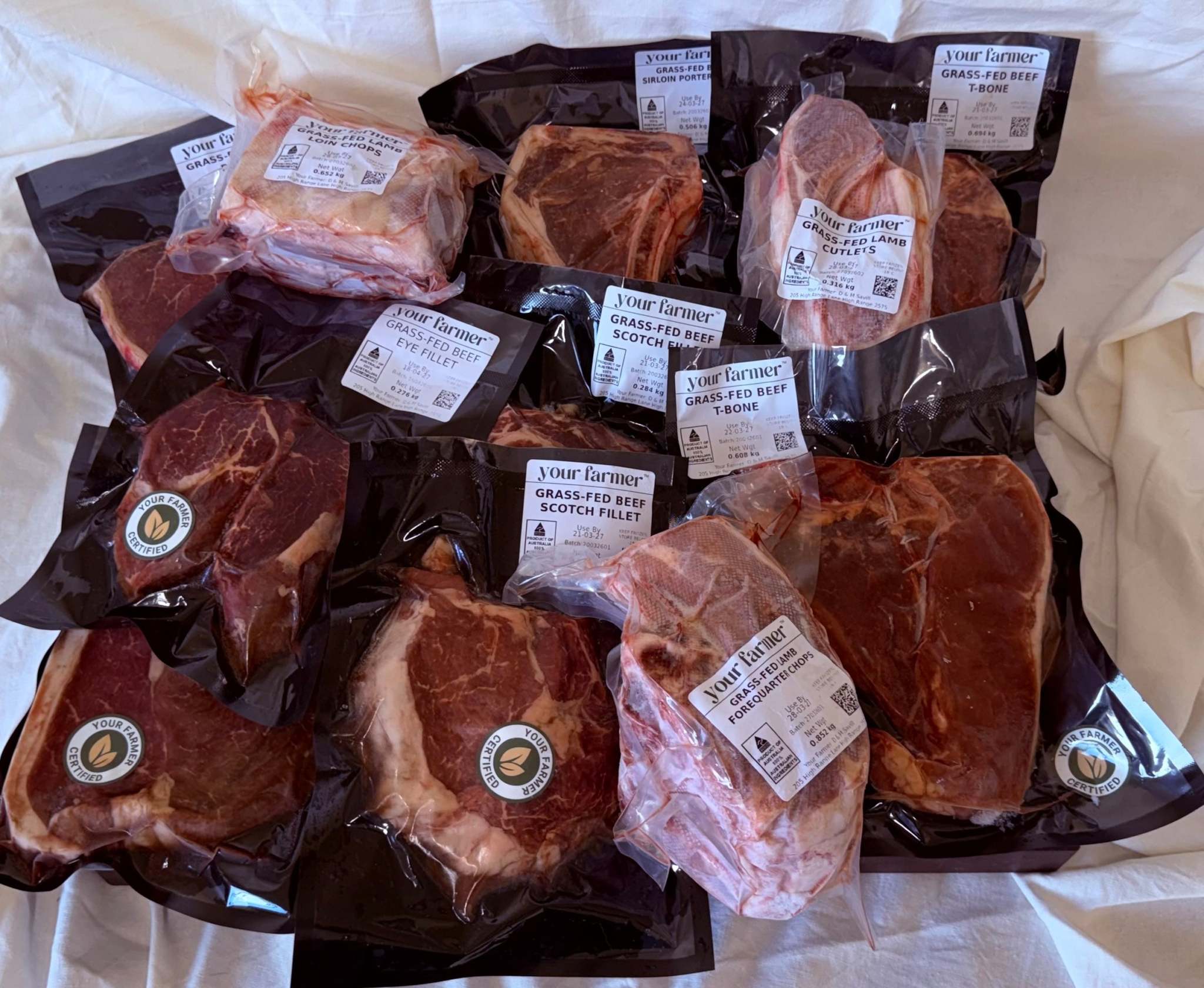
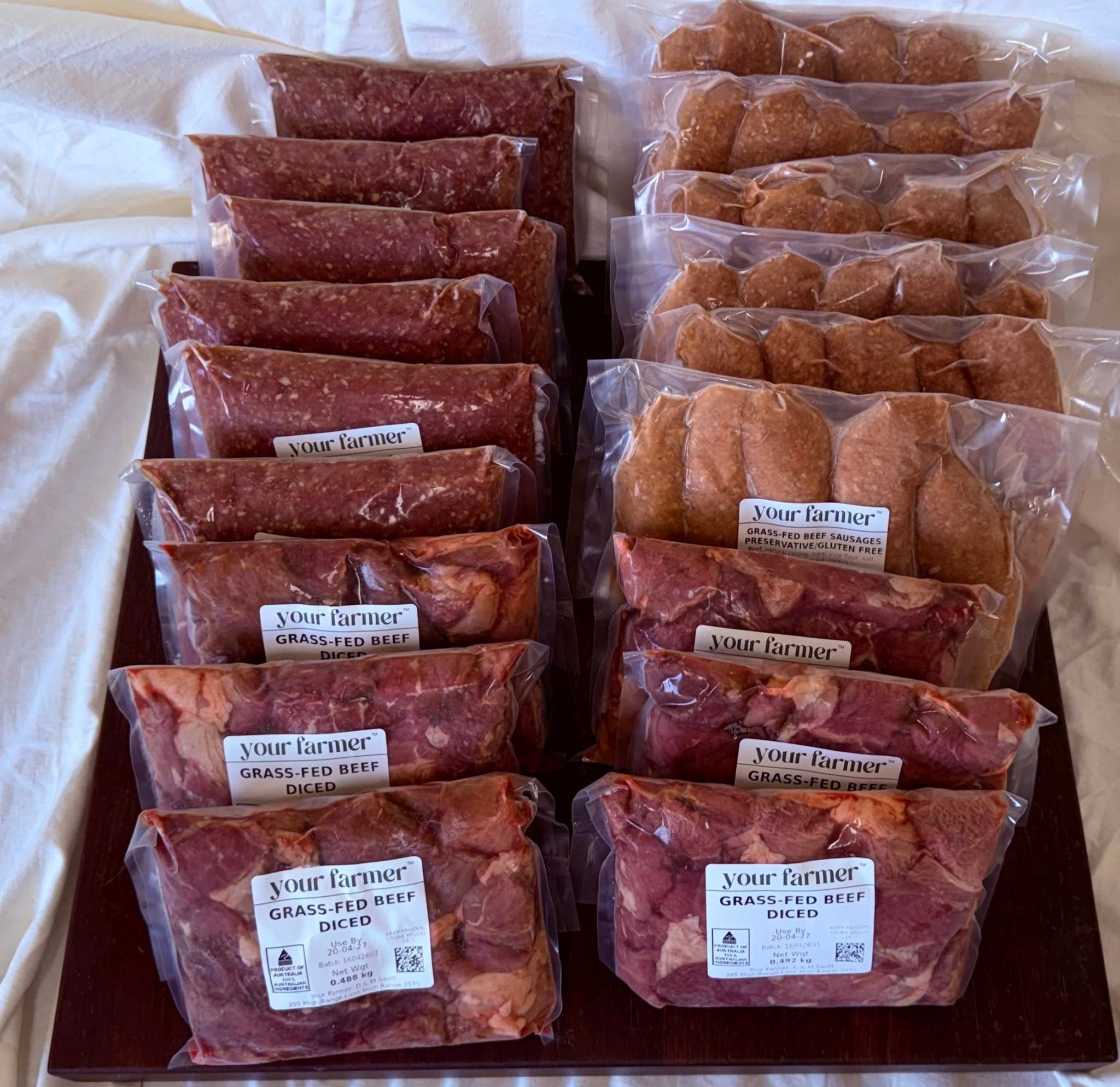
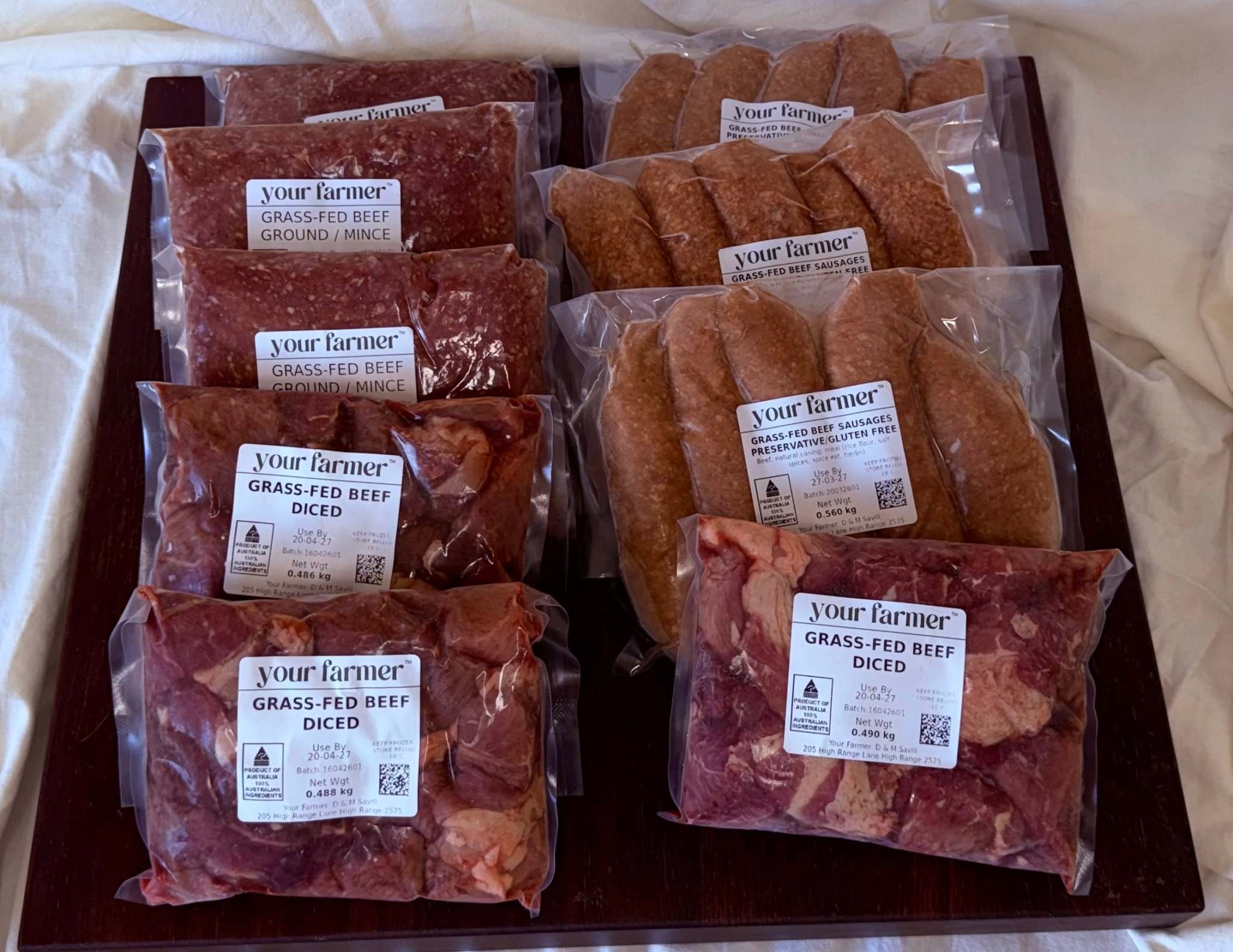
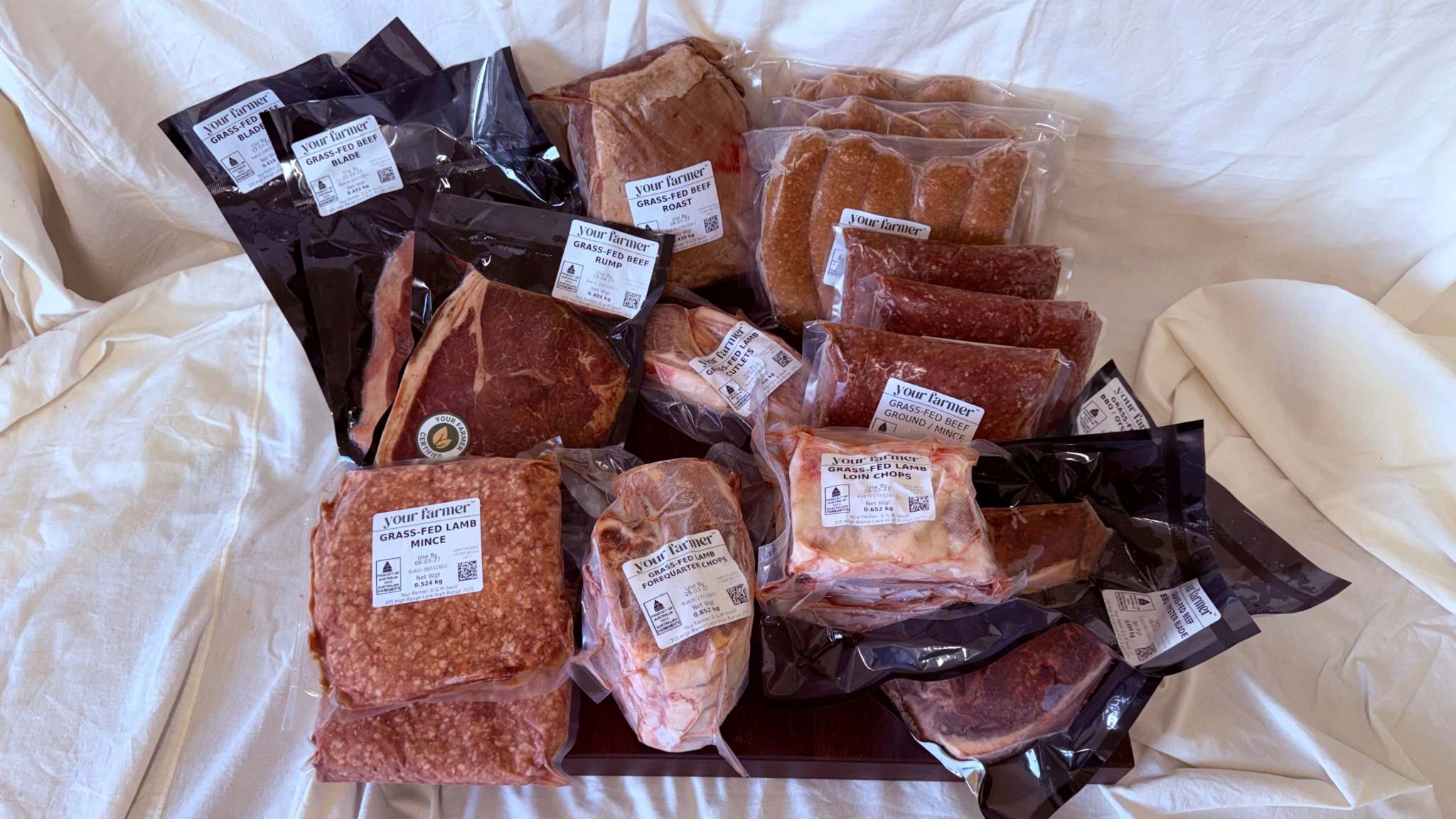
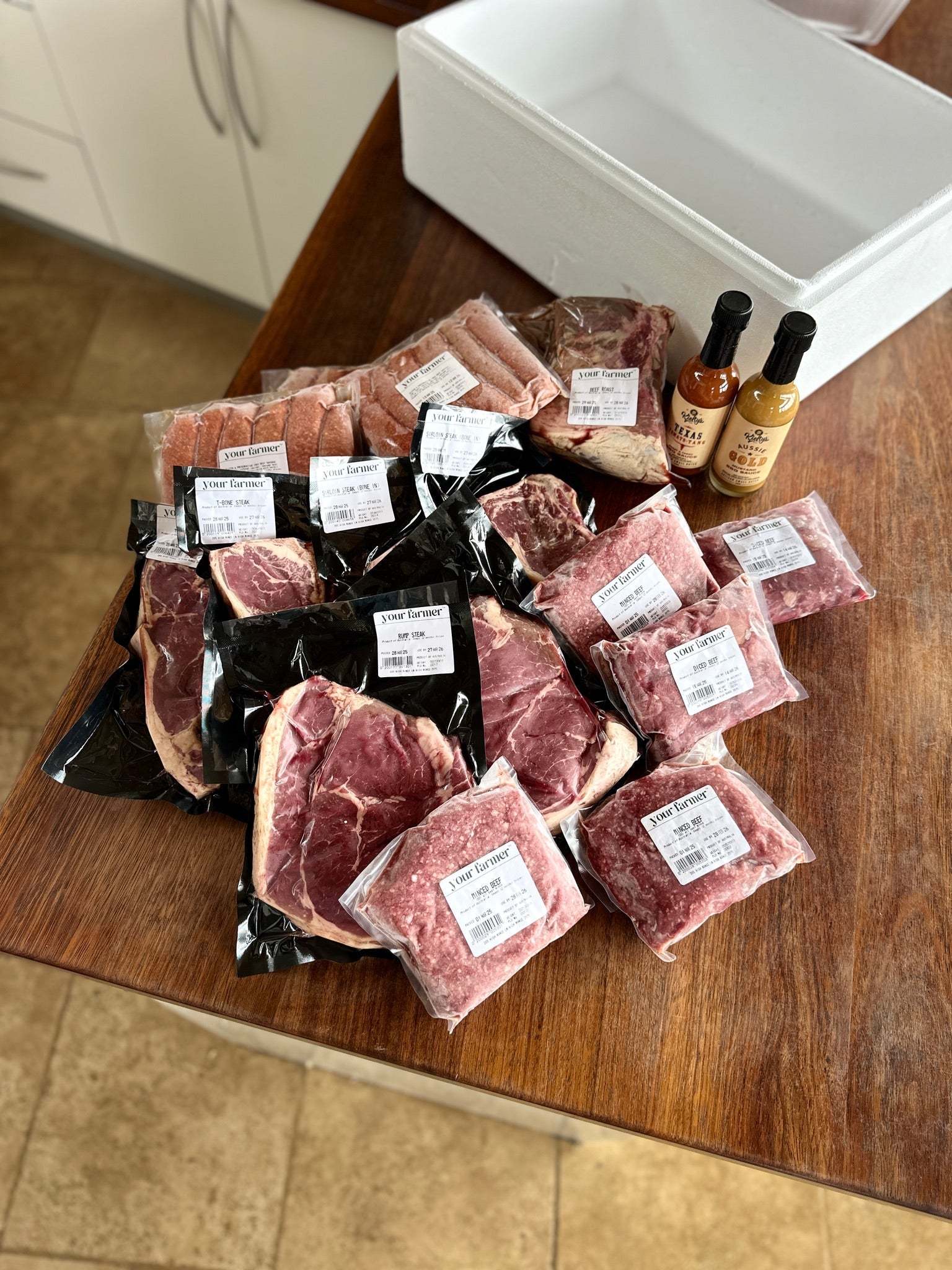
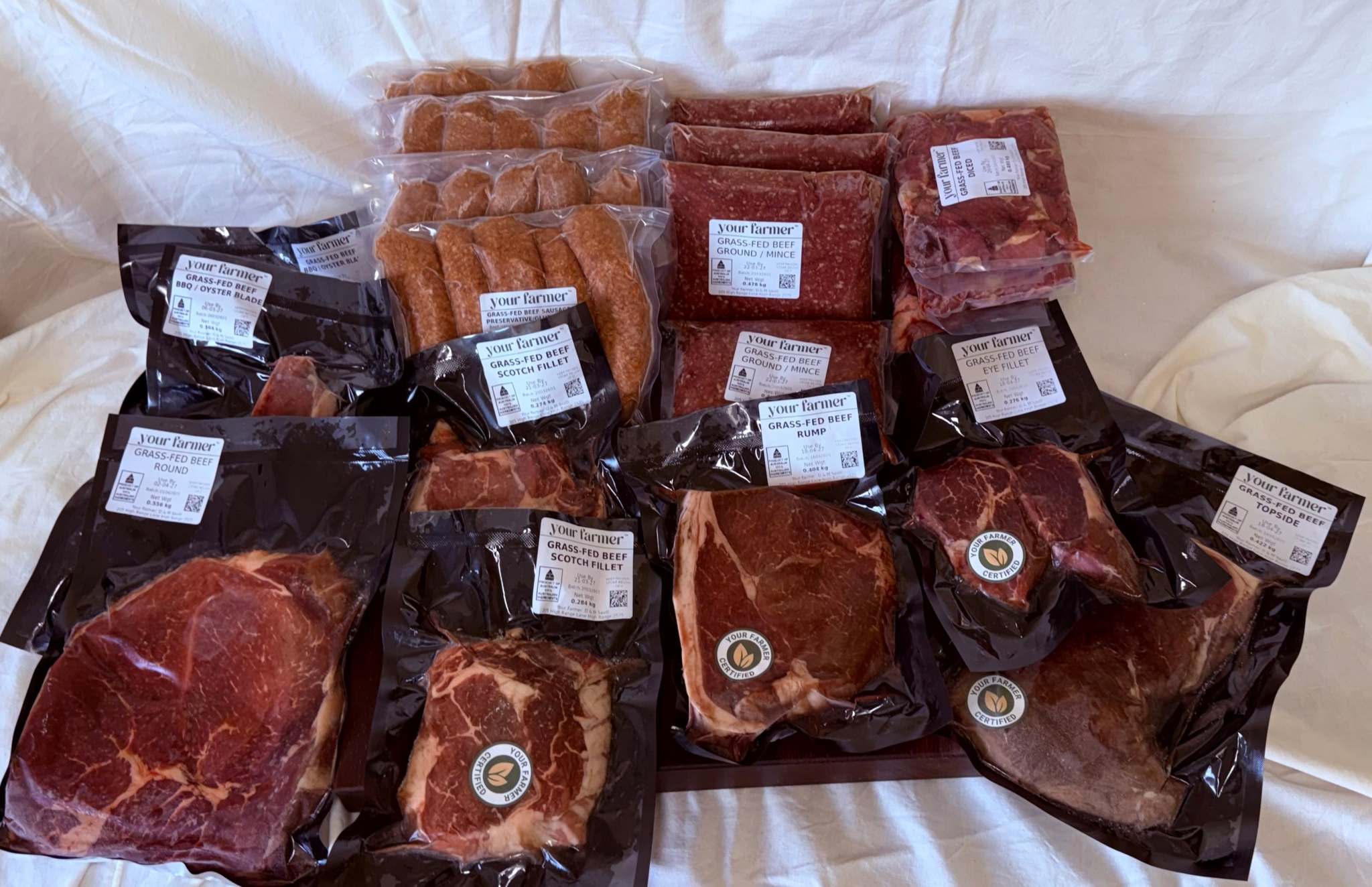
Your Farmer CSA grass-fed beef share — vacuum-sealed steaks, roasts, mince and sausages, paddock-to-plate NSW & ACT delivery
Sale price From $152.00Regular price $169.99

What a Dry Brine Actually Does

Salt a steak just before cooking and the seasoning sits on the surface. Salt it the night before and something better happens: the salt draws moisture out, dissolves into it, and then the whole lot travels back in — seasoning the meat deep rather than skin-deep. Meanwhile the surface, left uncovered in the dry air of the fridge, loses the dampness that normally has to steam off before browning can start. That's why a dry-brined steak crusts so fast and so evenly: the pan's heat goes straight into building flavour instead of boiling off water. It's completely safe — an uncovered rack in the fridge is exactly how butchers dry-age — and it costs you thirty seconds of effort. On a finely marbled steak like the Your Farmer® scotch from the grass-fed beef CSA share, the payoff is the full steakhouse experience: crackling crust, juicy centre, seasoned to the middle. Smaller grass-fed cattle give you a steak sized for this treatment too — there's more on that in why smaller cattle make better steaks.

Swaps and Variations

The dry brine works on every steak in the share — sirloin, rump and T-bone all crust up beautifully after a night on the rack, so if steak night is becoming a ritual, an extra scotch fillet alongside the share never goes astray. For the onion rings, swap the soda water for cold lager and you've got a pub-style beer batter; add a half teaspoon of cayenne to the flour if you like them with a kick. No time to fry? Thick onion rings tossed in oil and roasted hard at 220C aren't the same thing — but they're still very good next to this steak.

Storage and Leftovers

Onion rings wait for no one — they're at their peak for about ten minutes — but day-old rings revive surprisingly well in a 200C oven for 5–6 minutes on a rack. Never the microwave, which undoes the batter entirely. Leftover steak keeps 2 days in the fridge; slice it cold onto a roll with a smear of mustard, or warm it very gently in a low oven. And if the dry brine has won you over, make it standard practice: any steak you salt tonight is a better steak tomorrow.
Frequently asked questions

Is it really safe to leave a steak uncovered in the fridge overnight?

Yes — on a rack over a plate, in a normal fridge, it's completely safe and is standard practice in butcheries and steakhouses. The dry surface it develops is exactly what you're after. Keep it away from strong-smelling neighbours like cut onion.

I forgot to salt it last night. Can I dry-brine for just a couple of hours?

Two hours on a rack in the fridge is still better than salting at the pan — you'll get decent seasoning, just less of the dried surface. The one thing to avoid is salting 10–30 minutes before cooking, when the moisture is sitting on the surface with nowhere to go.

Why soda water in the batter?

The bubbles and the cold both fight gluten development, which keeps the batter lacy and crisp instead of bready. Mix it just before frying and don't overwhisk — a few lumps are fine.

What oil should I fry the onion rings in?

A neutral oil with a high smoke point — standard vegetable, canola or sunflower oil all work well. Olive oil isn't suited to frying at 180C, and it's an expensive way to make onion rings.

Do I add more salt before cooking the steak?

No — the brine has already seasoned it through, and more salt makes the crust harsh. Just oil, heat, and cracked pepper at the end (pepper burns if it goes on before the sear).

Three Simple Steps

A whole table of real food.

Your Farmers grow grass-fed beef and lamb, pastured eggs and the best eco-grown veggies and produce — every item grown to the same ecological standard, every farmer one you can know by name. One subscription, your whole real-food shop.

01

Reserve your share — or try a pack

Subscribe to a share of the harvest, or start with a one-off fixed pack.

02

Make it your own

Pick your delivery rhythm and what's in the box. Skip or cancel anytime — no lock-in.

03

Cook, savour, know your farmer

We deliver in a reusable esky we collect next time. No couriers, no waste.

More Recipes

View all

Greek-style grass-fed lamb roast with lemon and oregano served over golden potatoes in a ceramic baking dish.

Greek-Style Lamb Roast with Lemon and Oregano

Lemon, oregano and time — the Greek family-table treatment for the whole cut

Every Greek family has a version of this and none of them are wrong. Garlic, dried oregano and lemon get worked deep into the lamb, potatoes go underneath to catch everything that falls, and the oven runs slow enough that nobody has to watch it. What comes out isn't pink, carve-at-the-table lamb — it's the other thing entirely: golden on top, giving underneath, with lemony potatoes that half the table will fight over harder than the meat. It's Sunday cooking from a country that takes Sundays seriously.

Read moreabout Greek-Style Lamb Roast with Lemon and Oregano

Low-and-slow barbecued grass-fed lamb ribs with a dry-rub bark, sliced on butcher's paper.

Low-and-Slow BBQ Lamb Ribs with Dry Rub

Paprika, brown sugar, patience — American barbecue discipline meets Australian lamb

This is the recipe for the day you've decided the barbecue is the afternoon's entertainment, not just the cooking appliance. No foil, no shortcuts: a paprika and brown sugar rub, a hooded barbecue held low around 140C, and three or so unhurried hours while the fat renders, the spice sets into proper bark and the smell slowly takes over the street. Lamb ribs suit the American low-and-slow treatment better than most people expect — they're smaller and fattier than pork ribs, so you get all the bark in less time. Pour something cold. This one's a sit-outside recipe.

Read moreabout Low-and-Slow BBQ Lamb Ribs with Dry Rub

Grilled grass-fed lamb chump chops sliced over a warm French-style lentil salad with mustard dressing.

Grilled Chump Chops with Warm Lentil Salad

Charred chops over mustardy lentils — the bistro order, made at home

Walk into any honest bistro in France and there'll be lamb with lentils somewhere on the board. It works because the two halves trade favours — earthy lentils soak up the lamb's resting juices, and a sharp Dijon dressing cuts the richness of a properly charred chop. The lentils simmer away on their own for twenty-five minutes while you see to the chops, so the timing looks after itself. Hearty without being heavy, smart enough for guests, and most of it comes from the pantry.

Read moreabout Grilled Chump Chops with Warm Lentil Salad