The weekend project that pays you back twice

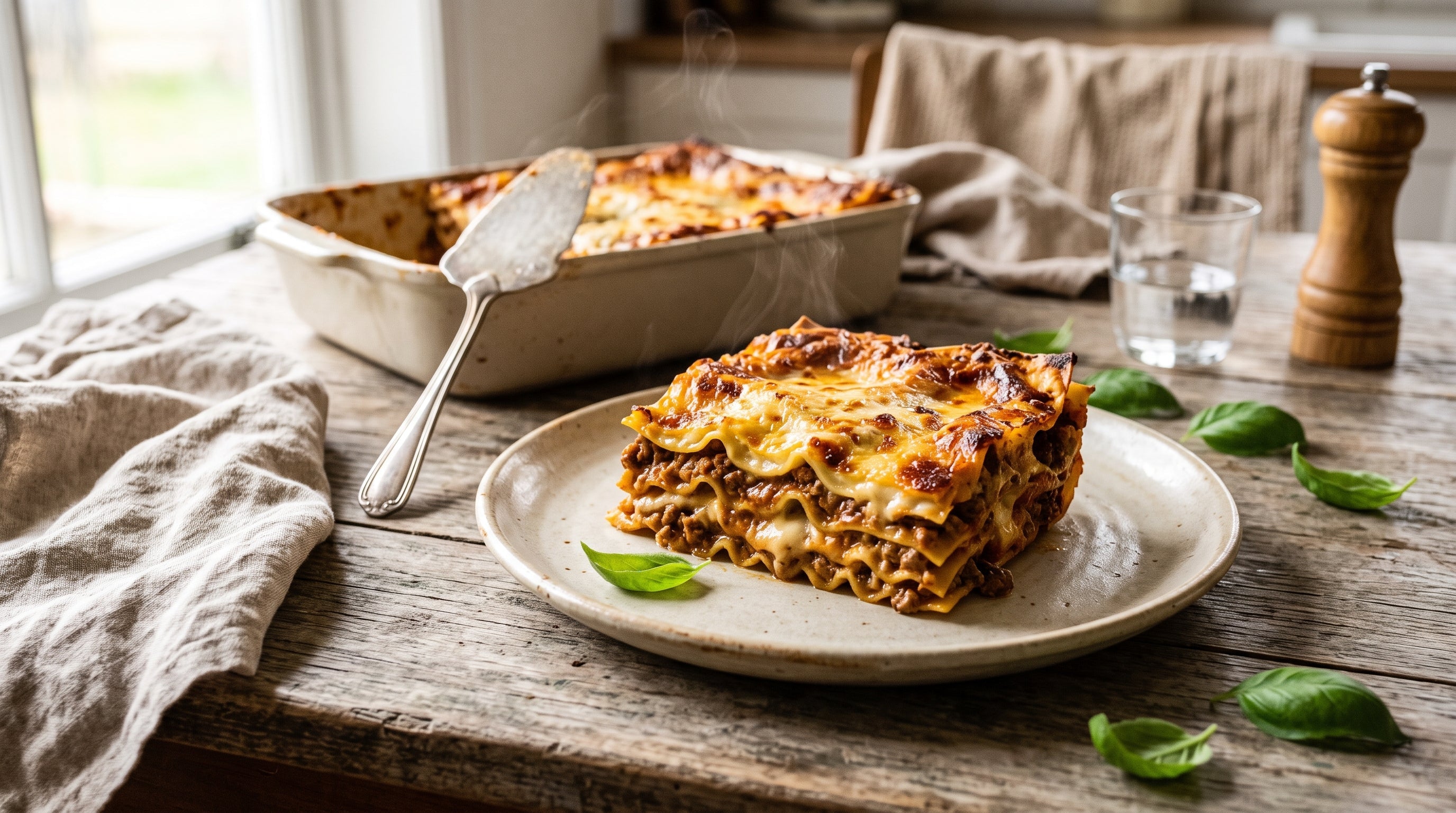
A proper lasagne isn't fast food, and I won't pretend otherwise. This one takes the best part of an afternoon — a ragu that simmers away for two hours, a silky béchamel, and layers you build like you mean it. But here's the thing: two packs of grass-fed beef mince become eight serious serves. Dinner tonight, and a tray in the freezer for the Tuesday you can't face cooking. Put the footy on, let the pot blip away, and call it time well spent.

3 hrs 30 mins 8 servings Prep 30 minsCook 3 hrsMain CourseItalian

Ingredients

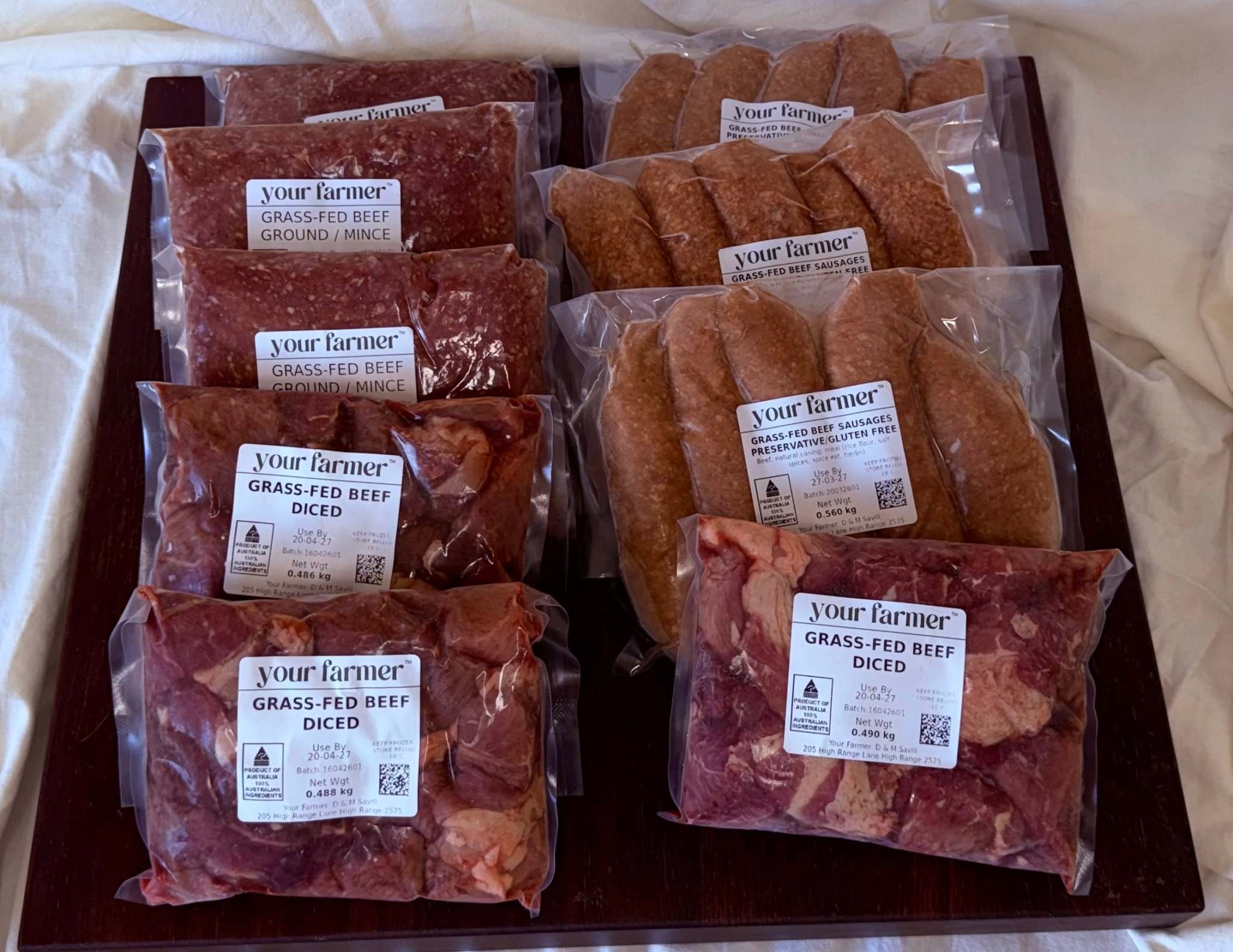
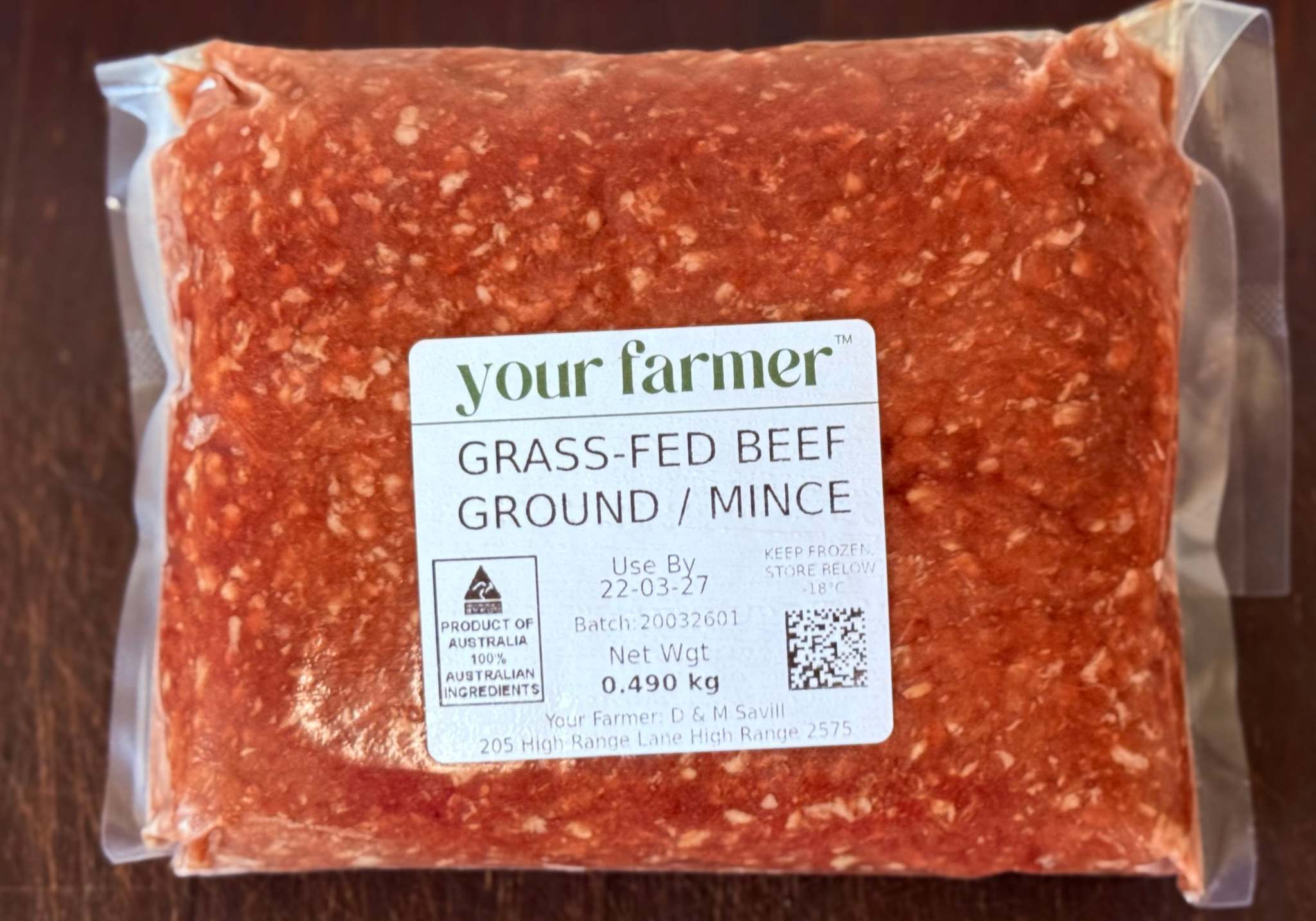
  • 960g Your Farmer grass-fed beef mince (2 packs)
  • 2 tbsp olive oil
  • 1 large brown onion, finely diced
  • 2 carrots, finely diced
  • 2 sticks celery, finely diced
  • 3 cloves garlic, crushed
  • 2 tbsp tomato paste
  • 125ml red wine (or extra stock)
  • 2 x 400g tins crushed tomatoes
  • 250ml beef stock
  • 2 bay leaves
  • Salt and pepper to season
  • 100g butter (for the béchamel)
  • 100g plain flour (for the béchamel)
  • 1 litre full-cream milk (for the béchamel)
  • A good grating of nutmeg (for the béchamel)
  • 375g dried lasagne sheets
  • 150g grated mozzarella
  • 60g finely grated parmesan

Instructions

For the ragu

Heat the olive oil in a large heavy pot over medium heat. Cook the onion, carrot and celery for 8–10 minutes until soft, adding the garlic for the final minute.

2 tbsp olive oil1 onion2 carrots2 sticks celery

Turn the heat up, add the mince in two batches and brown it hard, breaking it up as you go.

960g beef mince

Stir in the tomato paste and cook for 1 minute, then pour in the wine and let it bubble away almost to nothing.

2 tbsp tomato paste125ml red wine

Add the tomatoes, stock and bay leaves. Simmer uncovered over low heat for 1.5–2 hours, stirring occasionally, until thick enough to hold its shape on a spoon. Season well.

800g crushed tomatoes250ml beef stock2 bay leaves

For the béchamel

While the ragu simmers, melt the butter in a saucepan, stir in the flour and cook for 2 minutes without letting it colour.

100g butter100g plain flour

Gradually whisk in the milk and simmer, whisking often, until thick enough to coat the back of a spoon. Season with salt and the nutmeg.

1 litre full-cream milkgrating of nutmeg

To assemble and bake

Preheat the oven to 180°C fan-forced (200°C conventional).

In a large baking dish, spread a thin layer of ragu, then top with pasta sheets, more ragu and a layer of béchamel. Repeat for 3–4 layers, finishing with béchamel, then scatter over the mozzarella and parmesan.

375g lasagne sheets150g mozzarella60g parmesan

Bake for 40–45 minutes until deep golden and bubbling at the edges.

Rest for 15 minutes before cutting — the layers need it — then serve squares with a sharp green salad.

Appears in

In every beef share — Mince (480g)

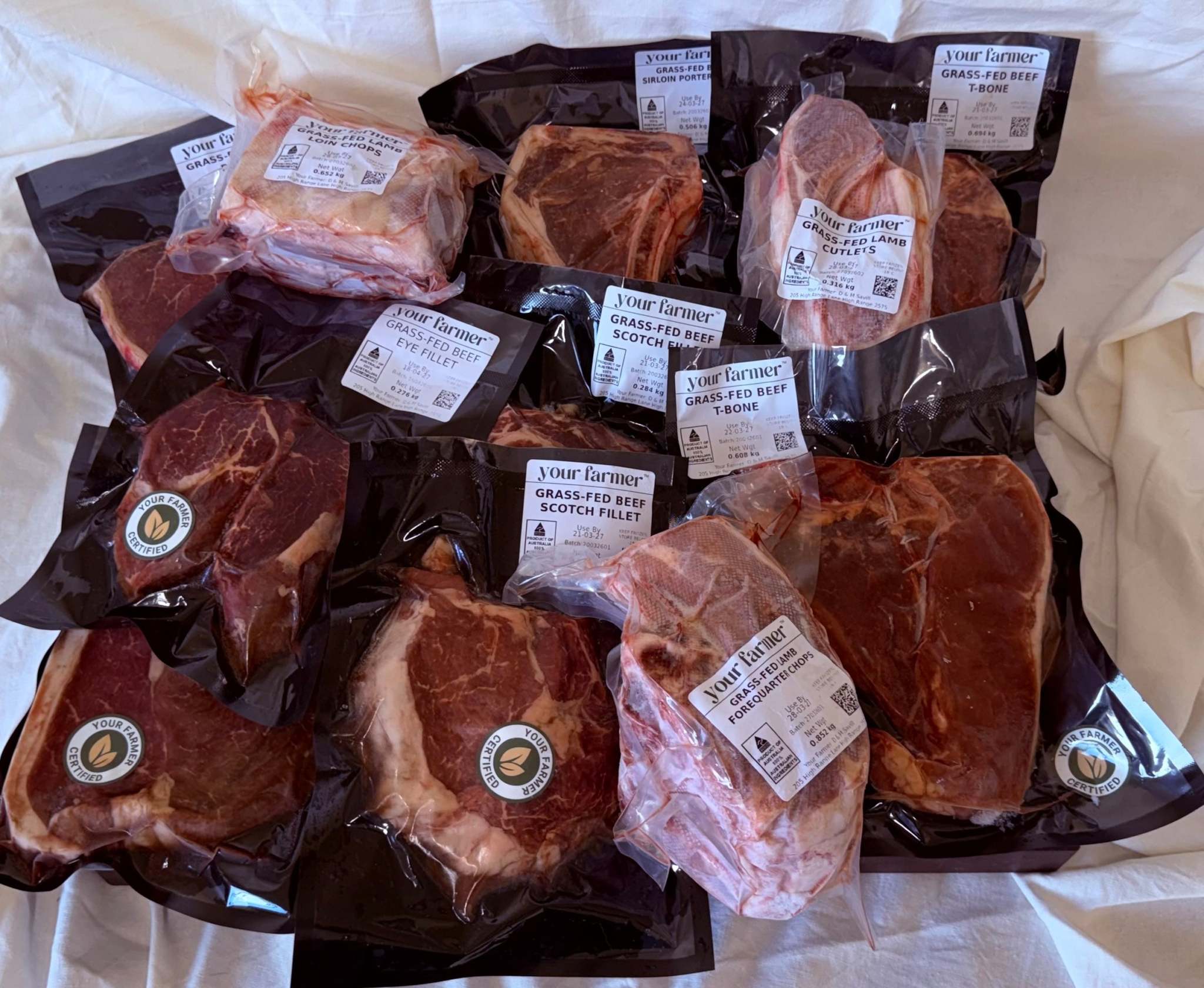
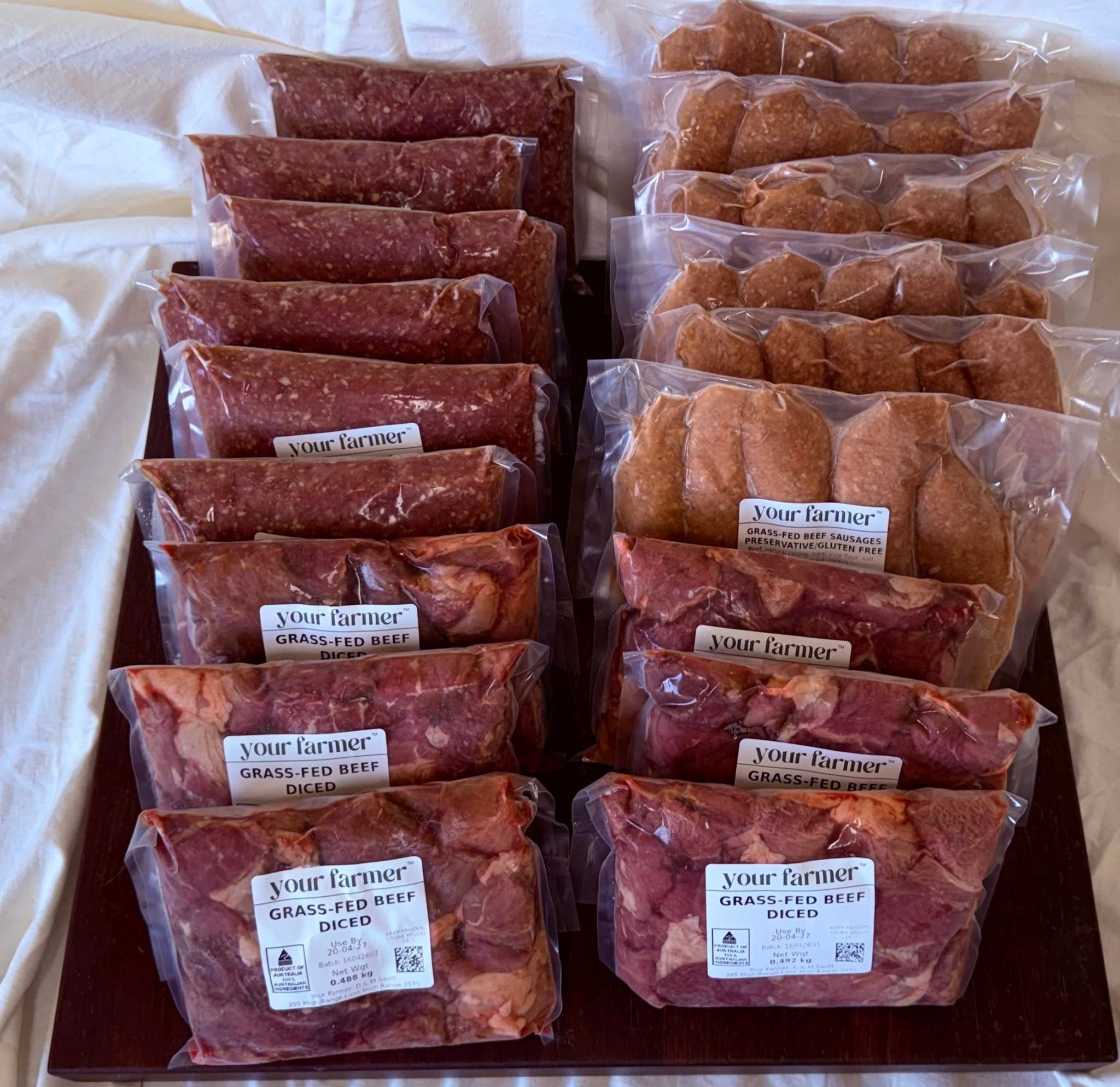
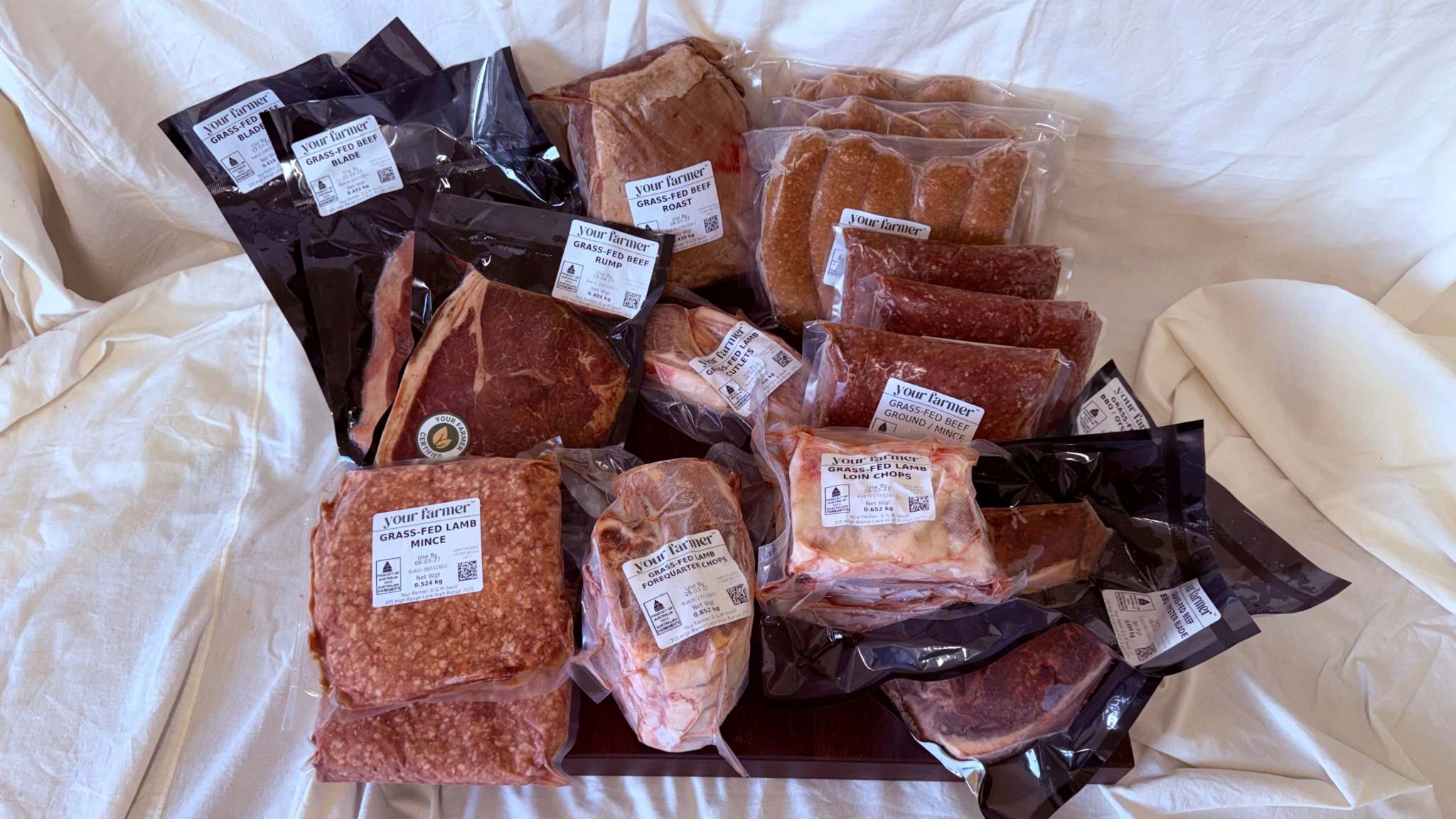
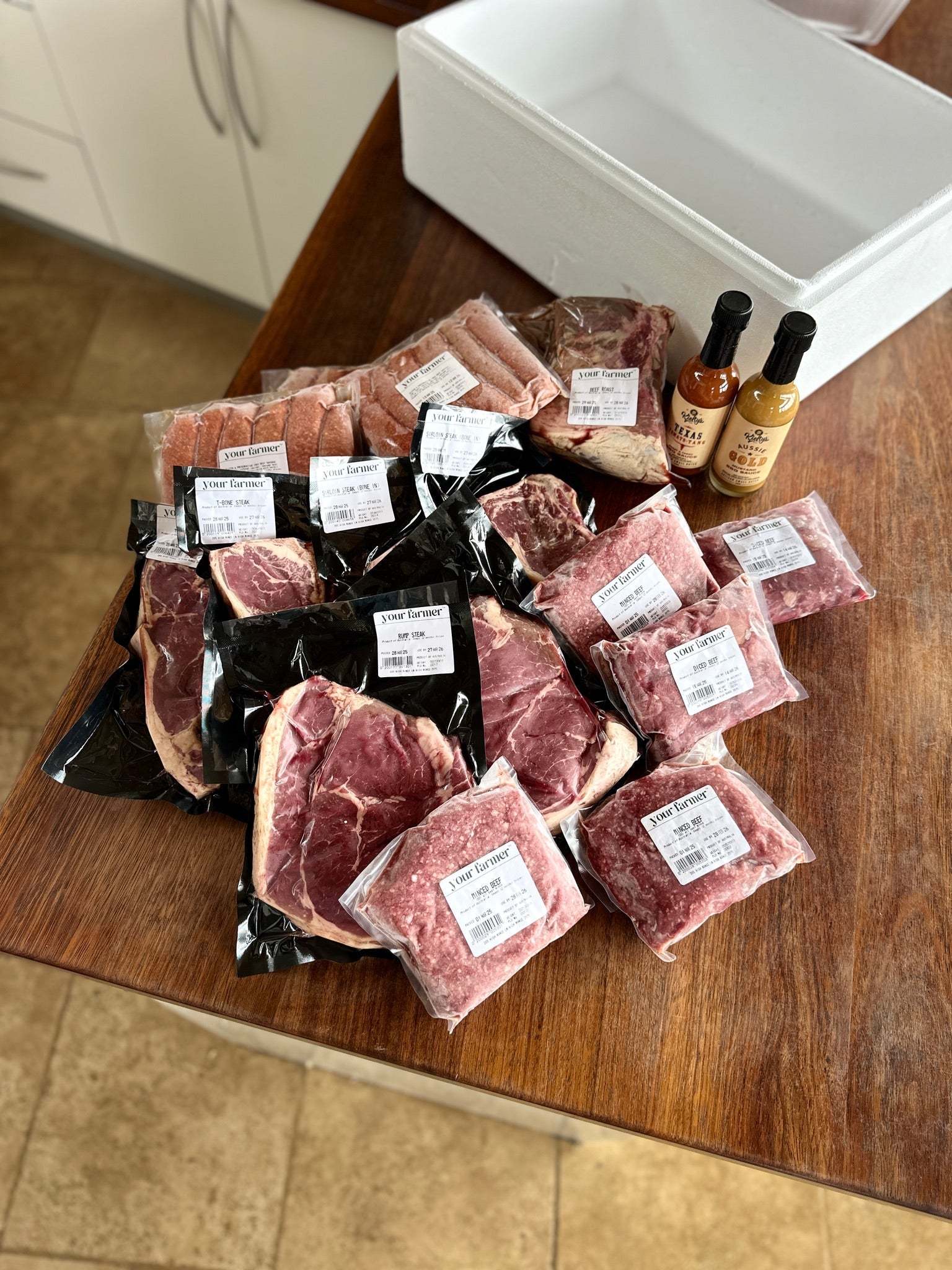
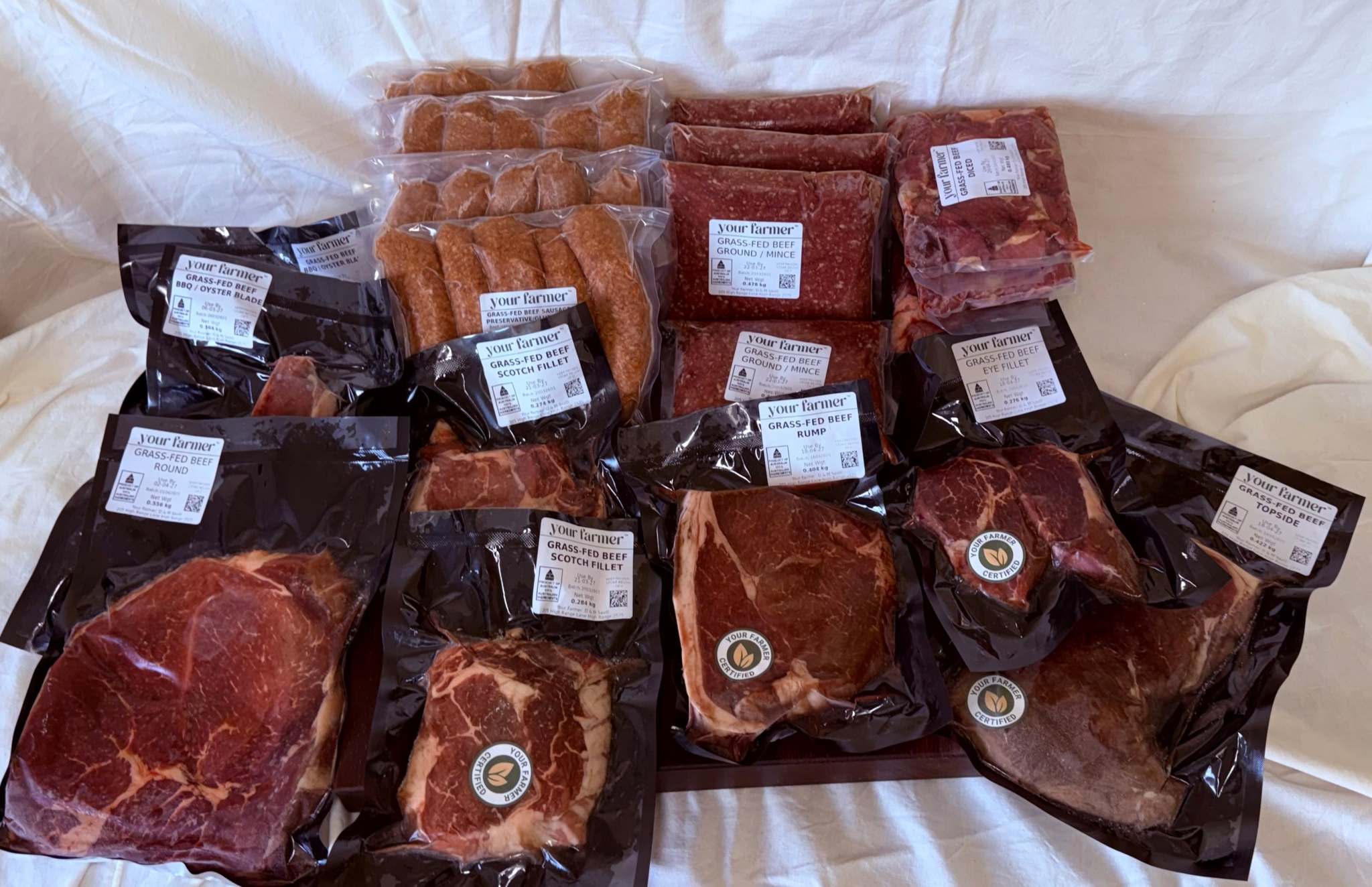
Your Farmer CSA grass-fed beef share — vacuum-sealed steaks, roasts, mince and sausages, paddock-to-plate NSW & ACT delivery
Sale price From $152.00Regular price $169.99
Grass-fed beef mince from Your Farmer — vacuum-sealed paddock-to-plate, NSW & ACT delivery
Sale price $12.00Regular price $13.49

Why Mince Makes a Proper Ragu

Your Farmer® mince is whole-animal trim from grass-fed cattle, minced and nothing more — and slow cooking is where it shows off. A ragu was never about expensive cuts; it's about time. Two hours of gentle simmering lets the fat carry flavour through the sauce and turns humble mince into something with real depth. The two non-negotiables: brown the mince hard in batches, because grey mince makes grey ragu, and don't rush the simmer — the sauce is ready when it holds its shape on a spoon. On the béchamel, add the milk gradually and keep the whisk moving; if lumps sneak in anyway, a hard whisk off the heat brings it back. A 33 x 23cm dish is the right size — deep enough for four layers without boiling over.

This recipe uses two 480g packs. Set aside a fortnight's worth from our beef subscription, or add an extra pack of grass-fed mince to your next delivery. The freezer maths works out either way, because one lasagne feeds the family twice. And if the slow-simmered sauce is the part you fall for, our Sunday bolognese is its single-pack cousin.

Swaps and Variations

  • The sausage trick: replace one pack of mince with sausage meat squeezed from its casings — it arrives already seasoned and brings extra richness to the ragu.
  • No wine: use extra stock instead, and add a teaspoon of red wine vinegar at the end for the same lift.
  • Fresh pasta sheets: no change to the method — just drop the bake to about 35 minutes.
  • Half lamb: one pack of beef, one of lamb mince, plus a pinch of cinnamon in the ragu — a richer, Greek-leaning tray.

Storage and Leftovers

Lasagne is one of the rare dishes that's genuinely better the next day, once the layers have settled into each other. It keeps three days in the fridge, and portions freeze well for three months — wrap them individually so weeknight-you only has to thaw what's needed. Reheat covered at 160°C for about 30 minutes, until piping hot in the centre. A reheated wedge needs nothing beside it but a green salad and a quiet evening.

If a two-hour ragu sounds like your kind of Sunday, reserve your share — the mince turns up in every box, regular as rain.
Frequently asked questions

Can I make this with one 480g pack of mince?

Yes — halve every ingredient and bake it in a 20cm square dish. The bake time stays about the same, and you'll get four serves instead of eight.

Do I need to pre-cook dried lasagne sheets?

No. As long as the ragu is loose enough and every sheet is covered by sauce, dried sheets cook through during the bake.

Why does it need to rest for 15 minutes?

The layers set as it cools slightly, so squares hold together instead of sliding apart. It also stops anyone burning their mouth on molten béchamel.

Can I assemble it ahead of time?

Yes. Assemble, cover and refrigerate up to 24 hours ahead, then add about 10 minutes to the bake time from fridge-cold.

What's the best way to freeze lasagne?

Baked and cooled, cut into portions and wrapped individually. Thaw overnight in the fridge and reheat covered at 160°C until piping hot in the centre.

Three Simple Steps

A whole table of real food.

Your Farmers grow grass-fed beef and lamb, pastured eggs and the best eco-grown veggies and produce — every item grown to the same ecological standard, every farmer one you can know by name. One subscription, your whole real-food shop.

01

Reserve your share — or try a pack

Subscribe to a share of the harvest, or start with a one-off fixed pack.

02

Make it your own

Pick your delivery rhythm and what's in the box. Skip or cancel anytime — no lock-in.

03

Cook, savour, know your farmer

We deliver in a reusable esky we collect next time. No couriers, no waste.

More Recipes

View all

Greek-style grass-fed lamb roast with lemon and oregano served over golden potatoes in a ceramic baking dish.

Greek-Style Lamb Roast with Lemon and Oregano

Lemon, oregano and time — the Greek family-table treatment for the whole cut

Every Greek family has a version of this and none of them are wrong. Garlic, dried oregano and lemon get worked deep into the lamb, potatoes go underneath to catch everything that falls, and the oven runs slow enough that nobody has to watch it. What comes out isn't pink, carve-at-the-table lamb — it's the other thing entirely: golden on top, giving underneath, with lemony potatoes that half the table will fight over harder than the meat. It's Sunday cooking from a country that takes Sundays seriously.

Read moreabout Greek-Style Lamb Roast with Lemon and Oregano

Low-and-slow barbecued grass-fed lamb ribs with a dry-rub bark, sliced on butcher's paper.

Low-and-Slow BBQ Lamb Ribs with Dry Rub

Paprika, brown sugar, patience — American barbecue discipline meets Australian lamb

This is the recipe for the day you've decided the barbecue is the afternoon's entertainment, not just the cooking appliance. No foil, no shortcuts: a paprika and brown sugar rub, a hooded barbecue held low around 140C, and three or so unhurried hours while the fat renders, the spice sets into proper bark and the smell slowly takes over the street. Lamb ribs suit the American low-and-slow treatment better than most people expect — they're smaller and fattier than pork ribs, so you get all the bark in less time. Pour something cold. This one's a sit-outside recipe.

Read moreabout Low-and-Slow BBQ Lamb Ribs with Dry Rub

Grilled grass-fed lamb chump chops sliced over a warm French-style lentil salad with mustard dressing.

Grilled Chump Chops with Warm Lentil Salad

Charred chops over mustardy lentils — the bistro order, made at home

Walk into any honest bistro in France and there'll be lamb with lentils somewhere on the board. It works because the two halves trade favours — earthy lentils soak up the lamb's resting juices, and a sharp Dijon dressing cuts the richness of a properly charred chop. The lentils simmer away on their own for twenty-five minutes while you see to the chops, so the timing looks after itself. Hearty without being heavy, smart enough for guests, and most of it comes from the pantry.

Read moreabout Grilled Chump Chops with Warm Lentil Salad