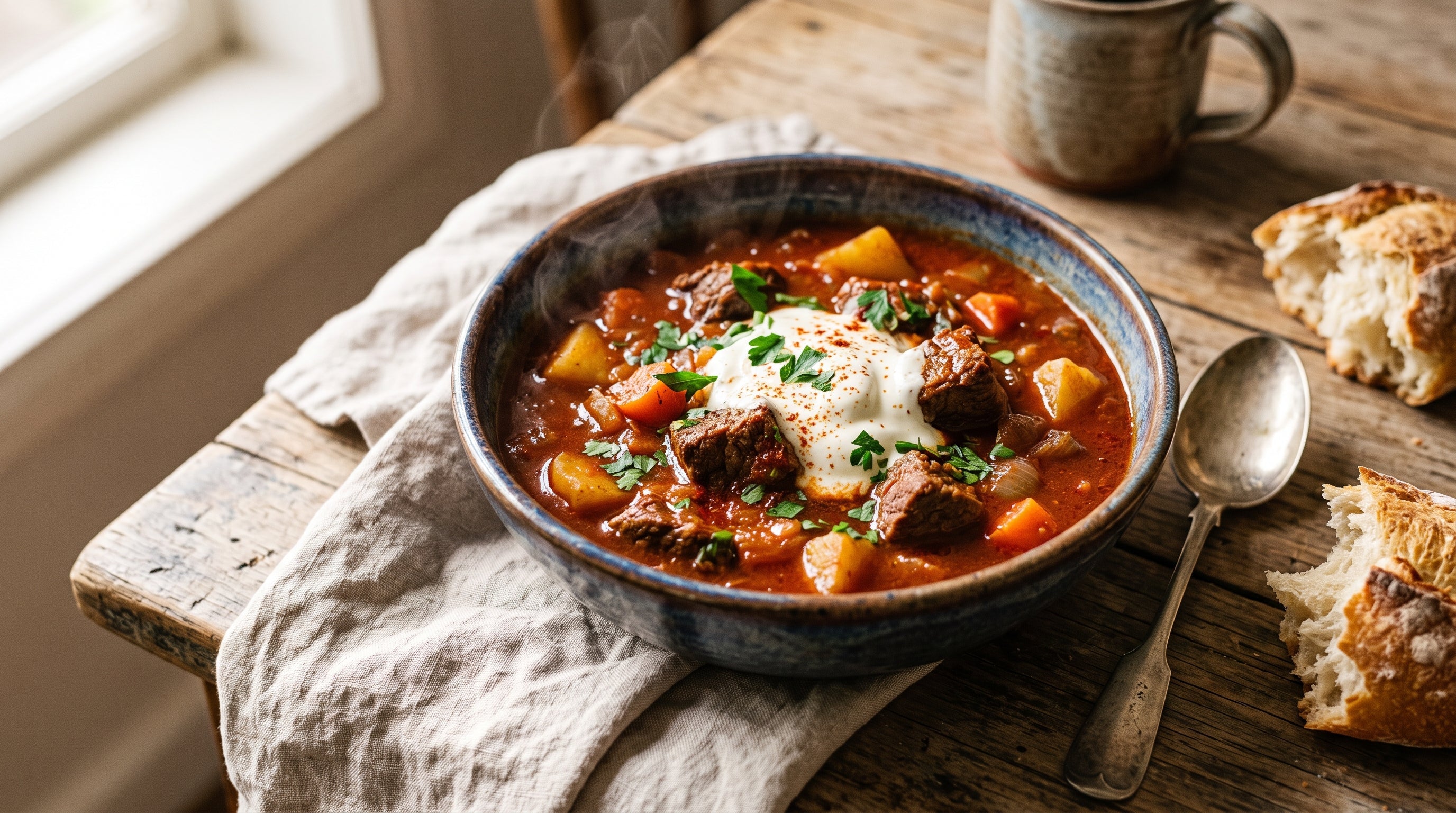
Three onions, a proper spoonful of paprika and no shortcuts

Goulash is what happens when onions and paprika are given all the time they ask for. Hungarian herdsmen built it in one pot over open fires, using the cuts that needed slow cooking — which is exactly what the diced beef in your share is. Three onions cooked down soft and golden, two big spoonfuls of sweet paprika, and a lazy burble until the beef gives way and the sauce turns brick-red and glossy. One pot, deep flavour, and the kind of bowl you hunch over happily on a cold night.

2 hrs 35 mins 4 servings Prep 20 minsCook 2 hrs 15 minsMain CourseHungarian

Ingredients

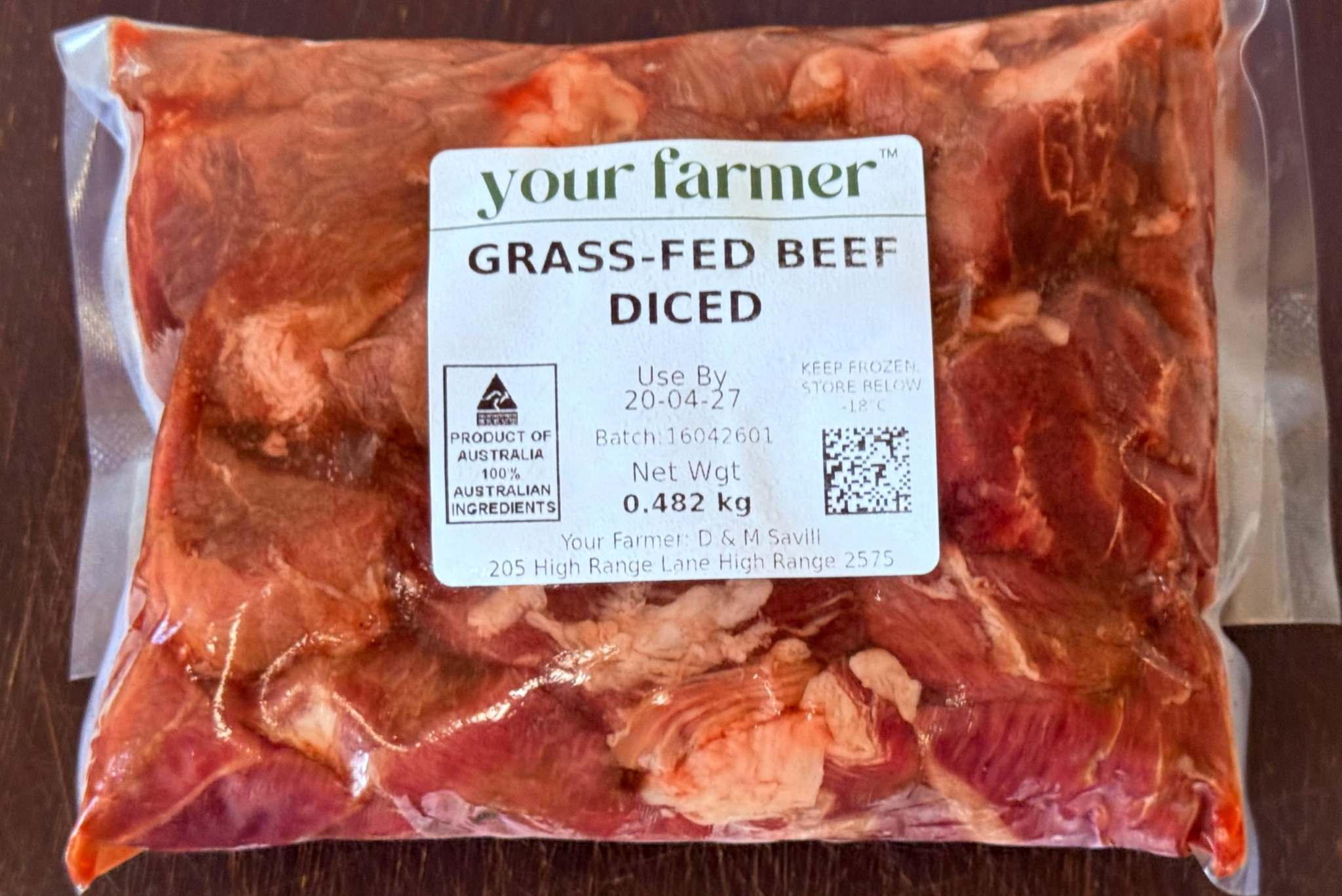
  • 480g Your Farmer grass-fed diced beef
  • 2 tbsp olive oil
  • 3 large brown onions, finely diced
  • 2 cloves garlic, crushed
  • 2 tbsp sweet paprika
  • 1 tsp caraway seeds, lightly crushed
  • 1 tbsp tomato paste
  • 1 red capsicum, diced
  • 500ml beef stock
  • 400g potatoes, peeled and cut into chunks
  • Salt and pepper to season
  • Sour cream and crusty bread, to serve

Instructions

Heat the oil in a heavy pot over high heat and brown the diced beef in two batches; set it aside.

2 tbsp olive oil480g diced beef

Drop the heat to medium-low and cook the onions for 10 to 12 minutes, stirring often, until soft and golden — this is the body of the sauce, so don't cut it short.

3 onions

Take the pot off the heat and stir in the garlic, paprika, caraway and tomato paste for 30 seconds — paprika burns bitter in moments on a hot base.

2 cloves garlic2 tbsp sweet paprika1 tsp caraway seeds1 tbsp tomato paste

Return the beef and its juices, add the capsicum and stock, scrape the bottom well, then cover and simmer on the lowest heat for 1.5 hours.

1 capsicum500ml beef stock

Add the potatoes and simmer, partly covered, for another 30 minutes, until beef and potato are tender and the sauce has real body.

400g potatoes

Season well and serve in deep bowls with a spoonful of sour cream and crusty bread for the sauce.

sour creamcrusty bread

Appears in

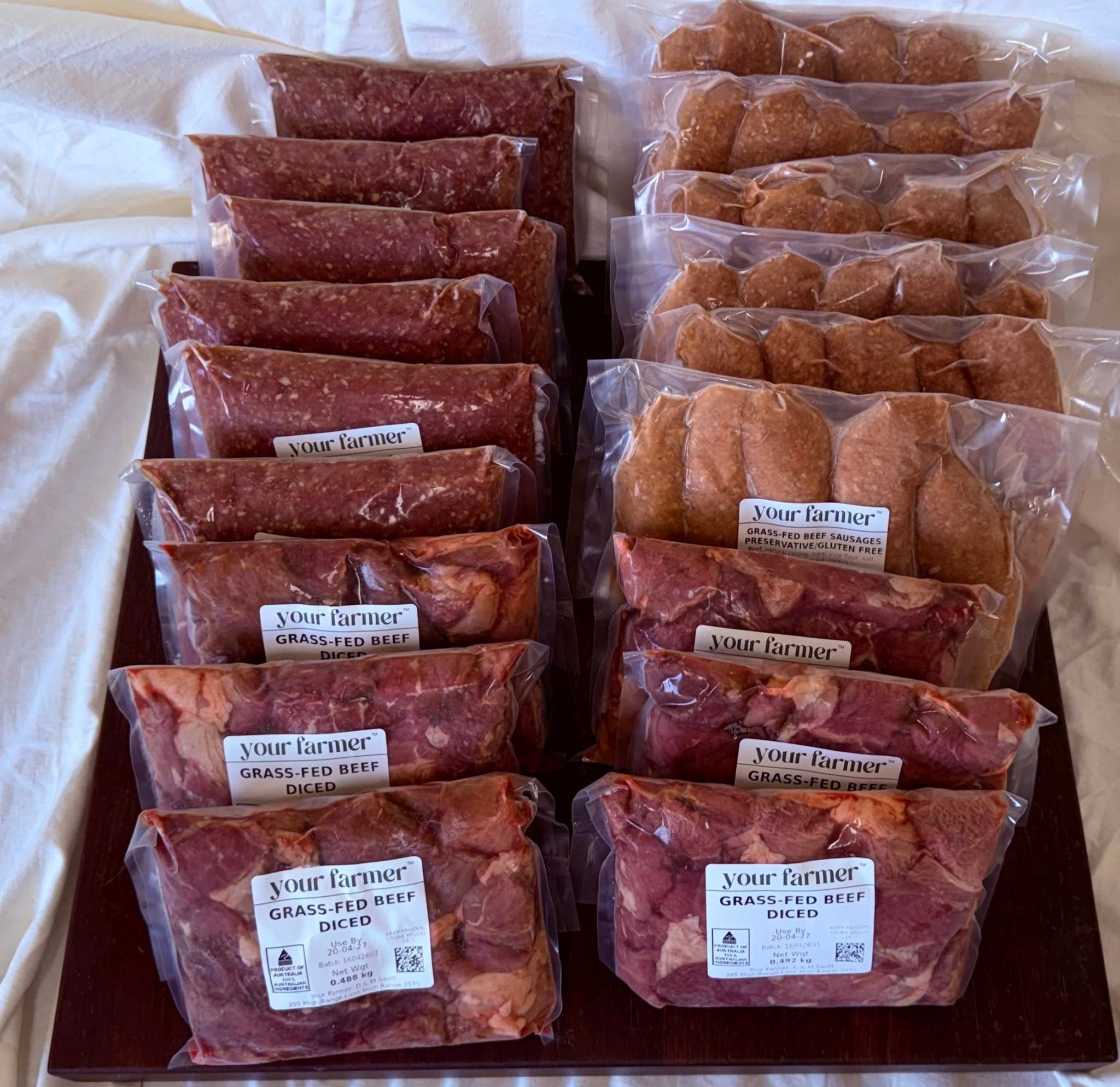
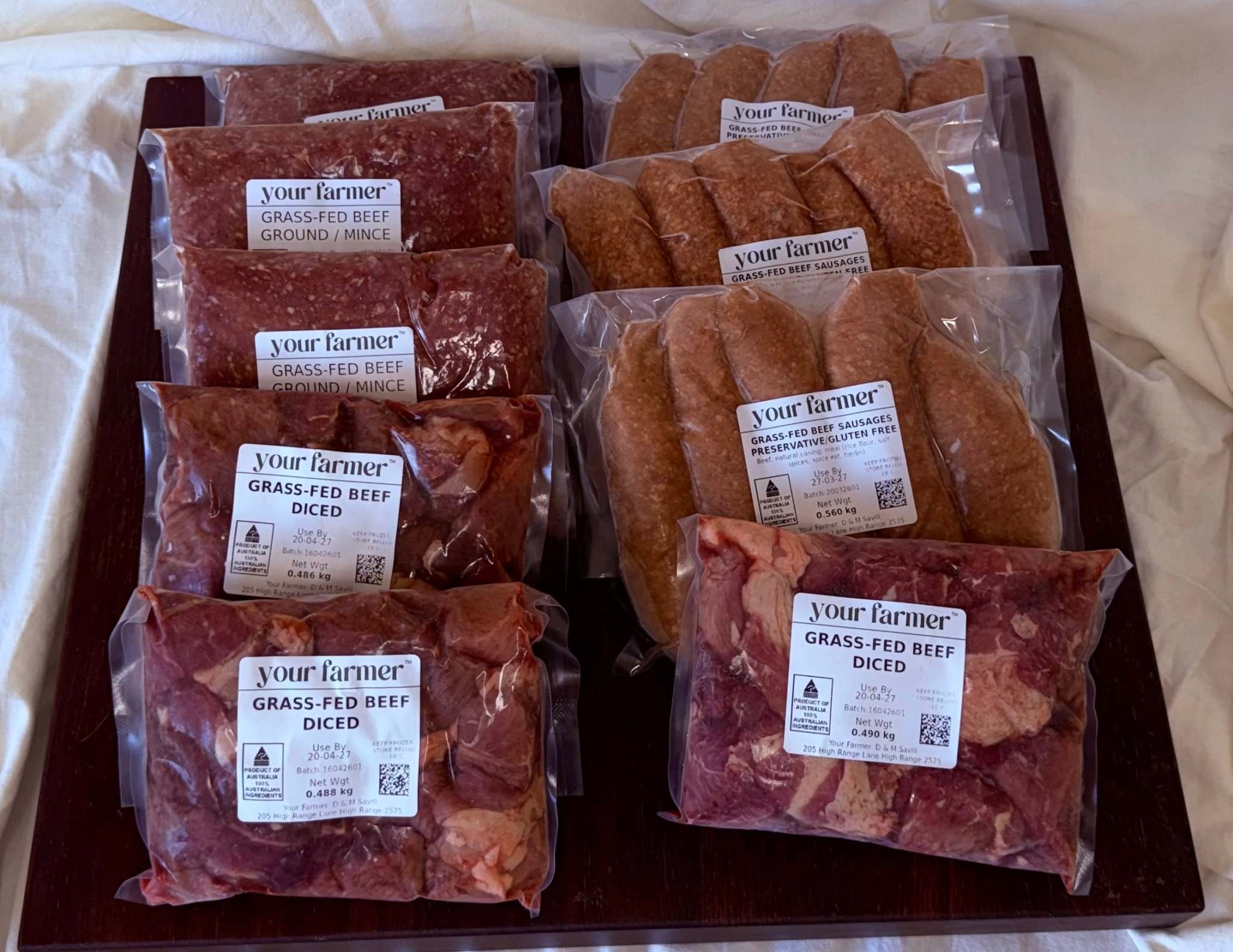
In every beef share — Diced Beef (480g)

Why Goulash Wants a Braising Cut

Goulash started as herdsmen's food — a kettle over a fire and the cuts that needed time, cooked until they didn't. No flour, no cream: the body of a proper goulash comes from onions cooked down to nearly nothing and from the connective tissue in the beef melting into the sauce. That's why Your Farmer® diced beef is the right pack to reach for — chuck-style shoulder beef, evenly diced, 480g in every share, with exactly the marbling and tissue this pot needs. The other non-negotiable is the paprika itself. It's the lead ingredient, not a garnish, so use sweet paprika from a tin or packet that hasn't sat open since last winter — stale paprika is where flat goulash comes from. If your share pack is spoken for this week, you can always order an extra pack of diced beef.

Swaps and Variations

A pinch of hot paprika alongside the sweet is entirely traditional if your table likes warmth. A small amount of smoked paprika works, but keep it to a half teaspoon — any more and you've wandered from Hungary to Spain. Skip the potatoes and serve it over buttered short pasta or German-style egg noodles instead. Add an extra 500ml of stock and it becomes gulyas proper — in Hungary it's closer to a soup than a stew. And if this pot wins you over, the original slow-food beef stew is its Australian cousin from the same pack.

Storage and Leftovers

Goulash improves overnight as the paprika settles into the sauce, so cooking it a day ahead is a feature, not a compromise. It keeps airtight in the fridge for 3 to 4 days and freezes well for up to 3 months; reheat gently on the stove with a splash of water. The leftover move worth knowing: stir a couple of ladlefuls through cooked rigatoni with an extra spoon of sour cream — goulash pasta, and nobody complains twice.

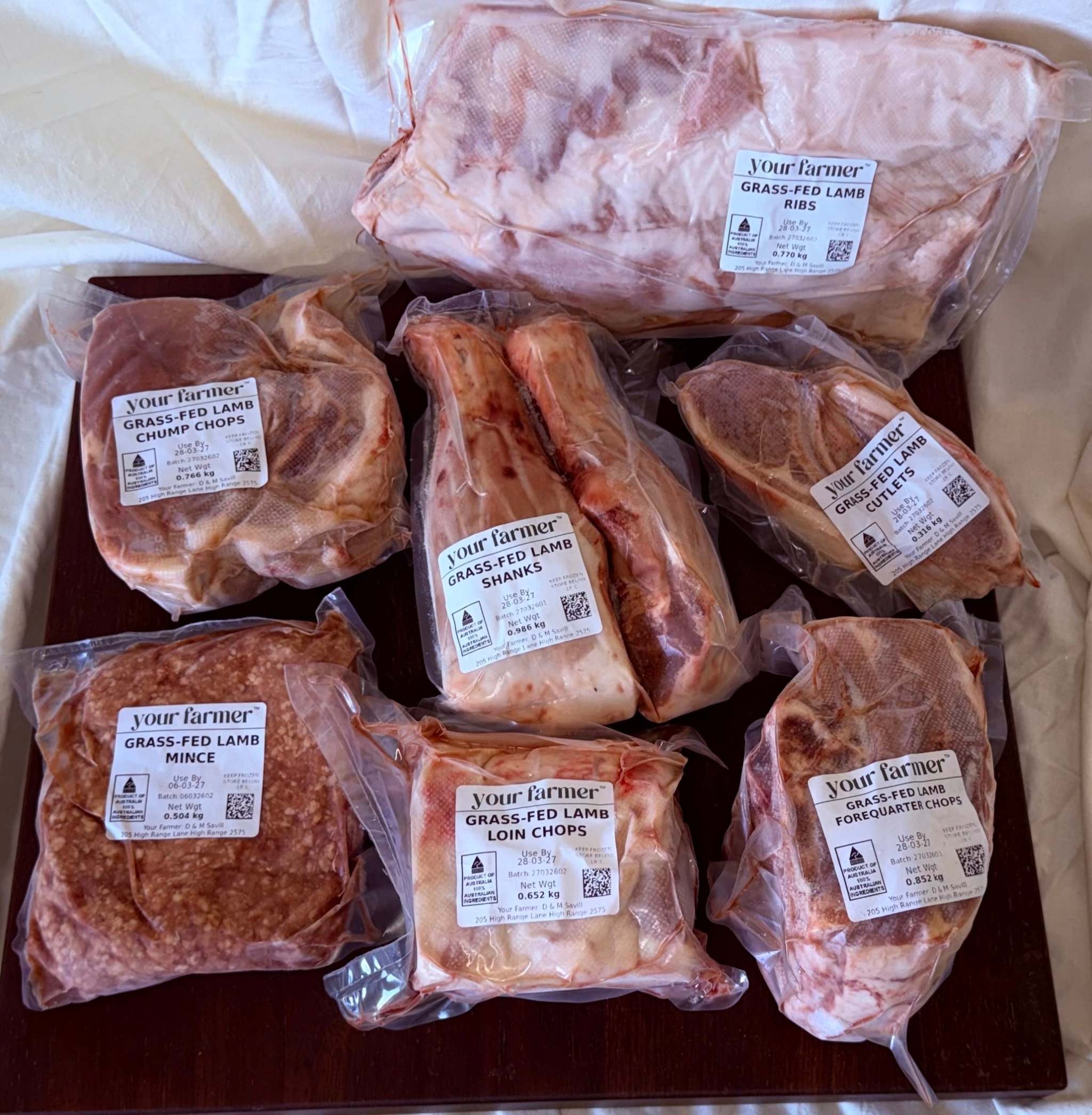
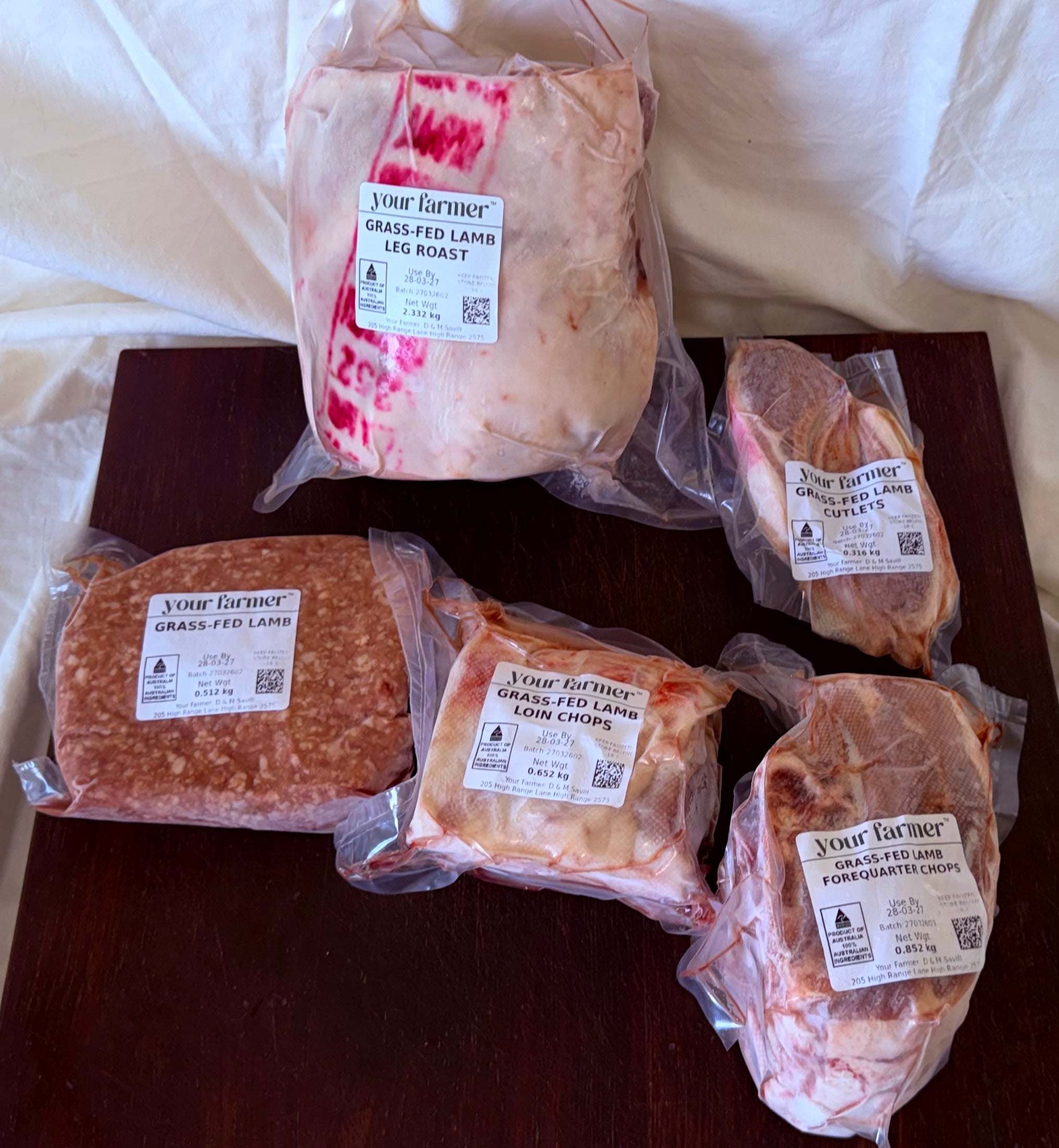
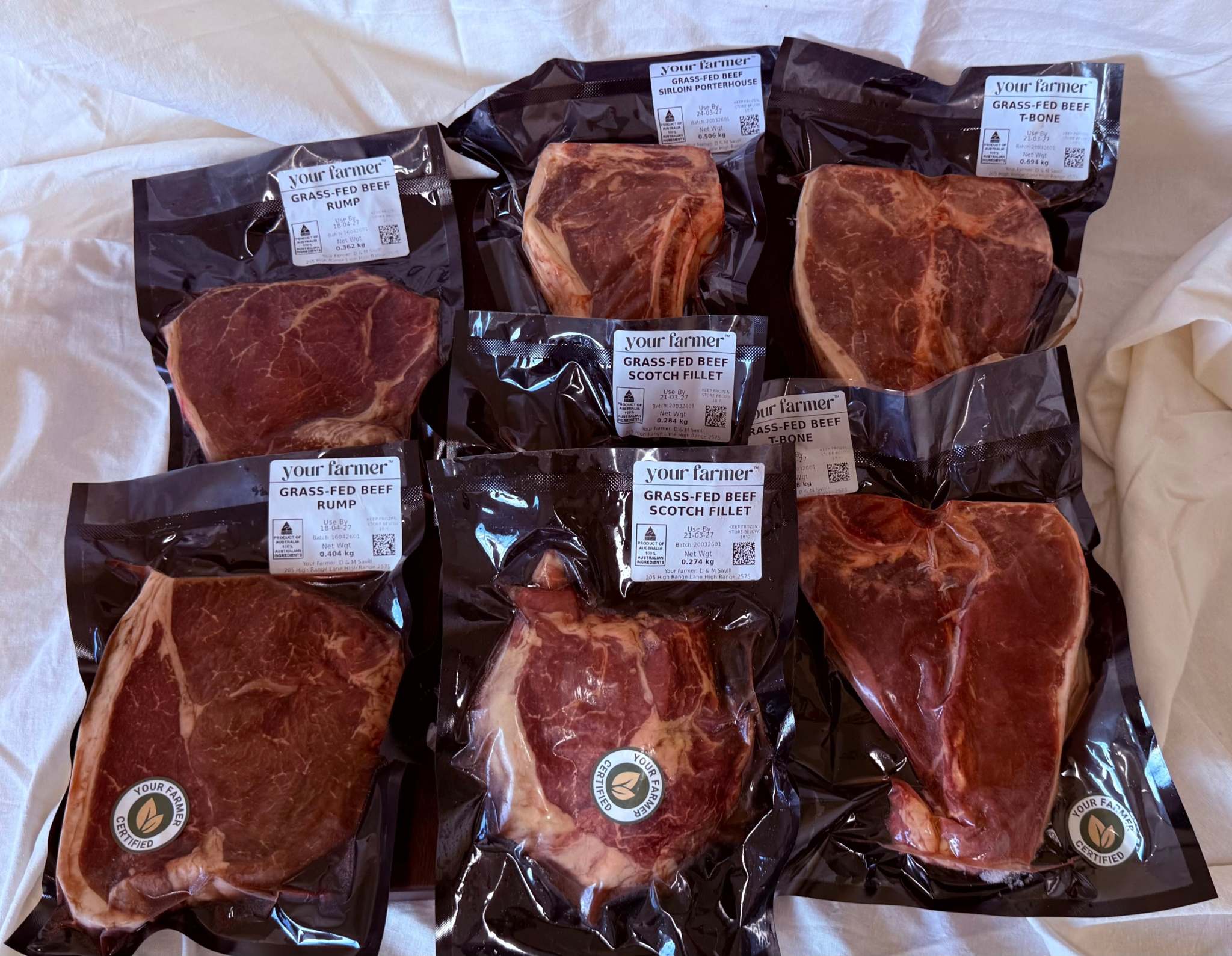
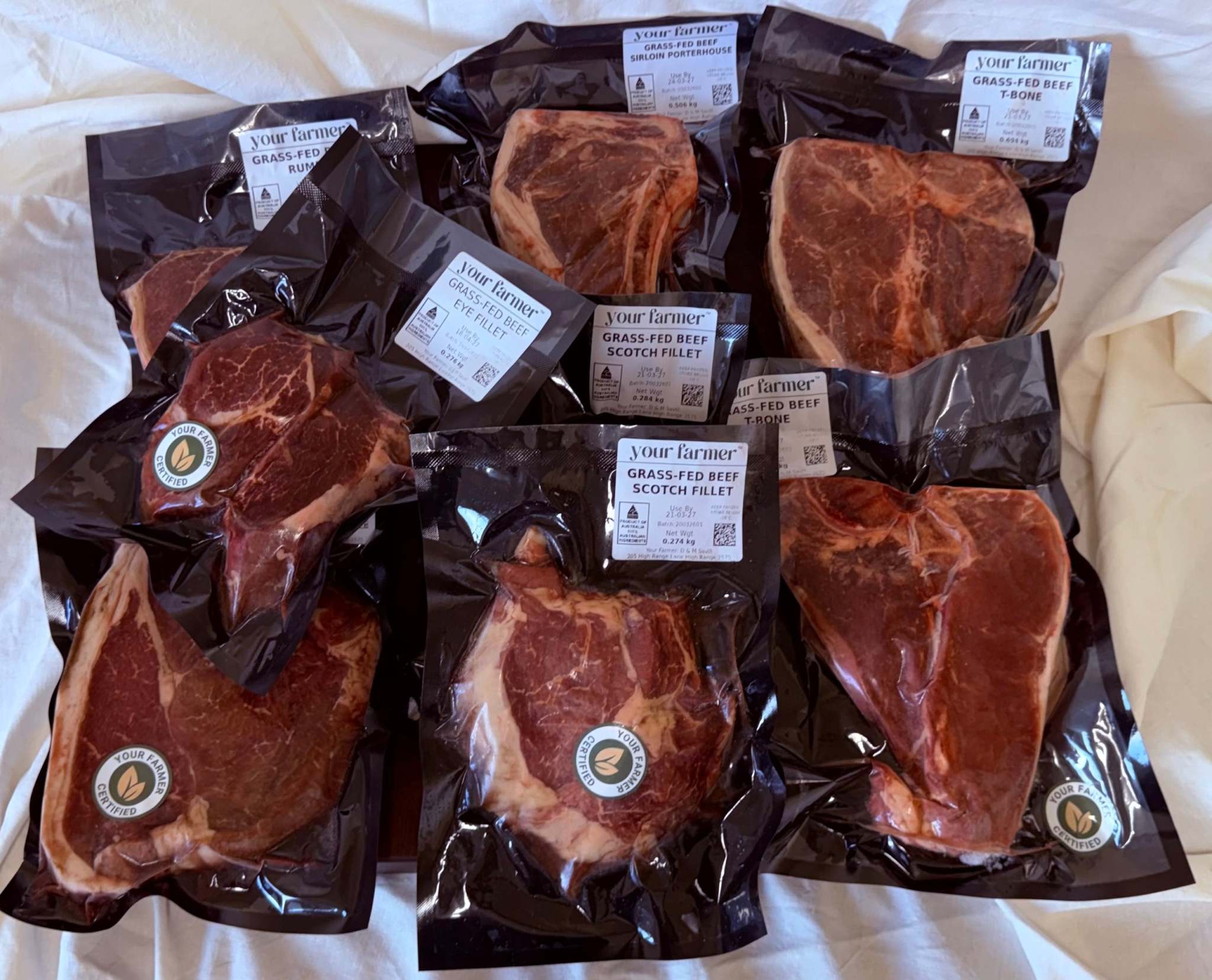
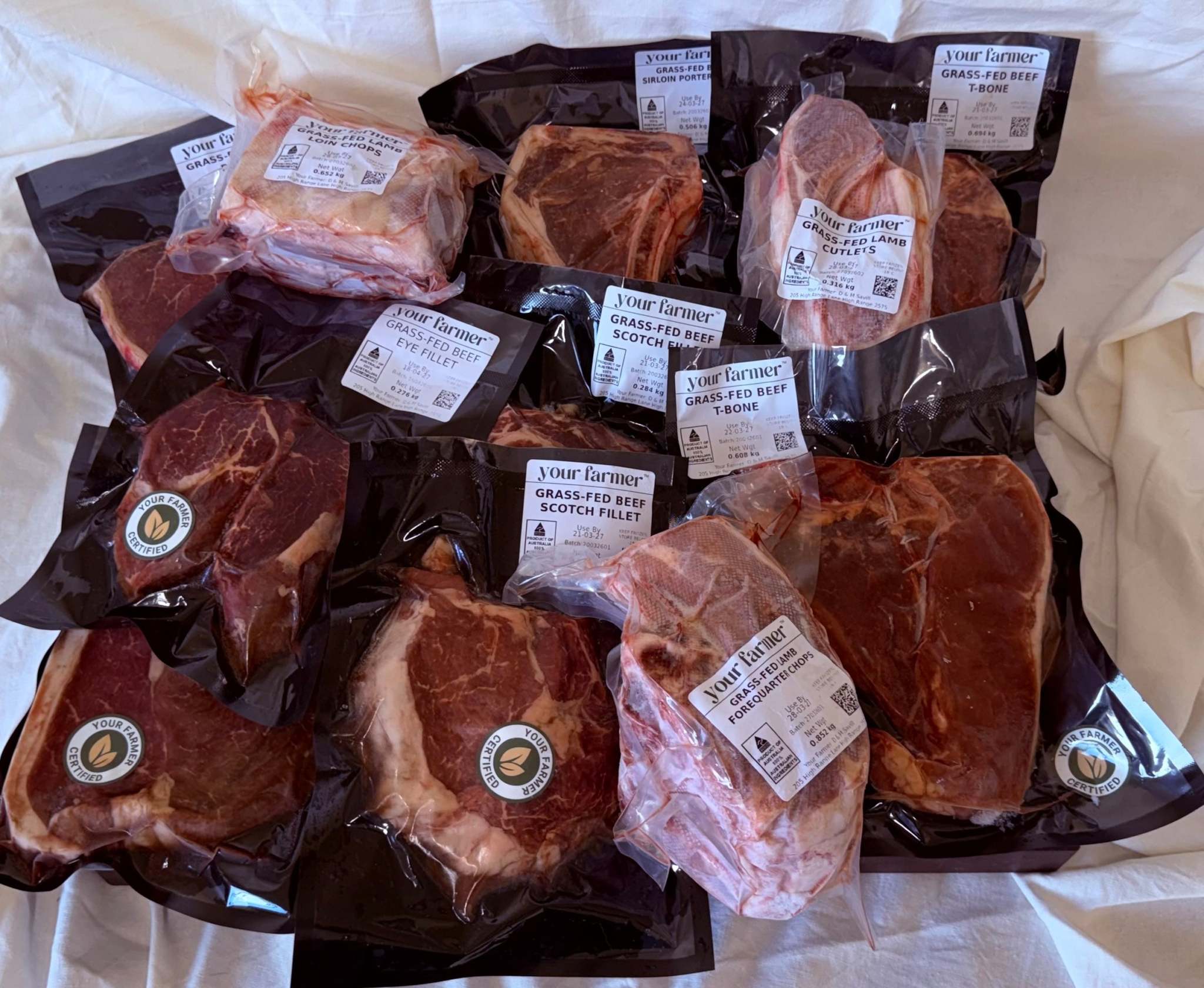
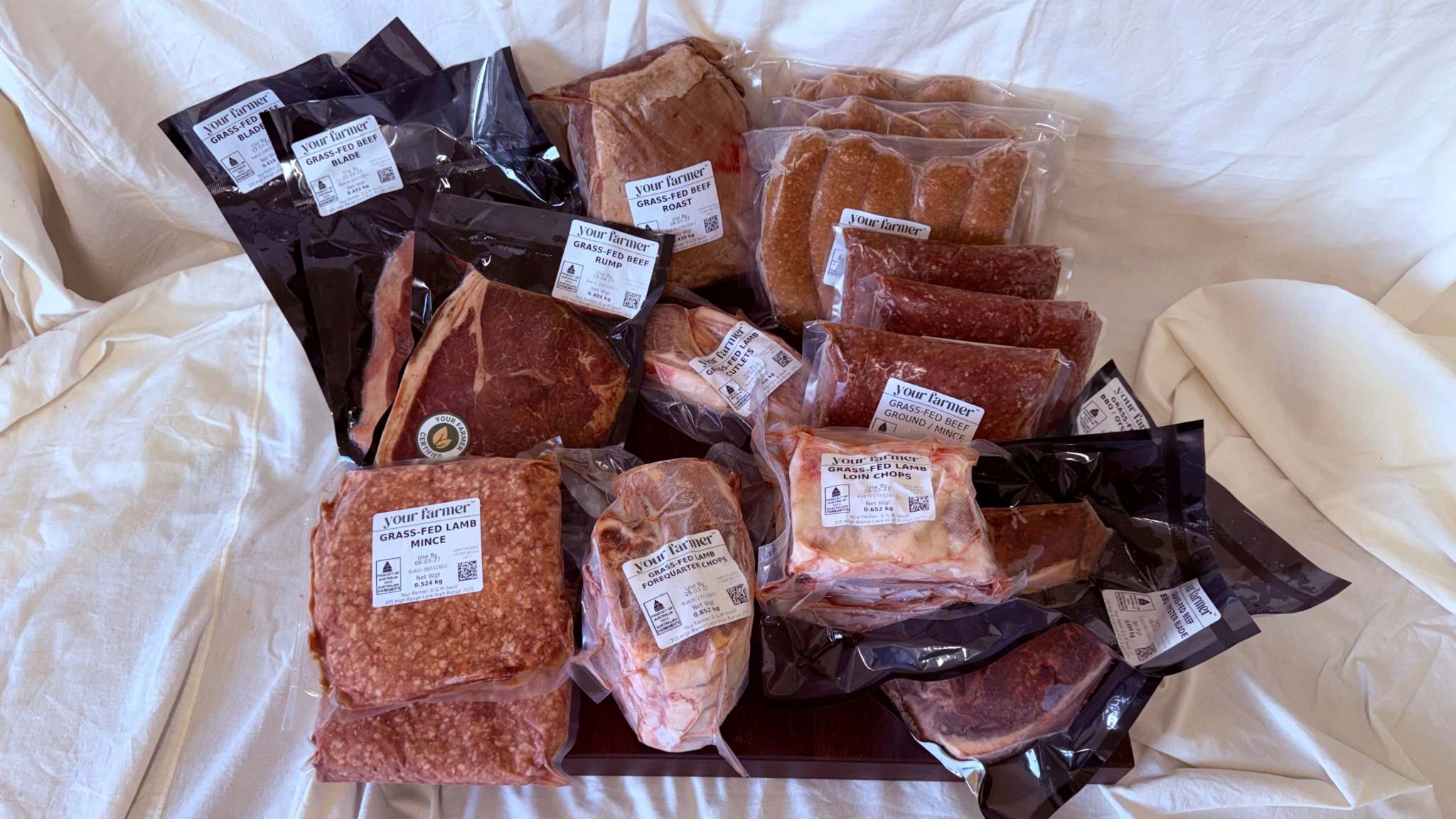
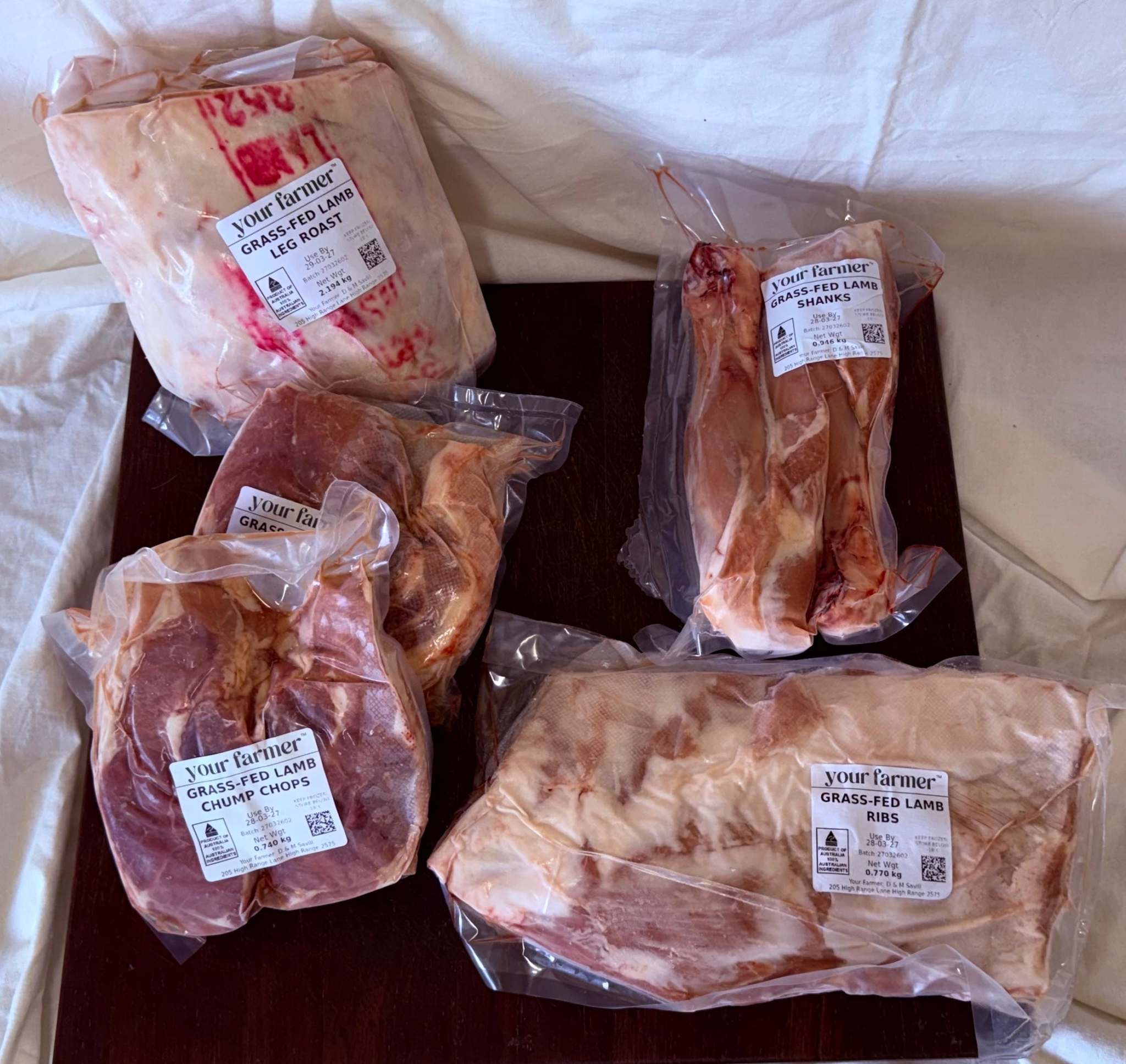
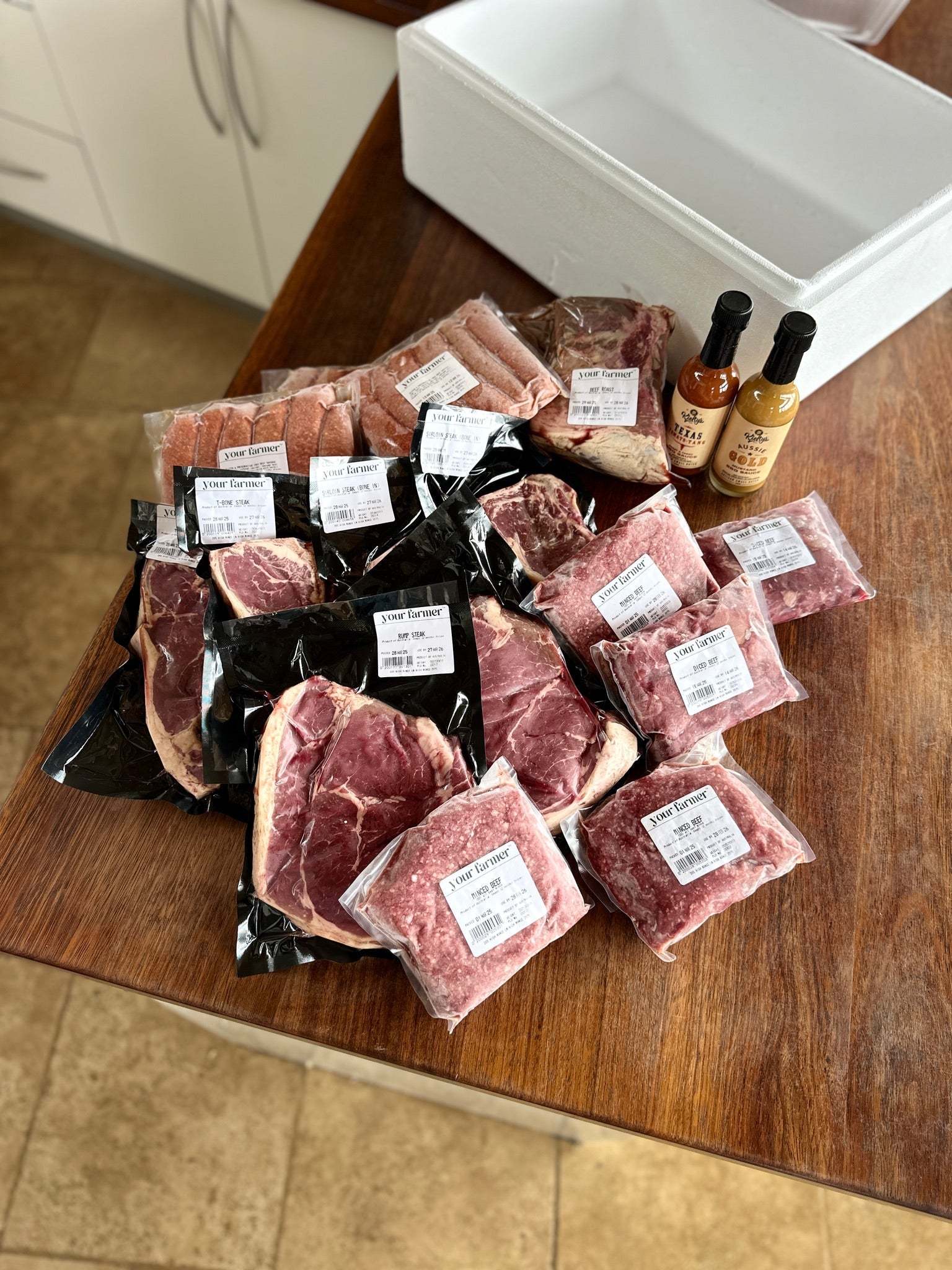
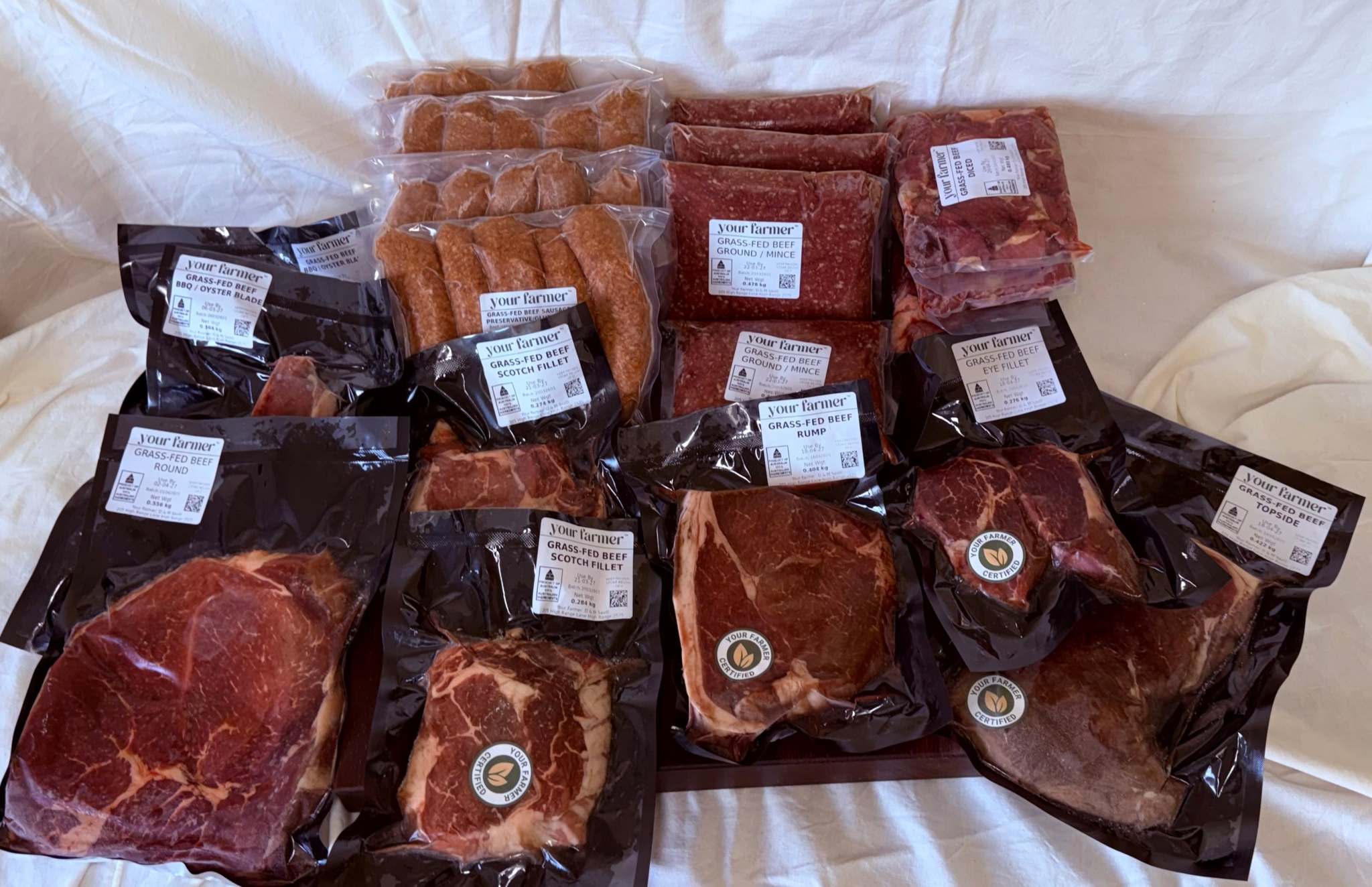
Everything this recipe needs from the butcher arrives in our grass-fed beef and lamb meat boxes — the diced pack is in every single beef share.
Frequently asked questions

What kind of paprika should I buy?

Sweet paprika — Hungarian if you can find it, but any fresh tin of sweet paprika works. Freshness matters more than origin; paprika loses its flavour within months of opening.

Why do the spices go in off the heat?

Paprika's sugars scorch in seconds on a hot pan base, and burnt paprika turns the whole pot bitter. Thirty seconds in the residual heat is all it needs to bloom.

Is goulash meant to be a soup or a stew?

In Hungary, gulyas is soupier than most Australians expect. This version is stew-style for serving over potatoes and bread — add an extra 500ml of stock if you want the traditional brothy bowl.

Can I make it in the slow cooker?

Yes. Do steps one to three in a frying pan, then transfer everything to the cooker with the stock reduced to 375ml. Cook on LOW for 7 to 8 hours with the potatoes in from the start.

Three Simple Steps

A whole table of real food.

Your Farmers grow grass-fed beef and lamb, pastured eggs and the best eco-grown veggies and produce — every item grown to the same ecological standard, every farmer one you can know by name. One subscription, your whole real-food shop.

01

Reserve your share — or try a pack

Subscribe to a share of the harvest, or start with a one-off fixed pack.

02

Make it your own

Pick your delivery rhythm and what's in the box. Skip or cancel anytime — no lock-in.

03

Cook, savour, know your farmer

We deliver in a reusable esky we collect next time. No couriers, no waste.

More Recipes

View all

Osso buco-style braised grass-fed lamb chump chops in tomato sauce over soft polenta, topped with gremolata.

Osso Buco-Style Braised Chump Chops with Gremolata

The Milanese treatment — chops braised low in white wine and tomato, lifted at the end by lemony gremolata

Osso buco is Milan's great braise, and the finishing touch is what makes it: gremolata, a raw scatter of lemon zest, garlic and parsley chopped fine, stirred in right at the end. Against an hour and a half of slow, rich braising, that fresh, sharp hit is a revelation — it stops the whole thing feeling heavy and makes you reach for another spoonful. Lamb chump chops stand in beautifully for the traditional veal shin here, their fat and connective tissue melting into a glossy sauce over soft polenta. It takes time, but almost none of it is yours. This is a dish to be proud of.

Read moreabout Osso Buco-Style Braised Chump Chops with Gremolata

A thick bowl of split pea and lamb bone soup topped with shredded lamb and mint.

Split Pea and Lamb Bone Soup

Pea-and-ham thinking, straight from the lamb paddock

Every Australian family has a pea-and-ham soup story, and every one of those soups leans on the same trick: a bone in the pot doing the heavy lifting. This is that trick with lamb bones instead of a hock. The split peas collapse into a thick, velvety base, the bones give the broth real depth and body, and a pinch of smoked paprika stands in for the smokehouse if you want that familiar edge. It's the thriftiest pot in this whole collection — pantry peas, add-on bones, one lazy afternoon — and it eats like a hug.

Read moreabout Split Pea and Lamb Bone Soup

Grass-fed T-bone steak sliced and served with homemade tarragon bearnaise and chips, bistro style.

T-Bone with Bearnaise from Scratch

The sauce that turns a steak into an occasion

Béarnaise has a reputation as chef's territory — it isn't. It's three egg yolks, a sharp tarragon reduction and a stream of warm butter, whisked over gentle heat until it turns thick, glossy and faintly wobbly. Twenty minutes of honest attention, most of it while the steak rests. And there's no better steak to learn it on than a grass-fed T-bone: the fillet side was born for béarnaise, and the sirloin side isn't far behind. This is occasion cooking you can pull off on an ordinary Saturday.

Read moreabout T-Bone with Bearnaise from Scratch