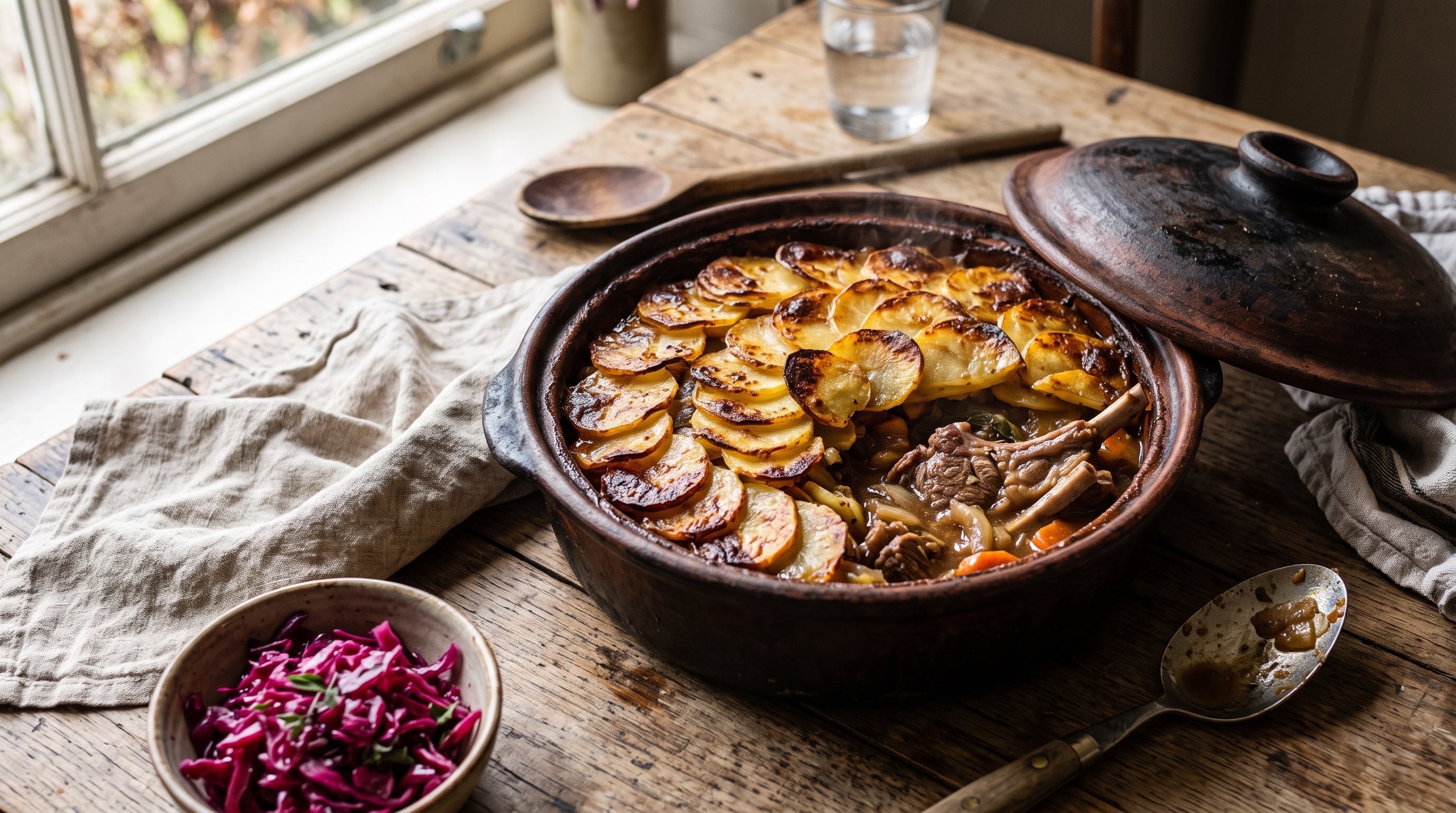
Chops, onions and a crisp golden potato lid — the north of England's greatest one-pot

The Lancashire hotpot earned its fame in the mill towns of northern England, where bone-in lamb chops, onions and potatoes were layered into a deep pot before work and collected, transformed, at the end of the day. The forequarter chop is the historically correct cut — cheap, bone-in, full of flavour — and the reward for your patience is the lid: overlapping potato slices brushed with butter that crisp into deep golden scales while everything underneath melts. It's a three-hour dish that wants ten minutes of skill and a lot of trust in your oven.

3 hrs 4 servings Prep 30 minsCook 2 hrs 30 minsMain CourseBritish

Ingredients

  • 4 Your Farmer grass-fed lamb forequarter chops
  • 2 tbsp plain flour
  • 1 tbsp olive oil
  • 75g butter, divided
  • 3 large brown onions, sliced
  • 2 tsp fresh thyme leaves (or 1 tsp dried)
  • 500ml chicken stock
  • 1 tbsp Worcestershire sauce
  • 1.2kg potatoes, peeled and sliced 5mm thick
  • 2 bay leaves
  • Salt and pepper to season
  • Pickled red cabbage or steamed greens, to serve

Instructions

Preheat the oven to 160C fan-forced. Toss the chops in the flour seasoned well with salt and pepper, then brown them in the oil in a frying pan for 2 to 3 minutes each side; set aside and keep any leftover flour.

4 forequarter chops2 tbsp plain flour1 tbsp olive oil

In the same pan, melt 25g of the butter and cook the onions for 8 to 10 minutes until soft and golden, stirring in the leftover flour for the last minute.

25g butter3 onions

Gradually stir in the stock and Worcestershire sauce to make a light gravy, add the thyme, and season.

500ml chicken stock1 tbsp Worcestershire sauce2 tsp thyme leaves

In a deep casserole dish, layer a third of the potato slices, then the chops, then the onions and gravy with the bay leaves tucked in. Finish with the remaining potatoes in neat overlapping rings, like fish scales.

1.2kg potatoes2 bay leaves

Melt the remaining 50g butter, brush it generously over the potato lid, and season the top.

50g butter

Cover and bake for 1 hour 45 minutes.

Uncover, raise the oven to 200C, and bake for 30 minutes more, until the lid is deep golden and crisp at the edges.

Rest for 10 minutes, then serve straight from the dish with pickled red cabbage or steamed greens — the sharpness is the traditional foil.

Appears in

The Historically Correct Cut

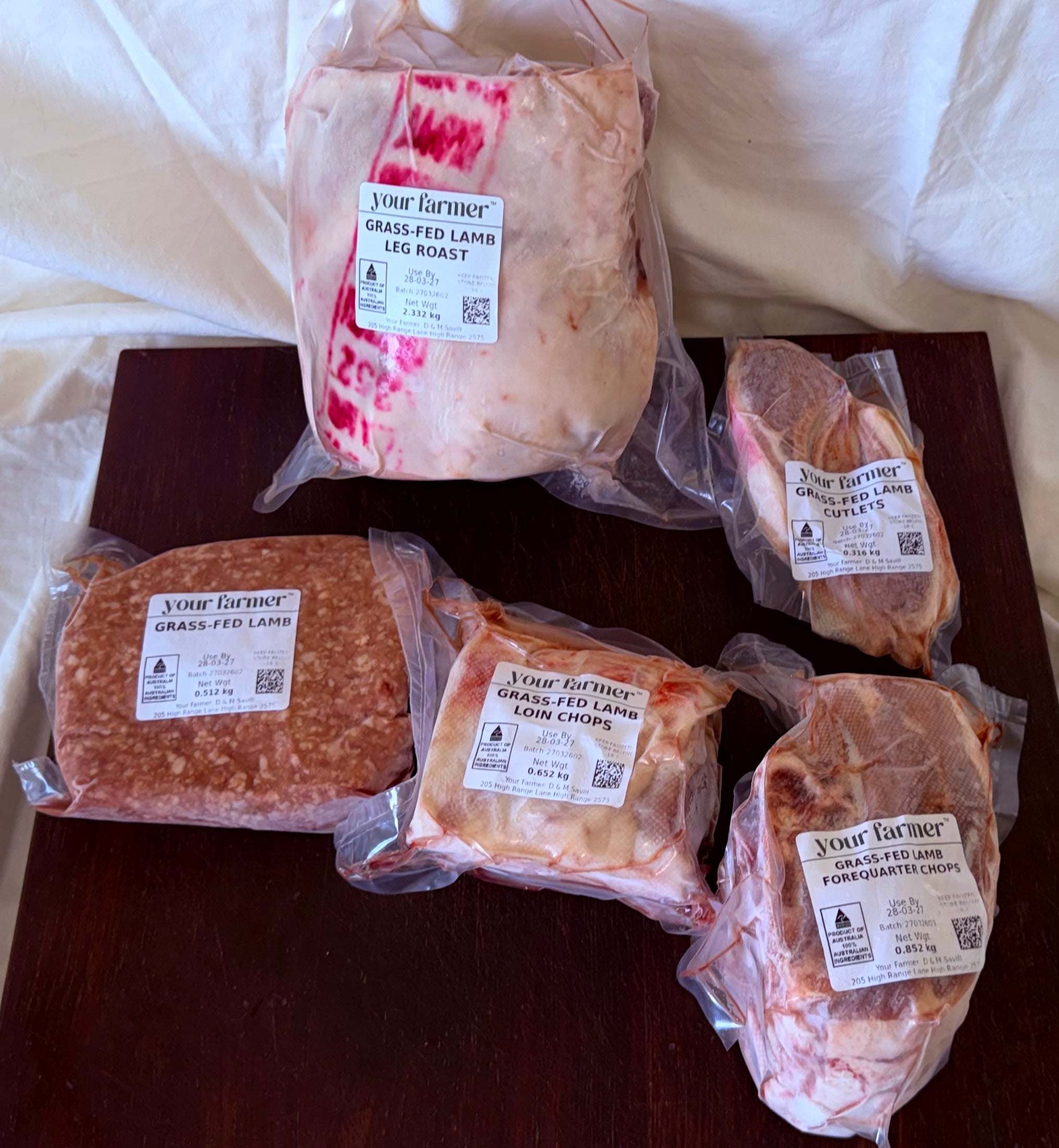
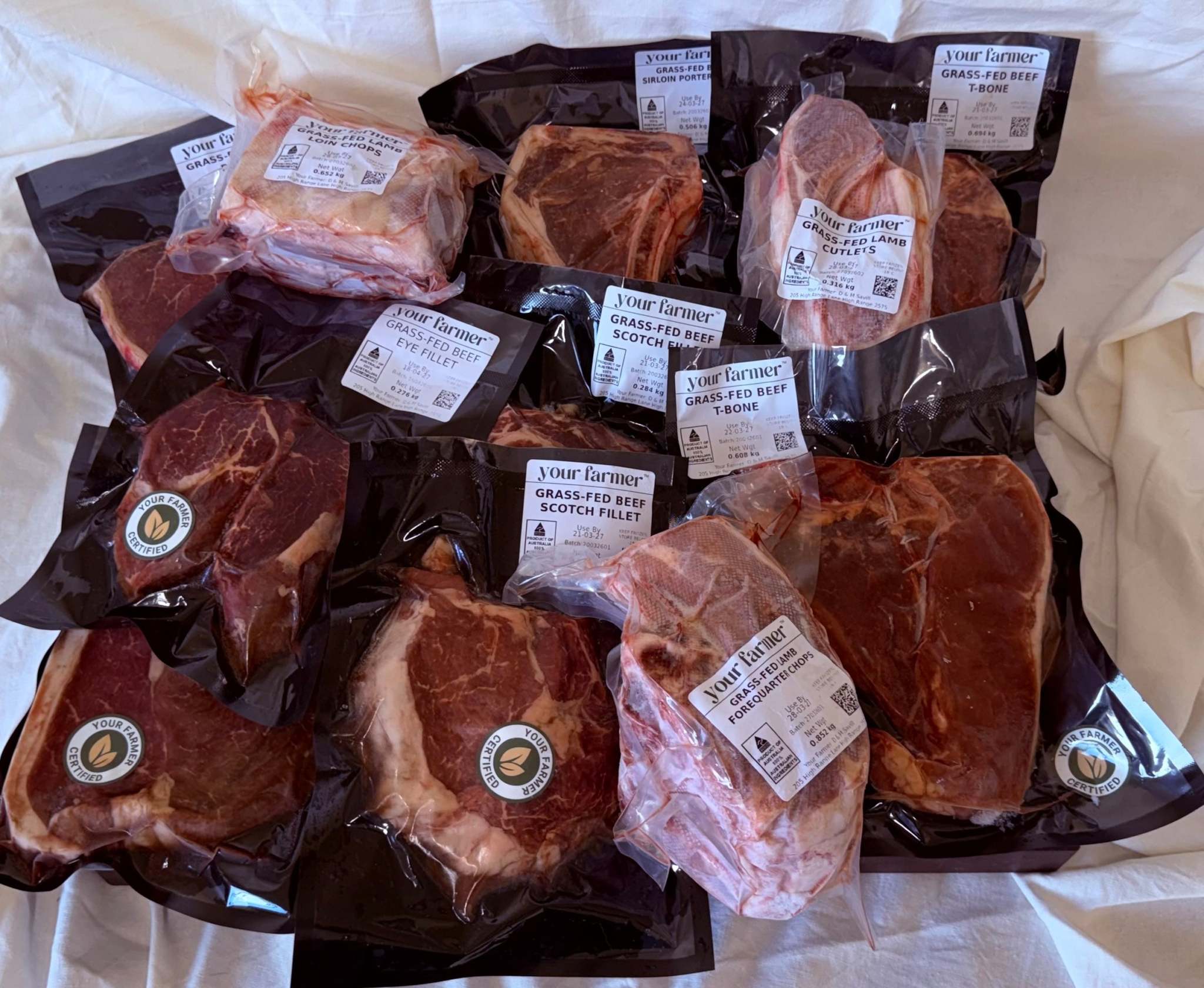
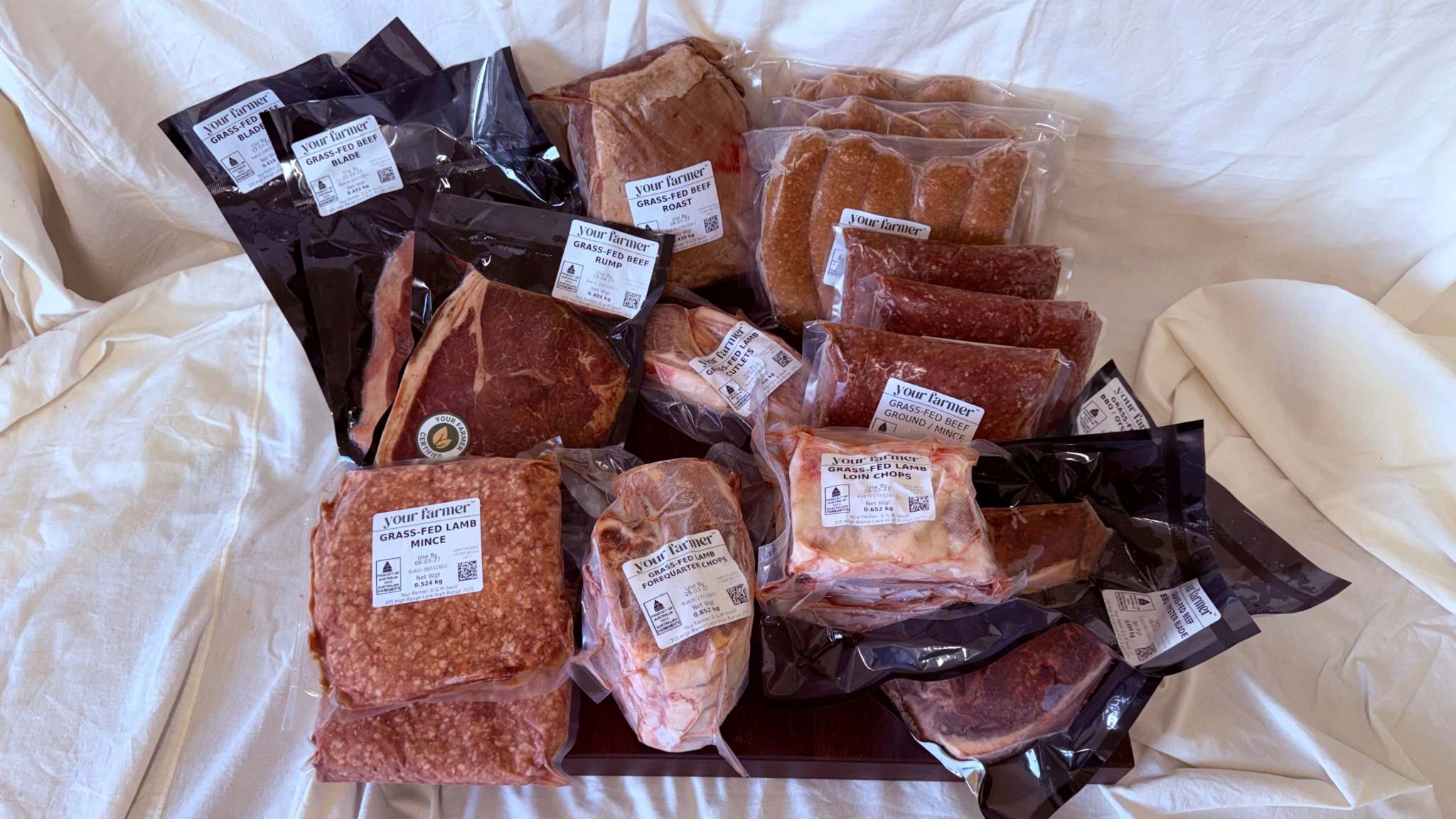
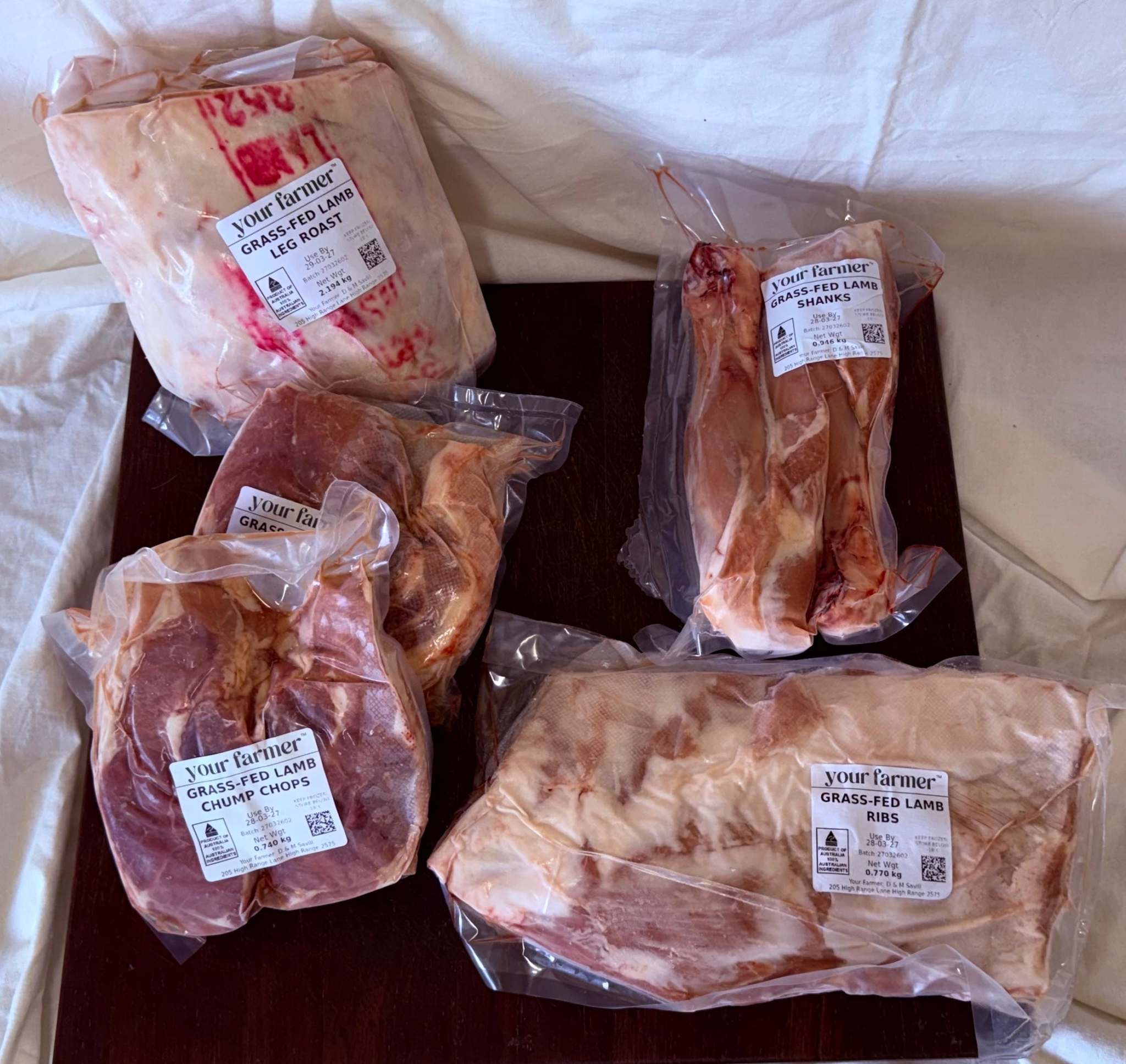
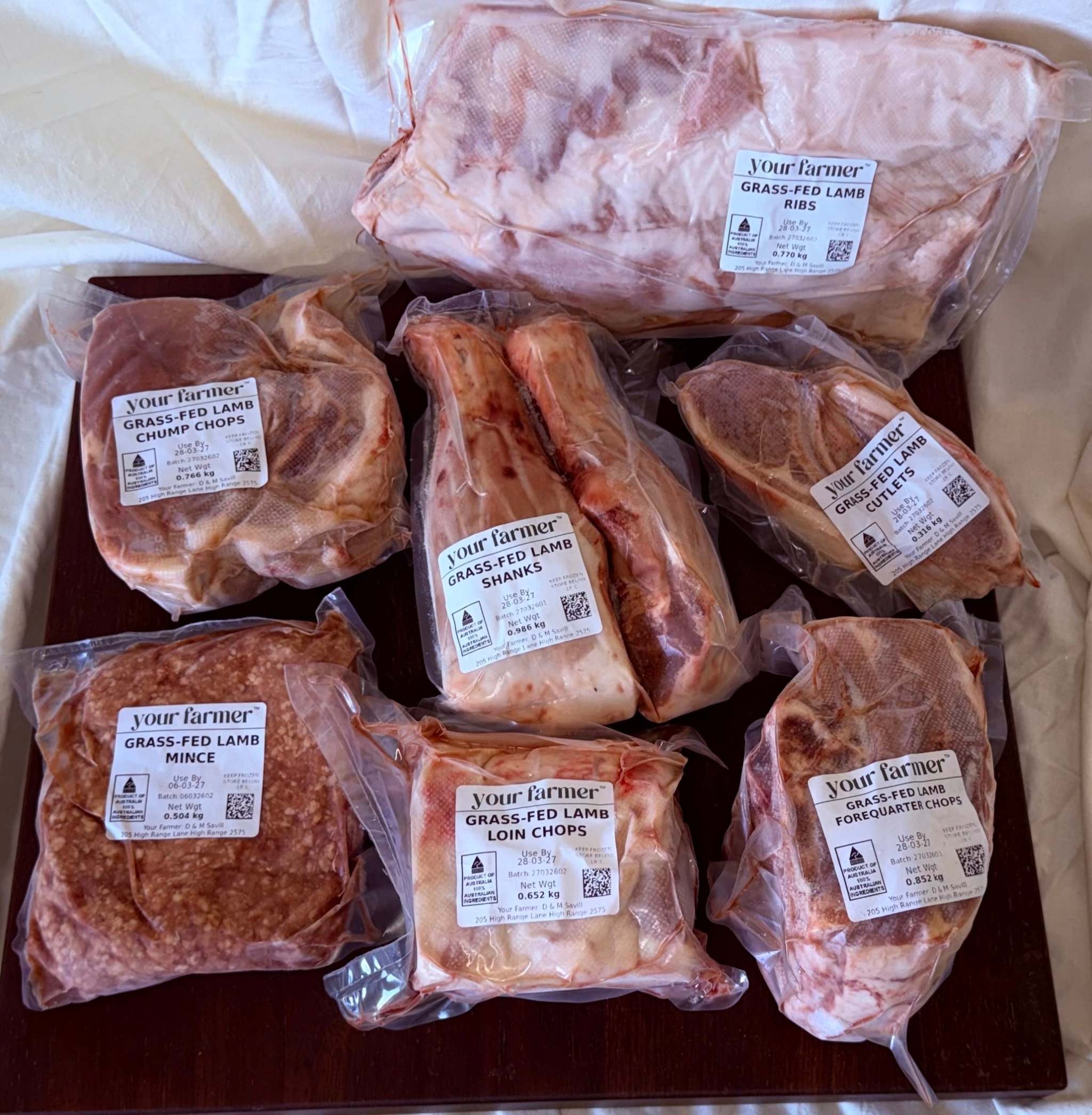
Hotpot was never a dish for expensive lamb. The mill-town cooks who perfected it used the cheap bone-in chops from the forequarter end of the animal, because a long, slow oven turns exactly those chops into the tenderest meat in the butcher's window — the collagen melts, the bones feed the gravy, and the fat rises to baste the potato lid from below while the butter crisps it from above. The whole dish is an argument for the humble cut, made once a week for a century until everyone agreed. Your Farmer® forequarter chops are the same honest chop, grass-fed on Australian pasture, four to the pack in every share — and there's an extra four-pack a click away when one hotpot isn't enough. If you like knowing whose paddock your dinner walked, you can meet the farmers behind it.

Swaps and Variations

Lamb kidneys, trimmed and sliced between the layers, are entirely traditional if your household is game. So — remarkably — were oysters, back when they were poor man's food; we'll leave that one to the historians. A layer of sliced carrot between chops and onions is common and welcome. Purists build it on mutton, and if you ever find good mutton, do. What it isn't is a stew: resist the urge to add more liquid. The lid seals the pot and the chops make their own, and a sloshy hotpot never gets its crisp roof.

Storage and Leftovers

Hotpot reheats surprisingly well — 20 minutes at 180C brings the lid most of the way back to crisp, which the microwave will not. It keeps in the fridge for 3 days. Freezing isn't its best trick, as the potato lid softens on thawing; better to assemble it a day ahead unbaked, keep it covered in the fridge, and bake it fresh with 15 extra covered minutes. Leftovers barely need an idea — a wedge of hotpot and something green sharp beside it is lunch solved.

Both our lamb shares carry the forequarter pack, season in and season out — reserve a lamb share and the hotpot habit takes care of itself.
Frequently asked questions

What kind of dish do I need?

A deep casserole or Dutch oven around 2.5 to 3 litres with a lid. Depth matters more than width — the layers should stack up, not spread out.

Can I make hotpot in the slow cooker?

The layers cook beautifully on LOW for 7 to 8 hours, but the lid won't crisp. Finish the dish under a hot oven griller for 5 to 10 minutes if your slow cooker insert is flameproof, or accept a soft lid.

Why didn't my potato lid crisp up?

Usually one of three things: not enough butter brushed on top, the oven not raised for the uncovered stage, or the dish sitting too low in the oven. Top shelf, 200C, uncovered, and be generous with the butter.

Can I assemble it ahead of time?

Yes — build it in the morning or the night before, cover and refrigerate, then bake from the fridge adding about 15 minutes to the covered stage. The potatoes may grey slightly on top; the butter and oven sort that out.

Do the chop bones stay in?

Yes — they flavour the gravy and hold the meat together through the long bake. By serving time the meat lifts off them with a spoon, and the bones come out clean.

Three Simple Steps

A whole table of real food.

Your Farmers grow grass-fed beef and lamb, pastured eggs and the best eco-grown veggies and produce — every item grown to the same ecological standard, every farmer one you can know by name. One subscription, your whole real-food shop.

01

Reserve your share — or try a pack

Subscribe to a share of the harvest, or start with a one-off fixed pack.

02

Make it your own

Pick your delivery rhythm and what's in the box. Skip or cancel anytime — no lock-in.

03

Cook, savour, know your farmer

We deliver in a reusable esky we collect next time. No couriers, no waste.

More Recipes

View all

Osso buco-style braised grass-fed lamb chump chops in tomato sauce over soft polenta, topped with gremolata.

Osso Buco-Style Braised Chump Chops with Gremolata

The Milanese treatment — chops braised low in white wine and tomato, lifted at the end by lemony gremolata

Osso buco is Milan's great braise, and the finishing touch is what makes it: gremolata, a raw scatter of lemon zest, garlic and parsley chopped fine, stirred in right at the end. Against an hour and a half of slow, rich braising, that fresh, sharp hit is a revelation — it stops the whole thing feeling heavy and makes you reach for another spoonful. Lamb chump chops stand in beautifully for the traditional veal shin here, their fat and connective tissue melting into a glossy sauce over soft polenta. It takes time, but almost none of it is yours. This is a dish to be proud of.

Read moreabout Osso Buco-Style Braised Chump Chops with Gremolata

A thick bowl of split pea and lamb bone soup topped with shredded lamb and mint.

Split Pea and Lamb Bone Soup

Pea-and-ham thinking, straight from the lamb paddock

Every Australian family has a pea-and-ham soup story, and every one of those soups leans on the same trick: a bone in the pot doing the heavy lifting. This is that trick with lamb bones instead of a hock. The split peas collapse into a thick, velvety base, the bones give the broth real depth and body, and a pinch of smoked paprika stands in for the smokehouse if you want that familiar edge. It's the thriftiest pot in this whole collection — pantry peas, add-on bones, one lazy afternoon — and it eats like a hug.

Read moreabout Split Pea and Lamb Bone Soup

Grass-fed T-bone steak sliced and served with homemade tarragon bearnaise and chips, bistro style.

T-Bone with Bearnaise from Scratch

The sauce that turns a steak into an occasion

Béarnaise has a reputation as chef's territory — it isn't. It's three egg yolks, a sharp tarragon reduction and a stream of warm butter, whisked over gentle heat until it turns thick, glossy and faintly wobbly. Twenty minutes of honest attention, most of it while the steak rests. And there's no better steak to learn it on than a grass-fed T-bone: the fillet side was born for béarnaise, and the sirloin side isn't far behind. This is occasion cooking you can pull off on an ordinary Saturday.

Read moreabout T-Bone with Bearnaise from Scratch