

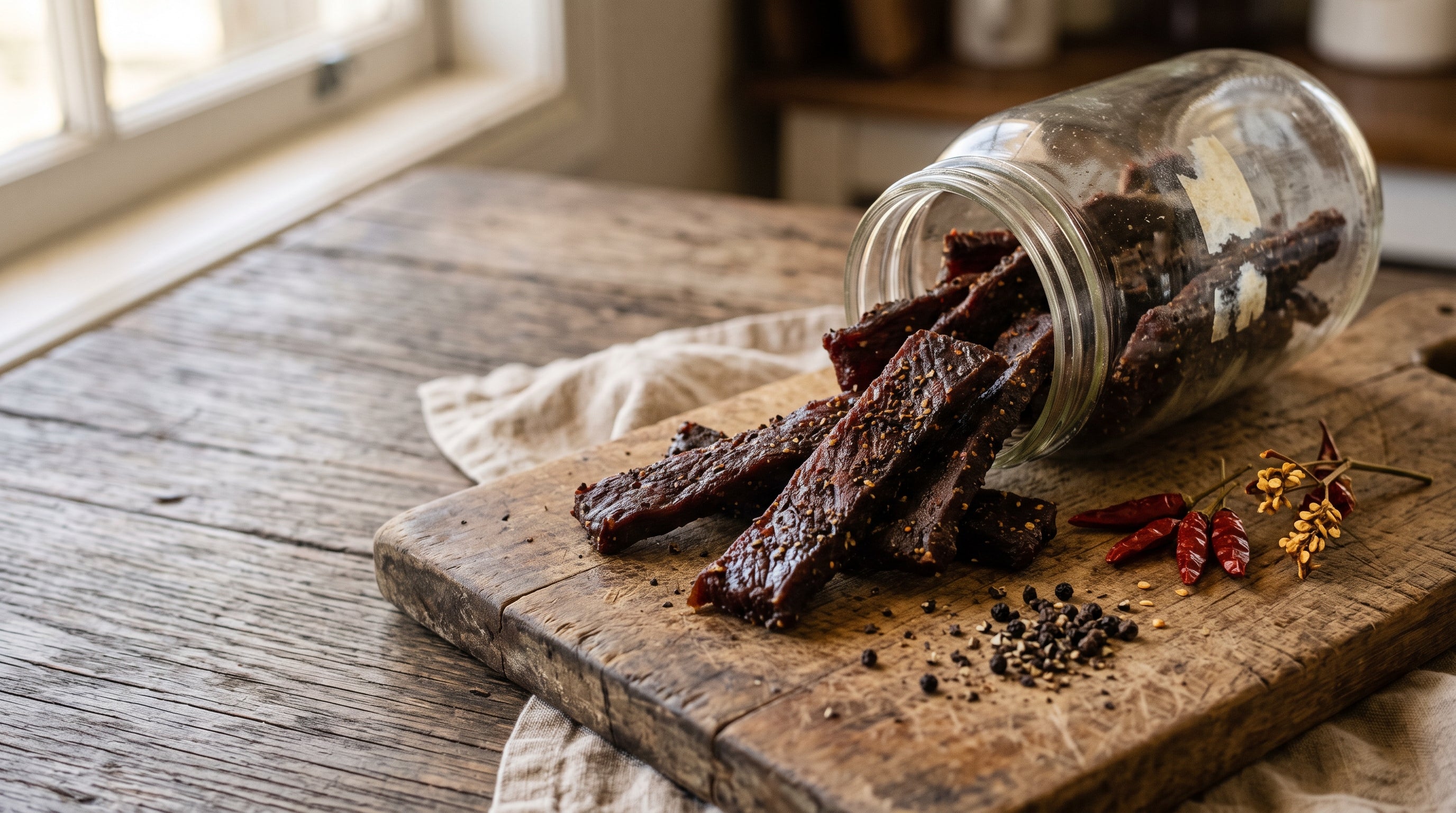
Why Topside Is the Traditional Jerky Cut
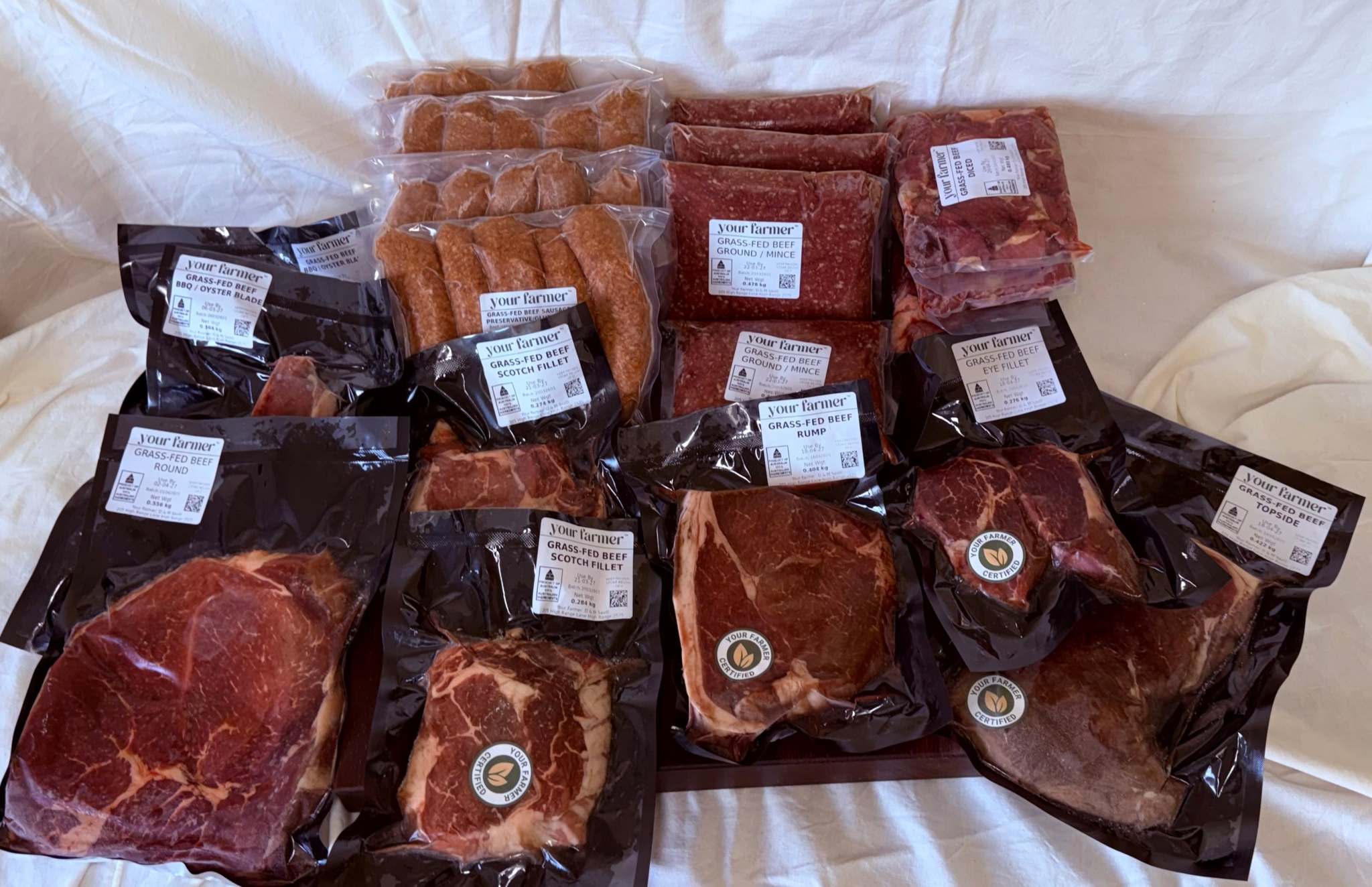
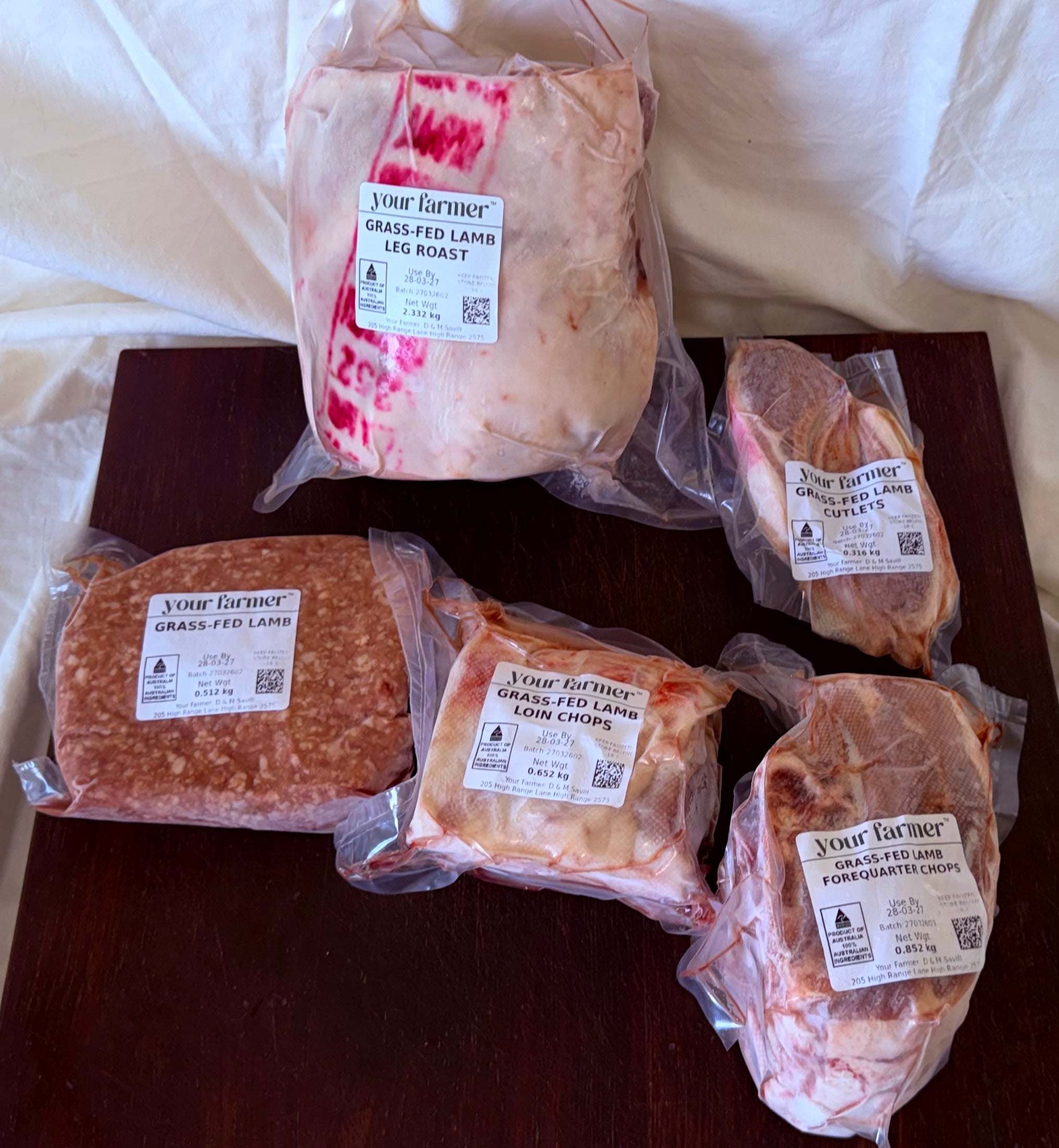
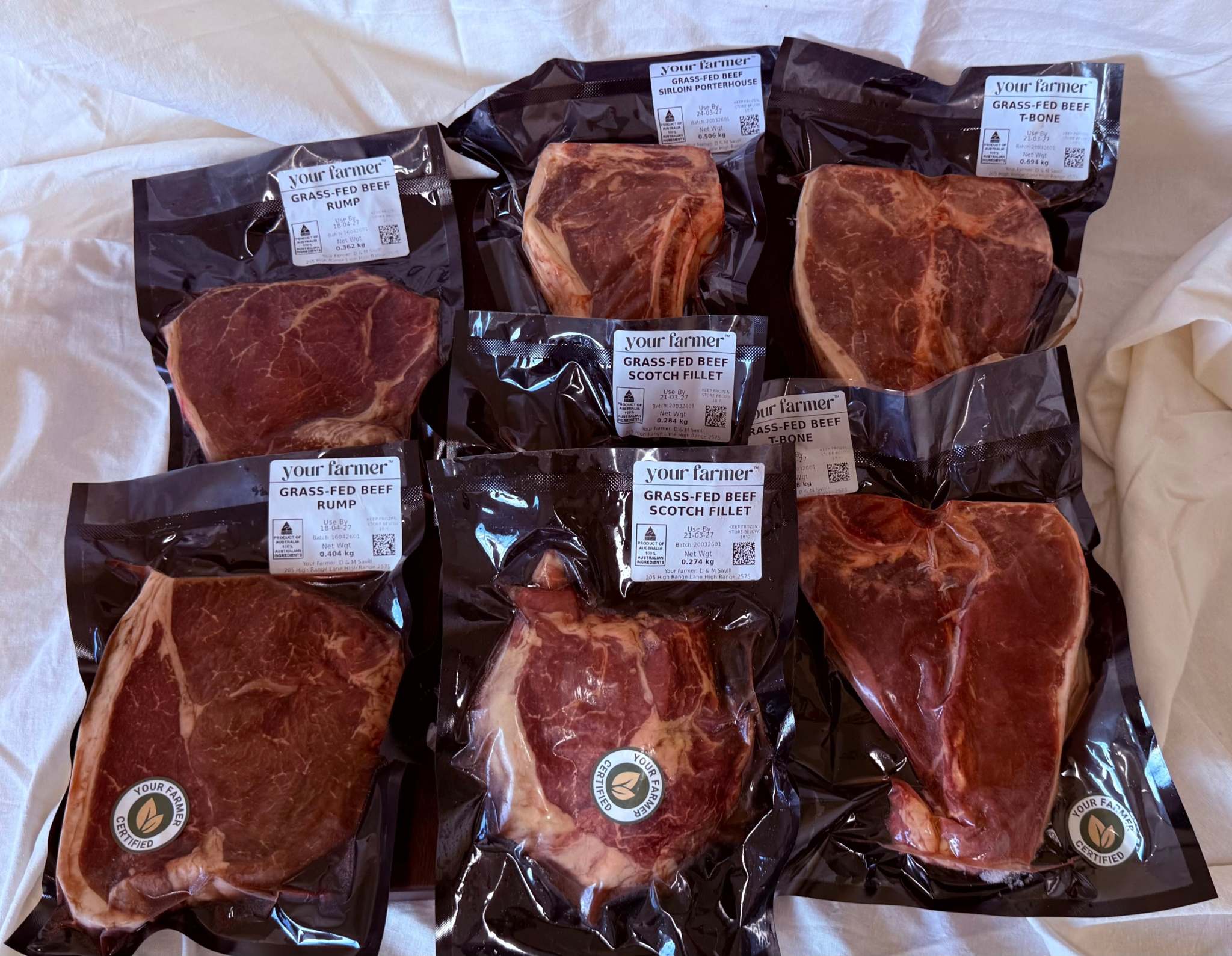
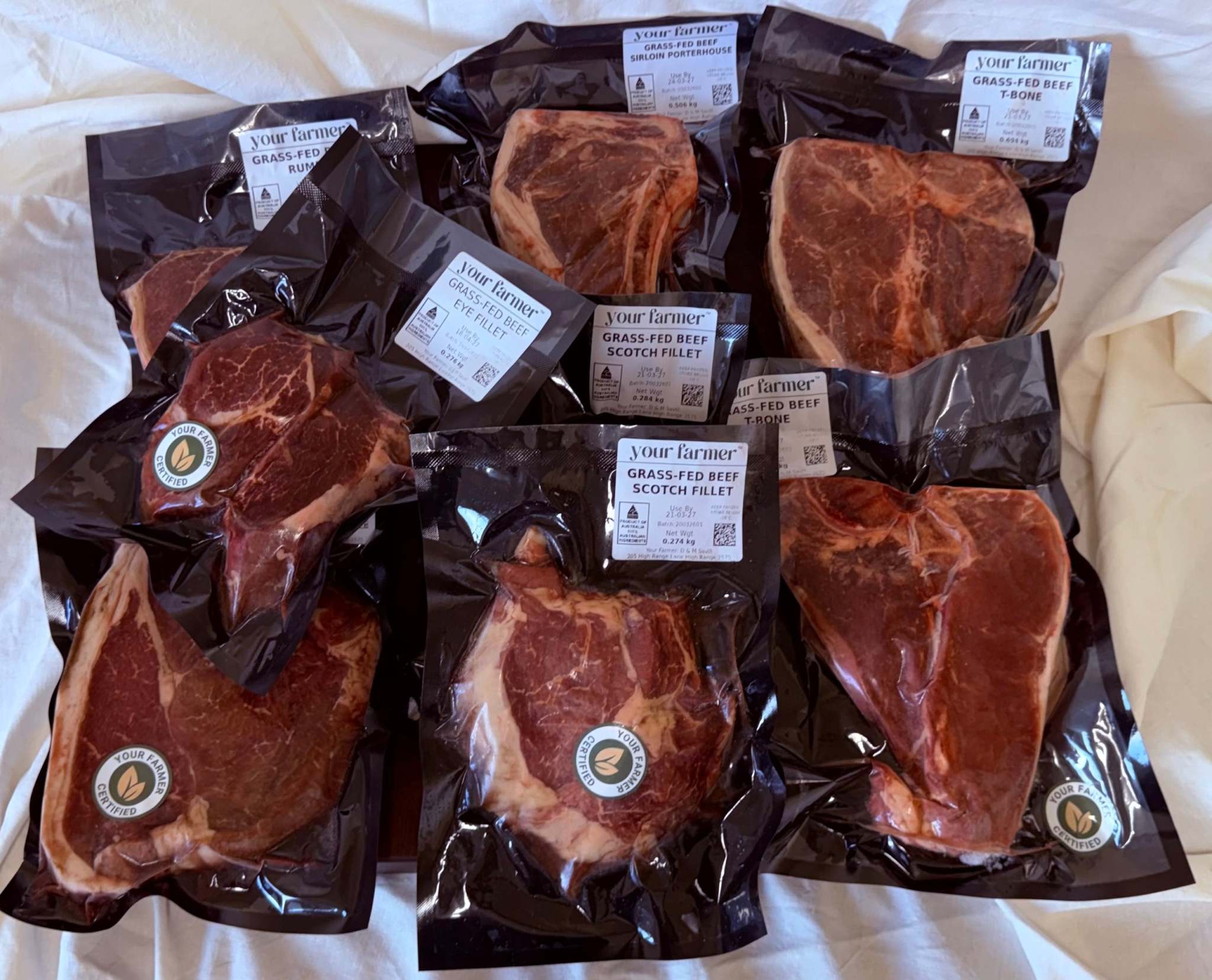
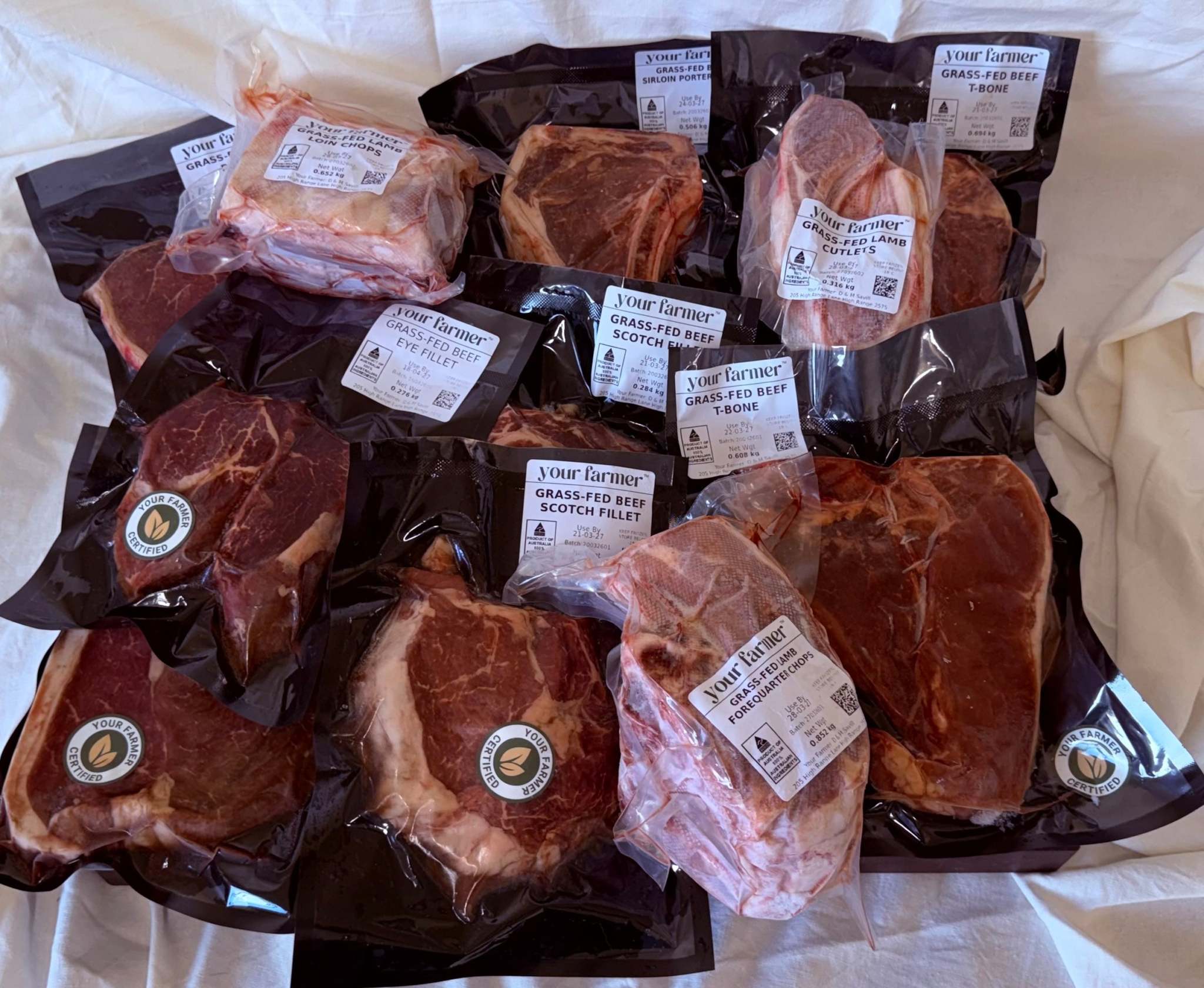
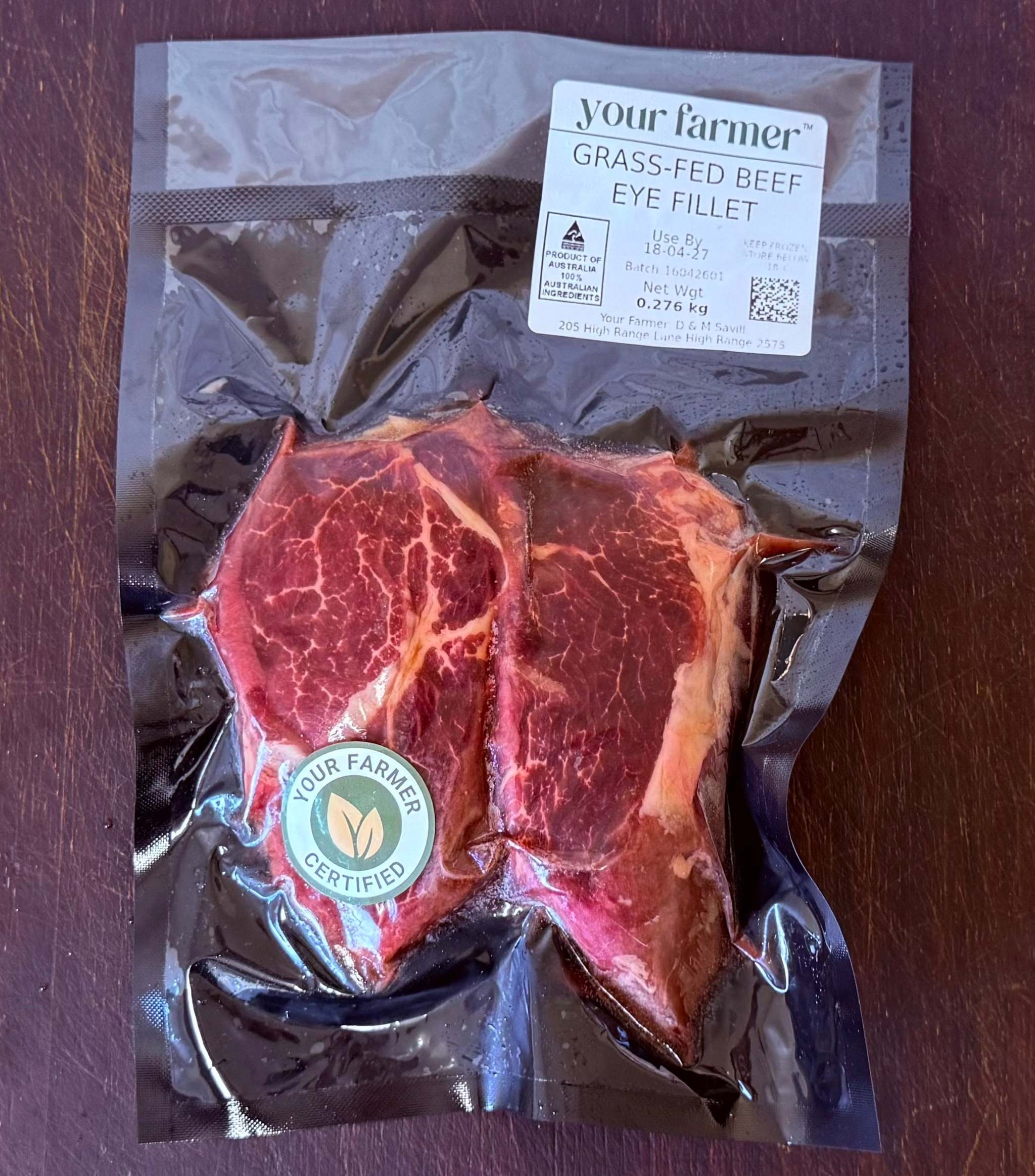
Every drying tradition on earth — jerky, biltong, the lot — reaches for the same kind of meat: the leanest, most even muscle on the animal. That's topside. Fat doesn't dry, it just sits there and slowly turns rancid, so the less of it in the cut, the longer the jerky keeps and the cleaner it tastes. Topside's fine, straight grain is the other half of the story: it dries evenly, with no thick pockets left soft in the middle. And here's the quiet advantage of the Your Farmer® pack — the hardest part of home jerky is slicing a roast thinly and evenly, and your topside from the grass-fed beef CSA share arrives as thin-cut steaks, so that job's already done. One decision remains: cut your strips along the grain for that classic long chew, or across it for a more tender, snappier bite. For the wider map of what every cut does best, our guide to every beef cut has you covered.
Swaps and Variations
The round steaks in the same share are every bit as traditional — same leanness, same even grain. For a biltong lean: swap the soy for 60ml of brown vinegar, and use crushed toasted coriander seeds, salt and pepper as the coating. Sweet-heat fans can add a tablespoon of honey and extra chilli to the marinade. And if you own a dehydrator, it does the same job at 70°C over a similar time — no door-propping required.
Storage and Leftovers
Let the jerky cool completely before it goes anywhere near a jar. Properly dried, it keeps about a week in an airtight container in a cool dark spot, 2–3 weeks in the fridge, and 2 months in the freezer — though in a house with children, none of those numbers has ever been tested. If any piece feels soft or you spot moisture inside the jar, move the lot to the fridge and eat it sooner. Beyond straight snacking, chop a few strips into a trail mix with nuts and dried fruit, and school lunchboxes sort themselves for the week.



Share:
Beef Sausage and Tomato Rigatoni
Beef Sausage and Tomato Rigatoni