A weekend project that becomes flavour insurance in the freezer

This is the glossy, spoon-coating sauce that finishes every plate of lamb in a good restaurant, and the secret is patience, not skill. You roast the bones dark, simmer them into a rich stock, then reduce that stock down and down until it turns syrupy and deep. It's a weekend afternoon at the stove, mostly hands-off, and the payoff is months of dinners: a frozen cube of this melted into the pan lifts a plain chop or a Sunday roast into something you'd swear came from a kitchen with a brigade. Make it once, eat well for ages.

6 hrs About 500ml (enough to sauce 8-10 servings) Prep 20 minsCook 5 hrs 40 minsSauceFrench

Ingredients

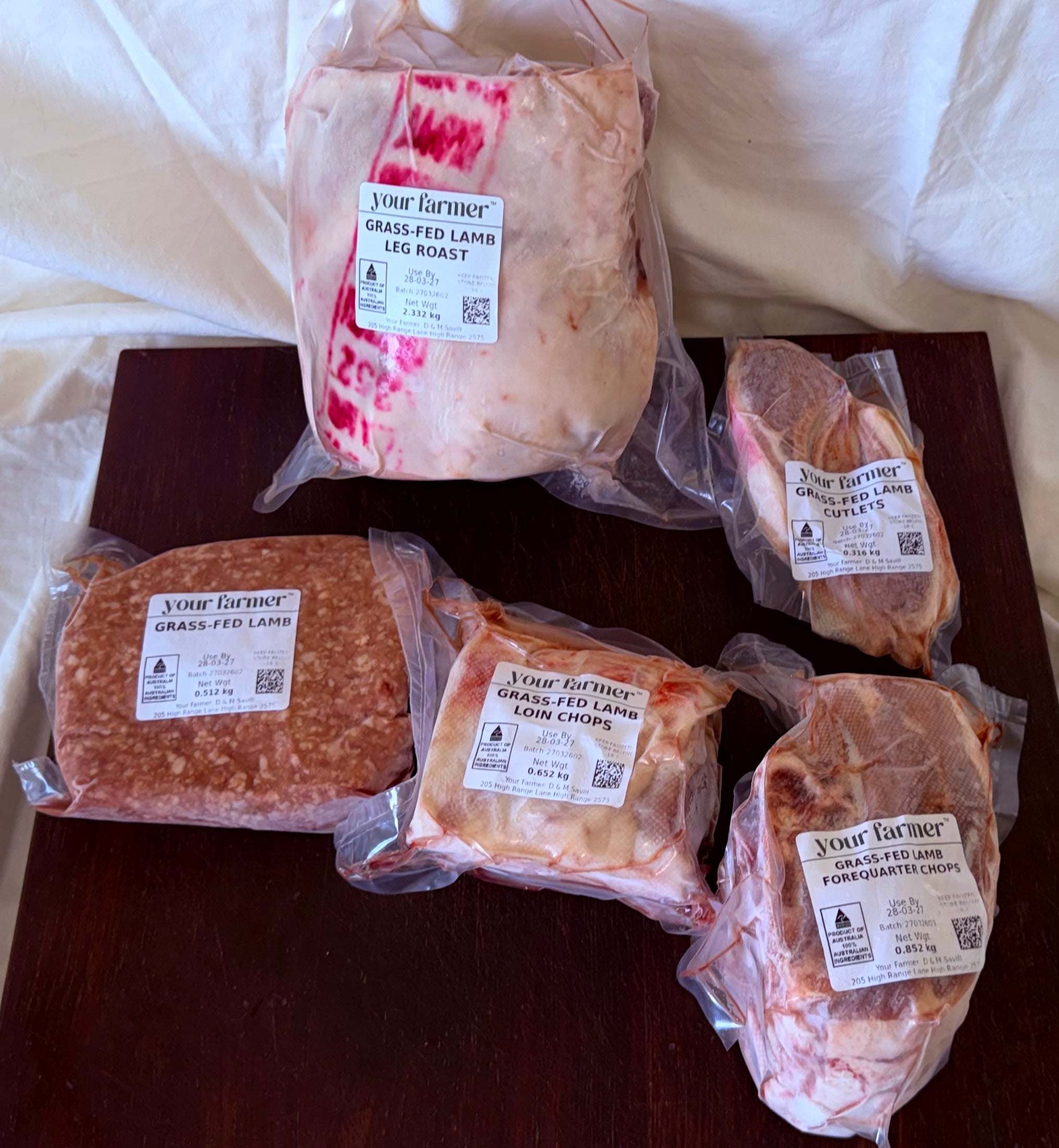
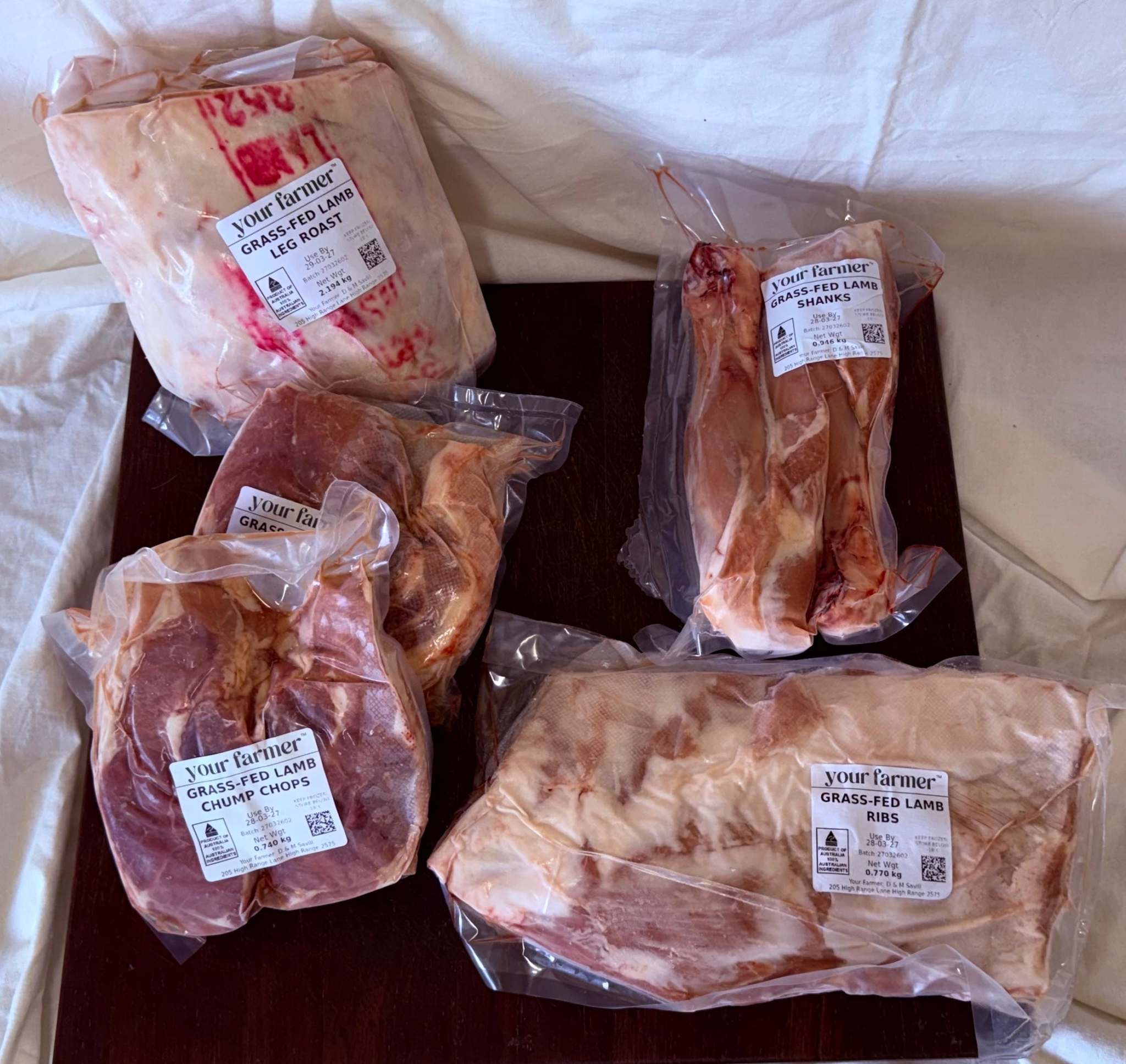
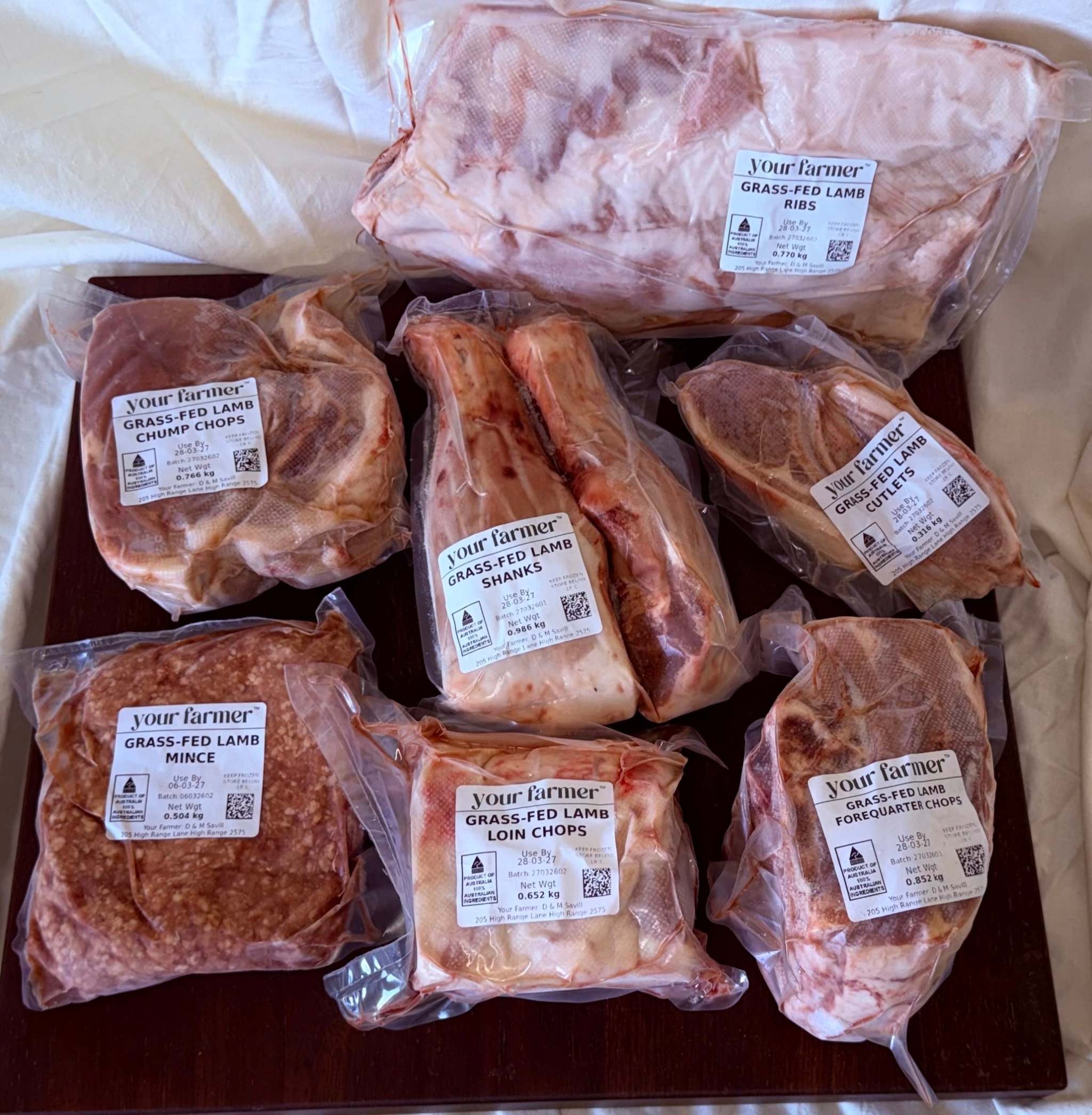
  • 1kg Your Farmer lamb bones
  • 2 tbsp tomato paste
  • 2 brown onions, quartered (skin on)
  • 2 carrots, roughly chopped
  • 2 sticks celery, roughly chopped
  • 1 head garlic, halved horizontally
  • 250ml red wine
  • 2 bay leaves and a few sprigs of fresh thyme
  • 1 tsp black peppercorns
  • Cold water to cover (about 2.5 litres)
  • 1 tbsp cold butter, to finish (optional)

Instructions

Heat the oven to 220°C. Spread the bones on a large roasting tray and roast for 30 minutes.

1kg lamb bones

Smear the bones with the tomato paste, add the onion, carrot, celery and garlic to the tray, and roast for another 20 minutes until deeply browned — dark edges, not black.

2 tbsp tomato paste2 onions2 carrots1 head garlic

Tip the bones and vegetables into a large stockpot. Set the hot tray over a burner, pour in the wine, and scrape up every browned bit with a wooden spoon; add it all to the pot.

250ml red wine

Cover with cold water, add the bay, thyme and peppercorns, and bring to the barest simmer. Cook for 4 hours, never letting it boil and skimming any foam early on.

2 bay leaves1 tsp peppercorns

Strain through a fine sieve into a clean saucepan and discard the solids. You should have around 2 litres of stock.

Simmer the strained stock steadily, uncovered, for 45 minutes to 1 hour, skimming now and then, until it has reduced to about 500ml and coats the back of a spoon. Don't season until now — reducing concentrates the salt.

Season to taste and, for restaurant shine, whisk in the cold butter off the heat just before serving. Spoon over lamb, or cool and freeze in an ice-cube tray for future dinners.

1 tbsp cold butter

Appears in

Stock, and Then Some

A jus is nothing more than a stock taken all the way — reduced until the water leaves and the flavour, the gelatine and the body stay behind and concentrate. Two techniques do the heavy lifting. Roasting the bones and vegetables first builds the deep, savoury colour and the roasted flavour that a raw bone never develops, and the long, gentle simmer pulls gelatine out of the bones' connective tissue, which is what gives the finished jus its glossy, lip-sticking shine. That gelatine only comes from real bones cooked slowly, which is why a bag of Your Farmer® grass-fed lamb bones makes a jus that store-bought gravy powder can't approach. The one rule to obey: never let it boil. A rolling boil emulsifies the fat back in and clouds the sauce — you want the barest blip.

Swaps and Variations

The same method makes an outstanding beef jus — the beef bones guide covers the longer-simmered version. For a red wine and shallot finish, sweat a couple of sliced eschalots in the pan before you add the reduced jus. A teaspoon of redcurrant jelly stirred in at the end nudges it towards the classic lamb pairing, and a splash more wine reduced right down deepens it further. No wine at all? Deglaze the tray with water instead — you lose a little acidity, nothing more.

Storage and Leftovers

This is a made-to-freeze sauce, and the whole point of the project is that you make it once and reach for it for months. Poured into an ice-cube tray and frozen, it keeps for up to 6 months and gives you single-serve flavour bombs on tap — one cube melted into the pan after searing a loin chop is a two-minute restaurant sauce, and a couple stirred into Sunday's roasting-tin juices makes a gravy that tastes like it took all day. In the fridge it sets to a firm jelly and keeps 5 days. Leftover idea: stir a spoonful into a pan of braising vegetables or a shepherd's pie base and it does the work of a whole tin of stock and then some.

The bones are one tick on the order form of our lamb subscription — a weekend's work that pays you back for months.
Frequently asked questions

What's the difference between a jus, a stock and a gravy?

A stock is bones and water simmered together. A jus is that stock reduced right down until it's concentrated and glossy, with nothing added to thicken it. A gravy is usually thickened with flour — a jus stays thin but intense, coating the spoon on body alone.

Why must I not let it boil?

A hard boil churns the fat back into the liquid and makes the finished jus cloudy and greasy. A gentle simmer, with just the odd bubble breaking the surface, keeps it clear and clean-tasting.

Can I do the long simmer in a slow cooker?

Yes — after roasting and deglazing, transfer everything to the slow cooker on LOW for 8 hours. It holds the ideal below-boil temperature better than most stovetops. You'll still need to reduce the strained stock on the stove afterwards.

My jus is too salty. What happened?

Almost certainly you seasoned too early. Reducing a liquid concentrates whatever salt is already in it, so always season a jus at the very end, once it's down to its final volume.

How much jus does one meal need?

A little goes a long way — a couple of tablespoons per plate is plenty, since it's so concentrated. That's why freezing it in ice-cube portions works so well: one or two cubes sauces a dinner.

Three Simple Steps

A whole table of real food.

Your Farmers grow grass-fed beef and lamb, pastured eggs and the best eco-grown veggies and produce — every item grown to the same ecological standard, every farmer one you can know by name. One subscription, your whole real-food shop.

01

Reserve your share — or try a pack

Subscribe to a share of the harvest, or start with a one-off fixed pack.

02

Make it your own

Pick your delivery rhythm and what's in the box. Skip or cancel anytime — no lock-in.

03

Cook, savour, know your farmer

We deliver in a reusable esky we collect next time. No couriers, no waste.

More Recipes

View all

Osso buco-style braised grass-fed lamb chump chops in tomato sauce over soft polenta, topped with gremolata.

Osso Buco-Style Braised Chump Chops with Gremolata

The Milanese treatment — chops braised low in white wine and tomato, lifted at the end by lemony gremolata

Osso buco is Milan's great braise, and the finishing touch is what makes it: gremolata, a raw scatter of lemon zest, garlic and parsley chopped fine, stirred in right at the end. Against an hour and a half of slow, rich braising, that fresh, sharp hit is a revelation — it stops the whole thing feeling heavy and makes you reach for another spoonful. Lamb chump chops stand in beautifully for the traditional veal shin here, their fat and connective tissue melting into a glossy sauce over soft polenta. It takes time, but almost none of it is yours. This is a dish to be proud of.

Read moreabout Osso Buco-Style Braised Chump Chops with Gremolata

A thick bowl of split pea and lamb bone soup topped with shredded lamb and mint.

Split Pea and Lamb Bone Soup

Pea-and-ham thinking, straight from the lamb paddock

Every Australian family has a pea-and-ham soup story, and every one of those soups leans on the same trick: a bone in the pot doing the heavy lifting. This is that trick with lamb bones instead of a hock. The split peas collapse into a thick, velvety base, the bones give the broth real depth and body, and a pinch of smoked paprika stands in for the smokehouse if you want that familiar edge. It's the thriftiest pot in this whole collection — pantry peas, add-on bones, one lazy afternoon — and it eats like a hug.

Read moreabout Split Pea and Lamb Bone Soup

Grass-fed T-bone steak sliced and served with homemade tarragon bearnaise and chips, bistro style.

T-Bone with Bearnaise from Scratch

The sauce that turns a steak into an occasion

Béarnaise has a reputation as chef's territory — it isn't. It's three egg yolks, a sharp tarragon reduction and a stream of warm butter, whisked over gentle heat until it turns thick, glossy and faintly wobbly. Twenty minutes of honest attention, most of it while the steak rests. And there's no better steak to learn it on than a grass-fed T-bone: the fillet side was born for béarnaise, and the sirloin side isn't far behind. This is occasion cooking you can pull off on an ordinary Saturday.

Read moreabout T-Bone with Bearnaise from Scratch