The Saturday-morning classic, done the way it deserves

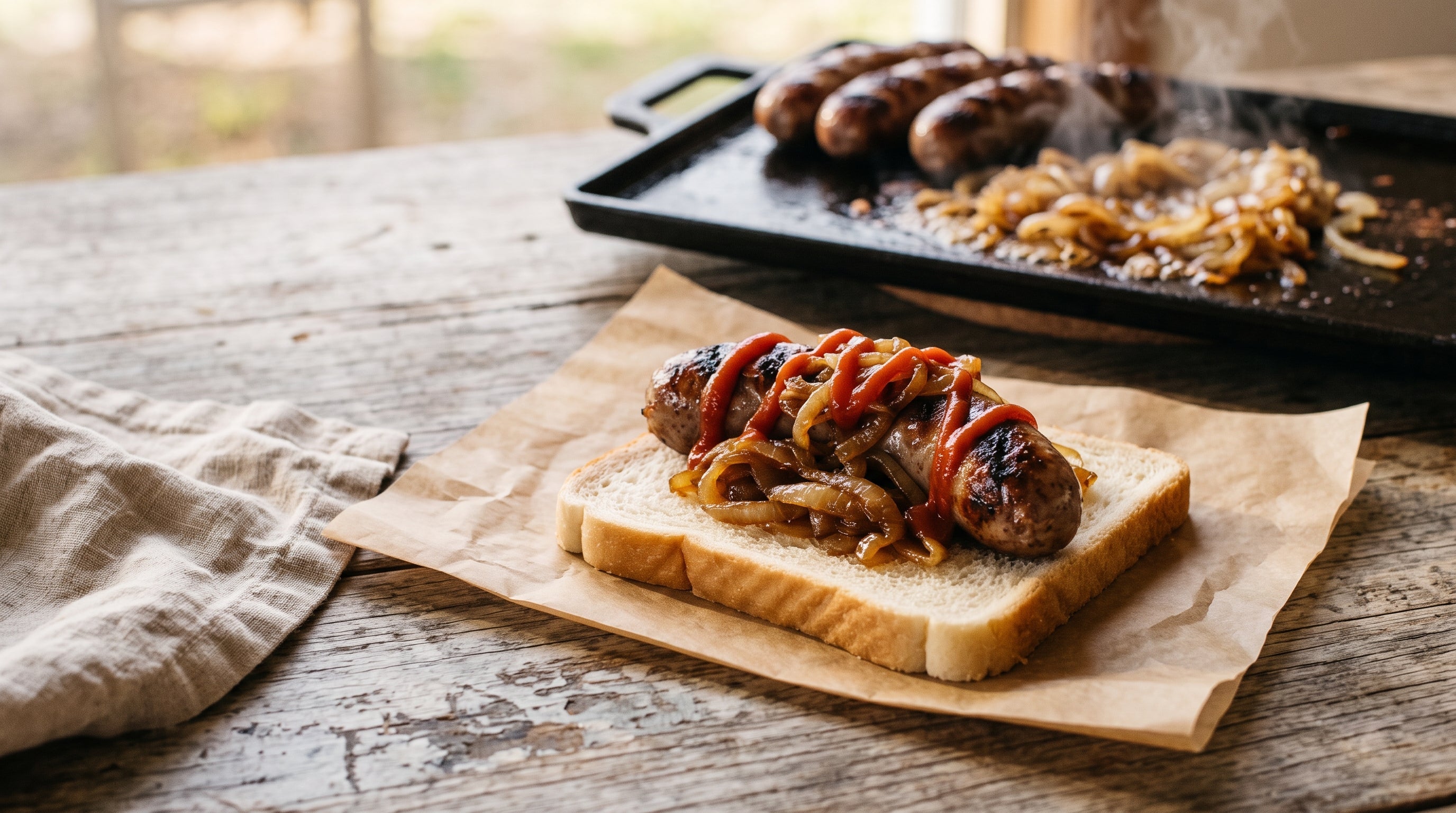
Every Australian knows the smell. Onions going soft and golden on a hot plate, sausages ticking away beside them, white bread at the ready. The sausage sizzle doesn't need reinventing — it needs doing properly. And with a natural-casing, grass-fed beef sausage, properly means gently: steady heat, patient turning, and no stabbing with the tongs. Twenty-five minutes on the barbecue, start to finish, and you've got the one to master before summer rolls around.

30 mins 5 servings Prep 5 minsCook 25 minsMain CourseAustralian

Ingredients

  • 5 Your Farmer grass-fed beef sausages
  • 3 brown onions, halved and thinly sliced
  • 1 tbsp olive oil
  • 20g butter
  • 5 slices soft white bread
  • Tomato or barbecue sauce, to serve
  • Salt, for the onions

Instructions

Preheat the barbecue flat plate — medium on one side for the onions, medium-low on the other for the sausages.

Spread the onions over the hotter side with the oil and butter. Cook for 15–20 minutes, turning with tongs every few minutes, until soft, golden and sweet. Season with salt and push to the cooler edge to keep warm.

3 onions1 tbsp olive oil20g butter

Meanwhile, lay the sausages on the medium-low side. Turn every 3–4 minutes for 15–18 minutes, until browned all over and cooked through (about 71°C at the centre). Never prick them, and don't rush — a natural casing splits over fierce heat.

5 sausages

Lay each slice of bread on the diagonal, add a sausage, top with onions and sauce, and serve straight off the plate.

5 slices white breadtomato or barbecue sauce

Appears in

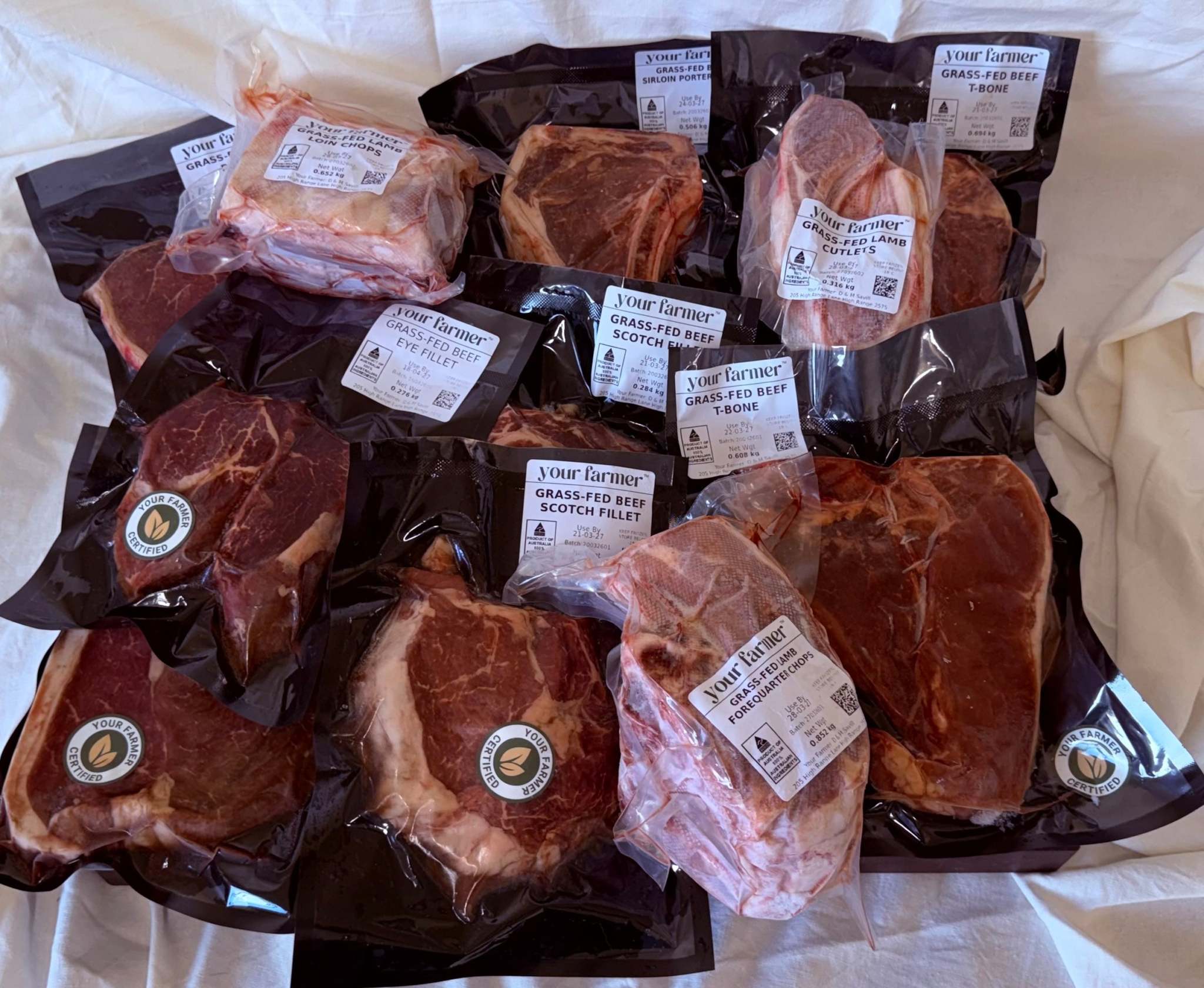
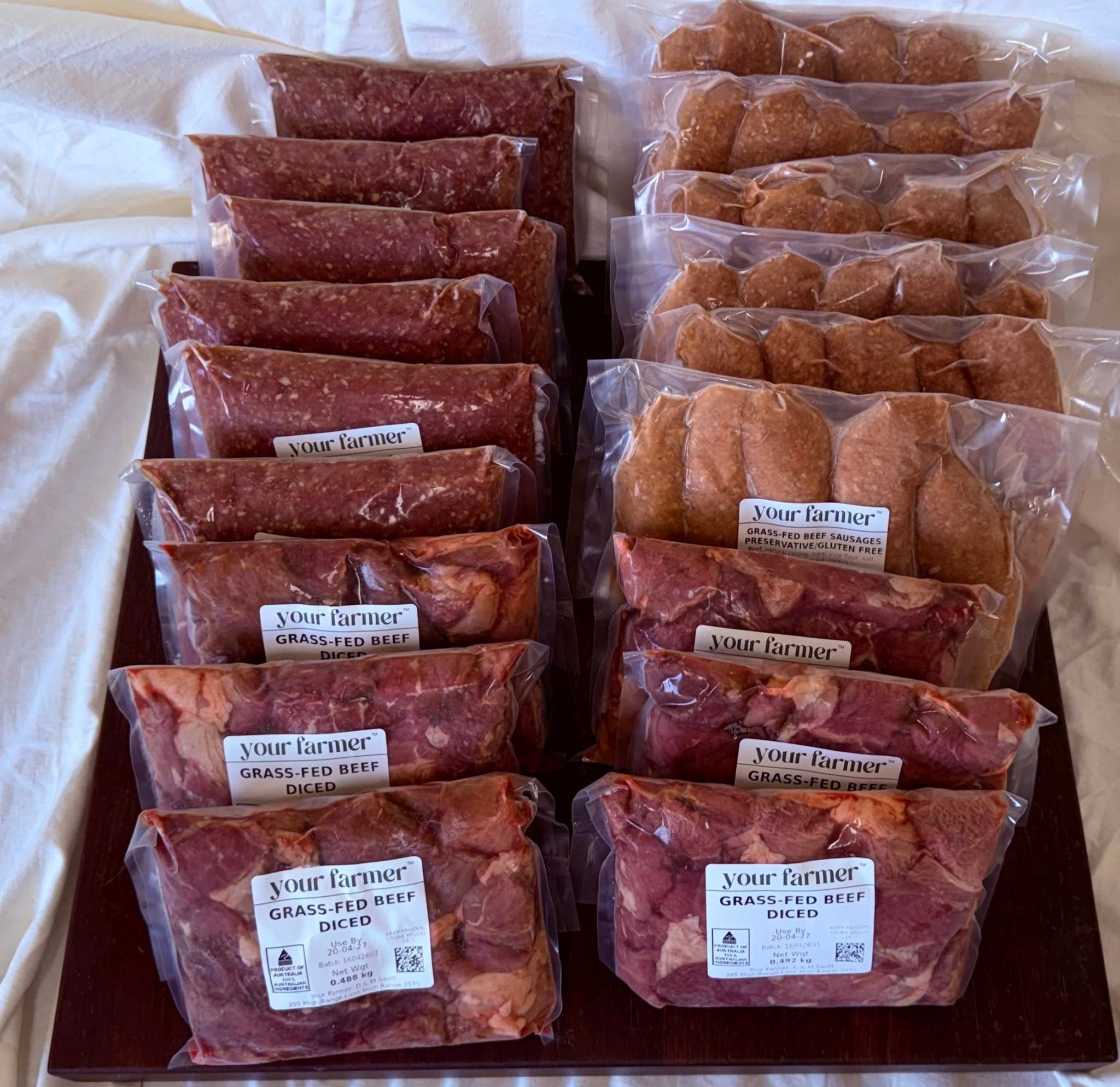
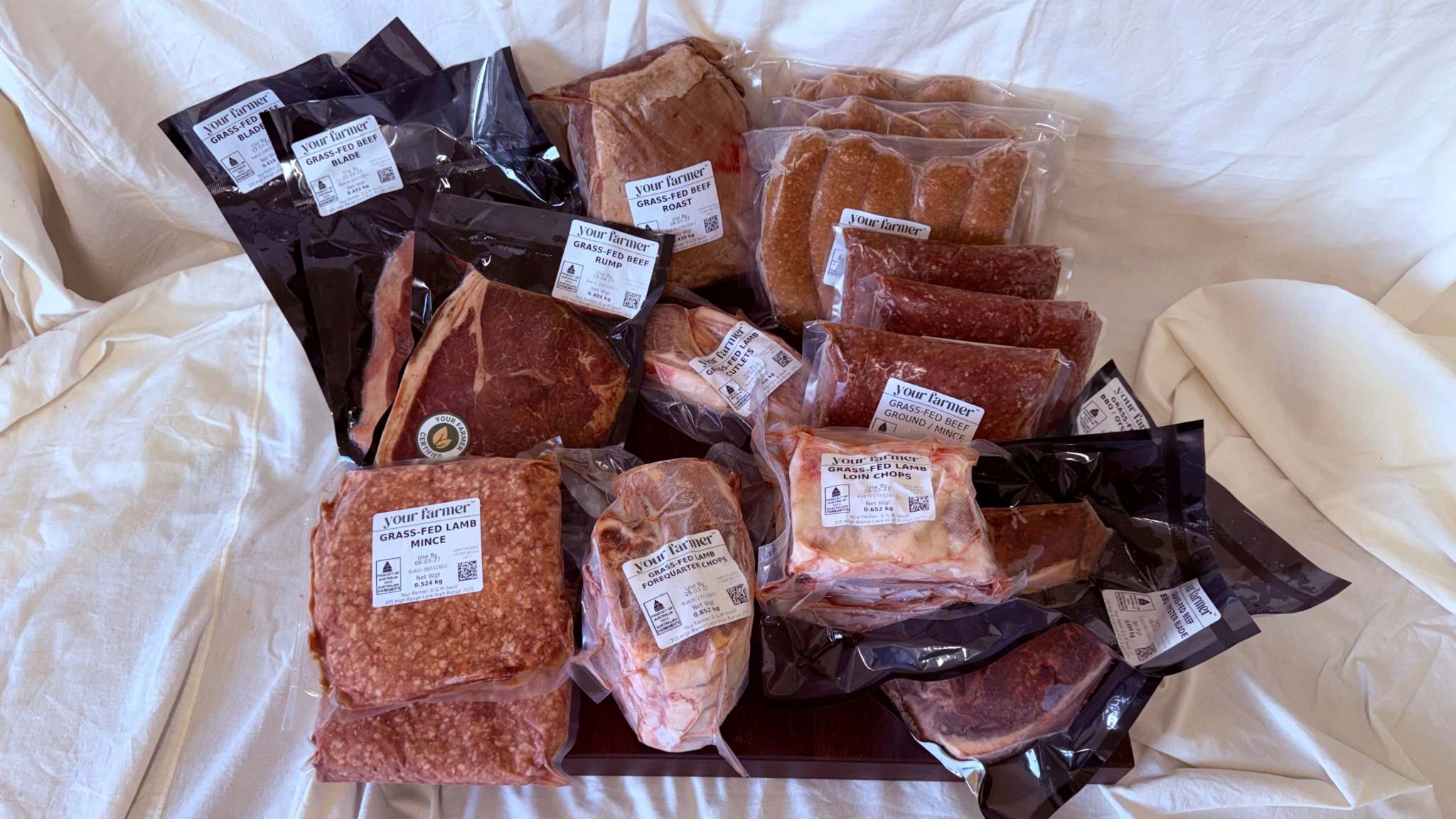
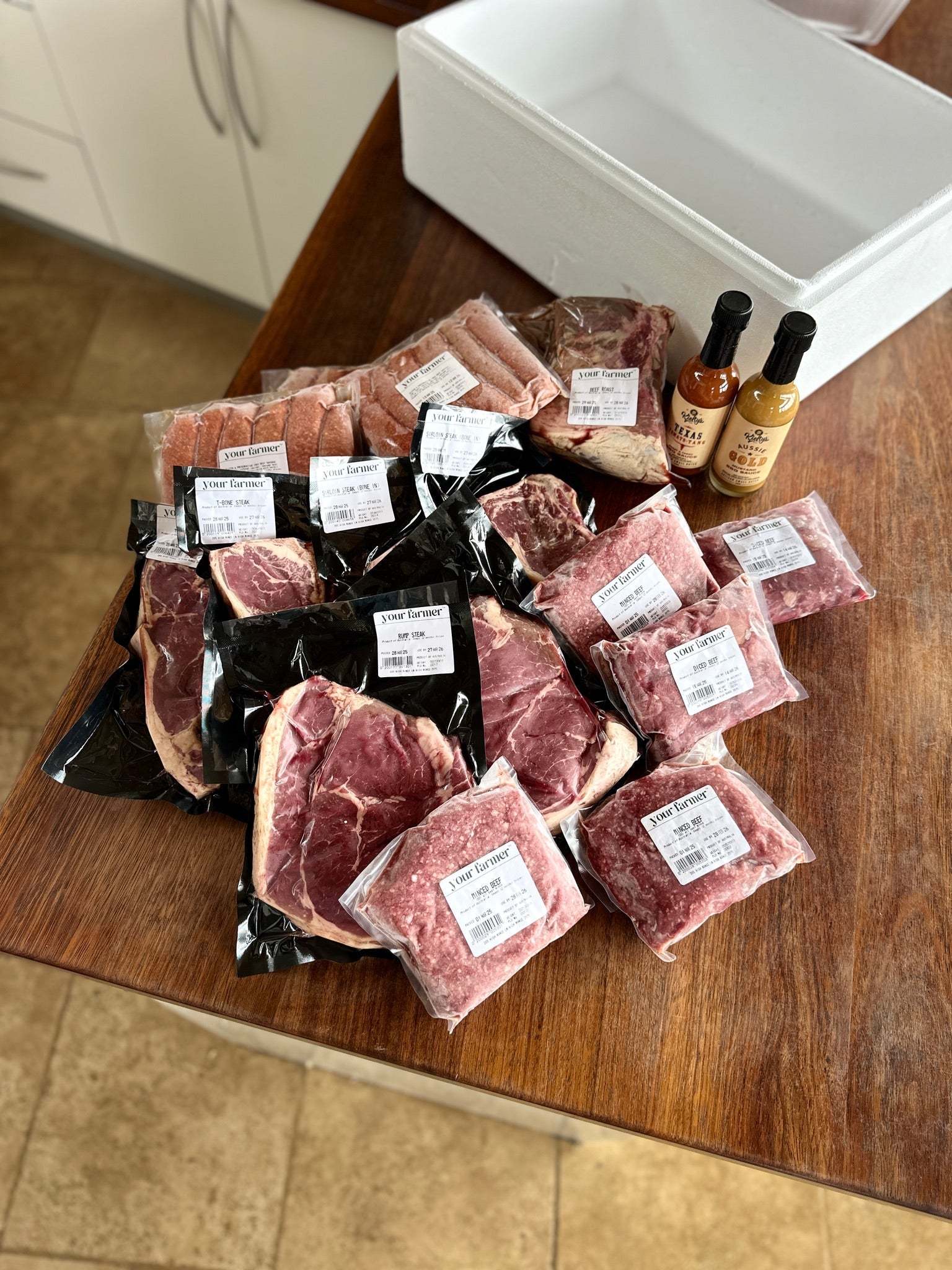
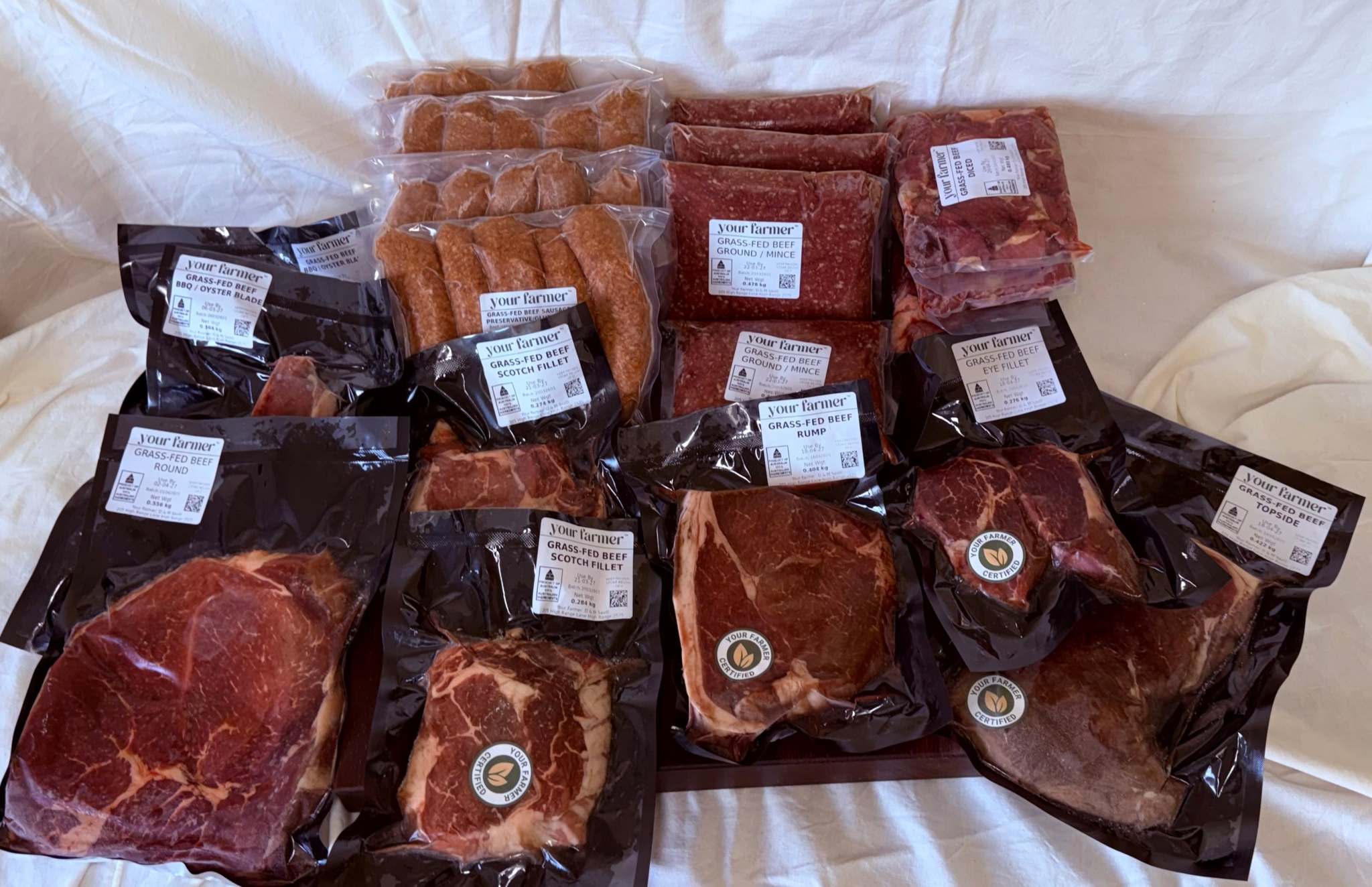
Your Farmer CSA grass-fed beef share — vacuum-sealed steaks, roasts, mince and sausages, paddock-to-plate NSW & ACT delivery
Sale price From $152.00Regular price $169.99
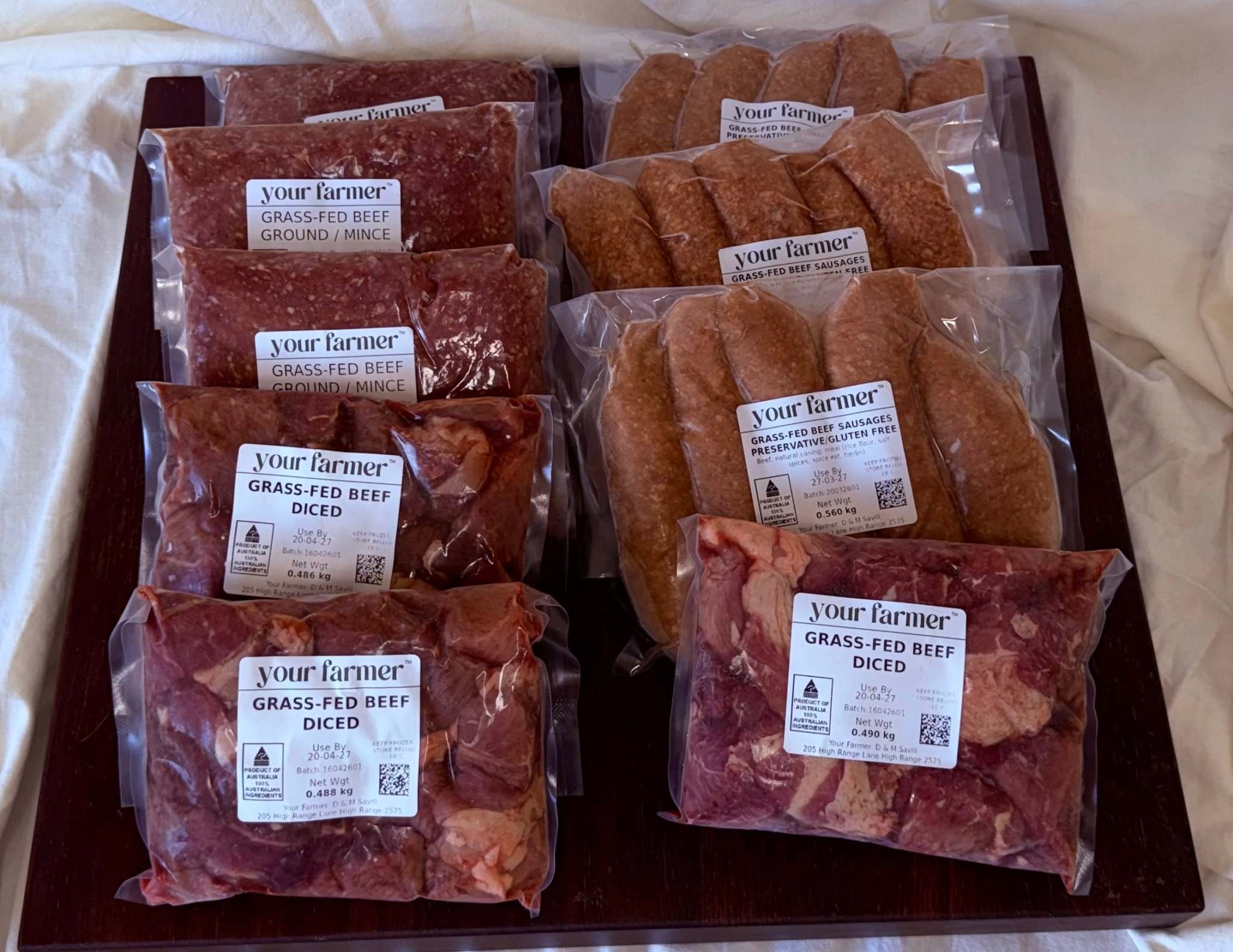
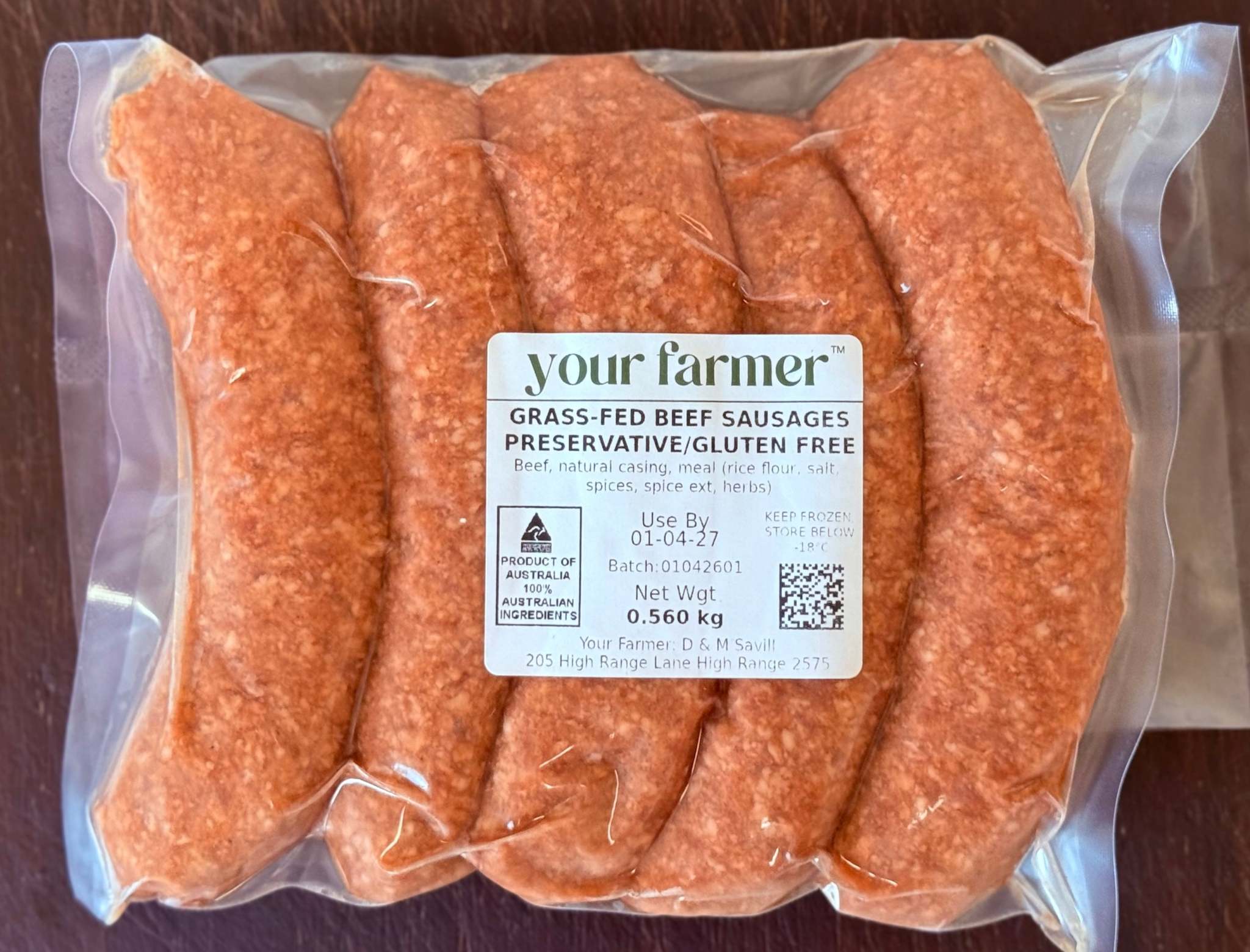
Preservative-free grass-fed beef sausages from Your Farmer — paddock-to-plate NSW & ACT delivery
Sale price $15.00Regular price $16.99

Why a Good Sausage Cooks Differently

Your Farmer® grass-fed beef sausages come in a natural casing, with no preservatives and no gluten — just grass-fed beef and seasoning. That changes how you cook them. A natural casing holds the juices under pressure as the sausage heats up, and fierce direct heat will split it before the middle is done. So the whole technique is one word: gently. Medium-low plate, a turn every few minutes, and about fifteen to eighteen minutes of patience. What you get back is a sausage that's browned all over, juicy in the middle, and never grey or burst.

The other rule you already know, but it bears repeating: never prick them. There's a pack of five in every grass-fed beef CSA share, so you'll have plenty of chances to practise. Two more small things the good sizzlers know: take the sausages out of the fridge fifteen minutes before they hit the plate, because a chilled centre is what makes the timing hard — and if you're feeding a crowd, work in batches and rest the cooked ones loosely under foil at the cool end. Ten minutes' rest never hurt a sausage, and the onions only get sweeter while they wait.

Swaps and Variations

Soft white bread is traditional, and there's no shame in tradition — but a buttered roll holds more onion, and a slice of cheese melted over the sausage in its last minute on the plate never hurt anyone. Mustard instead of tomato sauce moves it from Saturday morning to Saturday night. And if you're firing up the barbecue anyway, it's a short step to a full grill — our guide to steak night on the barbie covers the rest of the plate.

Storage and Leftovers

Cooked sausages keep in the fridge for up to three days, and the onions for a good week in a sealed container — spoon them onto steak sandwiches, burgers and eggs all week. The best leftover in this house: a next-morning breakfast roll with a split sausage, fried egg and the last of the onions. If your barbecue habit outruns the monthly pack, extra five-packs of our beef sausages are easy to add to a delivery.
Frequently asked questions

Flat plate or grill bars?

Flat plate, every time. It gives even contact, catches the juices, and cooks the onions properly. Grill bars run hotter at the contact points and are the main reason sausages split.

How do I know the sausages are done without cutting one open?

They'll feel firm when pressed and be evenly browned all over — about 71°C on a meat thermometer if you have one. If you must check, sacrifice one sausage for the cook's quality control.

Can I cook them from frozen?

No — thaw in the fridge overnight. From frozen the casing overcooks long before the centre is safe.

Can I do the onions ahead?

Yes, up to three days ahead. Reheat them on the plate for a couple of minutes while the sausages finish.

Three Simple Steps

A whole table of real food.

Your Farmers grow grass-fed beef and lamb, pastured eggs and the best eco-grown veggies and produce — every item grown to the same ecological standard, every farmer one you can know by name. One subscription, your whole real-food shop.

01

Reserve your share — or try a pack

Subscribe to a share of the harvest, or start with a one-off fixed pack.

02

Make it your own

Pick your delivery rhythm and what's in the box. Skip or cancel anytime — no lock-in.

03

Cook, savour, know your farmer

We deliver in a reusable esky we collect next time. No couriers, no waste.

More Recipes

View all

Greek-style grass-fed lamb roast with lemon and oregano served over golden potatoes in a ceramic baking dish.

Greek-Style Lamb Roast with Lemon and Oregano

Lemon, oregano and time — the Greek family-table treatment for the whole cut

Every Greek family has a version of this and none of them are wrong. Garlic, dried oregano and lemon get worked deep into the lamb, potatoes go underneath to catch everything that falls, and the oven runs slow enough that nobody has to watch it. What comes out isn't pink, carve-at-the-table lamb — it's the other thing entirely: golden on top, giving underneath, with lemony potatoes that half the table will fight over harder than the meat. It's Sunday cooking from a country that takes Sundays seriously.

Read moreabout Greek-Style Lamb Roast with Lemon and Oregano

Low-and-slow barbecued grass-fed lamb ribs with a dry-rub bark, sliced on butcher's paper.

Low-and-Slow BBQ Lamb Ribs with Dry Rub

Paprika, brown sugar, patience — American barbecue discipline meets Australian lamb

This is the recipe for the day you've decided the barbecue is the afternoon's entertainment, not just the cooking appliance. No foil, no shortcuts: a paprika and brown sugar rub, a hooded barbecue held low around 140C, and three or so unhurried hours while the fat renders, the spice sets into proper bark and the smell slowly takes over the street. Lamb ribs suit the American low-and-slow treatment better than most people expect — they're smaller and fattier than pork ribs, so you get all the bark in less time. Pour something cold. This one's a sit-outside recipe.

Read moreabout Low-and-Slow BBQ Lamb Ribs with Dry Rub

Grilled grass-fed lamb chump chops sliced over a warm French-style lentil salad with mustard dressing.

Grilled Chump Chops with Warm Lentil Salad

Charred chops over mustardy lentils — the bistro order, made at home

Walk into any honest bistro in France and there'll be lamb with lentils somewhere on the board. It works because the two halves trade favours — earthy lentils soak up the lamb's resting juices, and a sharp Dijon dressing cuts the richness of a properly charred chop. The lentils simmer away on their own for twenty-five minutes while you see to the chops, so the timing looks after itself. Hearty without being heavy, smart enough for guests, and most of it comes from the pantry.

Read moreabout Grilled Chump Chops with Warm Lentil Salad