

So you've seen the term "CSA" pop up — on a farm's website, in a friend's kitchen, maybe on one of our boxes — and you're not quite sure what it means. Fair enough. It's one of those phrases that sounds more complicated than it is.
Here's the short of it: a CSA is you and a farmer, in a direct relationship, with the supermarket left out of the middle. You sign up for a share of the harvest, the farmer grows it, and it turns up at your door. That's it. The rest of this is just the why.
Key Takeaways
- Community Supported Agriculture (CSA) is a subscription to a real farm's harvest — you commit to a share, the farmer grows it, and you get it directly.
- You and the farmer share the season — the good weeks and the lean ones — which makes it a partnership, not a transaction.
- The idea started in Japan in the 1960s and has been quietly growing in Australia ever since.
- The payoff: you know your farmer, your food travels less, it arrives fresher, and a fair share of your money reaches the person who grew it.
- A CSA suits families who want to trust their food without becoming experts — and who like eating with the seasons.
What is community supported agriculture?
Community Supported Agriculture is a direct arrangement where you subscribe to a farm's harvest, and in return you receive a regular box of that farm's food — vegetables, fruit, eggs, meat, whatever they grow. You commit to the farm for a season; the farm commits its food to you. The Australian Food Sovereignty Alliance describes it as taking responsibility for how your food is produced and how it reaches your table, through a real relationship between the farmer and the people who eat what they grow 1.
Think of it like this. You've got a doctor, a hairdresser, maybe an accountant — people you know, who look after one part of your life. A CSA gives you the same thing for your food. You've got your farmer. And once you've got your farmer, a whole lot of guesswork just disappears.
How does a CSA actually work?
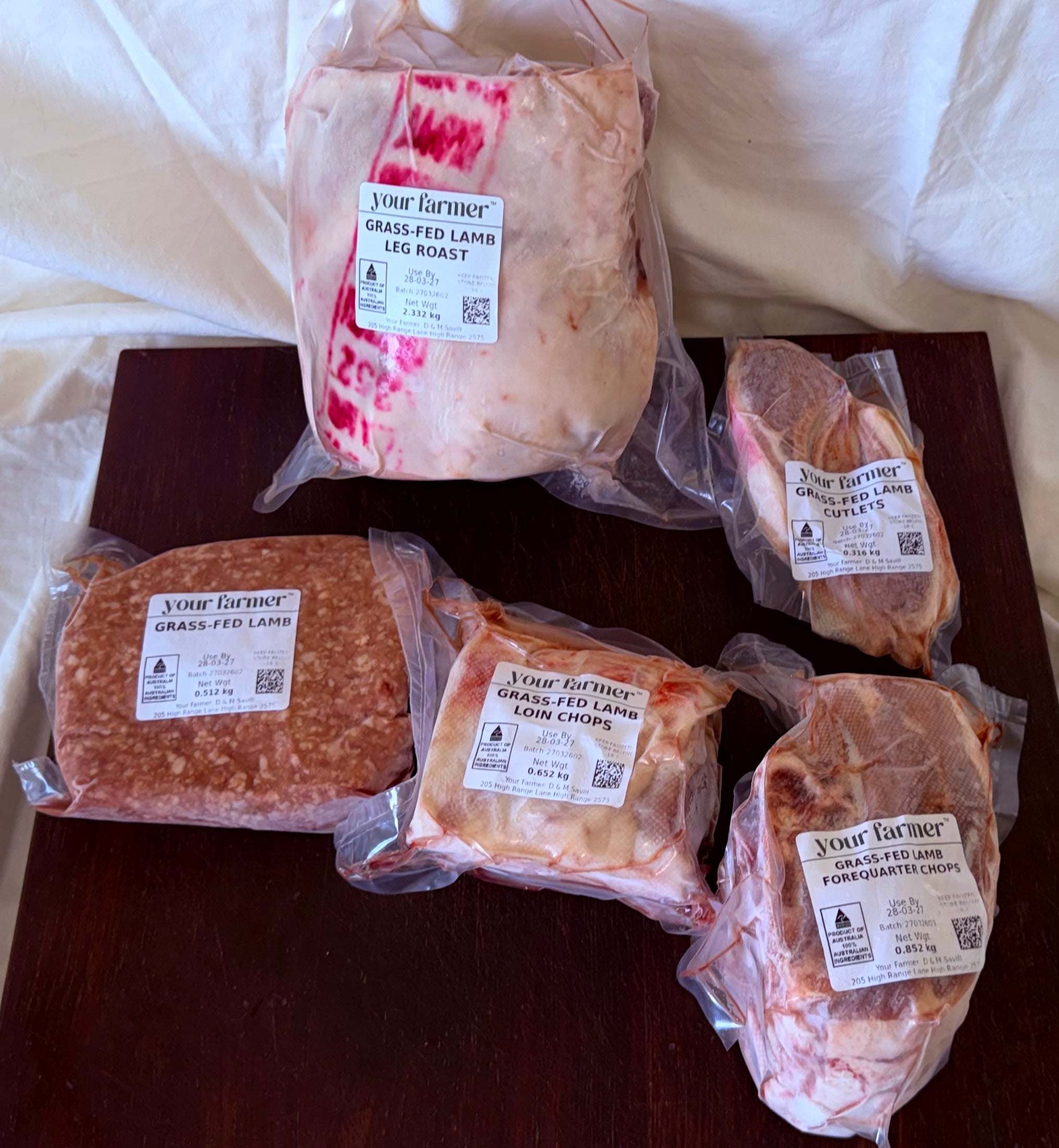
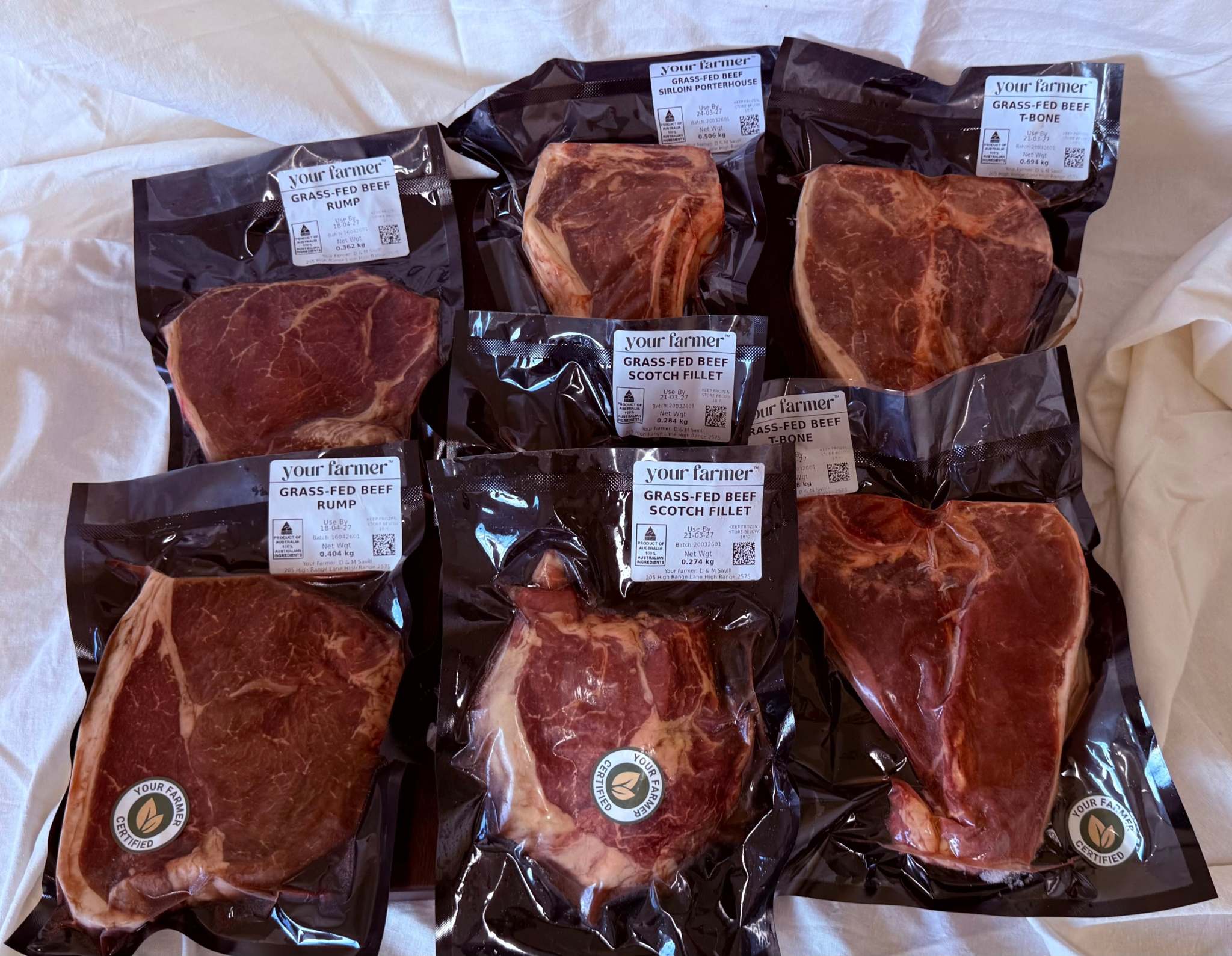
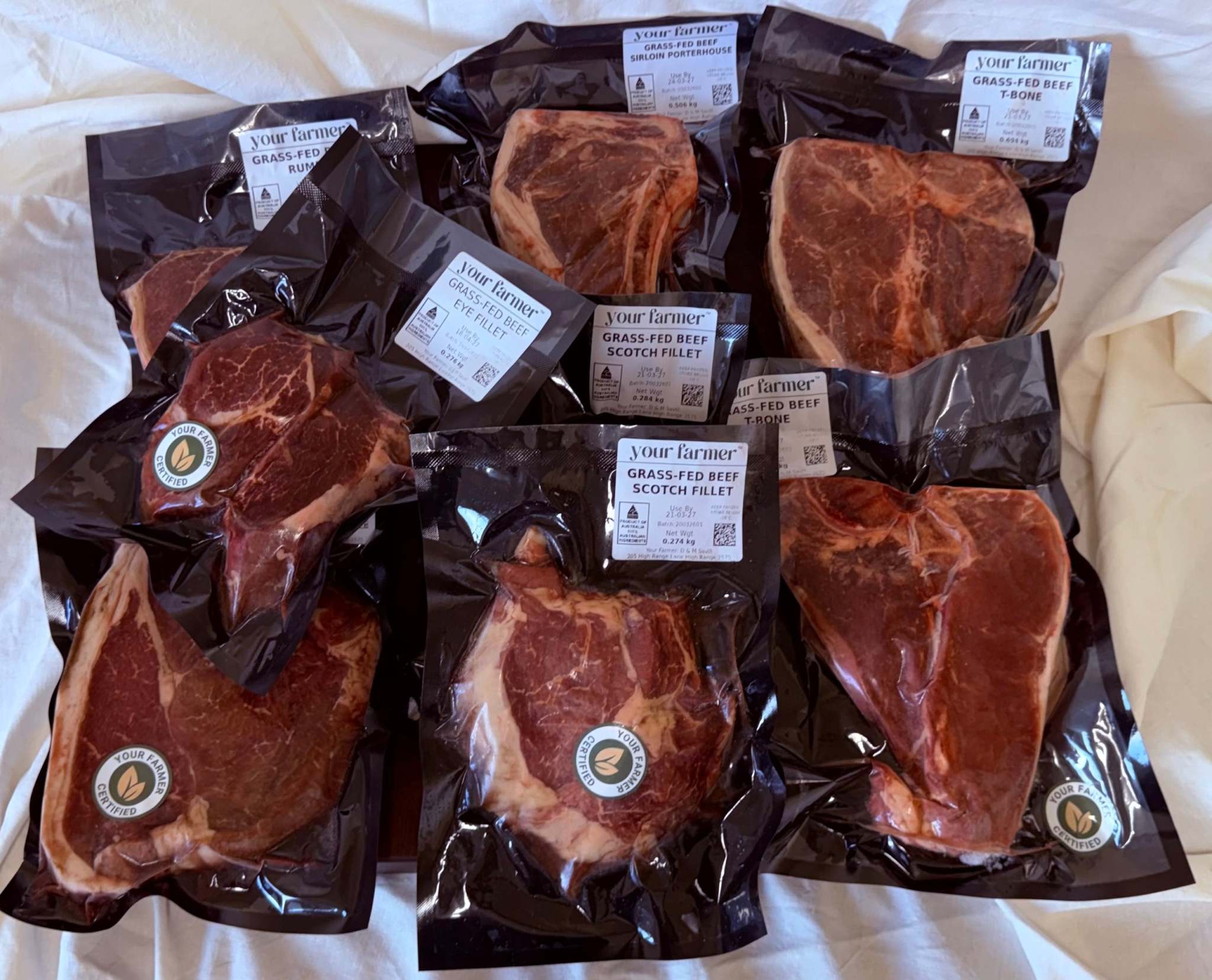
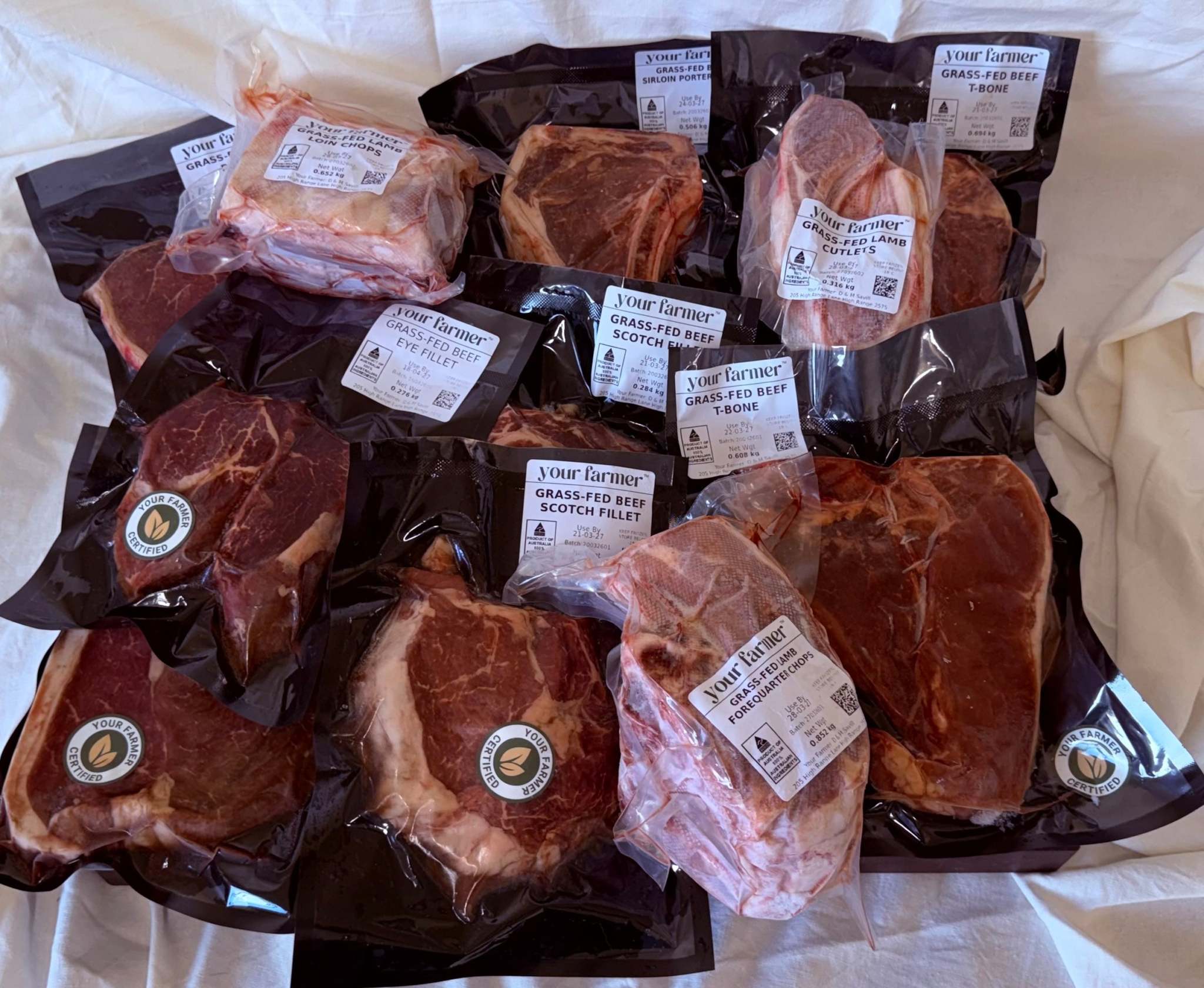
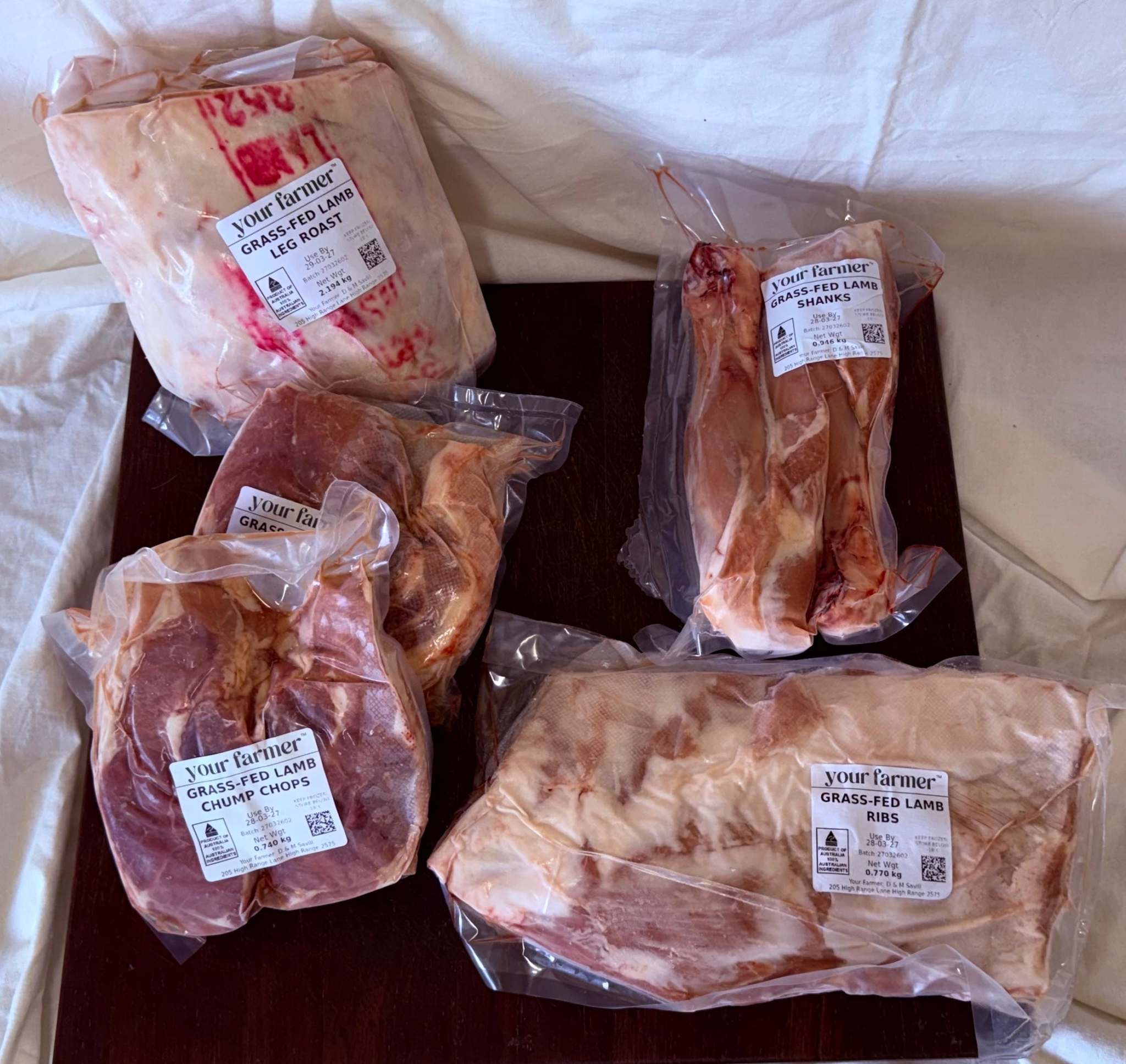
A CSA runs on a simple rhythm: you pay for a share on subscription, and the farm delivers a box of in-season food on a set schedule. Some CSAs are veg-only and turn up weekly. Ours brings meat, eggs, and veggies together, delivered monthly — which suits the way most families actually cook, shop, and use the freezer.

The part that trips people up is the word "share." You're not ordering off a menu. You're buying a share of what the farm produces — so the box reflects the paddock, not a catalogue. In spring you'll get the first tender greens and new-season lamb; by autumn it's pumpkins, roots, and slow-cooking cuts. Your box follows the paddock, and the paddock follows the seasons.
Sharing the season — the bit that makes it a partnership
Here's the heart of it. In a CSA, you and the farmer share the season — the bumper weeks and the lean ones. If it's a cracking month for tomatoes, your box is full of them. If a cold snap slows things down, everyone feels it a little. The Australian Food Sovereignty Alliance calls this sharing the risk of the harvest,1 and it's the thing that turns a shopping habit into a partnership.
That might sound like the customer drawing the short straw. It isn't. When a farmer knows they've got the loyal support of their members, they can stop worrying about selling and focus entirely on growing good food. That security is what lets a farm work with nature instead of flogging the land for a guaranteed yield. Good for you, good for the farmer.
Where did the idea come from?
CSA isn't new, and it didn't start on a marketing whiteboard. It began in Japan in the 1960s, where it was called teikei — roughly, "partnership." A group of mothers, worried about chemical residues and the creeping distance between people and their food, partnered directly with local farmers to get clean milk and vegetables they could trust.2
That worry probably sounds familiar. The idea spread to Europe in the late 1970s and eventually made its way here. Australia came to the party later than most, but the movement's been growing steadily as small-scale farmers move to this model for a fairer income, shared risk, and a genuine connection with the people they feed. Different country, same instinct: people wanting to know where their food comes from.
Why does a CSA matter? Four honest reasons
This is where it gets practical. Here's what you actually get out of the arrangement.
You know your farmer — by name
The whole point of a CSA is that the anonymous supply chain disappears. You're not trusting a label; you're trusting a person. Do you know where your food comes from? With a CSA, you can answer that — the farm, the paddock, the family. That's not a small thing. It's the difference between hoping your food was grown well and knowing it.

Your food travels a lot less
Supermarket food is well travelled. A Melbourne study — Food Miles in Australia, by the team at CERES — added up a basket of 29 common items and found it had clocked up 70,803 km getting to the shelf. That's nearly twice around the planet for one shop. The same study found locally grown oranges had travelled 567 km, while the Californian ones often sitting beside them had done 12,879 km.3 A CSA box, grown nearby and driven to you, skips almost all of that.
Fresher food, with more of the good stuff still in it
Food starts losing nutrients the moment it's picked, and time on a truck and a shelf adds up. A US study from Penn State found spinach kept properly chilled still lost almost half its folate and carotenoids within eight days4 — and the science of a wilting leaf is no different in Wollongong than it is anywhere else. Shorten the gap between harvest and your kitchen, and more of the goodness is still there when you eat it. That's the quiet advantage of food that was in the ground this week, not a fortnight ago on the other side of the country.
The farmer gets a fair go
When you buy through the long chain, most of your money never reaches the farm. Globally, farmers take home only around 27% of what you spend on food eaten at home5 — the rest goes to the middle. (In Australia, ABARES tracks the same "farm share,"6 and while it swings a lot by product, the pattern holds: the bit in the middle takes the biggest cut.) A CSA hands the farmer a fair share directly, because there's barely any middle left. Your money does more than buy dinner — it keeps a good farm farming.
Is a CSA right for you? An honest answer
Let me be straight with you, because a CSA isn't for everyone. You're buying a share of a harvest, so you don't get to tick every box yourself — some weeks you'll get a vegetable you'd never have chosen, and you'll have to work out what to do with it. You're also backing the farm through the lean weeks, not just the good ones. That's the deal.
But if you're the sort of person who's tired of second-guessing the supermarket, who likes the idea of eating with the seasons, and who'd rather know their farmer than read another label that tells you nothing — a CSA fits you like a glove. Most families who try it find the "what do I do with this?" weeks become half the fun.
How to join a CSA in Australia
Getting started is easy. Look for a farm near you that runs a CSA, check what they grow and how often they deliver, and sign up for a share. The CSA Network Australia & New Zealand is a good place to start looking, and plenty of farms — ours included — let you start small and find your rhythm before you commit to more.
That's what we built Your Farmer around. We're Australia's first expert-verified paddock-to-plate online food subscription — a CSA delivering eco-grown meat, eggs, and veggies, monthly, from named Southern Highlands family farms, all sharing the same ecological vision, to families across NSW and ACT, within 150 km of the farms. Every farm is personally checked against our eight-outcome standard, so the "know your farmer" part is built in.
If that sounds like your kind of thing, come and get good food from farmers you know by name.
Get Good FoodKnow Your Farmer®, Know Your Food.

Share:
How Does a Meat Box Subscription Save Sydney Families Time and Money?
Online Butcher Southern Highlands: Order Fresh Meat Online From Local Farms