

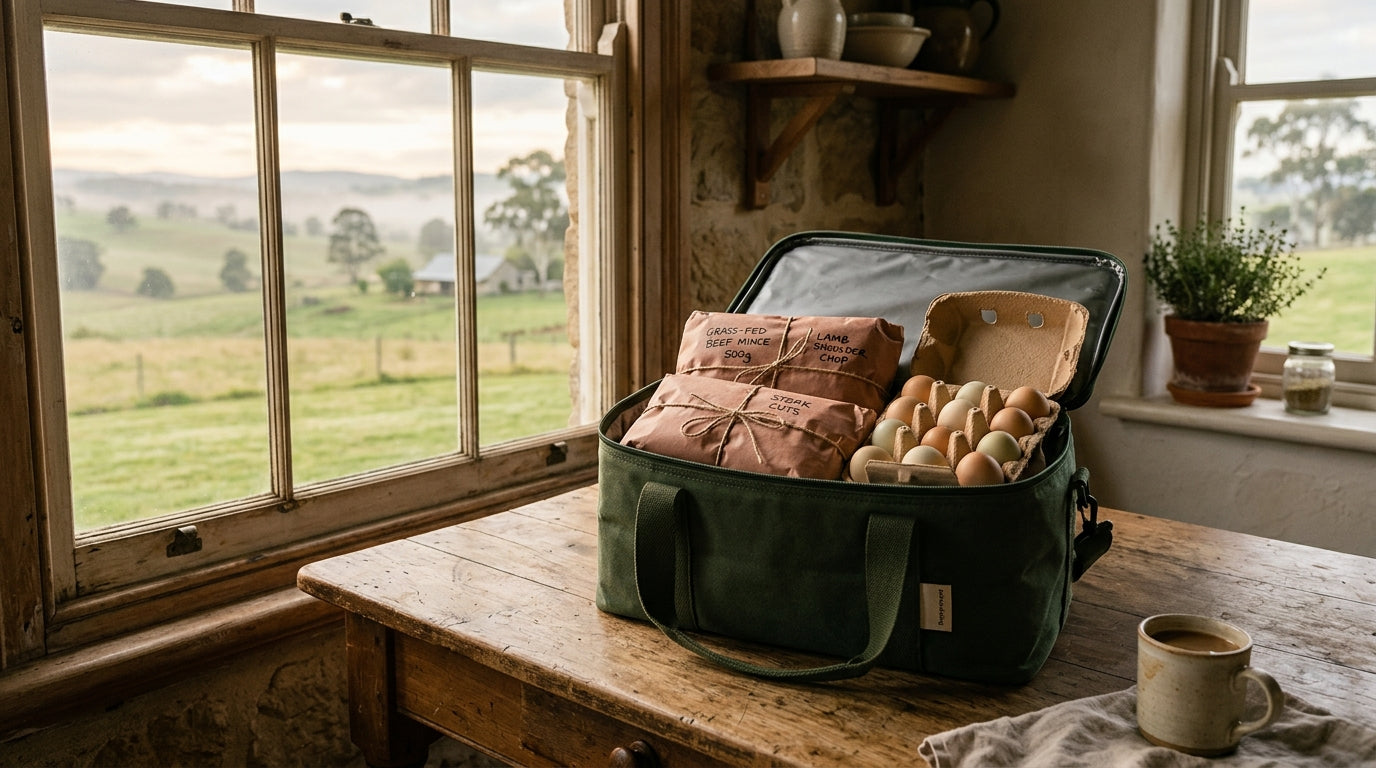
More of us are buying dinner with our thumbs now. You order the school shoes, the birthday present, the dog food — so why not the meat? The bit nobody tells you is that ordering meat online isn't really about convenience. It's about something you've quietly wanted all along.
Here it is. Do you know where your food comes from? Stand at the supermarket meat fridge and you mostly can't answer that. A tray, a barcode, a best-before date — and a long, quiet chain behind it you can't see down. An online butcher that sells from named local farms flips that around. You can trace the steak back to a paddock, a farm, a farmer. That's the real reason to order meat online, and it's worth walking through properly. So let's do that.
Key Takeaways
- Buying food online is now ordinary, not niche — online grocery in Australia is worth around $11.8 billion a year.1 The question has shifted from "can I?" to "who am I actually buying from?"
- "Online butcher" covers three very different things: the supermarket, a meat marketplace that pools hundreds of unnamed farms, and true farm-direct — where you can name the one farm your dinner came from.
- Supermarket "fresh" beef can be weeks old. Chilled, vacuum-packed beef has a storage life of 26 weeks or more.2
- Australian grass-fed beef carries more long-chain omega-3 than grain-fed — enough to legally count as a "source of omega-3".3
- "Free range" eggs can legally run at 10,000 hens per hectare — about 6.6× the older CSIRO welfare benchmark.45 A label tells you what's allowed, not what happened.
- Two chains, Woolworths and Coles, sell roughly 67% of Australia's groceries, so the "choice" at the fridge is narrower than it looks.6
What does ordering from an online butcher actually get you?
Ordering food online is no longer the fringe option — online grocery in Australia is worth roughly $11.8 billion a year and still climbing.1 So the interesting question isn't whether you can buy meat online. You can, easily. It's who you're actually buying from. And here's the catch most people miss: "online butcher" covers two very different things.
One is the online meat marketplace — the wholesale-style networks like Our Cow or Butcher Crowd that aggregate hundreds of farms and ship nationally. That's a genuine step up from the supermarket, and good on them for it. But they pool meat from so many farms that you still can't point to the one paddock your steak came from, and there's no shared ecological standard sitting behind it. The other is true farm-direct: one named farm, one farmer, full provenance. That's us. Same animals-eat-grass argument, but you can name the source. Here's the three-way comparison before we dig in.
| Supermarket | Meat marketplace | Farm-direct (us) | |
|---|---|---|---|
| Who raised it | Rarely named | 100s of farms, none named to you | One named farm and farmer |
| How it was raised | Told by label claims | Label claims, no shared eco standard | Verified against eight outcomes |
| Provenance | Anonymous chain | Aggregated, not farm-traceable | Traced to the paddock |
| How far it travelled | Often long, sometimes imported | Shipped nationally, long-distance | Within 150 km of the farms |
| Delivery | Minimum spend, or you fetch it | Courier, in the post | Reusable esky we collect |
None of this makes the supermarket or the marketplaces the bad guy. The supermarket's brilliant at cheap and everywhere; the marketplaces are a real improvement on it. The point is simply how far down the chain you can see. With farm-direct, you can see all the way to the paddock. That's the whole job we're built to do.
Why grass-fed from the Southern Highlands?
Because how an animal is fed changes what ends up on your fork — and there's Australian evidence for it. A study of Australian beef cuts found grass-fed beef carried significantly more long-chain omega-3 than grain-fed, and only the grass-fed beef cleared the food-standards threshold to legally count as a "source of omega-3".3 Same animal, different diet, measurably different food.
The Southern Highlands of New South Wales is good country for raising it well. Reliable rainfall, cool green pasture, room to roam. Our cattle and lambs grow up the slow way, on grass, the way nature set it up. It actually starts with the sun: sun feeds the soil biology, the soil feeds the pasture, the pasture feeds the animal, and the animal feeds you. You can read the nutrition evidence behind that chain, and the full picture of how we farm if you want to go deeper.
But here's the honest bit, because it matters: a Southern Highlands postcode is not a guarantee. Plenty of farms in this region are conventional — grain-finished cattle, sprayed pasture, the usual chemical inputs — and you'd never tell from a "local" or even a "grass-fed" sticker. Those words just aren't policed the way you'd hope. So how's a busy parent meant to know the good from the ordinary? You can't, by reading the packet. That's exactly the gap we close. Every farm in our network is eco-grown and personally walked by David Savill, an ecologist, against the eight-outcome Your Farmer Certified standard — living soil, biodiversity, animal welfare, nutritional density and more. Not just local. Not just grass-fed. Verified.
So what does that mean for your kitchen? A steak that tastes like something, raised somewhere you could actually drive to. If you want the specifics on the meat itself, here's what makes grass-fed beef different.

How do you actually order fresh meat online?
It's simpler than people expect, and the model that does the heavy lifting is a CSA — Community Supported Agriculture. Instead of hunting for quality every week, you pick a share once and it turns up on a schedule. And here's the part that makes it work: a CSA gives you a share of the harvest, not a shopping list. The farmer's the one who knows when an animal has reached its peak, or what's at its seasonal best right now — so that call gets made by someone with decades in the paddock, not by you at 6pm on a Tuesday. You don't need to know how to grow things, or how to pick the perfect moment. You just need to trust the farmer to do it for you. New to the idea? Our plain-English guide to what Community Supported Agriculture actually is walks through it. The short version is three steps.
One: pick your share. Most families start with our grass-fed beef CSA share or our pasture-raised lamb share. Want eggs in there too? Add pasture-raised eggs.
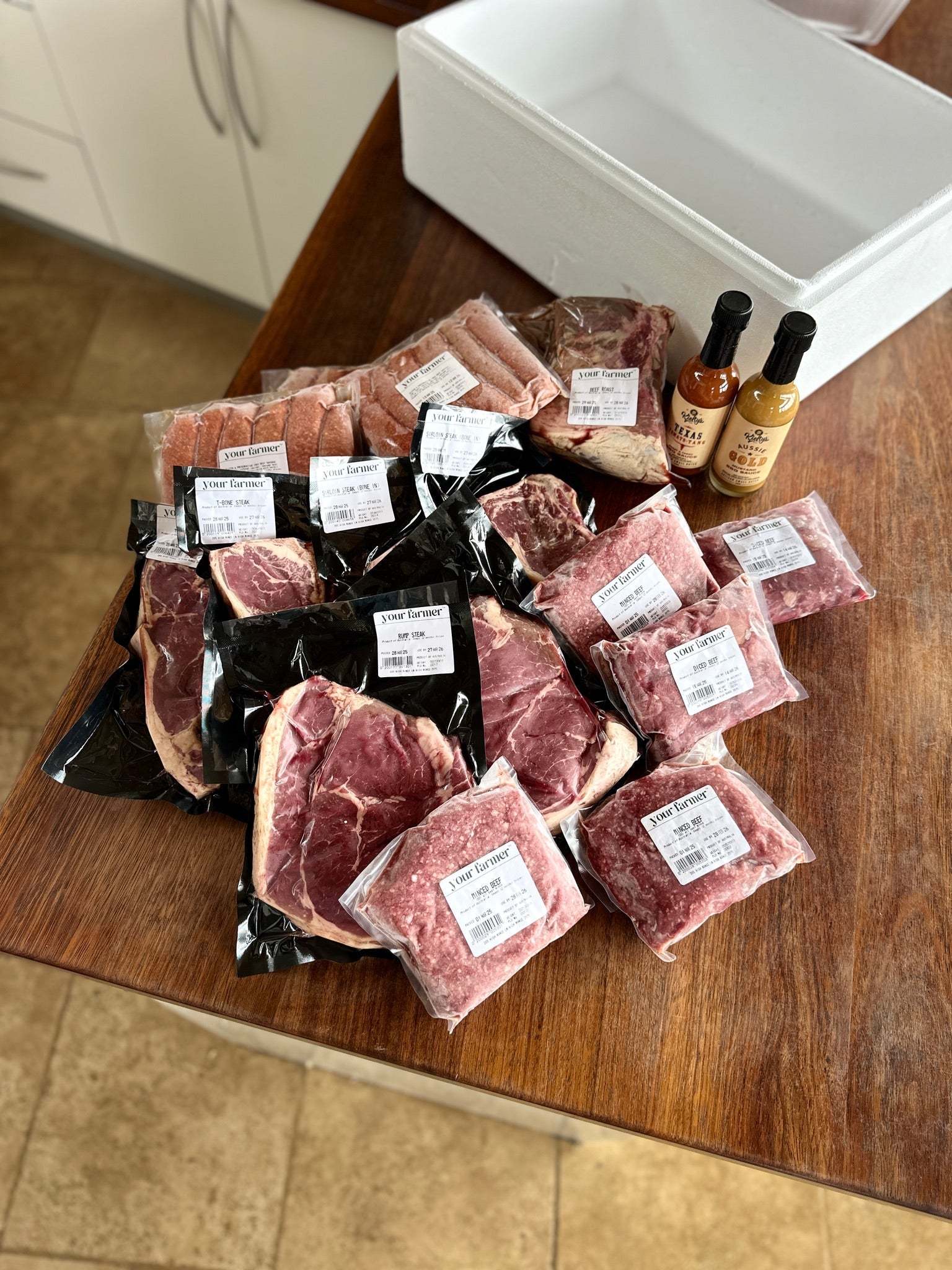
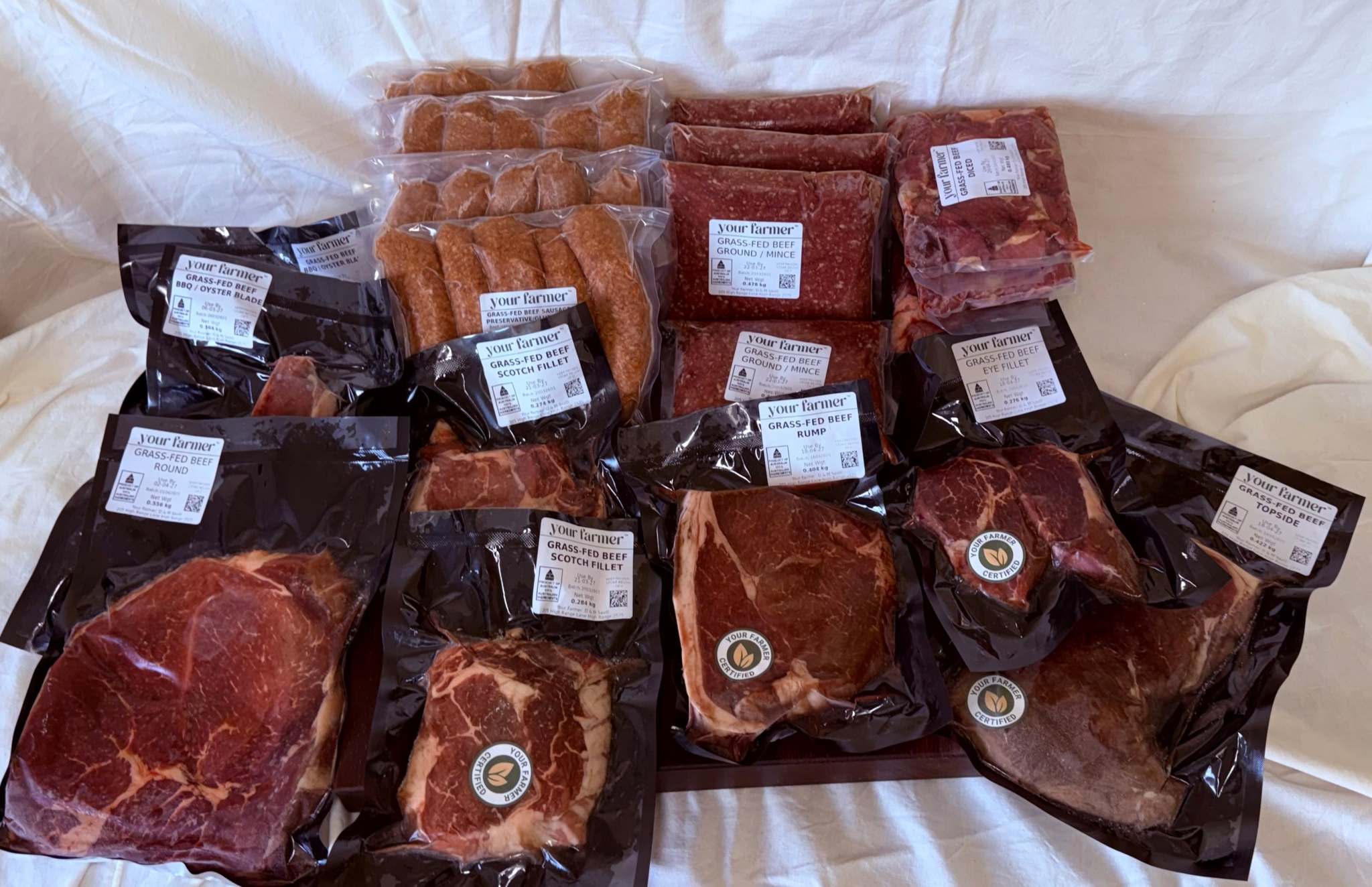
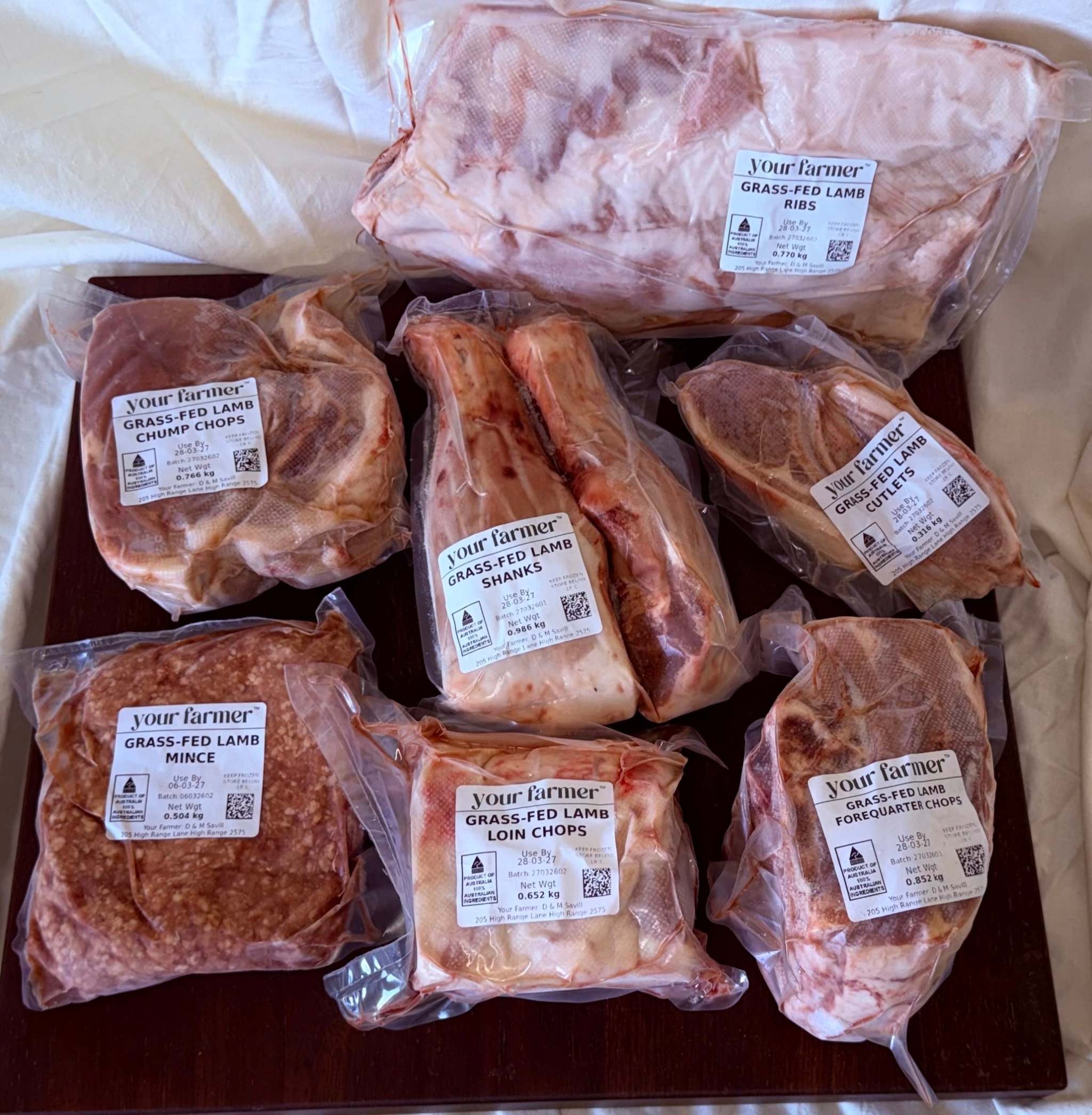
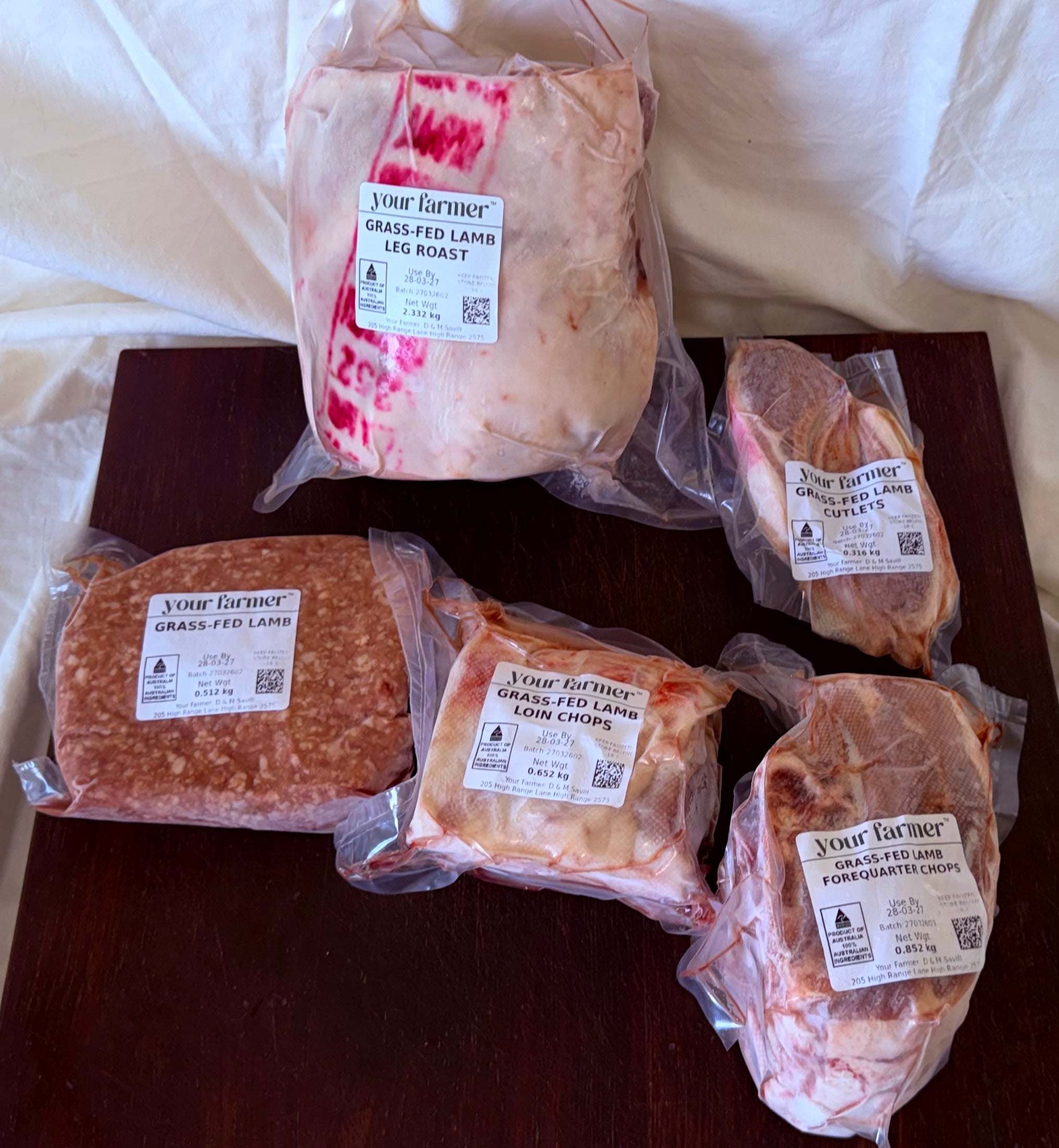
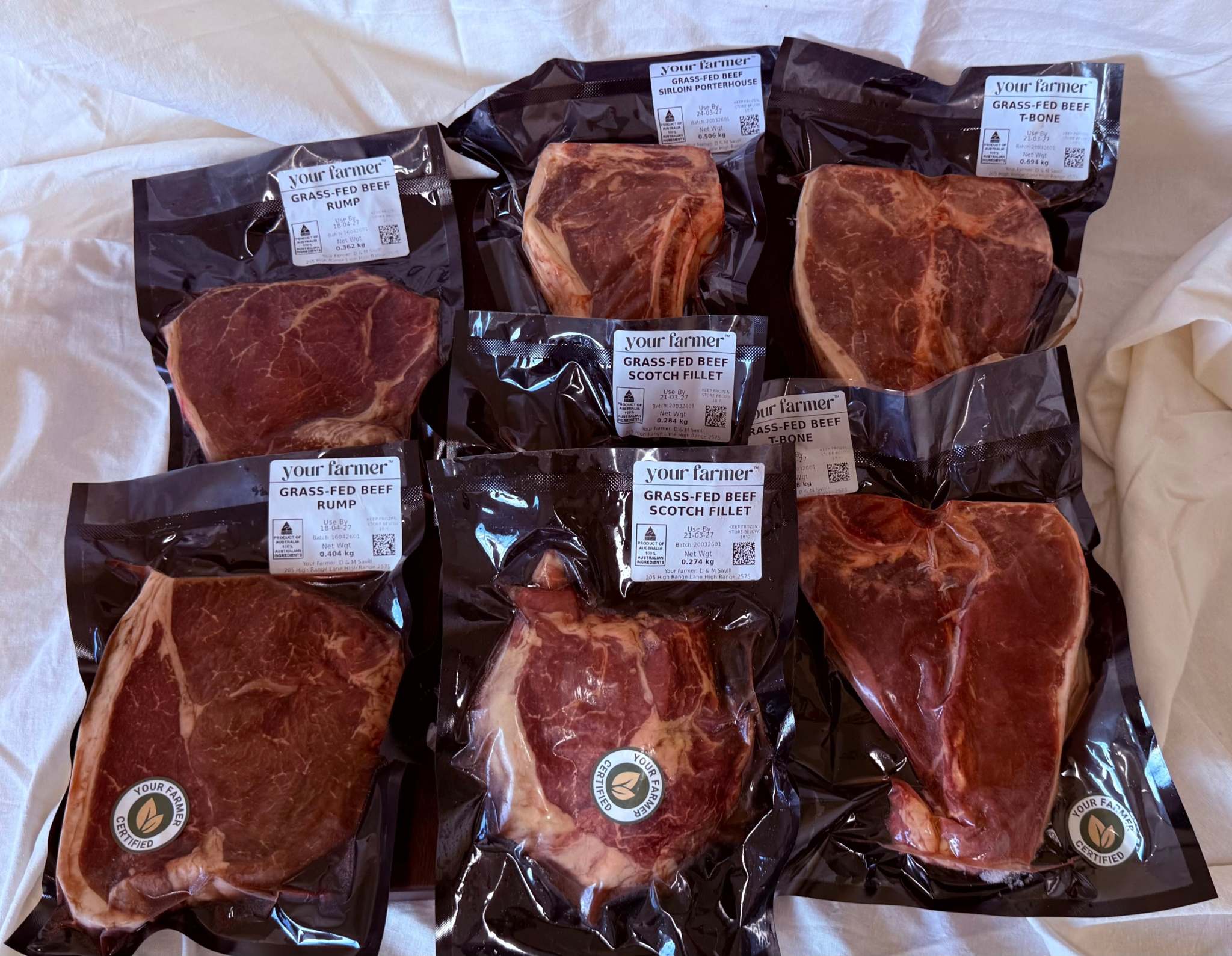
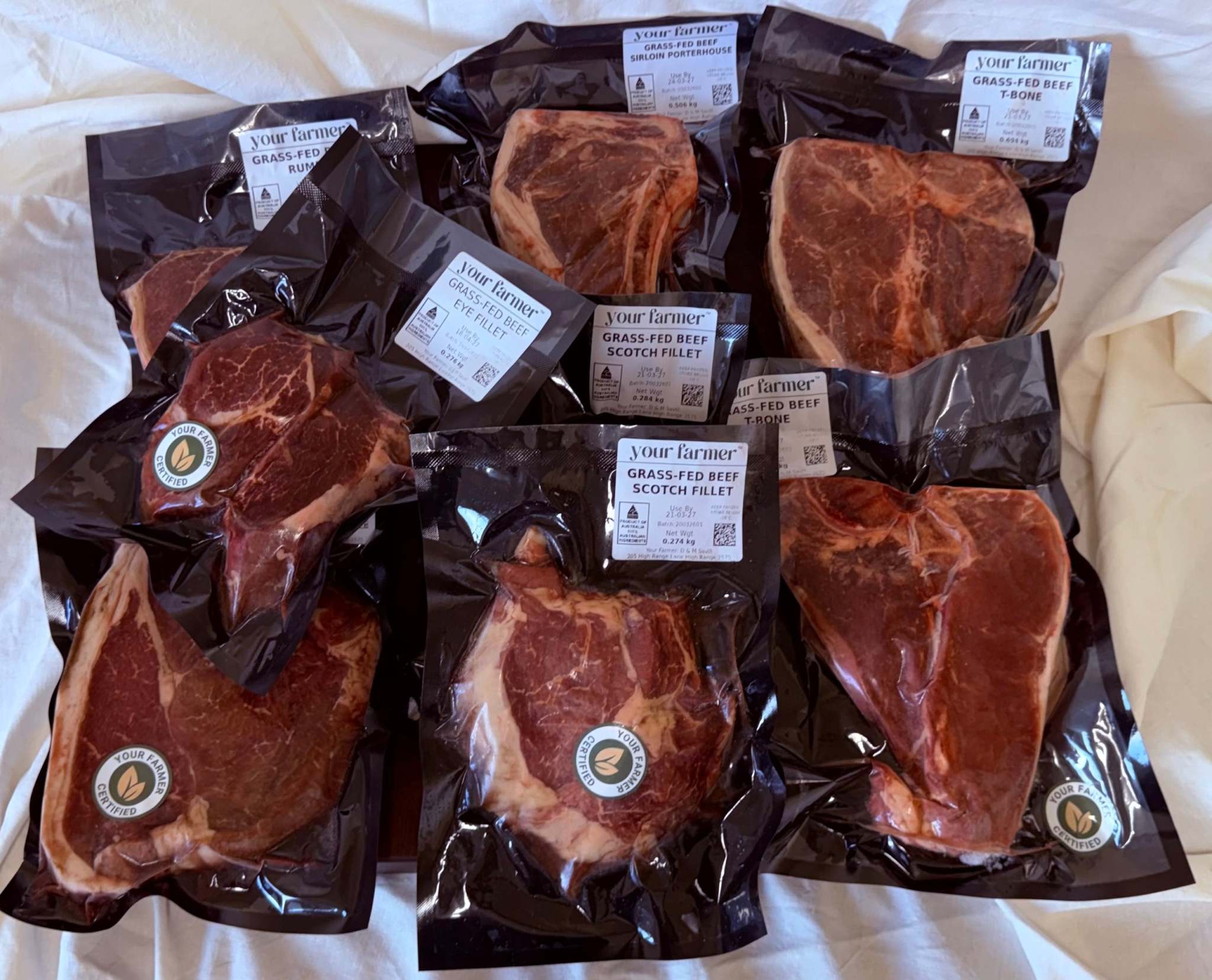
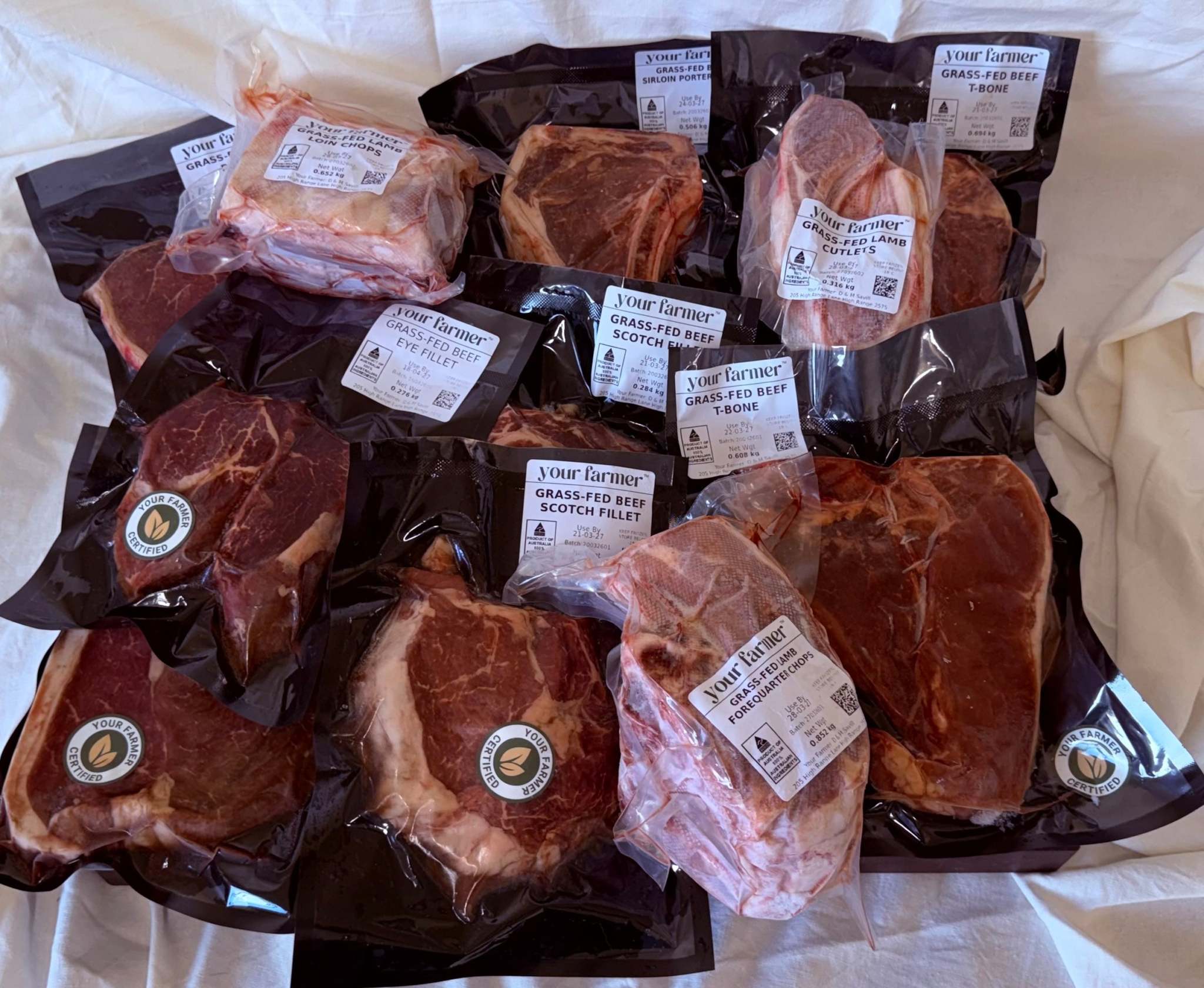
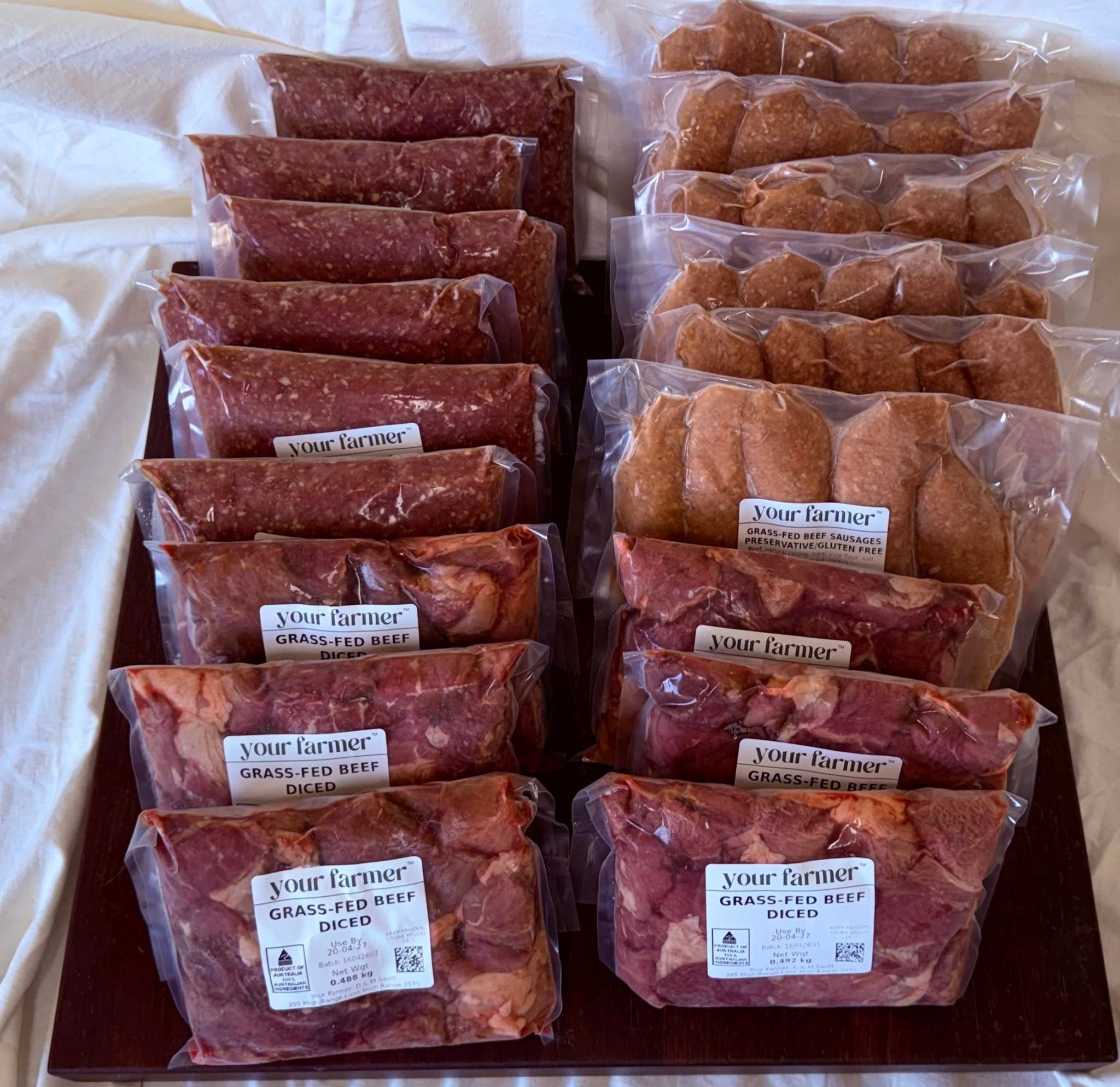
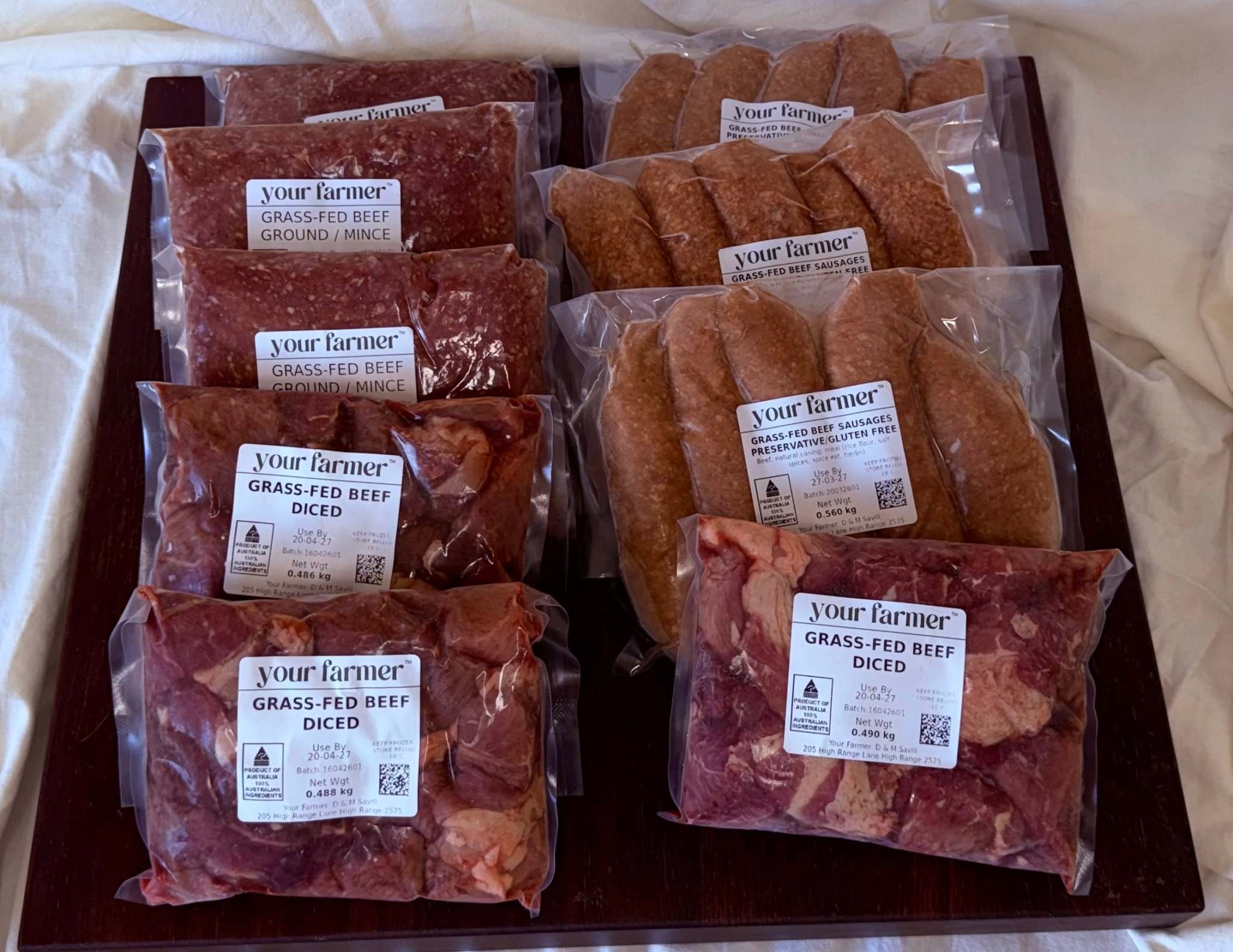
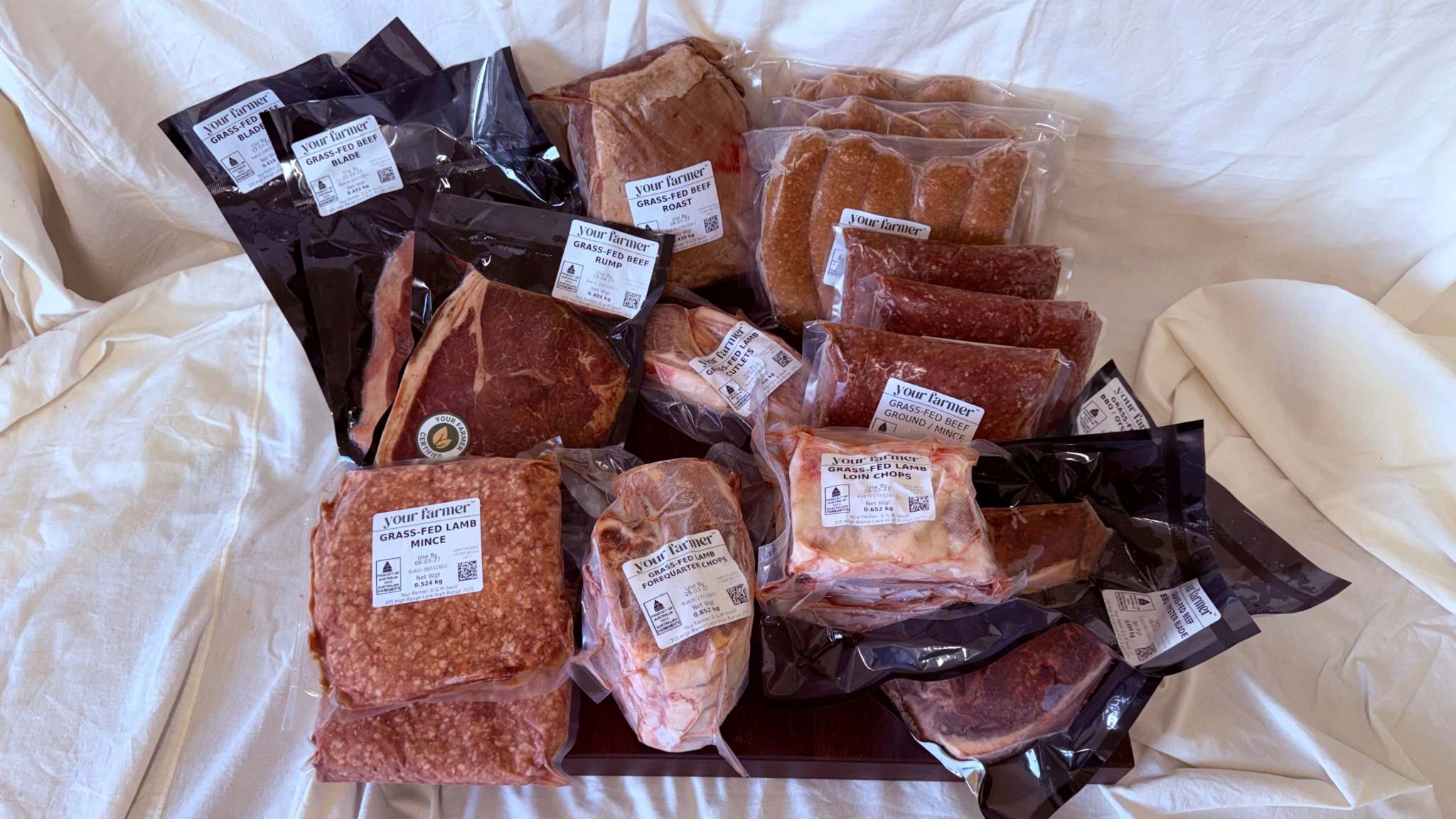
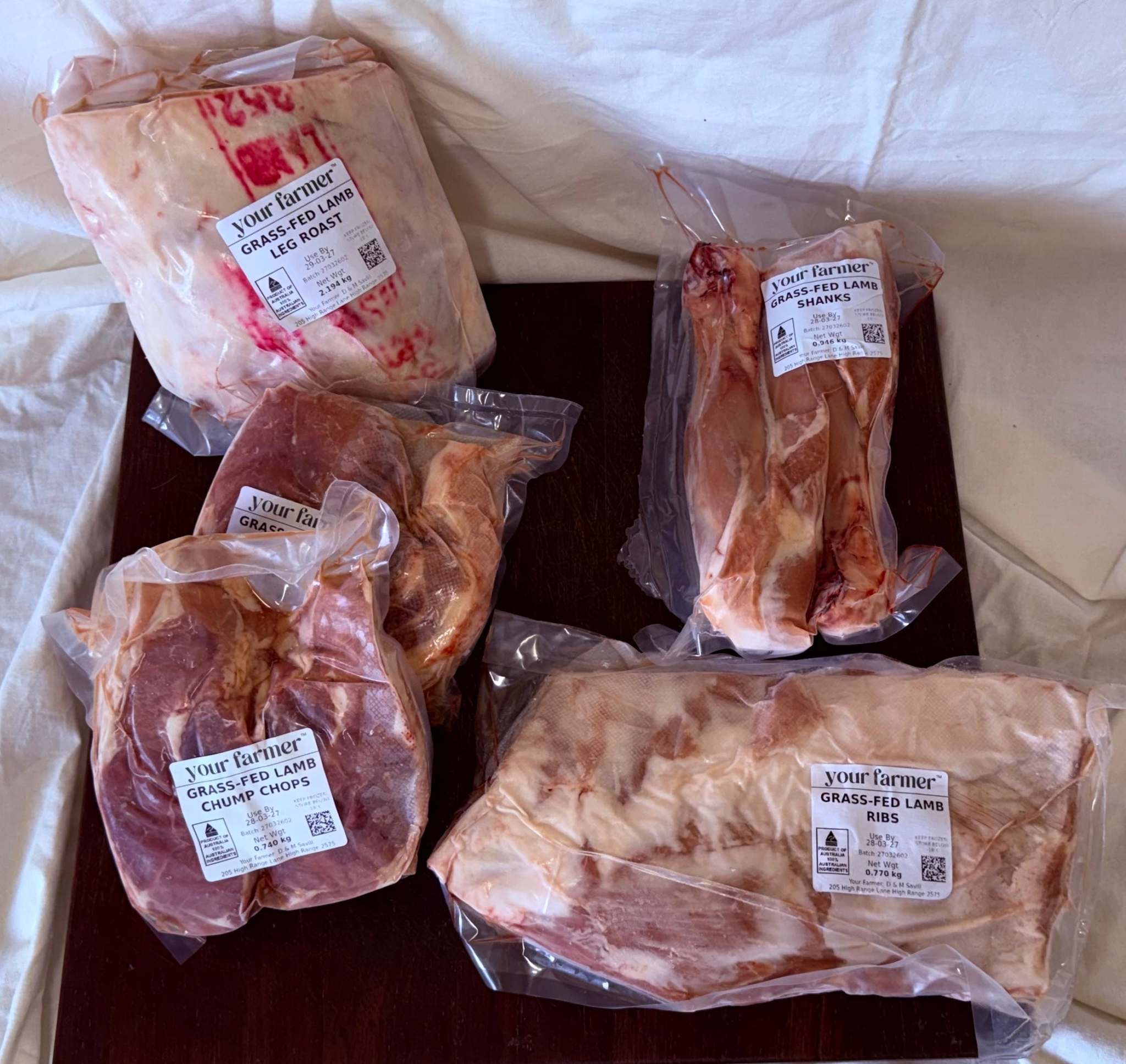
Two: make it yours. You can choose your sausage, mince and diced mix, then add extras before each cut-off: eggs, extra steaks, whatever suits your week. Not sure what to expect in the box? Here's a guide to what cuts turn up in a quality farm meat box.
Three: tell us where to deliver. Pop in your address, pick your slot, and you're set. Our meat delivery runs right across NSW and the ACT, within 150 km of the farms — check where we deliver. And because it's a subscription, not a contract, you can skip, pause or cancel anytime. No lock-in.
What turns up at your door, and is frozen a downgrade?
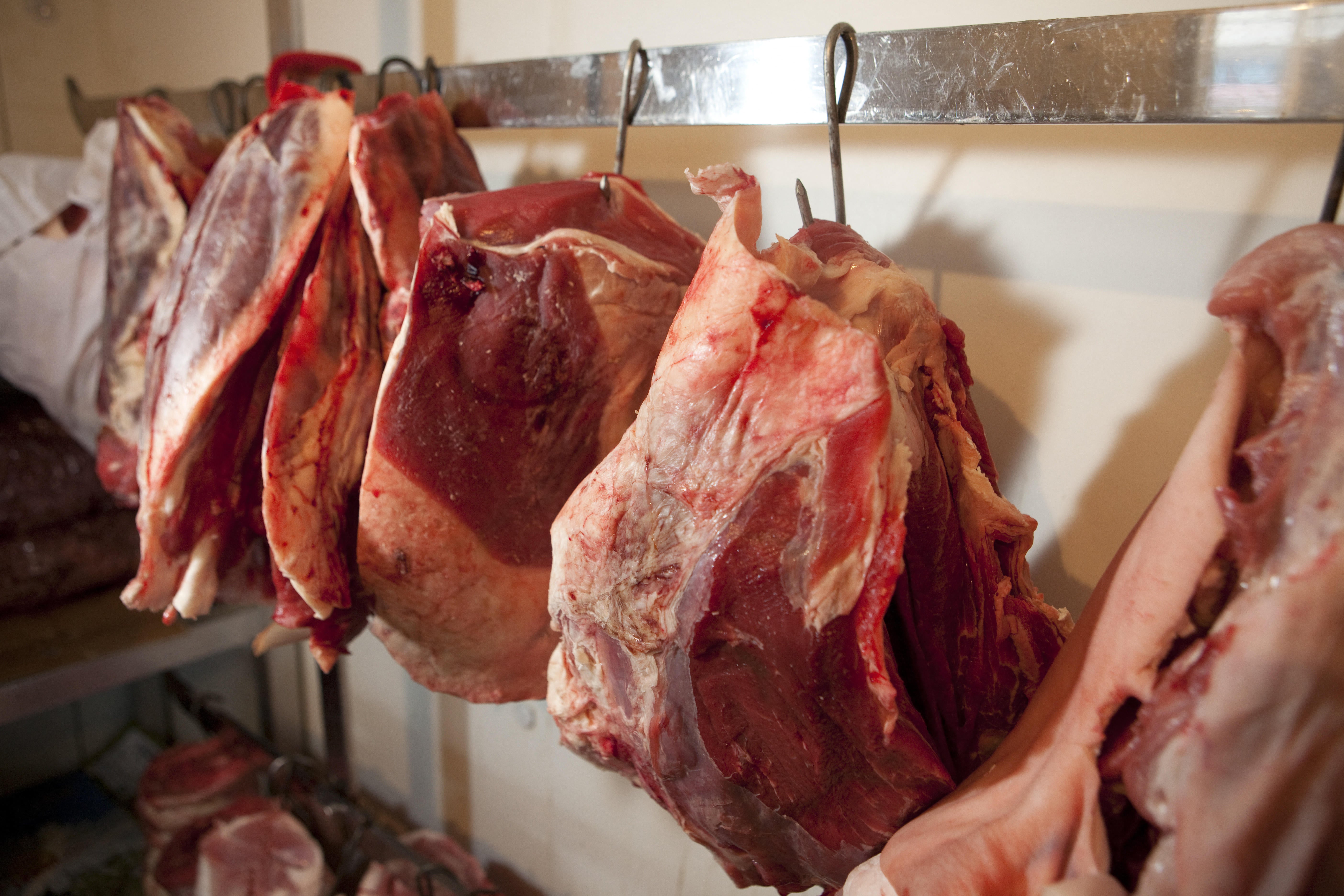
Short answer: no — and the "fresh fridge" it gets compared to is doing some quiet pretending. That tray of "fresh" supermarket beef can be weeks old. Meat & Livestock Australia puts the storage life of chilled, vacuum-packed beef at 26 weeks or more — well over half a year in the bag before it's sold.2 Produce is the same story: Australian apples are routinely held in storage for up to 10 or 11 months before they hit the shelf.7 "Fresh" mostly means "never frozen", not "recently alive". The clock's still ticking, you just can't see it.
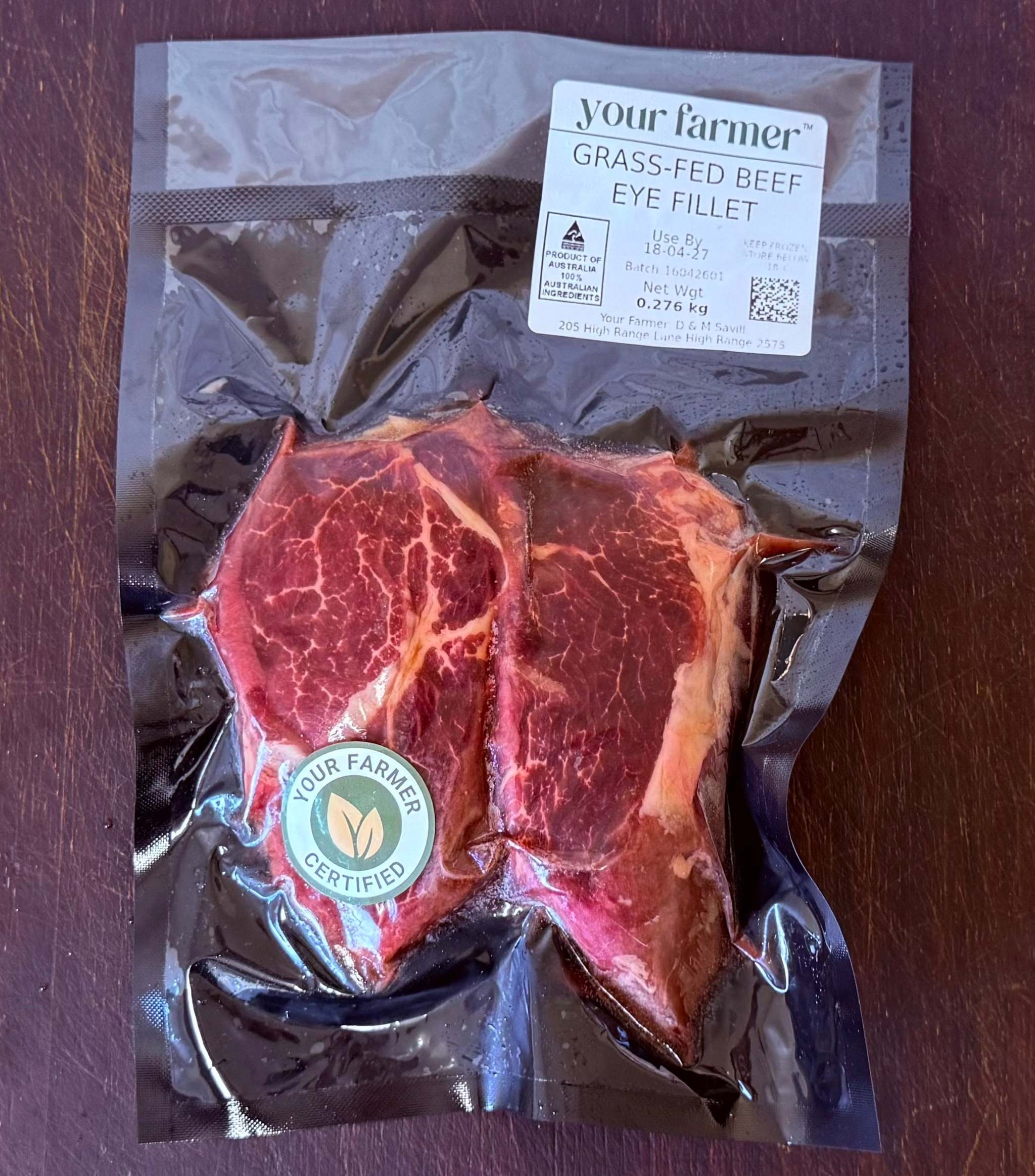
We do the opposite. The meat is cut and snap-frozen at its peak using ProCryo — blast-frozen to −18°C in under two hours — which locks in quality the way slow freezing in your kitchen freezer never can. Then it travels to you in a reusable esky we collect next time. No couriers, no foam, no waste. You chuck it in the freezer and it's ready to roll whenever you are.
So the trade everyone fears — fresh versus frozen — isn't really the trade. The real choice is a few days old and snap-frozen at its best, against meat that could be weeks old in a vacuum bag or shipped frozen across the country. I know which I'd put in front of my kids.

"Free range", "organic", "grass-fed" — what do the labels really promise?
Less than you'd hope, and this is exactly why knowing your farmer beats reading a packet. Take "free range" eggs. Under Australia's free-range egg labelling standard, an egg can legally be called free range at an outdoor density of up to 10,000 hens per hectare — roughly one hen per square metre.4 The older CSIRO Model Code benchmark, which the consumer group CHOICE treats as genuine free range, is 1,500 hens per hectare.5 That's about 6.6 times denser. The chart shows the gap.
"Organic" has its own gap. Organic measures what's NOT in your food — no synthetic sprays, no this, no that. Useful, but it's a list of absences. So if you came here to buy organic meat online, here's the honest version: that label tells you what was kept out, not whether the soil was alive or the animal had a good life. That's a different question, and it's the one we answer. Every farm in our network is personally vetted against the eight-outcome Your Farmer Certified standard — living soil, biodiversity, animal welfare, nutritional density and more. Organic measures what's NOT in your food. We measure what IS.
Who actually raised it? Meet the farmers
This is the part that turns "ordering meat online" into something better, and people feel it. Food Standards Australia New Zealand's Consumer Insights Tracker 2024 found that while trust in food generally is high, farmers are the most trusted link in the entire food chain.8 People trust the grower. It's the anonymous system around the grower they're unsure about. So we took the system out of the middle.
It's like having a GP, or a hairdresser, or an accountant — you've got your farmer. A small, named network of Southern Highlands family farms, all sharing the same ecological vision, every one walked and vetted personally. You can meet the farmers behind your food, by name. And because we never fill the box from wholesale markets, there are no anonymous fill-ins: if it's not from our farms, it's not in the box. That's the whole promise, and it's why we stay small on purpose. It's also, for our money, the most sustainable and ethical way to do it — short food miles, real animal welfare, and a fair share staying with the grower. It's what we mean by sustainable, ethical meat delivery for Sydney and Canberra families.
So, is an online butcher worth it for your family?
Let's be fair about it. People reach for the supermarket for two reasons: price and convenience. Both are narrower than they look. On price, buying by the box from the farm lands at or below the supermarket for the same eco-grown quality — you're weighing a CSA share against the premium end of the aisle, not the weekly special. And "convenience"? Supermarket delivery isn't free or instant either: you either hit a minimum spend for a delivery slot, or you drive there and queue yourself. Where the supermarket genuinely wins is the forgotten-onion run at 7pm, and there's no guilt in that.
Worth knowing the shelf is more concentrated than it looks, too: Woolworths and Coles together sell about 67% of Australia's groceries, and the competition regulator found their margins rose over the past five years.6 The "choice" is narrower than the aisle suggests.
A farm-direct online butcher wins on everything to do with knowing — who raised it, how, and how recently. And the old knock, that farm food is a hassle, just doesn't hold anymore. A CSA beef share from named local farms turns up at your door in a reusable esky, snap-frozen at its peak, with a Taste-Love Guarantee and no lock-in. We deliver within 150 km of the farms across NSW and the ACT. That's how 110 families have rated us 4.97 out of 5. Still weighing it up? Here's an honest look at whether farm-fresh delivery is worth it, and our wider range of grass-fed beef and lamb boxes.
You don't have to choose sides forever. But if you've ever wanted to actually know your farmer — the way you know your GP — a farm-direct online butcher is the only one of these three that lets you. That's the swap: from second-guessing the fridge, to feeding your family food you can name.
Grass-fed beef and lamb from named Southern Highlands farms, snap-frozen at its peak and delivered to your door. Know exactly who raised your dinner.
Get Good FoodCloser to home? See how our Southern Highlands meat delivery works.

Share:
So, What Is Community Supported Agriculture? A Plain-English Guide for Aussie Families
What Does "Hormone-Free" Beef Actually Mean in Australia — and Is It Legally Protected?