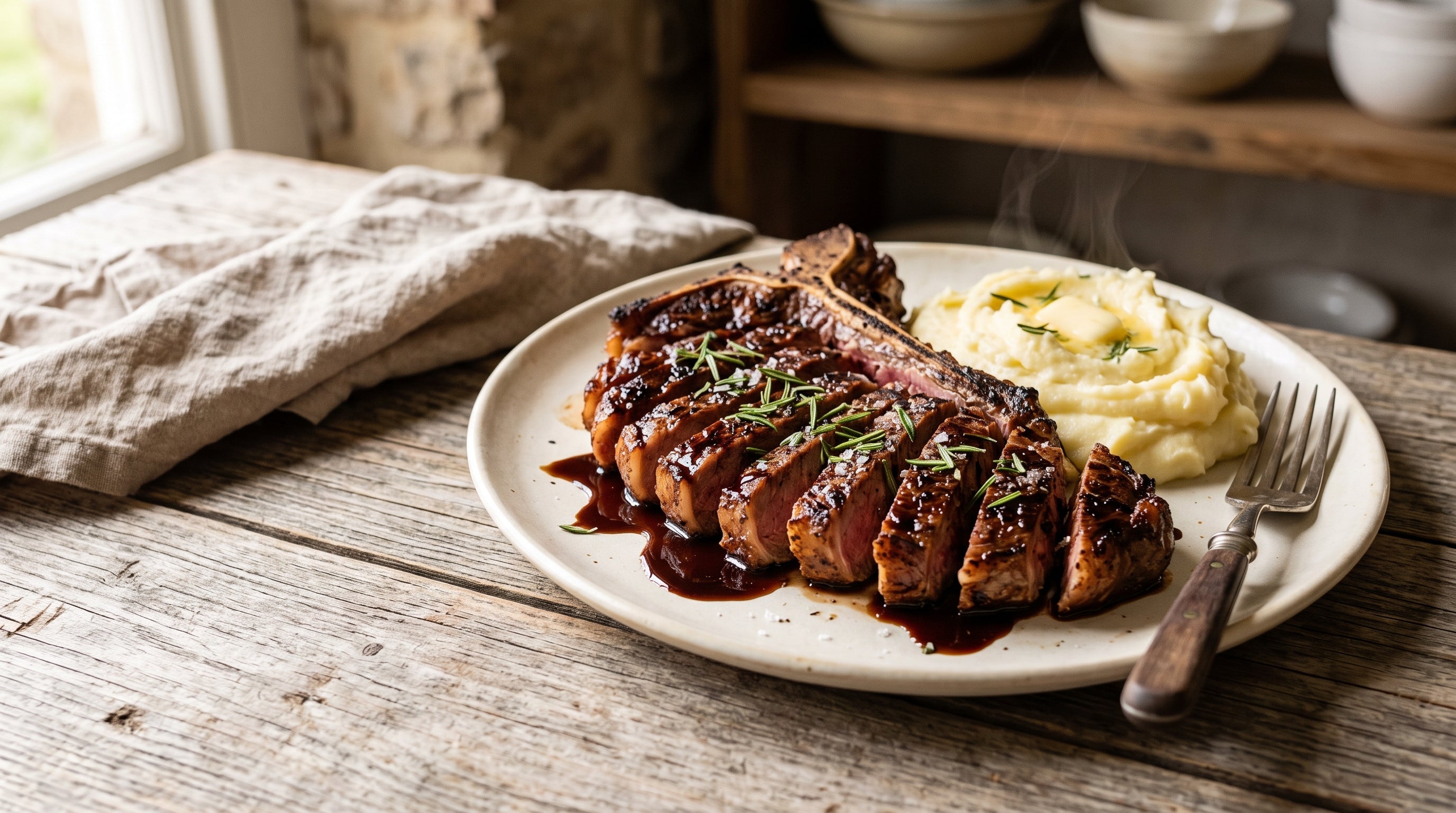
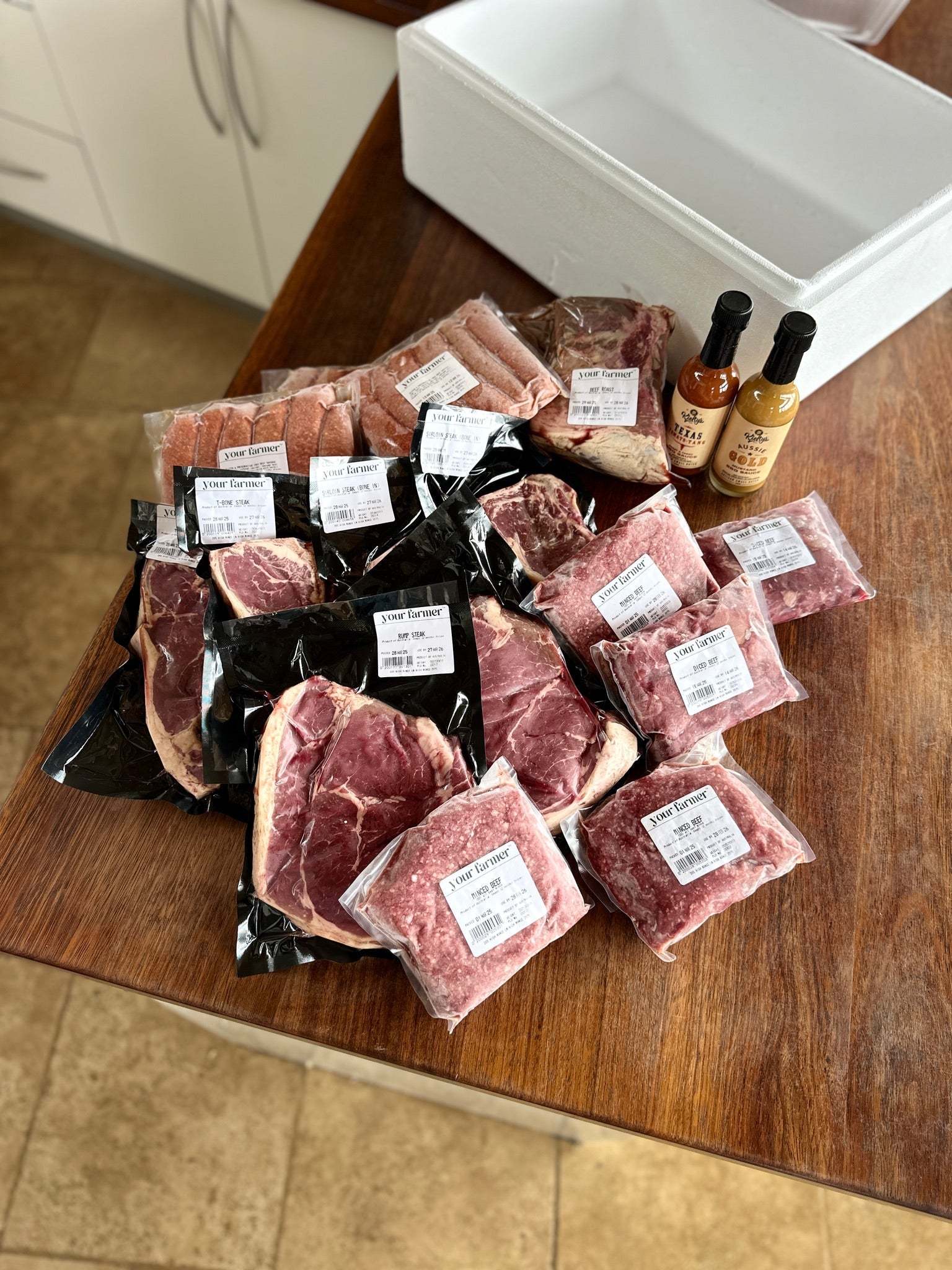
Set up at lunchtime, on the table by seven

Most marinades exist to soften economical cuts. This one's different — a T-bone doesn't need tenderising, so the balsamic's job is pure flavour: a dark, faintly sweet edge that deepens the crust and seasons the meat a few millimetres in. Whisk it together at lunchtime, slide the steak in, and by dinner the work's already done. Two rules keep it honest: pat the steak properly dry before it hits the pan, and don't run the heat at full blast — balsamic's sugars like medium-high, not scorched.

2 hrs 30 mins 2 servings Prep 2 hrs 15 minsCook 15 minsMain CourseItalian

Ingredients

  • 1 Your Farmer grass-fed beef T-bone steak (about 500g)
  • 80ml balsamic vinegar (for the marinade)
  • 2 tbsp olive oil (for the marinade)
  • 2 cloves garlic, crushed (for the marinade)
  • 1 tbsp brown sugar (for the marinade)
  • 1 sprig rosemary, leaves stripped and chopped (for the marinade)
  • 1/2 tsp cracked black pepper (for the marinade)
  • Salt to season

Instructions

For the marinade

Whisk the balsamic, olive oil, garlic, brown sugar, rosemary and pepper together in a dish that fits the steak snugly. Spoon 2 tablespoons into a small bowl and set aside — that's your finishing drizzle, kept clear of the raw meat.

80ml balsamic vinegar2 tbsp olive oil2 cloves garlic1 tbsp brown sugar

Add the steak, turn to coat, cover and refrigerate for at least 2 hours, turning once — up to 4 hours is fine, but no longer, or the vinegar starts working against the meat's texture.

1 T-bone steak

For the steak

Take the steak out of the fridge 20 minutes before cooking. Lift it from the marinade and pat it thoroughly dry with paper towel — a wet, sugary surface burns before it browns. Season with salt.

Heat a grill pan over medium-high — deliberately not maximum; the marinade's sugars char at full heat.

Cook 4 minutes with the smaller fillet side angled toward the pan's cooler corner — it's leaner than the sirloin side and finishes first.

Turn once and cook another 3–4 minutes, to 52–54C in the thickest part of the sirloin side for medium-rare.

Rest on a warm plate, loosely covered, for 8–10 minutes.

Carve both muscles off the bone, slice across the grain, and serve with the reserved marinade drizzled over — mash, polenta or a bitter-leaf salad alongside.

Appears in

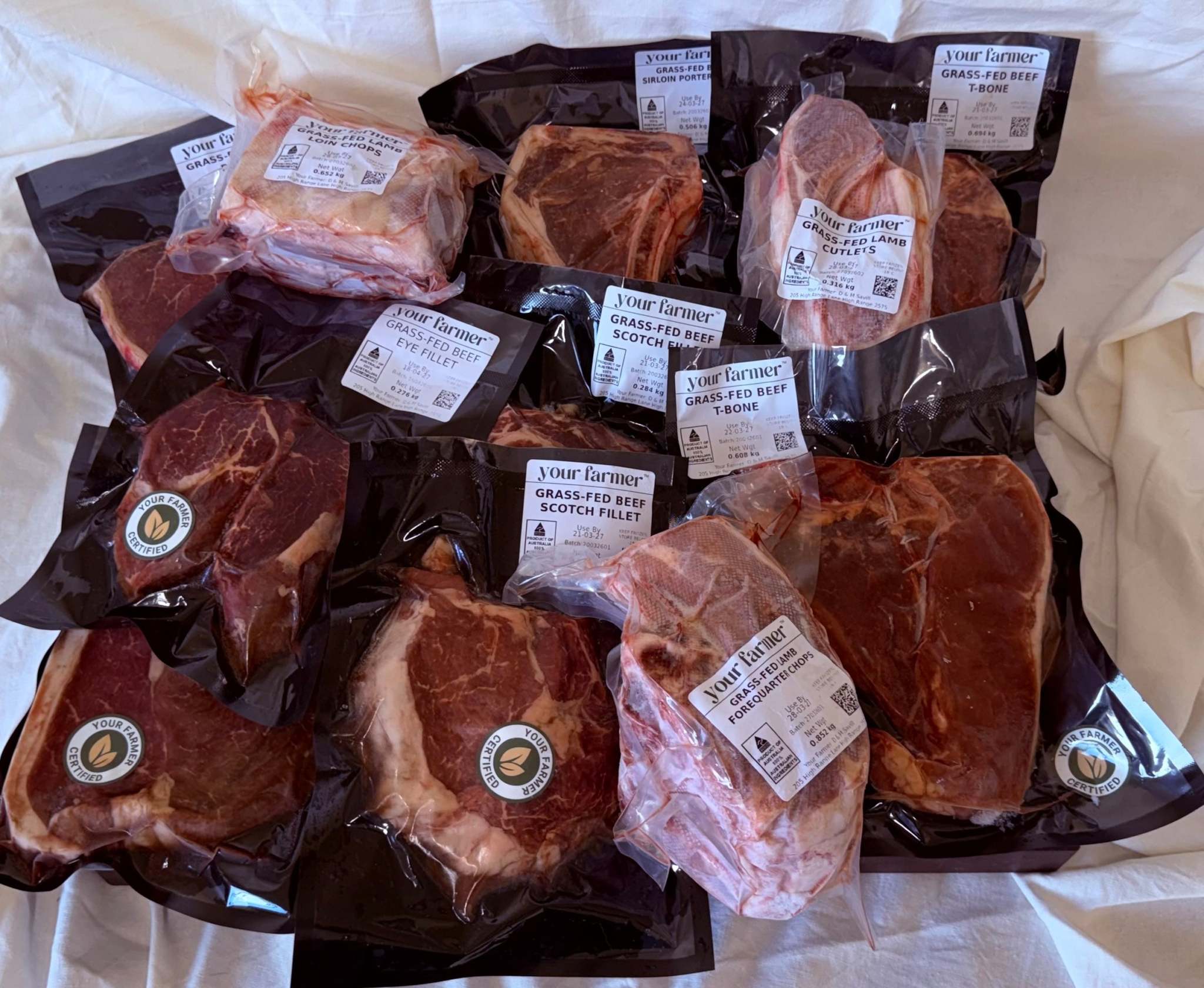
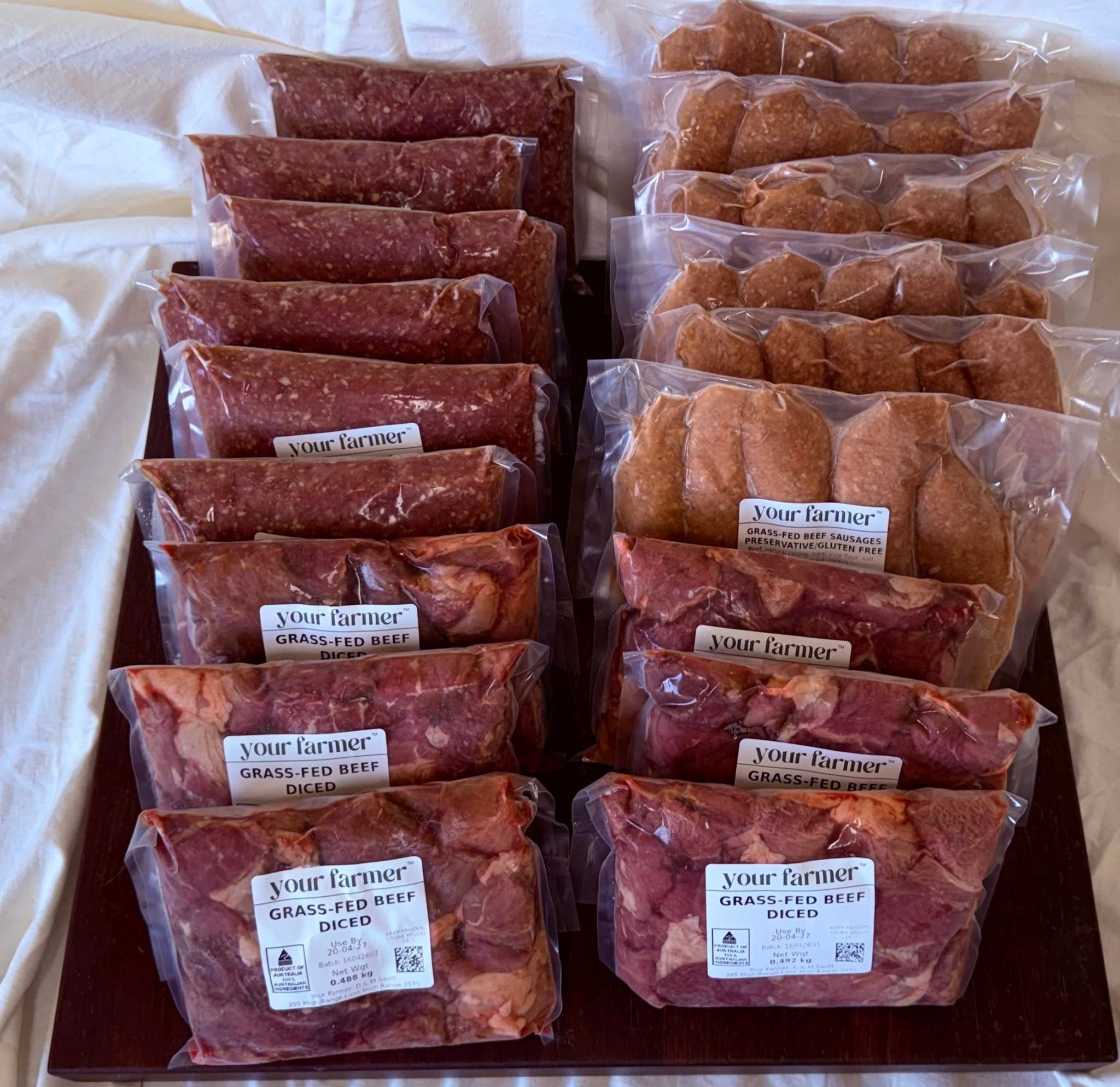
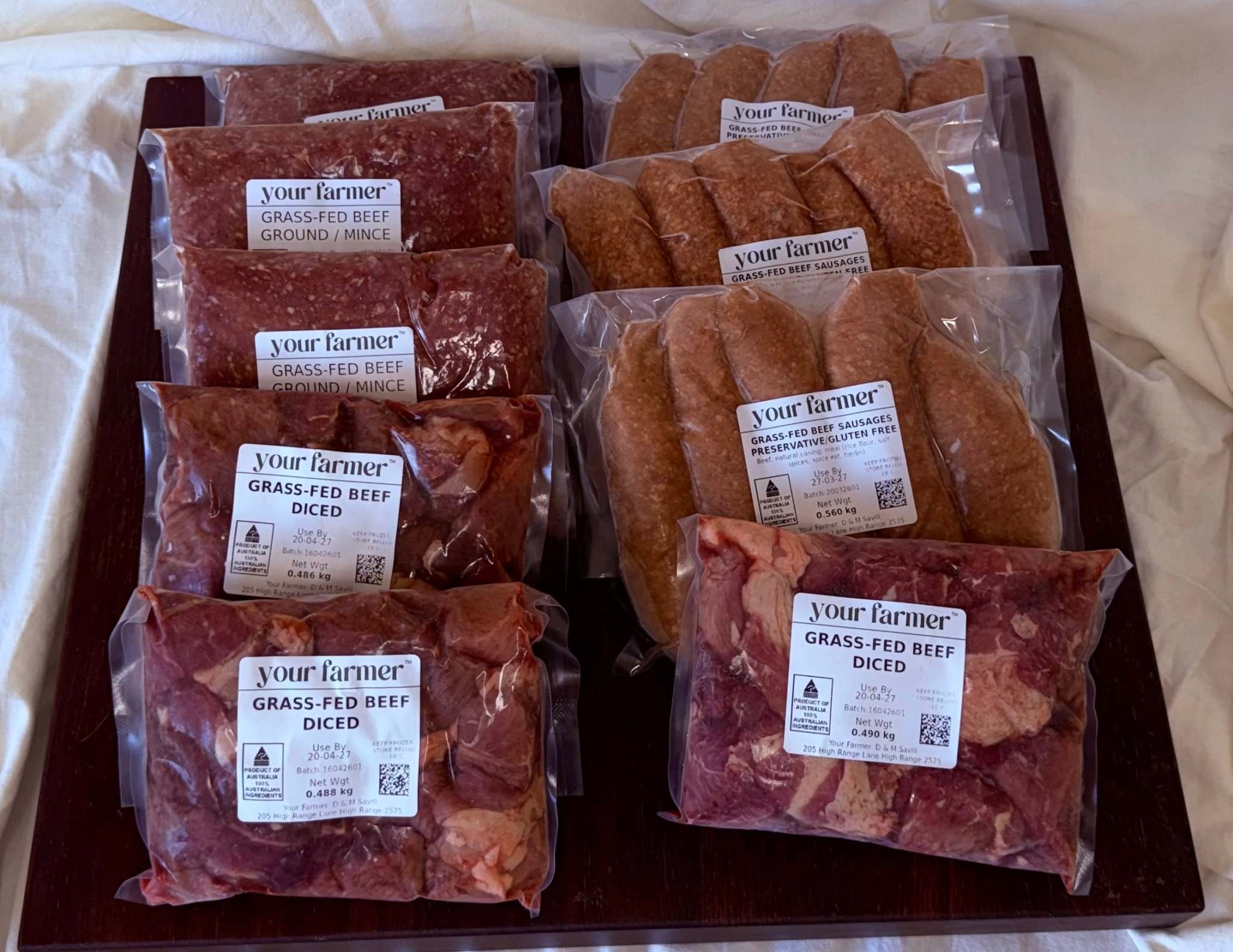
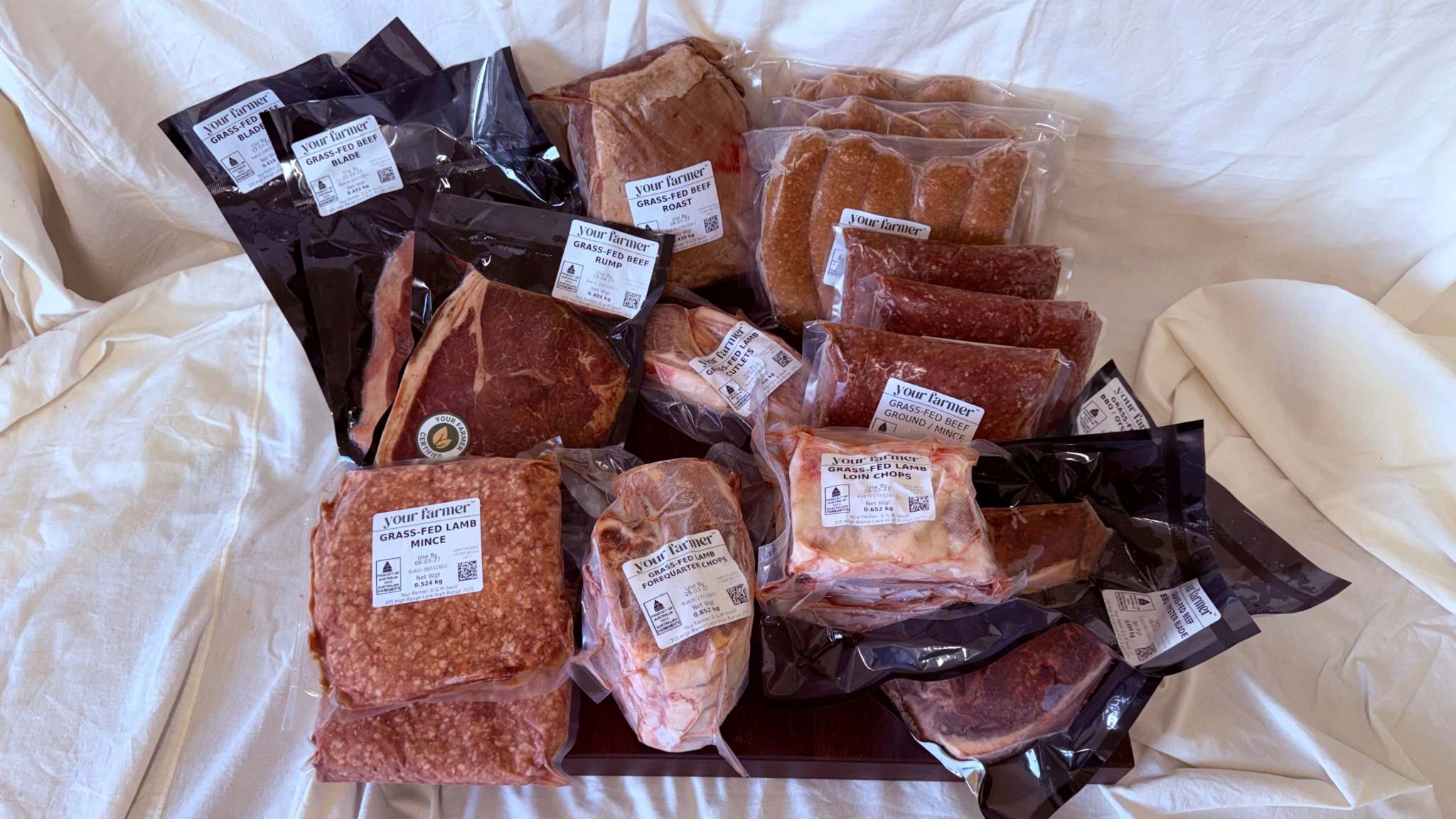
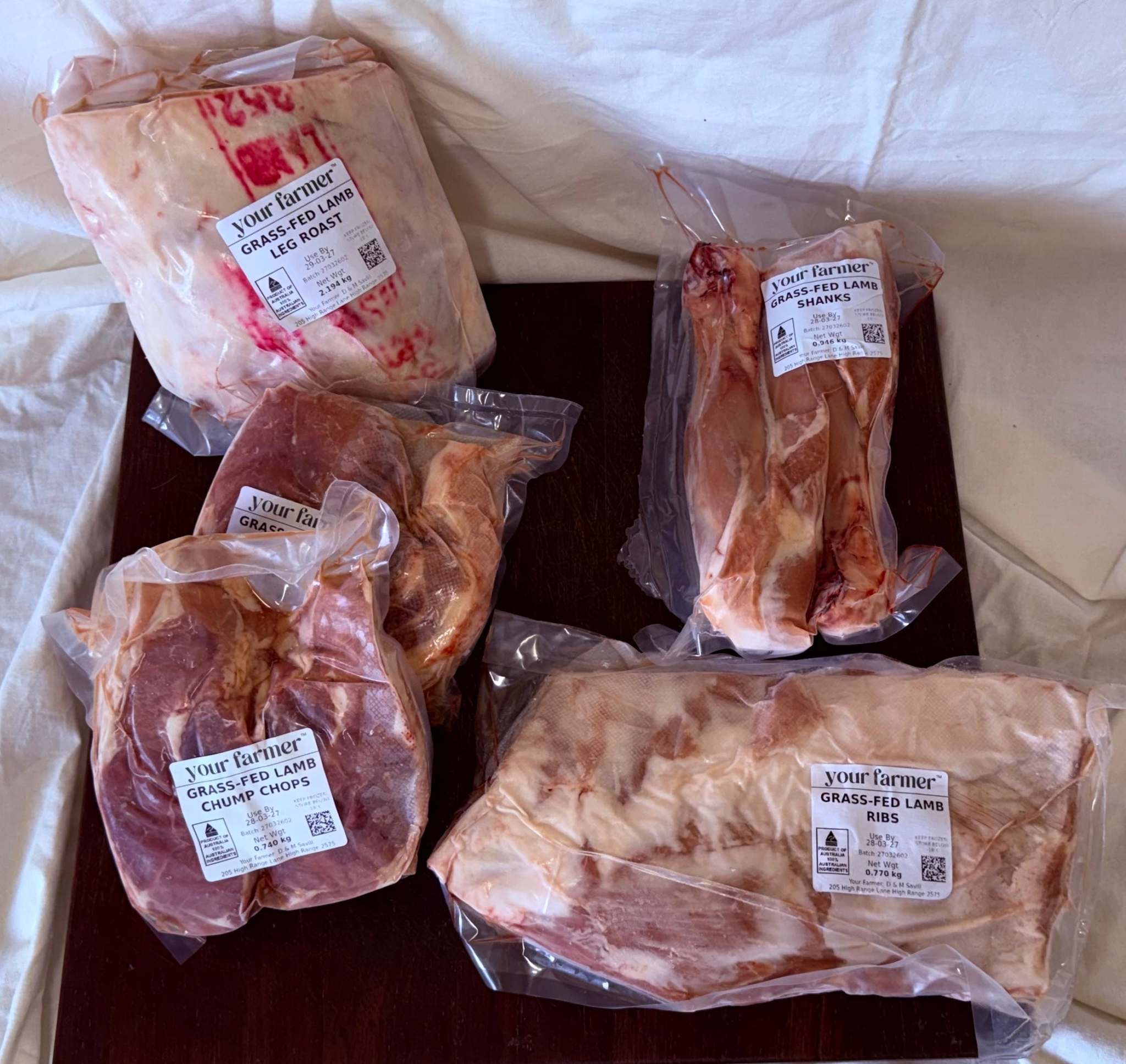
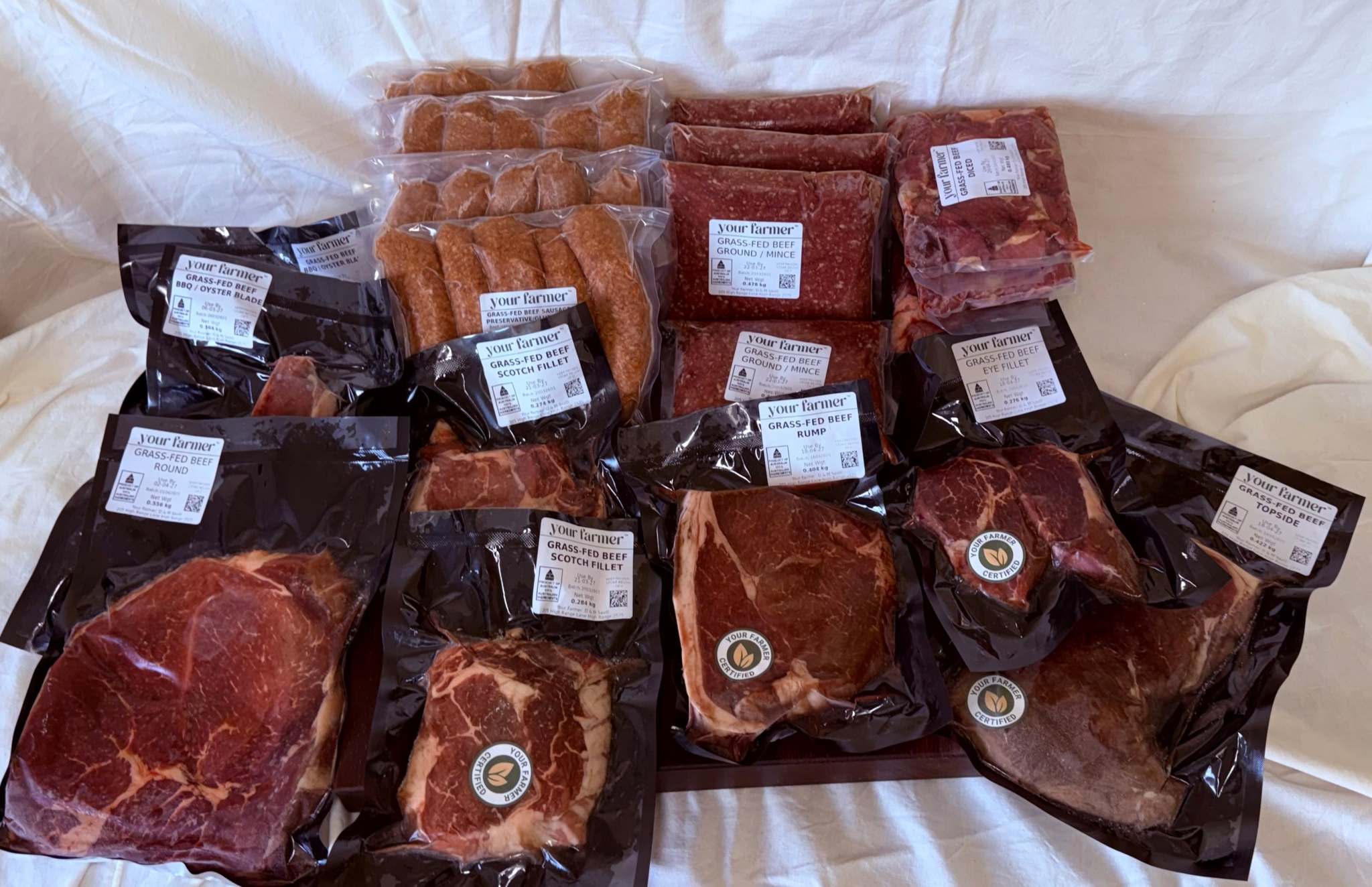
Your Farmer CSA grass-fed beef share — vacuum-sealed steaks, roasts, mince and sausages, paddock-to-plate NSW & ACT delivery
Sale price From $152.00Regular price $169.99

Marinating a Steak That Doesn't Need It

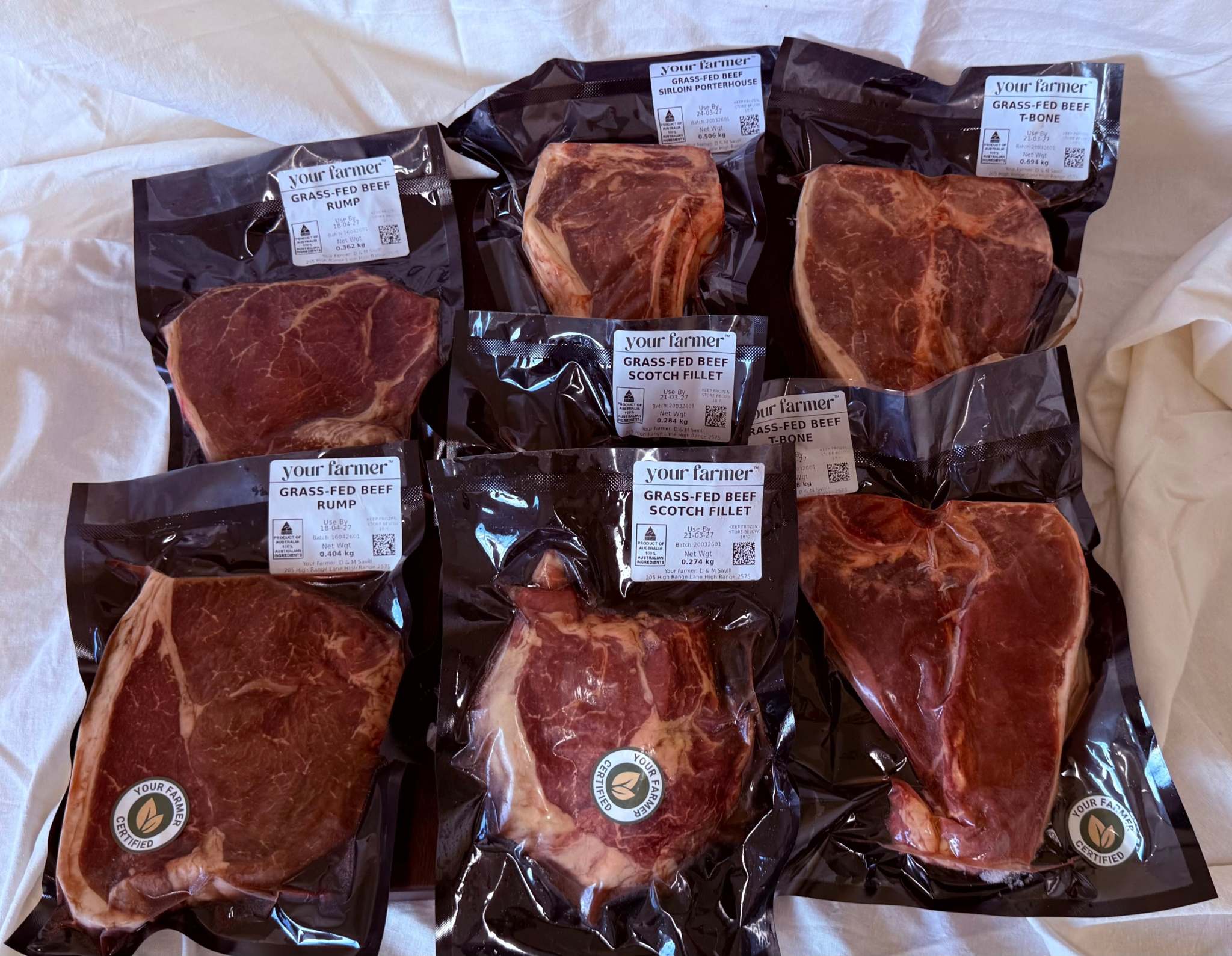
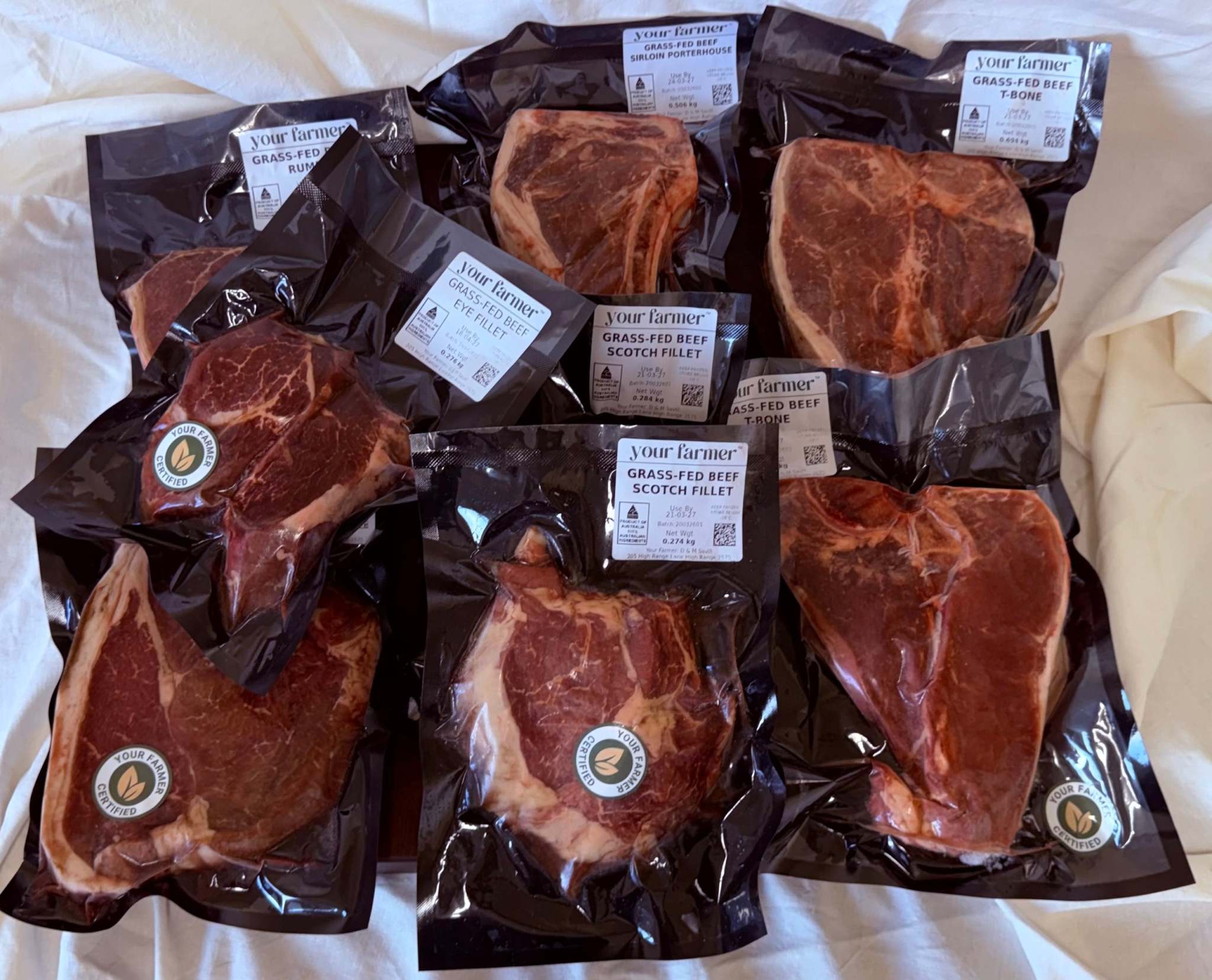
Marinades earn their keep on hard-working cuts — that's their day job. A T-bone is different: the sirloin and fillet on that bone are already tender, so the balsamic isn't there to rescue anything. It's there for flavour — a dark, sweet-sour edge that caramelises into the crust and seasons the outer few millimetres of the meat. That's also why the window is short. Two to four hours is the sweet spot; past that, the vinegar starts softening the surface into mush and the sweetness takes over the beef. Your Farmer® T-bones are 100% grass-fed and about 500g, one in each Pack B and Pack D box of the CSA beef share — and grass-fed beef's clean, savoury depth is exactly what keeps a sweet marinade in balance. On the heat, remember the cut's one rule: the lean fillet side finishes first, so give it the cooler corner of the pan.

Swaps and Variations

Honey and red wine vinegar make a gentler version of the same idea; a splash of soy sauce swaps in for some of the salt and adds depth. Thyme stands in for rosemary without complaint. The hooded barbecue handles this beautifully too — same medium-high discipline, and move the steak to indirect heat if the sugars start flaring. If marinating is your favourite trick, it belongs first on the cuts built for it — the marinated topside steaks with herb yoghurt show it at full stretch, and our guide to cooking grass-fed beef covers when to marinate and when to leave well alone.

Storage and Leftovers

Any marinade that touched raw meat gets binned — that's why the finishing drizzle is set aside at the start, before the steak goes in. Thawed raw steak keeps 2–3 days in the coldest part of the fridge (marinate within that window), and cooked leftovers keep 3 days airtight. Cold balsamic steak is a quiet triumph: sliced thin with rocket, shaved parmesan and a drop of oil, it's tomorrow's lunch sorted. Reheat only in a brief flash of pan heat, and save the bone for stock.
Frequently asked questions

Can I marinate the steak overnight?

Not this one. Balsamic is acidic and sweet, and past about 4 hours it turns the steak's surface soft and jammy rather than seasoned. Two to four hours gives you all the flavour with none of the damage.

Why did my steak char black?

Sugar. The brown sugar and balsamic caramelise fast, and at full heat they jump straight to burnt. Pat the steak truly dry and hold the pan at medium-high — you'll get a deep mahogany crust instead.

Is it safe to drizzle marinade over the cooked steak?

Only if it never touched raw meat. Set your finishing portion aside before the steak goes into the dish — the recipe builds this in — and throw out whatever the raw steak sat in.

Can I cook it on the barbecue instead of a grill pan?

Yes — same medium-high rule, same times. Keep a cooler zone free and shift the steak across if the marinade starts to flare.

Three Simple Steps

A whole table of real food.

Your Farmers grow grass-fed beef and lamb, pastured eggs and the best eco-grown veggies and produce — every item grown to the same ecological standard, every farmer one you can know by name. One subscription, your whole real-food shop.

01

Reserve your share — or try a pack

Subscribe to a share of the harvest, or start with a one-off fixed pack.

02

Make it your own

Pick your delivery rhythm and what's in the box. Skip or cancel anytime — no lock-in.

03

Cook, savour, know your farmer

We deliver in a reusable esky we collect next time. No couriers, no waste.

More Recipes

View all

Greek-style grass-fed lamb roast with lemon and oregano served over golden potatoes in a ceramic baking dish.

Greek-Style Lamb Roast with Lemon and Oregano

Lemon, oregano and time — the Greek family-table treatment for the whole cut

Every Greek family has a version of this and none of them are wrong. Garlic, dried oregano and lemon get worked deep into the lamb, potatoes go underneath to catch everything that falls, and the oven runs slow enough that nobody has to watch it. What comes out isn't pink, carve-at-the-table lamb — it's the other thing entirely: golden on top, giving underneath, with lemony potatoes that half the table will fight over harder than the meat. It's Sunday cooking from a country that takes Sundays seriously.

Read moreabout Greek-Style Lamb Roast with Lemon and Oregano

Low-and-slow barbecued grass-fed lamb ribs with a dry-rub bark, sliced on butcher's paper.

Low-and-Slow BBQ Lamb Ribs with Dry Rub

Paprika, brown sugar, patience — American barbecue discipline meets Australian lamb

This is the recipe for the day you've decided the barbecue is the afternoon's entertainment, not just the cooking appliance. No foil, no shortcuts: a paprika and brown sugar rub, a hooded barbecue held low around 140C, and three or so unhurried hours while the fat renders, the spice sets into proper bark and the smell slowly takes over the street. Lamb ribs suit the American low-and-slow treatment better than most people expect — they're smaller and fattier than pork ribs, so you get all the bark in less time. Pour something cold. This one's a sit-outside recipe.

Read moreabout Low-and-Slow BBQ Lamb Ribs with Dry Rub

Grilled grass-fed lamb chump chops sliced over a warm French-style lentil salad with mustard dressing.

Grilled Chump Chops with Warm Lentil Salad

Charred chops over mustardy lentils — the bistro order, made at home

Walk into any honest bistro in France and there'll be lamb with lentils somewhere on the board. It works because the two halves trade favours — earthy lentils soak up the lamb's resting juices, and a sharp Dijon dressing cuts the richness of a properly charred chop. The lentils simmer away on their own for twenty-five minutes while you see to the chops, so the timing looks after itself. Hearty without being heavy, smart enough for guests, and most of it comes from the pantry.

Read moreabout Grilled Chump Chops with Warm Lentil Salad