The old-fashioned soup that starts with bones and ends with seconds

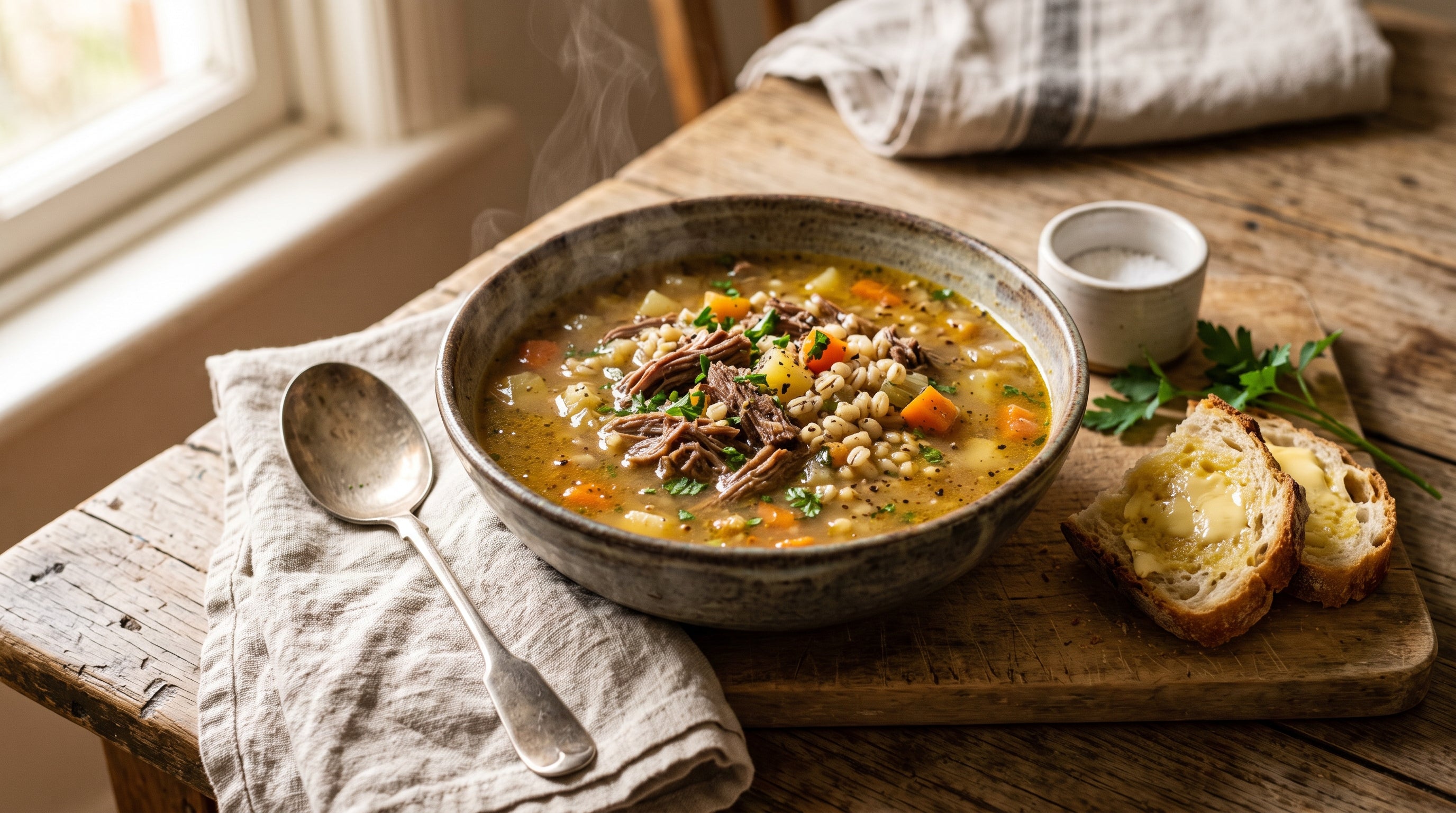
Before stock came in cartons, soup started like this: meat and bones into the big pot, water over the top, and the stove barely ticking over all afternoon. The rib rack does double duty here — the bones build a broth with real body while the meat turns silky, then gets shredded back through the pot with the barley and winter vegetables. It's the kind of soup that makes the whole house smell like someone's looking after you. With buttered bread, it's not a starter — it's dinner.

3 hrs 15 mins 6 servings Prep 15 minsCook 3 hrsSoupAustralian

Ingredients

  • 1.2kg Your Farmer grass-fed beef ribs (one rack), cut between the bones into individual ribs
  • 2 litres water
  • 500ml beef stock
  • 1 brown onion, diced
  • 2 bay leaves
  • 2 carrots, diced
  • 2 sticks celery, sliced
  • 300g swede or parsnip, peeled and diced
  • 2 medium potatoes, peeled and diced
  • 100g (1/2 cup) pearl barley, rinsed
  • 2 tbsp chopped parsley
  • Salt and pepper to season

Instructions

Put the ribs in your biggest pot with the water, stock, onion and bay leaves.

1.2kg beef ribs2L water500ml beef stock2 bay leaves

Bring it slowly to a bare simmer and skim off the foam that rises in the first 15 minutes — that's the difference between a cloudy pot and a clear one.

Simmer very gently, partly covered, for 2 hours. The bones are building your broth; there's nothing for you to do but the odd skim.

Add the carrots, celery, swede, potatoes and barley and simmer for another 45 minutes, until the vegetables are tender and the barley is plump.

2 carrots2 sticks celery300g swede100g pearl barley

Lift out the ribs, shred the meat off the bones with two forks and discard the bones. Skim any fat from the surface.

Return the meat to the pot, season generously — a big pot takes more salt than you think — and stir through the parsley.

2 tbsp parsley

Ladle into deep bowls and serve steaming, with buttered bread.

Appears in

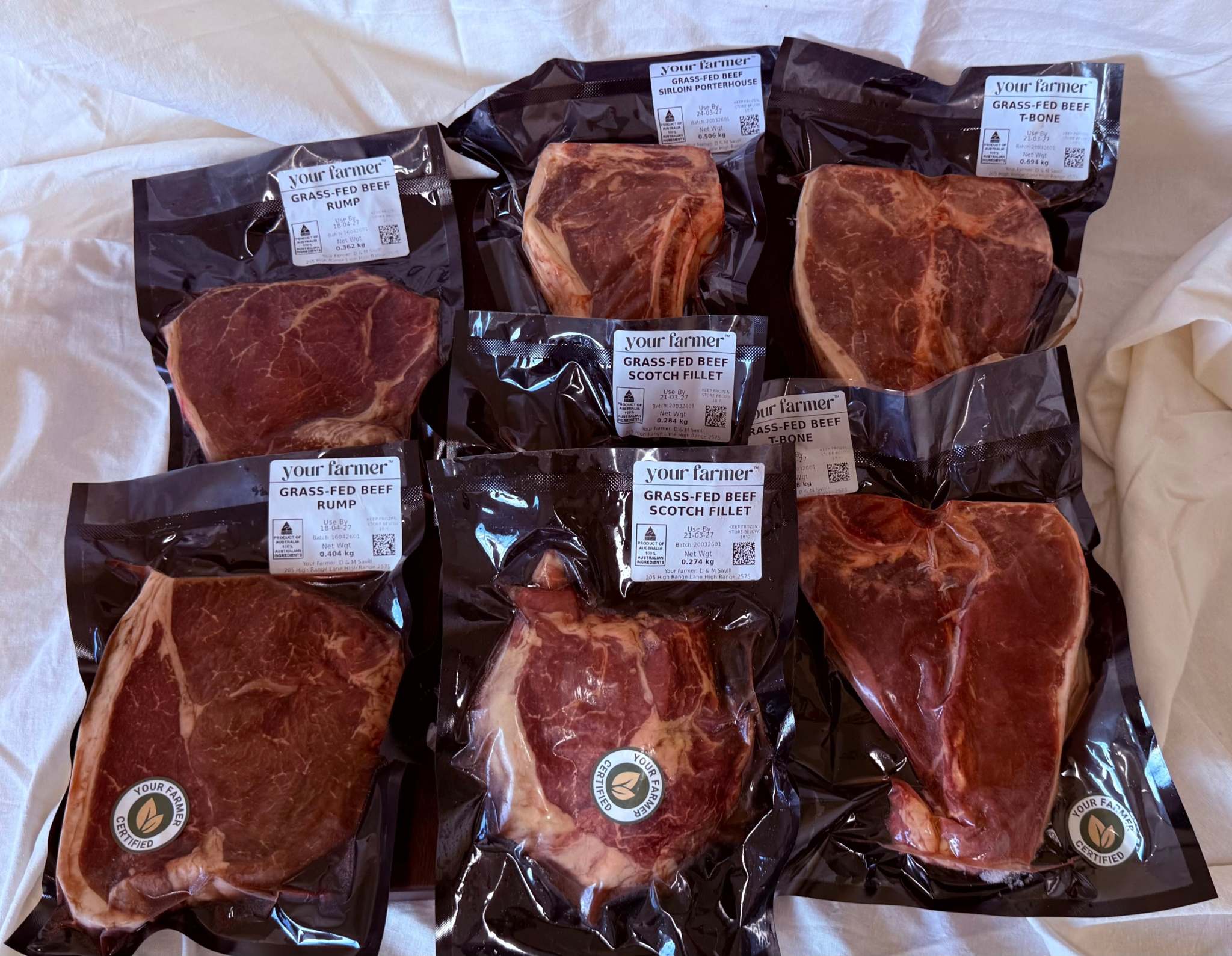
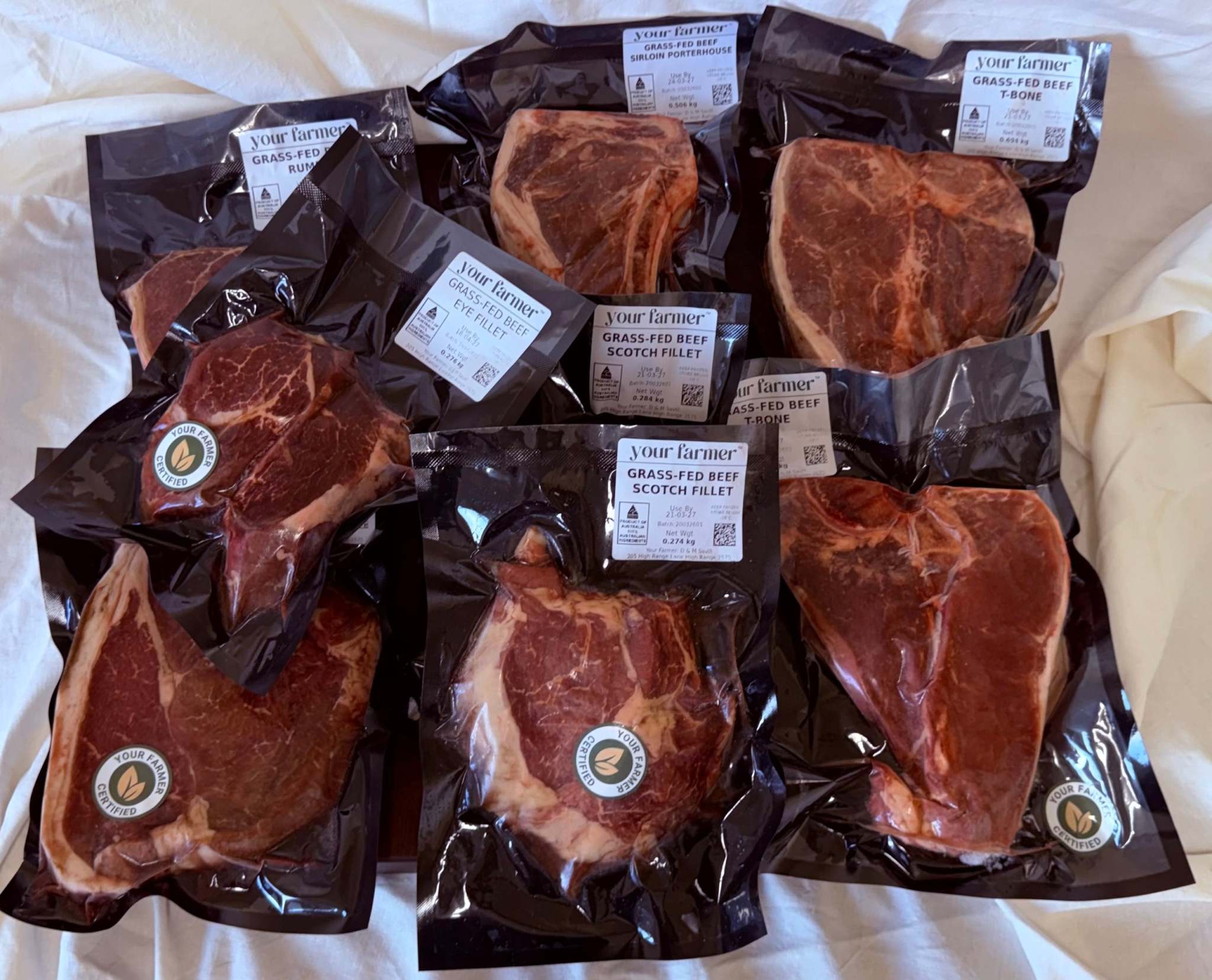
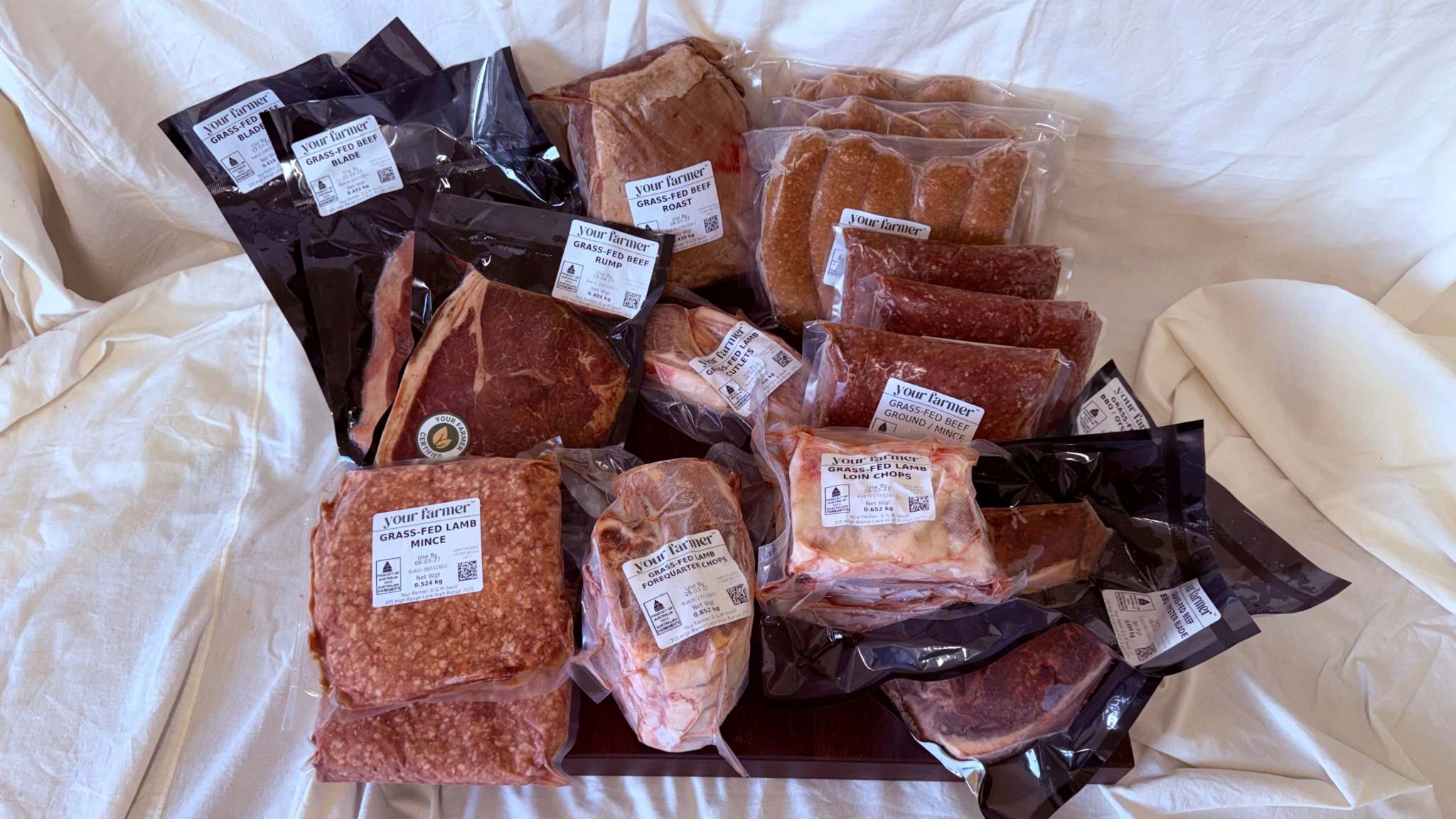
Pack B & Pack D shares — Ribs (~1.2kg)

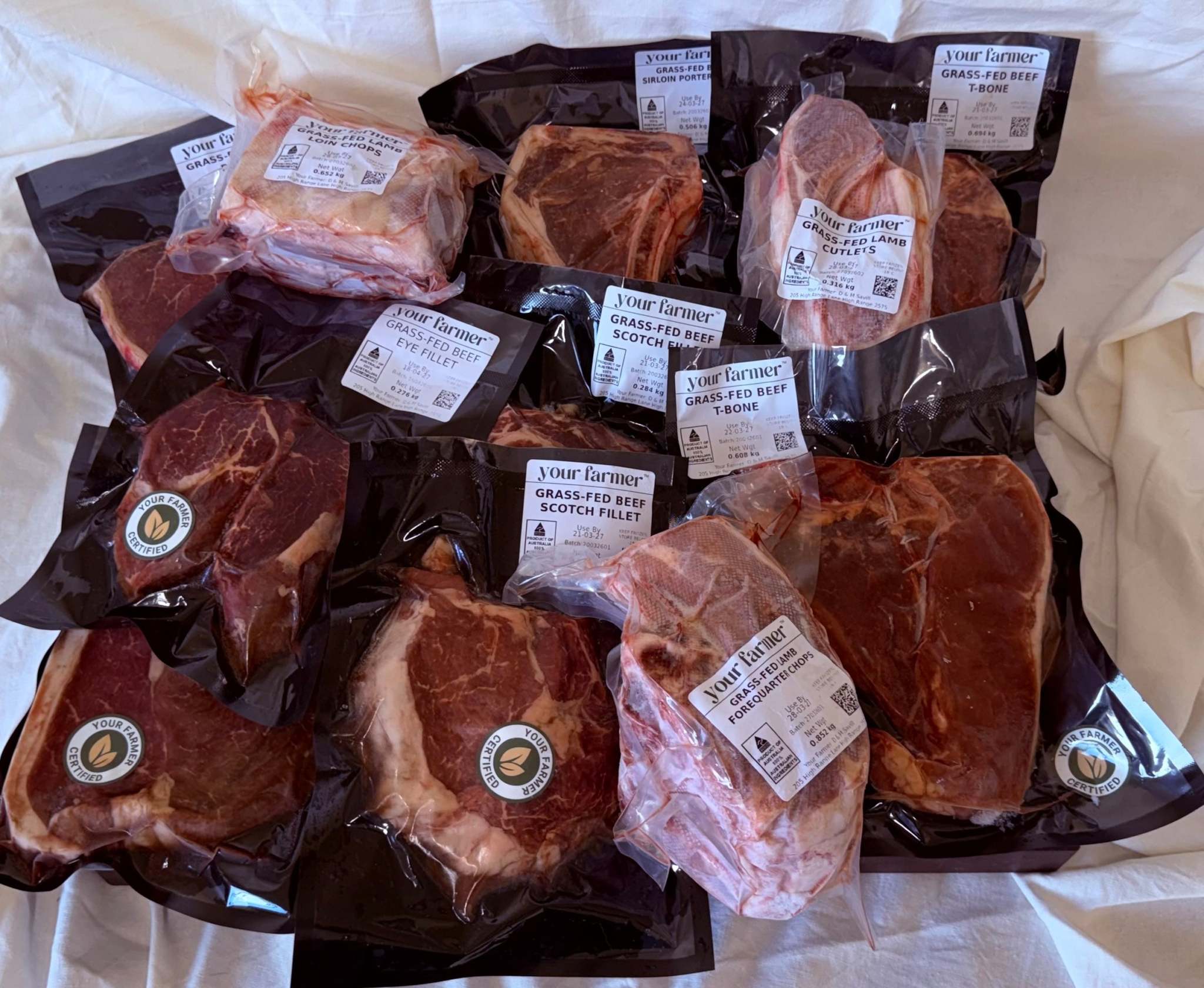
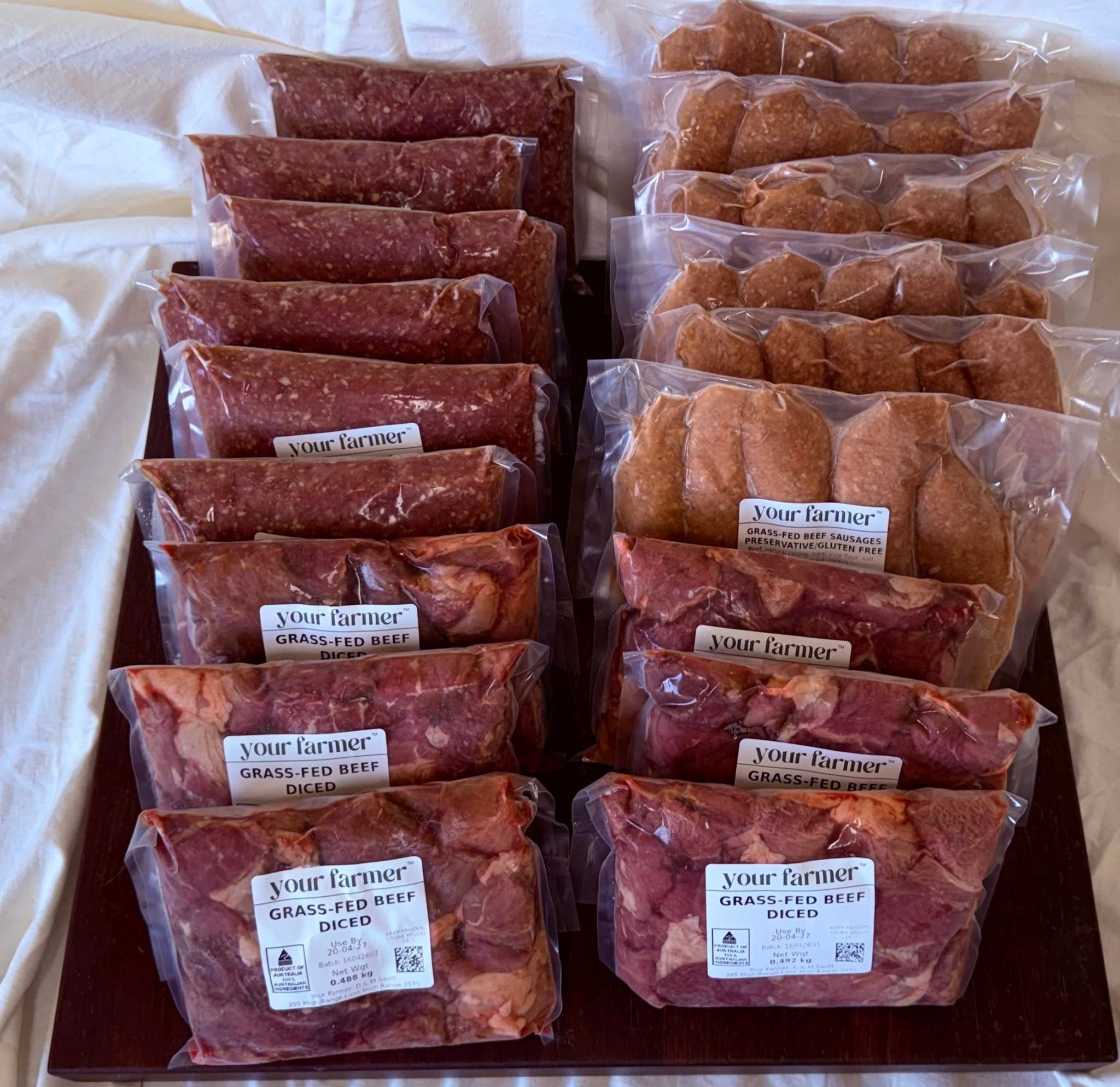
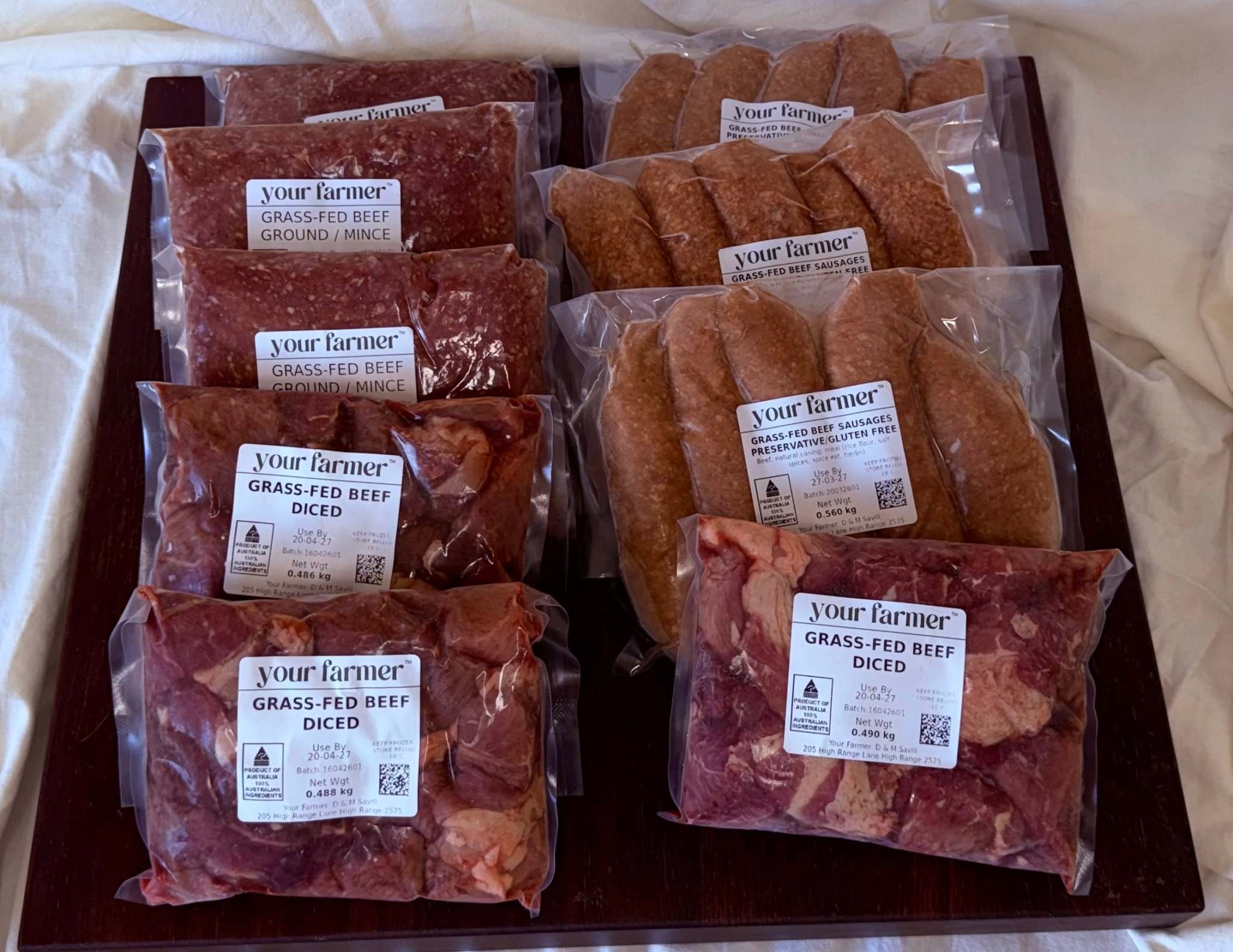
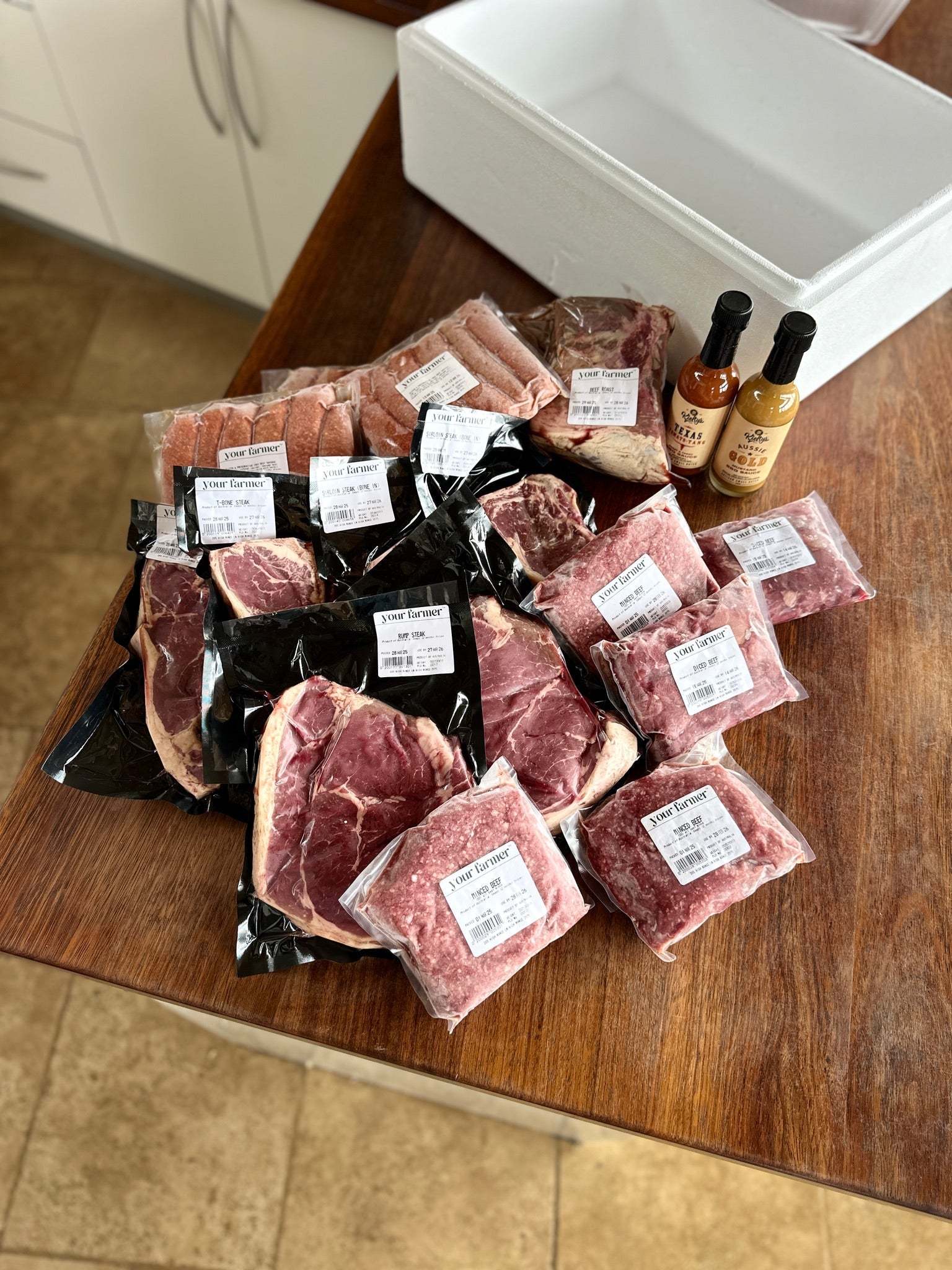
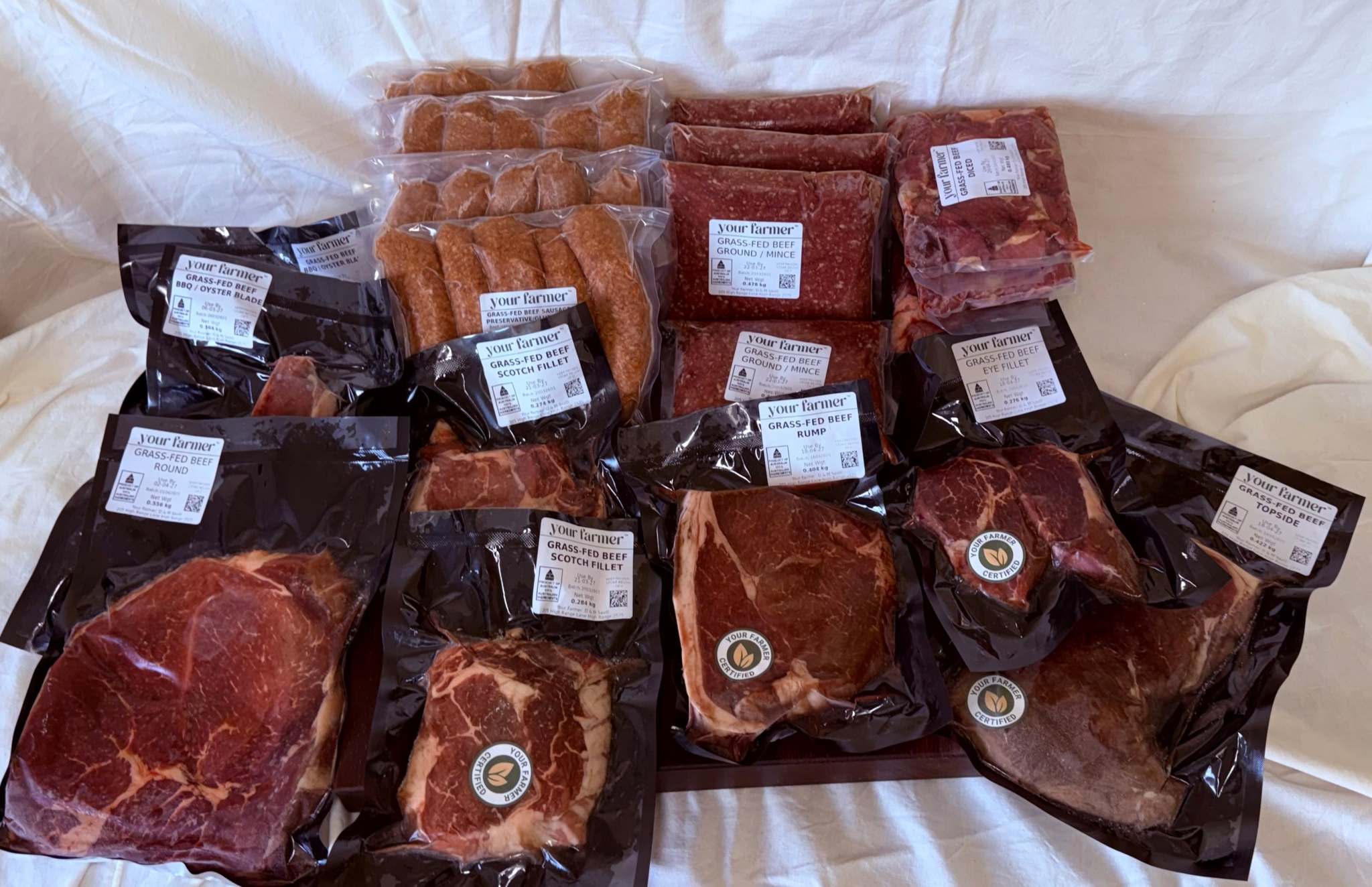
Your Farmer CSA grass-fed beef share — vacuum-sealed steaks, roasts, mince and sausages, paddock-to-plate NSW & ACT delivery
Sale price From $152.00Regular price $169.99

Why Soup Loves a Bone-In Cut

A stock cube can make water taste beefy. It cannot give a soup body — that takes bones. As the ribs simmer, the bones and connective tissue release gelatine into the broth, and gelatine is what makes a spoonful feel rich and rounded rather than thin and salty. The rib rack is the perfect soup engine because it does two jobs at once: the bones make the broth while the meat cooks silky in it, ready to shred back through the pot. Your Farmer® beef ribs come as a rack of about 1.2kg in Pack B and Pack D beef shares, and this soup is the strongest argument going that ribs have a life well beyond the barbecue.

Swaps and Variations

Any winter root works — pumpkin, turnip, extra carrot, whatever the crisper offers. Risoni or small pasta can stand in for barley; add it for just the last 15 minutes. A can of crushed tomatoes with the vegetables takes the pot in a redder, minestrone-ish direction, and a parmesan rind dropped in for the simmer is an old trick worth stealing. If broth-building gets its hooks into you, grass-fed beef bones take the same idea further — and our guide to every beef cut shows where the rest of the pack shines.

Storage and Leftovers

Like most soups with bones in their history, it's better on day two. Keep it airtight in the fridge for 3 to 4 days — if it sets to a soft jelly when cold, that's the gelatine, and it's a sign you did everything right. The barley keeps drinking as it sits, so loosen with water when reheating. Freeze for up to 3 months in dinner or lunch-sized portions. Leftover move: simmer a bowlful down until thick and spoon it over a baked potato.

The rack that starts the whole pot arrives with Pack B and Pack D deliveries of the grass-fed beef CSA share — winter soup, sorted at the source.
Frequently asked questions

Why does my broth look cloudy?

Almost always because it boiled instead of simmered. Keep it at a bare murmur and skim early. A cloudy pot still tastes grand — it's a looks thing, not a flavour thing.

Can I make it in a slow cooker?

Yes. Ribs, water, stock, onion and bay on LOW for 8 hours, then add the vegetables and barley on HIGH for the last 1 to 1.5 hours before shredding the meat back through.

How much meat will the rack give the pot?

Roughly 500 to 600g once shredded — plenty across six bowls, with the broth doing the rest of the heavy lifting.

Can I freeze it?

Yes, for up to 3 months. The barley comes back a little softer and the soup thicker — just loosen it with water as it reheats.

Three Simple Steps

A whole table of real food.

Your Farmers grow grass-fed beef and lamb, pastured eggs and the best eco-grown veggies and produce — every item grown to the same ecological standard, every farmer one you can know by name. One subscription, your whole real-food shop.

01

Reserve your share — or try a pack

Subscribe to a share of the harvest, or start with a one-off fixed pack.

02

Make it your own

Pick your delivery rhythm and what's in the box. Skip or cancel anytime — no lock-in.

03

Cook, savour, know your farmer

We deliver in a reusable esky we collect next time. No couriers, no waste.

More Recipes

View all

Greek-style grass-fed lamb roast with lemon and oregano served over golden potatoes in a ceramic baking dish.

Greek-Style Lamb Roast with Lemon and Oregano

Lemon, oregano and time — the Greek family-table treatment for the whole cut

Every Greek family has a version of this and none of them are wrong. Garlic, dried oregano and lemon get worked deep into the lamb, potatoes go underneath to catch everything that falls, and the oven runs slow enough that nobody has to watch it. What comes out isn't pink, carve-at-the-table lamb — it's the other thing entirely: golden on top, giving underneath, with lemony potatoes that half the table will fight over harder than the meat. It's Sunday cooking from a country that takes Sundays seriously.

Read moreabout Greek-Style Lamb Roast with Lemon and Oregano

Low-and-slow barbecued grass-fed lamb ribs with a dry-rub bark, sliced on butcher's paper.

Low-and-Slow BBQ Lamb Ribs with Dry Rub

Paprika, brown sugar, patience — American barbecue discipline meets Australian lamb

This is the recipe for the day you've decided the barbecue is the afternoon's entertainment, not just the cooking appliance. No foil, no shortcuts: a paprika and brown sugar rub, a hooded barbecue held low around 140C, and three or so unhurried hours while the fat renders, the spice sets into proper bark and the smell slowly takes over the street. Lamb ribs suit the American low-and-slow treatment better than most people expect — they're smaller and fattier than pork ribs, so you get all the bark in less time. Pour something cold. This one's a sit-outside recipe.

Read moreabout Low-and-Slow BBQ Lamb Ribs with Dry Rub

Grilled grass-fed lamb chump chops sliced over a warm French-style lentil salad with mustard dressing.

Grilled Chump Chops with Warm Lentil Salad

Charred chops over mustardy lentils — the bistro order, made at home

Walk into any honest bistro in France and there'll be lamb with lentils somewhere on the board. It works because the two halves trade favours — earthy lentils soak up the lamb's resting juices, and a sharp Dijon dressing cuts the richness of a properly charred chop. The lentils simmer away on their own for twenty-five minutes while you see to the chops, so the timing looks after itself. Hearty without being heavy, smart enough for guests, and most of it comes from the pantry.

Read moreabout Grilled Chump Chops with Warm Lentil Salad