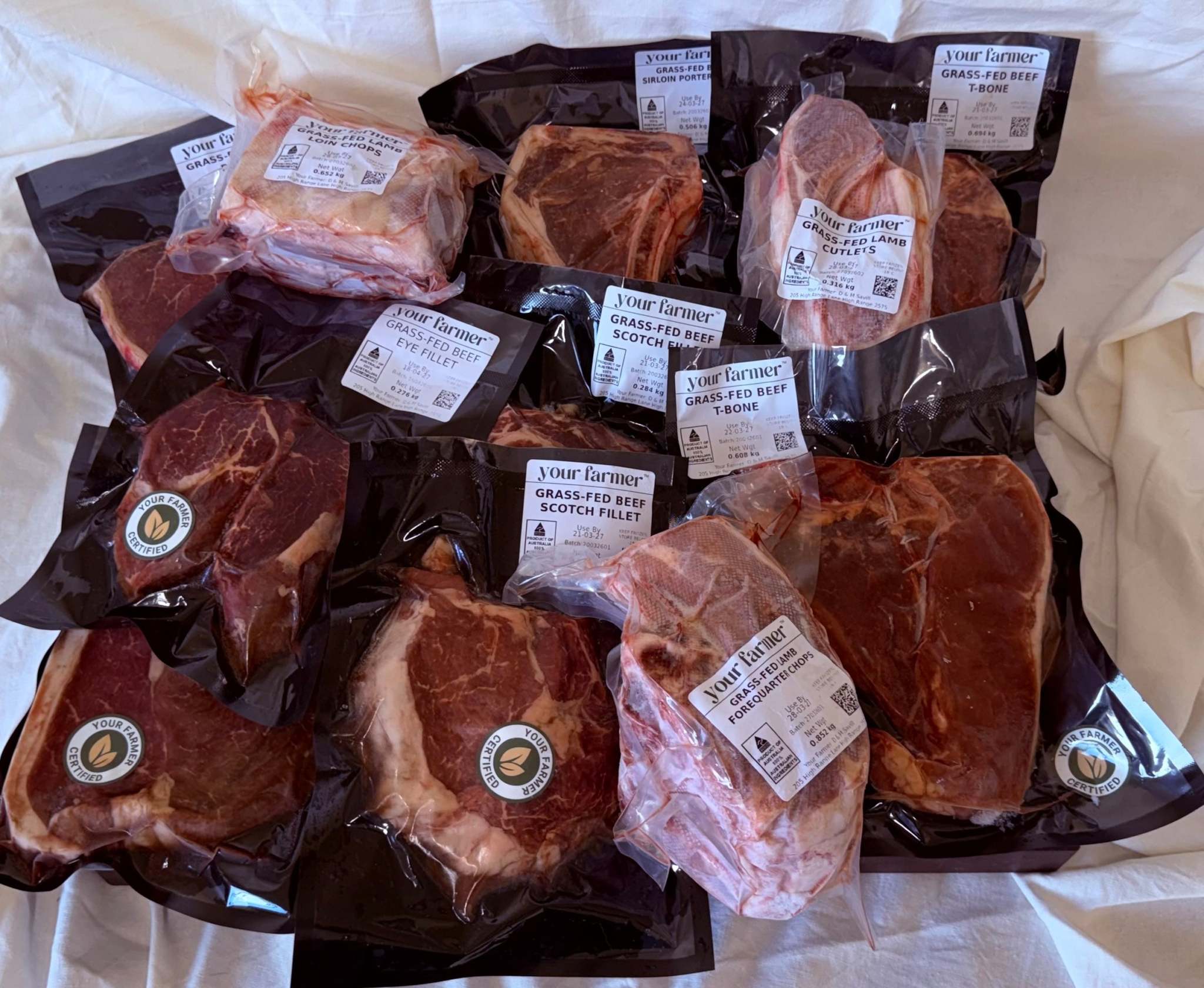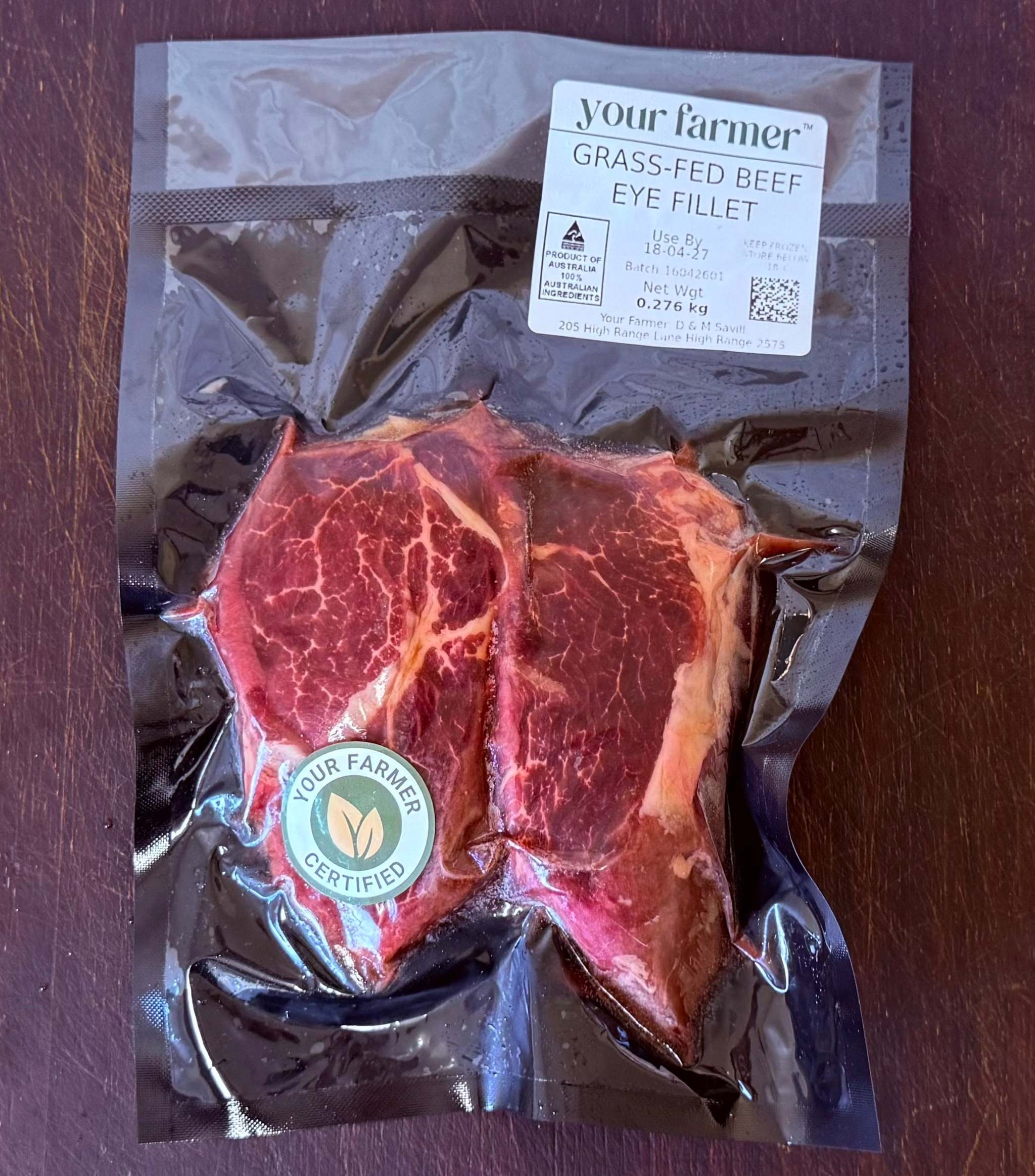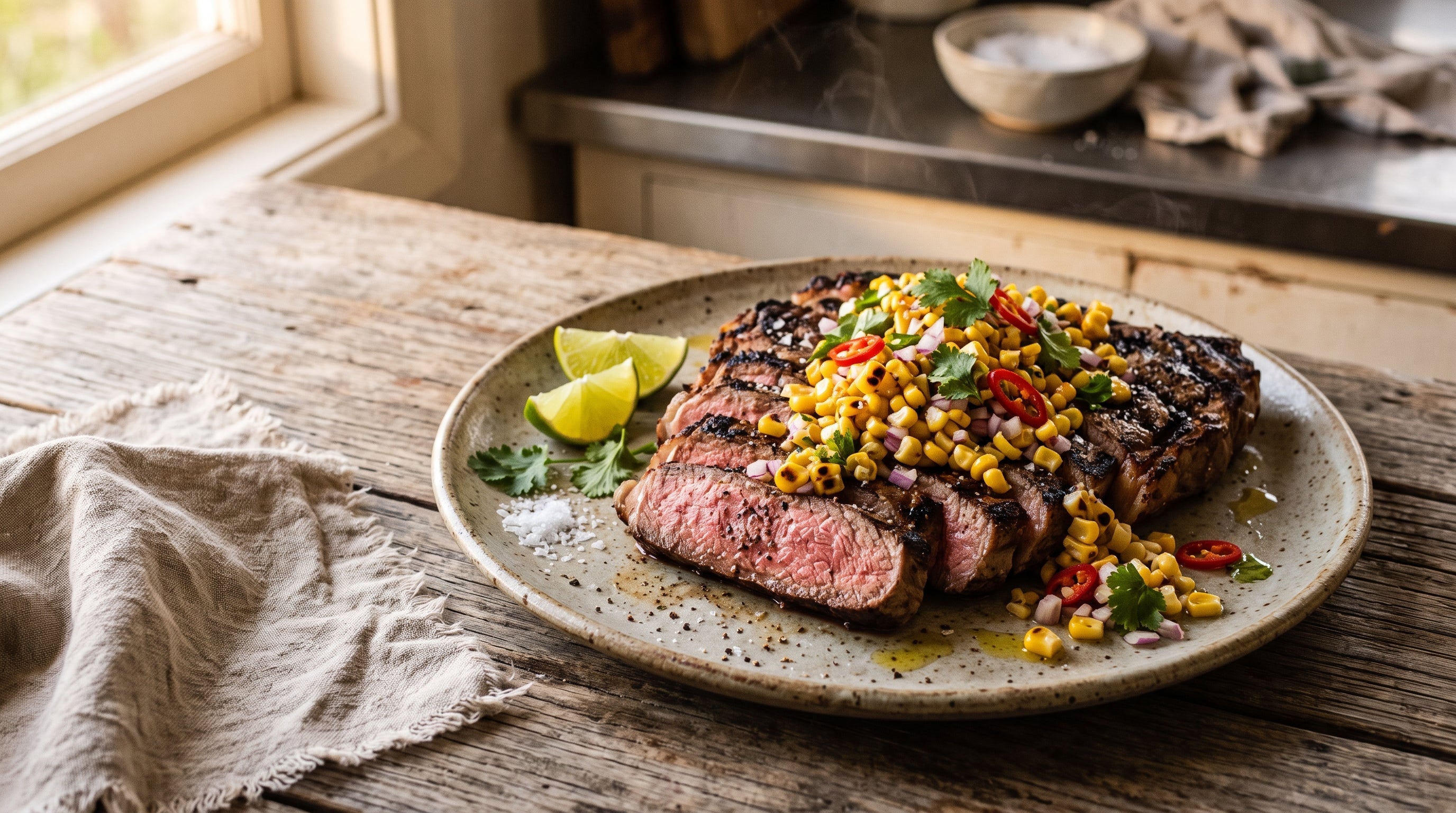
The steak takes the smoke, the corn takes the char, and summer does the rest

Rump and the barbecue were made for each other. That open, honest grain takes on smoke the way finer steaks never quite do, and the fat cap crisps into something worth fighting over. Here the corn goes on the grill first, blistering and blackening in spots while the steak comes up to room temperature — then the kernels come off the cob into a sharp little salsa of lime, chilli and red onion that cuts through the char like a sea breeze. One steak, two cobs, one hot grill. That's a summer dinner sorted.

45 mins 2-3 servings Prep 20 minsCook 25 minsMain CourseAustralian

Ingredients

  • 320g Your Farmer grass-fed rump steak
  • 3 tbsp olive oil, divided
  • Salt and pepper to season
  • 2 corn cobs, husks removed
  • 1/2 small red onion, finely diced
  • 1 long red chilli, deseeded and finely chopped
  • Juice of 1 lime
  • Small handful coriander, roughly chopped

Instructions

Take the steak out of the fridge 20-30 minutes before cooking and light the barbecue to high. While it heats, rub the corn cobs with a little of the oil.

320g rump steak2 corn cobs1 tbsp olive oil

Combine the red onion, chilli and lime juice in a bowl and set aside — the lime softens the onion's bite while everything else cooks.

1/2 red onion1 long red chillijuice of 1 lime

Grill the corn for 10-12 minutes, turning every few minutes, until blistered and blackened in patches all over. Set aside until cool enough to handle.

Rub the steak with 1 tablespoon of oil and season generously. Grill 3-4 minutes per side for medium-rare (52-54C), moving it to a cooler part of the grill if the fat cap flares.

1 tbsp olive oil

Rest the steak, loosely covered, for a full 8-10 minutes. Rump repays every minute of rest — this is where the steak is actually made.

Stand each cob upright and slice the kernels off in slabs. Toss them through the onion mixture with the coriander and the remaining oil, and season to taste.

coriander1 tbsp olive oil

Slice the steak across the grain, fan it over a platter and spoon the charred corn salsa generously over the top. Serve with anything else the barbecue happens to have going.

Appears in

Why Rump Loves a Barbecue

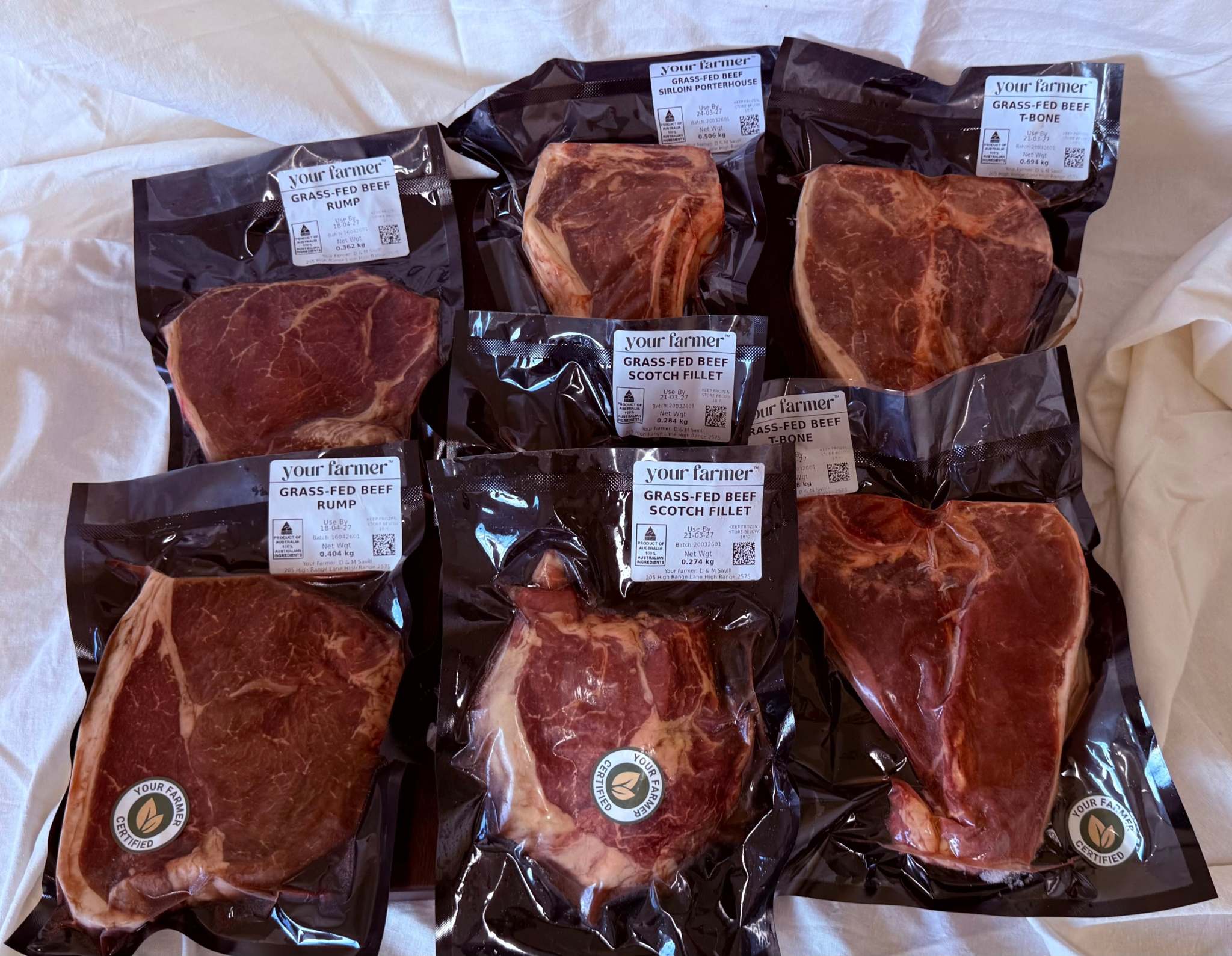
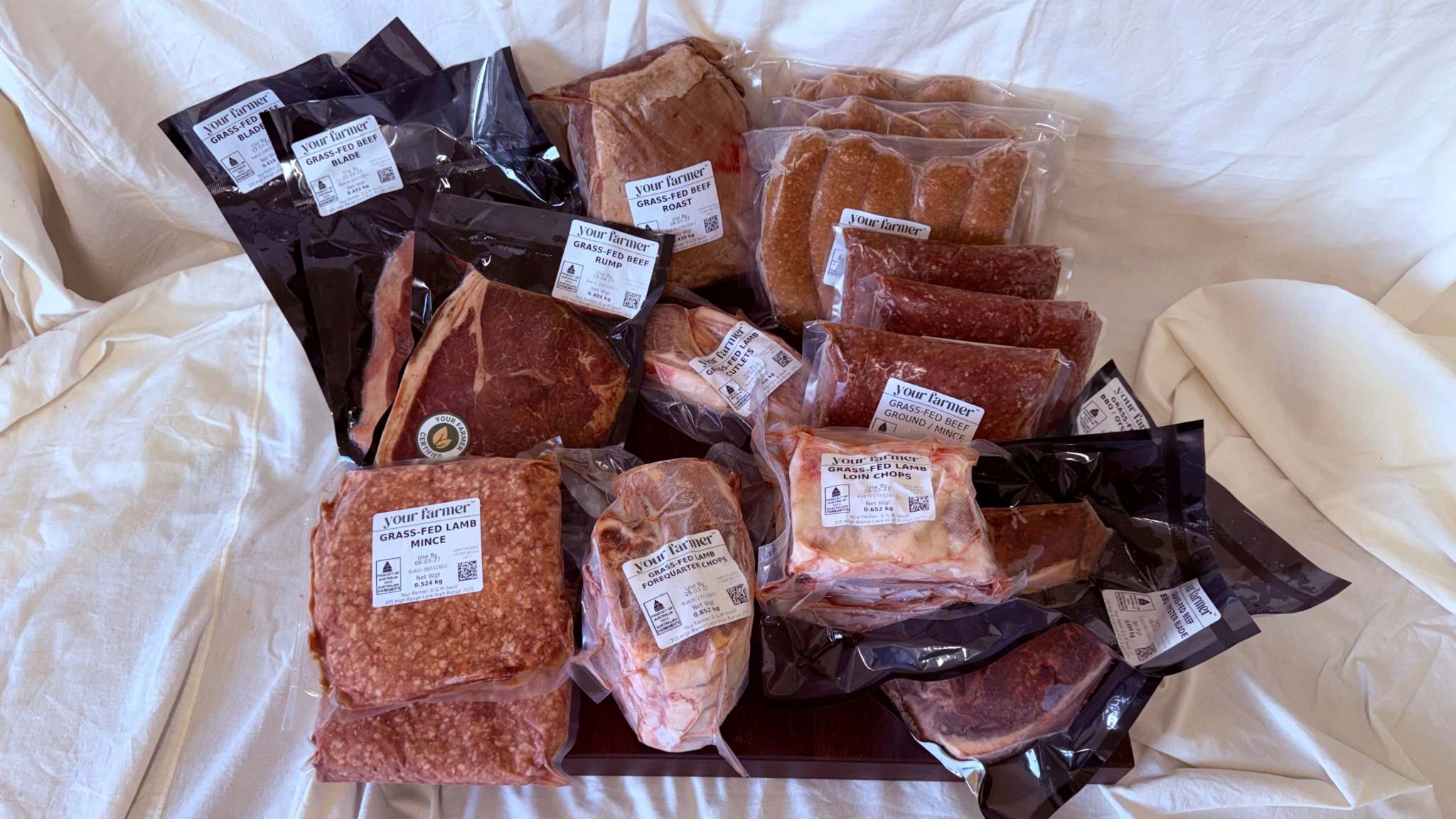
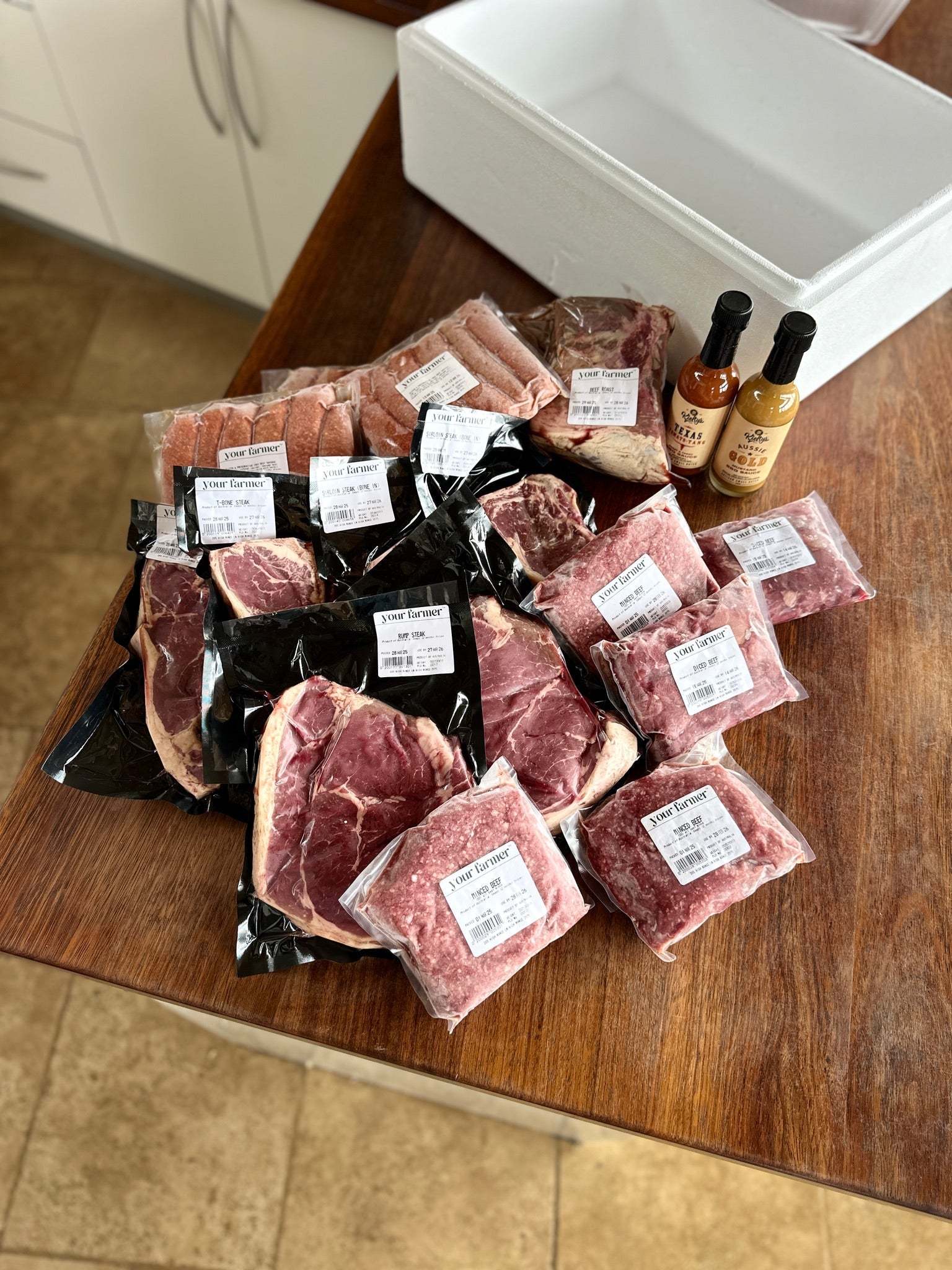
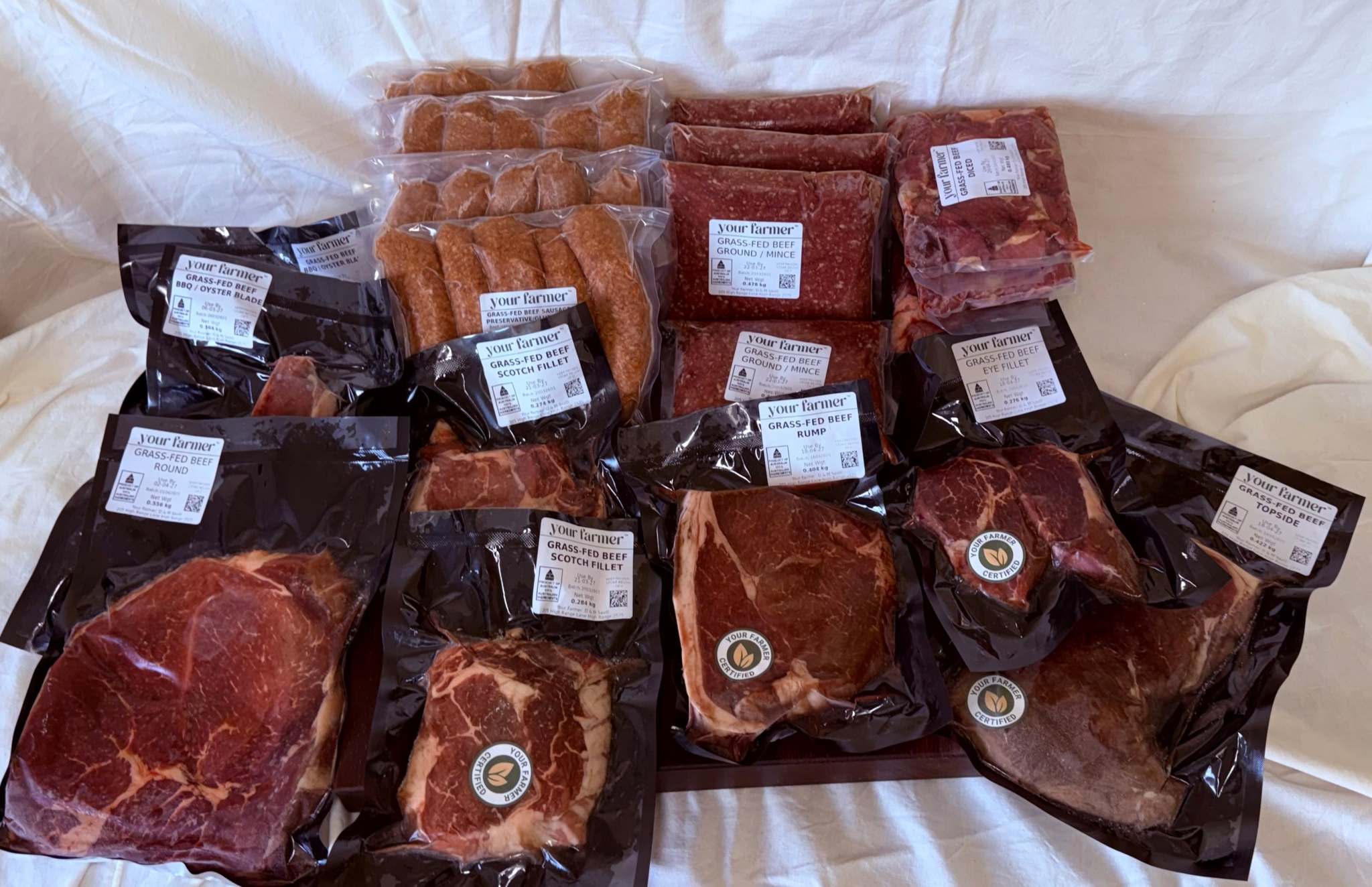
Every steak browns over flame, but not every steak takes on smoke. Rump does. Its grain is more open than sirloin or fillet — it comes from the hindquarter, a muscle that worked hard while the animal walked real pasture — and that texture drinks in barbecue character rather than letting it slide off. The fat cap along one edge bastes the steak as it renders, so give it a minute standing on that edge before it comes off. Your Farmer® rump is 100% grass-fed and leaner through the middle than grain-finished beef, so high heat and a short cook is the way — medium-rare to medium, never beyond, and then the long rest that this cut demands. You'll find a rump in three of the four beef CSA share packs, which makes it the near-staple steak of the summer rotation.

Swaps and Variations

The oyster blade BBQ steak from your share is bred for this exact treatment — it's the marinating cut, and our BBQ steak night guide covers it properly. Sirloin works too, a minute less per side. In the salsa, halved cherry tomatoes or diced avocado folded through at the end make it a fuller side; a crumble of feta takes it somewhere else again. No fresh corn in the cooler months? Char thawed frozen kernels in a dry, smoking-hot pan until they pop and catch colour — different, but honest. And if the weather turns on you, the whole plate moves indoors without complaint: grill pan for the steak, that same dry pan for the corn.

Storage and Leftovers

The salsa is at its best the day it's made but holds 2 days covered in the fridge — the lime keeps it lively. Cooked steak keeps 3 days airtight. The two have a second life together: warm tortillas, cold steak sliced thin, leftover salsa and a squeeze of fresh lime, and Tuesday gets tacos out of Sunday's barbecue. Reheat steak only if you must, and fast, in a hot pan — cold and thinly sliced is better, and it keeps the pink you worked for.
Frequently asked questions

Do I need to boil the corn before grilling it?

No — straight onto a hot grill, naked and lightly oiled. Twelve minutes of regular turning cooks the kernels through while the outside blisters, and those charred patches are the flavour of the whole salsa.

How do I judge medium-rare on a barbecue?

A thermometer is the honest answer: pull the steak at 52-54C and let the rest carry it home. Without one, use the tong press test — medium-rare feels like the relaxed base of your thumb, with some give but a springy surface.

What if my rump is thicker or thinner than usual?

Adjust time, not temperature. A thick steak gets an extra minute or two per side, or a few minutes with the hood down after searing; a thin one needs less time and closer watching. Thickness matters more than weight.

Hood up or hood down?

Hood up for a steak this size — it cooks quickly over direct heat. Save the hood for thicker cuts and roasts that need the oven effect.

Three Simple Steps

A whole table of real food.

Your Farmers grow grass-fed beef and lamb, pastured eggs and the best eco-grown veggies and produce — every item grown to the same ecological standard, every farmer one you can know by name. One subscription, your whole real-food shop.

01

Reserve your share — or try a pack

Subscribe to a share of the harvest, or start with a one-off fixed pack.

02

Make it your own

Pick your delivery rhythm and what's in the box. Skip or cancel anytime — no lock-in.

03

Cook, savour, know your farmer

We deliver in a reusable esky we collect next time. No couriers, no waste.

More Recipes

View all

Osso buco-style braised grass-fed lamb chump chops in tomato sauce over soft polenta, topped with gremolata.

Osso Buco-Style Braised Chump Chops with Gremolata

The Milanese treatment — chops braised low in white wine and tomato, lifted at the end by lemony gremolata

Osso buco is Milan's great braise, and the finishing touch is what makes it: gremolata, a raw scatter of lemon zest, garlic and parsley chopped fine, stirred in right at the end. Against an hour and a half of slow, rich braising, that fresh, sharp hit is a revelation — it stops the whole thing feeling heavy and makes you reach for another spoonful. Lamb chump chops stand in beautifully for the traditional veal shin here, their fat and connective tissue melting into a glossy sauce over soft polenta. It takes time, but almost none of it is yours. This is a dish to be proud of.

Read moreabout Osso Buco-Style Braised Chump Chops with Gremolata

A thick bowl of split pea and lamb bone soup topped with shredded lamb and mint.

Split Pea and Lamb Bone Soup

Pea-and-ham thinking, straight from the lamb paddock

Every Australian family has a pea-and-ham soup story, and every one of those soups leans on the same trick: a bone in the pot doing the heavy lifting. This is that trick with lamb bones instead of a hock. The split peas collapse into a thick, velvety base, the bones give the broth real depth and body, and a pinch of smoked paprika stands in for the smokehouse if you want that familiar edge. It's the thriftiest pot in this whole collection — pantry peas, add-on bones, one lazy afternoon — and it eats like a hug.

Read moreabout Split Pea and Lamb Bone Soup

Grass-fed T-bone steak sliced and served with homemade tarragon bearnaise and chips, bistro style.

T-Bone with Bearnaise from Scratch

The sauce that turns a steak into an occasion

Béarnaise has a reputation as chef's territory — it isn't. It's three egg yolks, a sharp tarragon reduction and a stream of warm butter, whisked over gentle heat until it turns thick, glossy and faintly wobbly. Twenty minutes of honest attention, most of it while the steak rests. And there's no better steak to learn it on than a grass-fed T-bone: the fillet side was born for béarnaise, and the sirloin side isn't far behind. This is occasion cooking you can pull off on an ordinary Saturday.

Read moreabout T-Bone with Bearnaise from Scratch