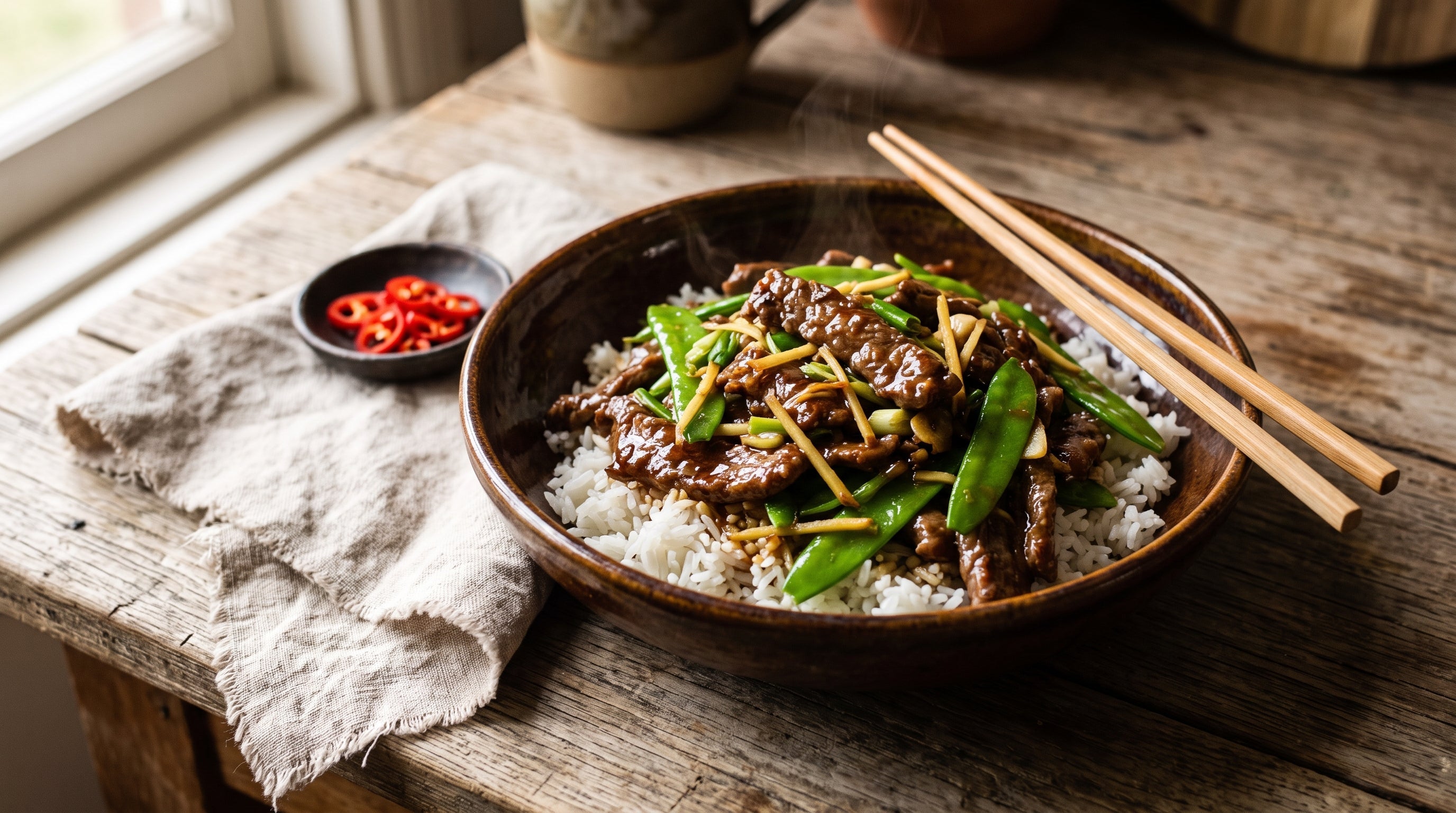
Hot wok, glossy sauce, ten minutes of actual cooking

A stir-fry lives or dies on the cut, and round is quietly one of the best in the share for it. It's lean and fine-grained, so sliced thin across the grain it turns into exactly the beef strips a wok wants — quick to brown, tender to bite. Get the rice on first, line everything up beside the stove, and dinner moves fast from there. Ginger, garlic, snow peas and a glossy oyster-sauce finish. It's the reliable Tuesday answer for the round steaks that turn up every single week.

25 mins 4 servings Prep 15 minsCook 10 minsMain CourseChinese

Ingredients

  • 460g Your Farmer grass-fed beef round steaks, sliced into thin strips across the grain
  • 1 tbsp soy sauce
  • 1 tsp cornflour
  • 2 tbsp peanut or vegetable oil
  • 3cm piece ginger, cut into matchsticks
  • 2 cloves garlic, thinly sliced
  • 200g snow peas, topped and tailed
  • 2 tbsp oyster sauce
  • Steamed jasmine rice, to serve

Instructions

Slice the steaks across the grain into strips about 5mm thick, then toss them with the soy sauce and cornflour. Let them sit while you prep everything else — that light coating is what gives you glossy, tender beef.

460g round steaks1 tbsp soy sauce1 tsp cornflour

Get the rice cooking, and line up the ginger, garlic, snow peas and sauce right beside the stove. A stir-fry waits for nobody.

Heat half the oil in a wok or your widest pan over the highest heat until it shimmers. Fry the beef in two batches, 60–90 seconds each, until just browned but not cooked through. Remove to a plate.

1 tbsp oil

Add the remaining oil. Toss the ginger and garlic for 30 seconds until fragrant, then add the snow peas with a splash of water and stir-fry for 1 minute — they should stay bright green and snappy.

1 tbsp oil3cm ginger2 cloves garlic200g snow peas

Return the beef with the oyster sauce and another splash of water. Toss for 30 seconds until everything is coated and glossy.

2 tbsp oyster sauce

Serve immediately over steamed jasmine rice, while the snow peas still have their snap.

Appears in

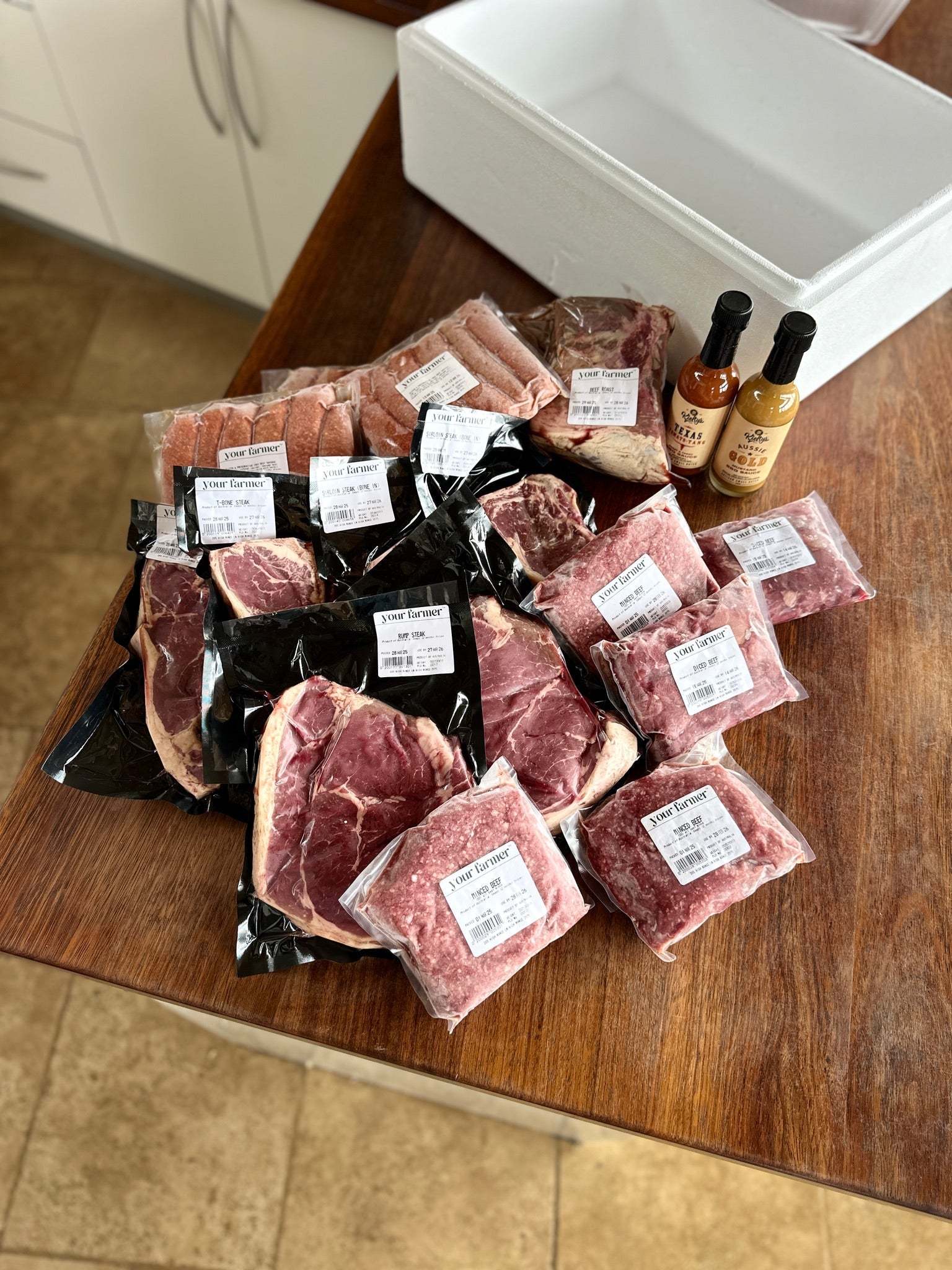
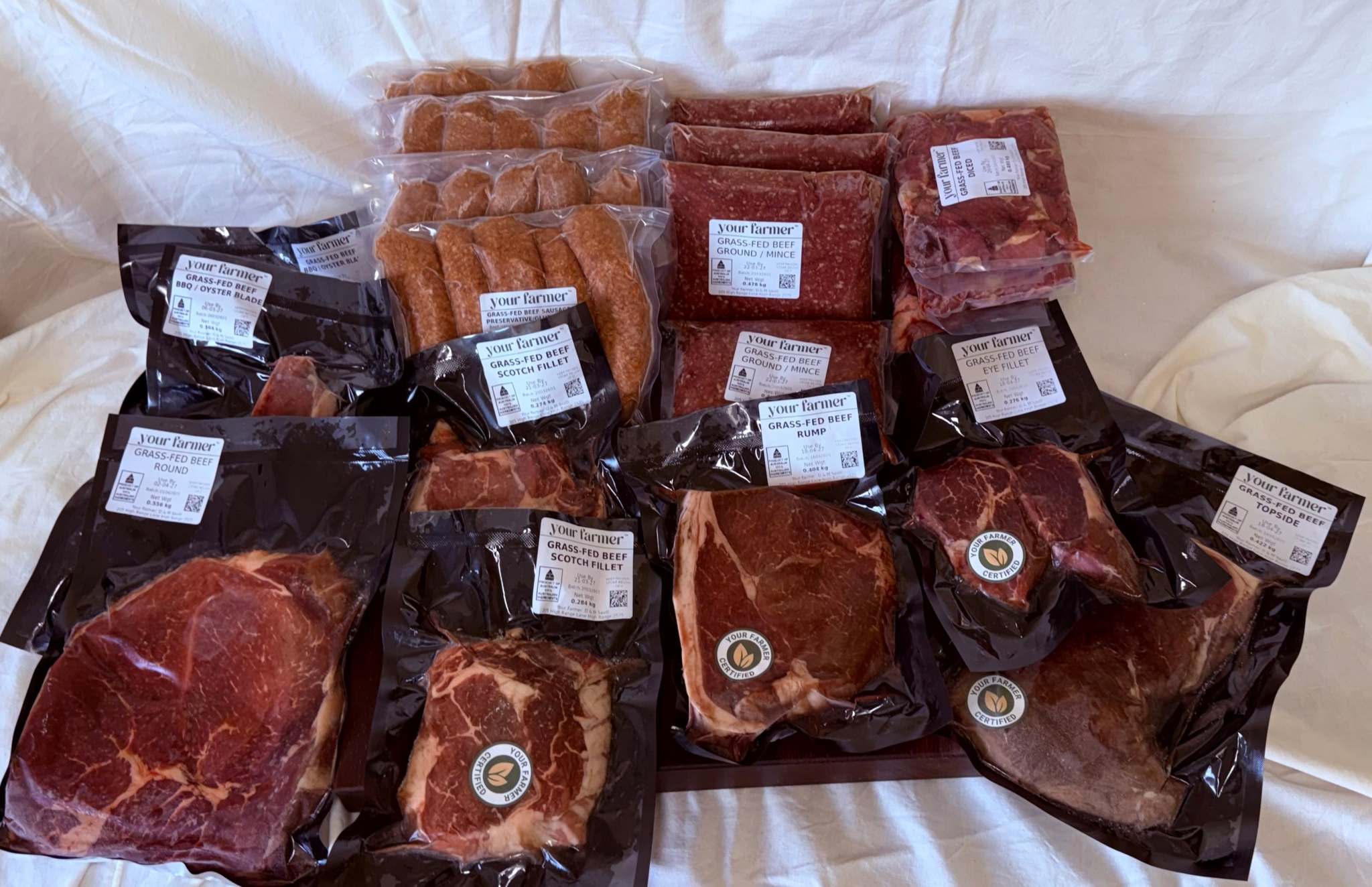
In every beef share — Round Steaks (~460g)

The Right Cut for the Wok

Every share includes round steaks, and this is one of the jobs they were born for. Round is a hard-working leg muscle — lean, fine-grained, with a grain you can actually see running through the meat. Slice across that grain and you shorten every fibre, which is the difference between tender strips and chewy ones. It's the single most important knife decision in this recipe. Because Your Farmer® beef is 100% grass-fed and lean, the soy-and-cornflour toss matters too: it protects the strips in the fierce heat and turns the pan juices into that glossy, clinging sauce. Ten minutes in the fridge firms the steaks up if you want extra-neat slicing. Cook in batches — pile the wok too high and the beef stews instead of searing. And if you don't own a wok, don't let that stop you: your widest frying pan over the biggest burner does the same job, as long as the batches stay small.

Swaps and Variations

Topside strips from the same share behave identically — we use them the same way in our topside and broccolini stir-fry. Sugar snaps, broccolini or gai lan can stand in for the snow peas, and a spoonful of chilli oil at the end wakes the whole thing up if the small people at your table allow it. No oyster sauce? A tablespoon of hoisin plus an extra dash of soy gets you close. And when summer comes around, the same across-the-grain slicing turns round into a cracking Thai beef salad.

Storage and Leftovers

Stir-fry is best eaten the night it's made, but leftovers keep in the fridge for 2 days. Reheat hard and fast in a hot pan rather than the microwave — steaming softens the snow peas and overcooks the beef. The best leftover move: toss the lot through fresh egg noodles with a splash of water for a five-minute lunch. If you've cooked extra rice, cool it fast and get it into the fridge within the hour — leftover rice deserves the same respect as the beef. If a weekly rhythm of good beef strips, steaks and slow-cooking cuts sounds like your kind of meal planning, that's exactly what our beef subscription delivers.
Frequently asked questions

How thin should I slice the beef?

Aim for about 5mm, always across the grain. If the steaks are slightly firm from the fridge they slice much more neatly — 10 minutes in the freezer works too.

What does slicing 'across the grain' actually mean?

Look for the direction the muscle fibres run — they look like fine parallel lines. Cut perpendicular to those lines so each strip contains short fibres rather than long ones. Short fibres mean tender beef.

Can I substitute the oyster sauce?

Yes — a tablespoon of hoisin plus an extra dash of soy sauce is the closest swap. Kecap manis works too but is sweeter, so hold back any extra soy until you've tasted it.

Why cook the beef in two batches?

A home stove loses heat fast when cold meat hits the pan. Half the beef at a time keeps the surface hot enough to brown the strips instead of stewing them in their own juices.

Three Simple Steps

A whole table of real food.

Your Farmers grow grass-fed beef and lamb, pastured eggs and the best eco-grown veggies and produce — every item grown to the same ecological standard, every farmer one you can know by name. One subscription, your whole real-food shop.

01

Reserve your share — or try a pack

Subscribe to a share of the harvest, or start with a one-off fixed pack.

02

Make it your own

Pick your delivery rhythm and what's in the box. Skip or cancel anytime — no lock-in.

03

Cook, savour, know your farmer

We deliver in a reusable esky we collect next time. No couriers, no waste.

More Recipes

View all

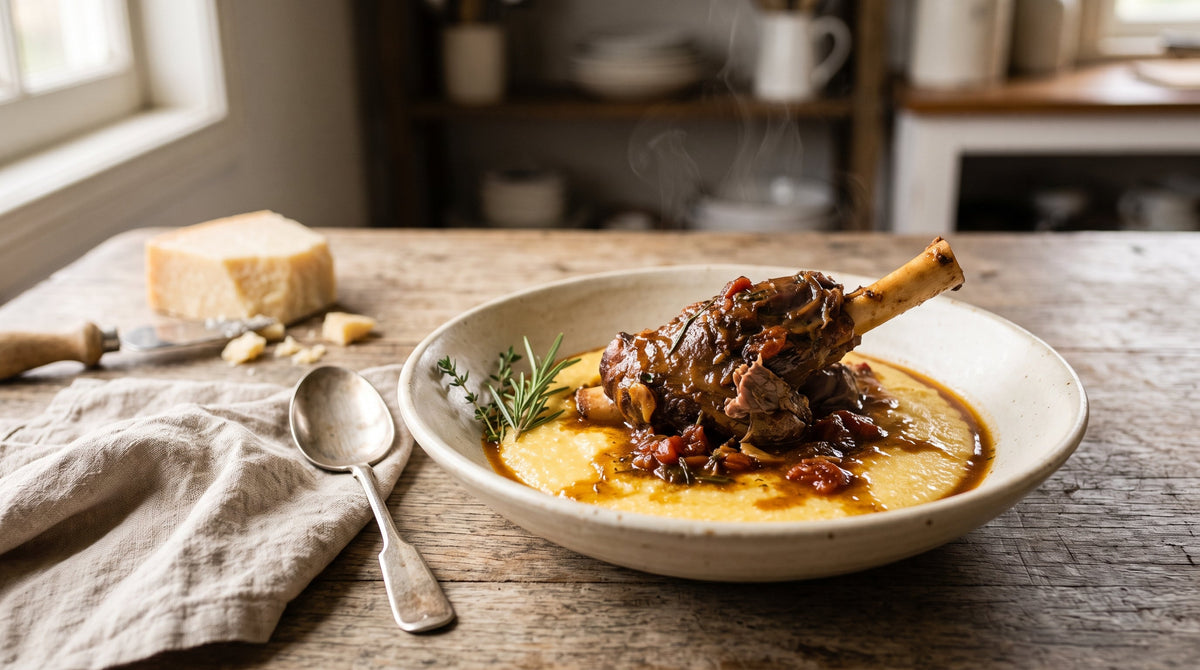
Tomato and rosemary braised grass-fed lamb shank served over soft parmesan polenta.

Tomato and Rosemary Braised Lamb Shanks with Soft Polenta

Osso buco's lamb cousin, with soft polenta doing the catching

The Milanese figured out long ago that a shin braised on the bone in tomato makes a sauce nothing else can — the marrow sees to that. This is the same idea run through the lamb paddock: shanks browned hard, then braised low with tomato, white wine and rosemary until the meat leans off the bone, all of it served over a pool of soft, buttery parmesan polenta whose entire purpose in life is catching sauce. It's a Sunday sort of pot that happily cooks on a Tuesday, and the polenta takes less minding than most people fear.

Read moreabout Tomato and Rosemary Braised Lamb Shanks with Soft Polenta

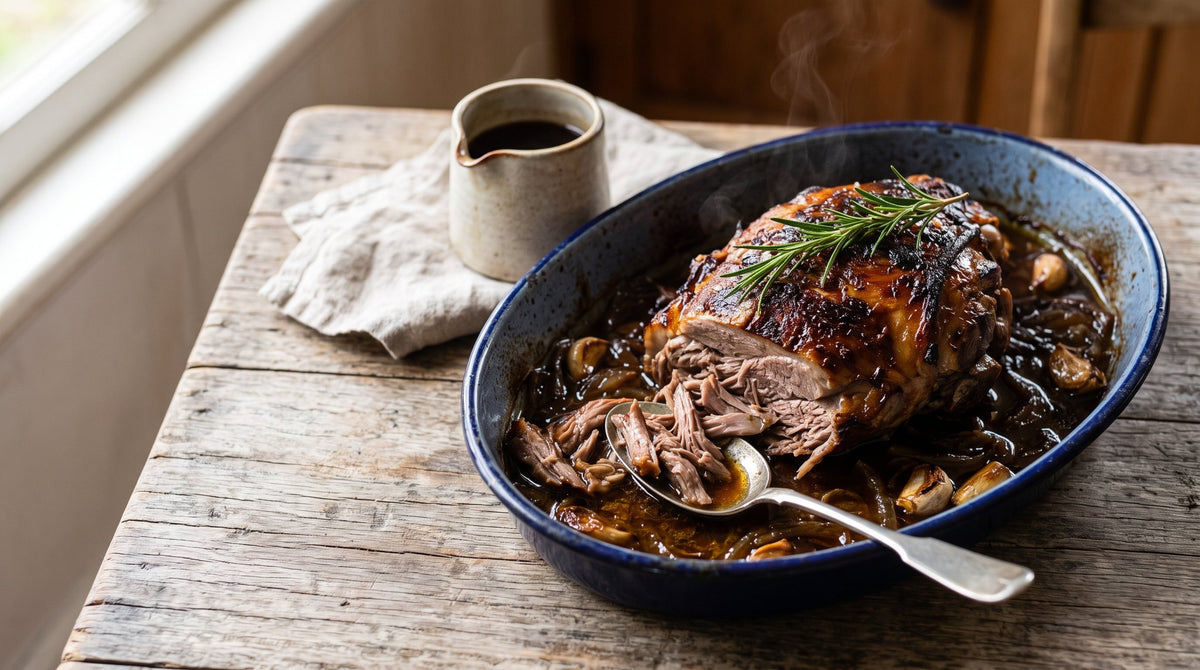
Slow-roasted grass-fed lamb pulled into tender shreds in its pan juices in an enamel roasting dish.

Slow-Roasted Lamb with Pan Juices, the Low and Slow Way

The roast that cannot be overcooked — give it half a day and it gives up entirely

Most roast anxiety comes from a five-minute window: pull it too early, it's raw; too late, it's leather. This method deletes the window. You give the lamb a hard blast of colour, then drop the oven right down and walk away for the better part of an afternoon. Somewhere in hour three the meat stops resisting altogether — a spoon will do the carving. There's no thermometer stress, no window to miss, and the pan underneath quietly builds the best juices you'll pour all winter. Patience, rewarded.

Read moreabout Slow-Roasted Lamb with Pan Juices, the Low and Slow Way

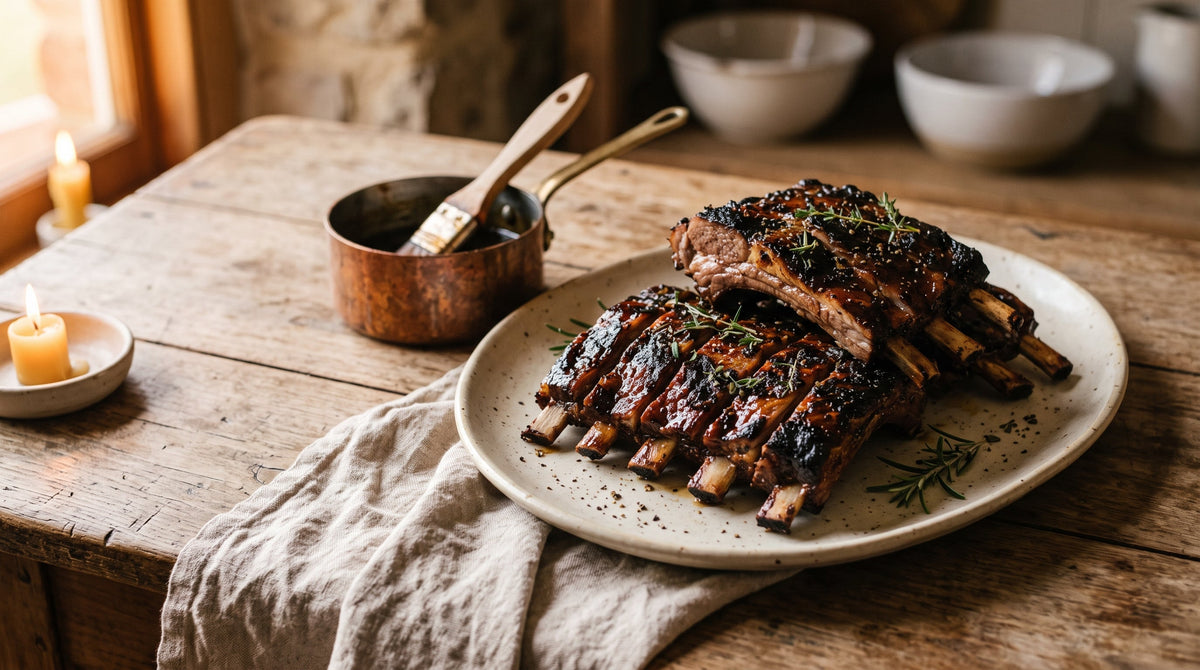
Twice-cooked grass-fed lamb ribs, braised until tender then charred and glazed, stacked on a stoneware platter.

Twice-Cooked Lamb Ribs: Braise, Then Char

The restaurant trick: do the hard part yesterday, take the applause tonight

Ever wondered how a restaurant sends out perfect sticky ribs eight minutes after you order them? They cooked the ribs yesterday. The racks get braised in stock and aromatics until tender, then cooled in their own liquid — where they firm up, drink back flavour, and wait as long as you need. Come dinner time, all that's left is a hot grill pan, a honey glaze made from the braising liquid, and about ten minutes of theatre. It's the most reliable rib method there is, and the only one where the night-of cooking fits between guests arriving and the first drink being finished.

Read moreabout Twice-Cooked Lamb Ribs: Braise, Then Char