

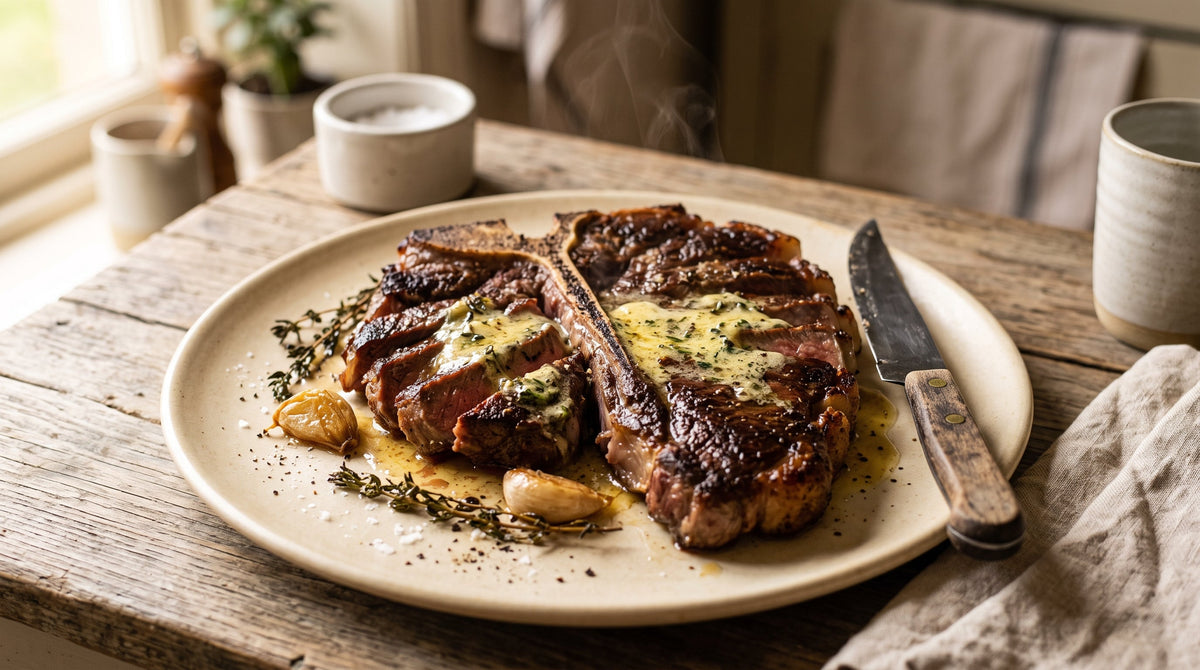
Managing Two Muscles on One Bone
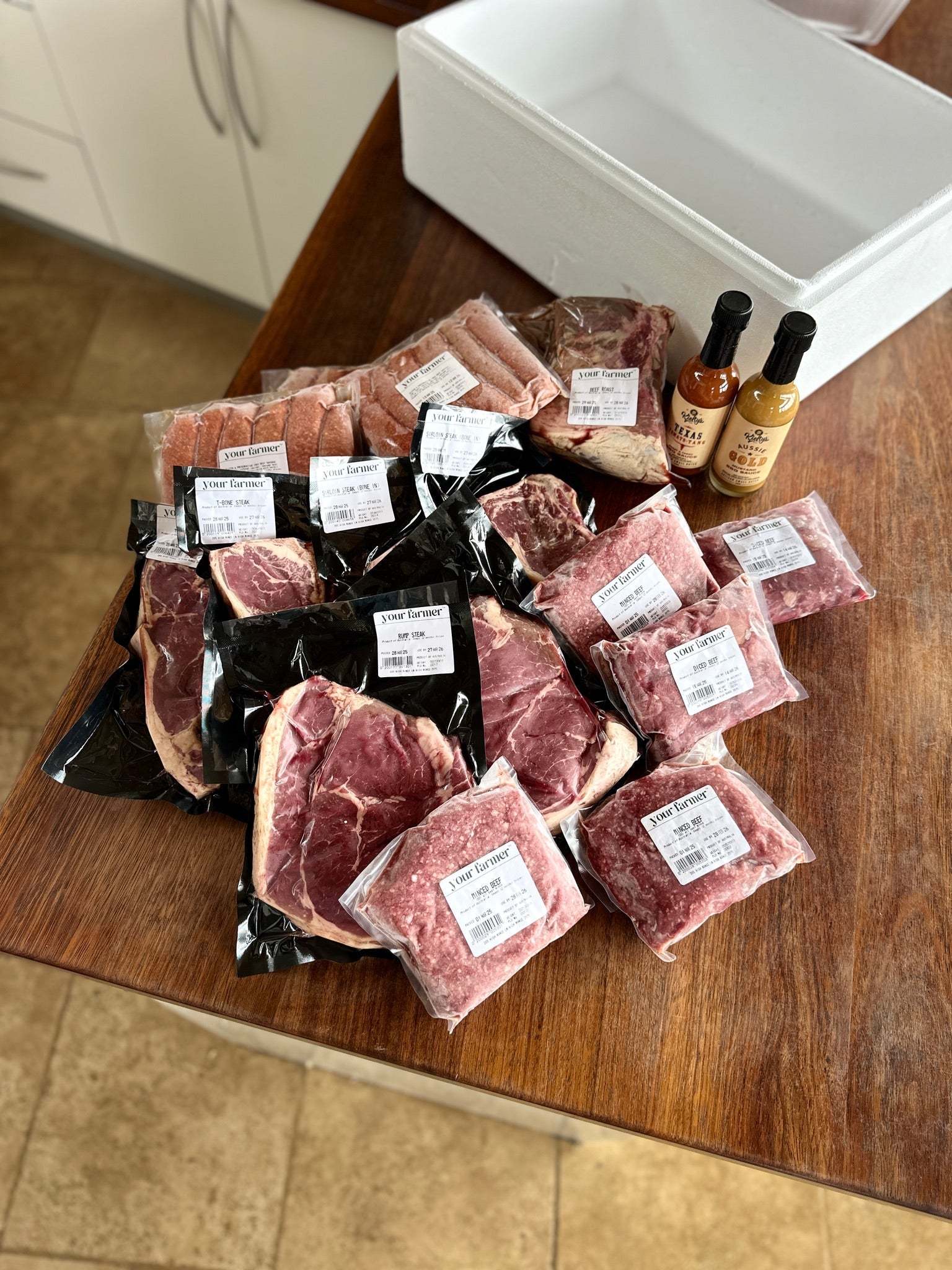
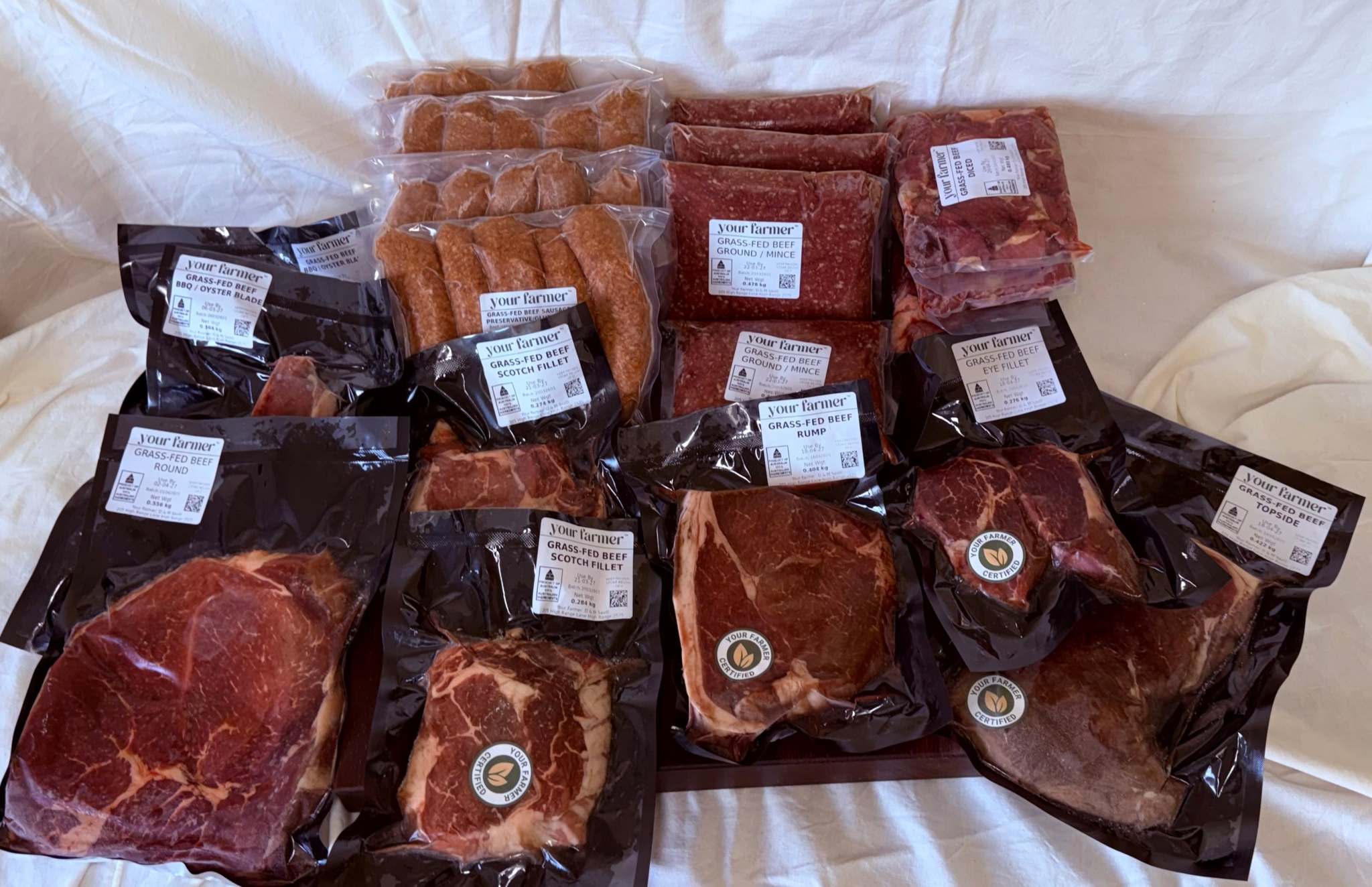
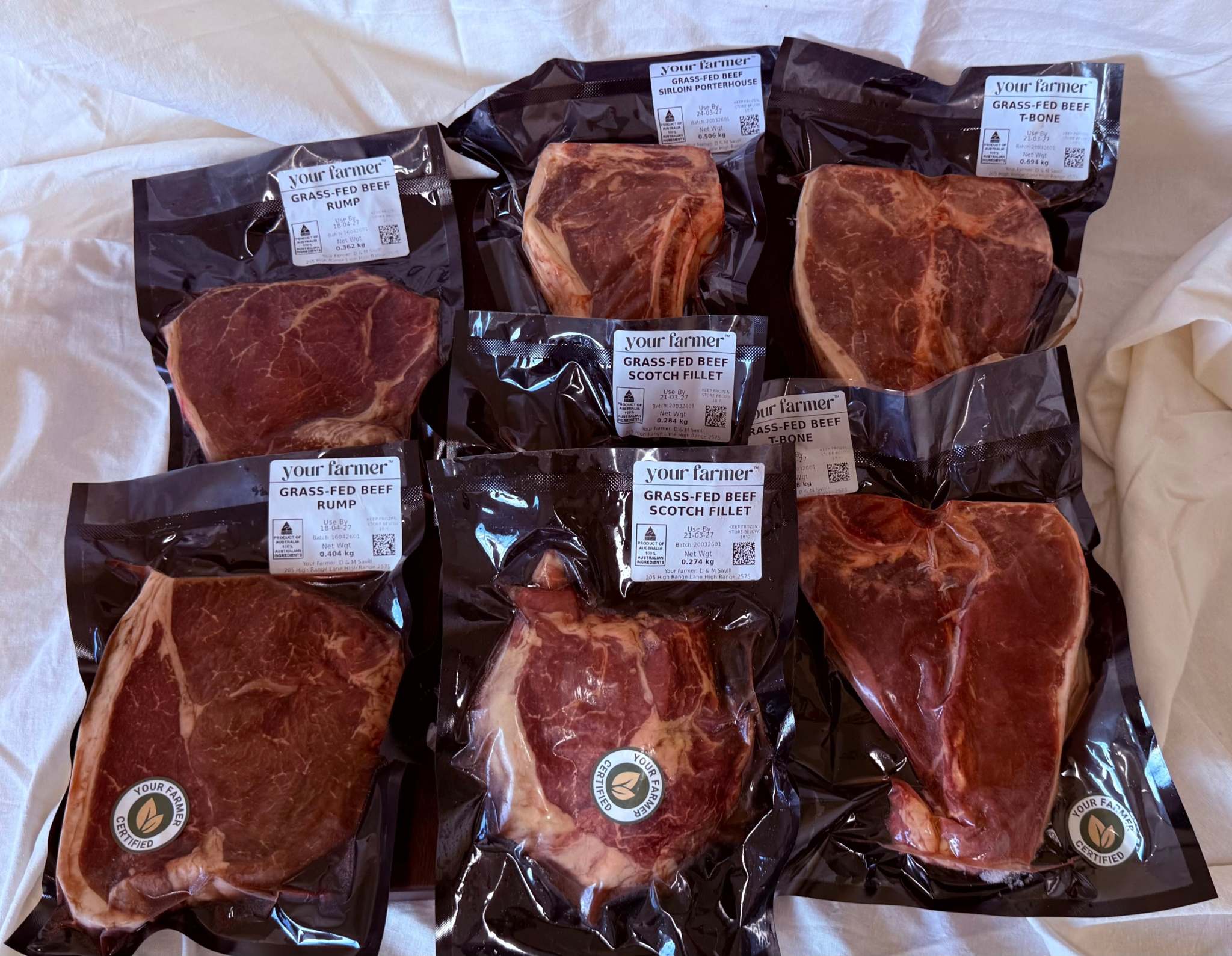
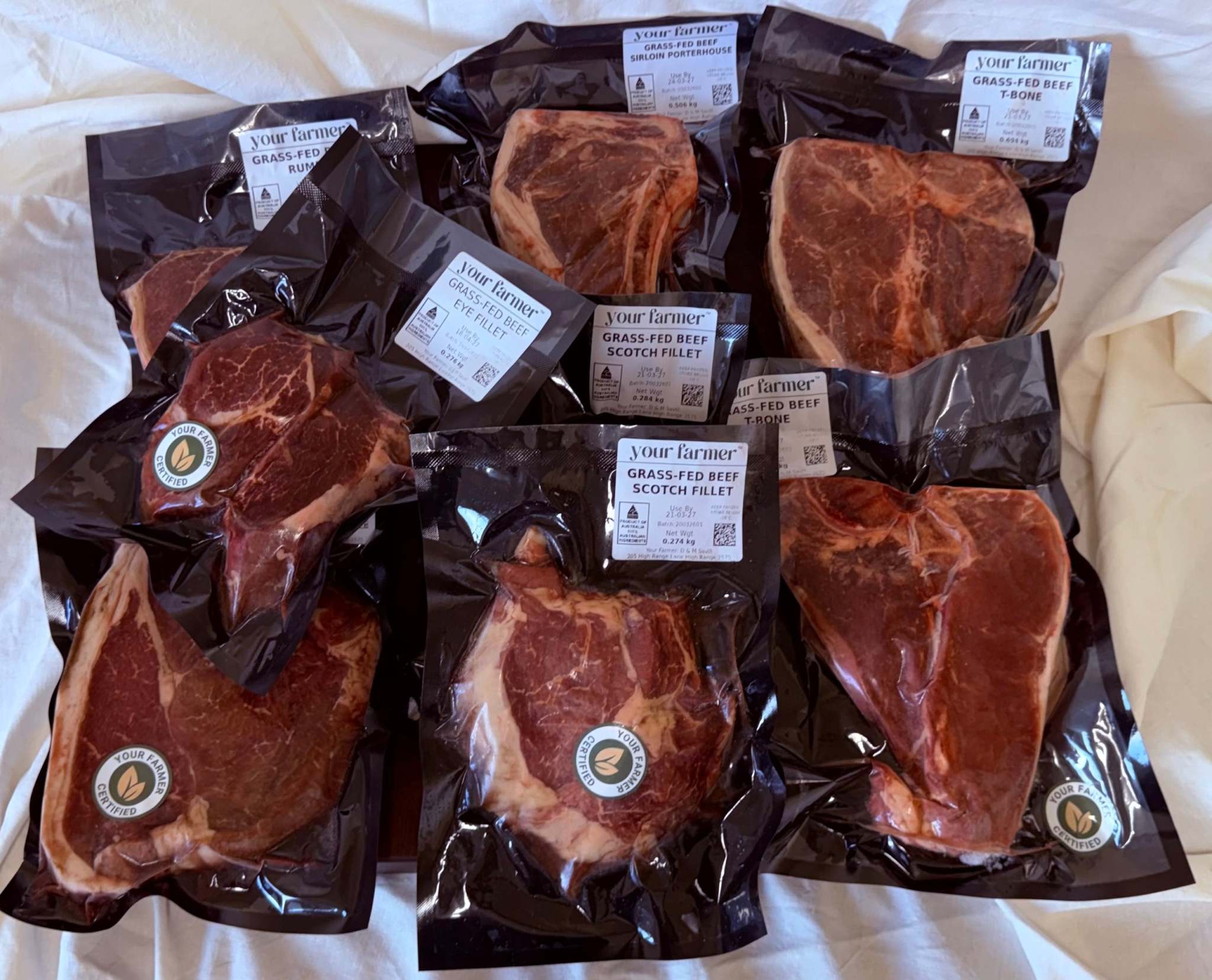
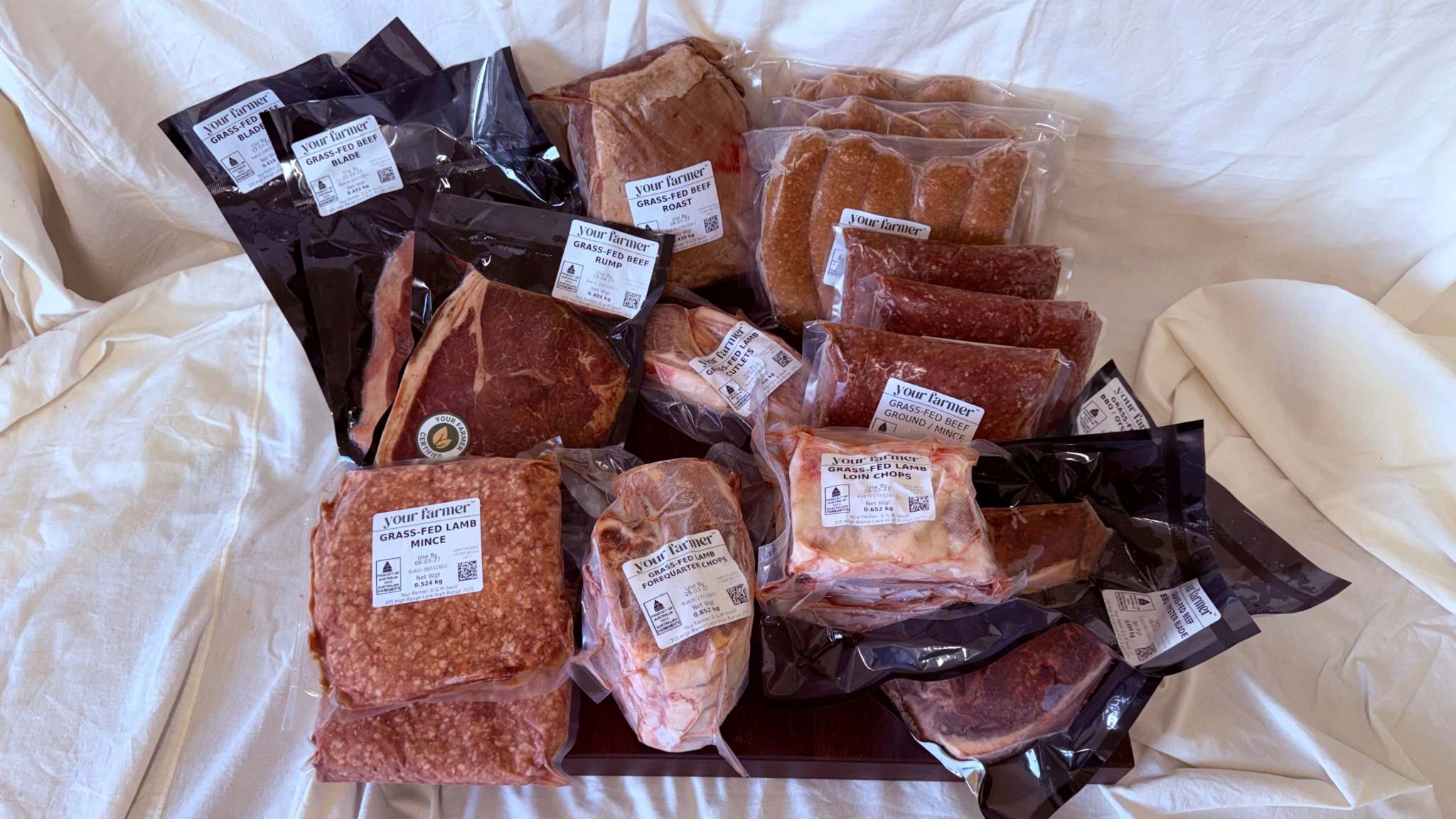
Here's the truth that separates a good T-bone from a great one. The big side of the bone is sirloin — the same muscle as a classic sirloin steak — and it wants real heat to build crust and render its fat edge. The small side is fillet, the tender heart of the special-occasion cut, and it's leaner, smaller and quicker to overshoot. Treat them identically and the fillet lands medium-well while the sirloin's still finding its feet. You have three levers, and this recipe uses all of them: position (fillet to the pan's cooler edge), baste direction (the hot butter goes to the sirloin), and the bone itself, which insulates the meat beside it. Success is measurable — a thermometer reading both muscles within a few degrees of each other. Your Farmer® T-bones arrive at about 500g in the Pack B and D boxes of the grass-fed beef CSA share, and grass-fed leanness makes the butter earn its place — it's not garnish, it's the finishing fat the cut asks for.
Swaps and Variations
Ghee handles higher heat than butter without burning, if you want a longer baste. Rosemary or sage swap in for thyme; two anchovies melted into the butter add a steakhouse depth nobody will name. The skill itself is the real takeaway — the same position-baste-bone thinking works on any bone-in steak or thick chop that crosses your bench from here on, which is why it's worth learning properly on the cut that demands it most.
Storage and Leftovers
Thawed raw steak keeps 2–3 days in the coldest part of the fridge; cooked leftovers keep 3 days airtight. Slice leftovers cold across the grain for sandwiches or salads rather than reheating — thin medium-rare slices don't survive a second cooking. The strained baste butter is its own reward: kept in a small jar in the fridge for up to a week, it turns steamed greens, mash or fried eggs into something with a past. And the bone — browned, buttery — belongs in the freezer stock bag, not the bin.

Share:
Red Wine-Braised Beef Ribs
Honey-Soy Marinated BBQ Steak