The fanciest steak in the share, on a Tuesday

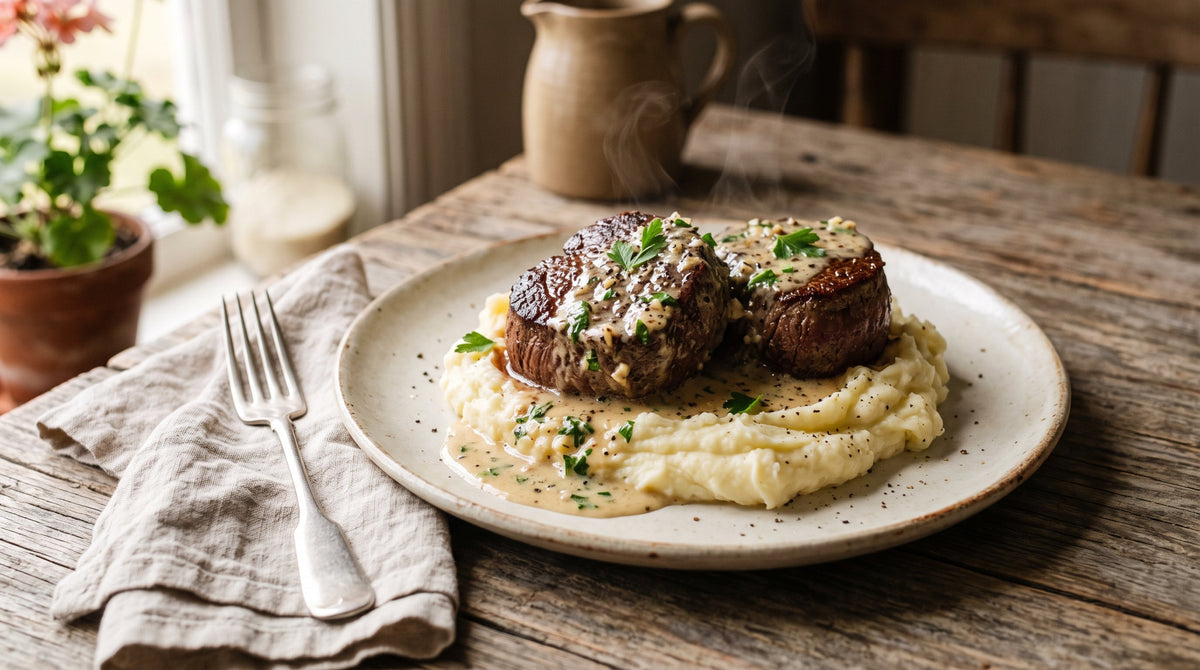
Eye fillet has a reputation as restaurant food — the cut you order out because you're worried about wrecking it at home. Here's the truth: two medallions, a hot pan and eight minutes is all it takes, and the garlic cream sauce builds itself in the same pan while the steaks rest. No tricks, no cheffy equipment, no stress. If it's your first go at the tenderest cut in the pack, this is exactly where to start.

25 mins 2 servings Prep 10 minsCook 15 minsMain CourseAustralian

Ingredients

  • 2 Your Farmer grass-fed eye fillet medallions (about 140g each)
  • Salt and pepper to season
  • 1 tbsp olive oil
  • 25g butter
  • 3 cloves garlic, finely chopped
  • 150ml thickened cream
  • 1 tsp Dijon mustard
  • 1 tbsp chopped fresh parsley
  • Mash or steamed greens, to serve

Instructions

If you've got 15 minutes to spare, let the medallions sit out of the fridge first (optional) — they'll cook more evenly. Pat them dry and season generously all over.

2 eye fillet medallionssalt and pepper

Heat the oil in a heavy pan over medium-high heat until shimmering. Sear the medallions for 3–4 minutes each side for medium-rare.

1 tbsp olive oil

Move the medallions to a warm plate, cover loosely with foil and rest them while you make the sauce.

Drop the heat to medium. Add the butter and garlic to the same pan and cook for 30 seconds, until fragrant but not browned.

25g butter3 cloves garlic

Pour in the cream, stir in the mustard and any resting juices from the plate, and simmer for 2–3 minutes until the sauce coats the back of a spoon. Season to taste.

150ml thickened cream1 tsp Dijon mustard

Serve the medallions over mash or steamed greens with the sauce spooned over and the parsley scattered on top.

1 tbsp chopped parsley

Appears in

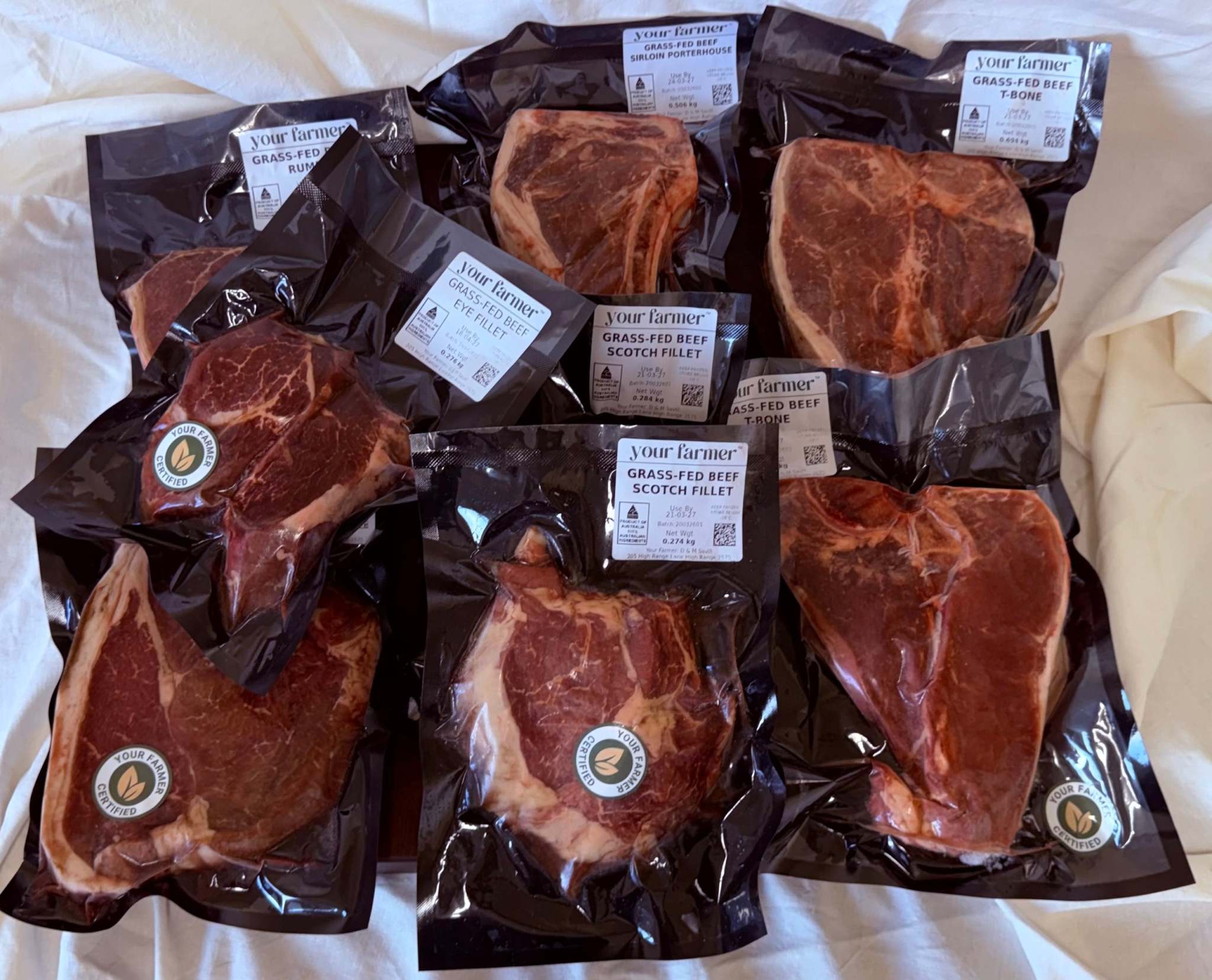
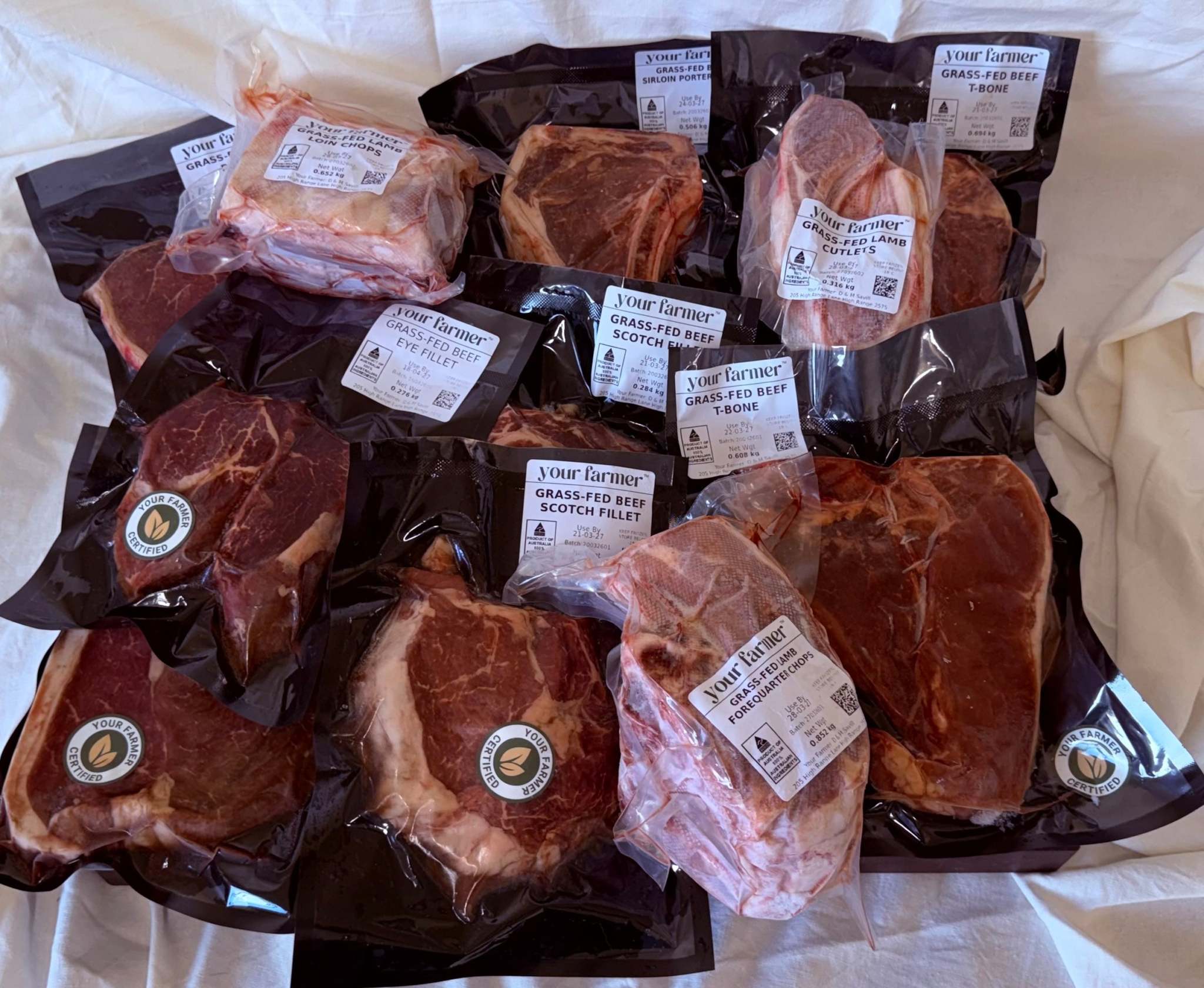
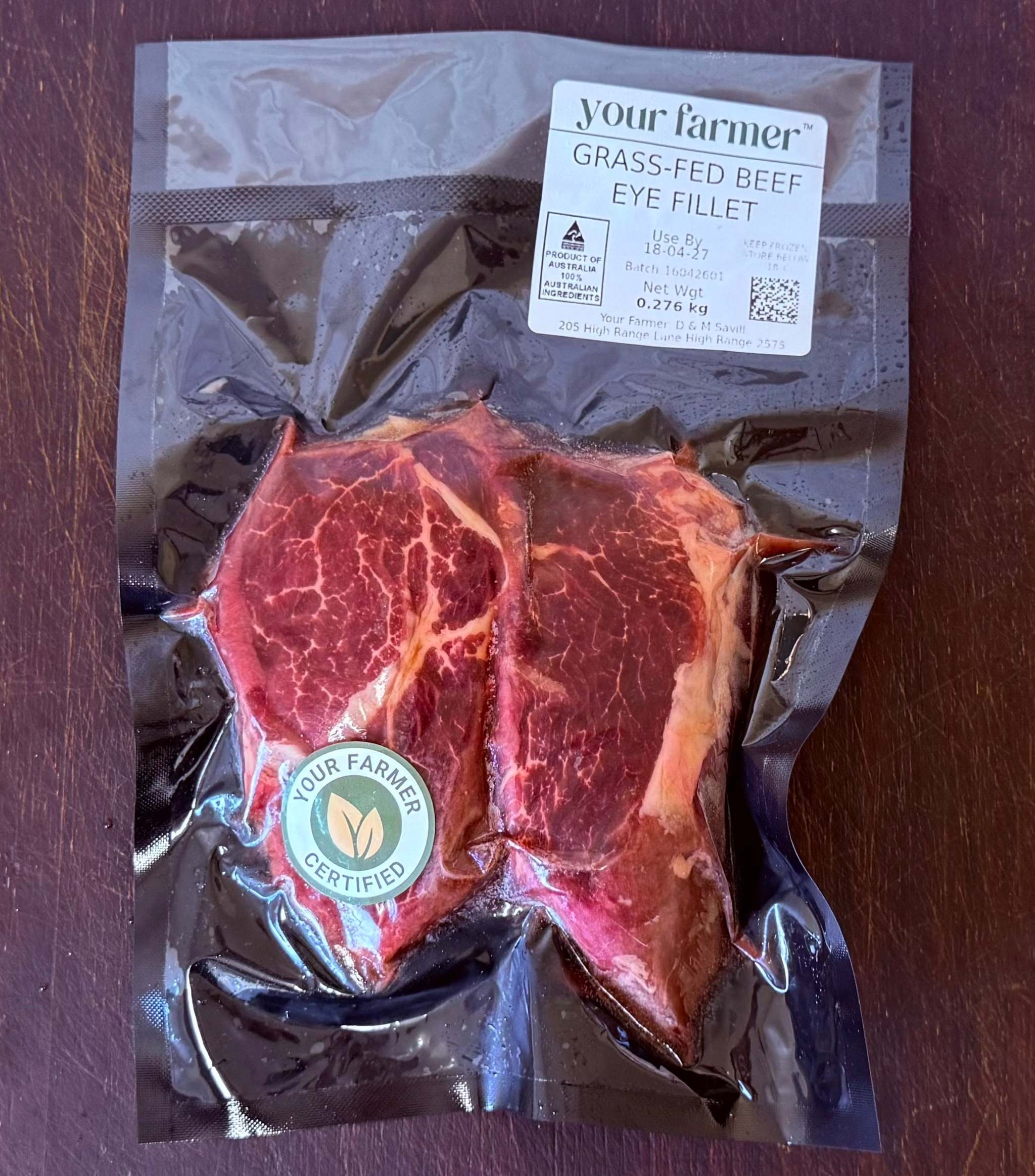
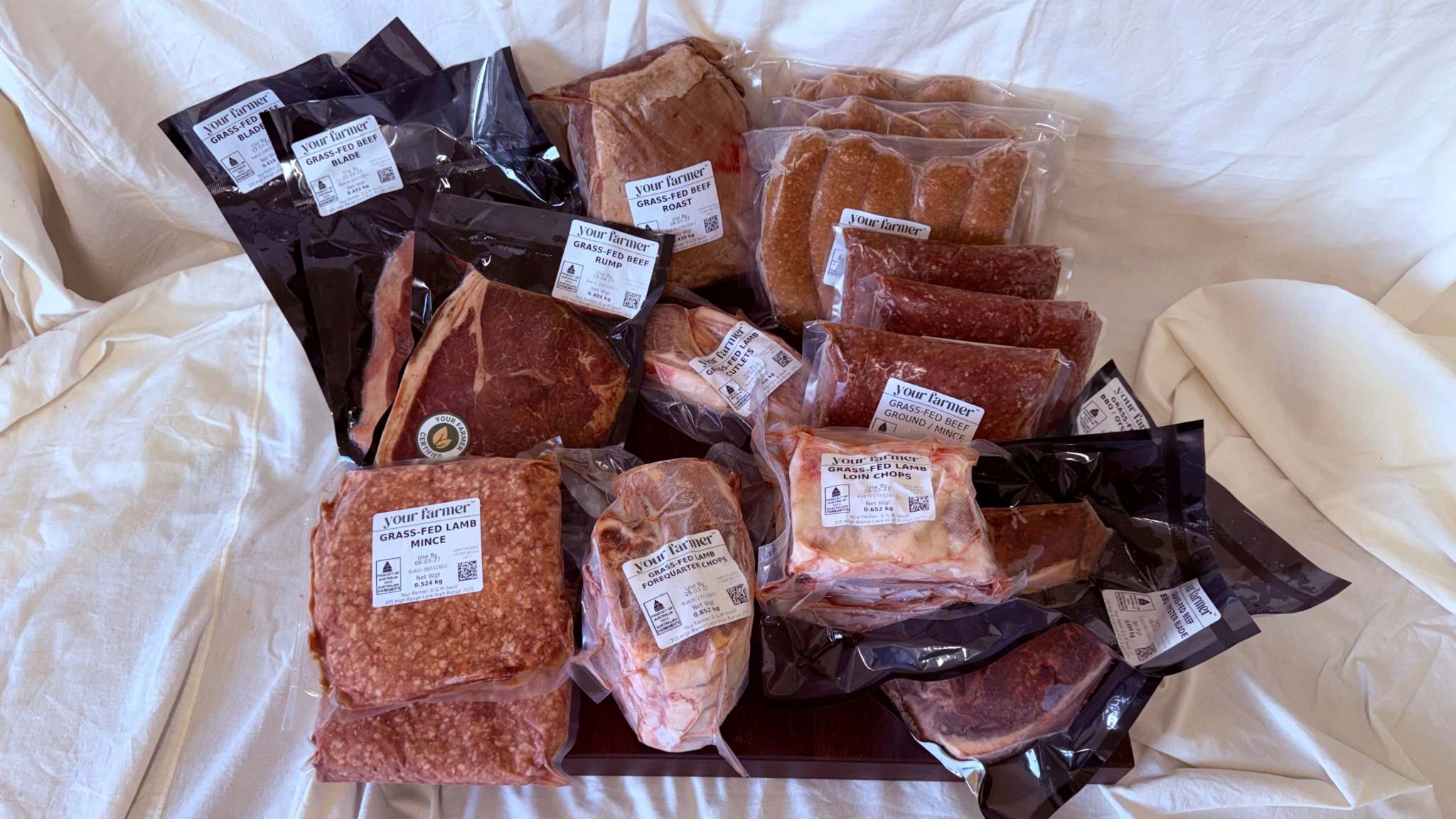
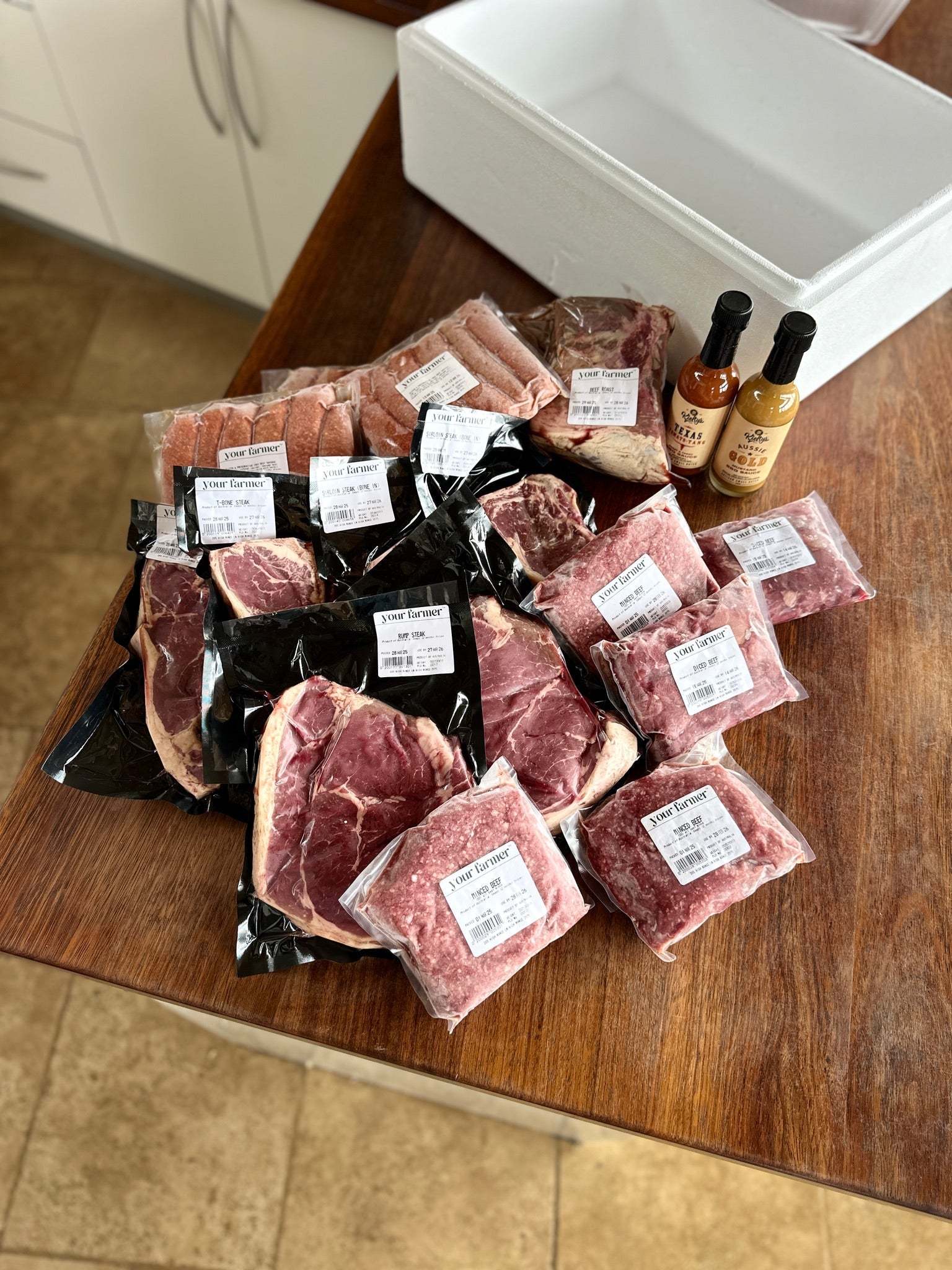
Pack A share — Fillet (2 pack, ~280g)

Getting to Know the Eye Fillet

The eye fillet is the tenderloin — a long, slender muscle tucked up under the backbone that does almost no work in the animal's life. No work means no tough connective tissue, and no connective tissue means the most tender cut on the whole beast. It's also the leanest, which is why the rules are short and non-negotiable: hot pan, quick cook, proper rest. There's no marbling in reserve to forgive a long cook, so this is the one cut you never slow-cook and never walk away from. Your Farmer® fillet comes as a twin pack of two 140g medallions — the neat, plate-sized shape comes from smaller-framed grass-fed cattle, and it's the right thickness to sear hard without drying out. If you want the full why behind the hot-and-fast rule, our guide to cooking grass-fed beef walks through it cut by cut.

Swaps and Variations

The garlic cream sauce is a workhorse, so don't stop at fillet. A scotch fillet takes it beautifully — richer cut, add a minute a side. Lamb loin chops work too: cook them to blush pink and spoon the same sauce over. In the pan itself, a handful of sliced mushrooms added before the garlic turns it into a garlic-mushroom cream, and swapping the parsley for tarragon takes the whole plate in a French direction. If cream's off the menu, mash an extra knob of butter with the garlic and let it melt over the steaks instead.

Storage and Leftovers

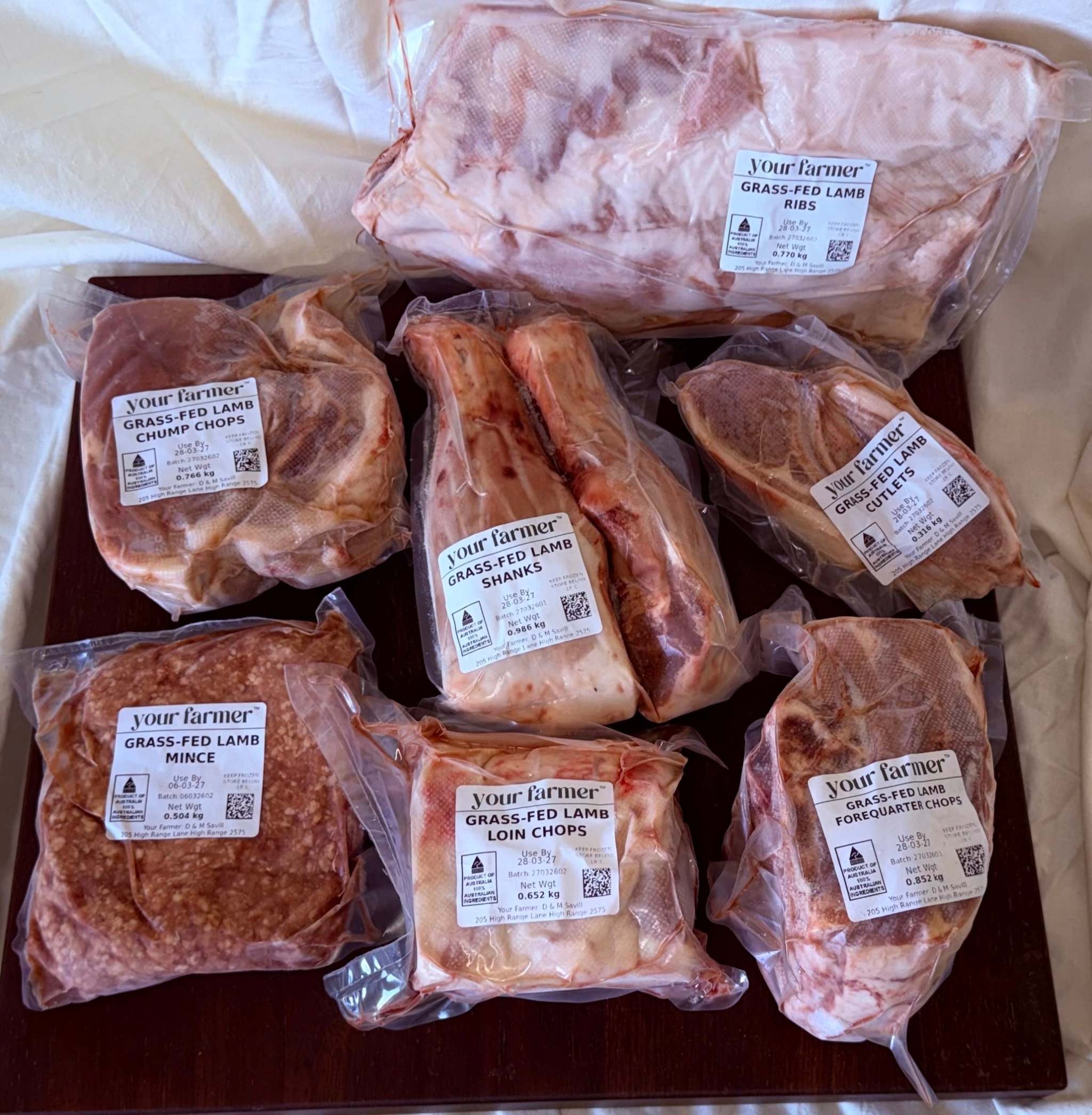
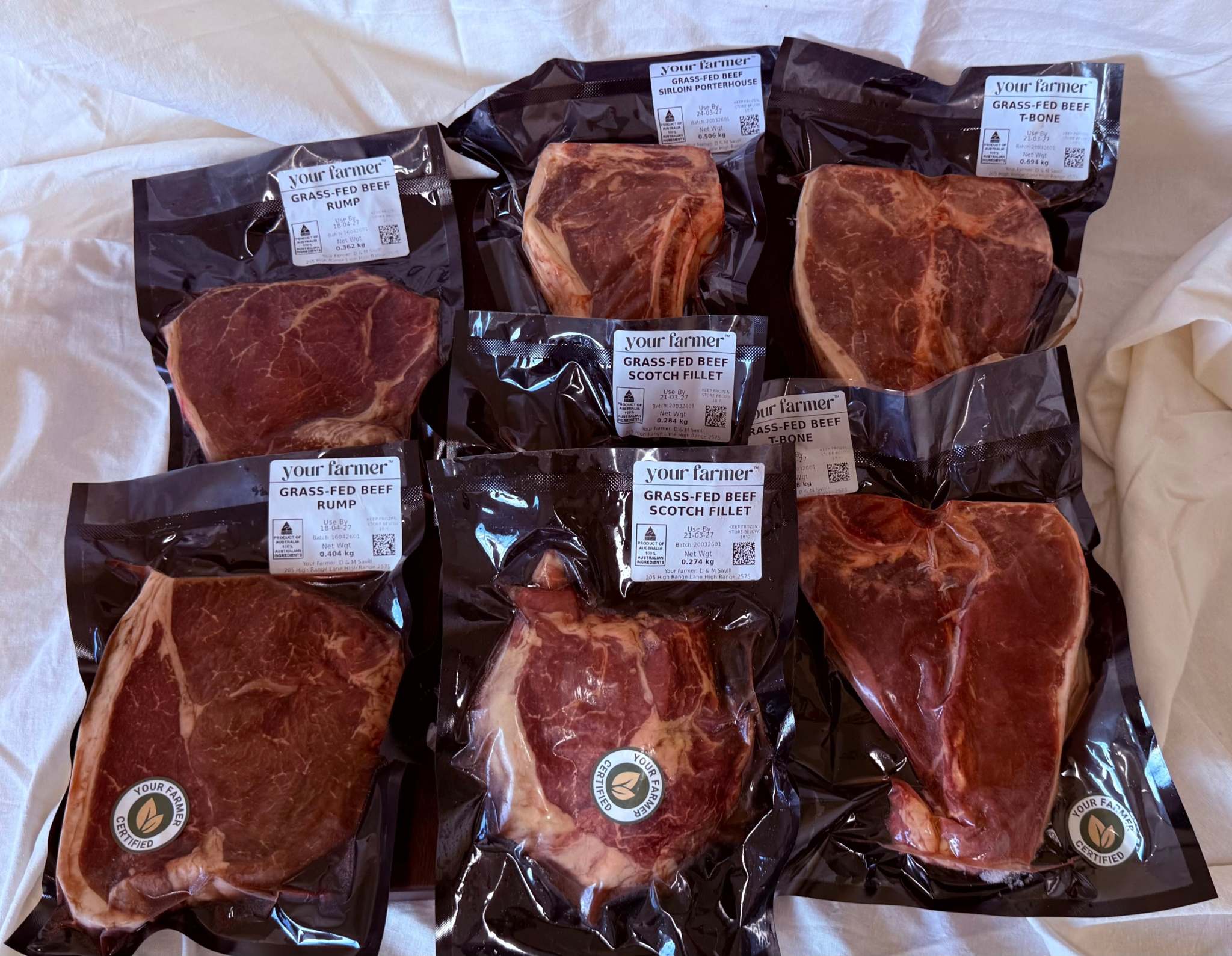
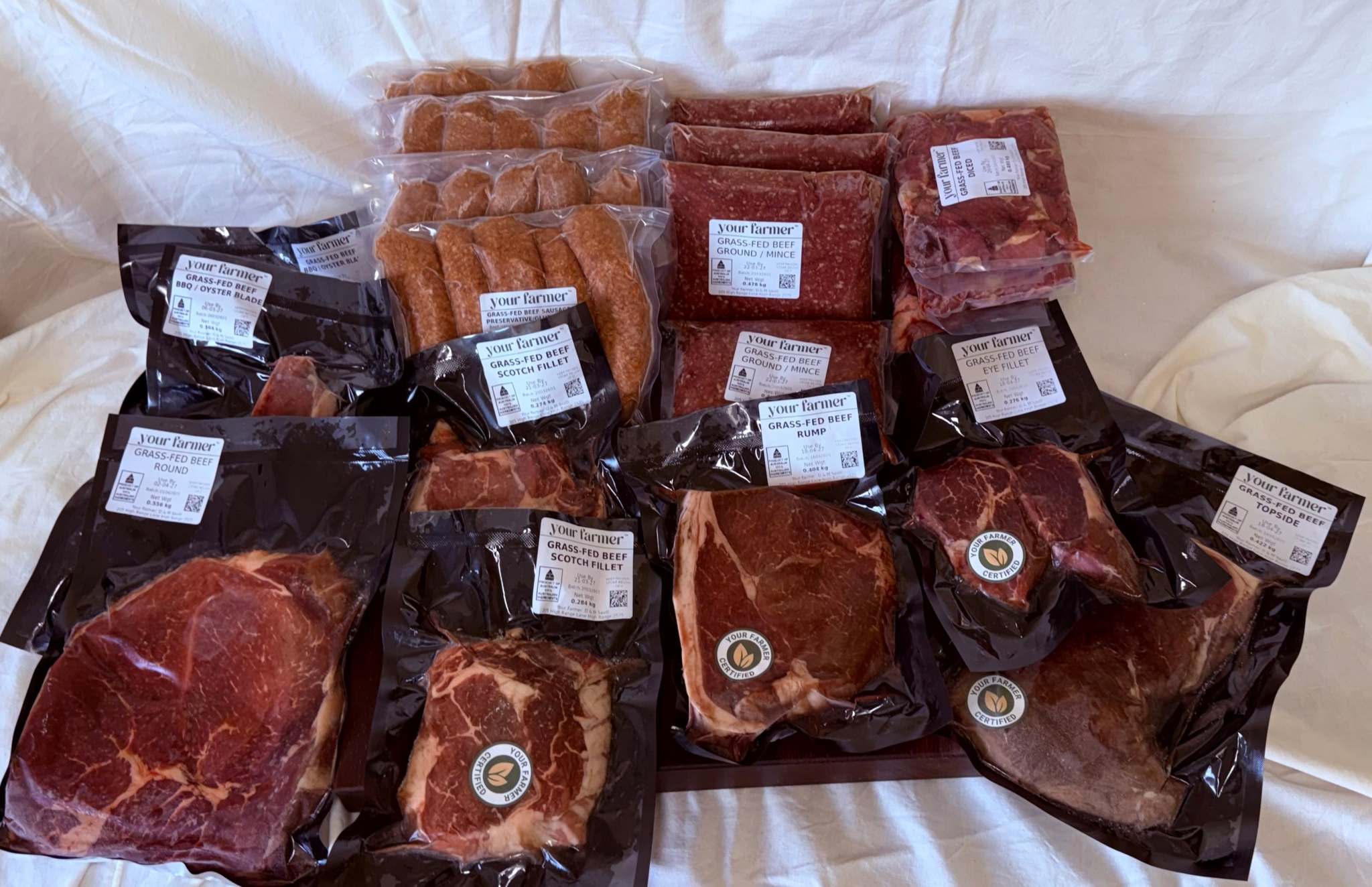
Raw medallions keep two to three days in the coldest part of the fridge, and if yours arrived frozen, thaw them overnight in the fridge rather than on the bench. Cooked fillet is best eaten the night you make it — reheating tends to undo all your careful medium-rare work — so if there are leftovers, slice them cold and thin the next day for a steak sandwich with mustard, or over a green salad. The sauce keeps two days in the fridge; loosen it over low heat with a splash of milk. The twin pack turns up in the Pack A rotation of our grass-fed beef CSA share, and when there's surplus you'll also find the eye fillet twin pack on its own.
Frequently asked questions

How do I know when the medallions are done?

A meat thermometer takes the guesswork away: pull them off the pan at 52–54°C and they'll rise to a perfect medium-rare while resting. Without one, press the top — medium-rare feels springy with a little give, not soft and not firm.

Can I use light cream instead of thickened cream?

Thickened cream is the forgiving choice because it won't split at a simmer. If light cream is what you have, keep the heat low and stir it through just below a simmer rather than letting it bubble.

My medallions are thicker than 3cm — do I change anything?

Add a minute or so per side, or sear both sides and finish them in a 180°C oven for 4–5 minutes. Thicker steaks are where a thermometer really earns its keep.

Can I scale this up for four?

Yes — sear four medallions in two batches so the pan stays properly hot, and double the sauce ingredients. Crowding the pan makes the meat steam instead of sear.

Three Simple Steps

A whole table of real food.

Your Farmers grow grass-fed beef and lamb, pastured eggs and the best eco-grown veggies and produce — every item grown to the same ecological standard, every farmer one you can know by name. One subscription, your whole real-food shop.

01

Reserve your share — or try a pack

Subscribe to a share of the harvest, or start with a one-off fixed pack.

02

Make it your own

Pick your delivery rhythm and what's in the box. Skip or cancel anytime — no lock-in.

03

Cook, savour, know your farmer

We deliver in a reusable esky we collect next time. No couriers, no waste.

More Recipes

View all

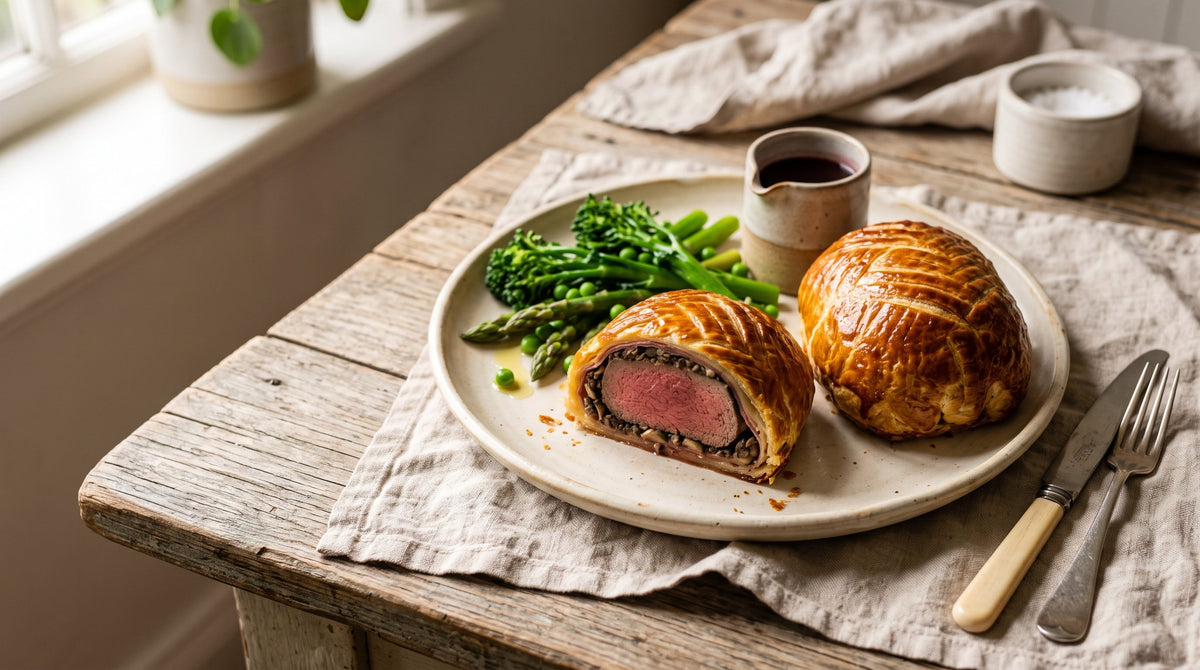
Individual beef Wellingtons made with grass-fed eye fillet medallions, one cut open to show a medium-rare centre.

Individual Beef Wellingtons for Two

The grand project, cut down to exactly what's in the pack

A whole beef Wellington is a magnificent thing that needs a dinner party to justify it. Individual Wellingtons are the smarter play: your two 140g medallions are precisely the right size, everyone gets their own golden pastry parcel, and there's no nervous carving in front of an audience. This is a proper Saturday-afternoon project — duxelles, prosciutto, puff pastry, the works — but every stage is honest and none of it is hard. Give it ninety minutes and pour yourself something while the oven does the final act.

Read moreabout Individual Beef Wellingtons for Two

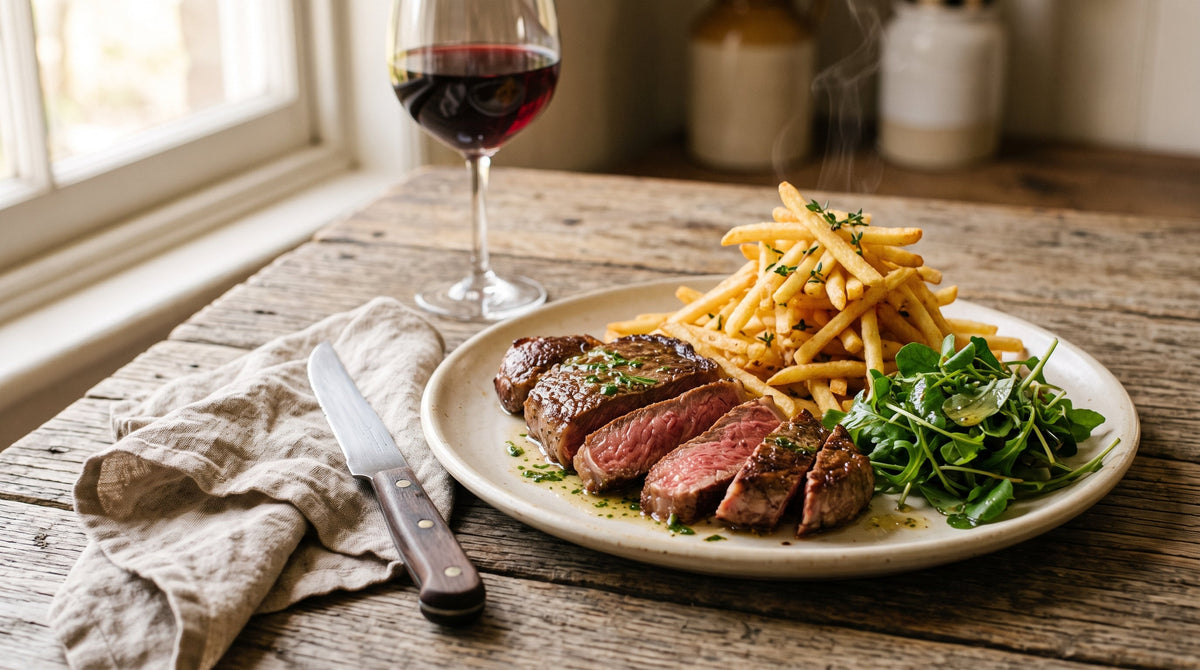
Sirloin steak frites with a rosy sliced grass-fed steak, golden thin chips and parsley butter, bistro style.

Sirloin Steak Frites

The bistro classic that's really just steak and chips, done properly

Every bistro in Paris built its name on this plate, and here's the quiet truth: it's steak and chips. What turns it into steak frites is care — chips cut thin and roasted properly crisp, a hard-seared steak rested as long as it takes, and a parsley-lemon butter that carries all the browned pan goodness over the top. The 420g sirloin halves neatly into two bistro-sized steaks, so this is dinner for two, done exactly right. Pour something red and don't answer the phone.

Read moreabout Sirloin Steak Frites

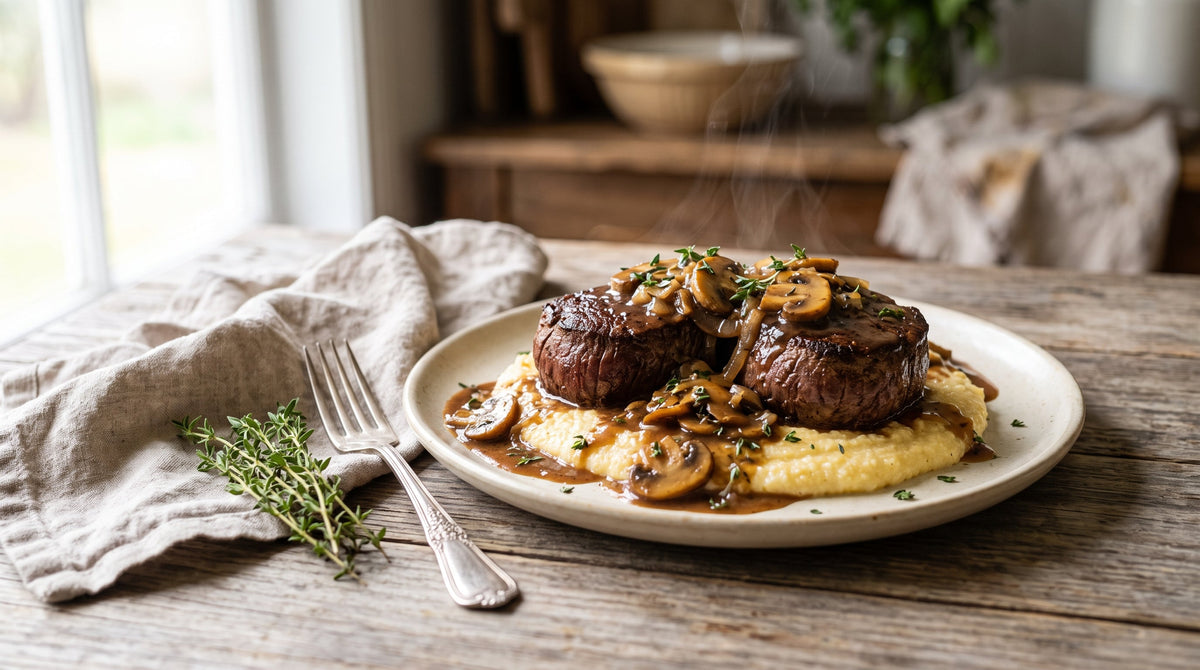
Pan-fried grass-fed eye fillet medallions with mushroom and Marsala sauce over soft polenta.

Eye Fillet with Mushroom and Marsala Sauce

The restaurant sauce that's secretly a one-pan job

Marsala and mushrooms is what good Italian restaurants have been spooning over fillet for generations, and there's a reason: the cut is mild and buttery-tender, and the sauce brings the caramel depth it's quietly asking for. Here's the good news — the whole thing happens in one pan. Sear the medallions, rest them under foil, and while they sit, the mushrooms, Marsala and cream build the sauce on the same browned bits the steaks left behind. Forty minutes, start to plate, and it looks like you booked a table.

Read moreabout Eye Fillet with Mushroom and Marsala Sauce