The Friday ritual: one great steak, spuds that shatter

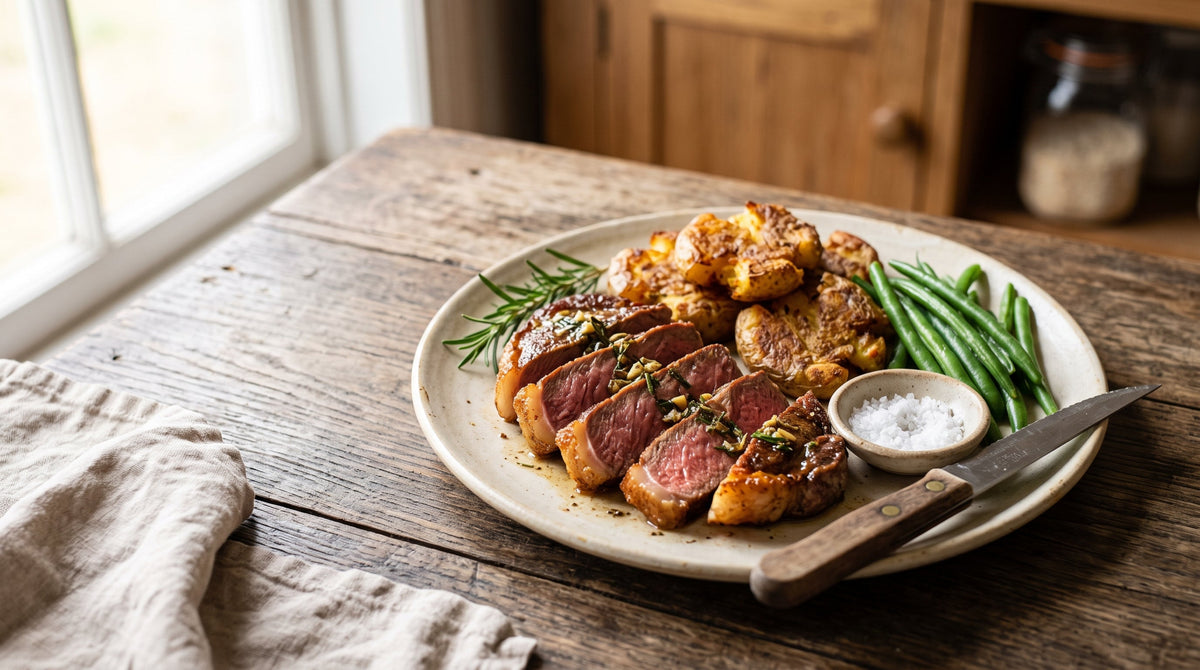
Call it sirloin, porterhouse or New York strip — it's the same handsome steak, and it's the one waiting in your Pack C share. This is the Friday-night ritual version: chat potatoes boiled, smashed flat and roasted until they shatter, while the steak gets a hard sear and a minute under foaming garlic-and-rosemary butter. Nothing clever, nothing fussy — just the plate half the pubs in the country built their reputation on, done at home for a fraction of the price.

1 hr 2 servings Prep 10 minsCook 50 minsMain CourseAustralian

Ingredients

  • 1 Your Farmer grass-fed sirloin steak (about 420g)
  • 800g chat potatoes
  • 3 tbsp olive oil
  • Salt flakes and pepper
  • 25g butter
  • 2 cloves garlic, bruised
  • 2 sprigs rosemary
  • Steamed green beans or a simple salad, to serve

Instructions

Heat the oven to 220°C. Boil the chats in well-salted water for 15 minutes, until just tender to a knife.

800g chat potatoes

Drain and let them steam-dry for 2 minutes. Tip onto an oiled oven tray, squash each one flat with the base of a glass, drizzle with 2 tbsp of the oil and scatter with salt flakes. Roast 30–35 minutes until deep golden and crisp at the edges.

2 tbsp olive oil

When the potatoes have about 15 minutes to go, take the steak from the fridge, pat it very dry and season generously on both sides.

420g sirloin steak

Heat the remaining oil in your heaviest pan over high heat until just smoking. Stand the steak fat-edge down for 2 minutes to render and crisp, then sear 3–4 minutes per side for medium-rare.

1 tbsp olive oil

Drop the heat to medium, add the butter, garlic and rosemary, and tilt the pan to spoon the foaming butter over the steak for a minute.

25g butter2 cloves garlic2 sprigs rosemary

Rest the steak on a warm plate, loosely covered, for 8–10 minutes while the potatoes finish.

Slice the steak thickly against the grain, plate it up with the smashed potatoes and greens, and spoon the rosemary-garlic pan butter over the beef. Salt flakes over everything, and serve.

Appears in

Pack C shares — Sirloin (~420g)

Sirloin, Porterhouse, New York Strip — One Steak, Three Names

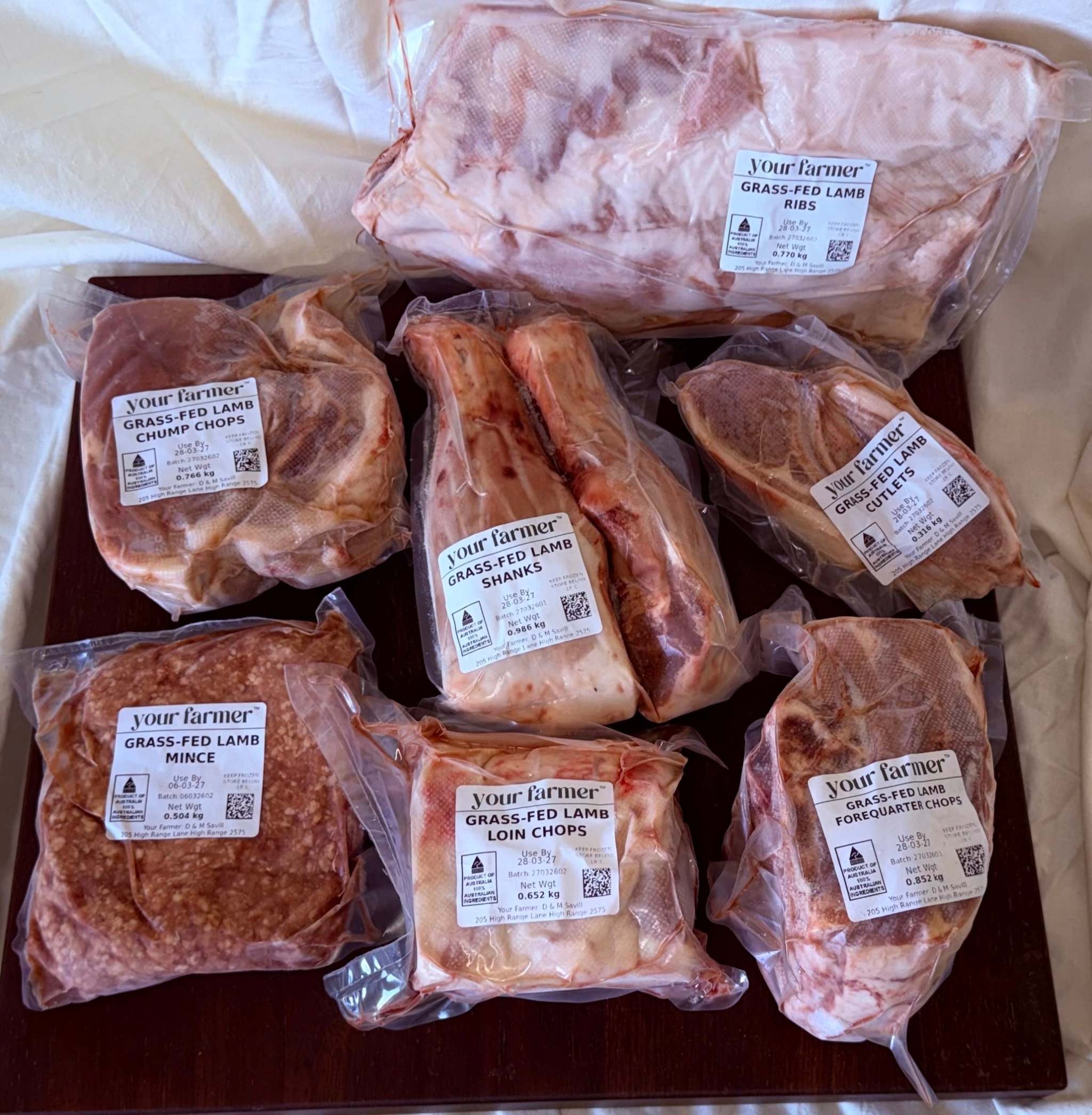
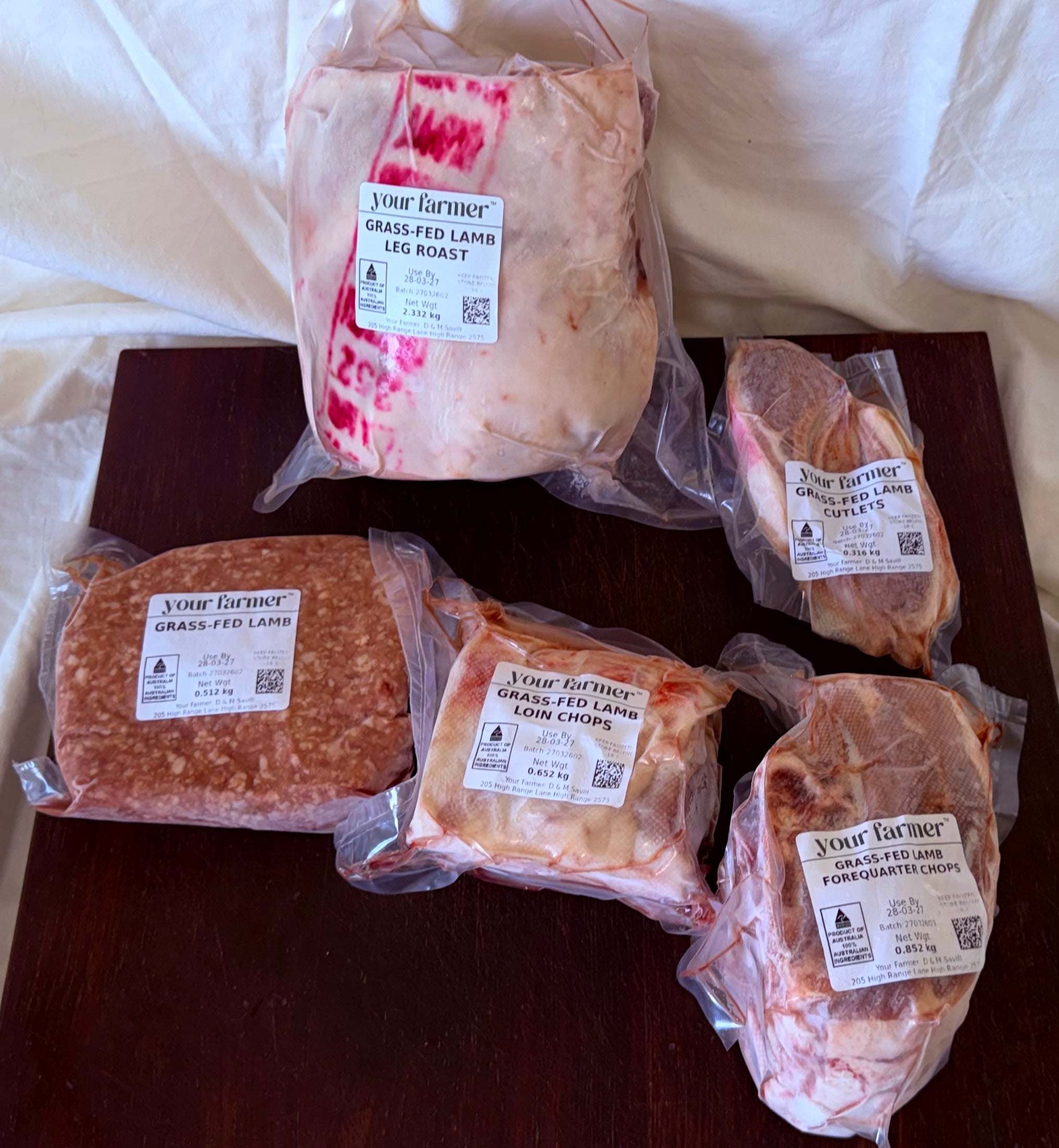
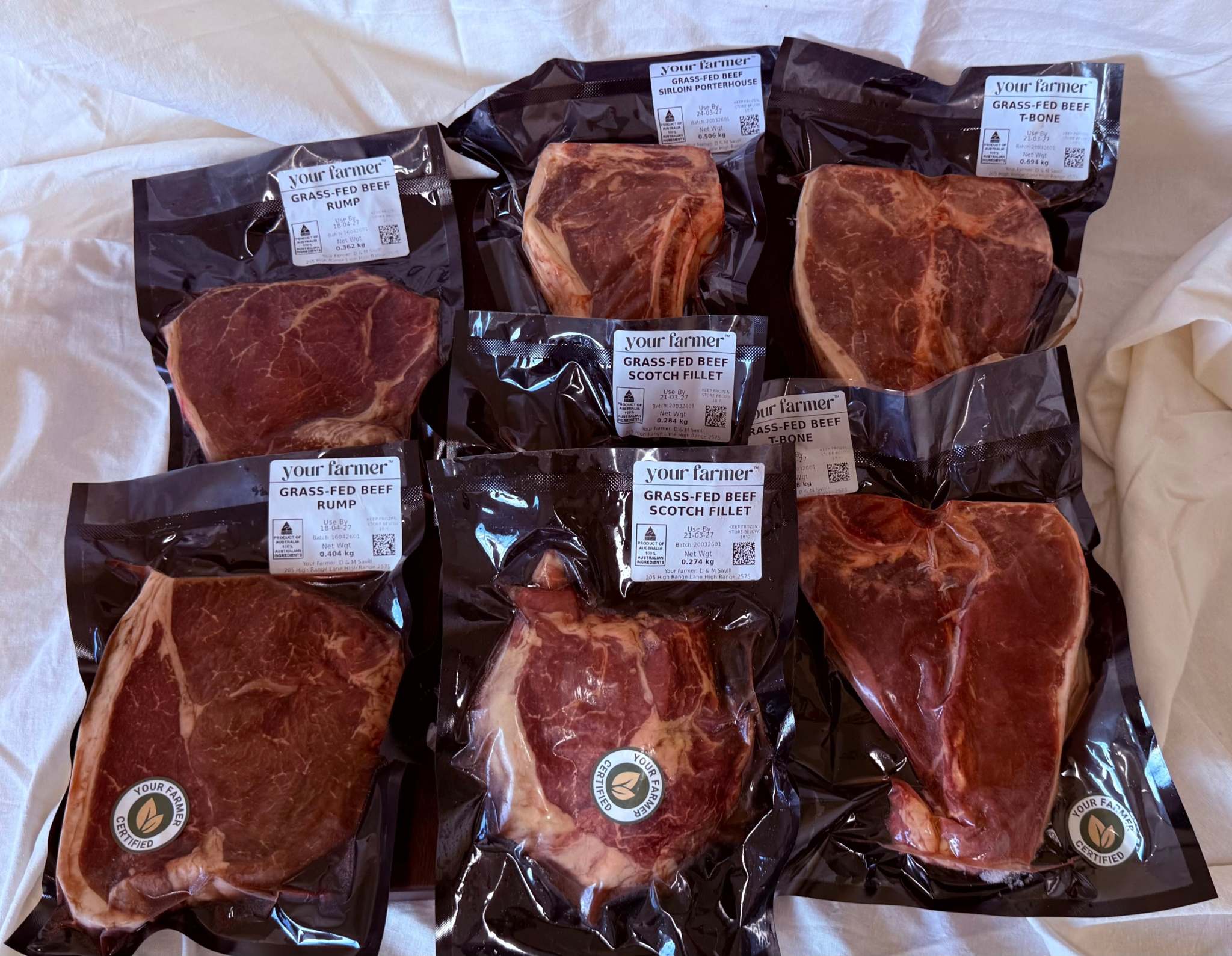
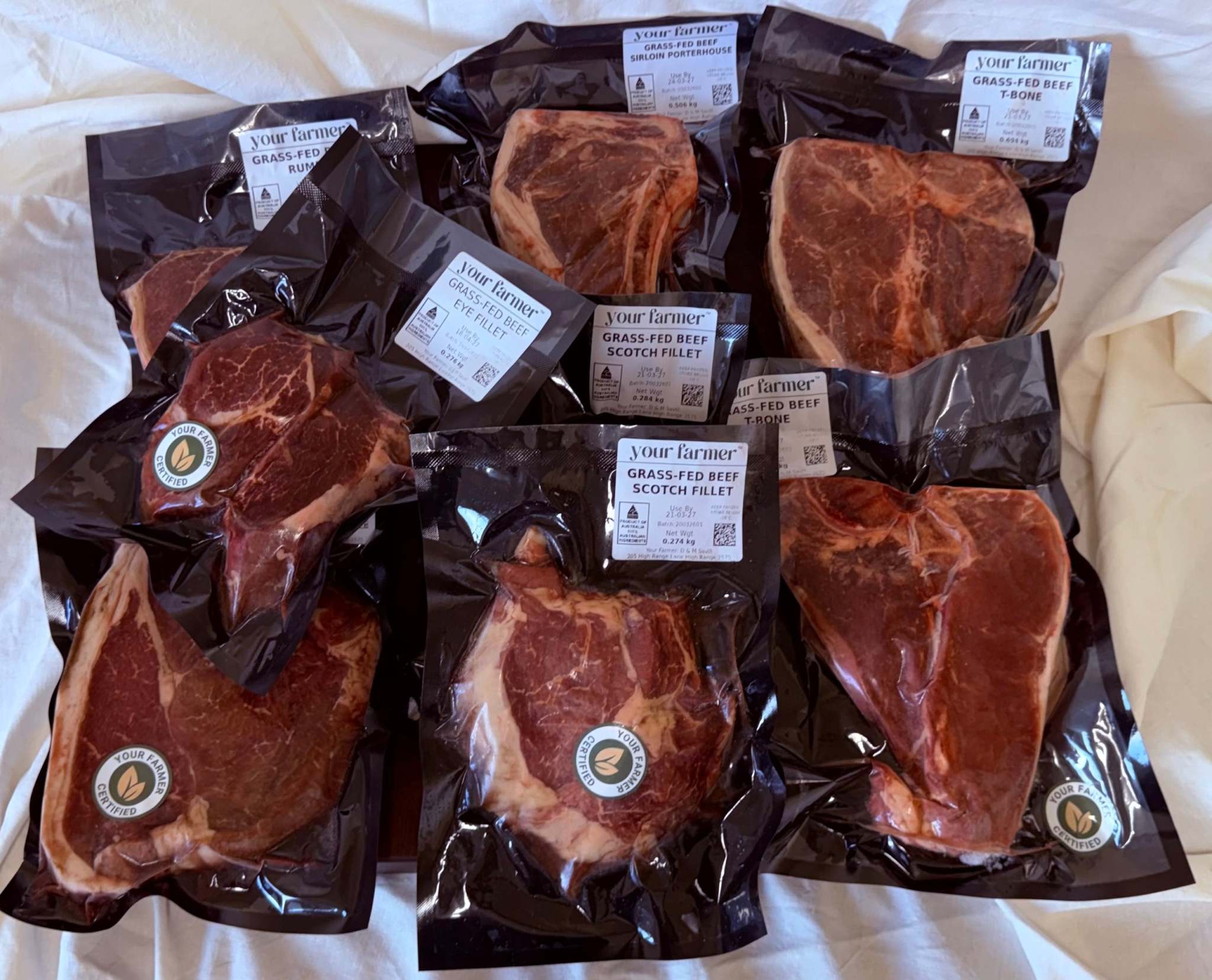
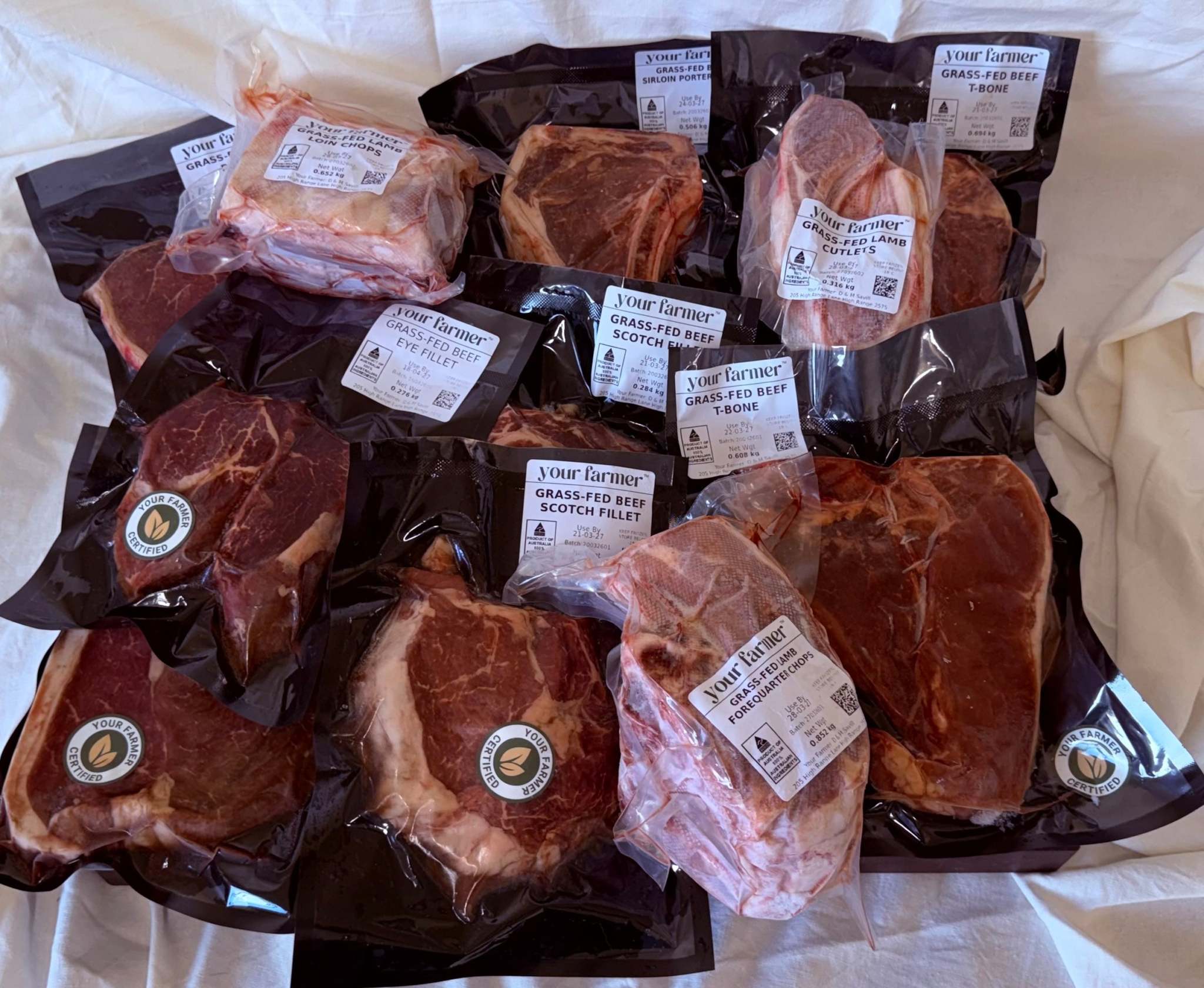
Few cuts cause more counter confusion than this one. In Australia, the boneless striploin gets called porterhouse in some states and sirloin in others; the Americans call it a New York strip and reserve "porterhouse" for an enormous T-bone. Same muscle every time: the striploin, running along the back behind the ribs. Because it does so little work, it stays tender and fine-grained, and the firm fat cap along one edge bastes the steak from the outside as it cooks. Your Farmer® sirloin comes from smaller-framed, 100% grass-fed cattle — there's a whole story on why smaller cattle make better steaks — and it arrives in Pack C of the grass-fed beef CSA share as one 420g steak: exactly right for two, sliced and shared.

Swaps and Variations

Scotch fillet takes the same treatment happily — richer, more marbled, same timings. Thyme swaps for rosemary, and a teaspoon of Dijon whisked into the resting-plate juices makes an instant mustard butter. The potatoes are endlessly flexible: toss them with rosemary before roasting, or skip the smash and do plain roast chats if the glass-squashing feels like a step too far. If chats are scarce, halved kipflers or quartered desirees do the same job happily. In summer, trade the beans for a sharp dressed salad and eat it outside. If you want to go deeper on the cut itself, our original grass-fed sirloin recipe makes a fine companion piece.

Storage and Leftovers

Cooked steak keeps in an airtight container in the fridge for up to 3 days. Smashed potatoes re-crisp brilliantly — 10 minutes in a 220°C oven brings them back to life in a way the microwave never will. The classic leftover move is the steak sandwich: cold sirloin sliced thin, good bread, mustard, pickles, maybe a leaf or two for appearances. Some people cook this dinner just to get there. The rosemary-garlic butter left in the pan deserves saving too — scraped into a small jar it keeps a week in the fridge, and it gives tomorrow's fried eggs or wilted greens a considerable head start on the day.
Frequently asked questions

Why stand the steak on its fat edge first?

The fat cap needs more time than the meat to render and crisp. Giving it a two-minute head start on its edge means golden, eatable fat instead of a chewy white strip — it's the single biggest upgrade to how this steak eats.

What internal temperature should I aim for?

Pull the steak at 52–54°C for medium-rare or 57–60°C for medium, then rest it — the temperature keeps climbing a few degrees off the heat. Grass-fed steak is leaner, so erring a minute early is the safer bet.

Can I prep the potatoes ahead?

Yes. Boil, drain and smash them onto the tray up to a day ahead and keep them covered in the fridge. Then it's just the 30-odd minutes of roasting on the night, timed to the steak.

How do I make this feed more than two?

Add a second steak from the share — rump or scotch work alongside sirloin — and double the potatoes across two trays. The pan butter stretches over two steaks without doubling.

Three Simple Steps

A whole table of real food.

Your Farmers grow grass-fed beef and lamb, pastured eggs and the best eco-grown veggies and produce — every item grown to the same ecological standard, every farmer one you can know by name. One subscription, your whole real-food shop.

01

Reserve your share — or try a pack

Subscribe to a share of the harvest, or start with a one-off fixed pack.

02

Make it your own

Pick your delivery rhythm and what's in the box. Skip or cancel anytime — no lock-in.

03

Cook, savour, know your farmer

We deliver in a reusable esky we collect next time. No couriers, no waste.

More Recipes

View all

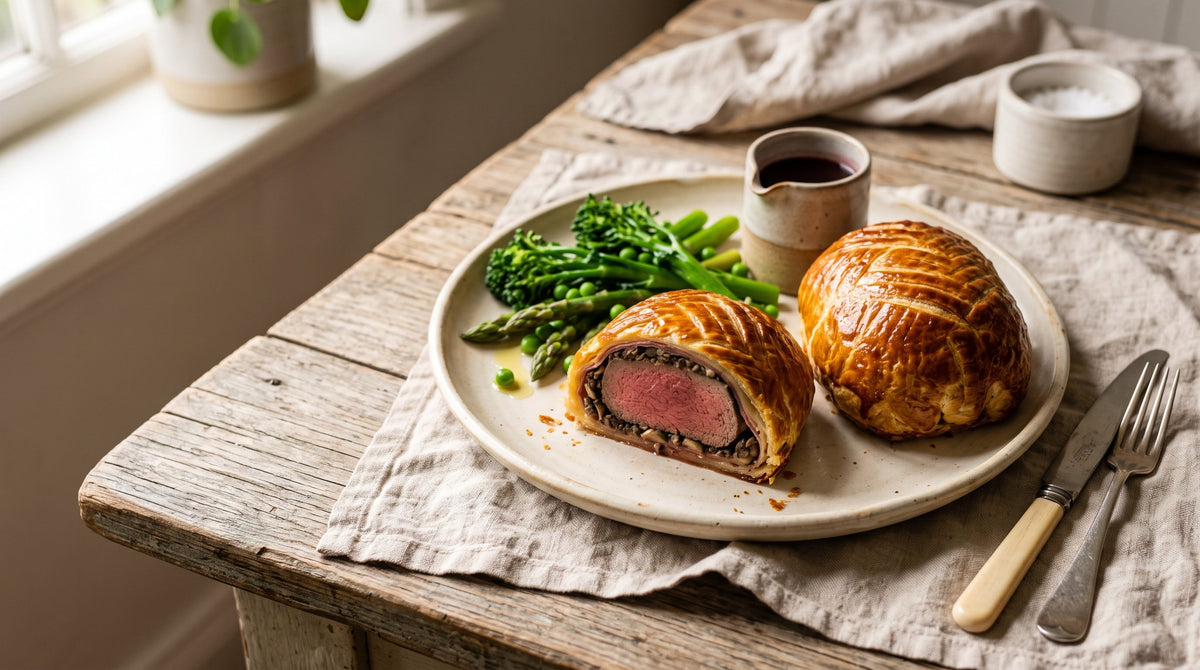
Individual beef Wellingtons made with grass-fed eye fillet medallions, one cut open to show a medium-rare centre.

Individual Beef Wellingtons for Two

The grand project, cut down to exactly what's in the pack

A whole beef Wellington is a magnificent thing that needs a dinner party to justify it. Individual Wellingtons are the smarter play: your two 140g medallions are precisely the right size, everyone gets their own golden pastry parcel, and there's no nervous carving in front of an audience. This is a proper Saturday-afternoon project — duxelles, prosciutto, puff pastry, the works — but every stage is honest and none of it is hard. Give it ninety minutes and pour yourself something while the oven does the final act.

Read moreabout Individual Beef Wellingtons for Two

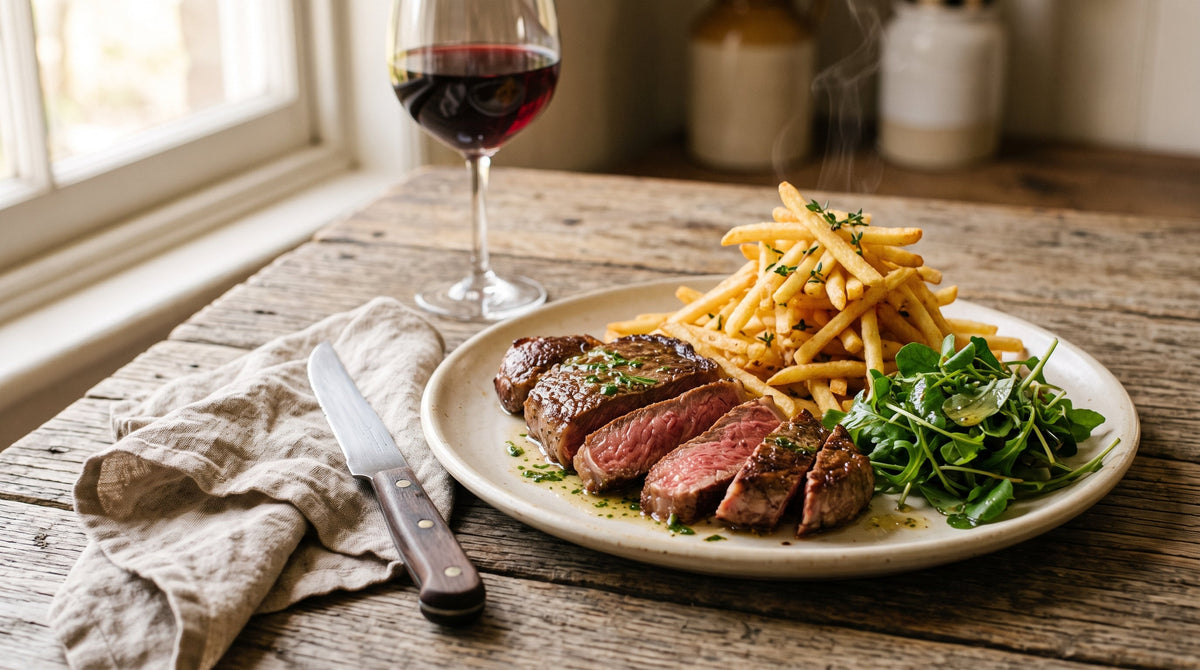
Sirloin steak frites with a rosy sliced grass-fed steak, golden thin chips and parsley butter, bistro style.

Sirloin Steak Frites

The bistro classic that's really just steak and chips, done properly

Every bistro in Paris built its name on this plate, and here's the quiet truth: it's steak and chips. What turns it into steak frites is care — chips cut thin and roasted properly crisp, a hard-seared steak rested as long as it takes, and a parsley-lemon butter that carries all the browned pan goodness over the top. The 420g sirloin halves neatly into two bistro-sized steaks, so this is dinner for two, done exactly right. Pour something red and don't answer the phone.

Read moreabout Sirloin Steak Frites

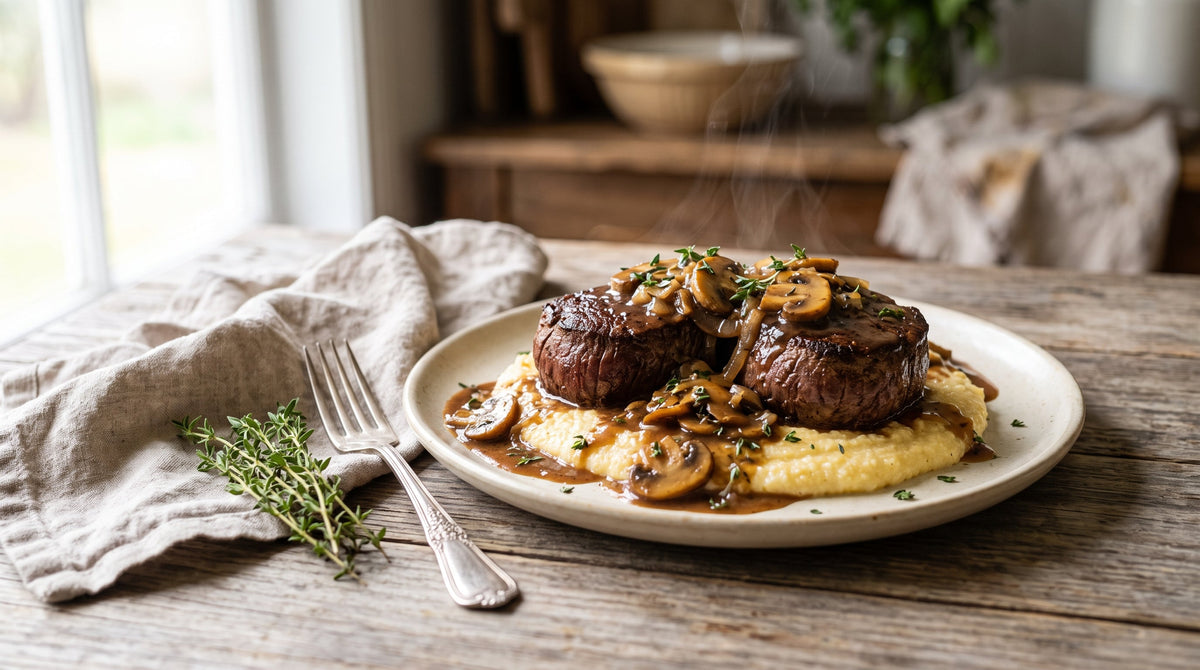
Pan-fried grass-fed eye fillet medallions with mushroom and Marsala sauce over soft polenta.

Eye Fillet with Mushroom and Marsala Sauce

The restaurant sauce that's secretly a one-pan job

Marsala and mushrooms is what good Italian restaurants have been spooning over fillet for generations, and there's a reason: the cut is mild and buttery-tender, and the sauce brings the caramel depth it's quietly asking for. Here's the good news — the whole thing happens in one pan. Sear the medallions, rest them under foil, and while they sit, the mushrooms, Marsala and cream build the sauce on the same browned bits the steaks left behind. Forty minutes, start to plate, and it looks like you booked a table.

Read moreabout Eye Fillet with Mushroom and Marsala Sauce