One tray, five sausages, and the oven does the rest

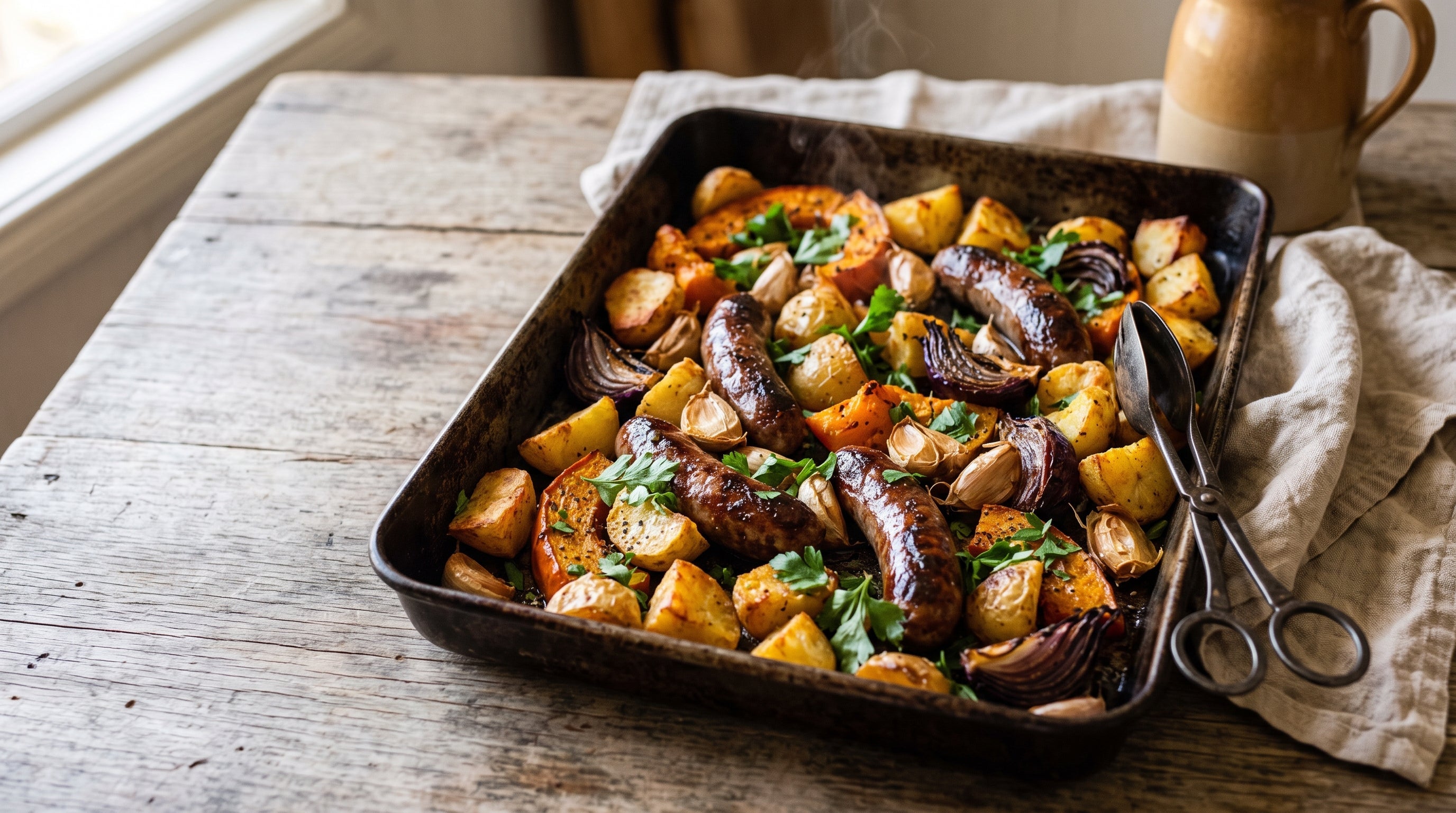
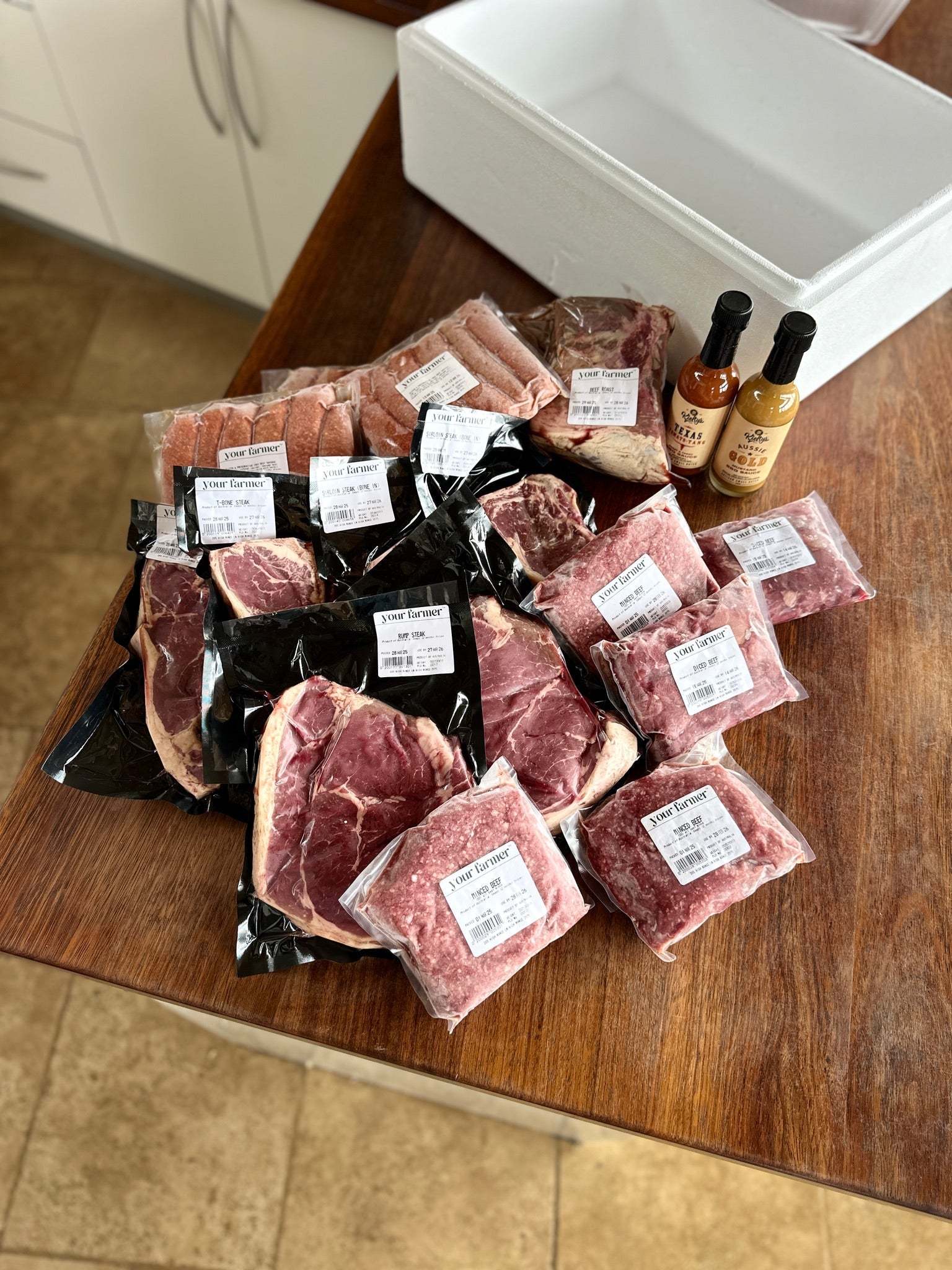
There are nights for projects, and there are nights when the best thing you can do is line a tray, turn the oven on, and walk away. This is the second kind. The whole five-pack goes in with potatoes, pumpkin and red onion, and fifty minutes later the sausages are browned, the veg has gone sweet and golden at the edges, and the washing up is one tray. If your beef share arrived this week and you're wondering where to start, start here.

1 hr 5 mins 4 servings Prep 15 minsCook 50 minsMain CourseAustralian

Ingredients

  • 5 Your Farmer grass-fed beef sausages
  • 600g potatoes, cut into 3cm chunks (no need to peel)
  • 600g pumpkin, peeled and cut into 3cm chunks
  • 2 red onions, cut into thick wedges
  • 4 cloves garlic, unpeeled
  • 2 tbsp olive oil
  • 1 tsp dried oregano
  • Salt and pepper to season
  • Handful of flat-leaf parsley, roughly chopped, to serve

Instructions

Preheat the oven to 200°C fan-forced. Toss the potatoes, pumpkin, red onion and garlic on your largest roasting tray with the olive oil, oregano, salt and pepper, and spread everything into a single layer.

600g potatoes600g pumpkin2 red onions2 tbsp olive oil

Roast for 20 minutes to give the vegetables a head start.

Nestle the sausages in among the vegetables and roast for 15 minutes.

5 sausages

Turn the sausages and roast a further 15 minutes, until they're deeply browned and cooked through with no pink in the middle (about 71°C at the centre) and the veg is golden at the edges.

Squeeze the roasted garlic from its skins and toss it through the vegetables. Scatter with parsley and serve straight from the tray.

4 cloves garlichandful of parsley

Appears in

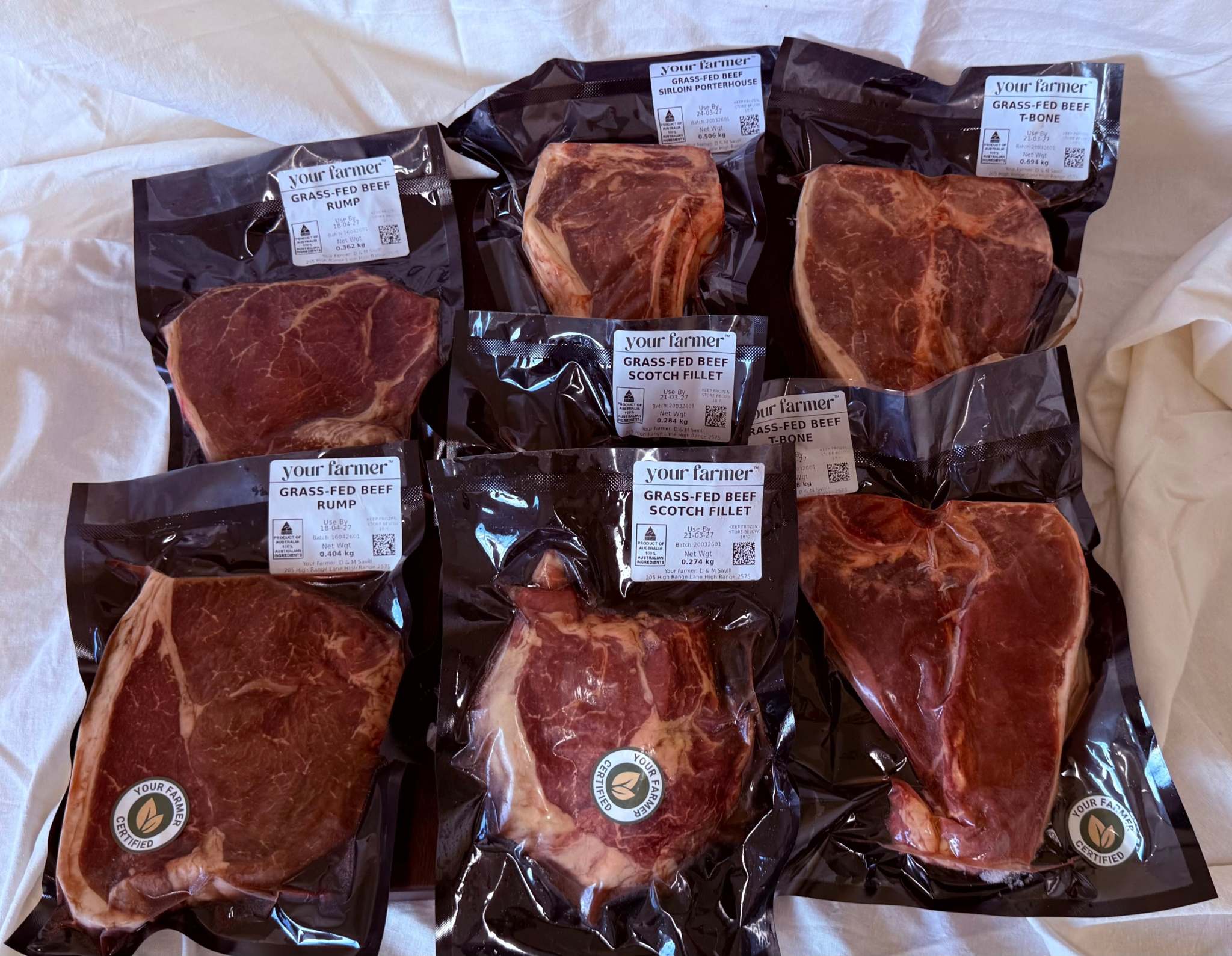
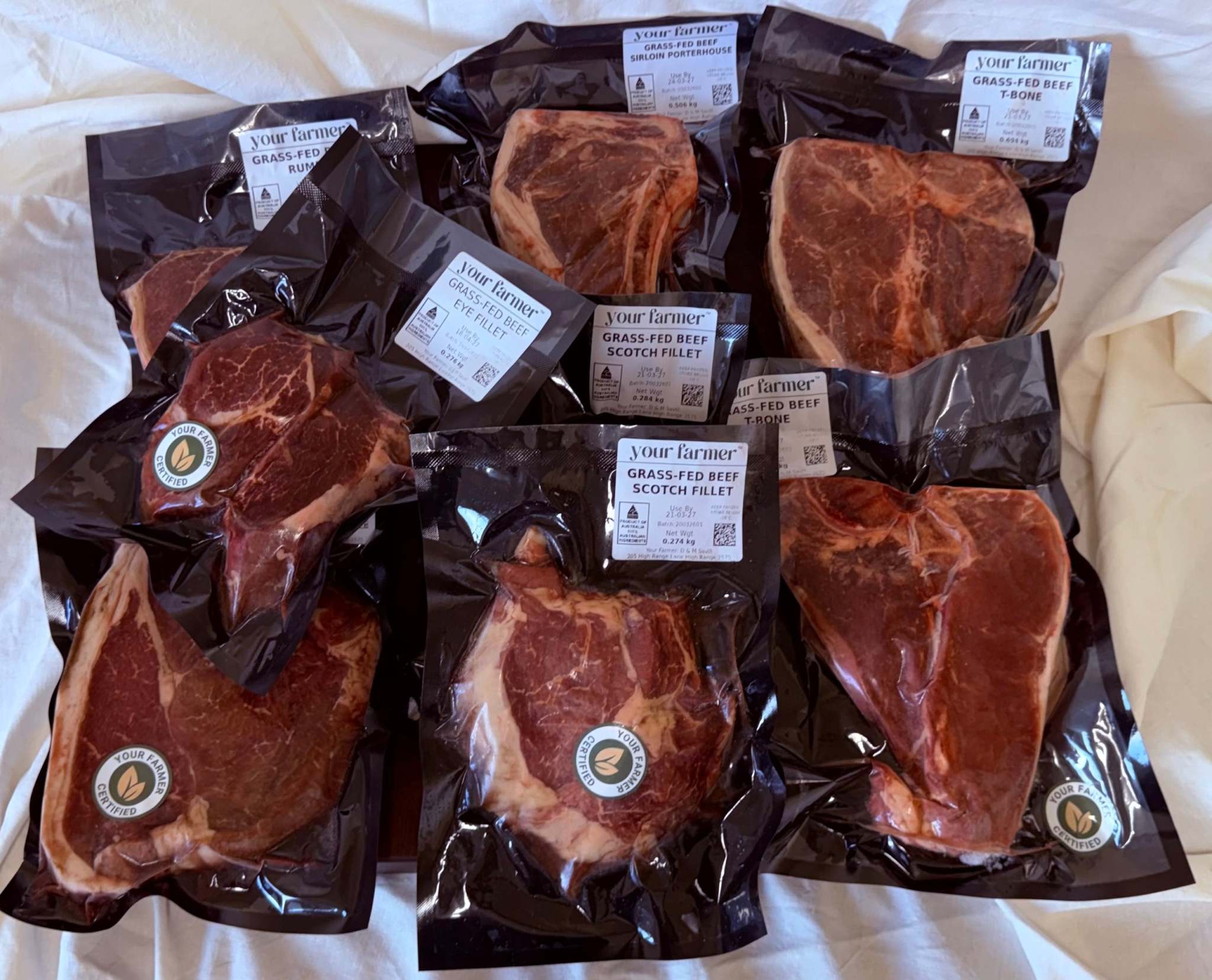
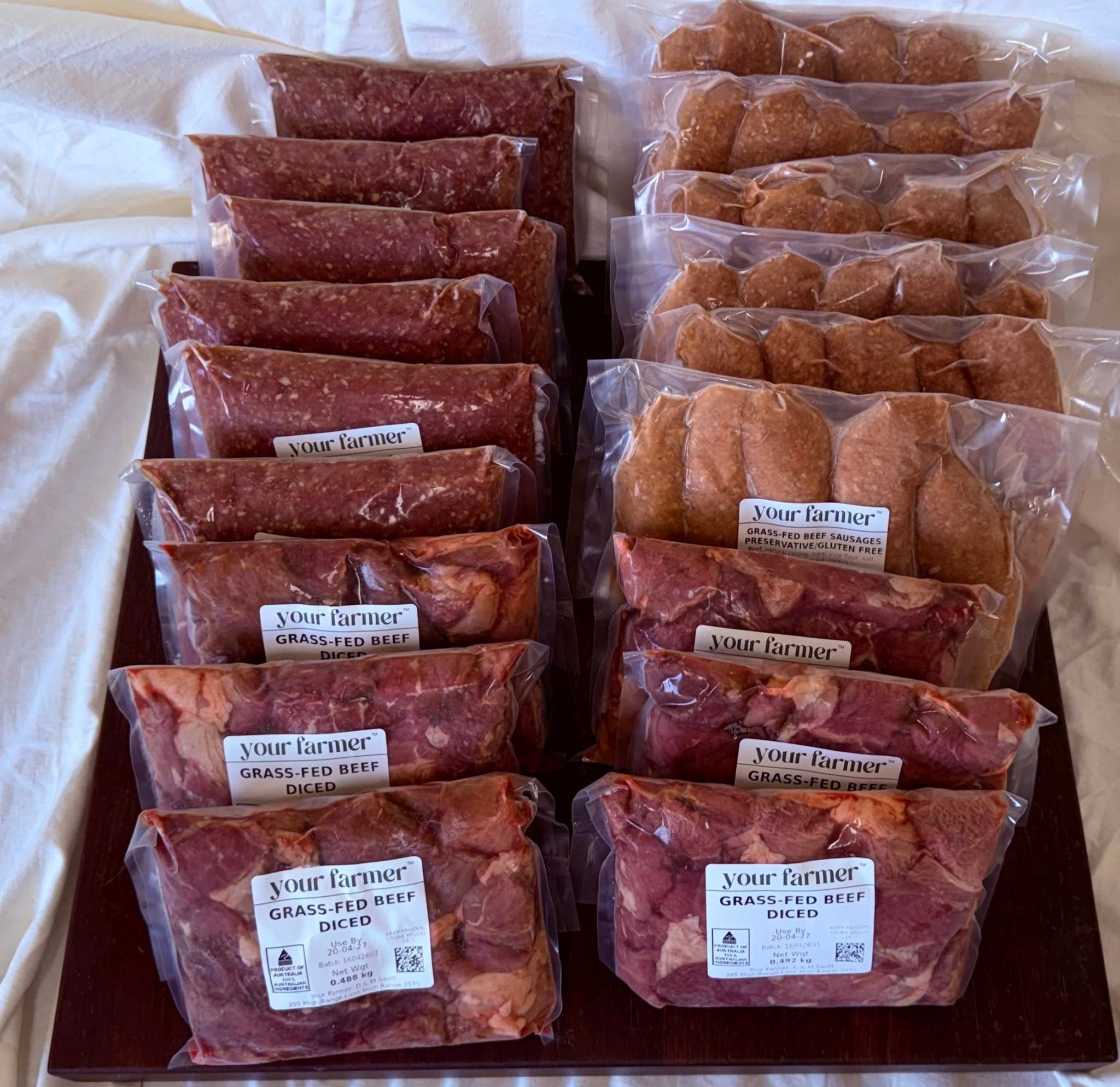
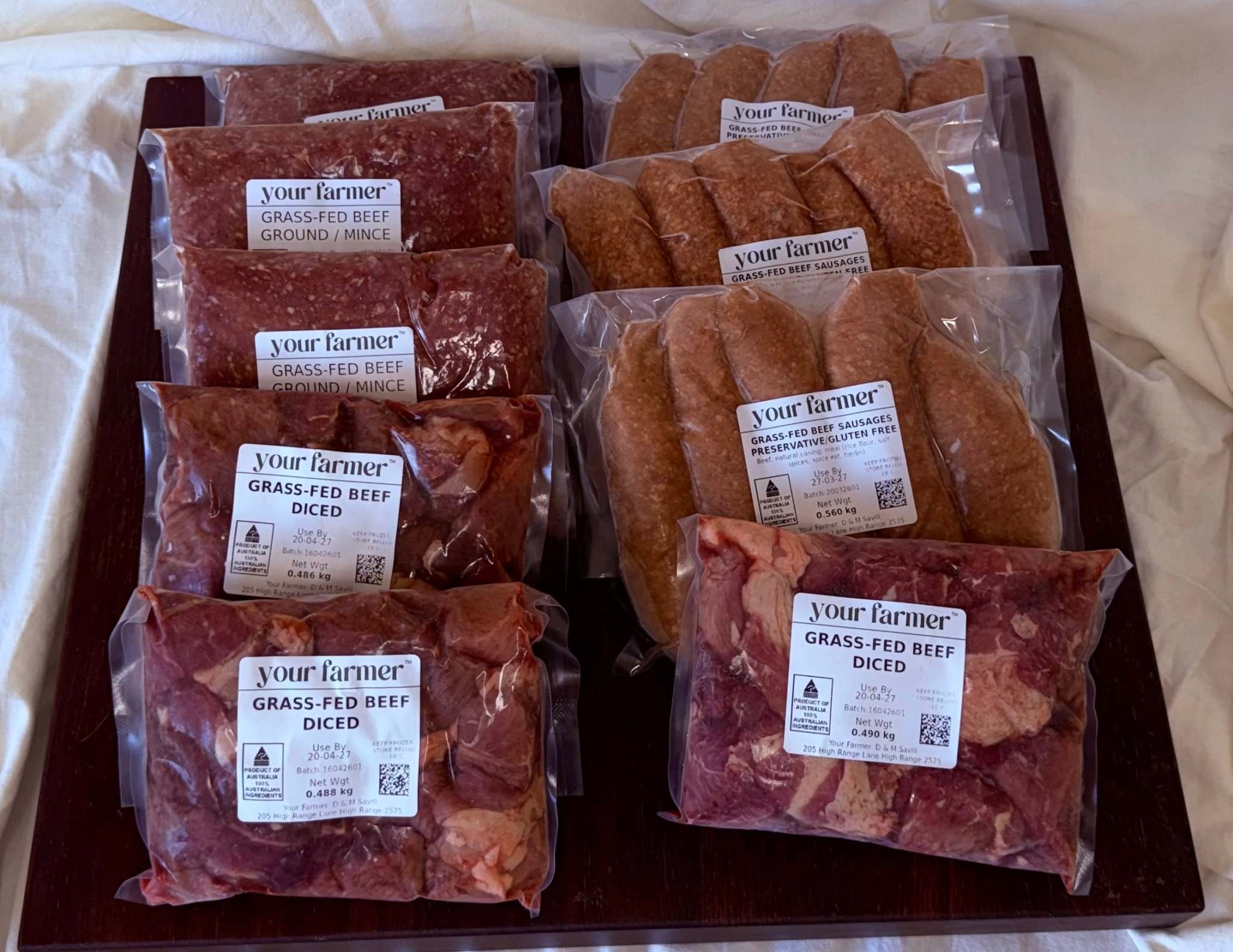
In every beef share — Sausages (5 pack, 600g)

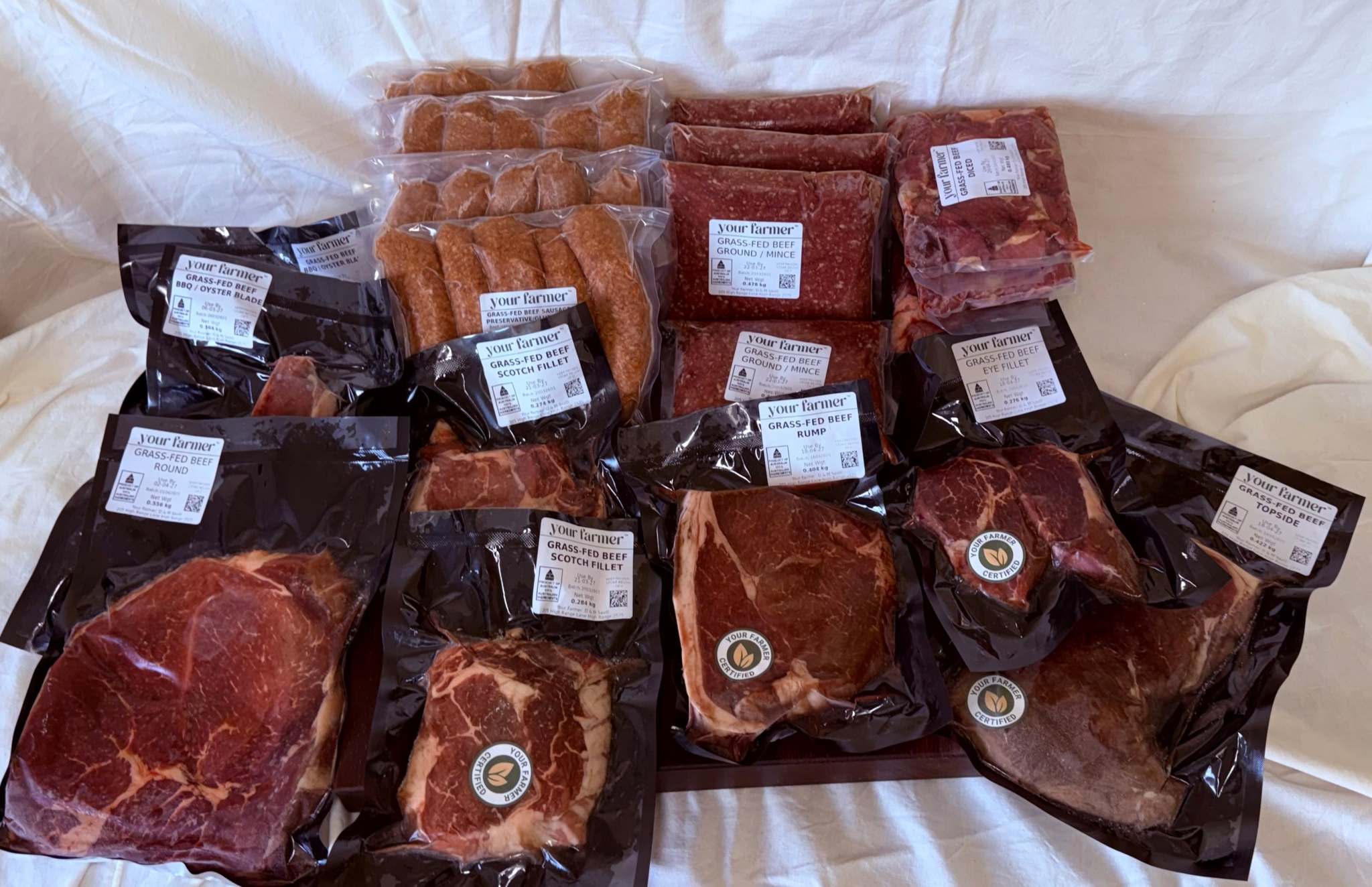
Your Farmer CSA grass-fed beef share — vacuum-sealed steaks, roasts, mince and sausages, paddock-to-plate NSW & ACT delivery
Sale price From $152.00Regular price $169.99
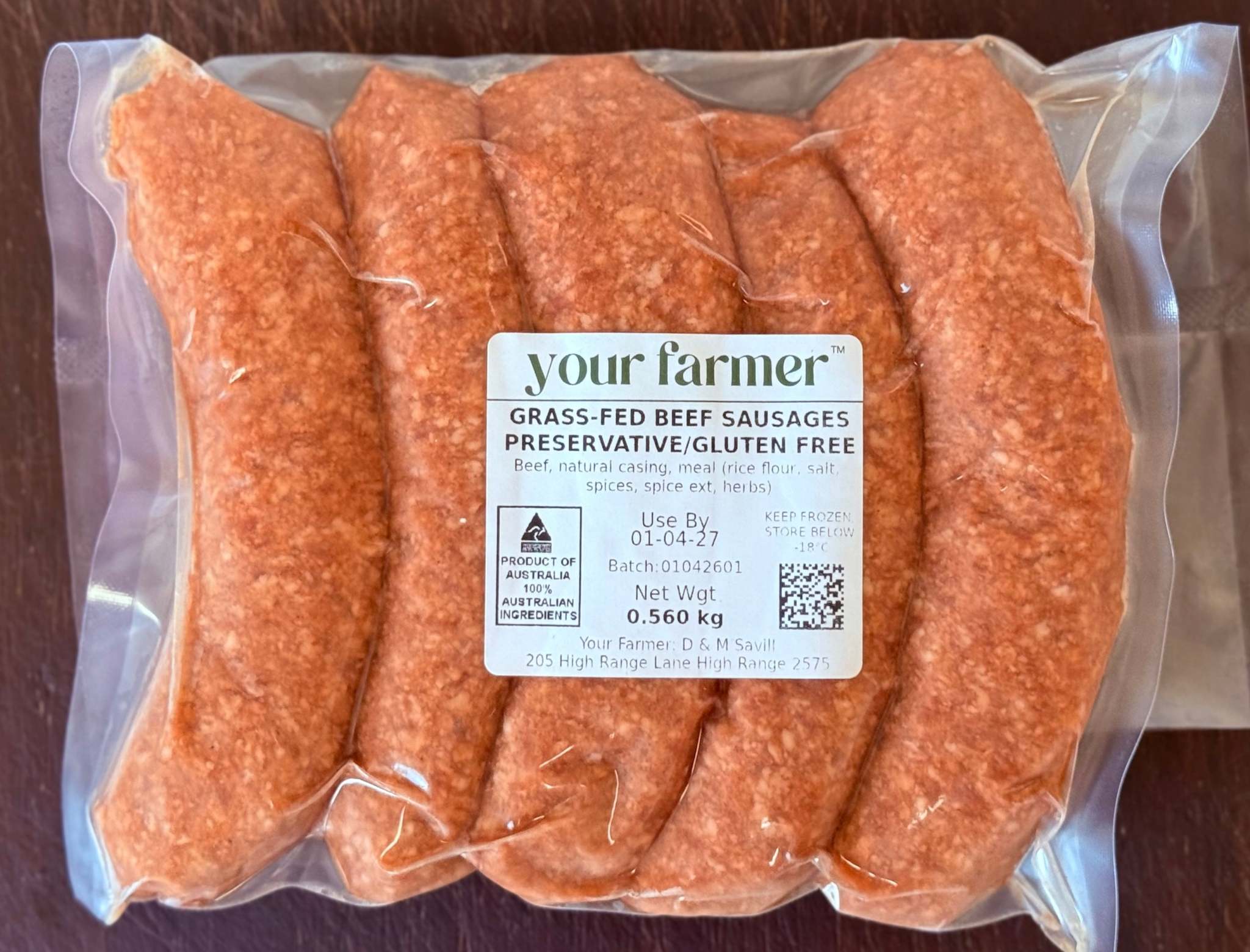
Preservative-free grass-fed beef sausages from Your Farmer — paddock-to-plate NSW & ACT delivery
Sale price $15.00Regular price $16.99

The Sausage in Every Share

Your Farmer® grass-fed beef sausages are the quiet staple of the whole box — five to a pack, about 600g, and in every grass-fed beef CSA share we send out. They're preservative-free and gluten-free, so the flavour is doing all the work: grass-fed beef, seasoning, and a natural casing. Grass-fed beef has a deeper, more savoury flavour than grain-fed, and in a sausage there's nowhere for it to hide — which is exactly how we like it.

That natural casing is also why a tray bake suits these sausages so well. Natural casings don't like being blasted — they want steady, even heat — and the oven gives them exactly that while you get on with your evening. One tip that matters: don't pierce them. Everything you want stays inside the casing.

Swaps and Variations

This is less a recipe than a formula, so raid the crisper. Carrot, parsnip and beetroot work beautifully through winter; in summer, swap the pumpkin for chunks of capsicum and zucchini and pull the first roasting stage back to ten minutes. Rosemary can stand in for oregano, and a drizzle of honey over the veg in the last ten minutes takes the caramelised edges somewhere special. Cooking for six? Add more veg rather than crowding the tray — two trays beat one overloaded one every time. And for more ideas across the whole box, our guide to cooking every cut of grass-fed beef is the place to start.

Storage and Leftovers

Leftovers keep in an airtight container in the fridge for up to three days, and cooked sausages freeze for up to three months — though in our experience they rarely last the week. Reheat in a 180°C oven for about ten minutes; the microwave works, but the oven brings the crisp edges back. The best leftover move we know: slice the sausages, chop the veg, and fold the lot through beaten eggs for a ten-minute frittata the next night. And if the pack disappears faster than the month does, you can always add an extra pack of beef sausages to your next delivery.
Frequently asked questions

Do I need to pierce the sausages before baking?

No — piercing lets the juices out and dries the sausages. At a moderate oven temperature the natural casings won't split.

How do I know the sausages are cooked through?

They should be firm, evenly browned and show no pink in the middle — about 71°C on a meat thermometer. Thirty minutes in a 200°C oven gets them there comfortably.

Can I cook the sausages from frozen?

Thaw them in the fridge overnight first. From frozen, the outside overcooks before the middle is done.

Why doesn't my veg go golden?

Almost always because the tray is overcrowded, which makes the vegetables steam instead of roast. Use your biggest tray, keep everything in a single layer, and split across two trays if you need to.

Can I double this for a crowd?

Yes — use two trays and swap them between shelves halfway through. Allow an extra five to ten minutes for the vegetables.

Three Simple Steps

A whole table of real food.

Your Farmers grow grass-fed beef and lamb, pastured eggs and the best eco-grown veggies and produce — every item grown to the same ecological standard, every farmer one you can know by name. One subscription, your whole real-food shop.

01

Reserve your share — or try a pack

Subscribe to a share of the harvest, or start with a one-off fixed pack.

02

Make it your own

Pick your delivery rhythm and what's in the box. Skip or cancel anytime — no lock-in.

03

Cook, savour, know your farmer

We deliver in a reusable esky we collect next time. No couriers, no waste.

More Recipes

View all

Greek-style grass-fed lamb roast with lemon and oregano served over golden potatoes in a ceramic baking dish.

Greek-Style Lamb Roast with Lemon and Oregano

Lemon, oregano and time — the Greek family-table treatment for the whole cut

Every Greek family has a version of this and none of them are wrong. Garlic, dried oregano and lemon get worked deep into the lamb, potatoes go underneath to catch everything that falls, and the oven runs slow enough that nobody has to watch it. What comes out isn't pink, carve-at-the-table lamb — it's the other thing entirely: golden on top, giving underneath, with lemony potatoes that half the table will fight over harder than the meat. It's Sunday cooking from a country that takes Sundays seriously.

Read moreabout Greek-Style Lamb Roast with Lemon and Oregano

Low-and-slow barbecued grass-fed lamb ribs with a dry-rub bark, sliced on butcher's paper.

Low-and-Slow BBQ Lamb Ribs with Dry Rub

Paprika, brown sugar, patience — American barbecue discipline meets Australian lamb

This is the recipe for the day you've decided the barbecue is the afternoon's entertainment, not just the cooking appliance. No foil, no shortcuts: a paprika and brown sugar rub, a hooded barbecue held low around 140C, and three or so unhurried hours while the fat renders, the spice sets into proper bark and the smell slowly takes over the street. Lamb ribs suit the American low-and-slow treatment better than most people expect — they're smaller and fattier than pork ribs, so you get all the bark in less time. Pour something cold. This one's a sit-outside recipe.

Read moreabout Low-and-Slow BBQ Lamb Ribs with Dry Rub

Grilled grass-fed lamb chump chops sliced over a warm French-style lentil salad with mustard dressing.

Grilled Chump Chops with Warm Lentil Salad

Charred chops over mustardy lentils — the bistro order, made at home

Walk into any honest bistro in France and there'll be lamb with lentils somewhere on the board. It works because the two halves trade favours — earthy lentils soak up the lamb's resting juices, and a sharp Dijon dressing cuts the richness of a properly charred chop. The lentils simmer away on their own for twenty-five minutes while you see to the chops, so the timing looks after itself. Hearty without being heavy, smart enough for guests, and most of it comes from the pantry.

Read moreabout Grilled Chump Chops with Warm Lentil Salad