Foaming butter, one heavy pan, no second-guessing

The first time a T-bone comes out of your share, this is the way to cook it. One heavy pan, hot enough to mean it. A proper sear on both sides, then the heat comes down, the butter goes in with garlic and rosemary, and you spoon that foaming, nutty butter over the steak until the kitchen smells like a steakhouse. Ten minutes of cooking, eight minutes of rest, and the biggest steak in the share is handled — no barbecue, no gadgets, no fuss.

30 mins 2 servings Prep 10 minsCook 20 minsMain CourseAustralian

Ingredients

  • 1 Your Farmer grass-fed beef T-bone steak (about 500g)
  • 1 tbsp olive oil
  • Salt and pepper to season
  • 60g butter
  • 3 cloves garlic, skin on, lightly crushed
  • 3 sprigs fresh rosemary

Instructions

Take the steak out of the fridge 10 minutes ahead so it loses its chill. Pat it very dry and season generously on both sides.

1 T-bone steak

Heat the oil in your heaviest pan over high heat until it's just starting to smoke — the pan being properly hot is half the recipe.

1 tbsp olive oil

Lay the steak in with the smaller fillet side toward the edge of the pan, where the heat is gentler — it's leaner than the sirloin side and cooks faster. Sear 3 minutes without moving it.

Flip and sear the other side for 3 minutes, then hold the steak up with tongs and brown the fat edge for 30 seconds.

Drop the heat to medium. Add the butter, garlic and rosemary, tilt the pan, and spoon the foaming butter over the steak for 2–3 minutes, aiming mostly at the sirloin side. Pull it at 52–54C in the thickest part for medium-rare.

60g butter3 cloves garlic3 sprigs rosemary

Rest the steak on a warm plate, loosely covered, for 8 minutes, with the pan butter poured over the top.

Carve both muscles off the bone, slice across the grain, and serve with the buttery resting juices — mash and greens or good bread alongside makes it dinner for two.

Appears in

Why the T-Bone Loves a Butter Baste

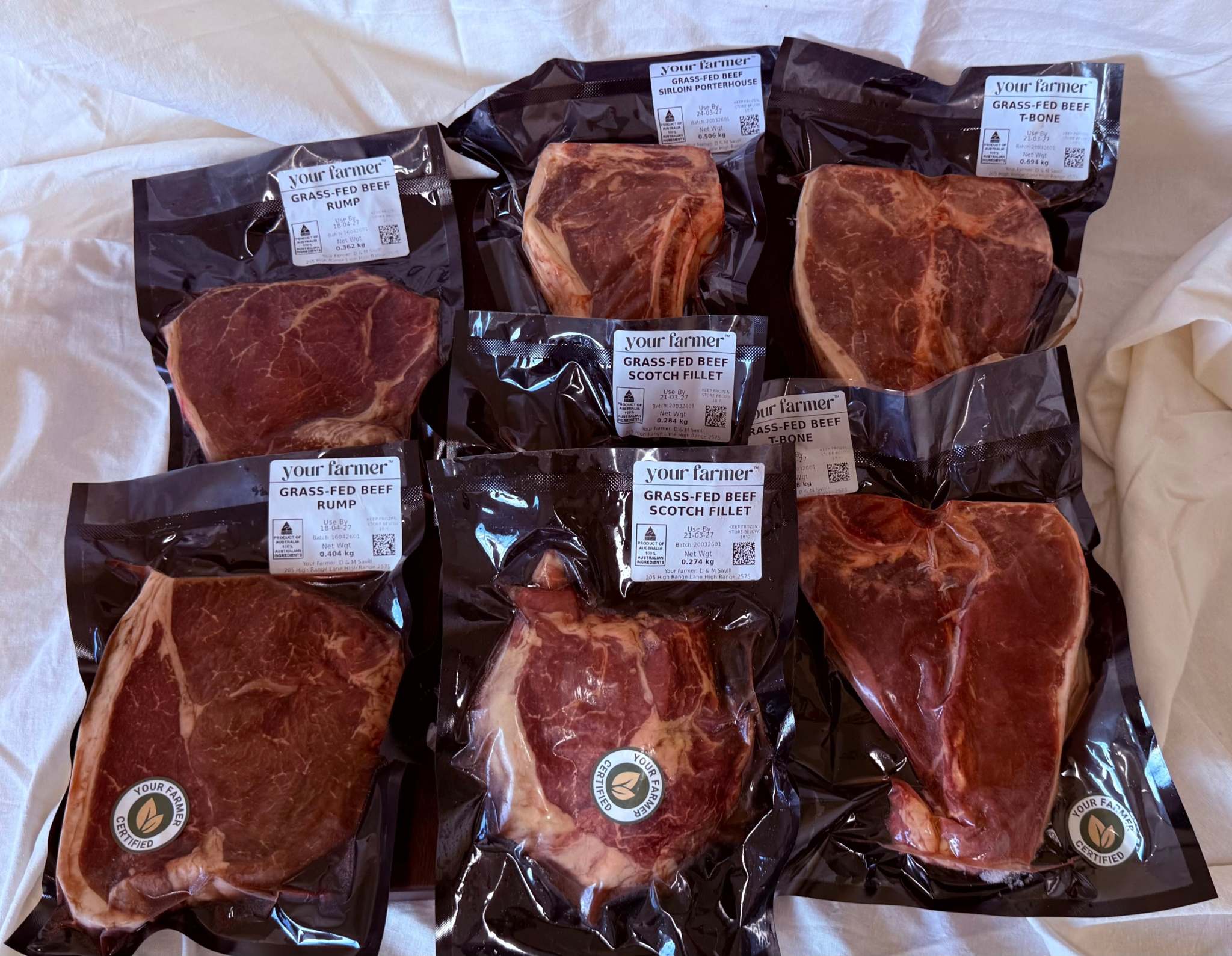
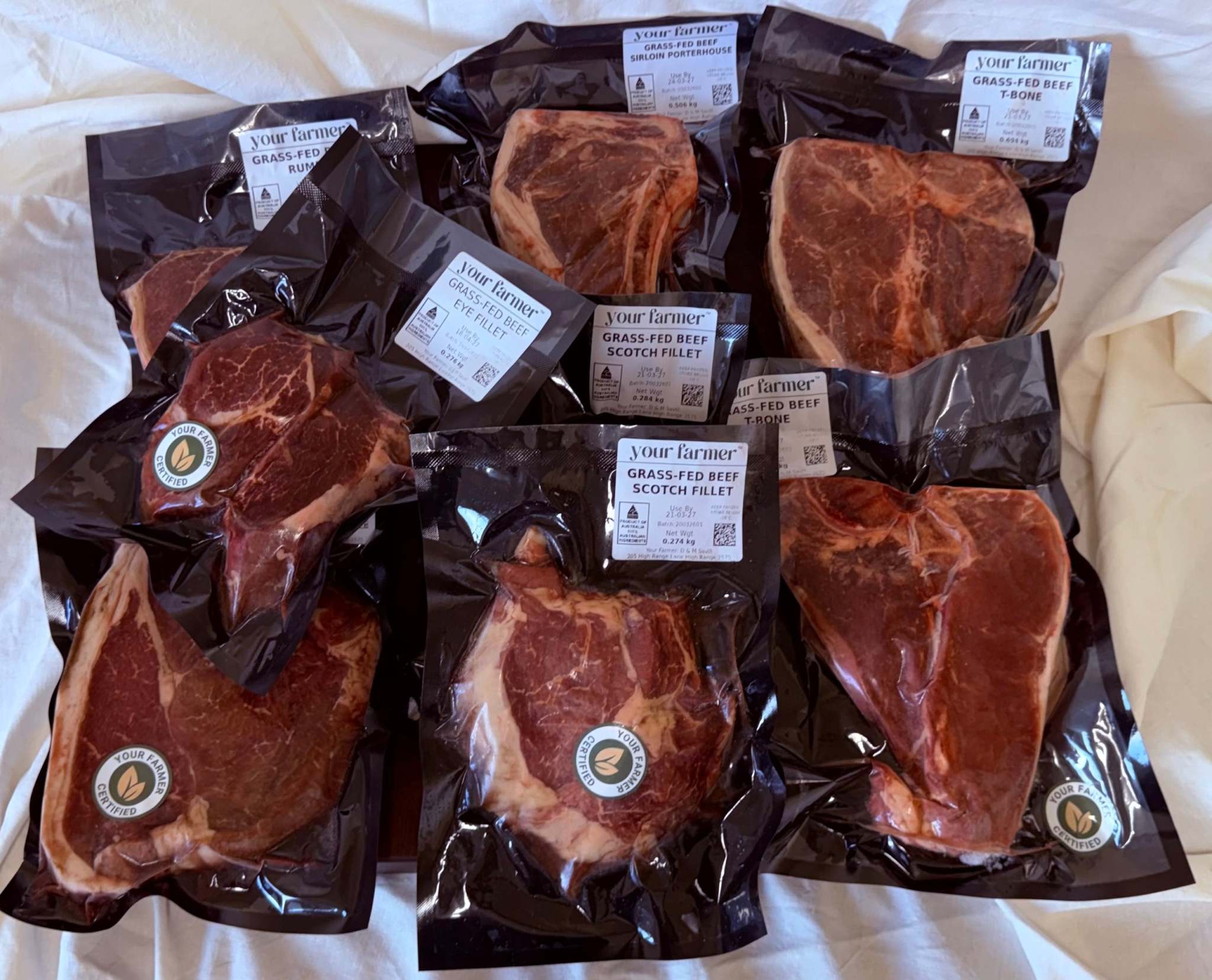
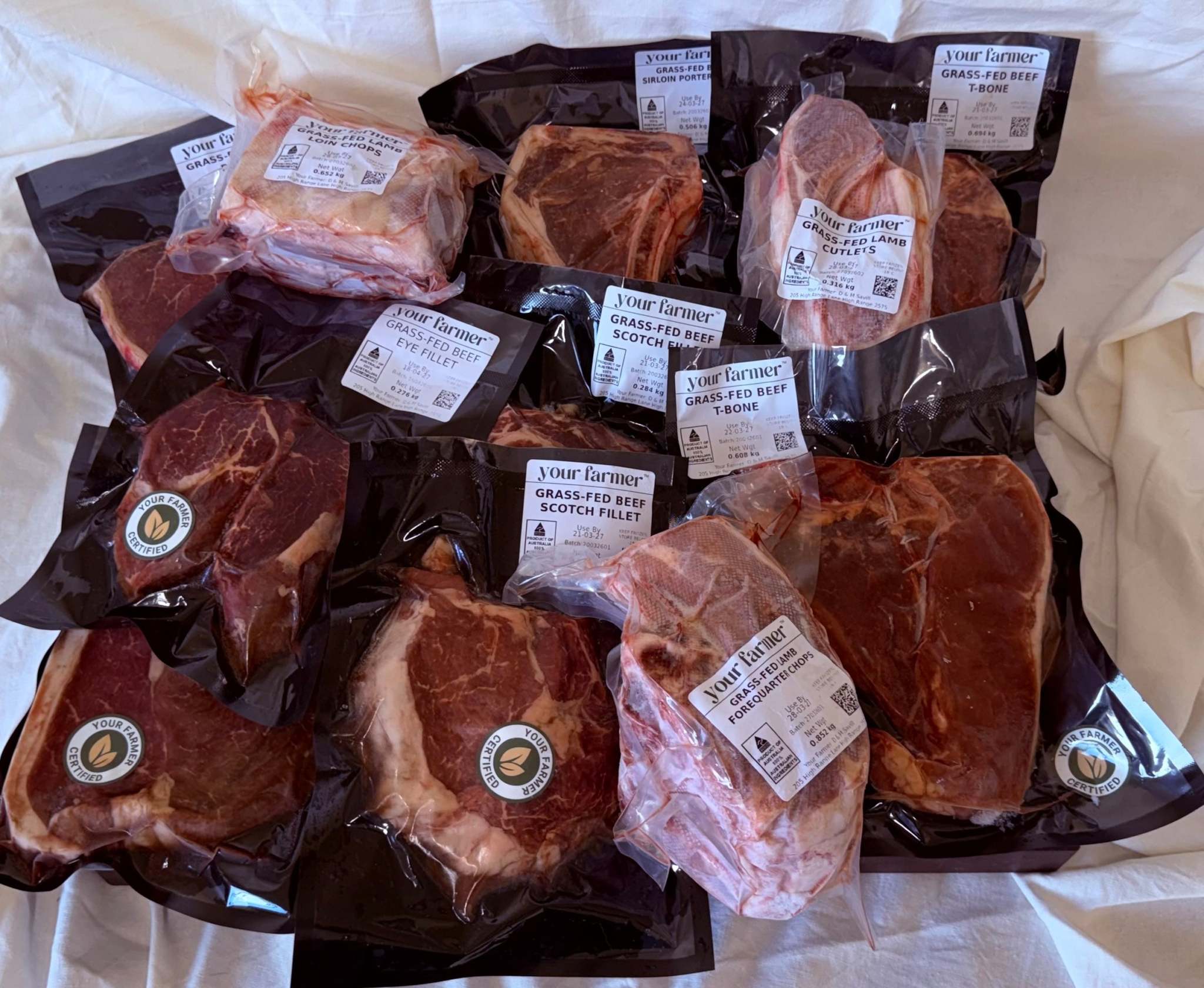
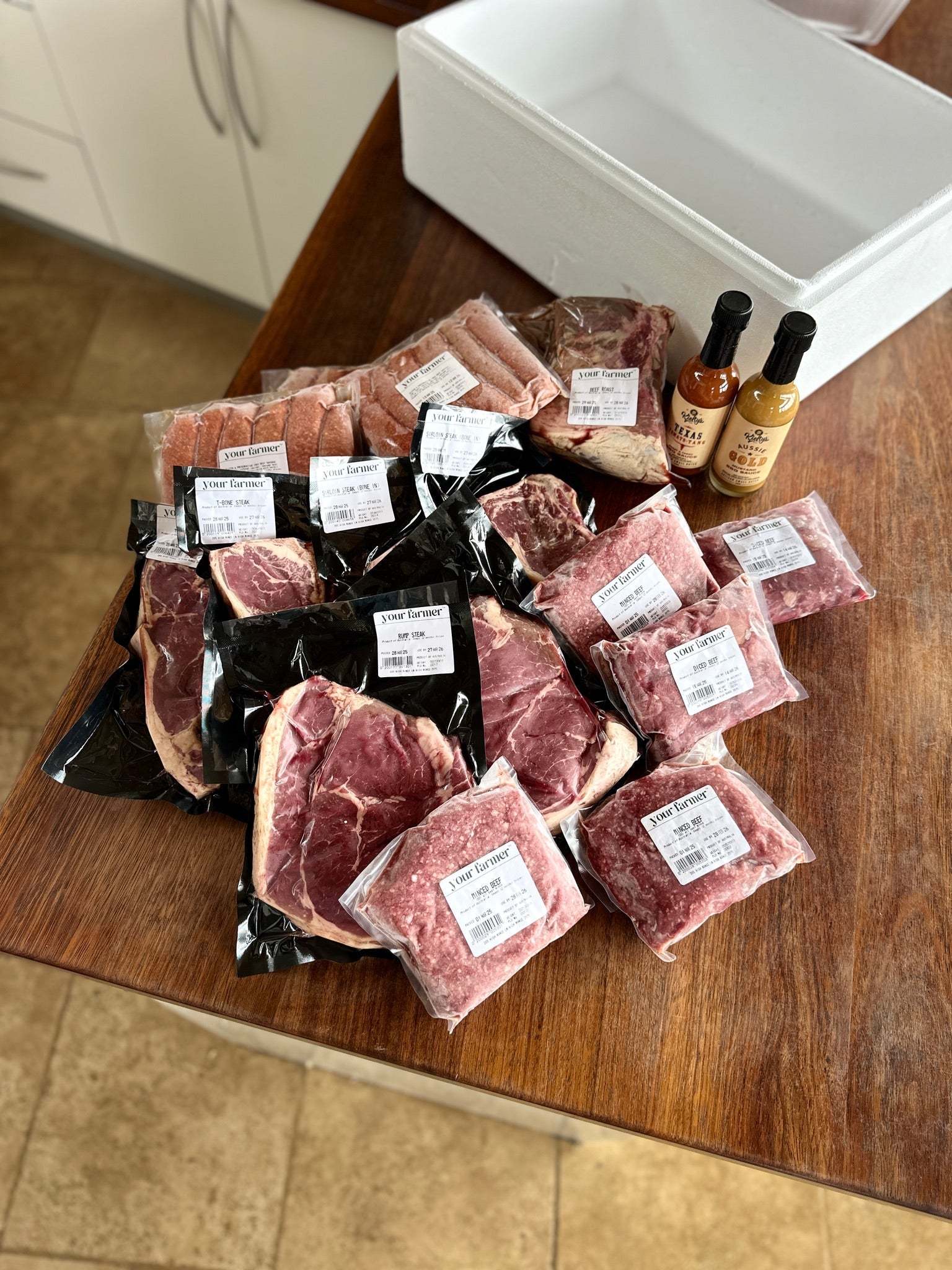
Grass-fed beef runs leaner than grain-finished — that's much of why it tastes like beef rather than butter — but lean steak appreciates a little fat coming back in the pan. Basting does three jobs at once: the butter carries the garlic and rosemary into the crust, it cooks the top of the steak while the bottom sears, and it evens out the heat across a thick cut. The T-bone rewards the technique more than most steaks because there are two muscles on that bone. The sirloin strip wants the fire; the smaller fillet side doesn't. So park the fillet toward the pan's edge, aim the spooned butter mostly at the sirloin, and let the bone — a natural insulator — look after the meat beside it. That's the whole two-zone trick, and it's the difference between a perfect T-bone and a perfect sirloin with a sad grey fillet attached. Your Farmer® T-bones come in at a proper 500g, one in every Pack B and Pack D box of our beef subscription.

Swaps and Variations

Thyme or sage stand in for rosemary happily. A couple of anchovy fillets melted into the butter add savoury depth without a hint of fish. If your household falls for this steak, make the butter ahead — mash garlic and herbs into softened butter, roll it into a log and slice a round over each rested steak; that's the trick behind our scotch fillet with compound butter. And once the steak's resting, throw a handful of sliced mushrooms into the pan — two minutes in that garlic butter and you've got a side.

Storage and Leftovers

Raw and thawed, the steak keeps 2–3 days in the coldest part of the fridge; cooked, 3 days in an airtight container. Leftover T-bone is best cold, sliced thin across the grain over a salad or into a sandwich — reheating thin slices just cooks them twice. Strain any leftover pan butter into a small jar too: it keeps a week in the fridge and is outrageous melted over steamed greens. For more on the temperament of lean, pasture-raised steak, our guide to cooking grass-fed beef walks every cut through it.
Frequently asked questions

What pan should I use?

The heaviest one you own — cast iron is ideal. Thin pans lose their heat the moment the steak lands, and you end up stewing instead of searing.

My butter burnt — what went wrong?

The pan was still on searing heat when the butter went in. Drop to medium first, and keep the butter foaming rather than smoking. If it does go dark brown and bitter, wipe the pan and start the baste again — it takes one minute.

Why leave the skin on the garlic?

The skin slows the garlic down so it perfumes the butter without scorching. Peeled cloves burn in that heat and turn the whole baste bitter.

Do I flip the steak once or many times?

Once is fine for this method — the sear sets each side, then the baste evens everything out from above. Just don't fidget with it during the first three minutes; that's when the crust forms.

Three Simple Steps

A whole table of real food.

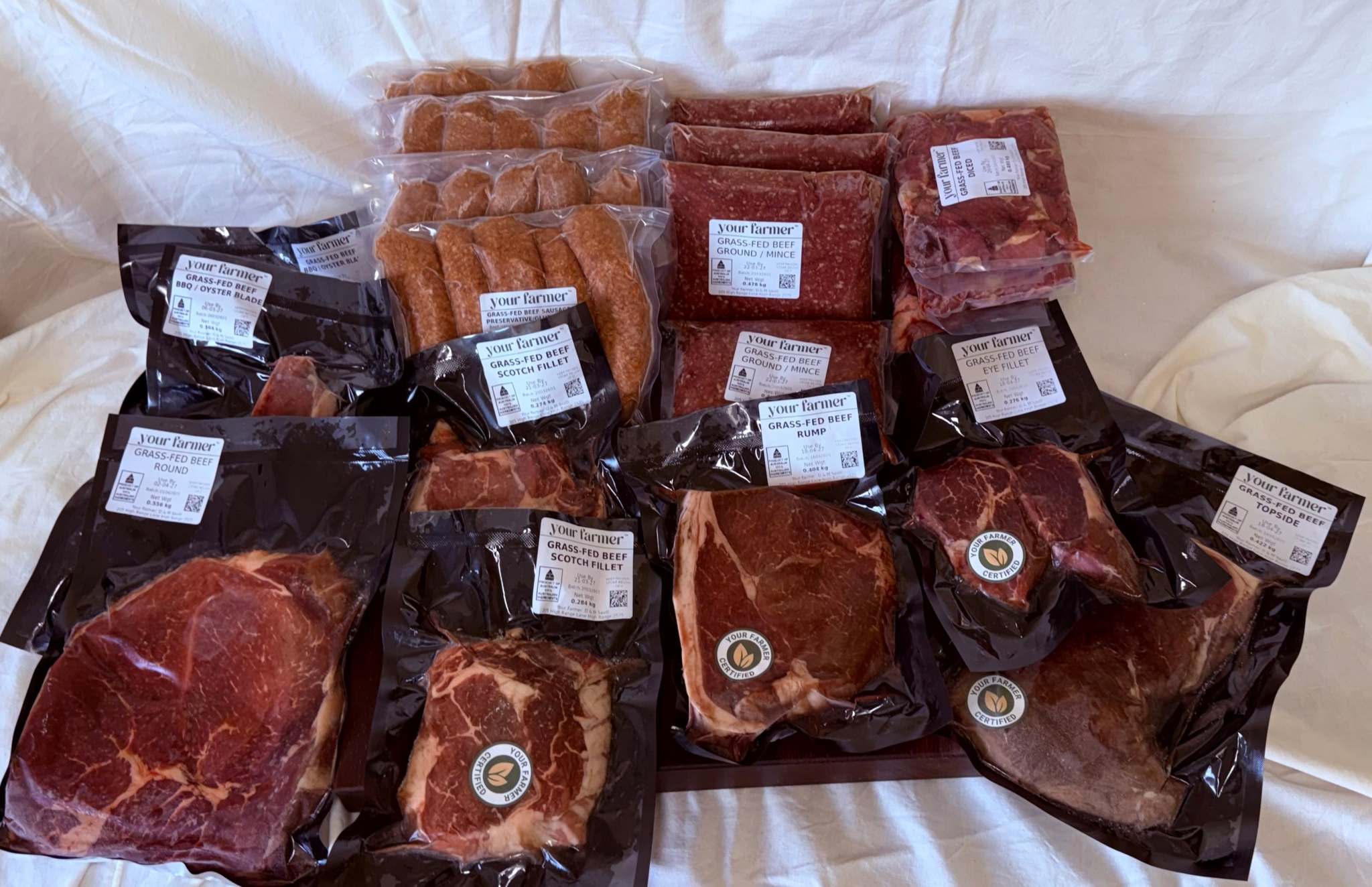
Your Farmers grow grass-fed beef and lamb, pastured eggs and the best eco-grown veggies and produce — every item grown to the same ecological standard, every farmer one you can know by name. One subscription, your whole real-food shop.

01

Reserve your share — or try a pack

Subscribe to a share of the harvest, or start with a one-off fixed pack.

02

Make it your own

Pick your delivery rhythm and what's in the box. Skip or cancel anytime — no lock-in.

03

Cook, savour, know your farmer

We deliver in a reusable esky we collect next time. No couriers, no waste.

More Recipes

View all

Osso buco-style braised grass-fed lamb chump chops in tomato sauce over soft polenta, topped with gremolata.

Osso Buco-Style Braised Chump Chops with Gremolata

The Milanese treatment — chops braised low in white wine and tomato, lifted at the end by lemony gremolata

Osso buco is Milan's great braise, and the finishing touch is what makes it: gremolata, a raw scatter of lemon zest, garlic and parsley chopped fine, stirred in right at the end. Against an hour and a half of slow, rich braising, that fresh, sharp hit is a revelation — it stops the whole thing feeling heavy and makes you reach for another spoonful. Lamb chump chops stand in beautifully for the traditional veal shin here, their fat and connective tissue melting into a glossy sauce over soft polenta. It takes time, but almost none of it is yours. This is a dish to be proud of.

Read moreabout Osso Buco-Style Braised Chump Chops with Gremolata

A thick bowl of split pea and lamb bone soup topped with shredded lamb and mint.

Split Pea and Lamb Bone Soup

Pea-and-ham thinking, straight from the lamb paddock

Every Australian family has a pea-and-ham soup story, and every one of those soups leans on the same trick: a bone in the pot doing the heavy lifting. This is that trick with lamb bones instead of a hock. The split peas collapse into a thick, velvety base, the bones give the broth real depth and body, and a pinch of smoked paprika stands in for the smokehouse if you want that familiar edge. It's the thriftiest pot in this whole collection — pantry peas, add-on bones, one lazy afternoon — and it eats like a hug.

Read moreabout Split Pea and Lamb Bone Soup

Grass-fed T-bone steak sliced and served with homemade tarragon bearnaise and chips, bistro style.

T-Bone with Bearnaise from Scratch

The sauce that turns a steak into an occasion

Béarnaise has a reputation as chef's territory — it isn't. It's three egg yolks, a sharp tarragon reduction and a stream of warm butter, whisked over gentle heat until it turns thick, glossy and faintly wobbly. Twenty minutes of honest attention, most of it while the steak rests. And there's no better steak to learn it on than a grass-fed T-bone: the fillet side was born for béarnaise, and the sirloin side isn't far behind. This is occasion cooking you can pull off on an ordinary Saturday.

Read moreabout T-Bone with Bearnaise from Scratch