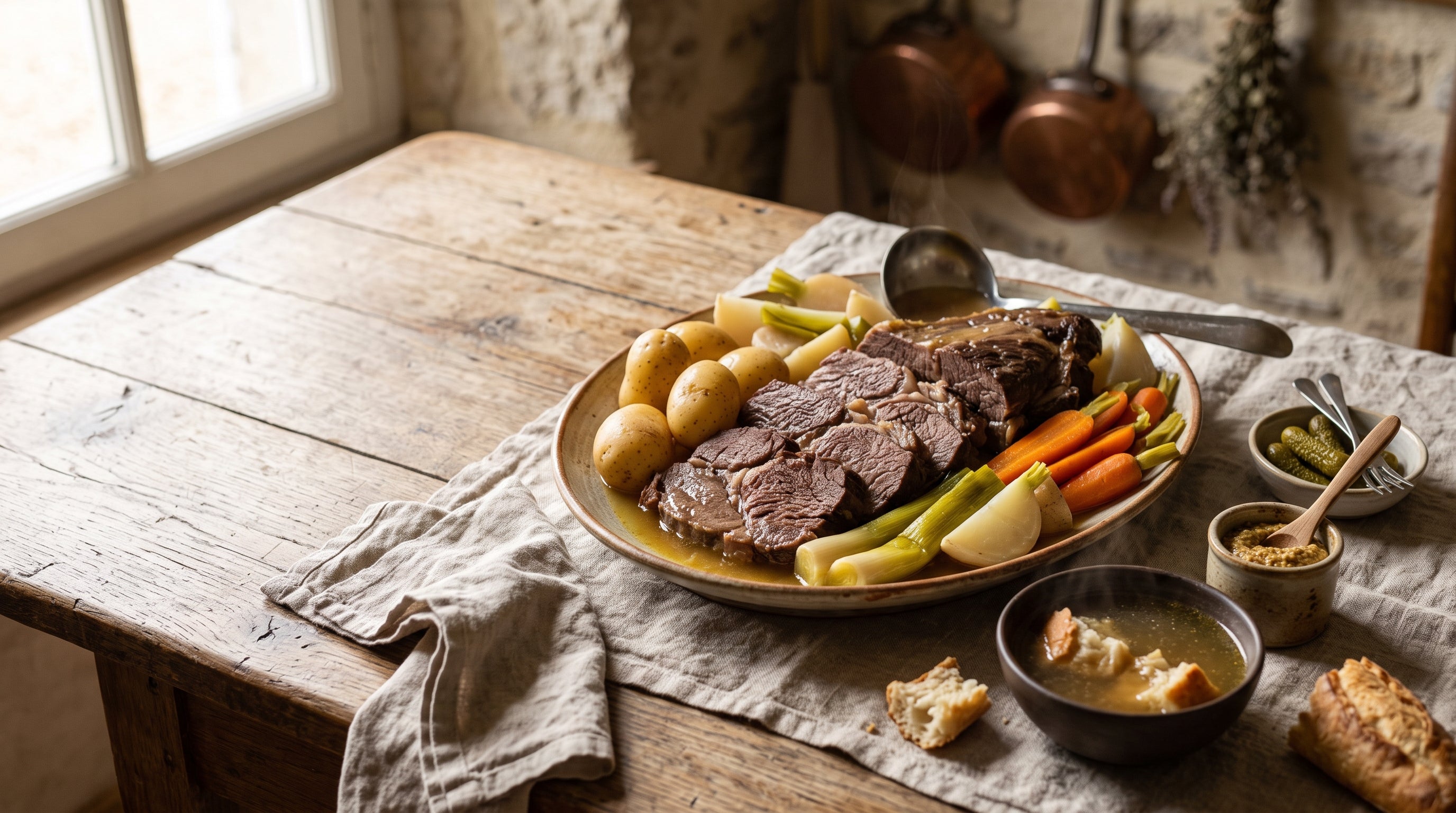
France's grand boiled dinner — two courses from one gently murmuring pot

Pot-au-feu means "pot on the fire", and for centuries it was exactly that — the pot that sat at the edge of a French farmhouse hearth all afternoon, beef and winter vegetables poaching in water that slowly became something far better than water. It's the least flashy thing you can do with the roast in your share, and one of the most rewarding: a clear, deeply savoury broth served first with crusty bread, then the beef and vegetables carved onto a platter with mustard, cornichons and good salt. Patience is the only real ingredient.

3 hrs 55 mins 6 servings Prep 25 minsCook 3 hrs 30 minsMain CourseFrench

Ingredients

  • 1.4kg Your Farmer grass-fed beef roast
  • 1 brown onion, halved and studded with 4 whole cloves
  • 2 bay leaves, 3 sprigs thyme and a few parsley stalks, tied into a bouquet garni
  • 1 tsp black peppercorns
  • 2 tsp salt
  • 3 carrots, halved crossways
  • 2 leeks, trimmed, halved and rinsed well
  • 3 small turnips, peeled and halved (or half a swede in wedges)
  • 3 sticks celery, halved
  • 600g small potatoes, peeled
  • Dijon mustard, cornichons, sea salt flakes and a crusty baguette, to serve

Instructions

Put the roast in your biggest pot and cover it by a few centimetres with cold water. Bring it slowly to a bare simmer over medium heat, skimming off the grey foam as it rises — a patient 15 minutes of skimming is what keeps the broth clear.

1.4kg beef roast

Add the studded onion, bouquet garni, peppercorns and salt. Adjust the heat until the surface barely shivers — a lazy bubble every second or two, never a boil — and cook, partly covered, for 2.5 hours.

1 studded onionbouquet garni1 tsp peppercorns2 tsp salt

Add the carrots, leeks, turnips and celery to the pot and keep it at the same gentle murmur for another 30 to 40 minutes, until the vegetables are completely tender.

3 carrots2 leeks3 turnips3 sticks celery

Meanwhile, simmer the potatoes separately in salted water for 15 to 20 minutes until tender — cooking them apart keeps the main broth clear.

600g potatoes

Lift the beef onto a board, cover it loosely with foil and rest it for 15 minutes. Taste the broth and season it — it should taste quietly of everything that's been in it.

First course: ladle hot broth into bowls over torn baguette. Second course: slice the beef thickly, arrange it on a platter with the vegetables and potatoes, moisten everything with more broth, and serve with Dijon, cornichons and sea salt flakes.

Dijon mustardcornichonssea salt flakesbaguette

Appears in

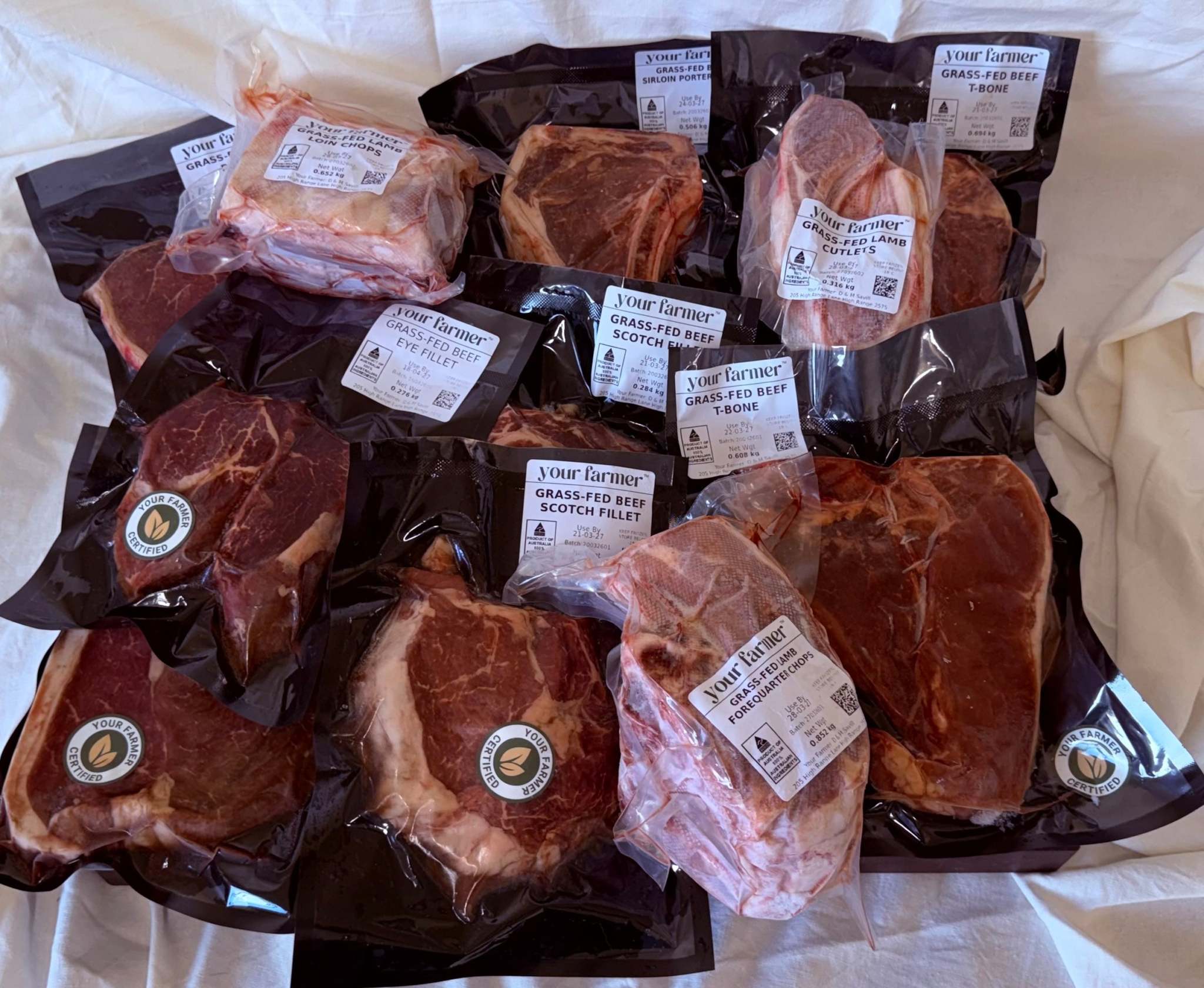
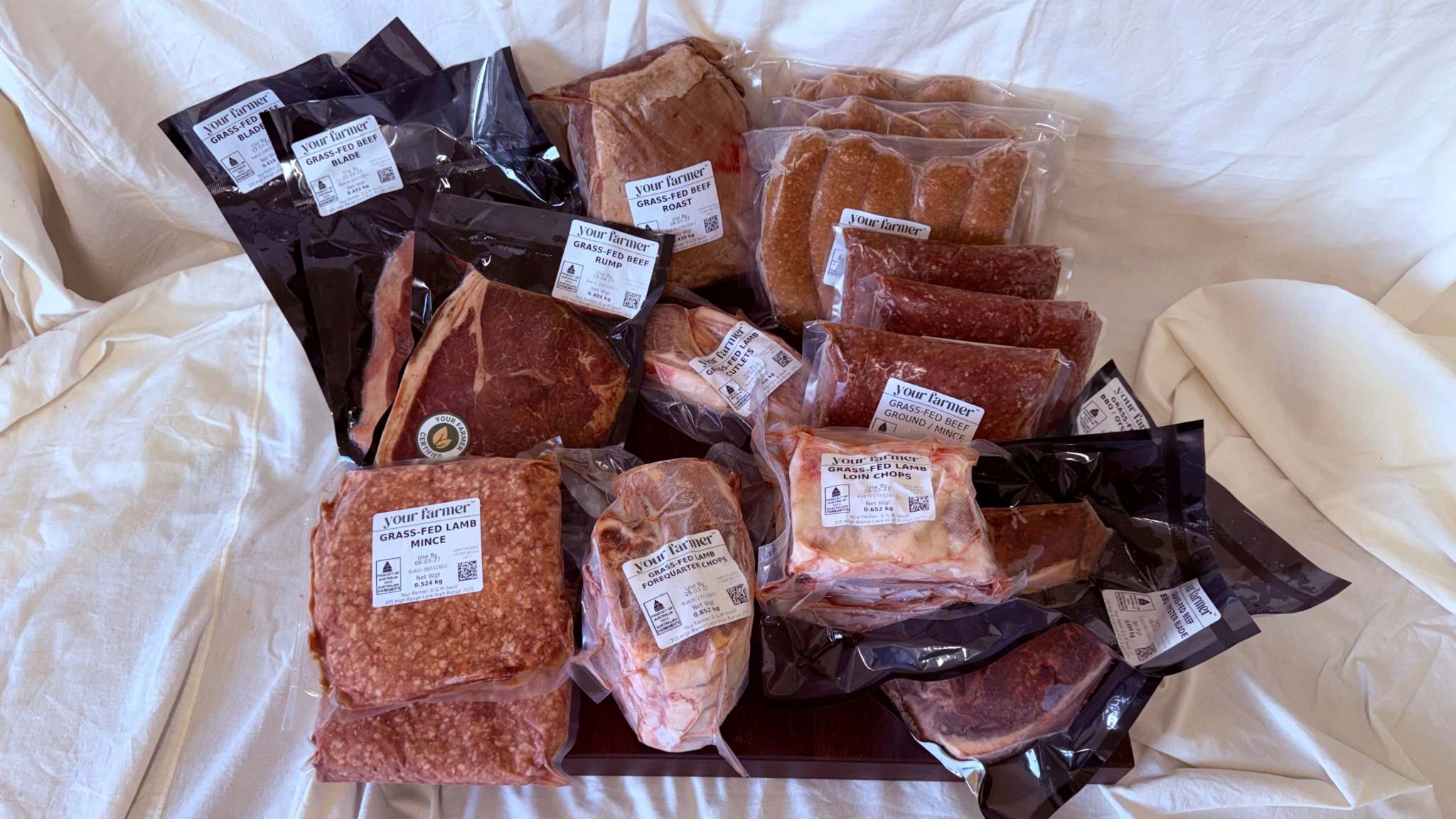
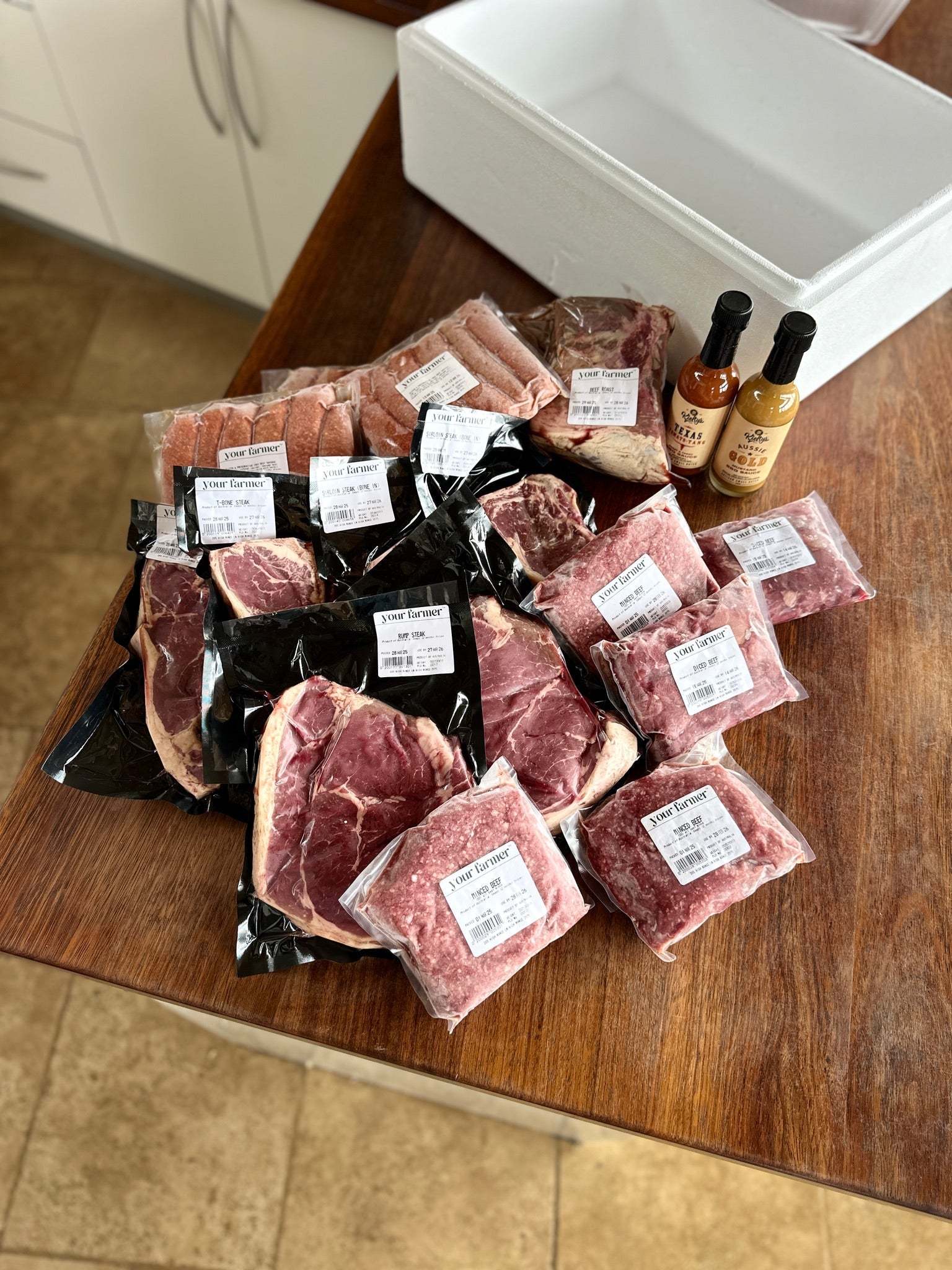
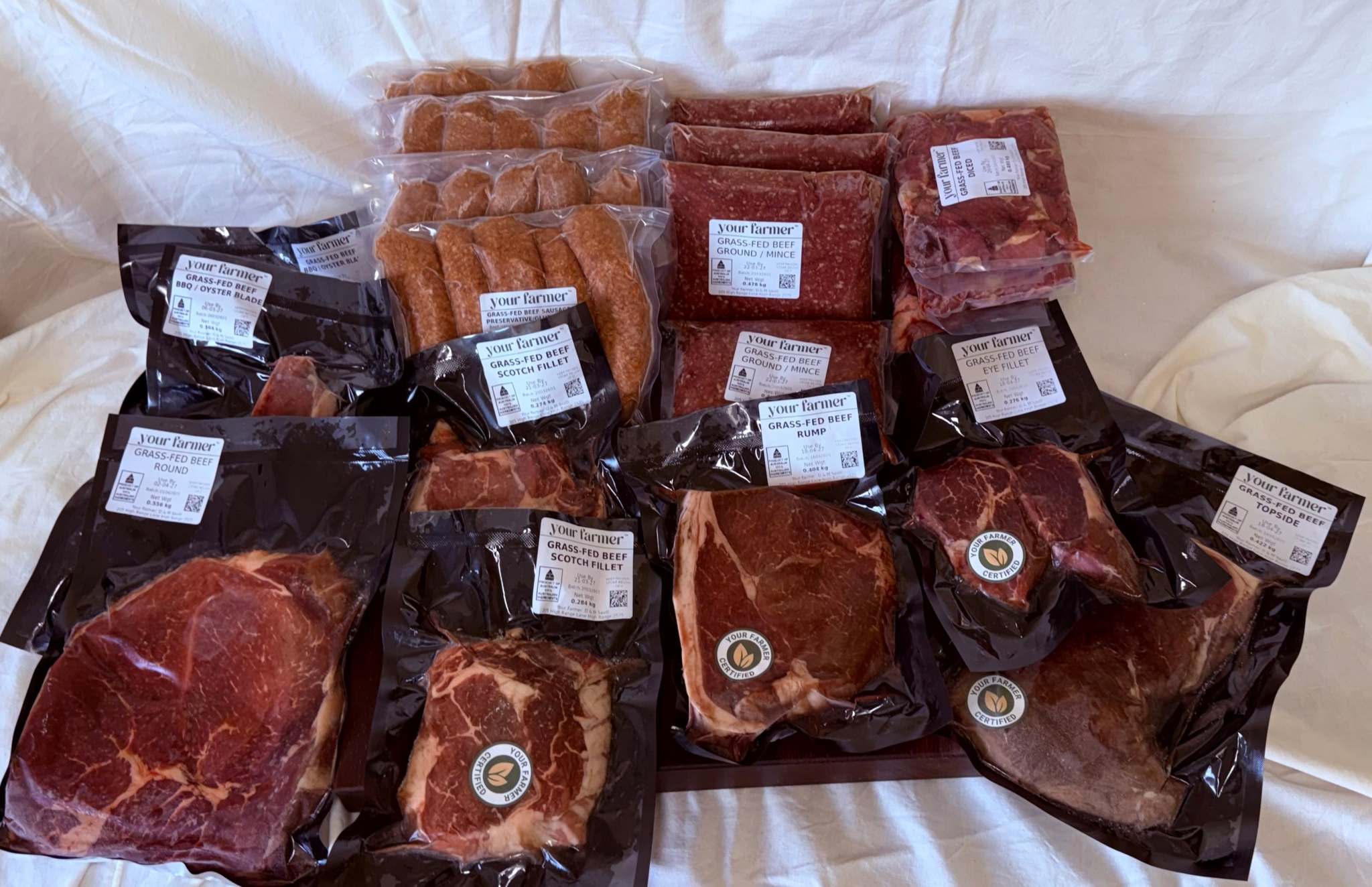
Pack A & Pack C shares — Roast (~1.4kg)

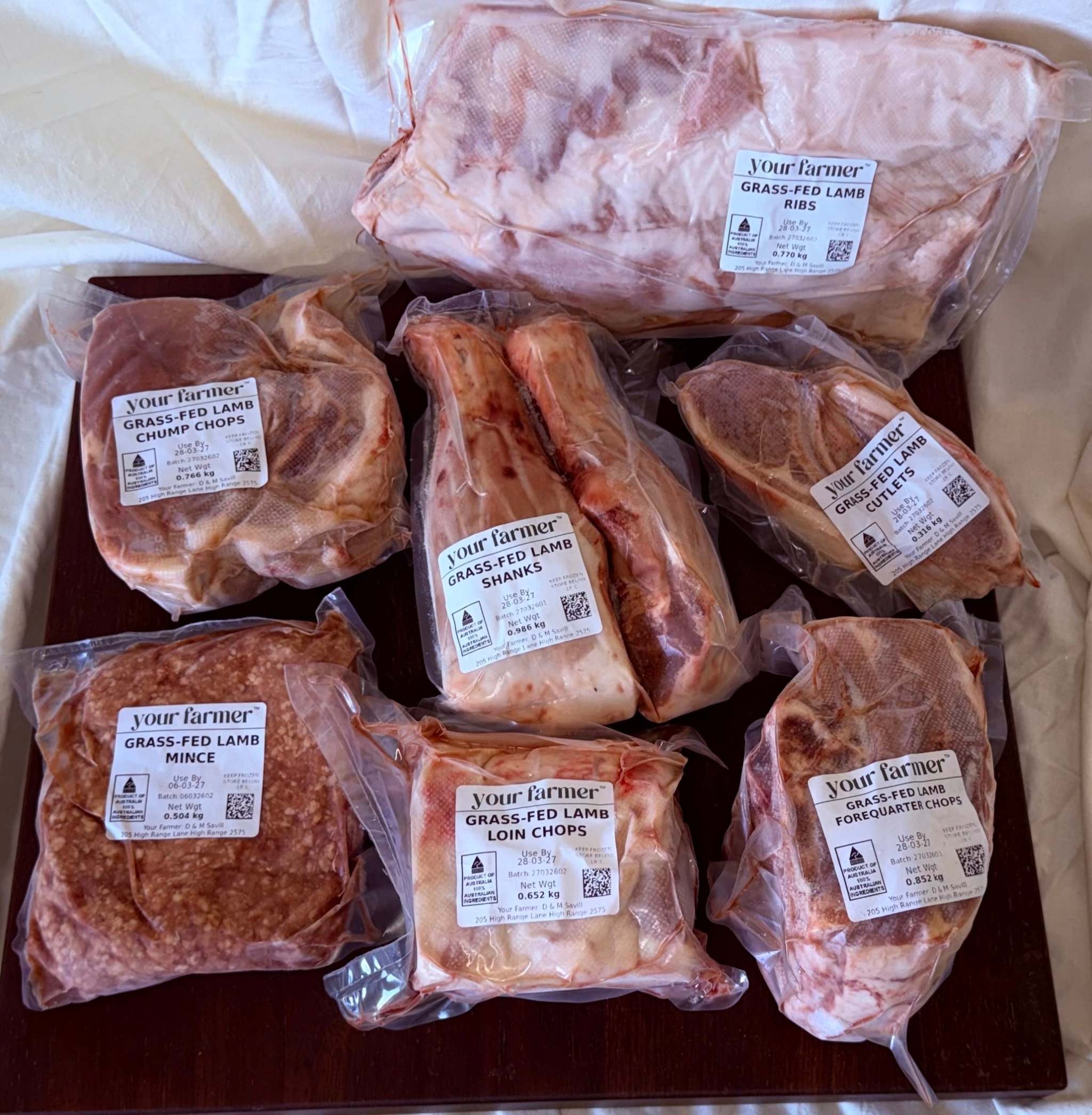
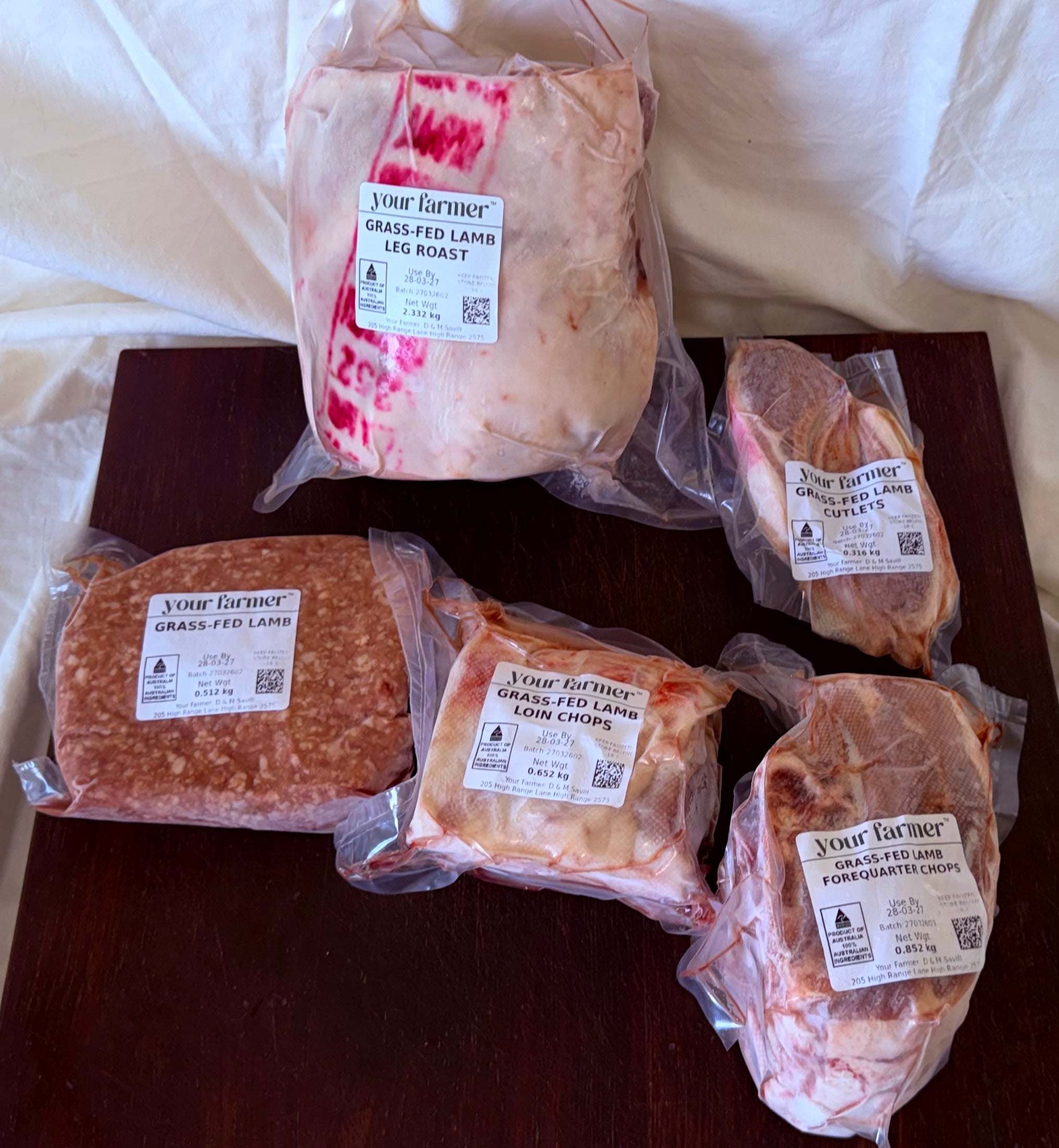
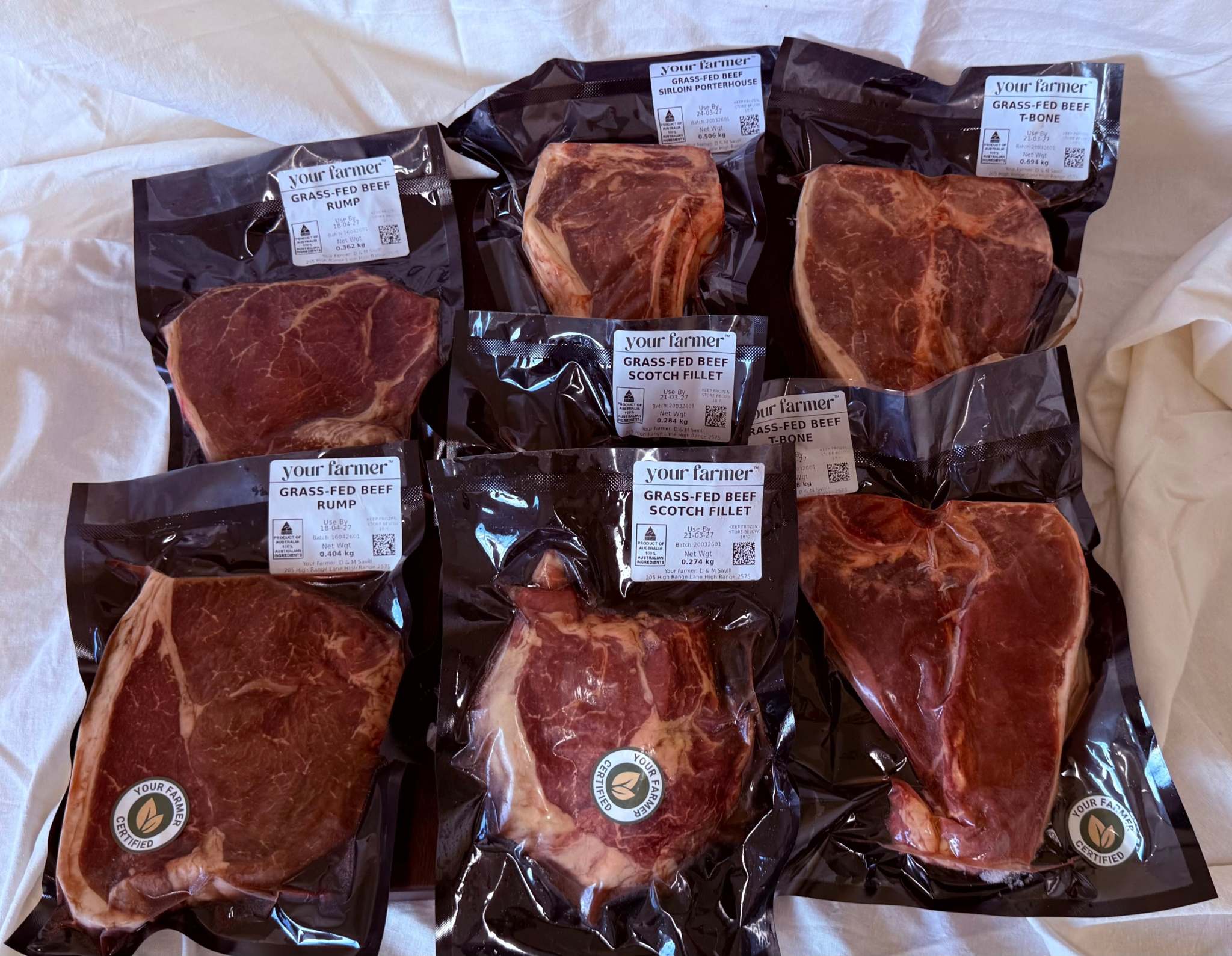
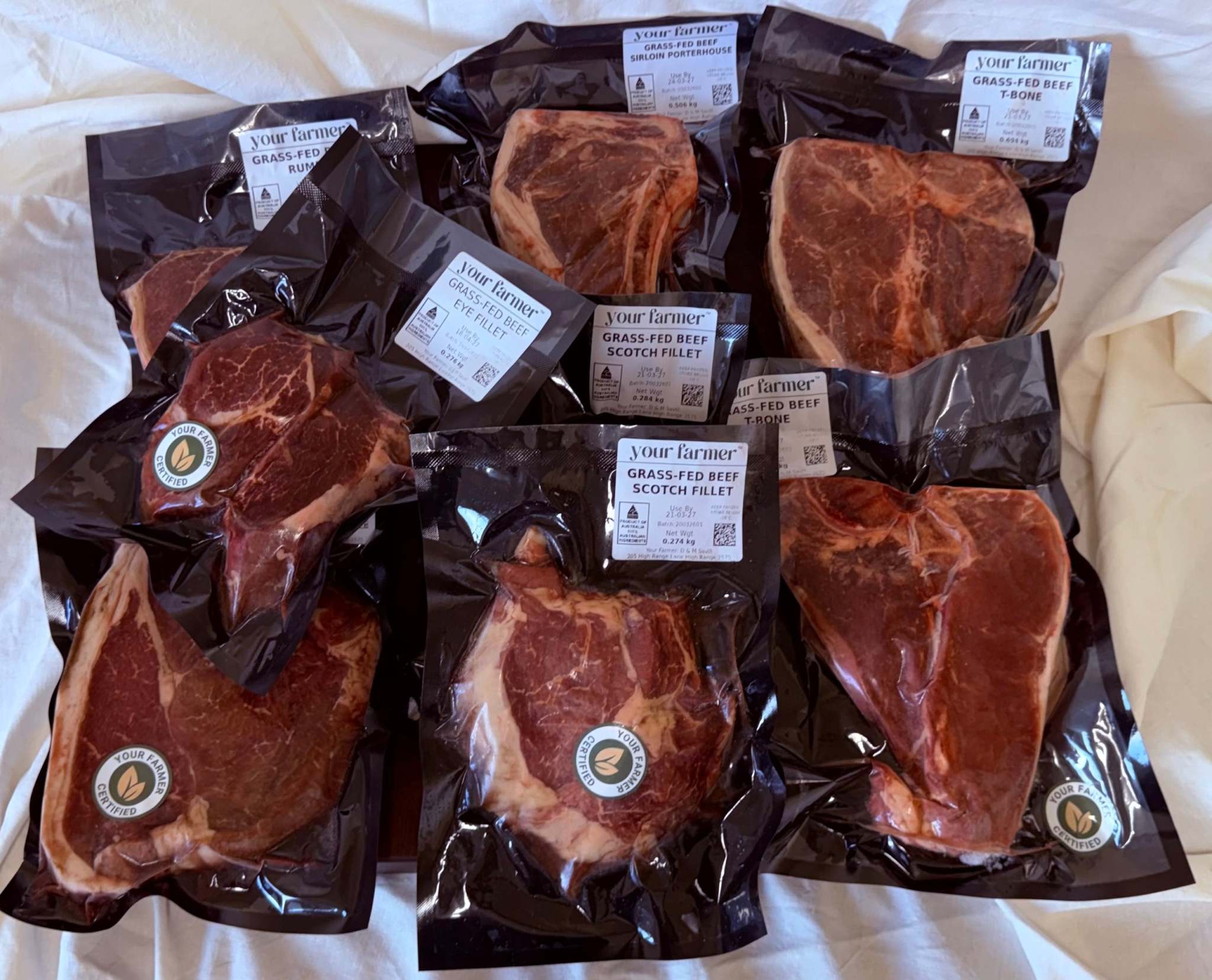
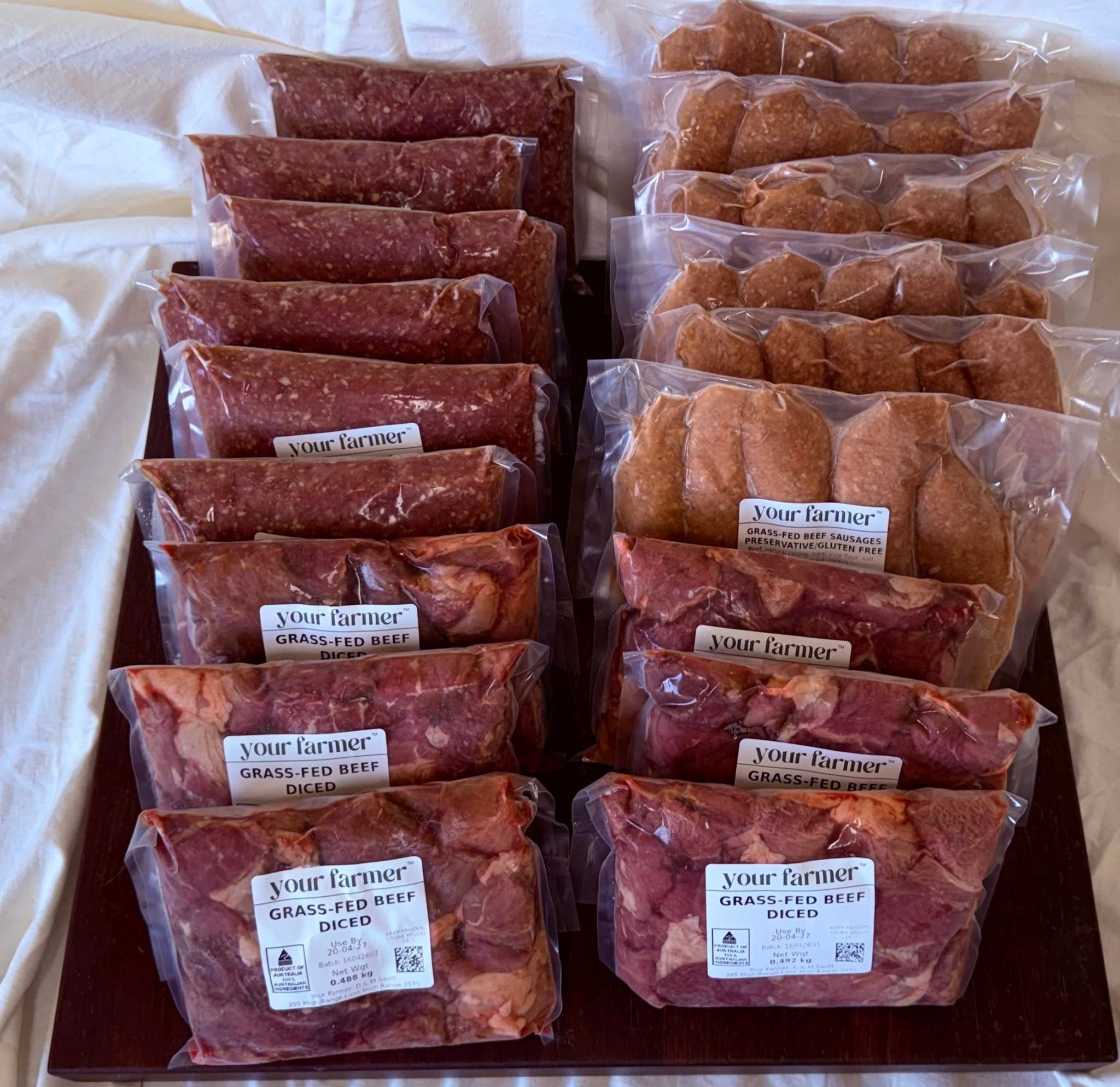
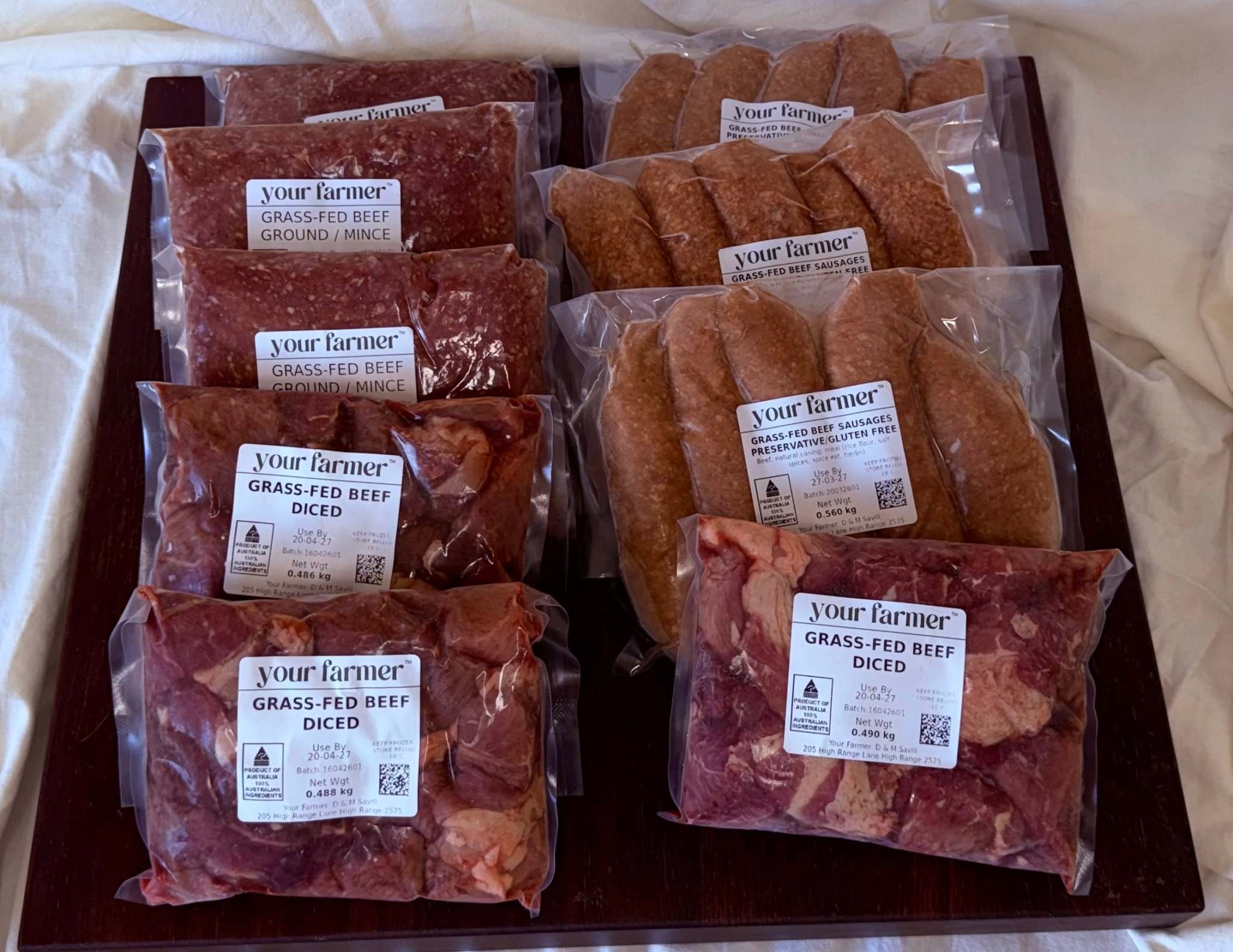
Your Farmer CSA grass-fed beef share — vacuum-sealed steaks, roasts, mince and sausages, paddock-to-plate NSW & ACT delivery
Sale price From $152.00Regular price $169.99

Why Poaching Suits a Lean Grass-Fed Roast

Boiled beef sounds like a punishment and eats like a reward — provided the pot never actually boils. The roast in a Your Farmer® beef share is a lean, whole-muscle cut, and held at a bare shiver for three hours it turns tender while feeding everything it has into the broth. That's the trade at the heart of pot-au-feu: the beef seasons the water, the water becomes the first course. A hard boil ruins both sides of the deal — it toughens the meat and turns the broth cloudy and dull. Skim early, keep the flame low, and let the pot do quiet work. Salt is the other place to hold your nerve: season lightly at the start and properly at the end, because the broth concentrates as it cooks and early confidence becomes late regret.

Swaps and Variations

Parsnips, swede and wedges of savoy cabbage (added with 20 minutes to go) are all traditional passengers. For a broth with real spine, add two or three grass-fed beef bones to the pot from the start — the marrow and collagen give it a body plain water can't. If the broth-first way of eating wins you over, the beef bones broth guide takes the same idea further. The horseradish crowd can swap Dijon for a sharp horseradish cream at the table — heresy in France, excellent in Australia.

Storage and Leftovers

The broth is the treasure: strain it, chill it, lift off the fat, and you've got the best stock in the house — 4 days in the fridge or 3 months frozen, ready for risotto, soups and gravies. The beef keeps 3 to 4 days in a little broth; reheat it gently, submerged, never in a dry pan. And the classic French second life: cold poached beef sliced into a salad with boiled potatoes, cornichons and a mustardy vinaigrette. Leftover vegetables are happiest crushed into a mug of the hot broth as a quick soup. Two courses tonight, two more meals banked.

The roast comes around in Pack A and Pack C of our grass-fed beef CSA share — one pot on the fire, half a week of eating.
Frequently asked questions

Why can't the pot boil?

A rolling boil toughens the meat, emulsifies fat into the liquid and turns the broth cloudy. You want a lazy bubble breaking the surface every second or two — if it's dancing, it's too hot.

The broth tastes weak. What do I do?

Season it more assertively at the end — under-salted broth always reads as weak. If it still lacks depth, simmer it down by a quarter after the beef comes out; reduction concentrates everything.

Can I make it in a slow cooker?

Yes — beef, aromatics and water on LOW for 8 hours, vegetables in for the last 90 minutes on HIGH. You lose a little of the skimming control, so expect a slightly less crystal-clear broth.

What do I do with the leftover broth?

Treat it as free stock. Strain and chill it, lift the fat off the top, and freeze it flat in bags for up to 3 months — it outclasses anything from a carton.

Is the marrow bone traditional?

Very — French tables serve the poached marrow bones alongside, the marrow spread on toast with salt. If you add beef bones for the broth, that's your cook's reward.

Three Simple Steps

A whole table of real food.

Your Farmers grow grass-fed beef and lamb, pastured eggs and the best eco-grown veggies and produce — every item grown to the same ecological standard, every farmer one you can know by name. One subscription, your whole real-food shop.

01

Reserve your share — or try a pack

Subscribe to a share of the harvest, or start with a one-off fixed pack.

02

Make it your own

Pick your delivery rhythm and what's in the box. Skip or cancel anytime — no lock-in.

03

Cook, savour, know your farmer

We deliver in a reusable esky we collect next time. No couriers, no waste.

More Recipes

View all

Greek-style grass-fed lamb roast with lemon and oregano served over golden potatoes in a ceramic baking dish.

Greek-Style Lamb Roast with Lemon and Oregano

Lemon, oregano and time — the Greek family-table treatment for the whole cut

Every Greek family has a version of this and none of them are wrong. Garlic, dried oregano and lemon get worked deep into the lamb, potatoes go underneath to catch everything that falls, and the oven runs slow enough that nobody has to watch it. What comes out isn't pink, carve-at-the-table lamb — it's the other thing entirely: golden on top, giving underneath, with lemony potatoes that half the table will fight over harder than the meat. It's Sunday cooking from a country that takes Sundays seriously.

Read moreabout Greek-Style Lamb Roast with Lemon and Oregano

Low-and-slow barbecued grass-fed lamb ribs with a dry-rub bark, sliced on butcher's paper.

Low-and-Slow BBQ Lamb Ribs with Dry Rub

Paprika, brown sugar, patience — American barbecue discipline meets Australian lamb

This is the recipe for the day you've decided the barbecue is the afternoon's entertainment, not just the cooking appliance. No foil, no shortcuts: a paprika and brown sugar rub, a hooded barbecue held low around 140C, and three or so unhurried hours while the fat renders, the spice sets into proper bark and the smell slowly takes over the street. Lamb ribs suit the American low-and-slow treatment better than most people expect — they're smaller and fattier than pork ribs, so you get all the bark in less time. Pour something cold. This one's a sit-outside recipe.

Read moreabout Low-and-Slow BBQ Lamb Ribs with Dry Rub

Grilled grass-fed lamb chump chops sliced over a warm French-style lentil salad with mustard dressing.

Grilled Chump Chops with Warm Lentil Salad

Charred chops over mustardy lentils — the bistro order, made at home

Walk into any honest bistro in France and there'll be lamb with lentils somewhere on the board. It works because the two halves trade favours — earthy lentils soak up the lamb's resting juices, and a sharp Dijon dressing cuts the richness of a properly charred chop. The lentils simmer away on their own for twenty-five minutes while you see to the chops, so the timing looks after itself. Hearty without being heavy, smart enough for guests, and most of it comes from the pantry.

Read moreabout Grilled Chump Chops with Warm Lentil Salad