Paprika, brown sugar, patience — American barbecue discipline meets Australian lamb

This is the recipe for the day you've decided the barbecue is the afternoon's entertainment, not just the cooking appliance. No foil, no shortcuts: a paprika and brown sugar rub, a hooded barbecue held low around 140C, and three or so unhurried hours while the fat renders, the spice sets into proper bark and the smell slowly takes over the street. Lamb ribs suit the American low-and-slow treatment better than most people expect — they're smaller and fattier than pork ribs, so you get all the bark in less time. Pour something cold. This one's a sit-outside recipe.

3 hrs 45 mins 4 servings Prep 15 minsCook 3 hrs 30 minsMain CourseAmerican

Ingredients

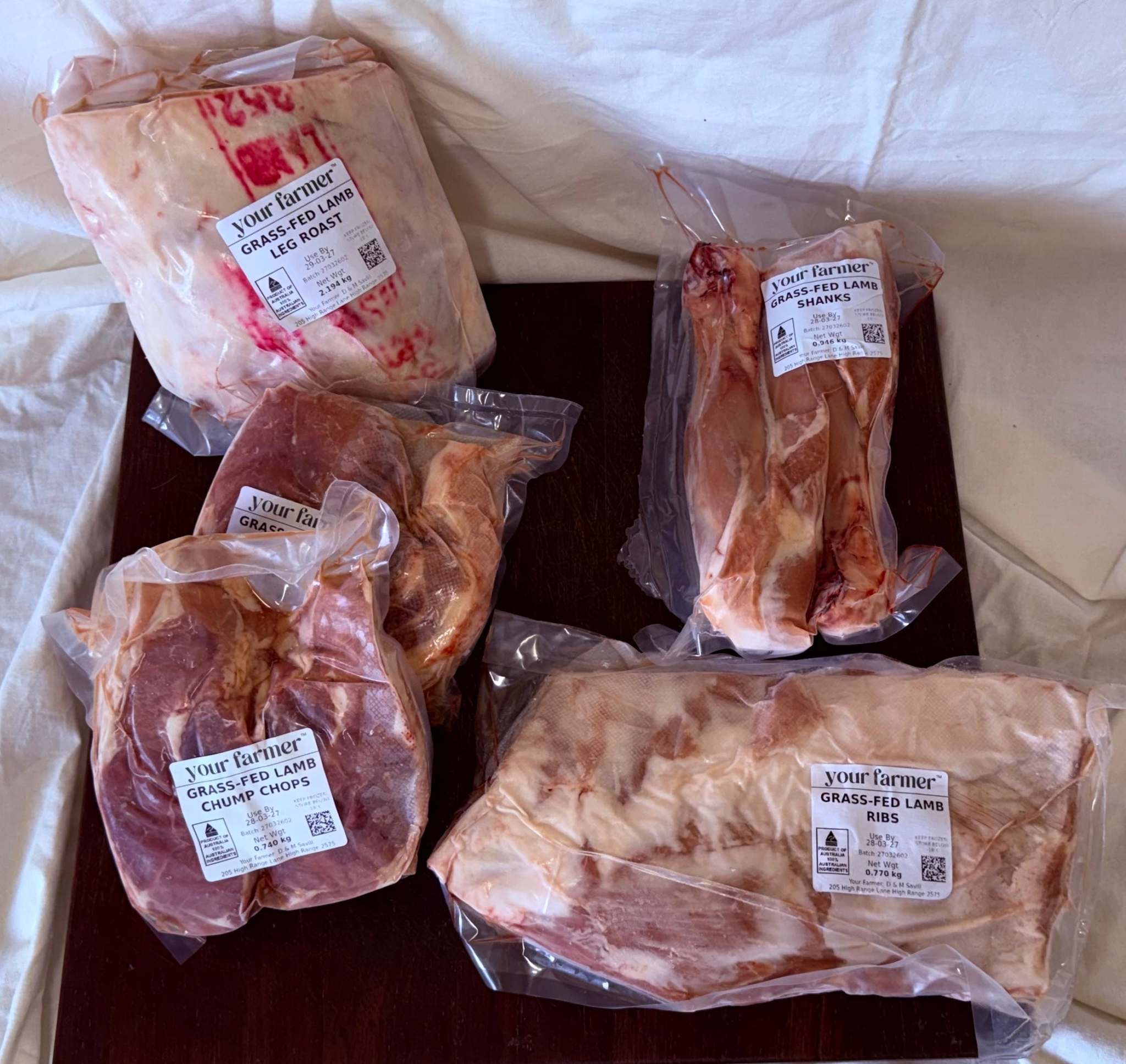
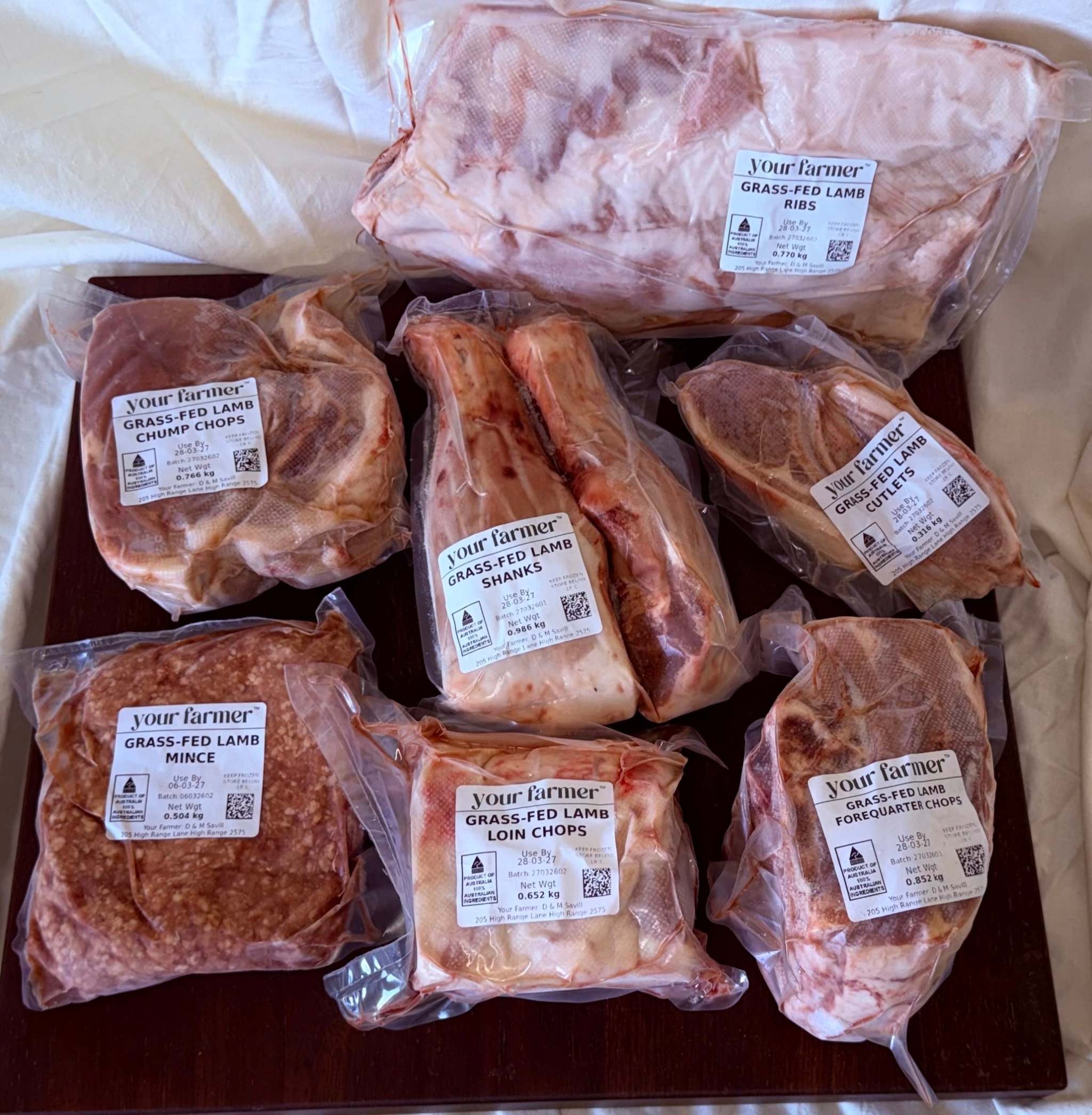
  • 2 Your Farmer grass-fed lamb rib racks (the 2 pack)
  • 2 tbsp brown sugar
  • 1 tbsp smoked paprika
  • 2 tsp sea salt
  • 1 tsp black pepper
  • 1 tsp garlic powder
  • 1 tsp onion powder
  • 1/4 tsp cayenne pepper (optional)
  • 125ml apple juice, in a clean spray bottle

Instructions

Mix the brown sugar, paprika, salt, pepper, garlic powder, onion powder and cayenne. Pat the racks dry and coat them all over with the rub, pressing it on.

2 lamb rib racks2 tbsp brown sugar1 tbsp smoked paprika

Set a hooded barbecue up for indirect heat at about 140C — burners on one side only, or coals banked to one side — and let the rubbed racks sit at room temperature while it comes to heat. If you want smoke, add a foil pouch of soaked wood chips over the hot side now.

Sit the racks bone-side down on the cool side, close the hood, and leave them alone for the first hour. No peeking — the bark is setting.

From the 1-hour mark, spritz the ribs with apple juice every 30 to 40 minutes to keep the surface from drying out.

125ml apple juice

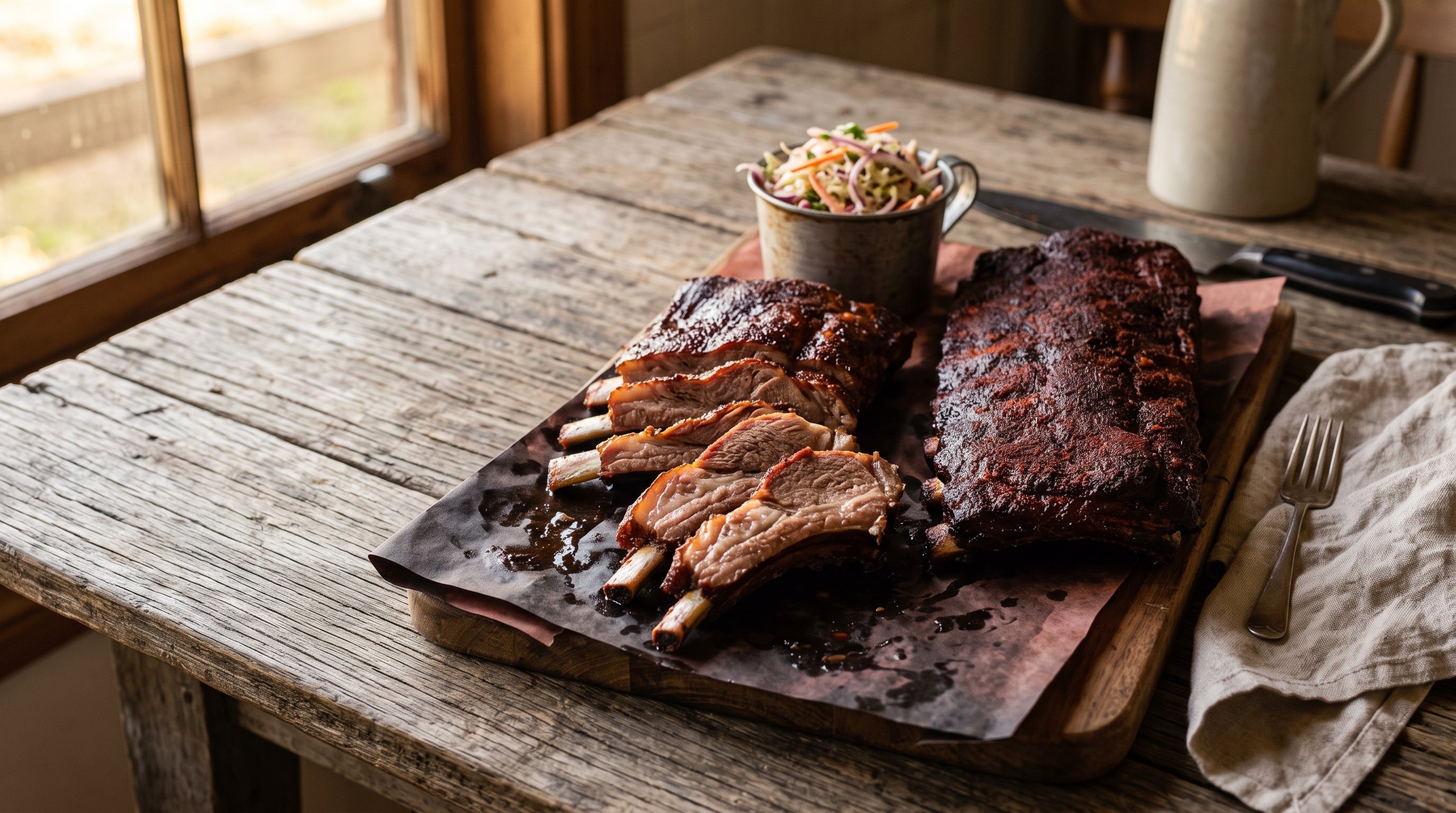
Keep going for 2.5 to 3.5 hours all up, depending on your barbecue, until the meat has pulled back from the bone tips, the bark is a deep red-brown, and a probe or skewer slides between the bones with no resistance — around 90C internal if you're using a thermometer.

Rest the racks under loosely tented foil for 15 minutes.

Slice between the bones and serve as they are — bark this good doesn't need sauce, though a vinegary slaw alongside earns its place.

Appears in

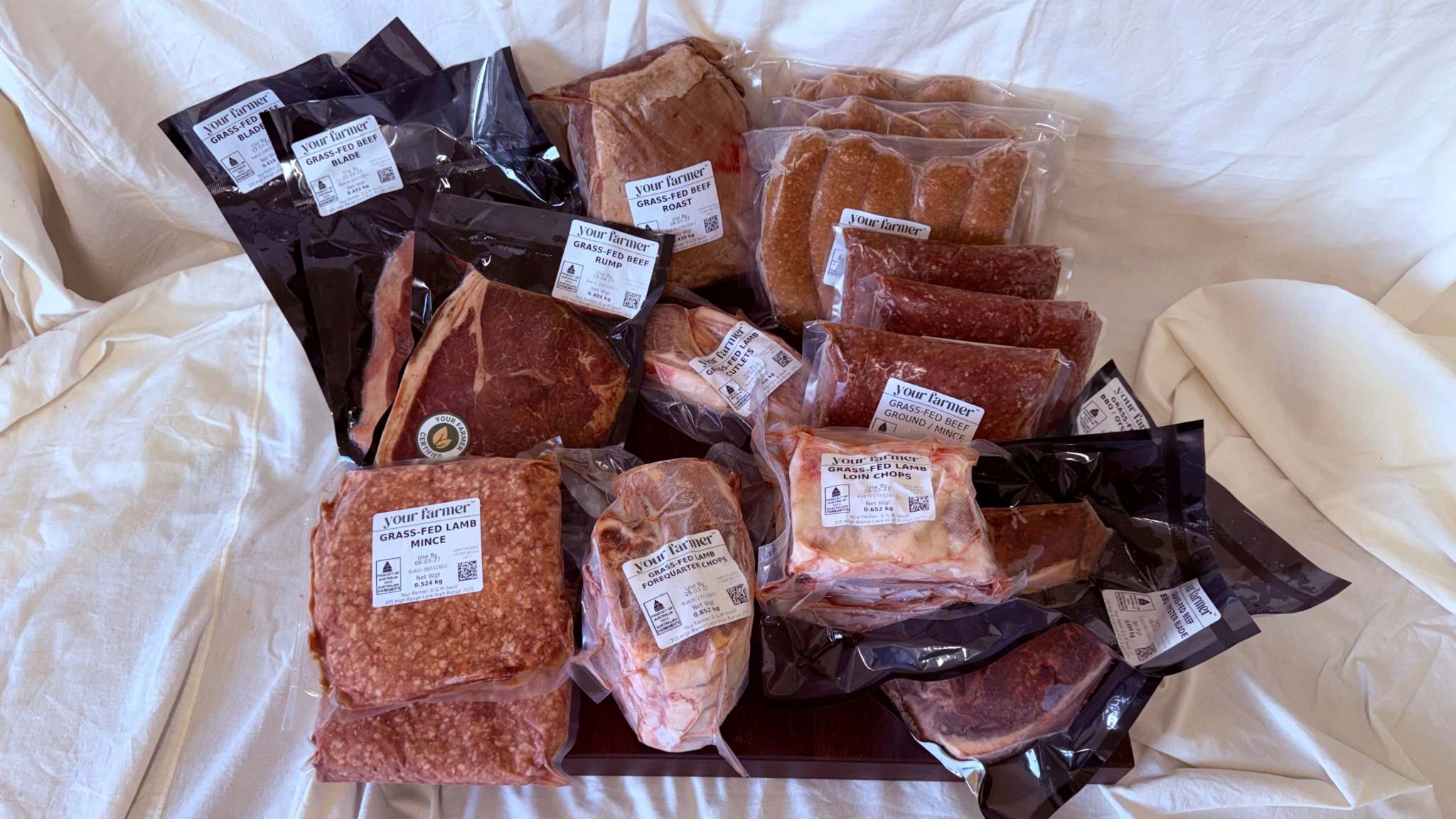
Lamb Share B only — Ribs (2 pack)

Your Farmer CSA grass-fed lamb share — Pack B selection of pasture-raised lamb cuts, vacuum-sealed, NSW & ACT delivery
Sale price From $150.00Regular price $162.41

What Low-and-Slow Actually Does

Lamb ribs come from the breast: layers of sweet meat, connective tissue and a generous fat cap. Hold them at 140C for a few hours and two things happen at once — the fat renders and the connective tissue slowly gives up and turns silky. Meanwhile the rub is doing its own work on the surface. Sugar, spice and rendering fat gradually set into bark: that dark, savoury crust that's the whole reason American barbecue people talk the way they do. Lamb gets you there faster than the American cuts, because the racks are smaller and the fat is more evenly distributed — call it three hours instead of six. No smoker required either; a standard hooded barbecue with the burners on one side does everything this recipe asks. The Your Farmer® two-pack lands in Lamb Share B, and a second rib two-pack is a sensible move if you're firing the barbecue up for hours anyway.

Swaps and Variations

The rub takes edits well: ground cumin and coriander push it towards the Middle East, a spoon of ground coffee deepens the bark dramatically. If you like ribs that surrender completely, wrap the racks in foil for the final 45 minutes — softer bark, but fall-apart meat. The identical method scales up to grass-fed beef short ribs with another hour or two of patience, so one afternoon of practice covers both species. Wood-chip wise, a small handful is plenty — lamb takes smoke on quickly.

Storage and Leftovers

Cooked ribs keep 3 days in the fridge and freeze for up to 3 months. Reheat wrapped in foil at 160C for about 20 minutes so the bark softens without burning. The best leftover in this whole library might be low-and-slow rib meat chopped through a pot of simmering white beans with a splash of vinegar — barbecue beans that taste like the day after a very good day.

A share box is what makes an afternoon like this possible without a special trip — the ribs just turn up. Reserve your pasture-raised lamb share and put a slow Saturday in the diary.
Frequently asked questions

Do I need a meat thermometer?

It helps but isn't essential. The honest tests are visual: meat pulled back from the bone tips, dark set bark that doesn't smear when touched, and a skewer sliding between the bones with no resistance.

Charcoal or gas?

Both work. Gas holds 140C with less fiddling; charcoal plus a handful of wood chips gives real smoke flavour. If it's your first run, gas lets you learn the timing without managing a fire too.

What wood chips suit lamb?

Milder woods — apple, cherry or a little oak. Lamb takes on smoke quickly, so one small foil pouch of soaked chips at the start is plenty. Heavy hickory can shout over the meat.

My bark went soft — what happened?

Usually too much spritzing or the hood coming up too often. Spritz lightly from a distance, keep the hood closed between checks, and give the ribs a final 20 minutes without any spritz to firm the crust.

Can I finish in the oven if the weather turns?

Yes — move the racks to a 140C oven on a wire rack over a tray and carry on exactly as you were. You'll lose the smoke from that point but keep the bark and tenderness.

Three Simple Steps

A whole table of real food.

Your Farmers grow grass-fed beef and lamb, pastured eggs and the best eco-grown veggies and produce — every item grown to the same ecological standard, every farmer one you can know by name. One subscription, your whole real-food shop.

01

Reserve your share — or try a pack

Subscribe to a share of the harvest, or start with a one-off fixed pack.

02

Make it your own

Pick your delivery rhythm and what's in the box. Skip or cancel anytime — no lock-in.

03

Cook, savour, know your farmer

We deliver in a reusable esky we collect next time. No couriers, no waste.

More Recipes

View all

Greek-style grass-fed lamb roast with lemon and oregano served over golden potatoes in a ceramic baking dish.

Greek-Style Lamb Roast with Lemon and Oregano

Lemon, oregano and time — the Greek family-table treatment for the whole cut

Every Greek family has a version of this and none of them are wrong. Garlic, dried oregano and lemon get worked deep into the lamb, potatoes go underneath to catch everything that falls, and the oven runs slow enough that nobody has to watch it. What comes out isn't pink, carve-at-the-table lamb — it's the other thing entirely: golden on top, giving underneath, with lemony potatoes that half the table will fight over harder than the meat. It's Sunday cooking from a country that takes Sundays seriously.

Read moreabout Greek-Style Lamb Roast with Lemon and Oregano

Low-and-slow barbecued grass-fed lamb ribs with a dry-rub bark, sliced on butcher's paper.

Low-and-Slow BBQ Lamb Ribs with Dry Rub

Paprika, brown sugar, patience — American barbecue discipline meets Australian lamb

This is the recipe for the day you've decided the barbecue is the afternoon's entertainment, not just the cooking appliance. No foil, no shortcuts: a paprika and brown sugar rub, a hooded barbecue held low around 140C, and three or so unhurried hours while the fat renders, the spice sets into proper bark and the smell slowly takes over the street. Lamb ribs suit the American low-and-slow treatment better than most people expect — they're smaller and fattier than pork ribs, so you get all the bark in less time. Pour something cold. This one's a sit-outside recipe.

Read moreabout Low-and-Slow BBQ Lamb Ribs with Dry Rub

Grilled grass-fed lamb chump chops sliced over a warm French-style lentil salad with mustard dressing.

Grilled Chump Chops with Warm Lentil Salad

Charred chops over mustardy lentils — the bistro order, made at home

Walk into any honest bistro in France and there'll be lamb with lentils somewhere on the board. It works because the two halves trade favours — earthy lentils soak up the lamb's resting juices, and a sharp Dijon dressing cuts the richness of a properly charred chop. The lentils simmer away on their own for twenty-five minutes while you see to the chops, so the timing looks after itself. Hearty without being heavy, smart enough for guests, and most of it comes from the pantry.

Read moreabout Grilled Chump Chops with Warm Lentil Salad