Fat strip first, faces second, butter last — that's the whole method

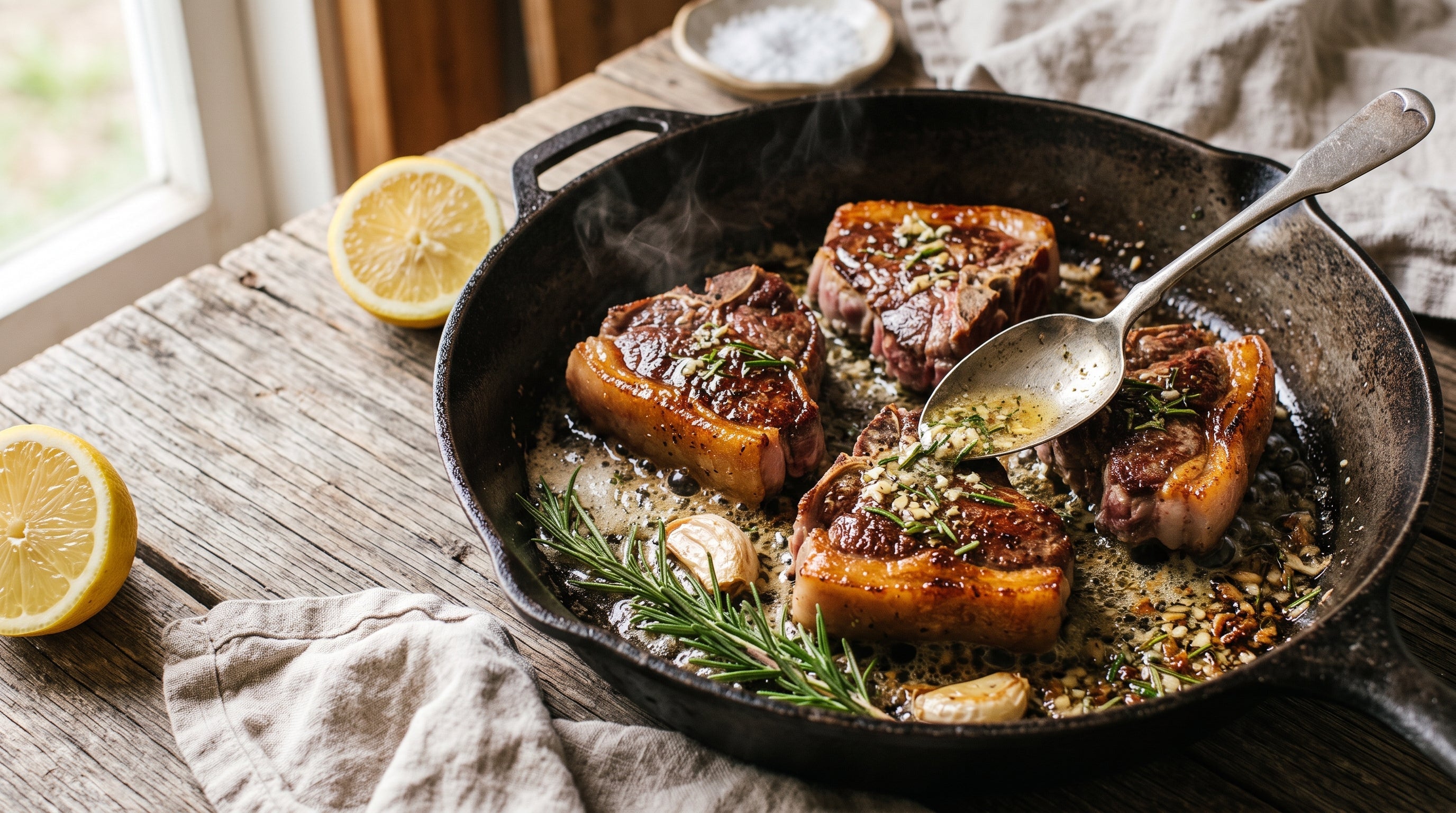
There's a right order to a loin chop, and once you know it you'll never cook them any other way. Stand the chops on their fat edge first so it renders golden and crisp. Then sear the faces in that lamb fat. Then, right at the end, a knob of butter, a couple of squashed garlic cloves and a sprig of rosemary go in, and you spoon that foaming butter over until the kitchen smells like a good pub. One pan, seven ingredients, twenty-five minutes — and dinner that feels like far more effort than it was.

25 mins 2 servings Prep 10 minsCook 15 minsMain CourseAustralian

Ingredients

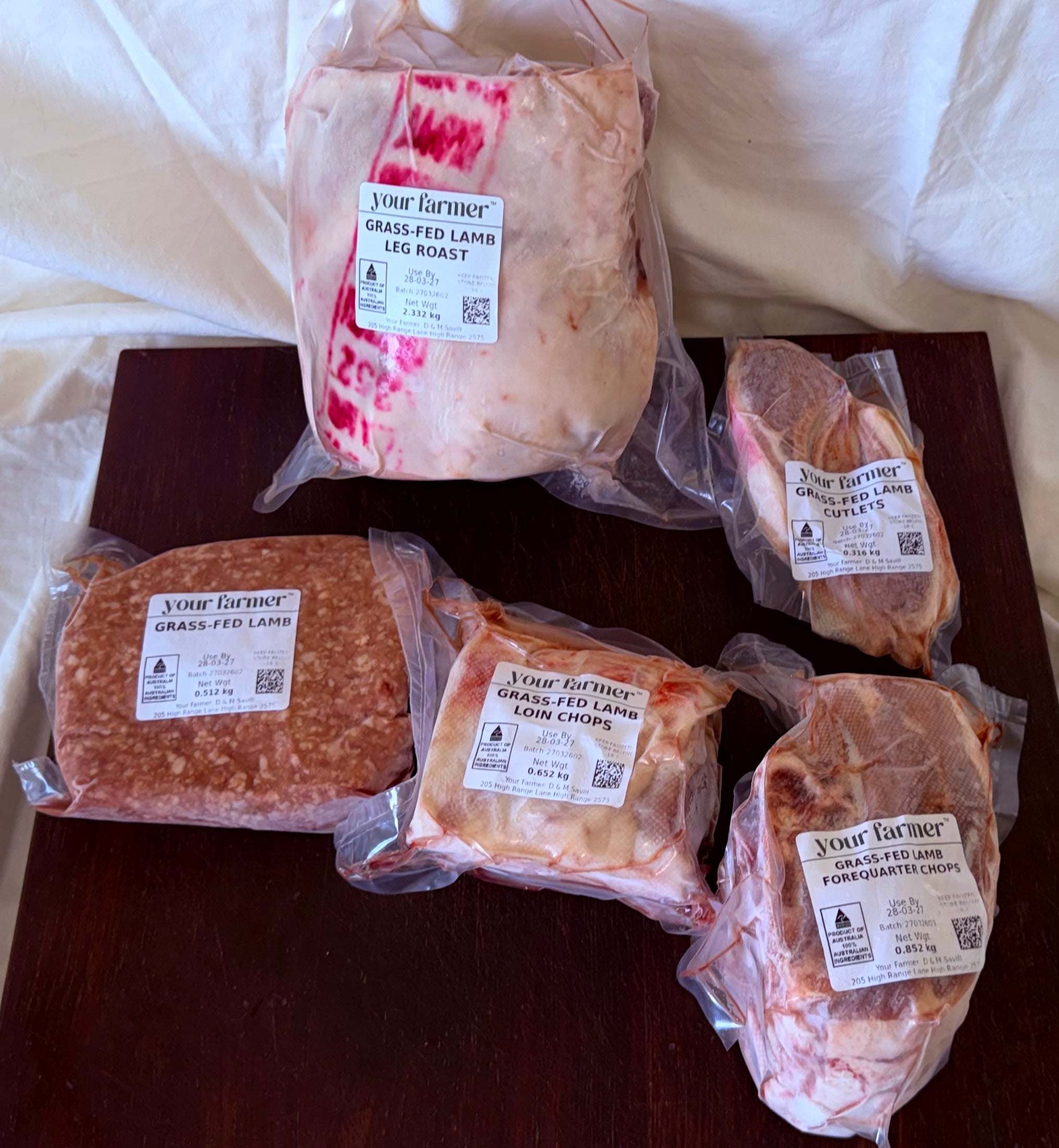
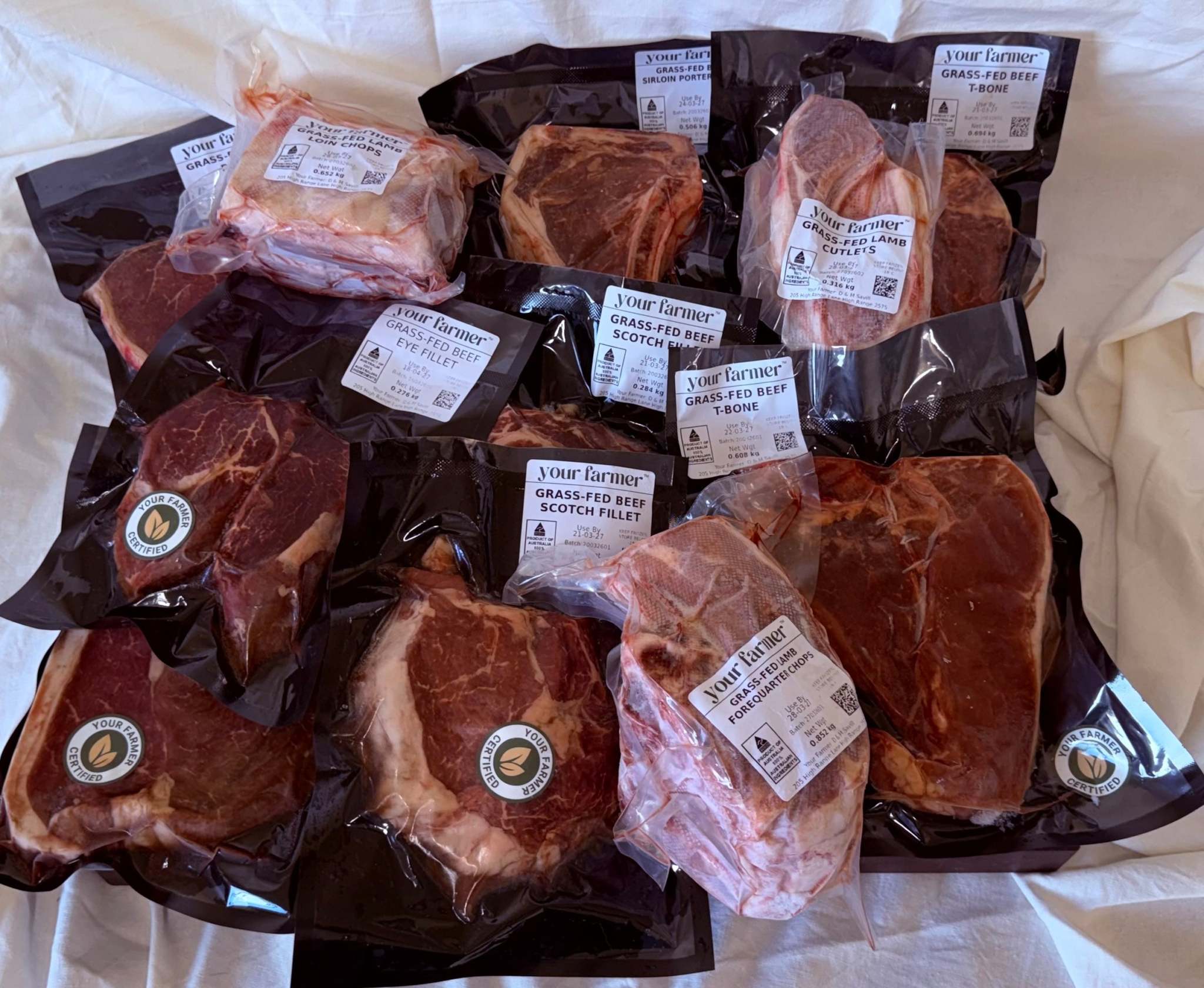
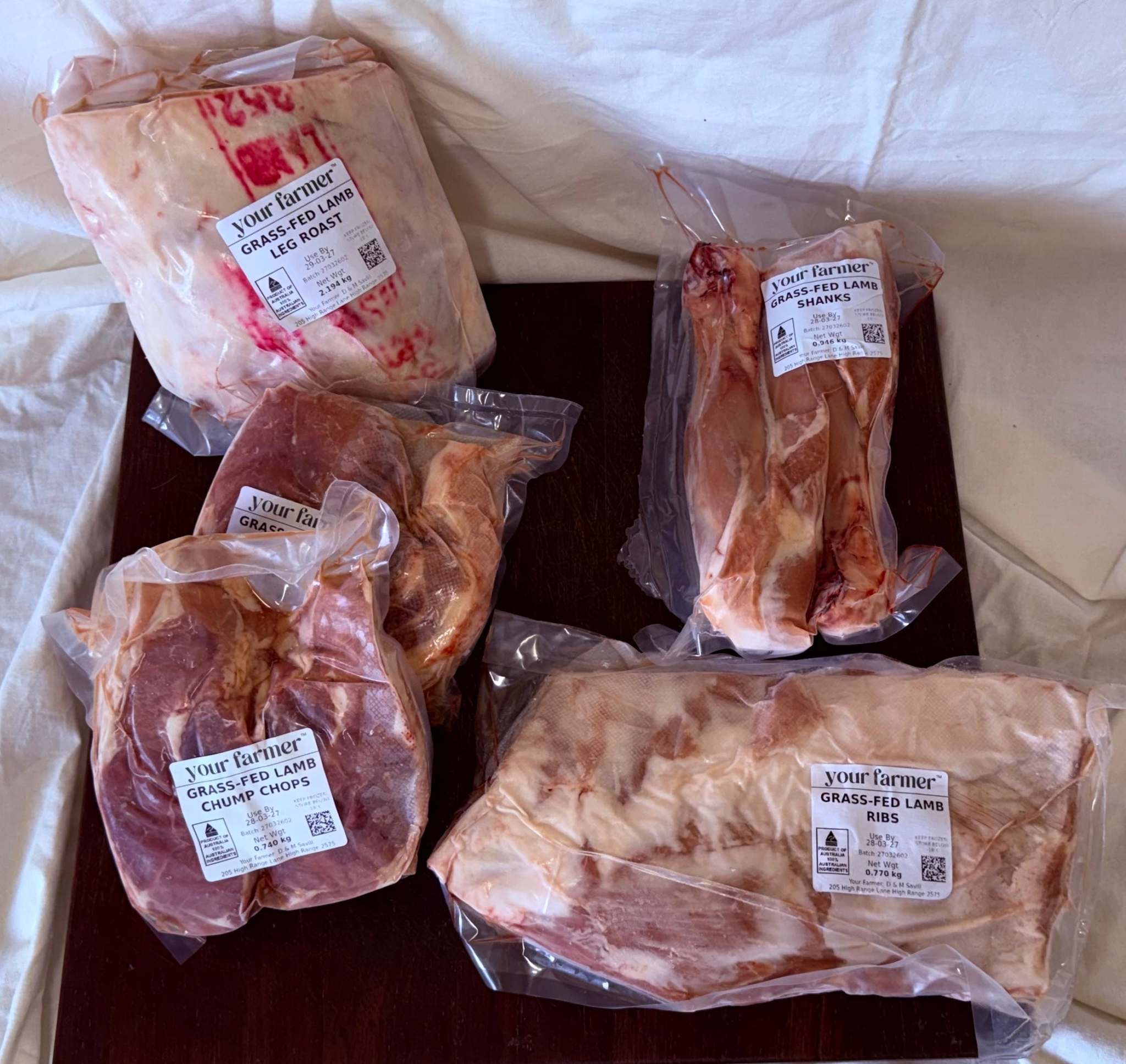
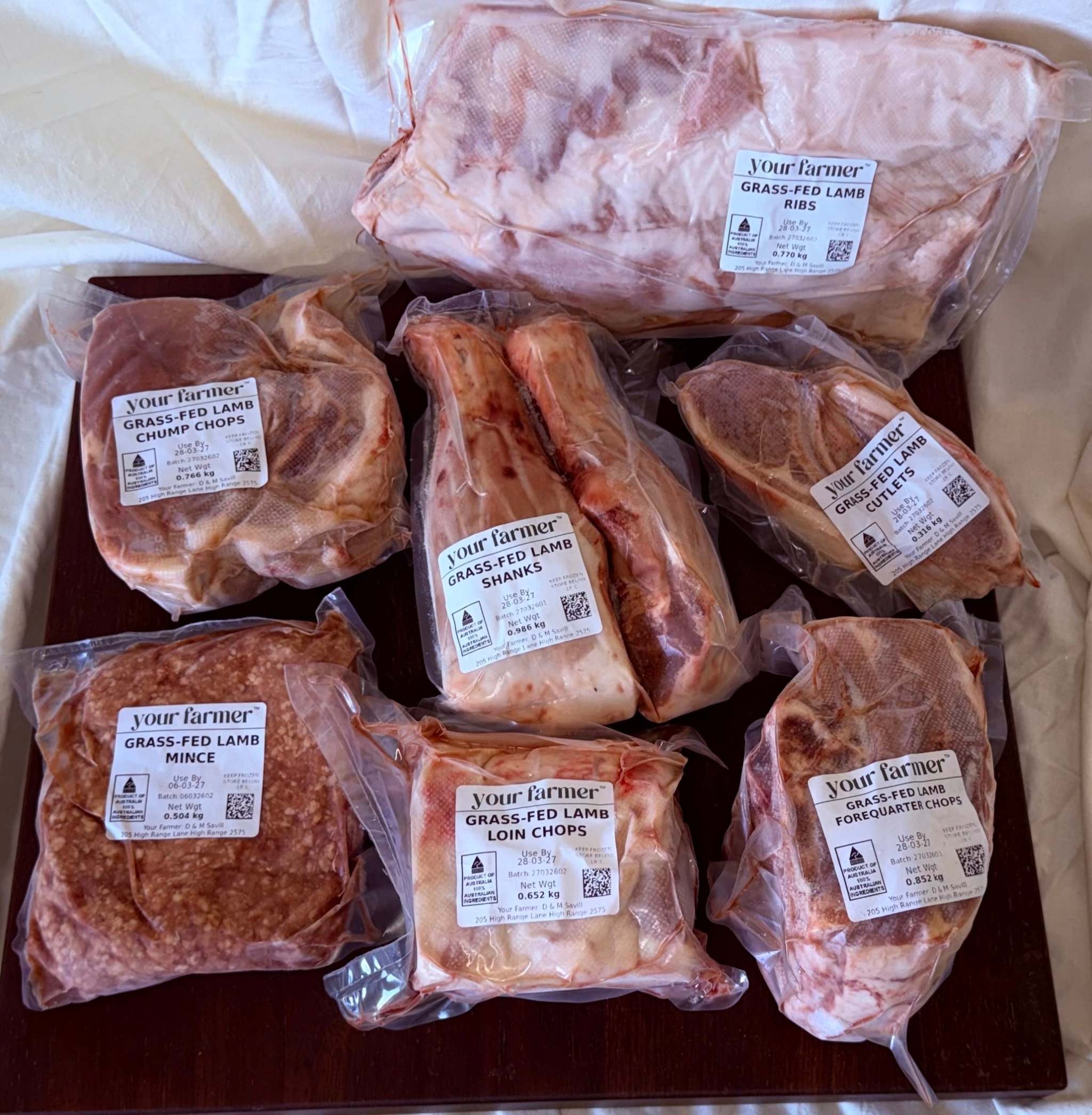
  • 4 Your Farmer grass-fed lamb loin chops
  • 1 tbsp olive oil
  • Salt and pepper to season
  • 50g butter
  • 3 cloves garlic, squashed with the flat of a knife
  • 2 sprigs rosemary
  • 1/2 lemon, for squeezing over

Instructions

Take the chops out of the fridge 10 minutes ahead so they lose their chill. Pat them very dry and season generously on both sides.

4 loin chops

Heat the oil in a heavy pan over medium-high heat until shimmering.

1 tbsp olive oil

Using tongs, stand the chops on their fat edge — lean them against each other so they stay upright — and cook 2–3 minutes until the fat is golden and rendering into the pan.

Lay the chops flat and cook 3 minutes on the first side, then 2–3 minutes on the second for medium.

Drop the heat to medium-low. Add the butter, garlic and rosemary, tilt the pan, and spoon the foaming butter over the chops for 1–2 minutes.

50g butter3 cloves garlic2 sprigs rosemary

Rest the chops on a warm plate for 5 minutes, pouring the garlic butter from the pan over the top.

Squeeze the lemon over and serve — mash and something green, or just good bread to mop the plate.

1/2 lemon

Appears in

Why the Fat Strip Comes First

A loin chop is lamb's answer to the T-bone steak — loin muscle one side of the bone, a nugget of tenderloin on the other, and a ribbon of fat running along the outside edge. That fat strip is the bit most people waste. Rendered properly, it turns golden and crisp like good crackling, and it greases the pan with lamb fat so the meat sears in its own flavour instead of plain oil. That's why the chops go in standing up before they ever lie down. Your Farmer® lamb is raised entirely on pasture, and it shows most in exactly that fat — clean and sweet, never waxy — which is why the loin chops in our lamb subscription deserve the extra two minutes on their edge. One more habit worth keeping: cook to feel, not just the clock. Chops vary in thickness, and a gentle press — springy means medium — will never lie to you.

Swaps and Variations

The lamb cutlets from the same share take to the identical treatment — they're thinner, so shorten every stage by about a minute. Thyme stands in for rosemary without argument, and a single anchovy mashed into the butter makes the whole thing deeply savoury without tasting remotely of fish. A spoonful of honey and a pinch of chilli in the butter takes it somewhere stickier and warmer. And the butter-baste itself is a transferable skill — it's the same move we use on beef in our scotch fillet with compound butter, so once you've got it, you've got it for every steak in the freezer.

Storage and Leftovers

Thawed raw chops keep 2–3 days in the coldest part of the fridge, so there's no rush the day they come out of the freezer. Cooked chops keep 3 days in an airtight container. Reheating tends to push them past pink, so eat leftovers cold — sliced off the bone into a wrap with yoghurt and cucumber is my standing order — or give them the briefest flash in a hot pan. The leftover garlic butter is liquid gold: keep it in a small jar in the fridge and melt it over steamed greens or mashed potato later in the week.
Frequently asked questions

How do I get the chops to stand on their fat edge?

Lean them against each other in pairs, fat edges down, or hold them upright with tongs for the first minute until they steady. In a snug pan they prop each other up nicely.

How do I know when they're done without a thermometer?

Press the eye of the meat: soft means rare, springy means medium, firm means overdone. At 3 minutes then 2–3 minutes a side over medium-high heat, a standard chop lands at medium — still pink at the bone.

Won't the garlic burn?

Not if it goes in with the butter at the end, off the fierce heat. Squashed whole cloves flavour the butter more gently than chopped garlic and are much harder to scorch.

Can I cook loin chops straight from frozen?

No — thaw them overnight in the fridge and pat them very dry before they hit the pan. A wet, icy chop steams instead of searing and the fat edge never crisps.

Three Simple Steps

A whole table of real food.

Your Farmers grow grass-fed beef and lamb, pastured eggs and the best eco-grown veggies and produce — every item grown to the same ecological standard, every farmer one you can know by name. One subscription, your whole real-food shop.

01

Reserve your share — or try a pack

Subscribe to a share of the harvest, or start with a one-off fixed pack.

02

Make it your own

Pick your delivery rhythm and what's in the box. Skip or cancel anytime — no lock-in.

03

Cook, savour, know your farmer

We deliver in a reusable esky we collect next time. No couriers, no waste.

More Recipes

View all

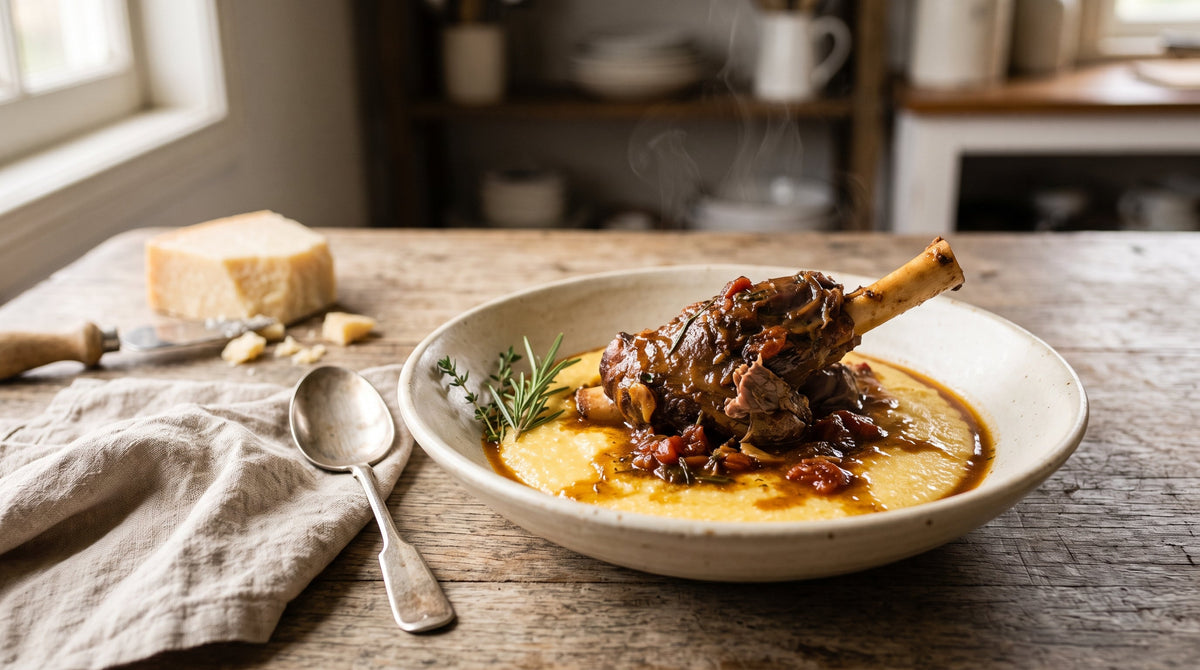
Tomato and rosemary braised grass-fed lamb shank served over soft parmesan polenta.

Tomato and Rosemary Braised Lamb Shanks with Soft Polenta

Osso buco's lamb cousin, with soft polenta doing the catching

The Milanese figured out long ago that a shin braised on the bone in tomato makes a sauce nothing else can — the marrow sees to that. This is the same idea run through the lamb paddock: shanks browned hard, then braised low with tomato, white wine and rosemary until the meat leans off the bone, all of it served over a pool of soft, buttery parmesan polenta whose entire purpose in life is catching sauce. It's a Sunday sort of pot that happily cooks on a Tuesday, and the polenta takes less minding than most people fear.

Read moreabout Tomato and Rosemary Braised Lamb Shanks with Soft Polenta

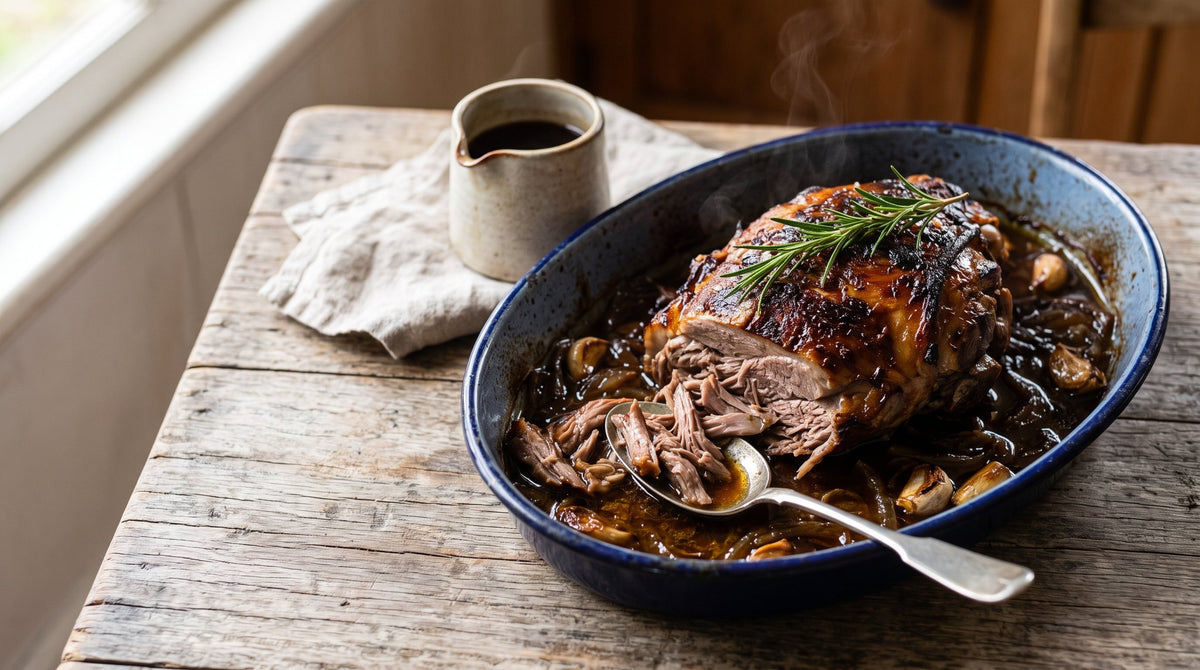
Slow-roasted grass-fed lamb pulled into tender shreds in its pan juices in an enamel roasting dish.

Slow-Roasted Lamb with Pan Juices, the Low and Slow Way

The roast that cannot be overcooked — give it half a day and it gives up entirely

Most roast anxiety comes from a five-minute window: pull it too early, it's raw; too late, it's leather. This method deletes the window. You give the lamb a hard blast of colour, then drop the oven right down and walk away for the better part of an afternoon. Somewhere in hour three the meat stops resisting altogether — a spoon will do the carving. There's no thermometer stress, no window to miss, and the pan underneath quietly builds the best juices you'll pour all winter. Patience, rewarded.

Read moreabout Slow-Roasted Lamb with Pan Juices, the Low and Slow Way

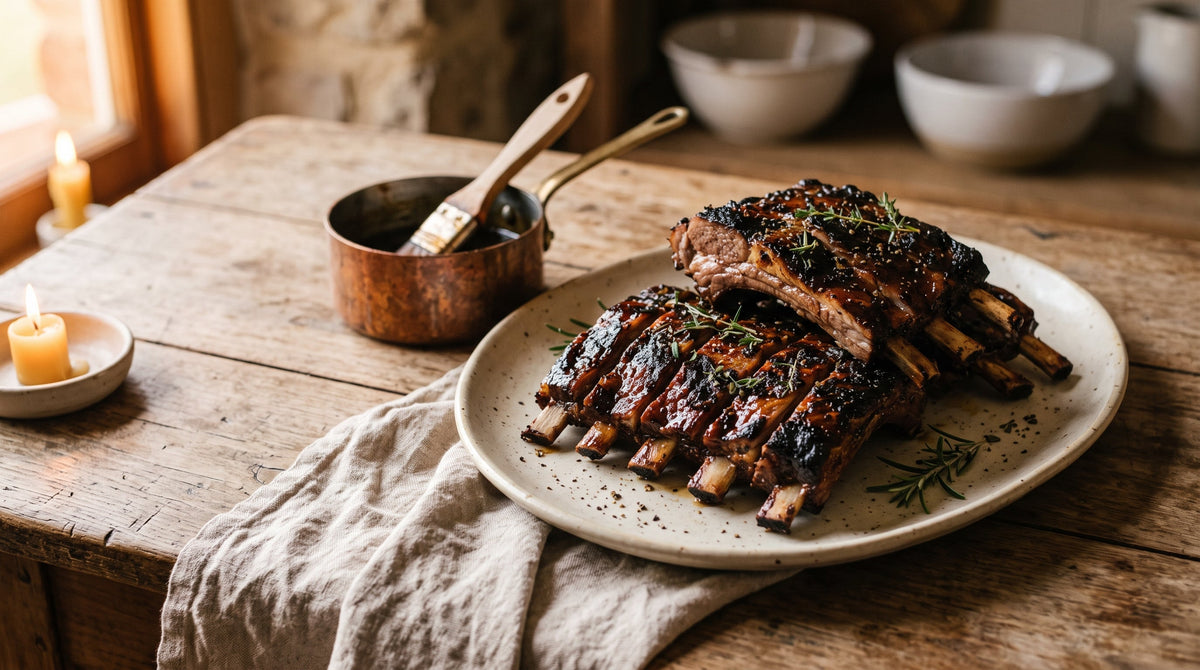
Twice-cooked grass-fed lamb ribs, braised until tender then charred and glazed, stacked on a stoneware platter.

Twice-Cooked Lamb Ribs: Braise, Then Char

The restaurant trick: do the hard part yesterday, take the applause tonight

Ever wondered how a restaurant sends out perfect sticky ribs eight minutes after you order them? They cooked the ribs yesterday. The racks get braised in stock and aromatics until tender, then cooled in their own liquid — where they firm up, drink back flavour, and wait as long as you need. Come dinner time, all that's left is a hot grill pan, a honey glaze made from the braising liquid, and about ten minutes of theatre. It's the most reliable rib method there is, and the only one where the night-of cooking fits between guests arriving and the first drink being finished.

Read moreabout Twice-Cooked Lamb Ribs: Braise, Then Char