One steak, three plates, no oven

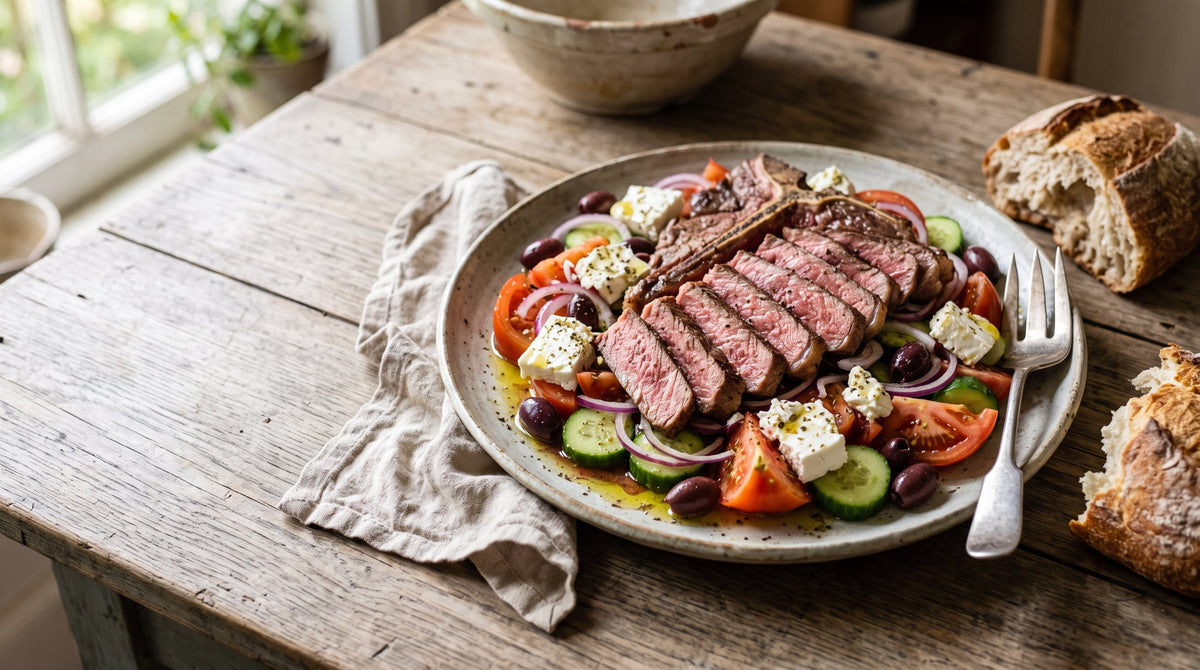
Here's the warm-weather answer to the biggest steak in the share. Grill it, rest it properly, then carve it off the bone and fan the slices over a village-style salad — ripe tomatoes, red onion, cucumber, olives, feta and a shower of dried oregano. The steak stays the hero, but the salad does the stretching, and one 500g T-bone honestly feeds three without anyone rationing. No oven, barely any washing up, and the resting juices become the best ingredient in the dressing.

35 mins 3 servings Prep 15 minsCook 20 minsMain CourseGreek

Ingredients

  • 1 Your Farmer grass-fed beef T-bone steak (about 500g)
  • 1 tbsp olive oil
  • Salt and pepper to season
  • 500g ripe tomatoes, cut into chunky wedges
  • 1/2 red onion, very finely sliced
  • 1 Lebanese cucumber, thickly sliced
  • 80g kalamata olives
  • 100g feta, broken into chunks
  • 1 tsp dried oregano
  • 1 tbsp red wine vinegar
  • 3 tbsp extra virgin olive oil

Instructions

Take the steak out of the fridge 15 minutes ahead so it loses its chill. Pat it very dry, rub with the olive oil and season generously.

1 T-bone steak1 tbsp olive oil

Heat the barbecue or a grill pan to high. Grill the steak with the smaller fillet side angled toward the cooler edge — it's the leaner muscle and finishes first — for 4–5 minutes without moving it.

Turn once and cook another 3–4 minutes, to 52–54C in the thickest part of the sirloin side for medium-rare.

Rest the steak on a plate with a lip, loosely covered, for a full 10 minutes — you want every drop of those resting juices.

While it rests, lay the tomatoes, onion, cucumber and olives on a big platter. Season with salt, scatter over the oregano, then dress with the vinegar and extra virgin olive oil. Sit the feta chunks on top.

500g tomatoes1/2 red onion80g kalamata olives100g feta

Carve both muscles off the bone and slice them thinly across the grain.

Fan the slices over the salad, pour the resting juices over the whole platter, and serve with crusty bread to mop up the juice-and-dressing puddle — the best part of the dish.

Appears in

One Steak, Three Plates

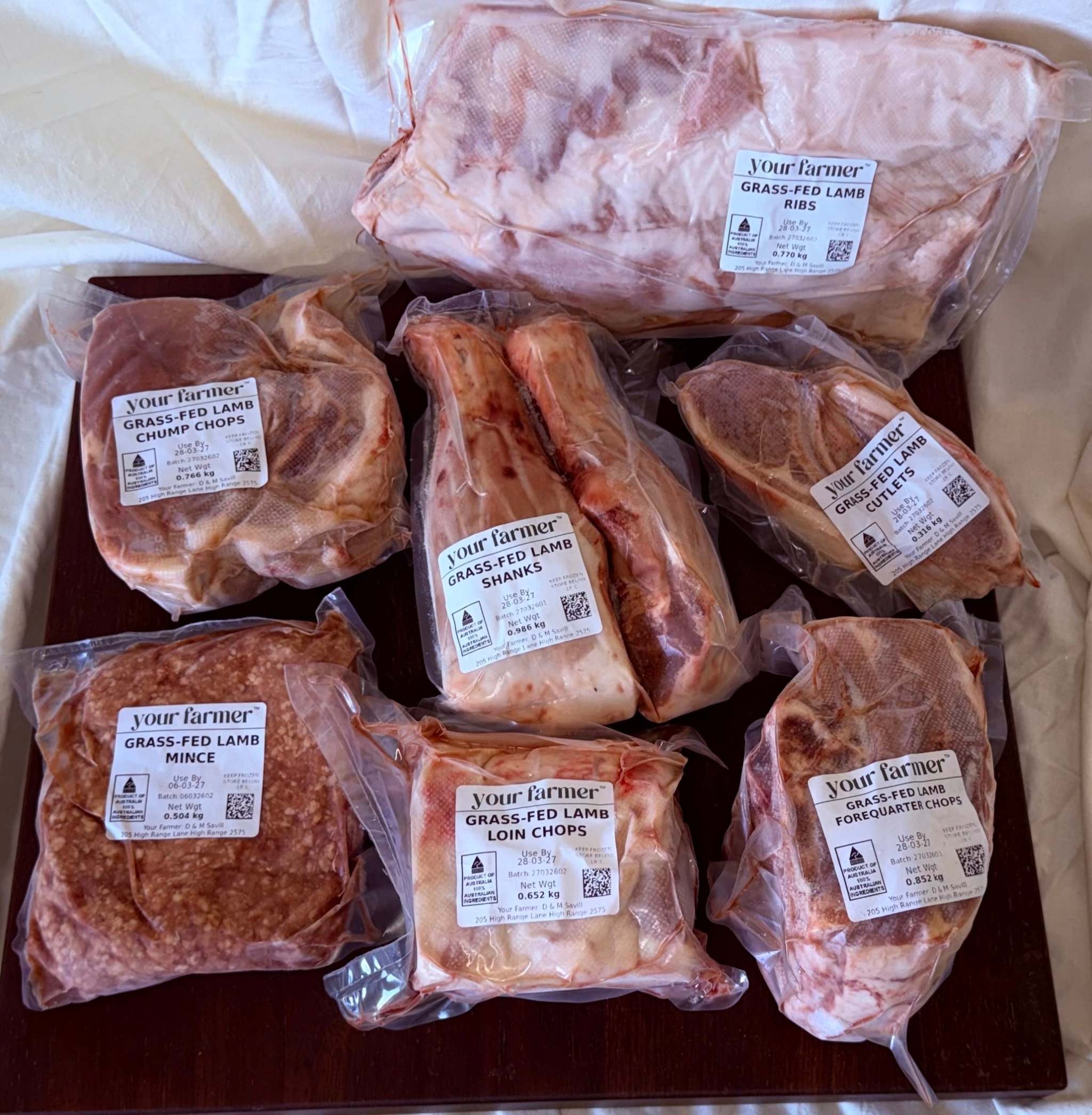
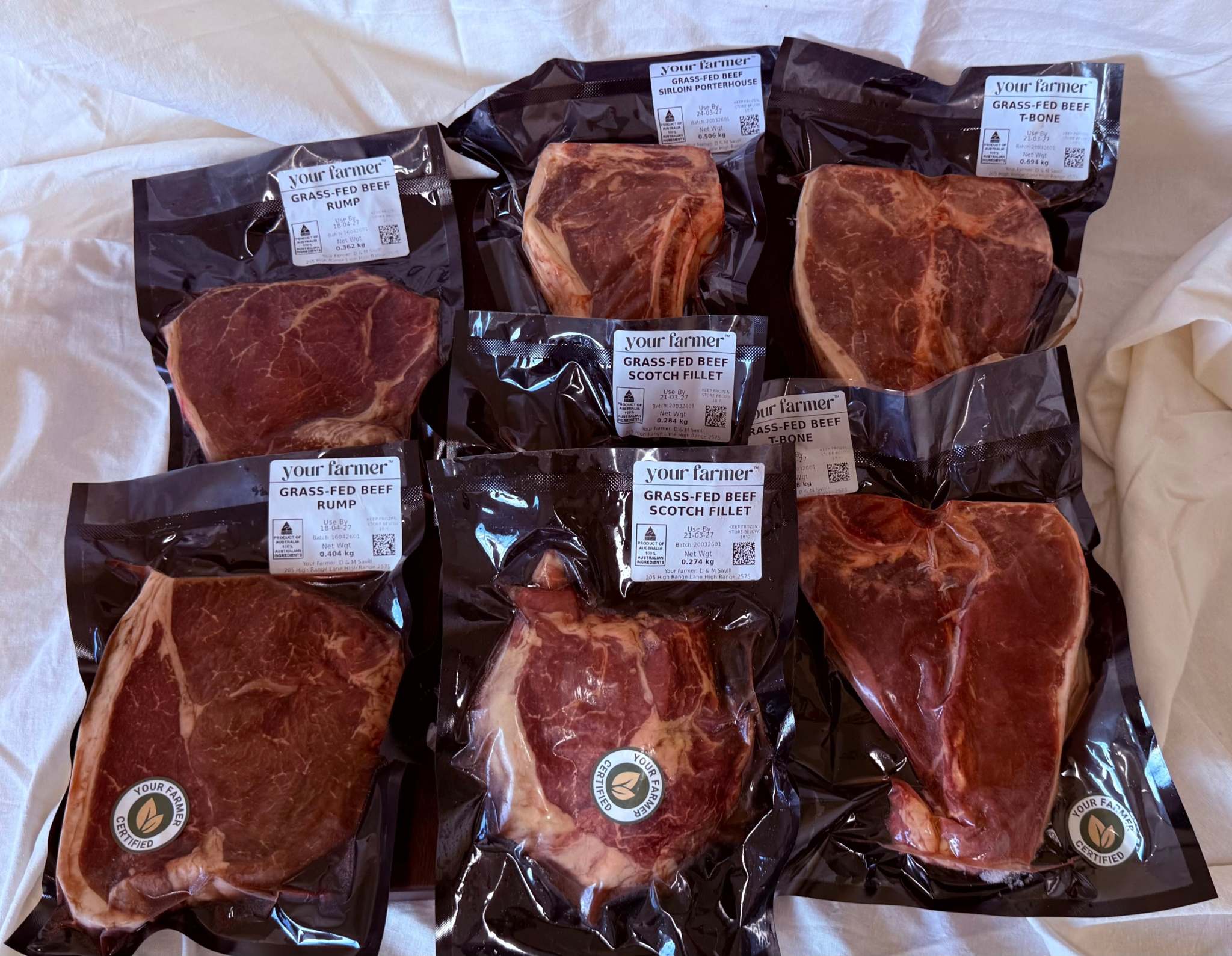
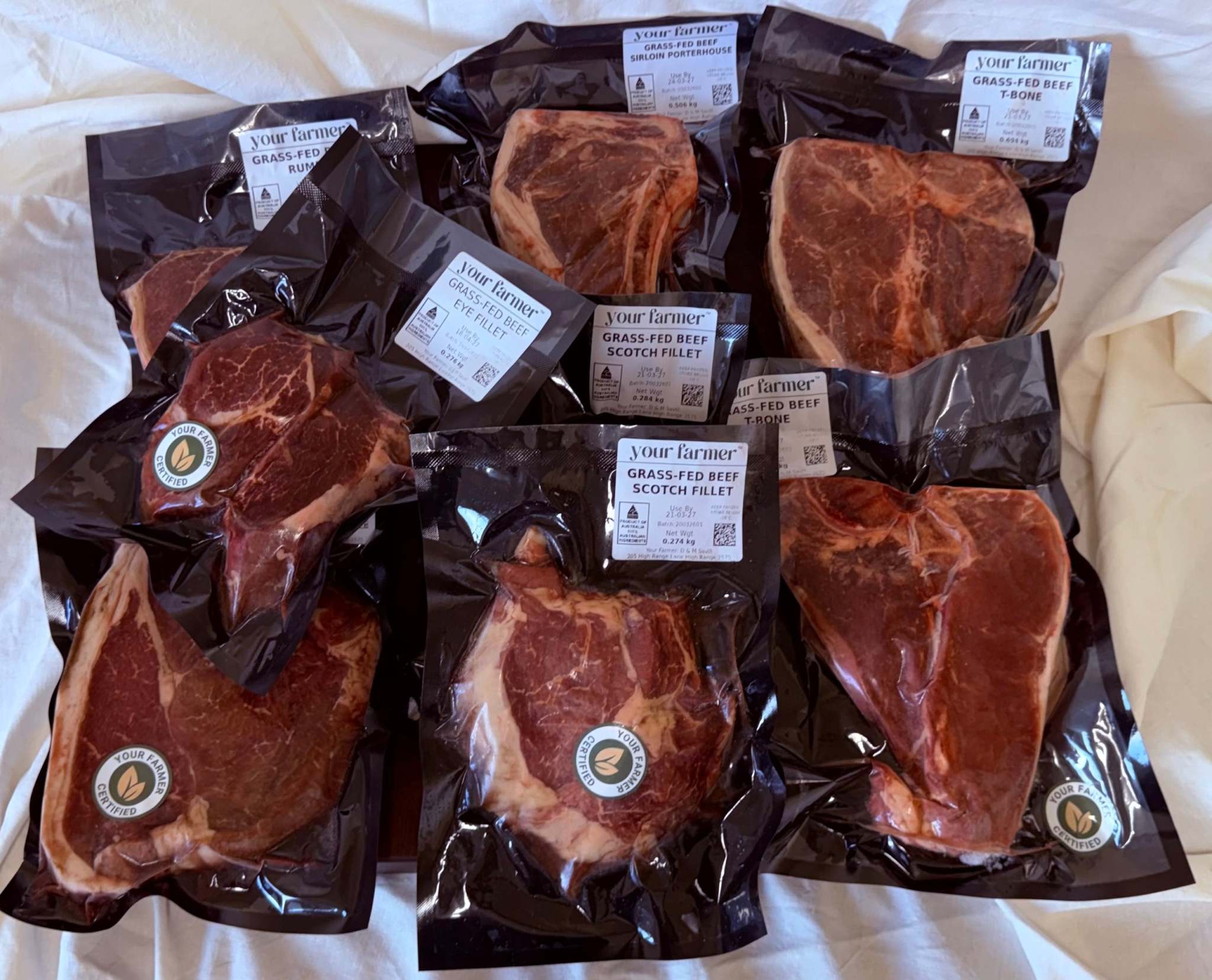
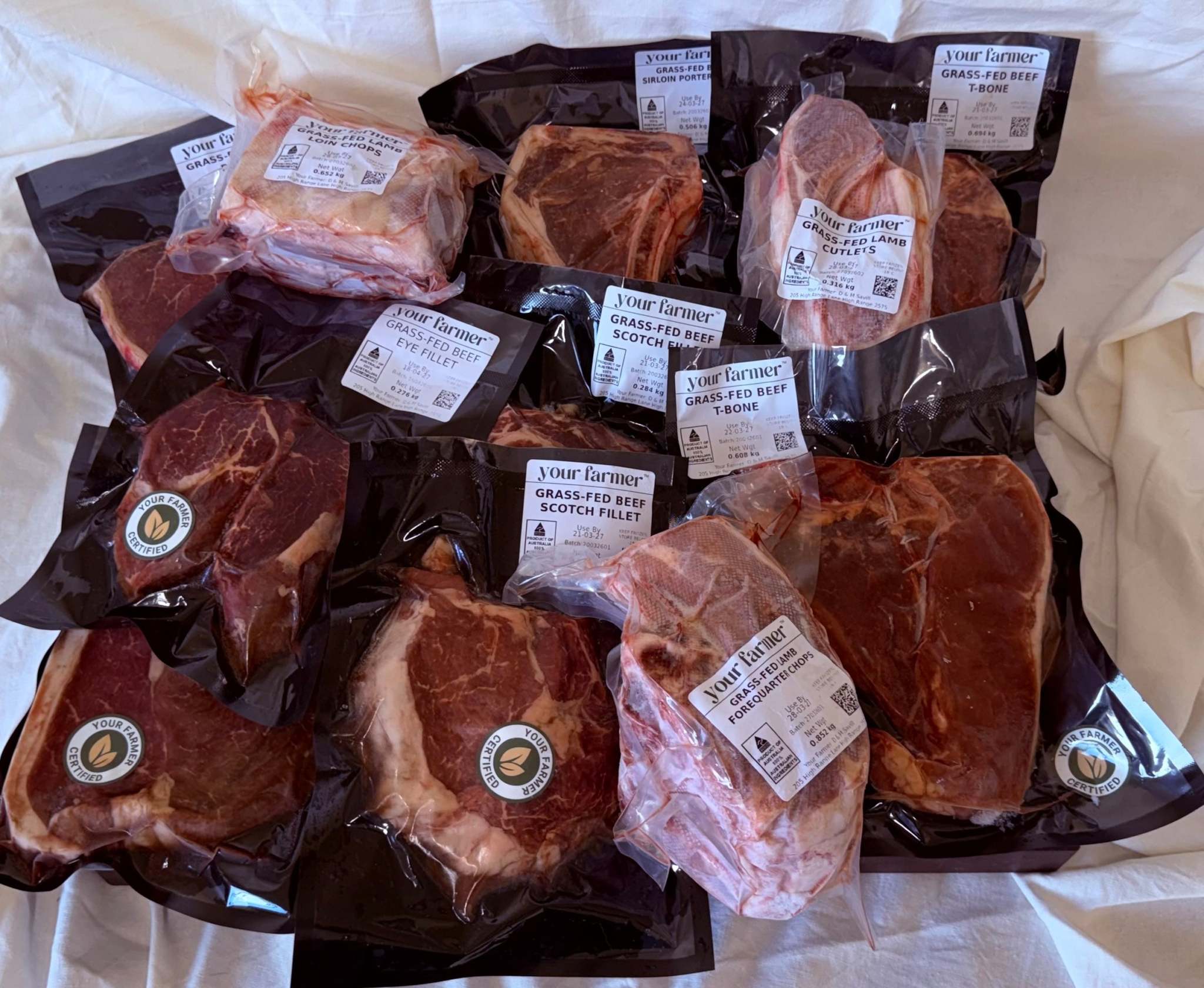
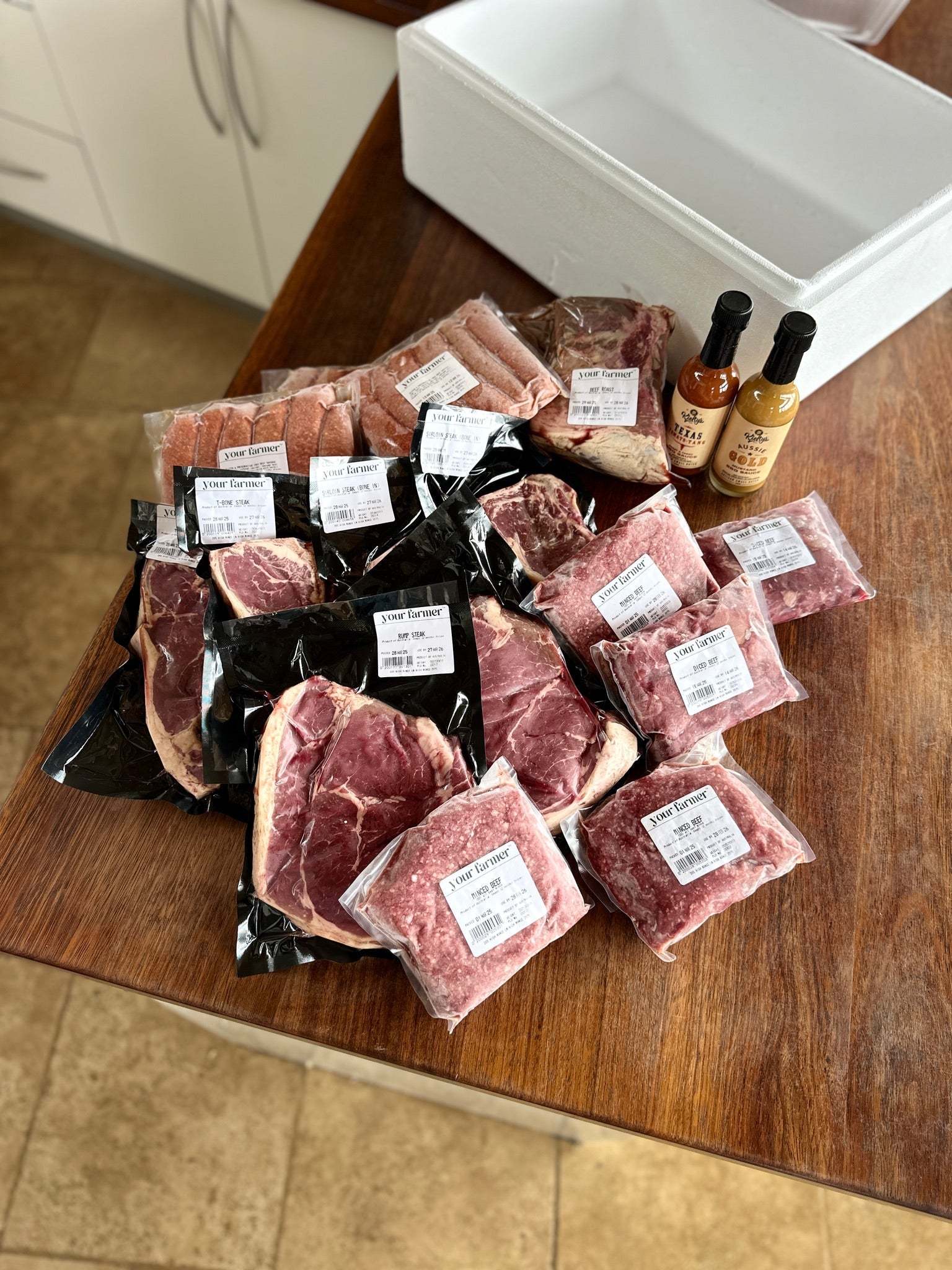
The T-bone is the grandest steak in the box — two muscles, one bone, about 500g — and the instinct is to treat it as dinner for two, tops. Slicing changes the arithmetic. Carve the sirloin and the fillet off the bone, slice both thinly across the grain, and every gram goes further: thin slices read as abundance on a platter in a way two slabs never do. This is how tavernas have stretched good meat for generations — over ripe tomatoes at room temperature, sweet red onion and briny olives, with the meat juices running into the dressing. The T-bone arrives in the Pack B and Pack D boxes of our beef subscription, and because Your Farmer® cattle are 100% grass-fed, the flavour holds its own against feta and oregano without any help. The one rule on the grill: the lean little fillet side cooks ahead of the sirloin, so angle it toward the cooler edge.

Swaps and Variations

Any proper steak from the share works when the T-bone's already gone — rump brings even more flavour, sirloin keeps it classic. Cos leaves, chargrilled capsicum or a handful of mint all belong here; in cooler months, roast the tomatoes first and serve the lot just warm. Skip the feta and add extra olives if there's a dairy-free plate at the table — the dish doesn't miss a beat. If the steak-over-salad idea has won you over, there's a whole school of it — try the warm topside salad with roasted capsicum or the Thai beef salad with toasted rice next.

Storage and Leftovers

Store the parts separately and this dish does two days easily: cooked steak keeps 3 days airtight in the fridge, and undressed salad vegetables hold a day. Keep tomatoes out of the fridge altogether — cold kills their flavour, and they're half the dish. Dressed salad won't hold overnight, so only dress what you'll eat. Leftover steak goes cold into pita with a spoon of yoghurt and whatever salad survived. Thawed raw steak, as always, keeps 2–3 days in the coldest part of the fridge before cooking.
Frequently asked questions

Can I use a different steak from the share?

Yes — rump and sirloin both slice beautifully for this. Cook to the same internal temperature, rest well, and slice thin across the grain; the salad doesn't mind which steak turned up.

Should the salad be cold from the fridge?

No — room temperature is the whole trick. Cold tomatoes taste of nothing, and chilled feta stays chalky. Build the salad while the steak rests and everything lands at the right temperature together.

Can I make any of it ahead?

You can slice the onion, cucumber and olives a few hours early and keep them covered. Cut the tomatoes and dress the platter only at serving time, or it turns watery.

What doneness works best for sliced steak?

Medium-rare, around 52–54C before resting. Thin rosy slices stay tender and juicy at room temperature; steak cooked further dries out quickly once sliced.

Three Simple Steps

A whole table of real food.

Your Farmers grow grass-fed beef and lamb, pastured eggs and the best eco-grown veggies and produce — every item grown to the same ecological standard, every farmer one you can know by name. One subscription, your whole real-food shop.

01

Reserve your share — or try a pack

Subscribe to a share of the harvest, or start with a one-off fixed pack.

02

Make it your own

Pick your delivery rhythm and what's in the box. Skip or cancel anytime — no lock-in.

03

Cook, savour, know your farmer

We deliver in a reusable esky we collect next time. No couriers, no waste.

More Recipes

View all

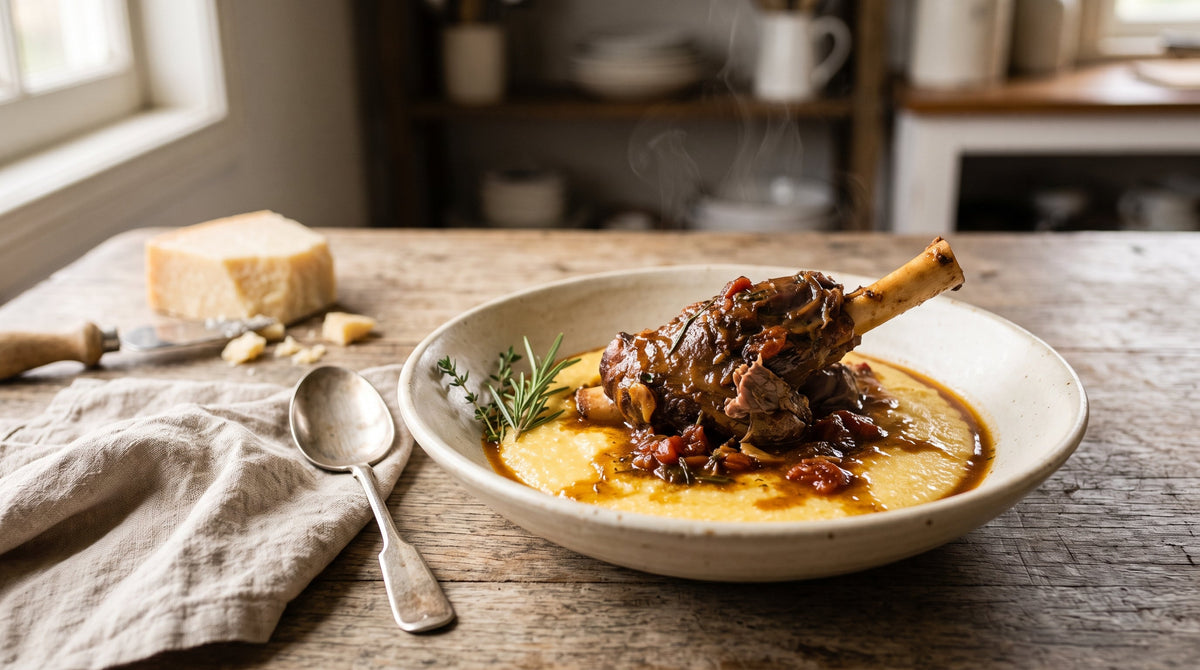
Tomato and rosemary braised grass-fed lamb shank served over soft parmesan polenta.

Tomato and Rosemary Braised Lamb Shanks with Soft Polenta

Osso buco's lamb cousin, with soft polenta doing the catching

The Milanese figured out long ago that a shin braised on the bone in tomato makes a sauce nothing else can — the marrow sees to that. This is the same idea run through the lamb paddock: shanks browned hard, then braised low with tomato, white wine and rosemary until the meat leans off the bone, all of it served over a pool of soft, buttery parmesan polenta whose entire purpose in life is catching sauce. It's a Sunday sort of pot that happily cooks on a Tuesday, and the polenta takes less minding than most people fear.

Read moreabout Tomato and Rosemary Braised Lamb Shanks with Soft Polenta

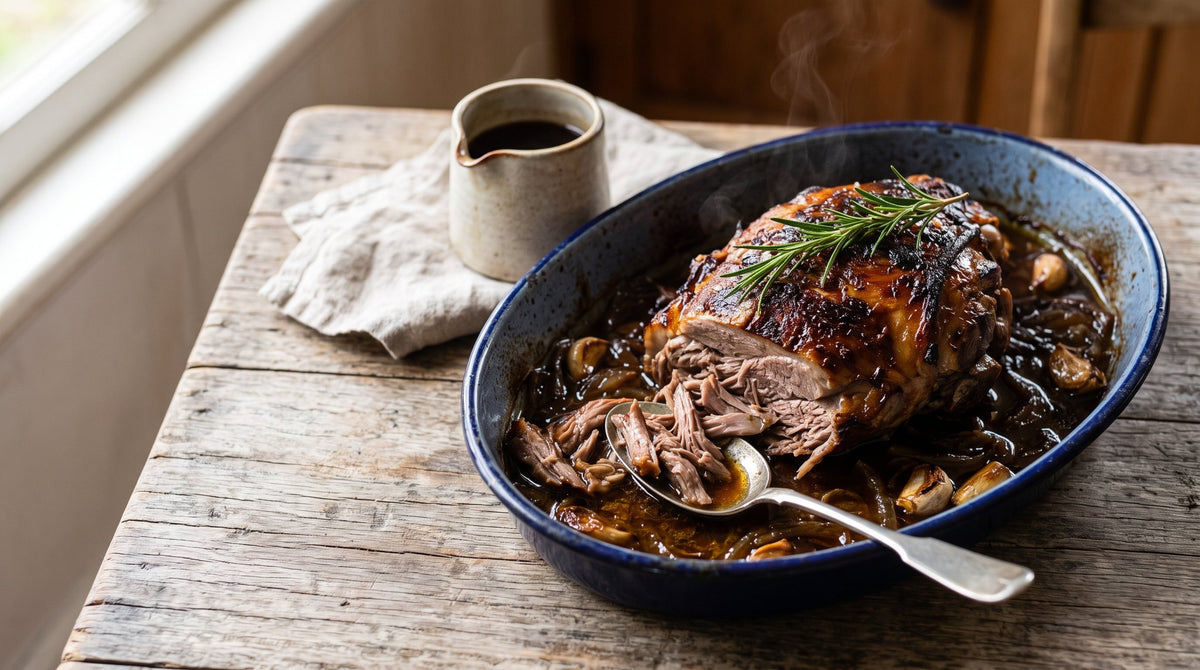
Slow-roasted grass-fed lamb pulled into tender shreds in its pan juices in an enamel roasting dish.

Slow-Roasted Lamb with Pan Juices, the Low and Slow Way

The roast that cannot be overcooked — give it half a day and it gives up entirely

Most roast anxiety comes from a five-minute window: pull it too early, it's raw; too late, it's leather. This method deletes the window. You give the lamb a hard blast of colour, then drop the oven right down and walk away for the better part of an afternoon. Somewhere in hour three the meat stops resisting altogether — a spoon will do the carving. There's no thermometer stress, no window to miss, and the pan underneath quietly builds the best juices you'll pour all winter. Patience, rewarded.

Read moreabout Slow-Roasted Lamb with Pan Juices, the Low and Slow Way

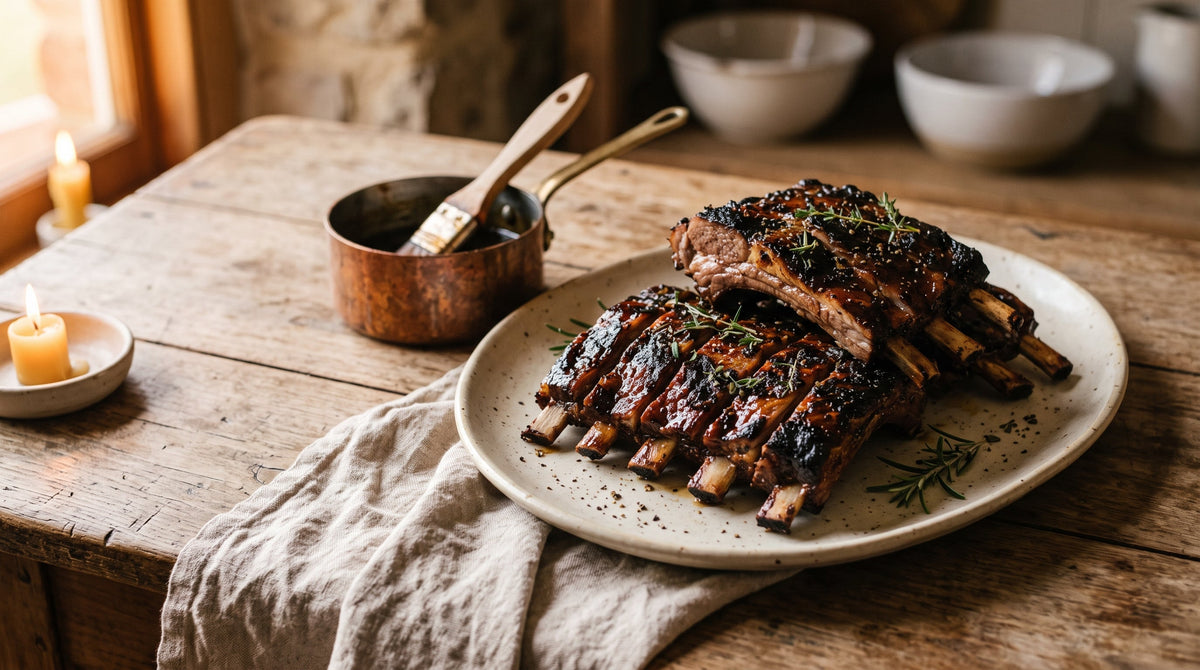
Twice-cooked grass-fed lamb ribs, braised until tender then charred and glazed, stacked on a stoneware platter.

Twice-Cooked Lamb Ribs: Braise, Then Char

The restaurant trick: do the hard part yesterday, take the applause tonight

Ever wondered how a restaurant sends out perfect sticky ribs eight minutes after you order them? They cooked the ribs yesterday. The racks get braised in stock and aromatics until tender, then cooled in their own liquid — where they firm up, drink back flavour, and wait as long as you need. Come dinner time, all that's left is a hot grill pan, a honey glaze made from the braising liquid, and about ten minutes of theatre. It's the most reliable rib method there is, and the only one where the night-of cooking fits between guests arriving and the first drink being finished.

Read moreabout Twice-Cooked Lamb Ribs: Braise, Then Char