


The Foil Is Doing the Braising
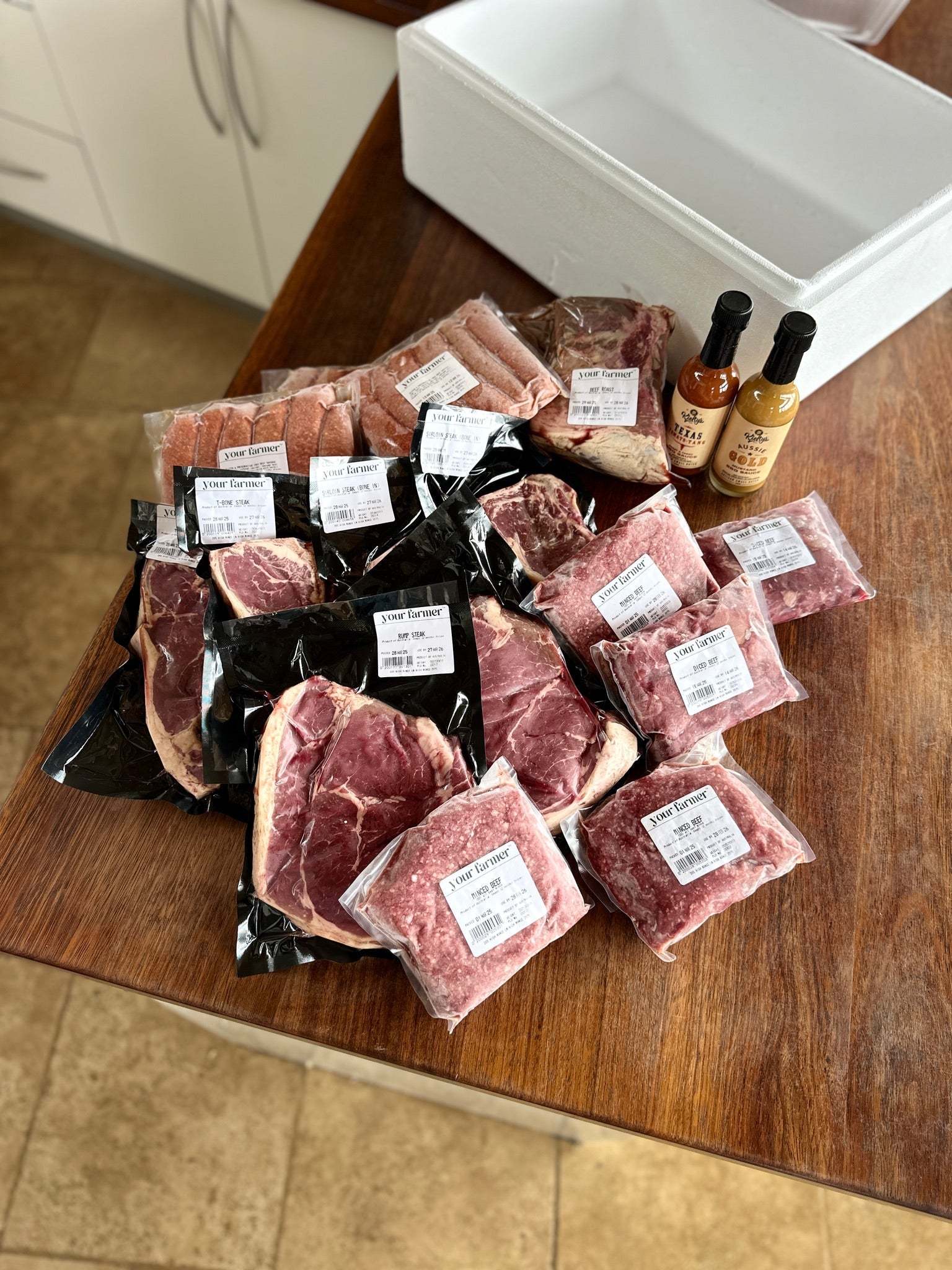
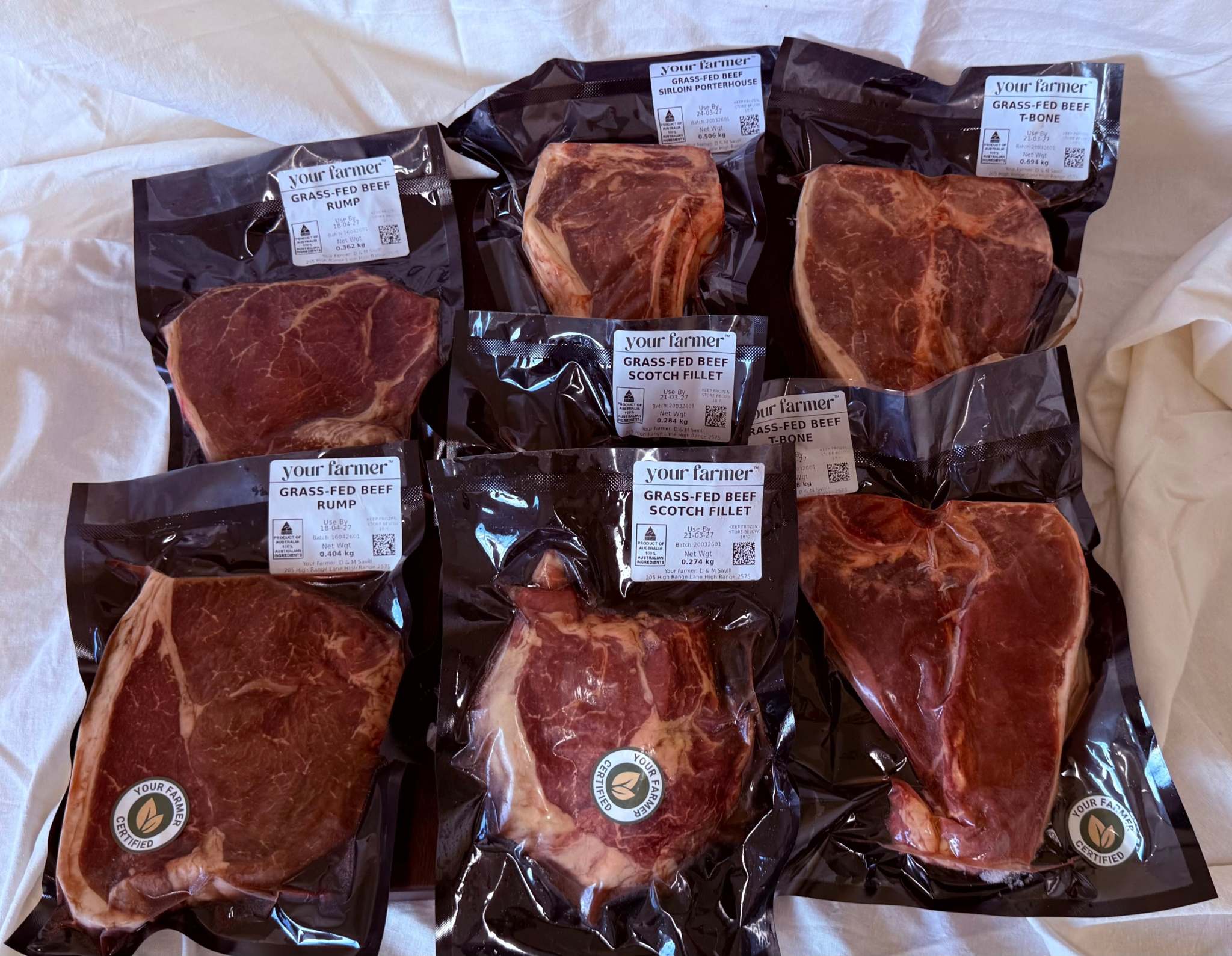
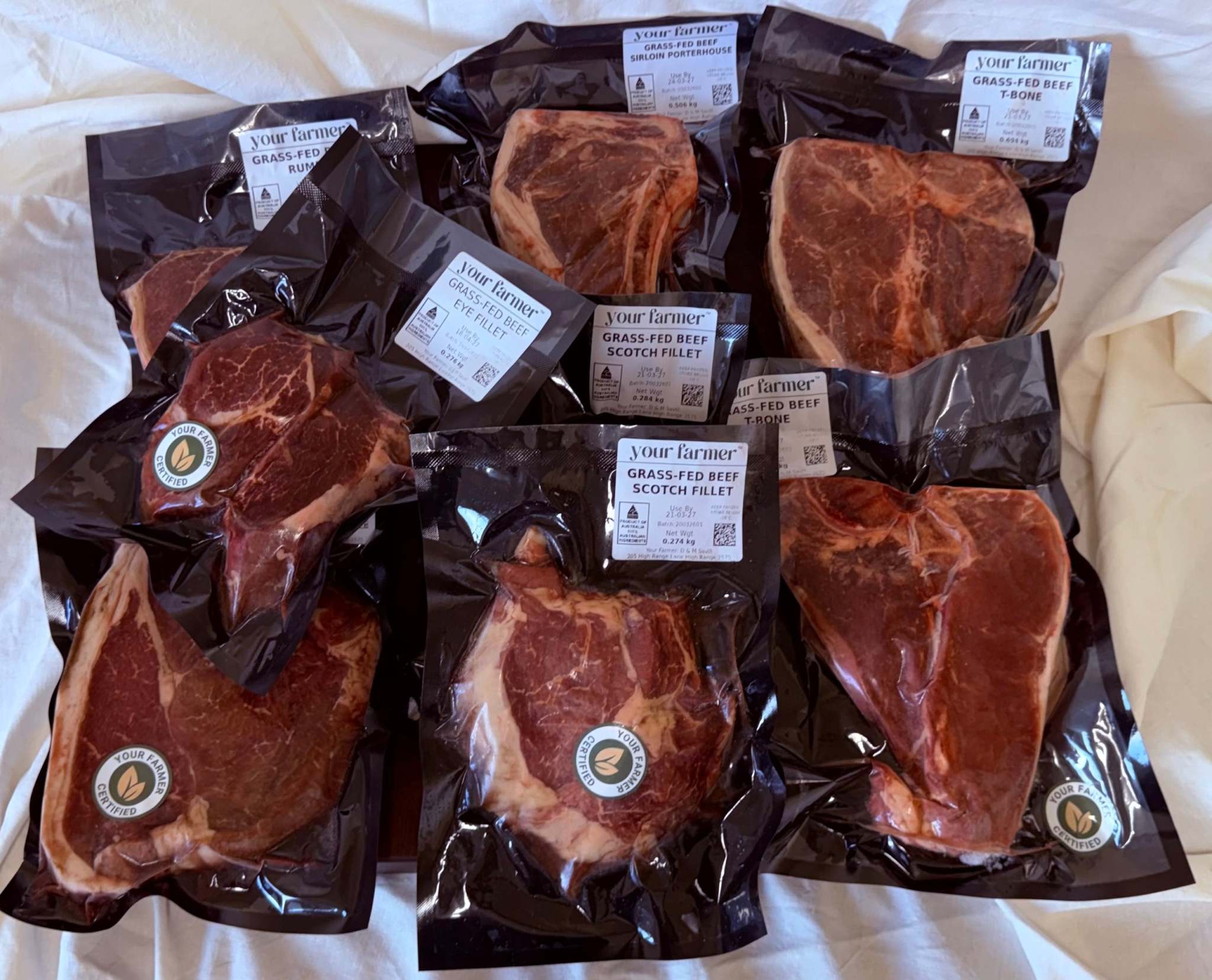
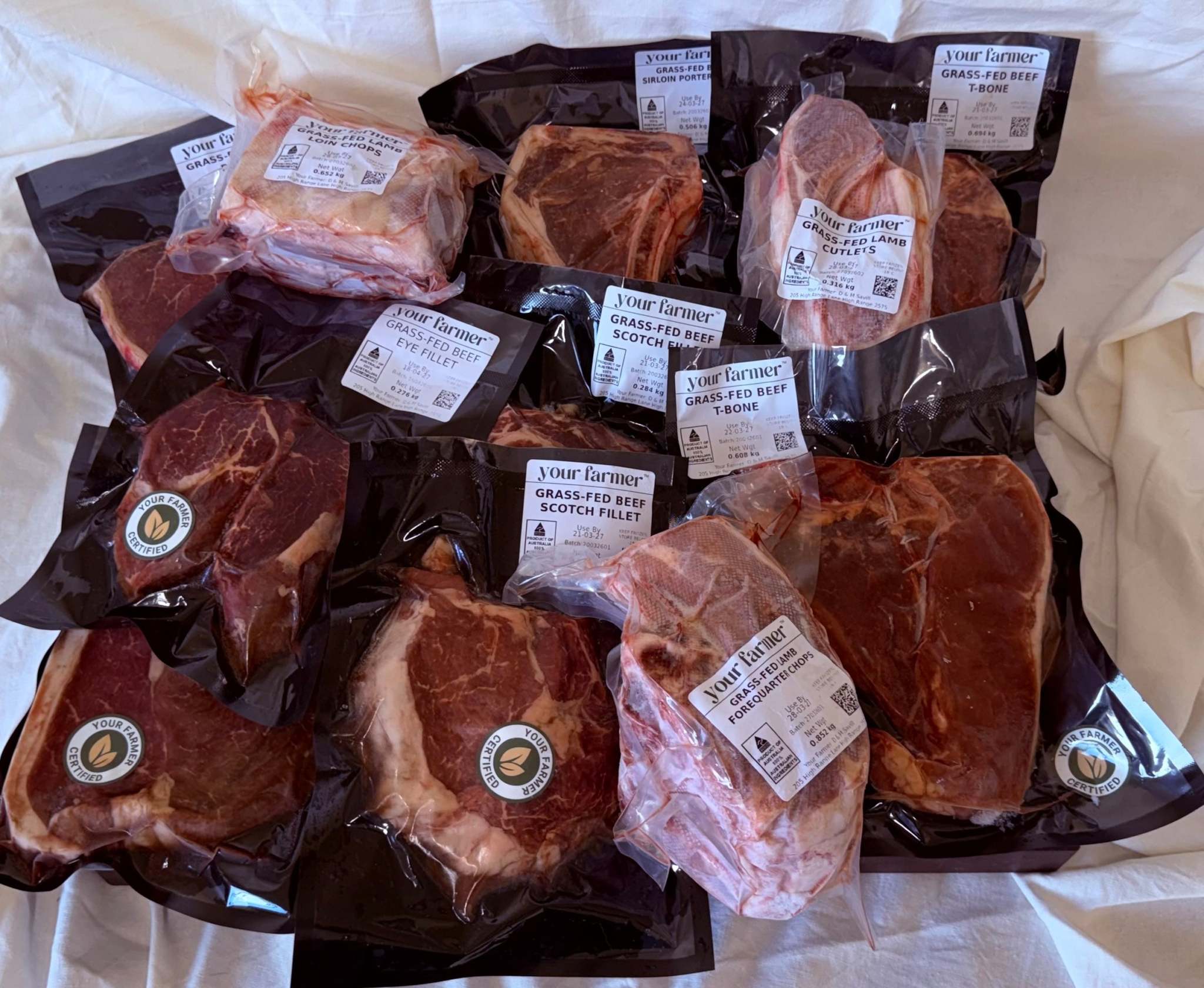
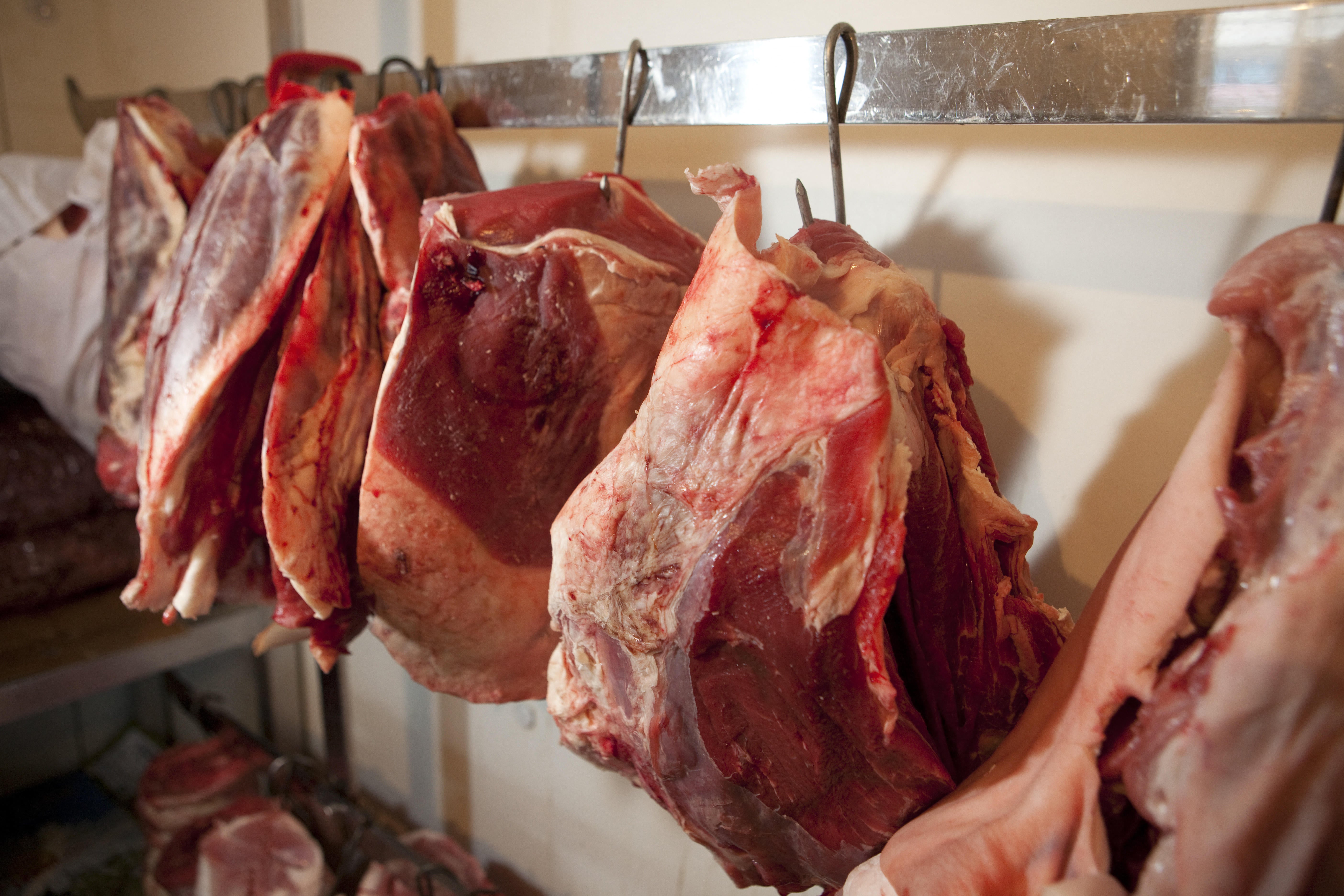
Beef ribs are a working cut — muscle and connective tissue built around bone — and that tissue needs long, moist heat before it melts into the gelatine that makes ribs worth eating. That's exactly what the foil parcel provides. Sealed in with a splash of vinegar, the rack steams and braises in its own juices at 160C, no basting, no checking, no barbecue. Your Farmer® beef ribs come as a rack of about 1.2kg in Pack B and Pack D beef shares, and the grass-fed flavour underneath means the smoke-sweet rub is seasoning something, not covering for it. You'll know the first stage is done when the meat has shrunk back from the bone ends — that pull-back is the cut telling you the collagen has let go.
Swaps and Variations
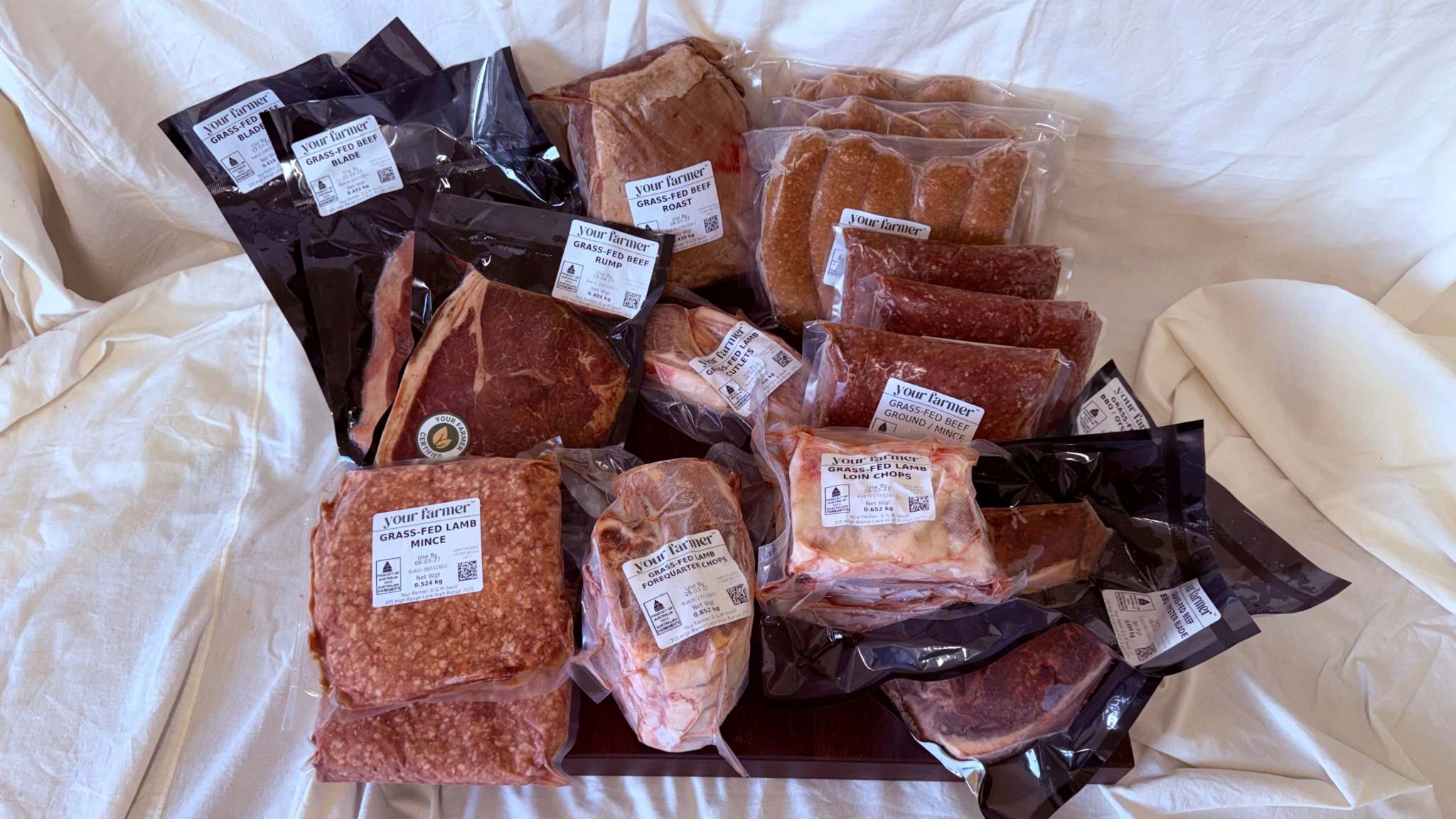
The rub and glaze are open to negotiation. A honey, soy and grated ginger glaze in place of the barbecue sauce takes the same ribs somewhere gently Asian; a pinch of cayenne in the rub suits the chilli inclined. If there's a barbecue on the deck, do the foil stage in the oven and finish the glazed ribs over medium heat outside for proper char. Feeding a bigger table? Order an extra rack and run two parcels side by side — same times. And if you're still getting to know what else is in the pack, our guide to every beef cut is the map.
Storage and Leftovers
Leftover ribs keep, well wrapped, in the fridge for 3 to 4 days, or freeze for up to 3 months. Reheat them re-wrapped in foil in a 150C oven for about 20 minutes so they warm through without drying out. Best leftover trick: strip the meat, chop it through the leftover glaze and pile it into toasted sandwiches — the school-holiday lunch that empties the fridge.
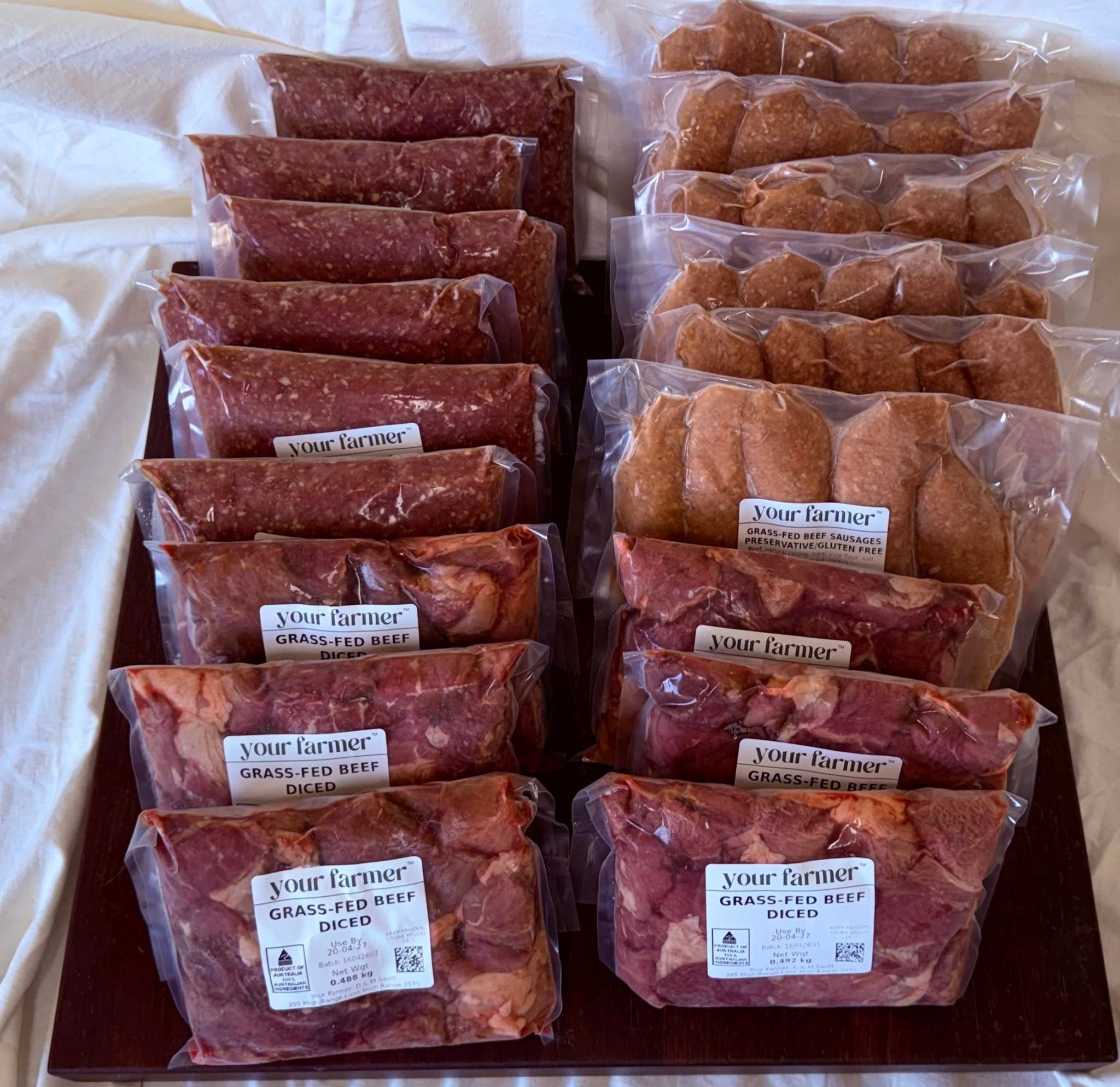
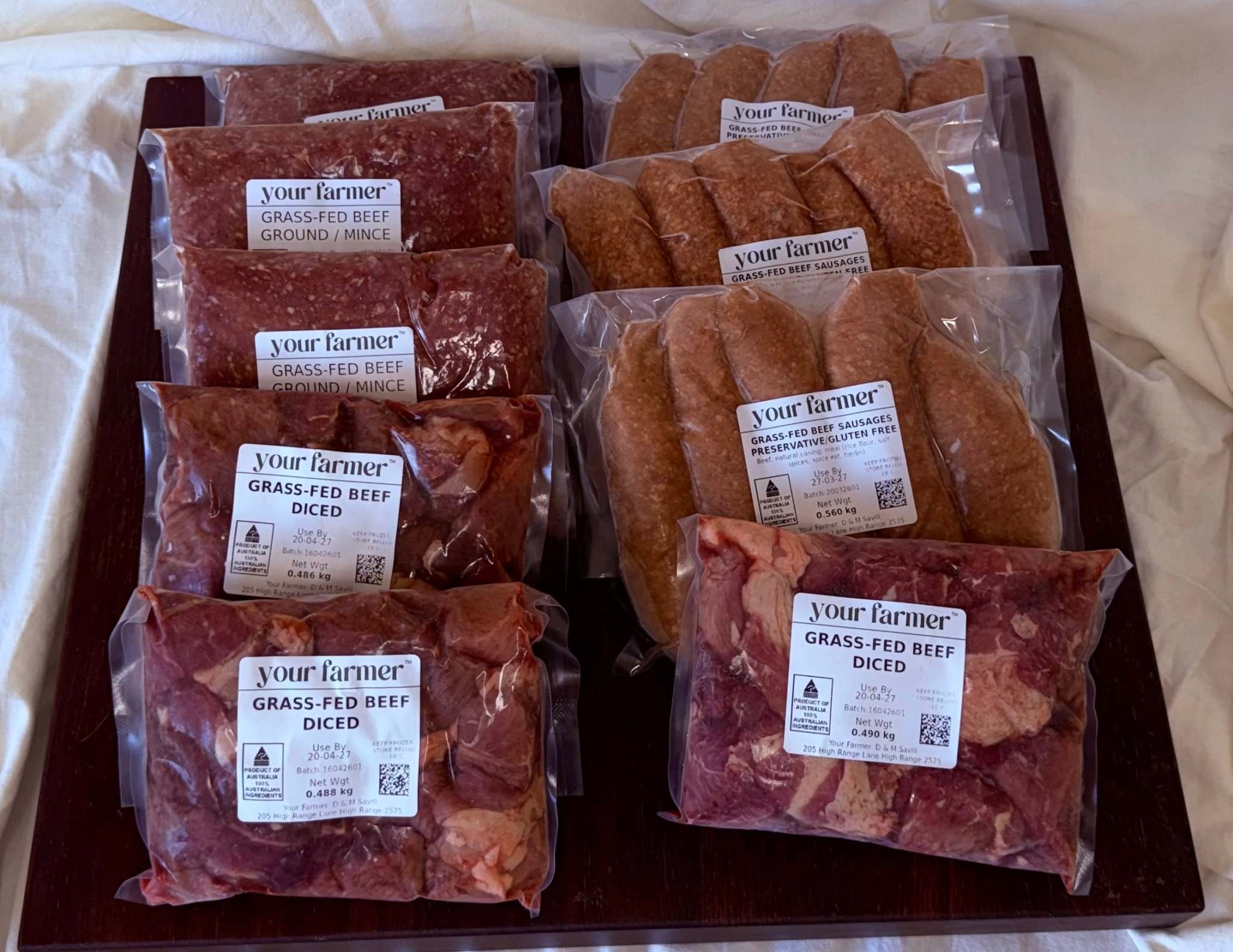
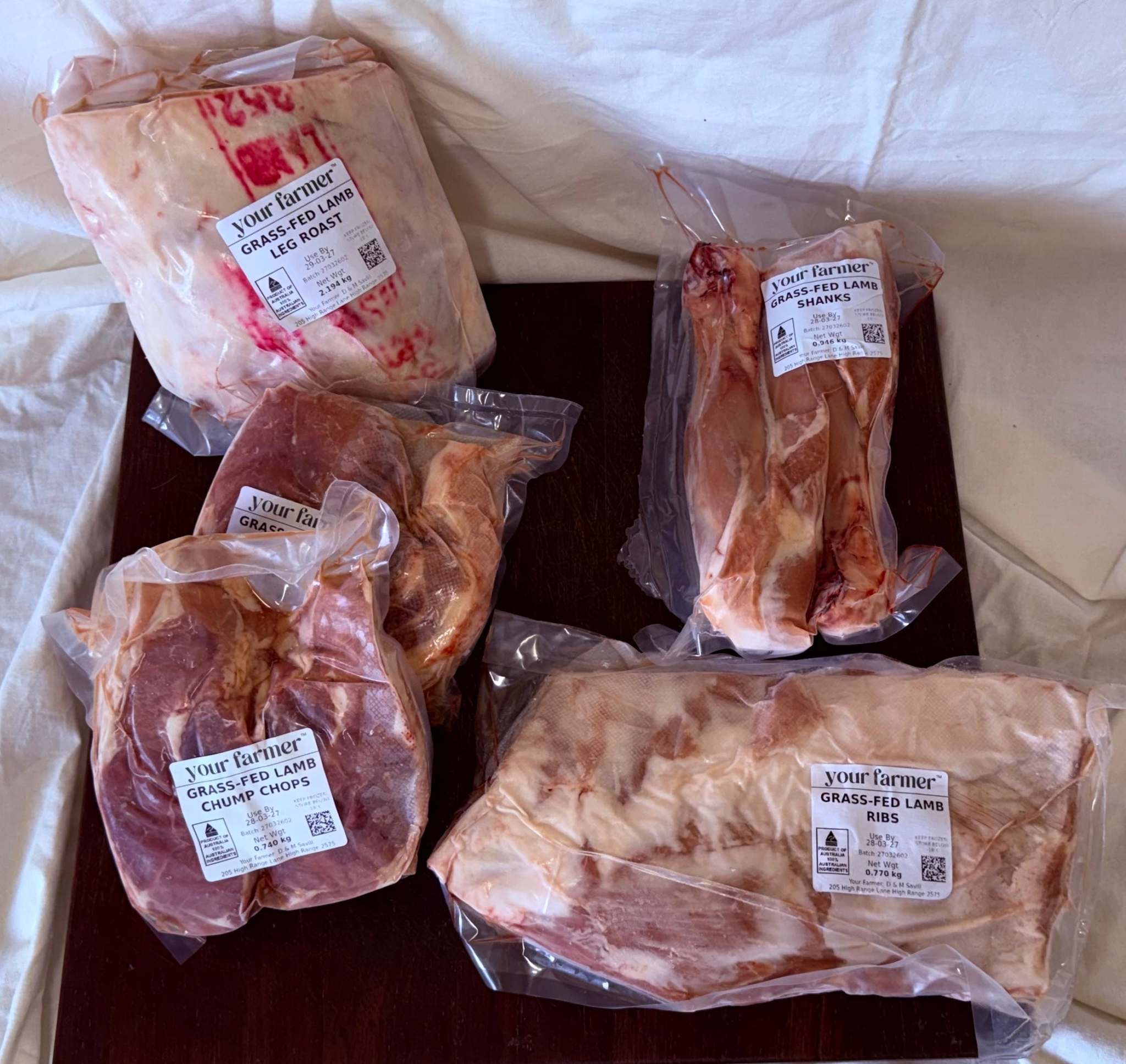
The rack turns up ready and waiting when our beef subscription lands a Pack B or Pack D delivery — one parcel of foil between you and sticky ribs.



Share:
Vietnamese Lemongrass Beef Skewers
Sliced T-Bone with Tomato, Red Onion and Oregano Salad