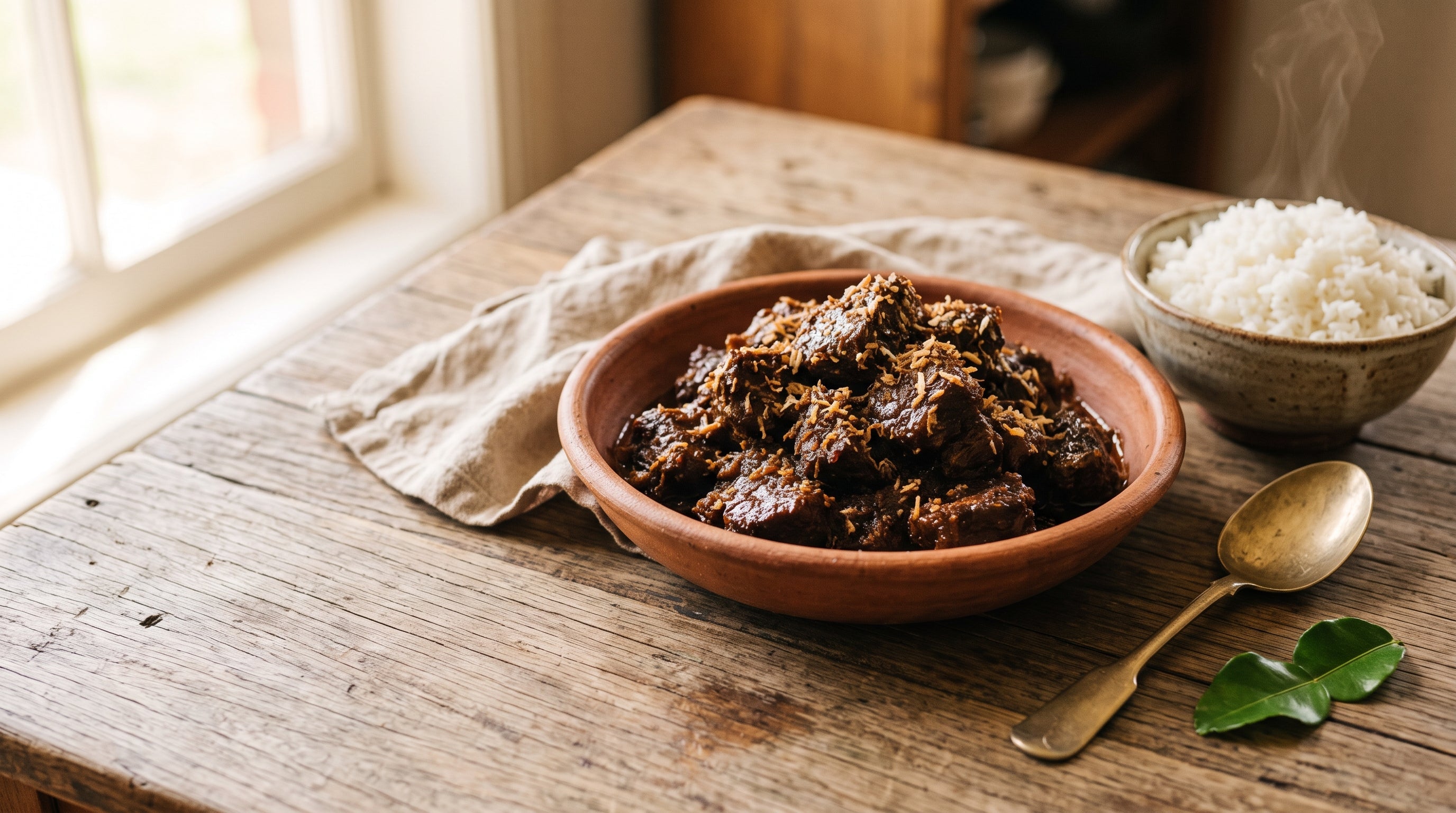
The curry that cooks until the sauce becomes part of the beef

Rendang isn't a curry you serve swimming in sauce — it's a curry you cook until the sauce all but disappears into the beef. Coconut milk simmers down over hours with a fragrant paste of lemongrass, ginger and chilli, getting darker and richer until it clings to every piece. The diced beef pack was built for this: enough connective tissue to stay lush through a three-hour simmer where a lean cut would give up. A genuine weekend project — one pot, occasional stirring, and a finish no takeaway container has ever matched.

3 hrs 45 mins 4 servings Prep 30 minsCook 3 hrs 15 minsMain CourseMalaysian

Ingredients

  • 480g Your Farmer grass-fed diced beef
  • 6 dried red chillies (use fewer for milder)
  • 6 eschalots (or 2 small red onions), roughly chopped
  • 4 cloves garlic, peeled
  • 1 thumb-sized piece ginger, sliced
  • 1 thumb-sized piece galangal, sliced (or use extra ginger)
  • 2 stalks lemongrass, white part only, sliced
  • 45g (3/4 cup) desiccated coconut
  • 2 tbsp neutral oil
  • 1 cinnamon stick
  • 2 star anise
  • 400ml can coconut milk
  • 4 makrut lime leaves
  • 1 tbsp grated palm sugar (or brown sugar)
  • 1 tsp salt
  • Steamed rice, to serve

Instructions

For the spice paste

Soak the dried chillies in boiling water for 15 minutes, then drain.

6 dried red chillies

Blitz the chillies with the eschalots, garlic, ginger, galangal and lemongrass, adding a splash of water, until you have a smooth paste.

6 eschalots4 cloves garlicginger and galangal2 stalks lemongrass

For the rendang

Toast the desiccated coconut in a dry frying pan over low heat, stirring, until deep golden, then pound or blitz it to an oily crumb — this is kerisik, and it's what makes rendang taste like rendang.

45g desiccated coconut

Heat the oil in a heavy pot over medium heat and fry the paste with the cinnamon and star anise for 8 to 10 minutes, until it darkens, smells incredible and the oil starts to separate at the edges.

2 tbsp neutral oil1 cinnamon stick2 star anise

Add the diced beef and stir for 2 minutes to coat it in the paste.

480g diced beef

Pour in the coconut milk, add the lime leaves and bring to the gentlest possible simmer, uncovered.

400ml coconut milk4 makrut lime leaves

Simmer low and slow for 2.5 to 3 hours, stirring occasionally at first and near-constantly toward the end, as the sauce thickens, darkens and reduces right down.

Stir in the kerisik, palm sugar and salt and cook a final 15 minutes, stirring so nothing catches, until the sauce is almost dry and clings to the beef.

toasted coconut1 tbsp palm sugar1 tsp salt

Rest for 10 minutes off the heat, then serve with steamed rice.

steamed rice

Appears in

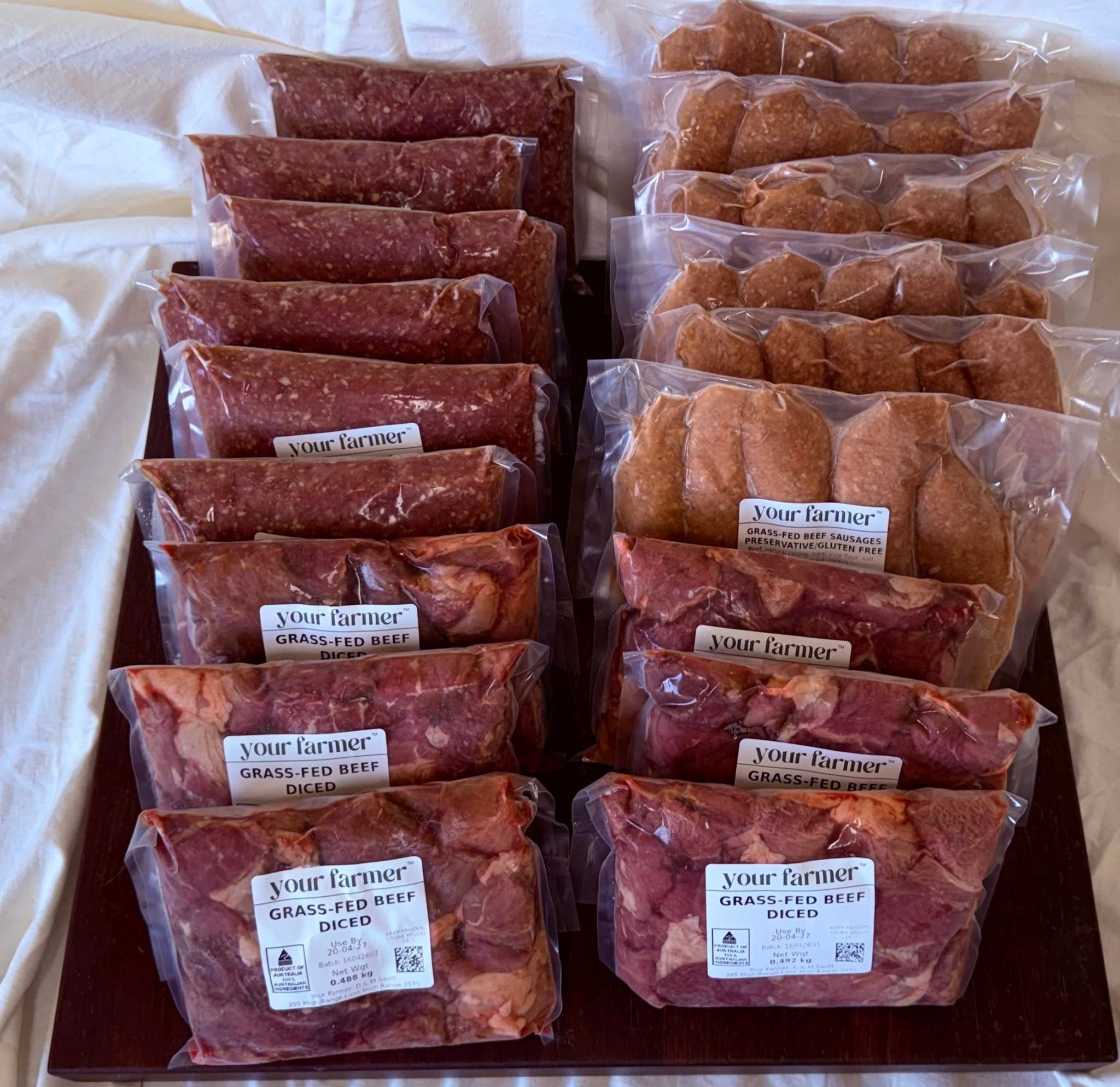
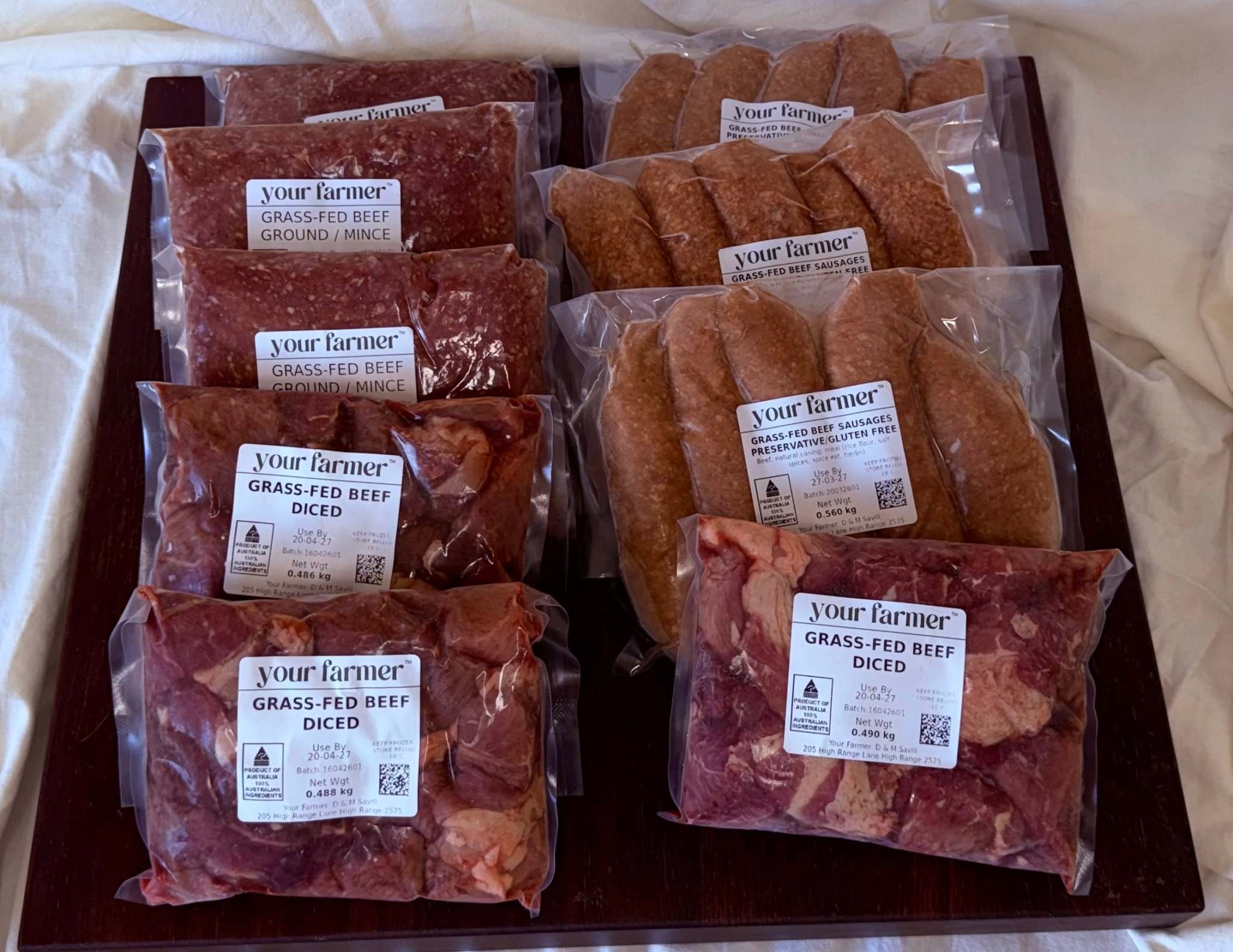
In every beef share — Diced Beef (480g)

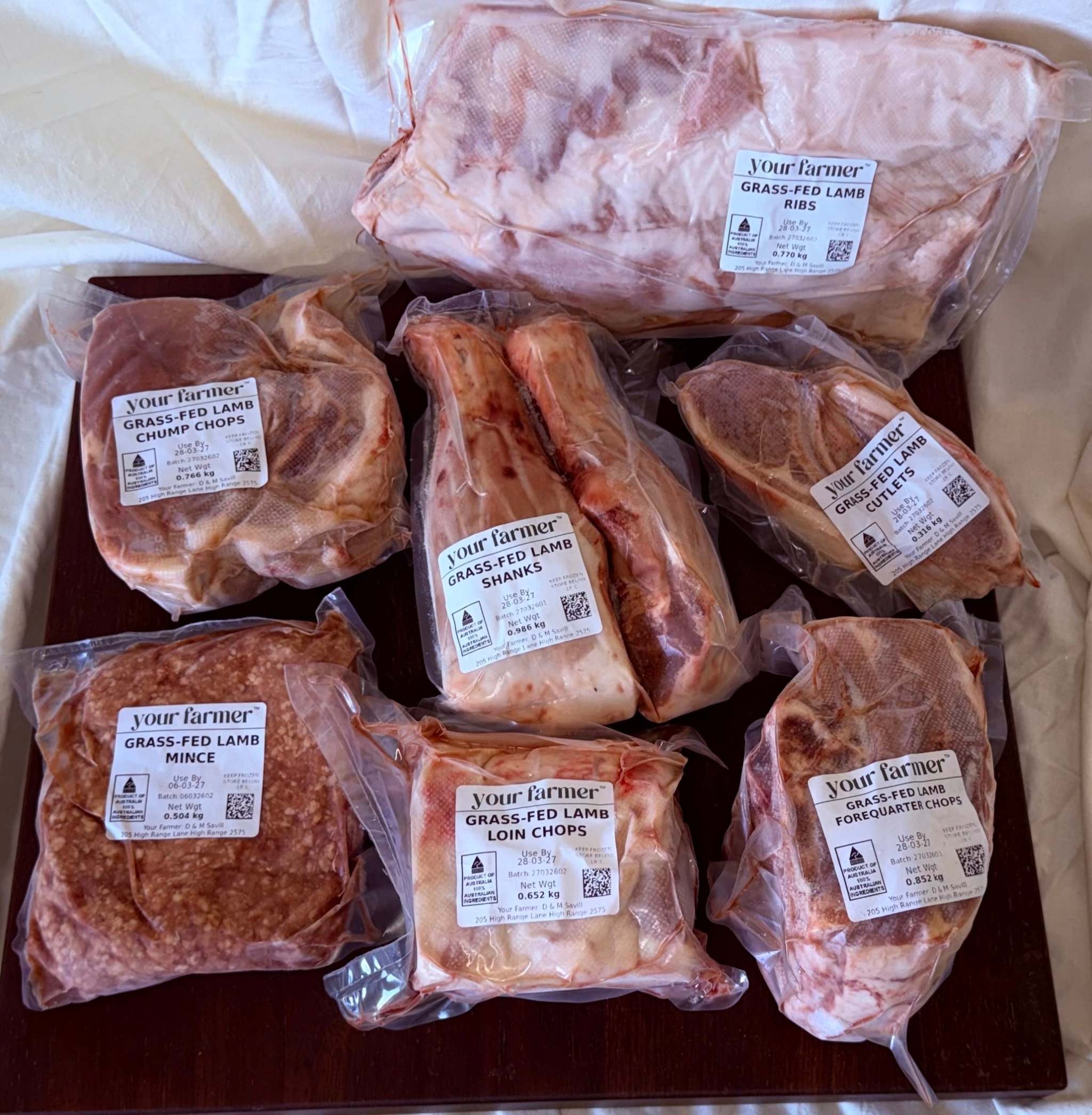
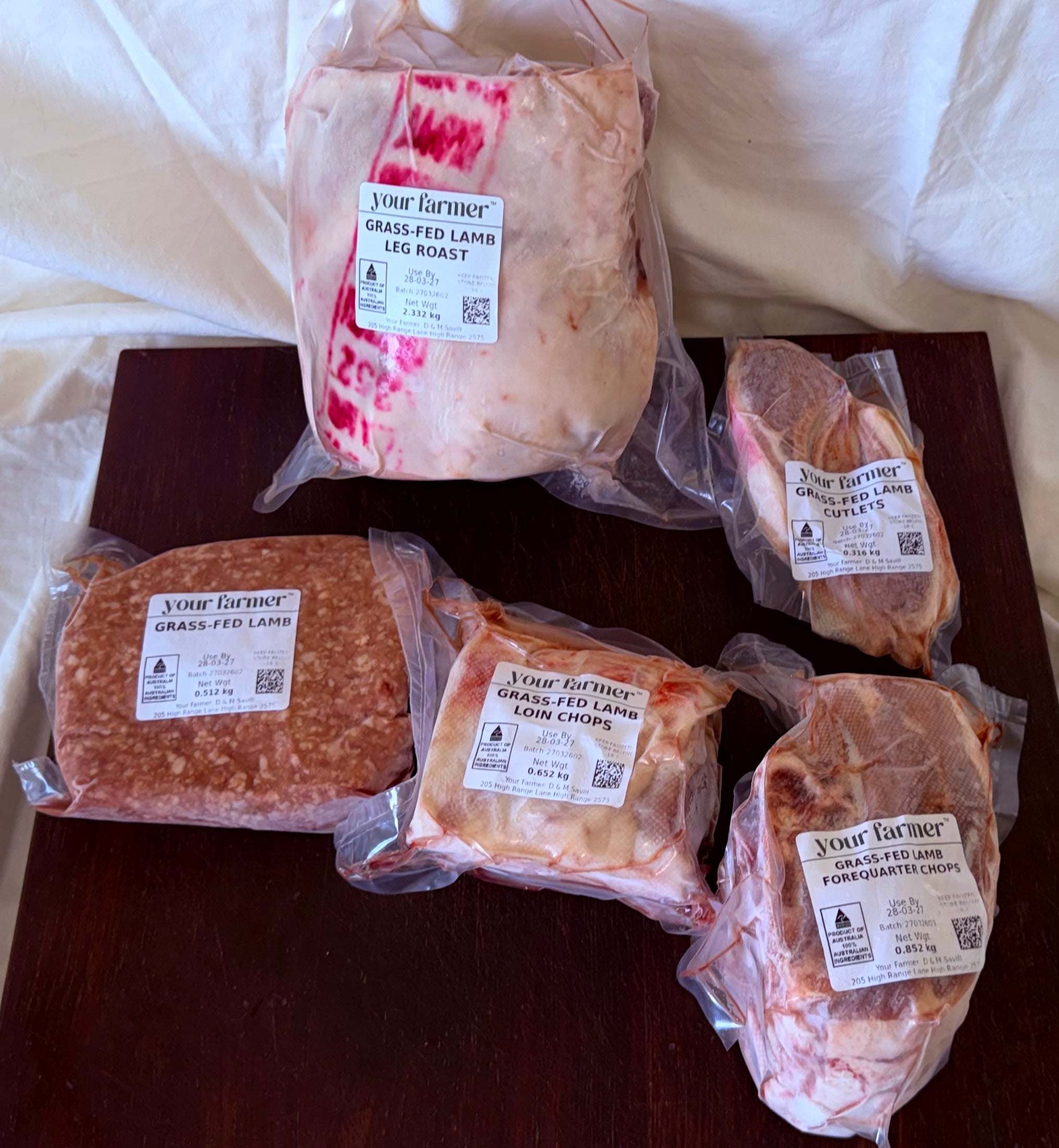
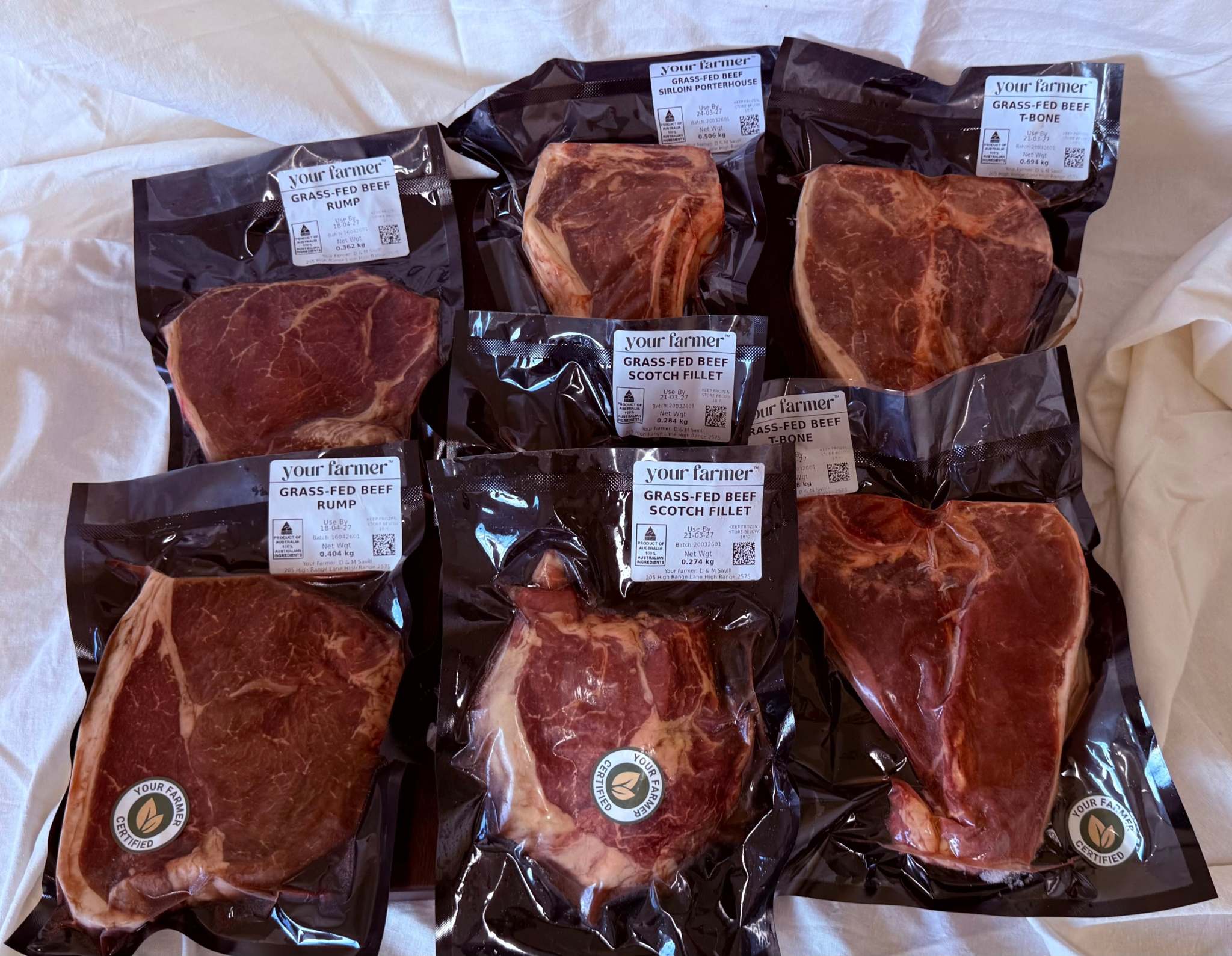
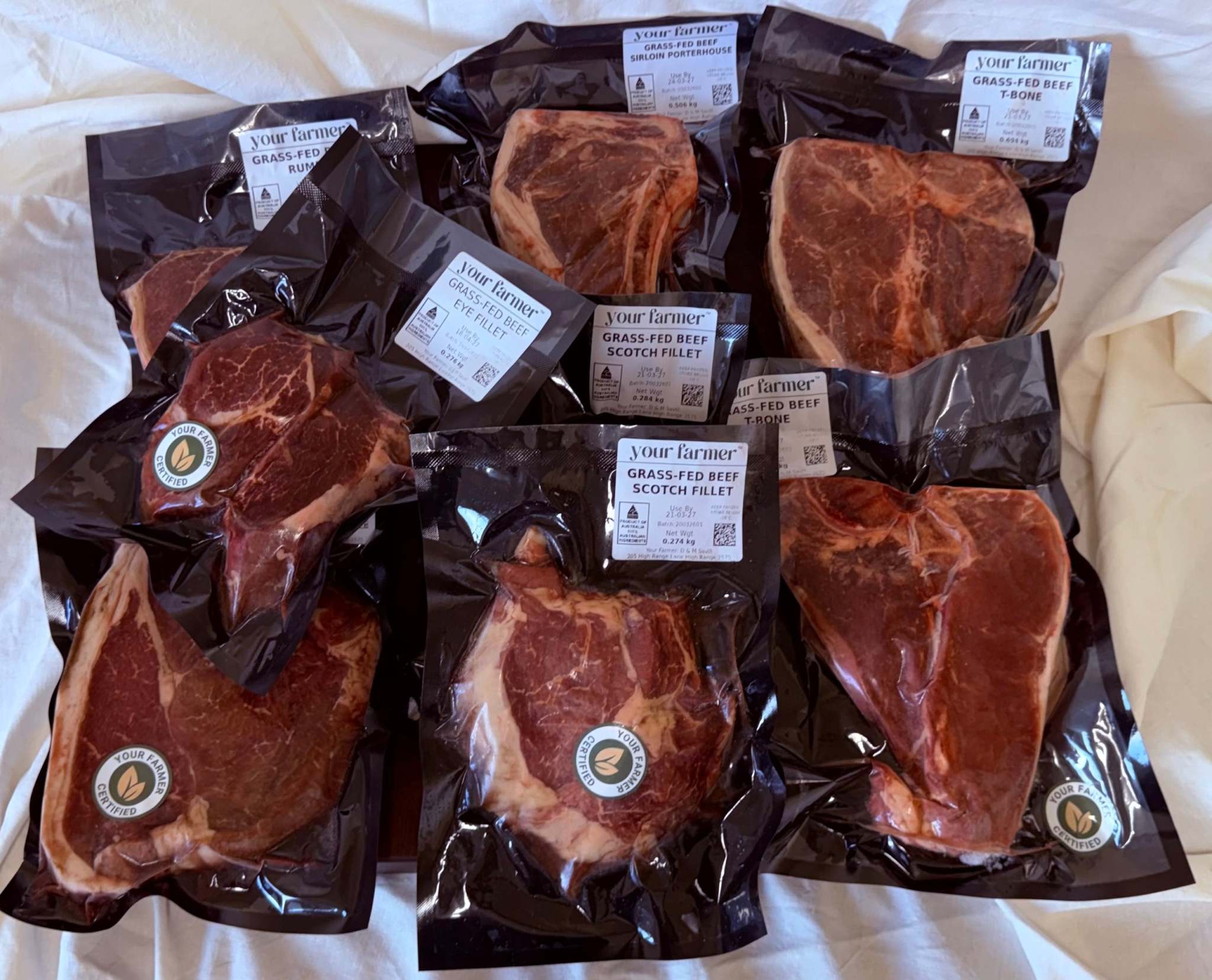
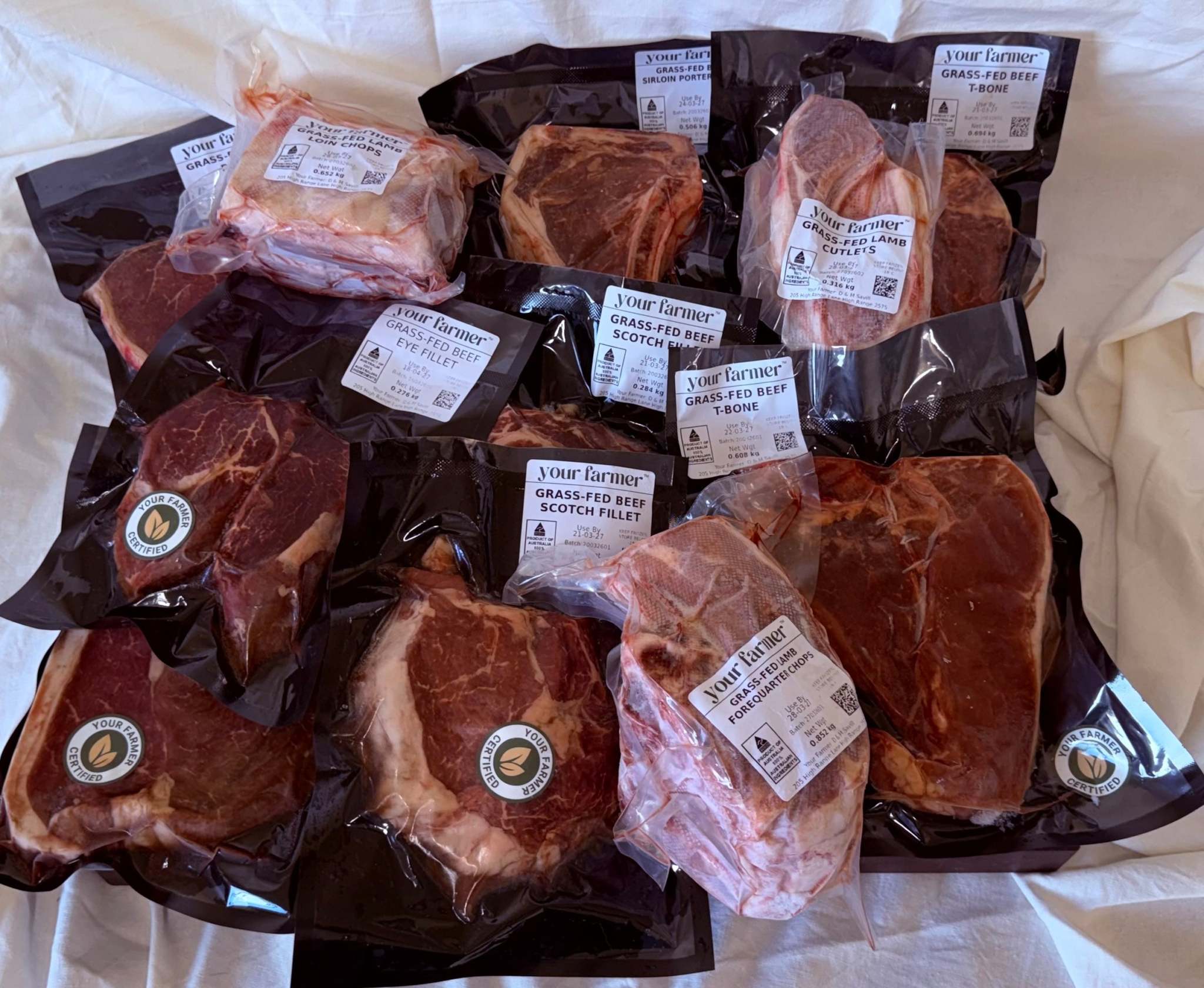
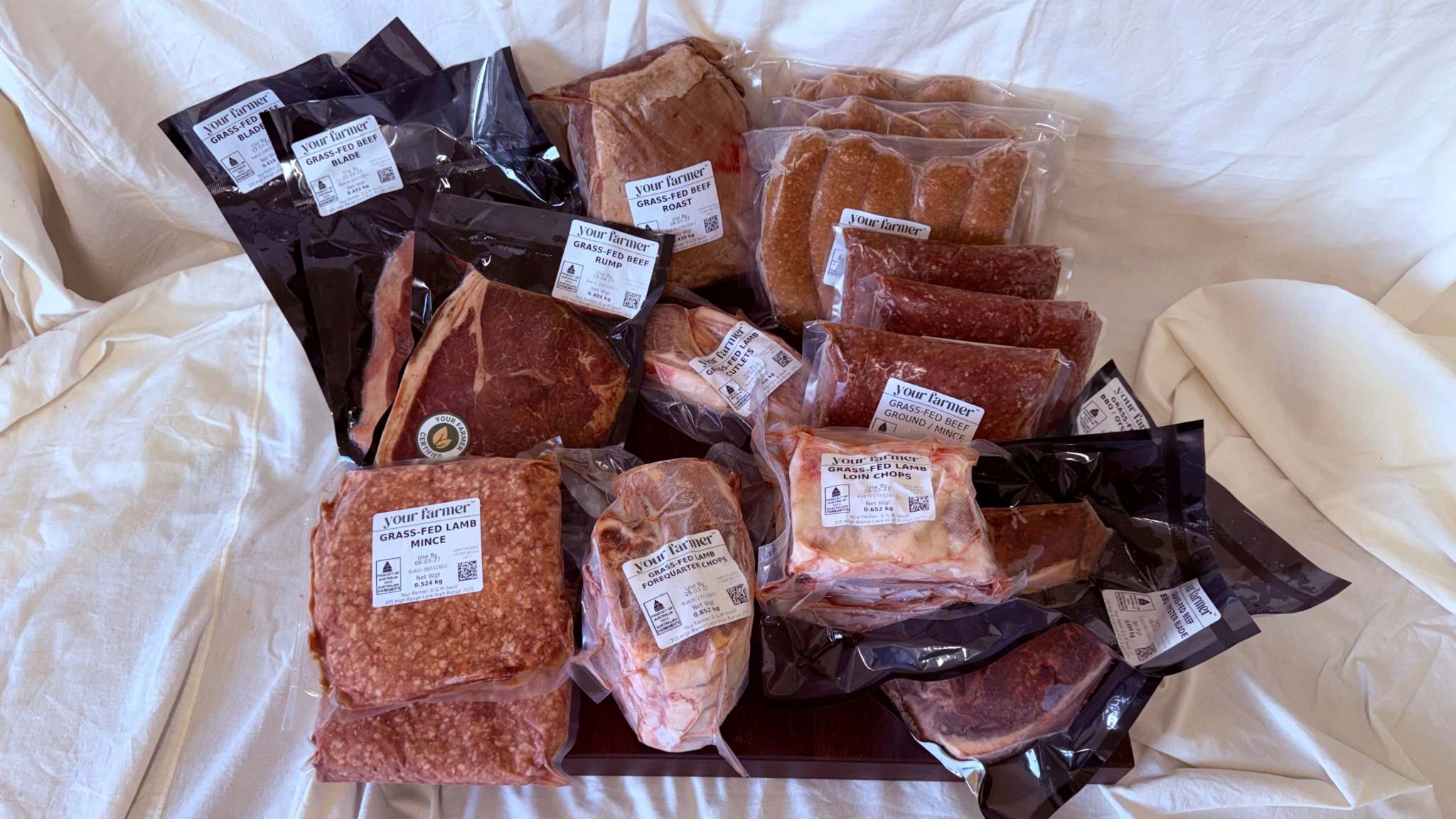
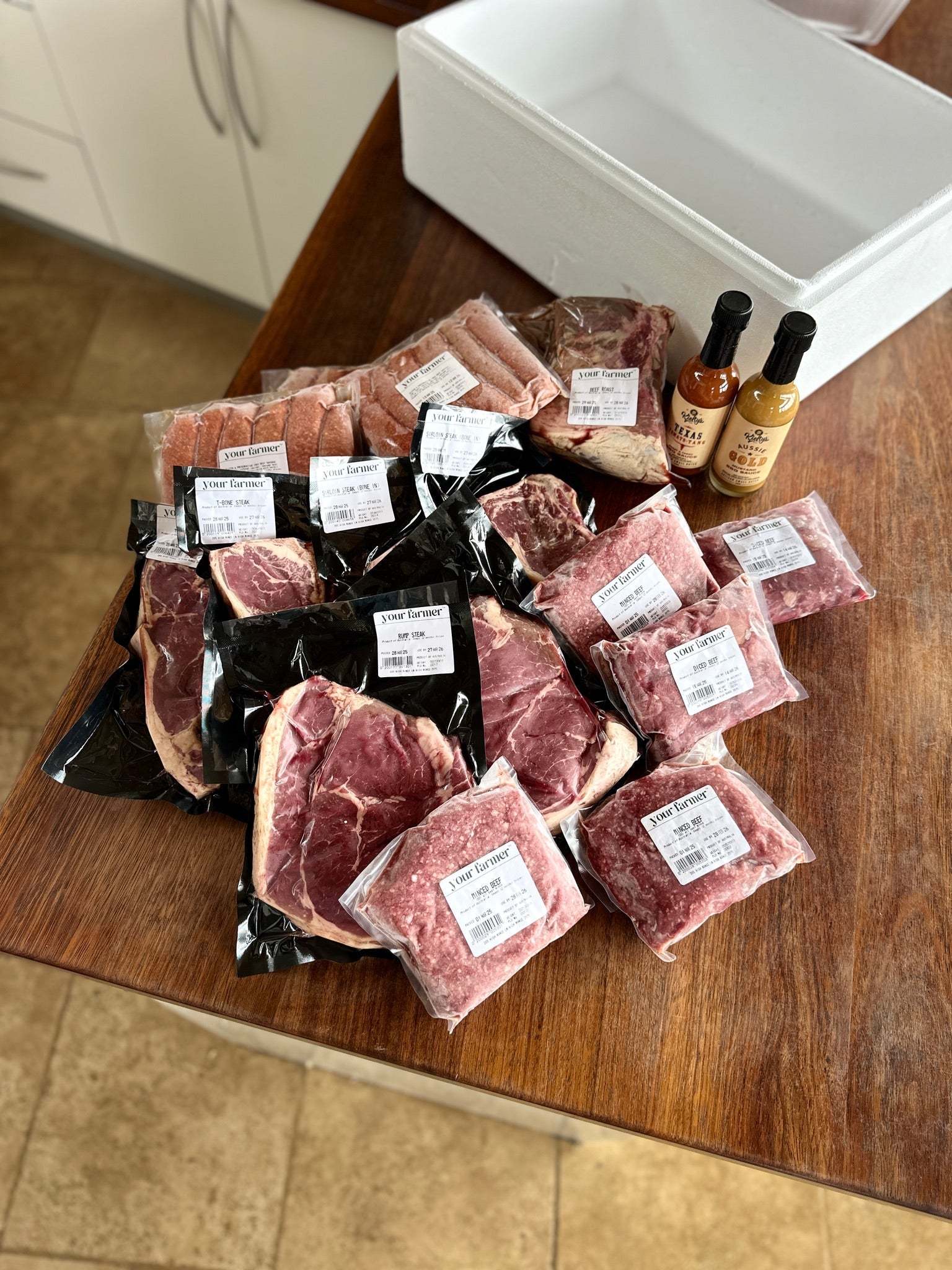
Your Farmer CSA grass-fed beef share — vacuum-sealed steaks, roasts, mince and sausages, paddock-to-plate NSW & ACT delivery
Sale price From $152.00Regular price $169.99
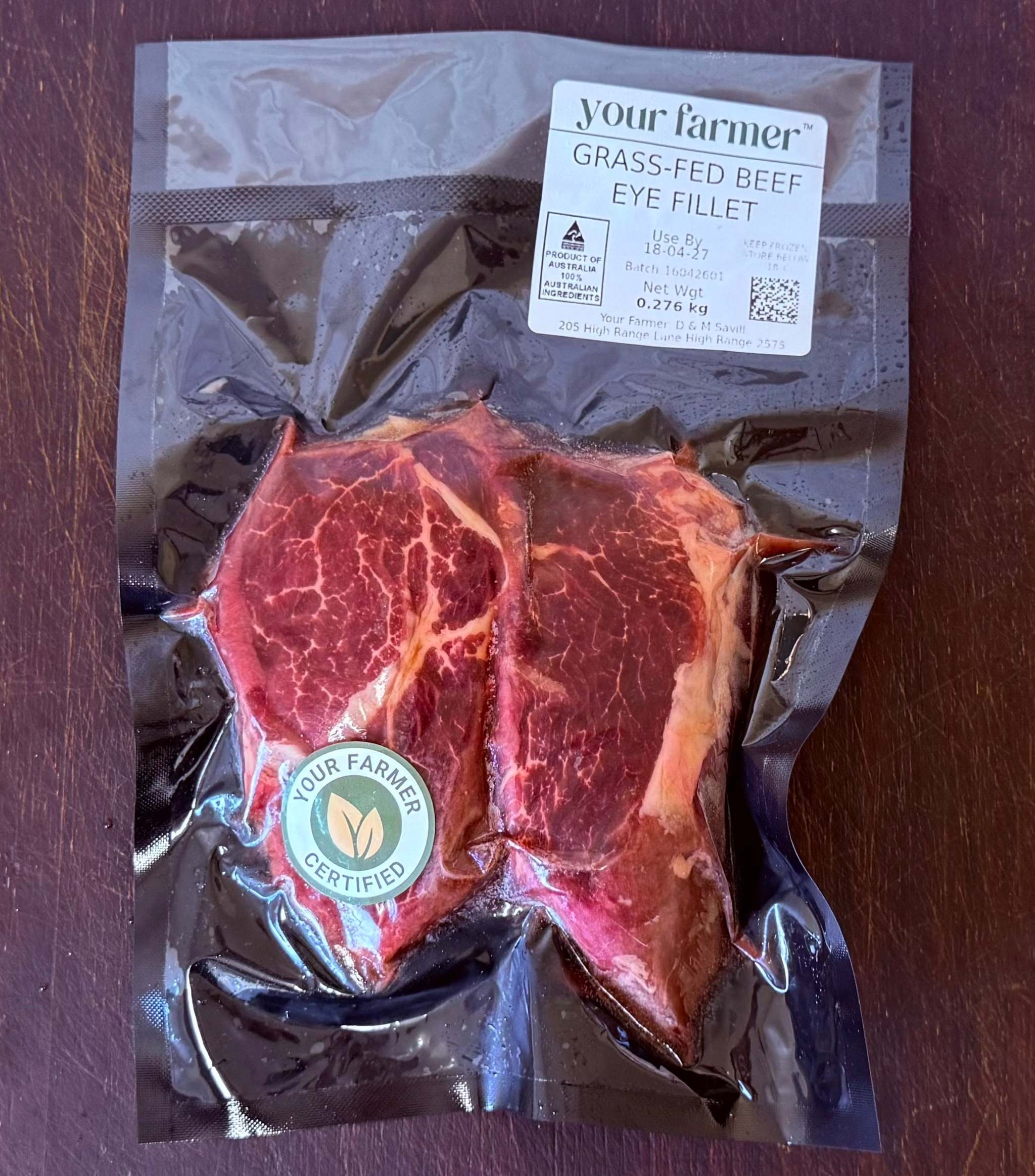
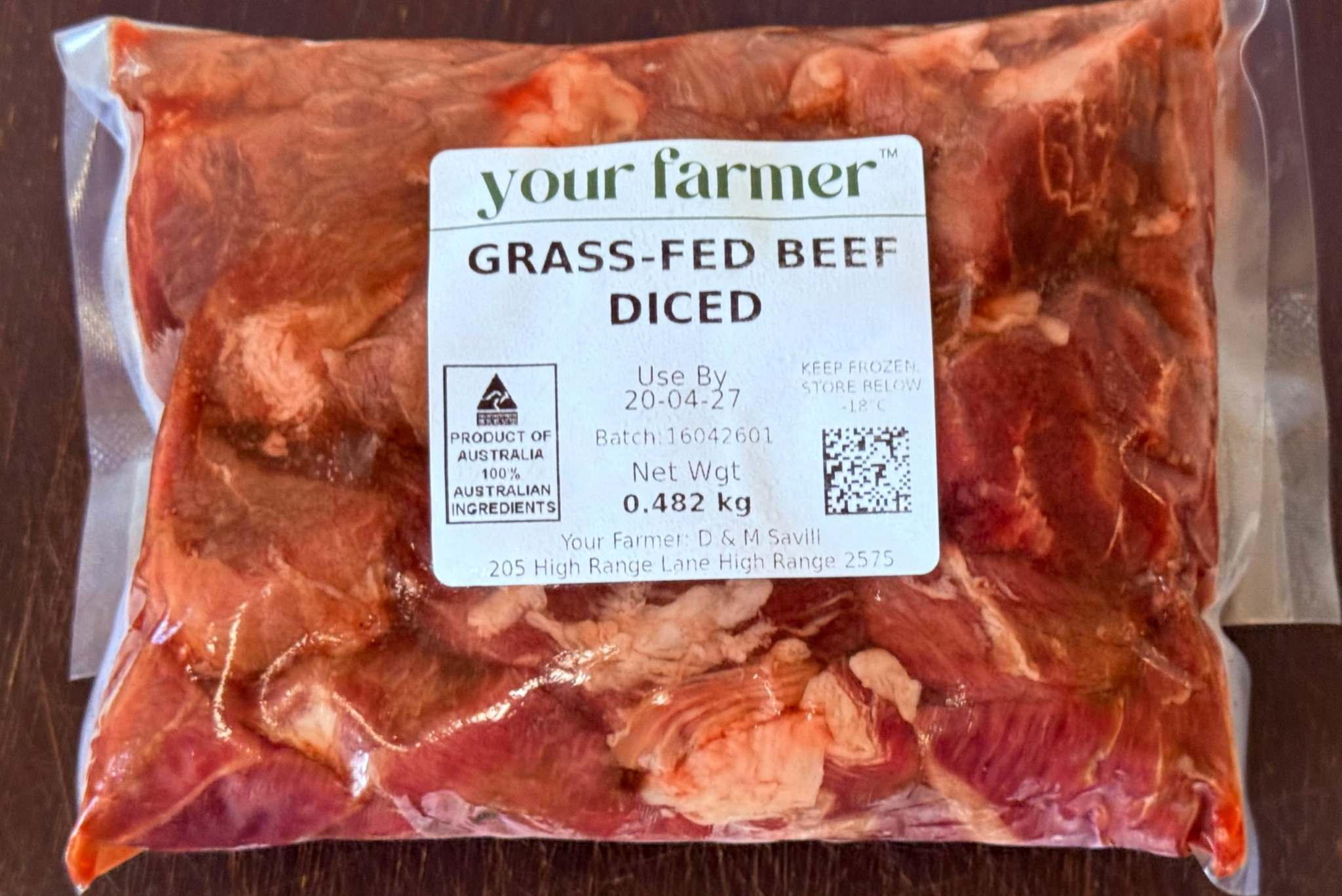
Grass-fed diced beef from Your Farmer — vacuum-sealed paddock-to-plate, NSW & ACT delivery
Sale price $13.00Regular price $14.99

A Cut Built for the Long Haul

Rendang comes out of Malay cooking, where beef was simmered in coconut milk and spice until the dish would keep for days without a fridge — the long cook is the whole idea, not a hurdle. That's why the cut matters so much. Your Farmer® diced beef is chuck-style braising beef, 480g in every share, with the connective tissue and marbling to stay lush through three hours of open simmering. A lean cut cooked this way turns to sawdust; a braising cut turns to velvet. The even dice earns its keep too — every piece reduces at the same pace, so the pot finishes together. And because grass-fed beef brings real flavour of its own, it holds its ground against lemongrass, galangal and toasted coconut instead of vanishing into them.

Swaps and Variations

No galangal at the shops? Double the ginger — the result leans slightly different but is still excellent. The chillies set the temperature: six gives a steady medium, so halve them or shake out the seeds for a family-friendly pot, or add a couple more if your table runs hot. A teaspoon of tamarind paste stirred in with the coconut milk adds the sour edge some regional versions carry. If you love this style but want it saucier and gentler, our beef massaman curry is the wet, mellow cousin — and on the nights there's no three hours to spend, the Thai holy basil stir-fry with diced beef uses the same pack at a sprint.

Storage and Leftovers

Rendang was designed to keep, and it shows: it's better on day two and better again on day three. Store it airtight in the fridge for up to 4 days, or freeze for up to 3 months. Reheat gently in a pan over low heat with a small splash of water to loosen. The leftover move worth staying home for: rendang folded into a toasted flatbread or roti with cucumber — lunch that makes the whole week feel organised.

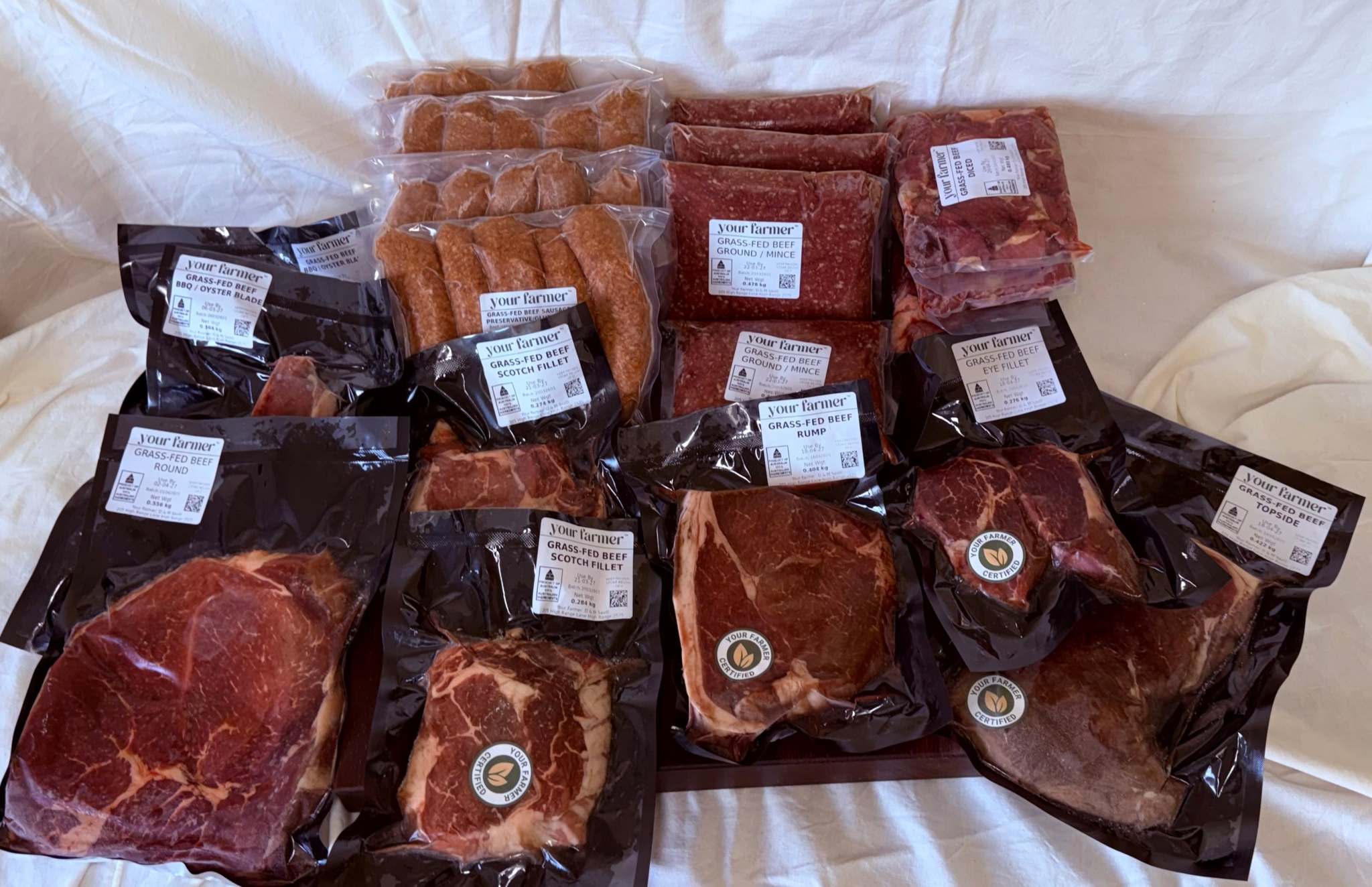
The pack at the heart of it arrives with every delivery — reserve a grass-fed beef share and the weekend project takes care of its own shopping list.
Frequently asked questions

Can I make the spice paste in a food processor?

Yes — a food processor or stick blender both work well. Add a splash of water to get it moving and scrape the sides down a couple of times until it's smooth.

I can't find galangal — what do I use?

Just use extra ginger. Galangal is more citrusy and peppery, so the flavour shifts a little, but the rendang is still well worth making.

How do I know when it's actually done?

The sauce should be nearly dry, deep brown and clinging to the beef, with the oil separating out so the beef starts to gently fry in it. If it still looks like a saucy curry, keep going.

Can I use light coconut milk?

No — rendang needs the fat in full-cream coconut milk to reduce and fry properly at the end. Light coconut milk just evaporates into nothing and the dish never develops its colour.

Can I do it in a slow cooker?

Not the whole way — a sealed slow cooker can't evaporate the liquid, and that reduction is what makes rendang rendang. You can start it there on LOW, but plan on finishing it uncovered in a pot for the last hour.

Three Simple Steps

A whole table of real food.

Your Farmers grow grass-fed beef and lamb, pastured eggs and the best eco-grown veggies and produce — every item grown to the same ecological standard, every farmer one you can know by name. One subscription, your whole real-food shop.

01

Reserve your share — or try a pack

Subscribe to a share of the harvest, or start with a one-off fixed pack.

02

Make it your own

Pick your delivery rhythm and what's in the box. Skip or cancel anytime — no lock-in.

03

Cook, savour, know your farmer

We deliver in a reusable esky we collect next time. No couriers, no waste.

More Recipes

View all

Greek-style grass-fed lamb roast with lemon and oregano served over golden potatoes in a ceramic baking dish.

Greek-Style Lamb Roast with Lemon and Oregano

Lemon, oregano and time — the Greek family-table treatment for the whole cut

Every Greek family has a version of this and none of them are wrong. Garlic, dried oregano and lemon get worked deep into the lamb, potatoes go underneath to catch everything that falls, and the oven runs slow enough that nobody has to watch it. What comes out isn't pink, carve-at-the-table lamb — it's the other thing entirely: golden on top, giving underneath, with lemony potatoes that half the table will fight over harder than the meat. It's Sunday cooking from a country that takes Sundays seriously.

Read moreabout Greek-Style Lamb Roast with Lemon and Oregano

Low-and-slow barbecued grass-fed lamb ribs with a dry-rub bark, sliced on butcher's paper.

Low-and-Slow BBQ Lamb Ribs with Dry Rub

Paprika, brown sugar, patience — American barbecue discipline meets Australian lamb

This is the recipe for the day you've decided the barbecue is the afternoon's entertainment, not just the cooking appliance. No foil, no shortcuts: a paprika and brown sugar rub, a hooded barbecue held low around 140C, and three or so unhurried hours while the fat renders, the spice sets into proper bark and the smell slowly takes over the street. Lamb ribs suit the American low-and-slow treatment better than most people expect — they're smaller and fattier than pork ribs, so you get all the bark in less time. Pour something cold. This one's a sit-outside recipe.

Read moreabout Low-and-Slow BBQ Lamb Ribs with Dry Rub

Grilled grass-fed lamb chump chops sliced over a warm French-style lentil salad with mustard dressing.

Grilled Chump Chops with Warm Lentil Salad

Charred chops over mustardy lentils — the bistro order, made at home

Walk into any honest bistro in France and there'll be lamb with lentils somewhere on the board. It works because the two halves trade favours — earthy lentils soak up the lamb's resting juices, and a sharp Dijon dressing cuts the richness of a properly charred chop. The lentils simmer away on their own for twenty-five minutes while you see to the chops, so the timing looks after itself. Hearty without being heavy, smart enough for guests, and most of it comes from the pantry.

Read moreabout Grilled Chump Chops with Warm Lentil Salad