The famous Taiwanese bowl, made for a cut exactly like this

Beef noodle soup is Taiwan's national obsession — chunks of beef braised in a broth built on soy, warm spice and a spoonful of chilli bean paste, ladled over chewy noodles with greens on top. The cut matters more than anything else in the bowl: it needs enough collagen to go silky but enough structure to hold its shape through two hours of simmering. That's blade steak, described exactly. One jar from the Asian grocer, one unhurried afternoon, and one seriously impressive dinner.

2 hrs 50 mins 3 servings Prep 20 minsCook 2 hrs 30 minsMain CourseTaiwanese

Ingredients

  • 430g Your Farmer grass-fed blade steak, cut into 4cm chunks
  • 2 tbsp neutral oil
  • 4cm piece ginger, thickly sliced
  • 4 cloves garlic, smashed
  • 4 spring onions, whites and greens separated
  • 2 tbsp doubanjiang (chilli bean paste)
  • 2 tbsp Shaoxing wine (or dry sherry)
  • 80ml light soy sauce
  • 1.5 tbsp brown sugar
  • 2 star anise and 1 small cinnamon stick
  • 1 tomato, quartered
  • 1.25 litres beef stock or water
  • 400g fresh wheat noodles
  • 2 baby bok choy, halved lengthways

Instructions

Cover the blade chunks with cold water in a saucepan, bring just to the boil, simmer 2 minutes, then drain and rinse the beef. This quick blanch is the Taiwanese trick for a clean, clear braising broth.

430g blade steak

Heat the oil in a heavy pot over medium heat and fry the ginger, garlic and spring onion whites for 2 minutes until fragrant.

2 tbsp neutral oil4cm ginger4 cloves garlic4 spring onion whites

Add the doubanjiang and fry for a minute — it should turn the oil brick-red — then splash in the Shaoxing wine and scrape the pot.

2 tbsp doubanjiang2 tbsp Shaoxing wine

Add the soy sauce, sugar, star anise, cinnamon, tomato and stock, return the beef, and bring to the gentlest simmer.

80ml light soy sauce1.5 tbsp brown sugar1 tomato1.25L beef stock

Cover and simmer very gently for 2 hours, until the beef is tender to a chopstick but still holding its shape. Taste the broth — it should sit right on the line between salty, sweet and warming; adjust with soy or sugar.

Near the end, cook the noodles per the packet and blanch the bok choy in the same pot for the final minute.

400g wheat noodles2 baby bok choy

Divide the noodles between deep bowls, ladle over the beef and hot broth (leaving the whole spices behind), top with bok choy and the sliced spring onion greens, and serve immediately.

spring onion greens

Appears in

The Cut That Survives the Broth

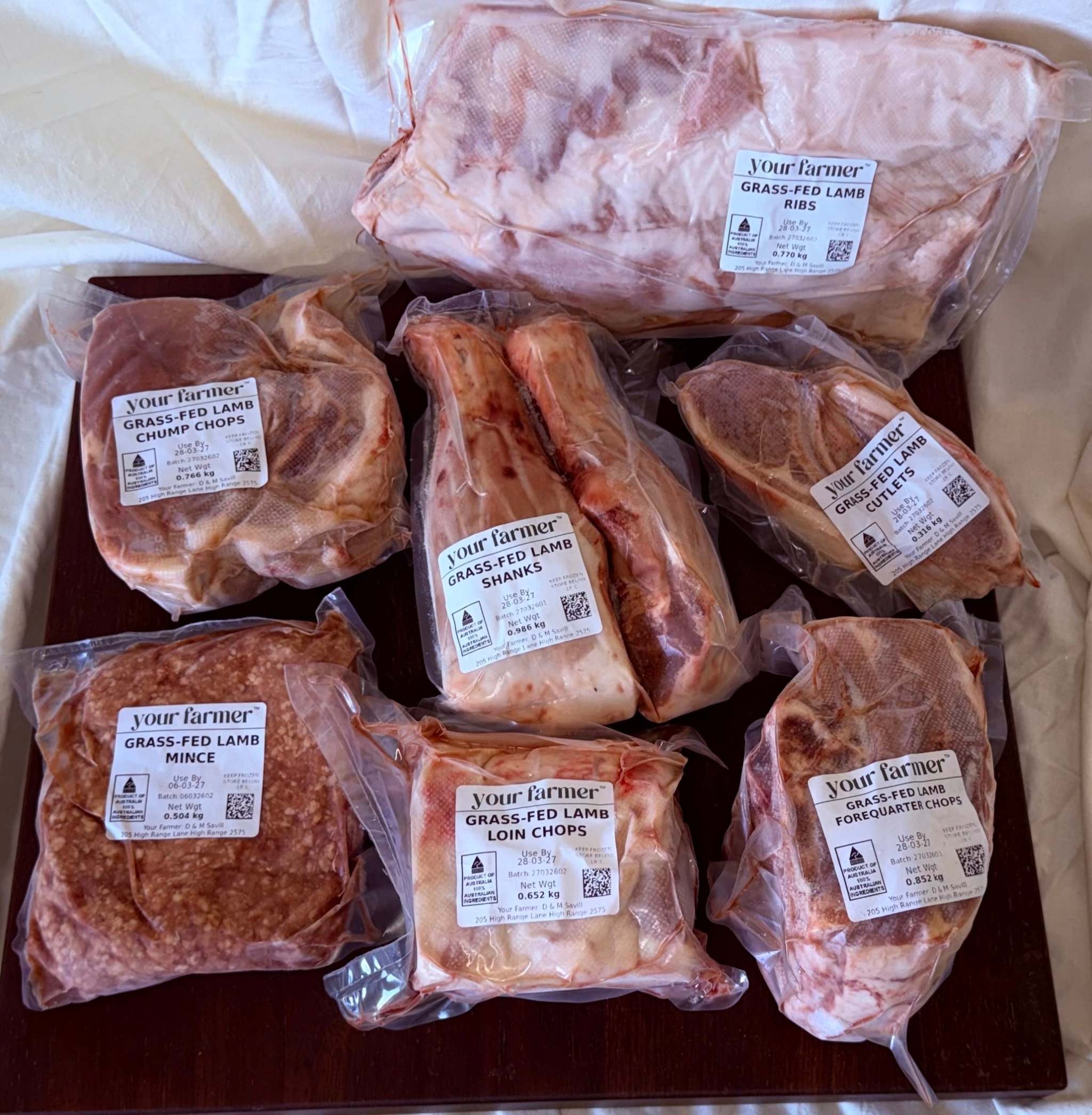
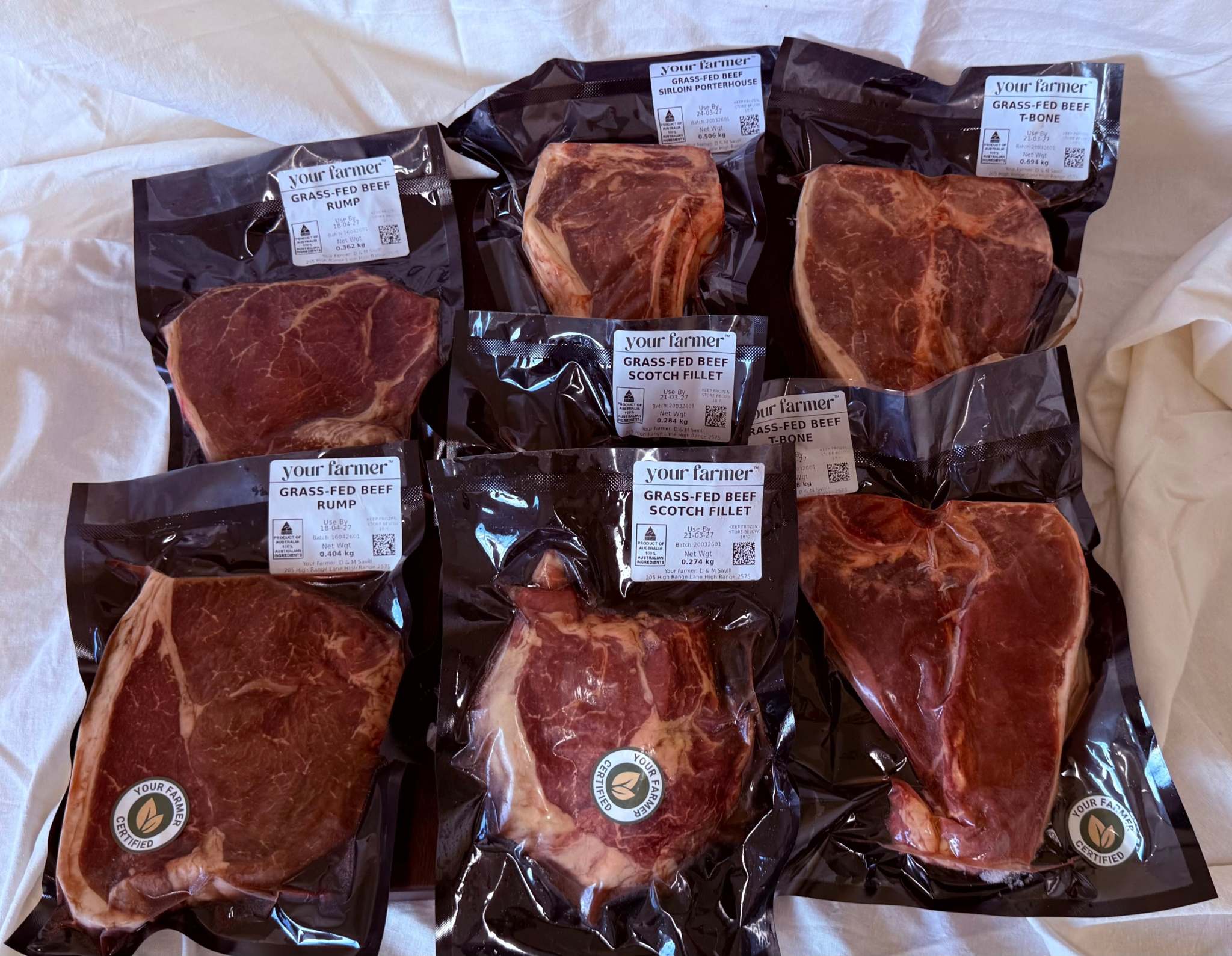
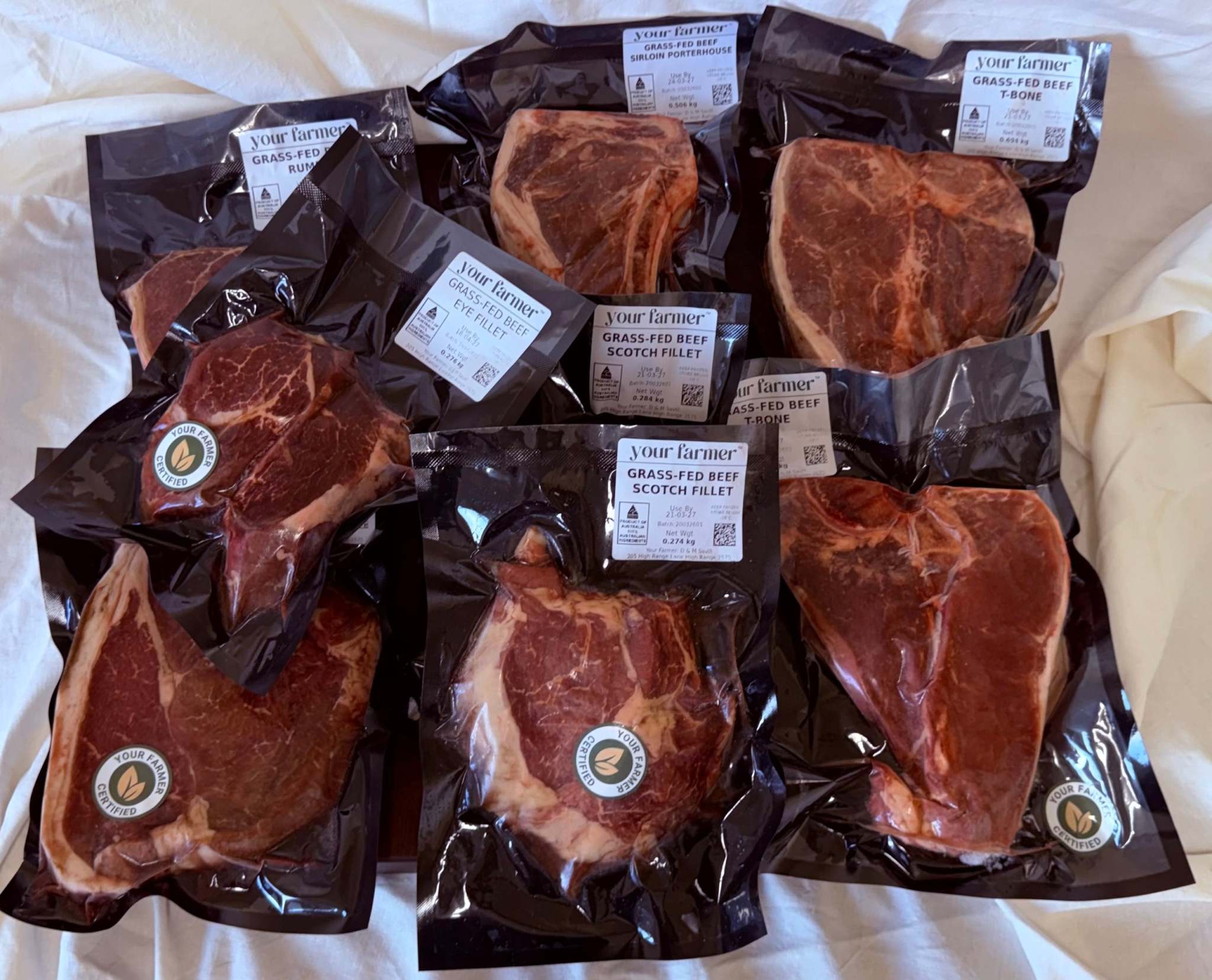
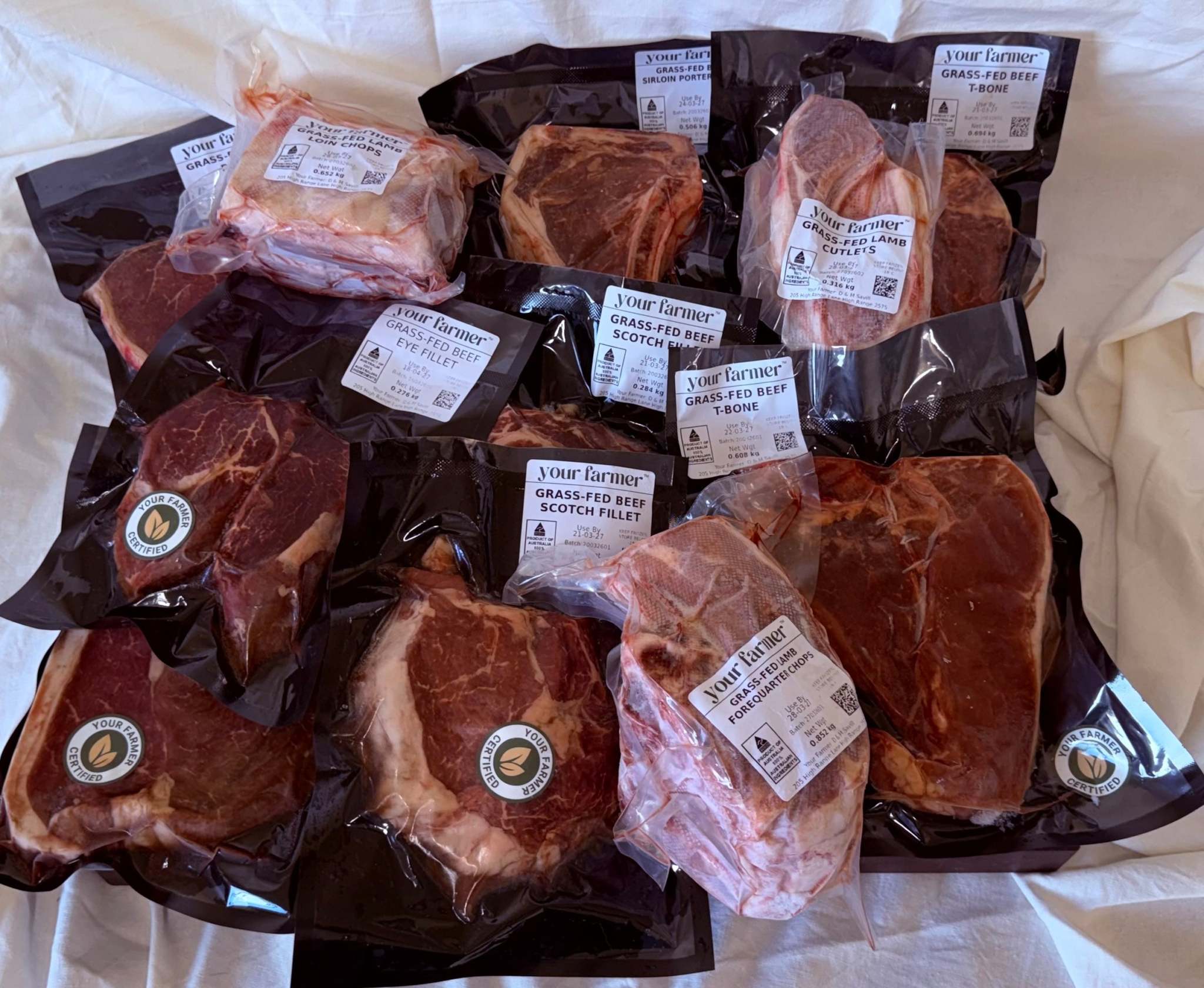
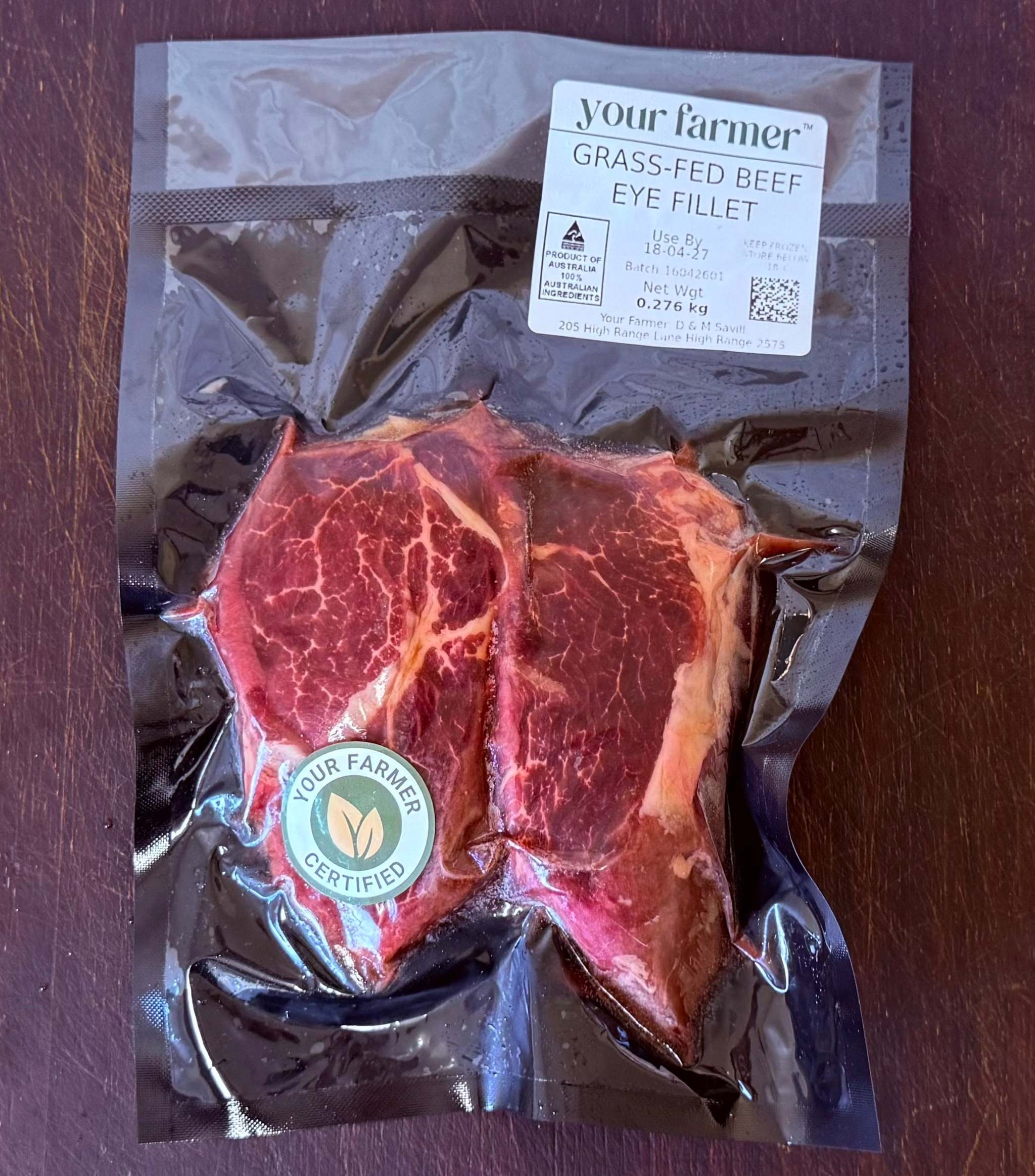
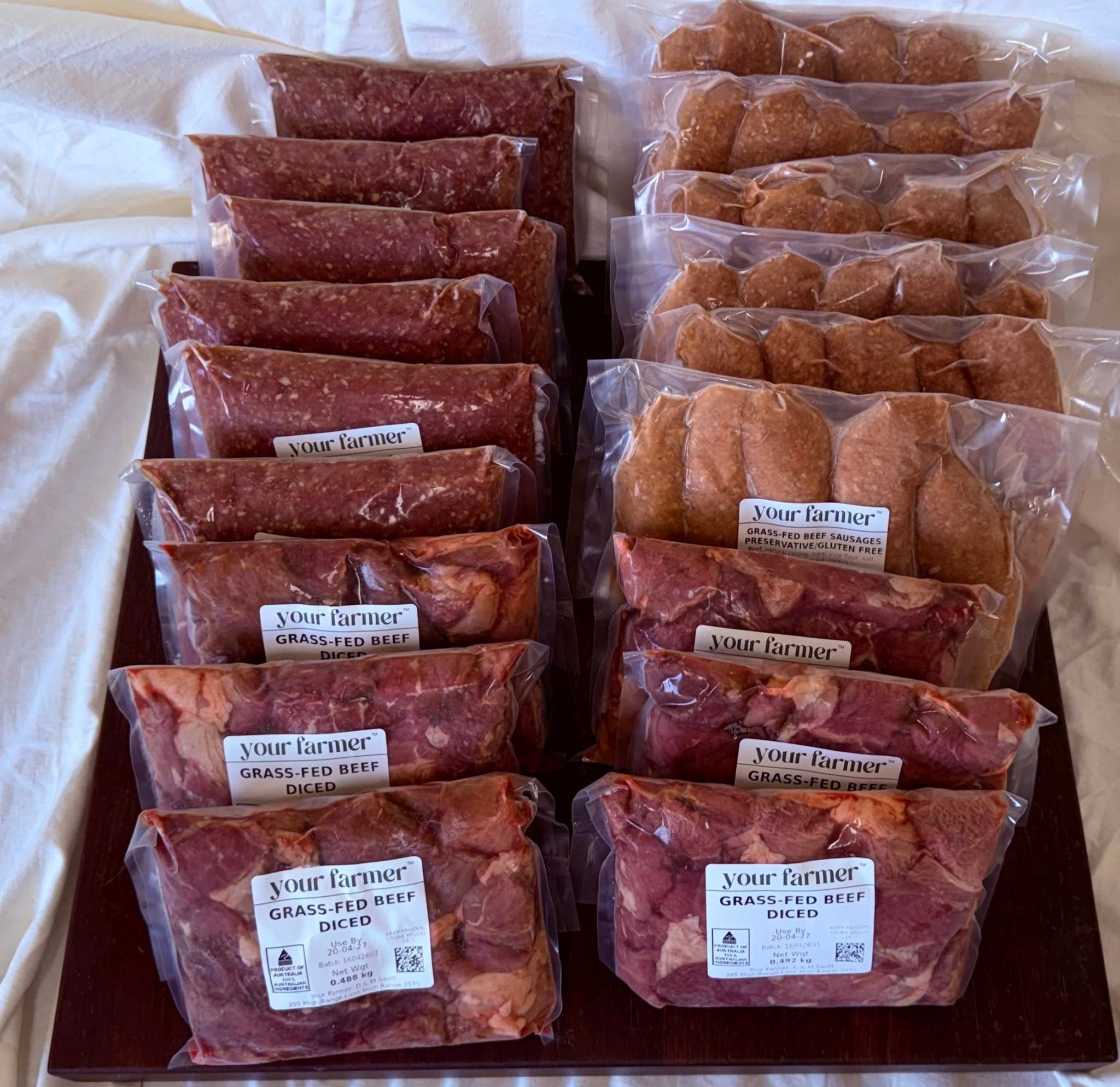
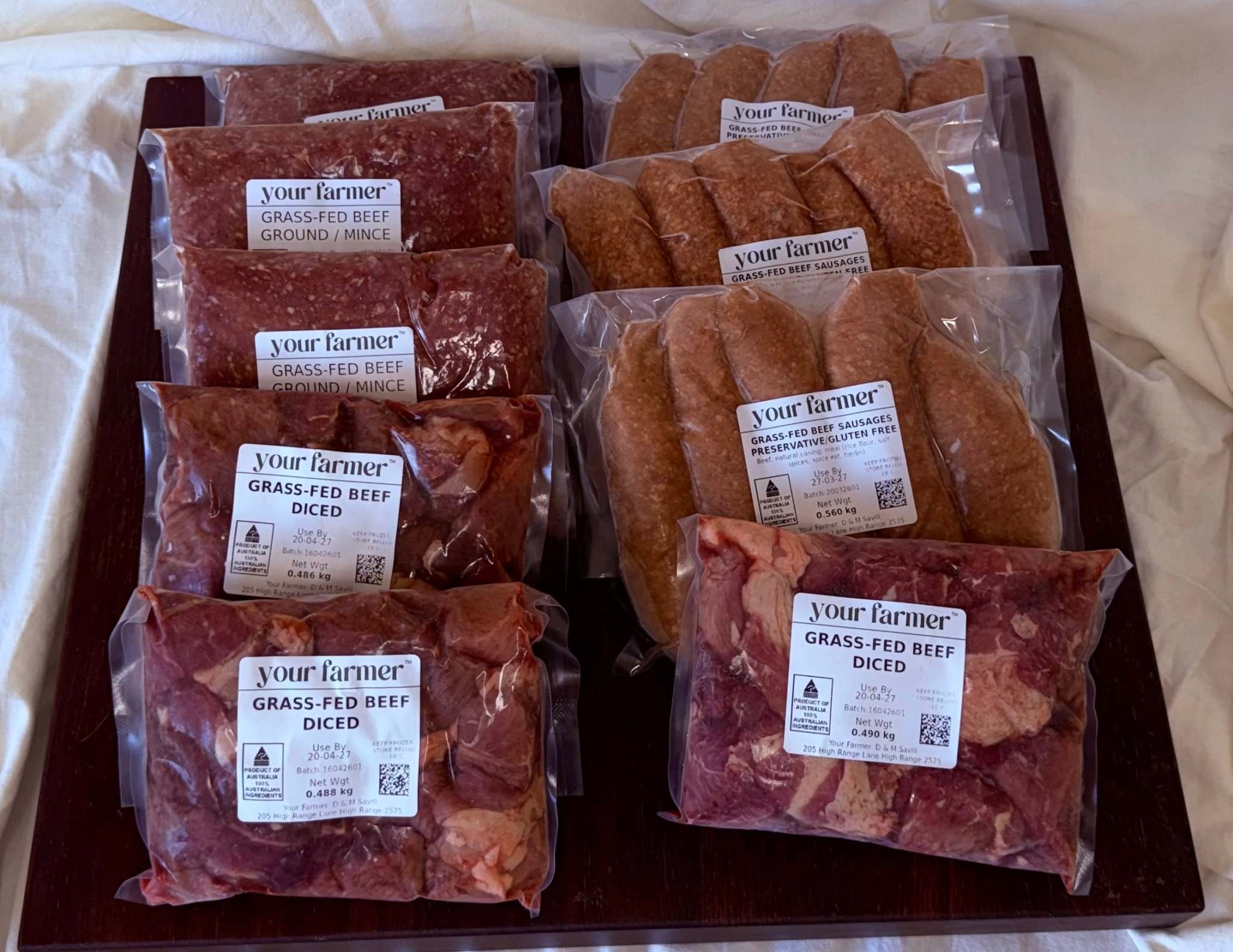
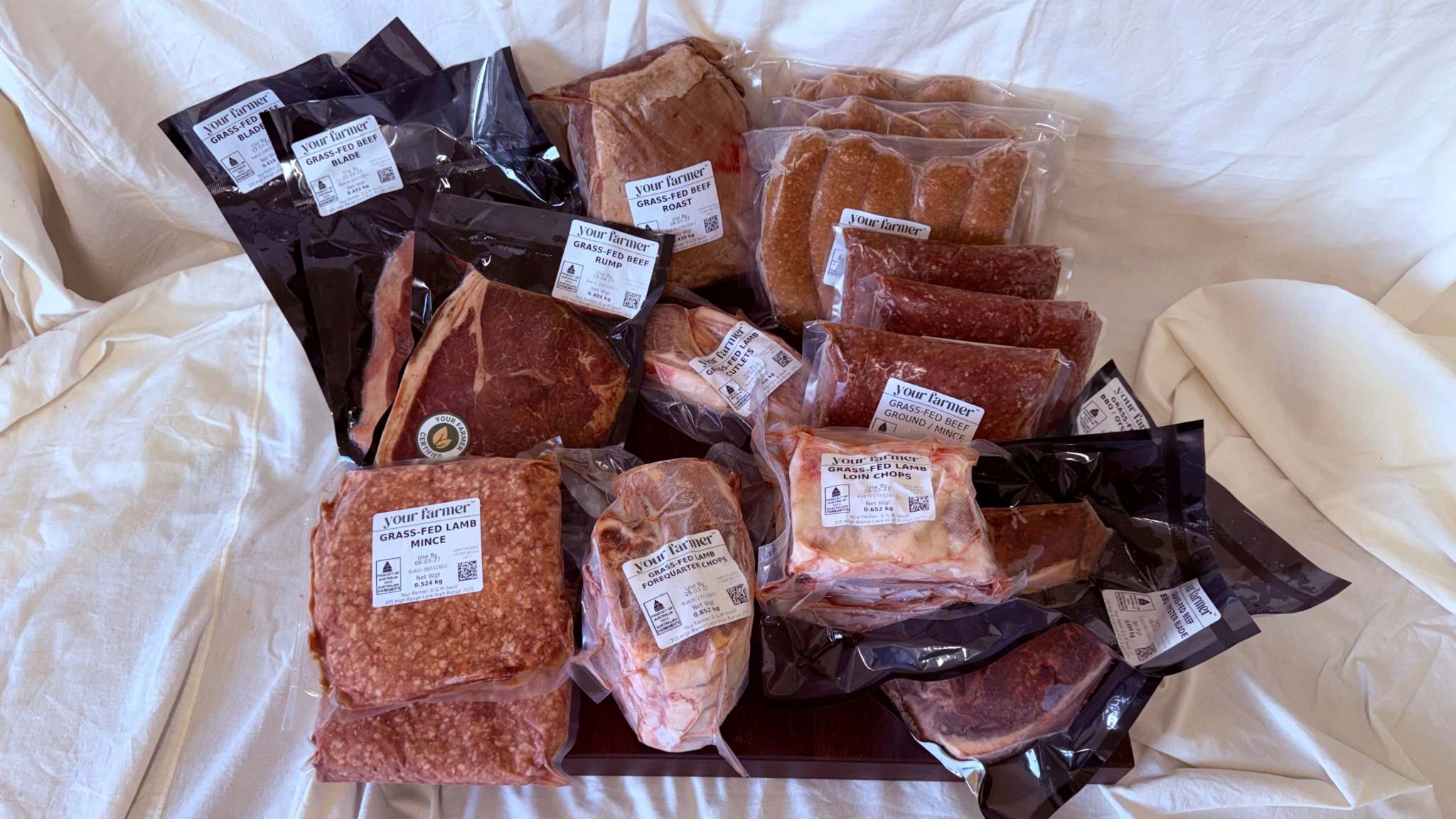
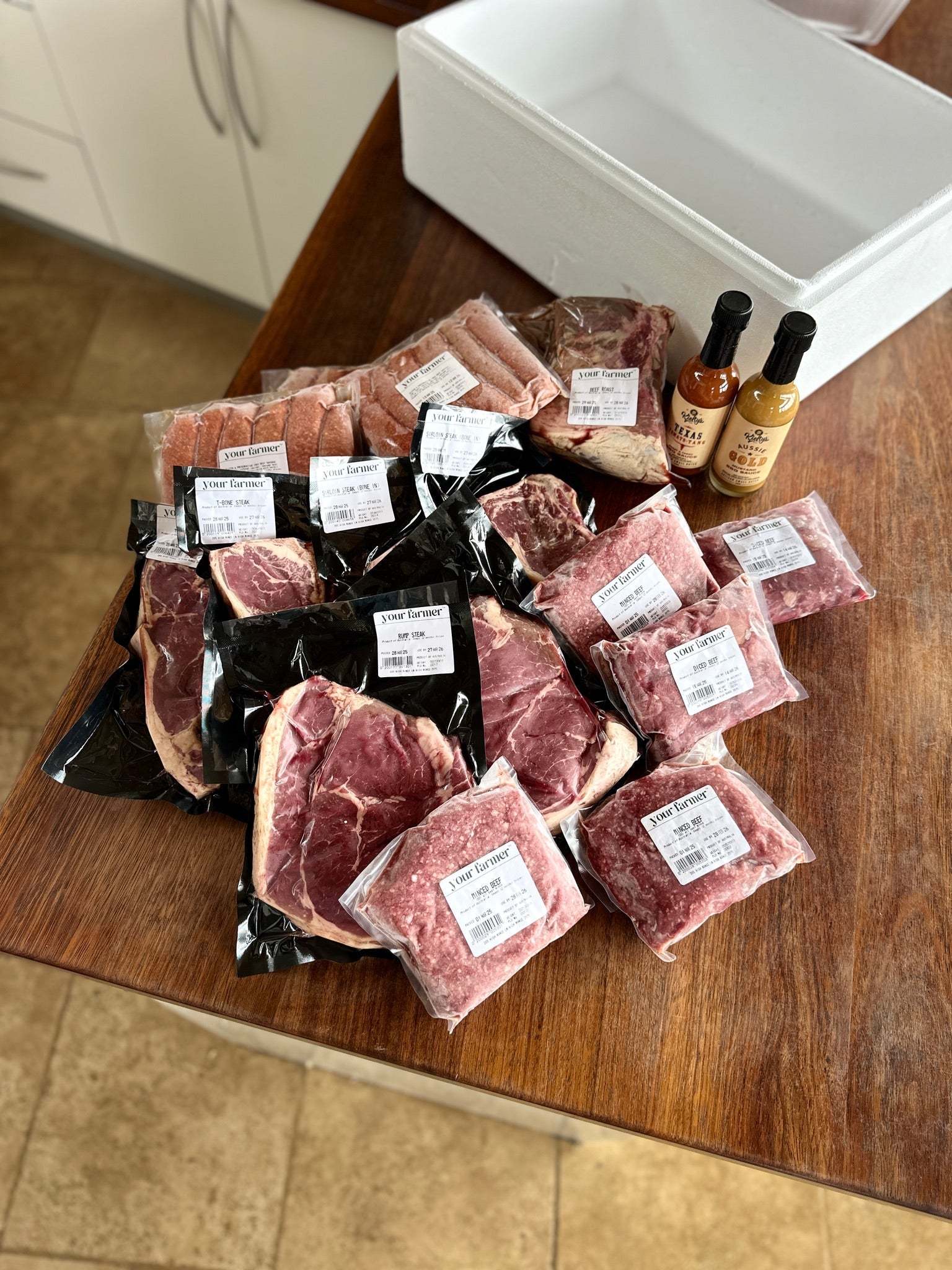
In Taiwan they argue about beef noodle soup the way we argue about footy teams, but everyone agrees on the beef: it has to be a collagen-rich braising cut that stays in proud, distinct chunks after hours in the pot. Lean cuts dry out; overly fatty ones fall apart into the broth. Blade sits in the sweet spot — the seam through each Your Farmer® blade steak melts into the soup and gives it that lip-coating richness, while the muscle either side holds its shape to the last chopstick. The quick blanch at the start looks fussy but takes five minutes and is what keeps the broth clean and glossy rather than murky. Blade lands as a ~430g pack in Pack B and Pack D beef shares.

Swaps and Variations

The one specialty item is doubanjiang — a fermented chilli bean paste, sold at any Asian grocer, sometimes labelled broad bean paste with chilli. There's no true substitute, but it keeps in the fridge for a year and earns its shelf space. Diced beef works if blade's spoken for, and a spoonful of the braising liquid over plain rice is a meal in itself. Traditional extras: a handful of pickled mustard greens on top, or dark soy for a deeper mahogany broth. If long-simmered noodle soups are your love language, our Vietnamese-style beef pho is the lighter, herb-strewn sibling — and a bag of beef bones turns the stock homemade for either.

Storage and Leftovers

Store the beef and broth together, noodles separately — cooked noodles left sitting in broth drink it up and turn to porridge overnight, and the broth is too good to lose that way. The soup base keeps 3 days in the fridge and freezes beautifully for up to 3 months, and like most braises it's deeper on day two. Reheat to a simmer and cook fresh noodles per bowl. Leftover move: reduce a cup of the broth by half and spoon it over rice with the last of the beef.

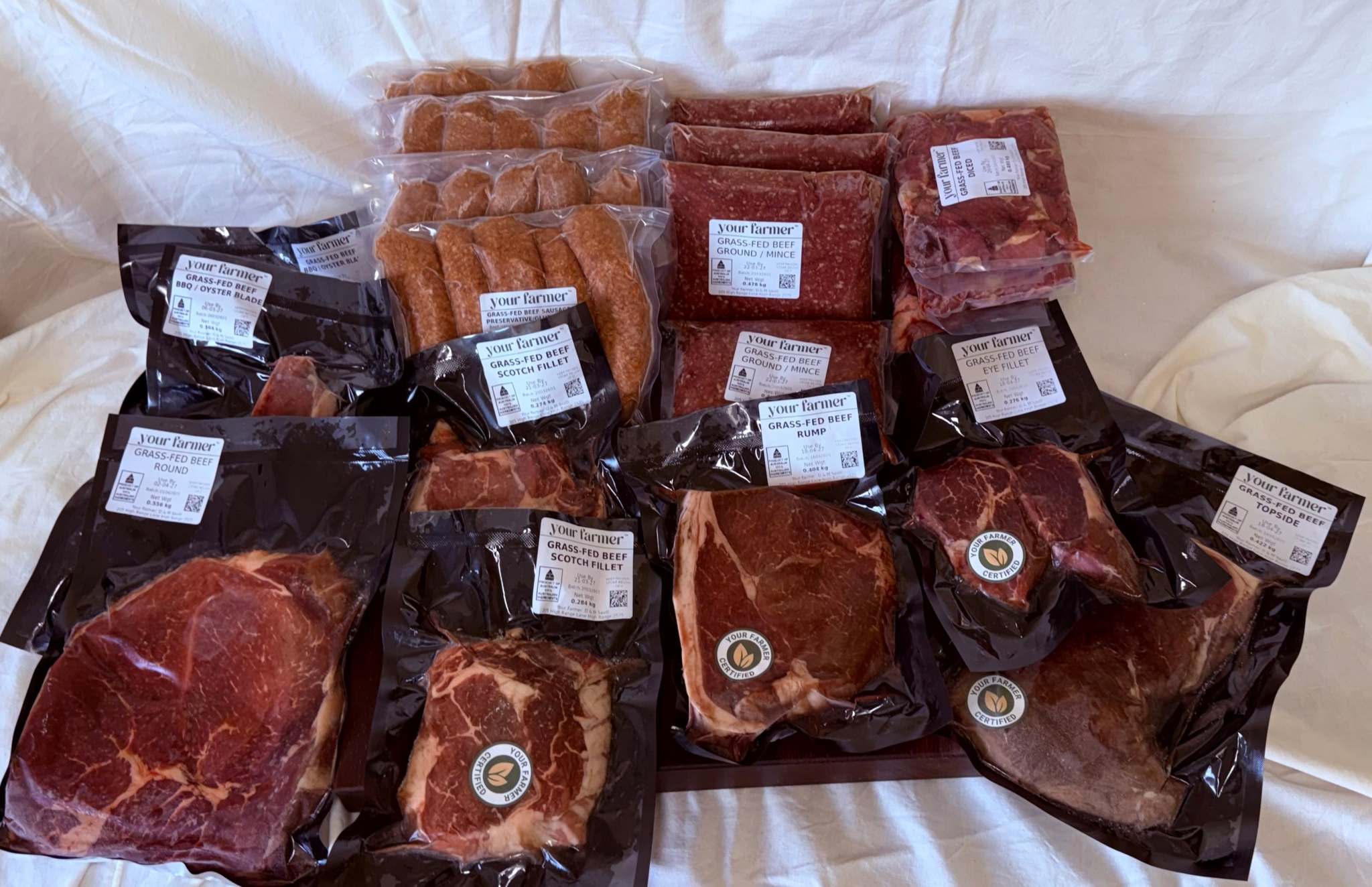
Blade is one of the quiet rewards of a grass-fed beef CSA share — the cut this famous bowl was always waiting for.
Frequently asked questions

How spicy does the doubanjiang make it?

A gentle, warming heat rather than a burn — two tablespoons gives a family-friendly bowl. Use one tablespoon for a very mild broth, or serve chilli oil at the table so everyone adjusts their own.

What noodles should I buy?

Fresh wheat noodles from the fridge section of an Asian grocer are ideal — look for a medium thickness. Dried wheat noodles or even thick spaghetti will do the job on a weeknight.

Can I skip blanching the beef?

You can — the flavour barely changes. You'll just get a cloudier broth with some foam to skim off in the first half hour. Blanching is about looks, and this bowl deserves them.

Can I make it in the slow cooker?

Yes. Do steps one to three on the stove, then combine everything in the cooker with the stock reduced to 1 litre and cook on LOW for 7 to 8 hours. Cook noodles and greens fresh at serving time.

Three Simple Steps

A whole table of real food.

Your Farmers grow grass-fed beef and lamb, pastured eggs and the best eco-grown veggies and produce — every item grown to the same ecological standard, every farmer one you can know by name. One subscription, your whole real-food shop.

01

Reserve your share — or try a pack

Subscribe to a share of the harvest, or start with a one-off fixed pack.

02

Make it your own

Pick your delivery rhythm and what's in the box. Skip or cancel anytime — no lock-in.

03

Cook, savour, know your farmer

We deliver in a reusable esky we collect next time. No couriers, no waste.

More Recipes

View all

Osso buco-style braised grass-fed lamb chump chops in tomato sauce over soft polenta, topped with gremolata.

Osso Buco-Style Braised Chump Chops with Gremolata

The Milanese treatment — chops braised low in white wine and tomato, lifted at the end by lemony gremolata

Osso buco is Milan's great braise, and the finishing touch is what makes it: gremolata, a raw scatter of lemon zest, garlic and parsley chopped fine, stirred in right at the end. Against an hour and a half of slow, rich braising, that fresh, sharp hit is a revelation — it stops the whole thing feeling heavy and makes you reach for another spoonful. Lamb chump chops stand in beautifully for the traditional veal shin here, their fat and connective tissue melting into a glossy sauce over soft polenta. It takes time, but almost none of it is yours. This is a dish to be proud of.

Read moreabout Osso Buco-Style Braised Chump Chops with Gremolata

A thick bowl of split pea and lamb bone soup topped with shredded lamb and mint.

Split Pea and Lamb Bone Soup

Pea-and-ham thinking, straight from the lamb paddock

Every Australian family has a pea-and-ham soup story, and every one of those soups leans on the same trick: a bone in the pot doing the heavy lifting. This is that trick with lamb bones instead of a hock. The split peas collapse into a thick, velvety base, the bones give the broth real depth and body, and a pinch of smoked paprika stands in for the smokehouse if you want that familiar edge. It's the thriftiest pot in this whole collection — pantry peas, add-on bones, one lazy afternoon — and it eats like a hug.

Read moreabout Split Pea and Lamb Bone Soup

Grass-fed T-bone steak sliced and served with homemade tarragon bearnaise and chips, bistro style.

T-Bone with Bearnaise from Scratch

The sauce that turns a steak into an occasion

Béarnaise has a reputation as chef's territory — it isn't. It's three egg yolks, a sharp tarragon reduction and a stream of warm butter, whisked over gentle heat until it turns thick, glossy and faintly wobbly. Twenty minutes of honest attention, most of it while the steak rests. And there's no better steak to learn it on than a grass-fed T-bone: the fillet side was born for béarnaise, and the sirloin side isn't far behind. This is occasion cooking you can pull off on an ordinary Saturday.

Read moreabout T-Bone with Bearnaise from Scratch