The broth that makes itself while you get on with life

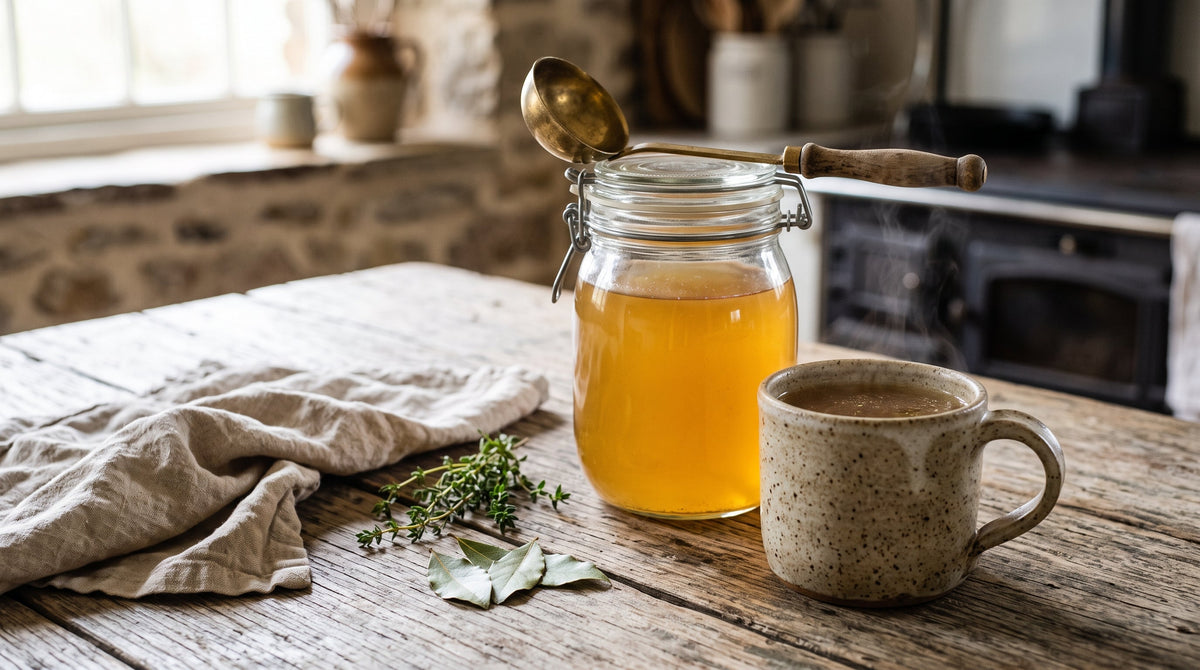
This is the least demanding recipe in the whole library. Bones, water, a splash of vinegar, and a slow cooker doing all the work while you sleep. That's it. Every generation before ours knew that the bones were where the flavour lived — the stockpot sat at the back of the stove and dinner got built out of it all week. The slow cooker is just the modern version of that back burner. Ten minutes of effort tonight, and tomorrow you've got litres of golden lamb broth ready to start soups, gravies and better pots of rice.

12 hrs 15 mins About 2 litres (8 servings) Prep 15 minsCook 12 hrsSoupAustralian

Ingredients

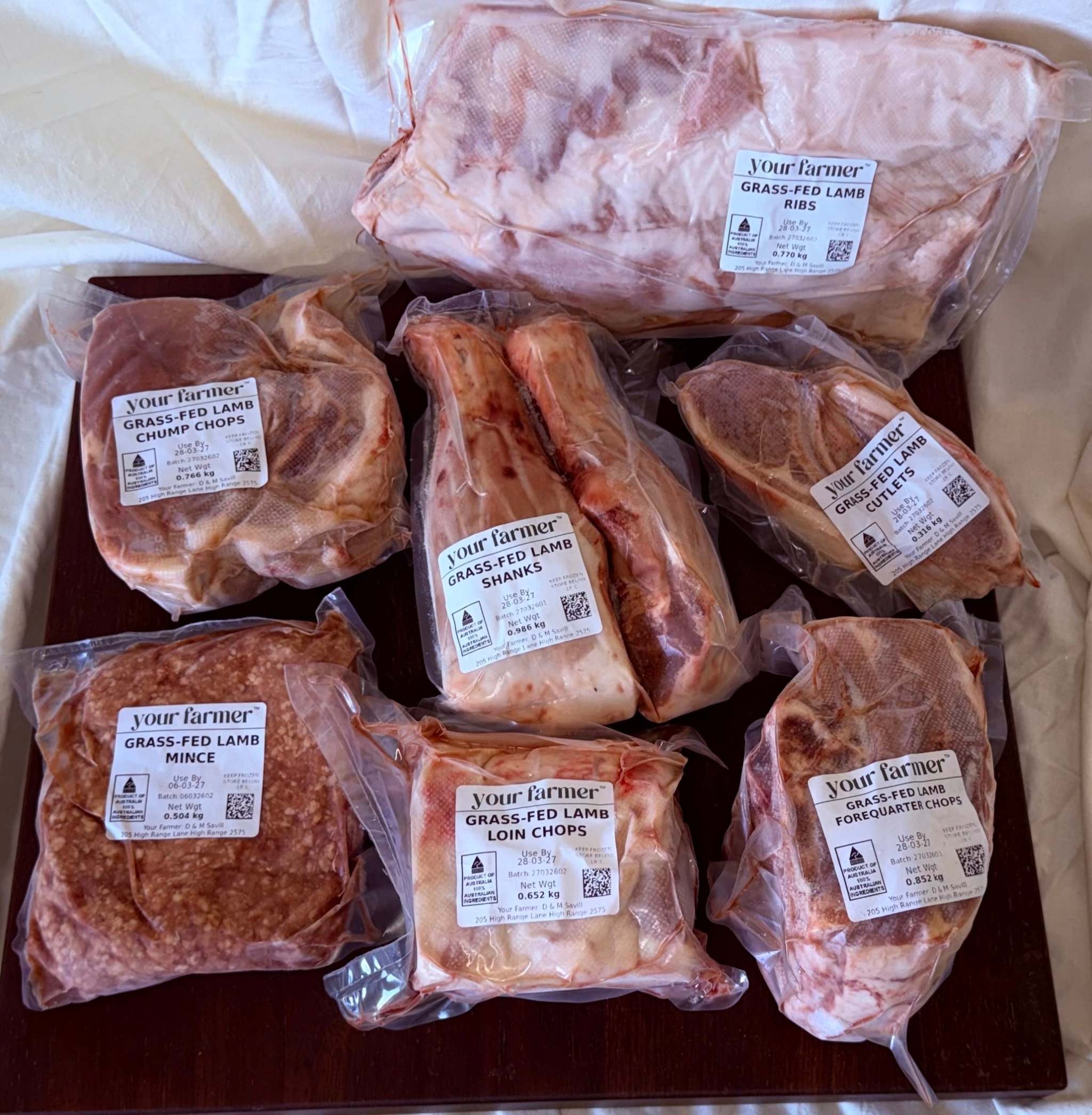
  • 1kg Your Farmer lamb bones
  • 2 tbsp apple cider vinegar
  • 1 brown onion, halved (skin on)
  • 2 carrots, roughly chopped
  • 2 sticks celery, roughly chopped
  • 2 bay leaves
  • 1 tsp black peppercorns
  • Cold water to cover (about 2.5 litres)
  • Sea salt, to season when serving

Instructions

Put the bones in the slow cooker, add the vinegar and cover with cold water. Let them sit for 30 minutes while you chop the vegetables (optional, but it helps the extraction along).

1kg lamb bones2 tbsp apple cider vinegar

Add the onion, carrots, celery, bay leaves and peppercorns, topping up with water if anything is poking out.

1 onion2 carrots2 sticks celery2 bay leaves

Put the lid on and cook on LOW for 12 hours. If you're home, skim any foam in the first hour — and if you're not, don't lose sleep over it. Up to 24 hours is fine if you want to keep it going (optional).

Strain the broth through a fine sieve into a large bowl or jug and discard the solids.

Cool, then refrigerate. Once cold, the fat sets in a cap on top — lift it off and keep it for roasting potatoes (optional).

Season only when you serve it: a hot mugful with a pinch of sea salt, or straight into any soup, gravy, braise or pot of rice that calls for stock.

sea salt

Appears in

Why Bones Make the Best Broth

The bag of lamb bones you can add to your share is the best-value flavour in your freezer. As the bones simmer, the connective tissue slowly melts into gelatine, which is what gives a proper broth its silky body — and why a well-made batch sets to a soft jelly in the fridge. That wobble is the traditional sign you've done it right, not something going wrong. The splash of vinegar helps the process along, and you won't taste it in the finished broth. One more old rule worth keeping: a lazy, barely-there simmer keeps broth clear and sweet, while a hard boil turns it cloudy. The slow cooker's LOW setting holds that gentle temperature better than most stovetops can, which is exactly why this recipe asks so little of you.

Swaps and Variations

The same method works with our beef bones — the most nourishing thing in your freezer walks through the roasted beef version, which trades this recipe's set-and-forget ease for a deeper colour. Vegetable-wise, use what's in the crisper: leek tops, parsnip ends and parsley stalks all belong in a broth pot. A thumb of ginger and a spring onion turn it towards an Asian-style broth for noodle soups. And if you want more colour without the oven, brown the onion halves cut-side down in a dry pan first.

Storage and Leftovers

Kept under its fat cap, the broth holds in the fridge for up to 5 days; without the cap, use it within 4. It freezes beautifully for up to 6 months — portion it into 1-cup and 2-cup containers so you never have to thaw more than dinner needs, and freeze a tray of broth ice cubes for pan sauces. Short on freezer space? Simmer the strained broth down by half and freeze it double-strength, then top it back up with water when you use it. Waste nothing: that's the whole tradition this pot comes from.

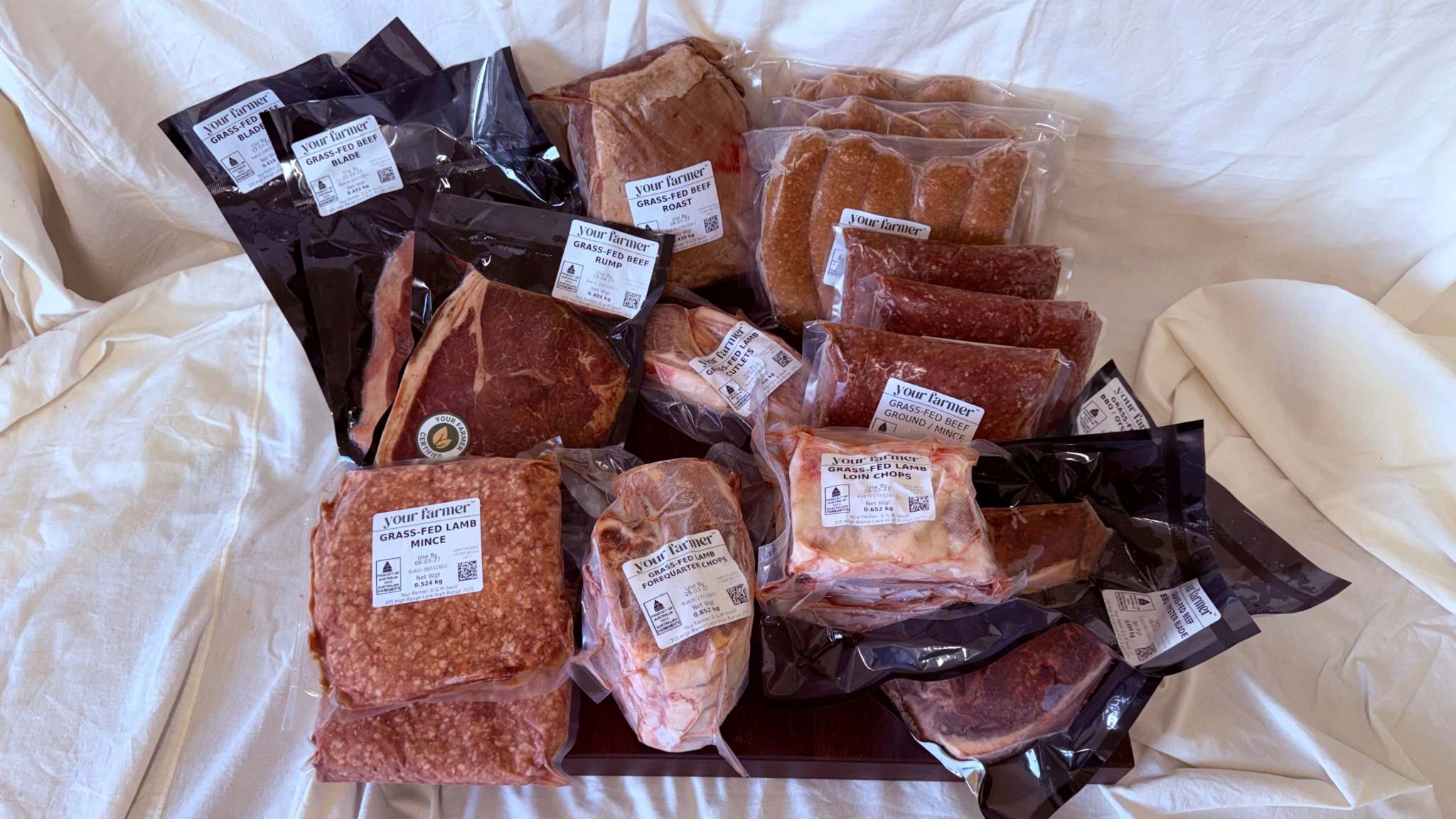
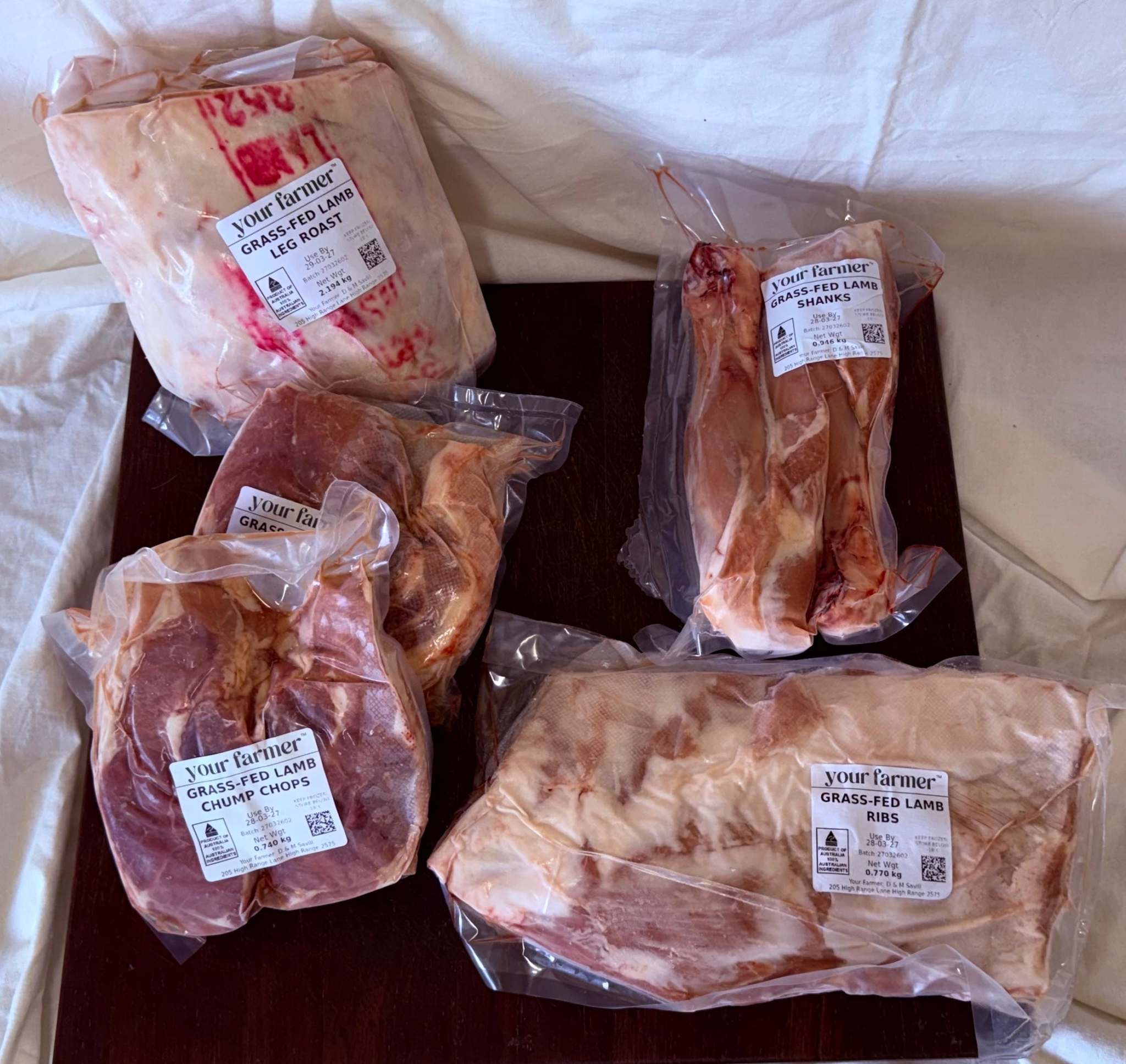
The bones ride along with every box of our pasture-raised lamb share if you tick the add-on — the easiest yes in the order form.
Frequently asked questions

Why do I add vinegar to bone broth?

A couple of tablespoons of acid helps draw flavour and gelatine out of the bones as they simmer. You won't taste it in the finished broth.

My broth didn't set to jelly in the fridge. Did I fail?

Not at all — it's still full of flavour and works everywhere stock does. Next time simmer longer, use slightly less water, or reduce the strained broth by a third to concentrate it.

Can I leave the slow cooker running longer than 12 hours?

Yes. Anywhere from 12 to 24 hours on LOW works; longer generally means a richer, more gelatinous broth. Just check the bones stay covered and top up with a little water if needed.

Should I salt the broth while it cooks?

No — leave it unseasoned. You'll often reduce the broth later in soups and sauces, and salt concentrates as liquid cooks off. Season each dish at the end instead.

Can I run the bones through a second batch?

You can. The second run (the old cooks called it remouillage) is lighter, so use it for cooking rice, grains or vegetables rather than as the backbone of a soup.

Three Simple Steps

A whole table of real food.

Your Farmers grow grass-fed beef and lamb, pastured eggs and the best eco-grown veggies and produce — every item grown to the same ecological standard, every farmer one you can know by name. One subscription, your whole real-food shop.

01

Reserve your share — or try a pack

Subscribe to a share of the harvest, or start with a one-off fixed pack.

02

Make it your own

Pick your delivery rhythm and what's in the box. Skip or cancel anytime — no lock-in.

03

Cook, savour, know your farmer

We deliver in a reusable esky we collect next time. No couriers, no waste.

More Recipes

View all

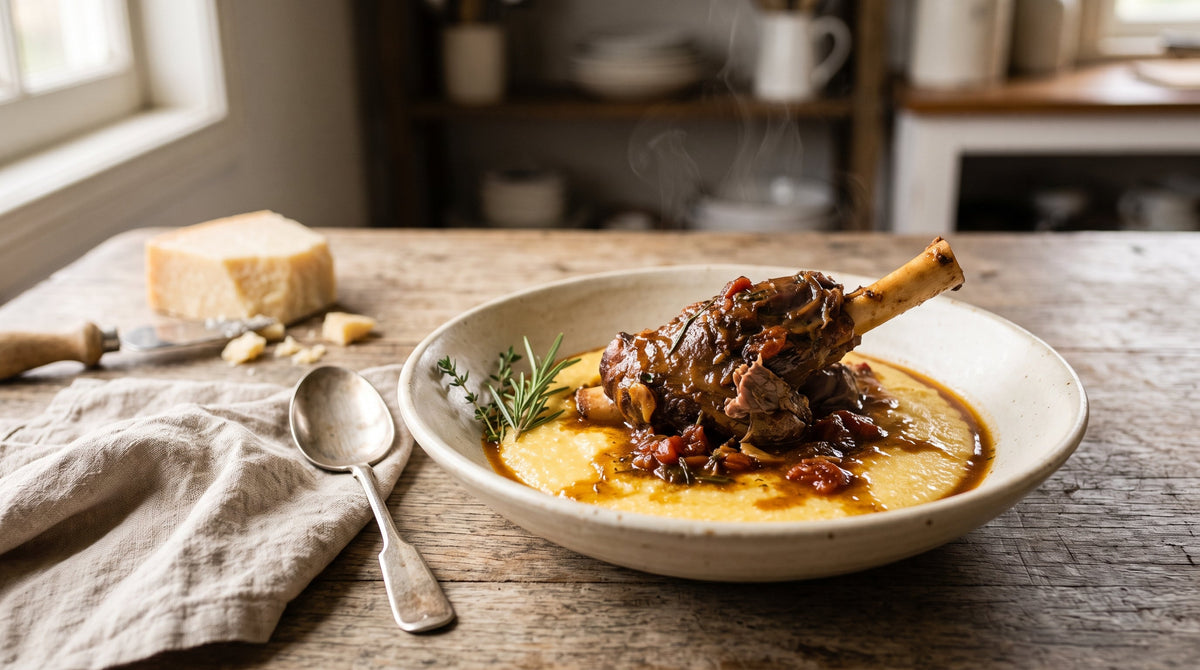
Tomato and rosemary braised grass-fed lamb shank served over soft parmesan polenta.

Tomato and Rosemary Braised Lamb Shanks with Soft Polenta

Osso buco's lamb cousin, with soft polenta doing the catching

The Milanese figured out long ago that a shin braised on the bone in tomato makes a sauce nothing else can — the marrow sees to that. This is the same idea run through the lamb paddock: shanks browned hard, then braised low with tomato, white wine and rosemary until the meat leans off the bone, all of it served over a pool of soft, buttery parmesan polenta whose entire purpose in life is catching sauce. It's a Sunday sort of pot that happily cooks on a Tuesday, and the polenta takes less minding than most people fear.

Read moreabout Tomato and Rosemary Braised Lamb Shanks with Soft Polenta

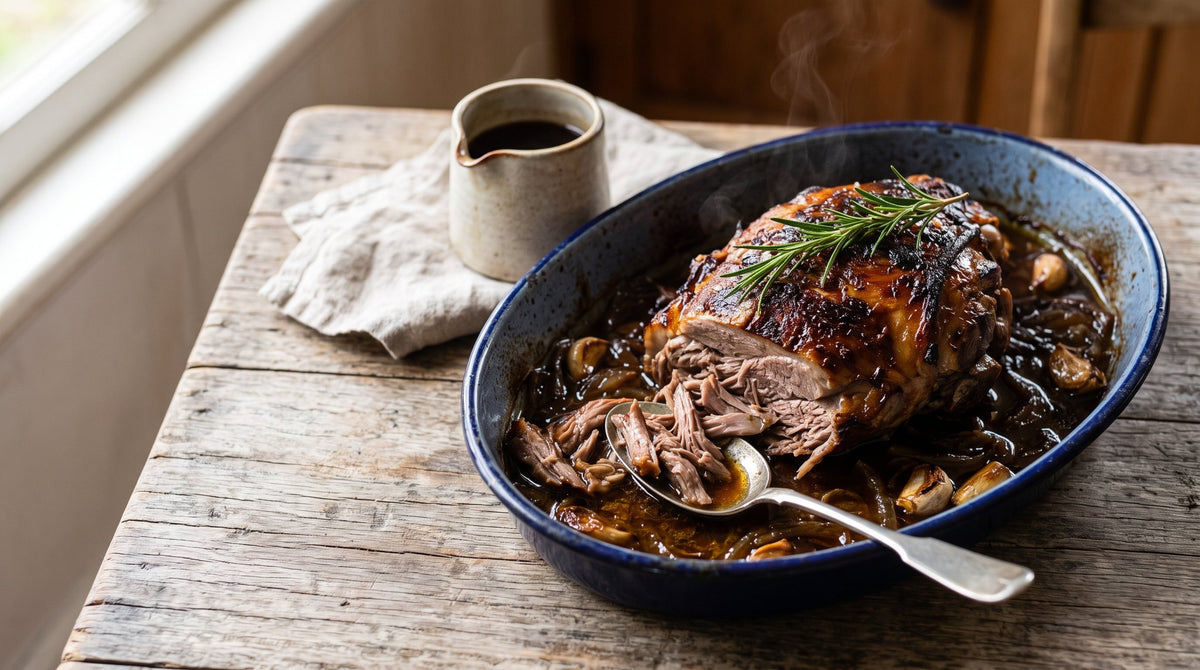
Slow-roasted grass-fed lamb pulled into tender shreds in its pan juices in an enamel roasting dish.

Slow-Roasted Lamb with Pan Juices, the Low and Slow Way

The roast that cannot be overcooked — give it half a day and it gives up entirely

Most roast anxiety comes from a five-minute window: pull it too early, it's raw; too late, it's leather. This method deletes the window. You give the lamb a hard blast of colour, then drop the oven right down and walk away for the better part of an afternoon. Somewhere in hour three the meat stops resisting altogether — a spoon will do the carving. There's no thermometer stress, no window to miss, and the pan underneath quietly builds the best juices you'll pour all winter. Patience, rewarded.

Read moreabout Slow-Roasted Lamb with Pan Juices, the Low and Slow Way

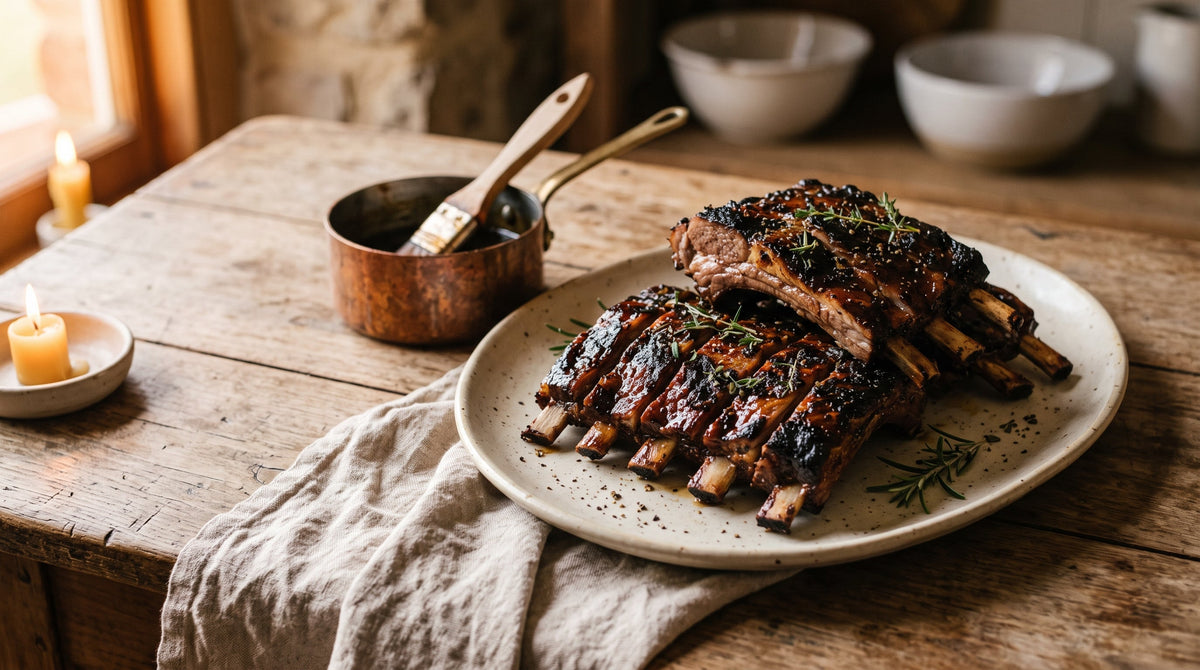
Twice-cooked grass-fed lamb ribs, braised until tender then charred and glazed, stacked on a stoneware platter.

Twice-Cooked Lamb Ribs: Braise, Then Char

The restaurant trick: do the hard part yesterday, take the applause tonight

Ever wondered how a restaurant sends out perfect sticky ribs eight minutes after you order them? They cooked the ribs yesterday. The racks get braised in stock and aromatics until tender, then cooled in their own liquid — where they firm up, drink back flavour, and wait as long as you need. Come dinner time, all that's left is a hot grill pan, a honey glaze made from the braising liquid, and about ten minutes of theatre. It's the most reliable rib method there is, and the only one where the night-of cooking fits between guests arriving and the first drink being finished.

Read moreabout Twice-Cooked Lamb Ribs: Braise, Then Char